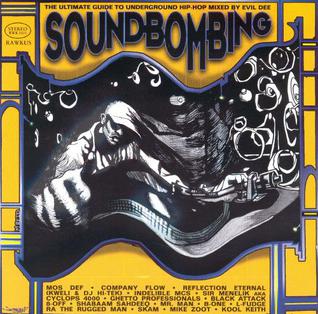
Various Artists – Soundbombing (October 14, 1997)

Finally, we’ve made it through 1997! This is my final ’97 album review, but I plan on posting the best and worst of the year in the next few weeks. I hope you enjoy the read, and thanks for time traveling with me.

By 1997, Puff Daddy and his Bad Boy Empire had begun to infiltrate hip-hop with an overabundance of bling talk and material gluttony. Often dubbed the Shiny Suit era, this new feel of hip-hop was commercially successful, which would make all other record labels and rappers begin to follow suit, aka copycats. But there will always be a few who choose to go against the status quo.

Rawkus Records was founded by two Brown University students (Brian Brater and Jarret Meyer) in 1995. Recognized by its black razor logo, it has been heralded by some as the last great hip-hop label for upholding the music’s organic integrity and helping spark the careers of legends like Black Star, Pharoahe Monch (post-Organized Konfusion), and Eminem. Rawkus laid its foundation in ’97, releasing the label’s inaugural album, Company Flow’s Funcrusher Plus, in July, and the subject of today’s post, Soundbombing, in November.

Soundbombing is a compilation album hosted by DJ Evil Dee of Da Beatminerz, featuring a bunch of up-and-coming New York-based emcees and one wily veteran who has reinvented himself a thousand times throughout his lengthy career (more on that later). As expected, the album wasn’t a commercial success, but it was a critical darling, receiving mostly positive reviews.

I bought a used CD copy of Soundbombing over a decade ago, and I may have listened to it once all the way through, which isn’t enough to form a solid opinion. It almost slipped through the cracks of my not-so-foolproof blog spreadsheet until one of my faithful readers (what up, Tony?!) asked me if I owned it. I remembered I did, and here we are today.

Intro – Our host for the evening (DJ Evil Dee) welcomes us all to the album and hits us with his signature tagline. This is followed by rugged drums, an ill jazz piano loop, and a short refrain from a group called Brick City Kids.

Flipside – R.A. the Rugged Man is one of those rappers I don’t know much about, but every time I hear him rap, I’m thoroughly entertained. He continues to entertain on this one-verse wonder, expressing his disappointment with the music industry and pretty much everybody on planet Earth. He’s backed by a muddy musical bed that suits his gutter delivery and flow well. I’m not sure who produced the track, as the liner notes hi-lariously state, “All information concerning R.A. is currently unknown.”

Fire In Which You Burn – Indelible MCs was a short-lived supergroup consisting of Company Flow (El-P, Big Juss, and Mr. Len), J-Treds, and Juggaknots (Breezly Brewin, Queen Herawin, and Buddy Slim), and I use the term “super” loosely. Only Breezly Brewin, J-Treds, Big Juss, and El-P rap on this track, and they all make passable performances, but their undynamic vocal tones get lost in El-P’s ear-straining, stale instrumental.

Lune TNS – This one is credited to Company Flow, but it’s really a Big Juss solo joint. His instrumental sounds like the soundtrack for a white-coated mad scientist in his lab mixing formulas in beakers. Juss uses the misty backdrop to list a bunch of New York City taggers’ aliases and gives the listeners who don’t get it a big middle finger. I thought it was cool.

Nightwork – I was introduced to Sir Menelik via Dr. Octagonecologyst, as he played Keith’s off-the-wall sidekick, Chewbacca Uncircumcised. He makes his first appearance of the evening as Cyclops 4000, spraying El-P’s bouncy boom-bap with a clip full of abstractions. I can’t follow half of what Menelik is saying on this track, but his verbal word salad over El-P’s gritty production was intriguing.

Arabian Nights – In the mid-nineties, Nick Wiz was quietly putting together an impressive production resume (with production credits for Miilkbone, Mad Skillz, Rakim, Cella Dwellas, and Chubb Rock records), and this is a nice addition to his discography. He crafts a sleek banger for Shabaam Shadeeq (who sounds heavily influenced by Nas) to paint with slick urban slang. This was fire.

Fortified Live – Speaking of fire, Talib Kweli, Mos Def, and Mr. Man from Bush Babees keep the blaze going on this intellectual cipher session. Everyone knows Talib and Mos (who in 1997 were revving up to release their debut Black Star album the following year) are elite-level emcees, but Mr. Man never got the proper chance to shine in his rap career. He takes full advantage of this opportunity, out-rapping his contemporaries (who sound great in their own right) and Hi-Tek’s ill-ass beat. His “I’ll cut your ass in half and leave you with a semicolon” bar was ridiculously witty.

Show Me Your Gratitude – I’ve never heard of L-Fudge before this record, and this was a horrible introduction. I hate his choppy flow, and the whistling beat (credited to a Rich Boogie) was as annoying as listening to Loren LoRosa stumble through a segment of The Latest on The Breakfast Club.

Till My Heart Stops – Side One of Soundbombing ends with an R.A. the Rugged Man/8-Off duet. I first became familiar with 8-Off (aka Agallah) as a producer, producing tracks for the likes of Onyx, PMD, and EPMD. He licks his rapping chops on this record, and his raspy voice, paired with R.A.’s humorous, semi-psychotic gruffness, makes for an entertaining listen over the darkly emotional instrumental.

Freestyle – After Evil Dee welcomes us back for side two of Soundbombing, Talib Kweli does a little riffing over some cool jazzy chords. That quickly comes to an end when Shawn J. Period’s triumphant loop drops and Talib and Mos hot potato the mic with off-the-top freestyle rhymes. The bars are pretty solid, and we find out that Talib once went by the alias of Genesis. I’m glad he chose to go with his government.

So Intelligent – The Dr. Octagonecologyst duo (Kool Keith, the wily vet I mentioned in the opening, and Sir Menelik) reunites on this record, and if “Nightwork” was a word salad, this shit is a vernacular full-course meal. I couldn’t decipher much of the oddball emcee’s nerdy composition, but I still enjoyed listening to their heavily coded abstractions and the ironically simple hook. I didn’t care for the boring backdrop, but there is a remix of this record with a much livelier and harder instrumental.

Empire Staters – The rapper on this track, B-One (not to be confused with KRS-One), shares his perspective on life from a NYC hustler’s point of view. He sounds like he may have fallen from the Mobb Deep tree and rolled down a few hills away from it, and I say that in the most complimentary way possible. The gully drums and unnerving chords (credited to Chuckie Madness) paint the nighttime New York City streets as unsafe, while also igniting my anxiety in the most entertaining way possible.

If You Can Huh… – Shawn J. Period throws Mos Def some ole beautiful shit to drop jewels over, and he doesn’t disappoint. By the way, I love the song title and hook; I have to start using that line on my kids when they “Huh?” at me.

Universal Magnetic – Mos starts this off by kicking a mediocre alphabet rhyme over a basic drumbeat, and oddly skips over J and ends at P. Things get better from there, as The Mighty Mos takes off the introspective conscious cap he wore on the previous track to get into some light-hearted emceeing (I love the Eddie Murphy Delirious and Raw references). Shawn J backs Black Dante’s bars with warm vibrations and a cloudy melody that I thoroughly enjoyed. This concludes an impressive two-piece Mos Def/Shawn J Period suite.

What If? – L-Fudge gets another shot, but this time he brings in plenty of help. He’s joined by Mike Zoot, Talib Kweli, Shabaam Shadeeq, and Skam, and the five of them have plenty of questions to ask over DJ Spinna’s anxious instrumental. This was decent, but it’s got nothing on “The Questions” (Mos Def and Common), “21 Questions” (50 Cent), or Jadakiss’ “Why” (coincidentally, Jada also made a song called “What If,” which was an obvious attempt to recapture the success of “Why;” it didn’t, but that track was also stronger than this record).

My Crown – I found a 12” vinyl copy of this record a few years ago. I knew nothing about the record or Black Attack, but bought it for a few bucks on the strength of the Rawkus Records logo printed on the label. It turned out to be an inexpensive gamble that paid off. Black Attack presents as a competent emcee with smooth verbals, and the Ghetto Professionals’ tough backdrop makes his bars sound even sharper (those big vibrant horns sound absolutely amazing). Side note: the B-side on the 12” is a record called “Correct Technique” featuring Problemz. It’s a dope joint that uses the same instrumental that Talib and Mos rapped over on their freestyle that kicks off side two of the album.

2000 Seasons – The last track of the evening goes to Reflection Eternal (which consisted of Talib Kweli on the mic and DJ Hi-Tek on the beats). Talib spews plenty of food for thought over the course of two verses, and Hi-Tek’s elegant jazz break paired with strong drums makes TK’s brainy nutrients easier to digest. This delicious closing track ends with Evil Dee doing a little promo for Rawkus and himself.

In the book of Mathew, Jesus shares a parable about the wise builder who built his house on solid rock: “Though the rain comes in torrents and the floodwaters rise and the winds beat against that house, it won’t collapse because it is built on bedrock” (Matt 7:25). Compared to the foolish person who built their house on sand, and “When the rain and floods come and the winds beat against that house, it will collapse with a mighty crash” (Matt 7:27). Somehow, Rawkus knew that “seventy-four minutes of dung flavored Now & Later and ass crack Oreos” would make a great substitution for bedrock.

Soundbombing is a well-orchestrated mixtape that avoids the glam, glitz, and all the other flashy bullshit so prevalent in mainstream hip-hop at the time. It’s seventeen tracks of hungry, relatively unknown (minus Kool Keith) emcees showcasing their talent over raw boom-bap beats, all woven together by the charismatic DJ Evil Dee’s silly commentary and infectious tagline (“Evil Dee is on the mix, come on kick it!”).

Like most compilation projects, Soundbombing has a few lackluster moments. But as a whole, it’s an entertaining backpacker’s delight that has aged well.

-Deedub
Follow me on Instagram @damontimeisillmatic
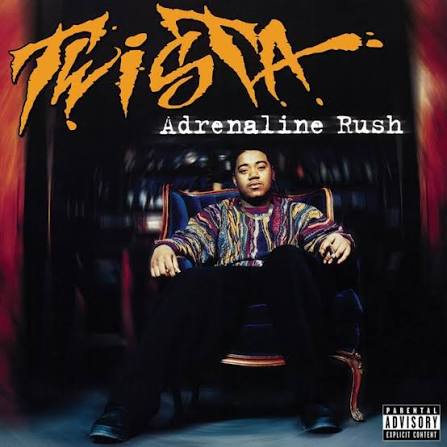
Twista – Adrenaline Rush (June 24, 1997)

The first time I heard Twista rhyme was back in the early nineties when he was going by the alias of Tung Twista. Back then, there was a bunch of hoopla around him getting into the Guinness Book of World Records as the world’s fastest rapper for pronouncing 598 syllables in sixty seconds. He signed a deal with Loud Records (becoming the first rapper signed to the soon-to-be legendary hip-hop label) and released his debut album Runnin’ Off At Da Mouth in 1992. I’ve never listened to the album, but the lead single (“Mista Tung Twista”) was proof that speed doesn’t necessarily equate to skill. He sounded like a less seasoned and less talented version of Wise Intelligent (shoutout to Poor Righteous Teachers), and the song was trash (random reminiscing moment: I remember when Treach accused Twista of biting his style and told him to “Tongue twist your ass back to Chicago” on “Sleepin’ On Jersey;” that line still cracks me up…but back to the review). Tung Twista’s gimmicky and semi-animated persona failed, leading Loud to part ways with the Chicagoan rapper. Twista would disappear from the hip-hop scene for a few years, but he would soon reinvent himself.

In ‘94, Twista released his sophomore effort Resurrection. Well, kind of. From what I could gather on the World Wide Web, Resurrection was released locally in Chicago, but since Common (another Chicago rapper) released an album the same year with the same title, Twista’s label was hesitant to release it nationally, so it came and went with very little attention or promotion. In ‘96, Twista would truly resurrect his career with his classic cameo appearance on Do Or Die’s hit single “Po Pimp,” sounding like a completely different rapper than the one we heard on “Mista Tung Twista.” He still used a swift flow, but his once overly anxious speed raps were crafted into a controlled double-time pace with a smooth delivery and slick cadence. The single went gold, and Twista would take full advantage of his resurgence, releasing his first album on Atlantic, titled Adrenaline Rush.

Produced entirely by The Legendary Traxster (the man also behind the boards for “Po Pimp”), Adrenaline Rush would become Twista’s breakout album. Even though it took two years to reach gold status (and another twenty years for it to become platinum).

I’m a casual Twista fan, and not too familiar with his catalog. But after hearing his amazing verse on “Is This The End?” (No Way Out), and a friend, whose opinion I (sometimes) trust, speaking so highly of AR, I tracked down a copy, and here we are today.

Let’s get to it.

Intro – The album begins with a brother giving Webster’s Dictionary’s definition of “adrenaline rush,” which quickly merges into Urban Dictionary’s definition of the term, followed by a skit. Twista finds out his cousin has been murdered, and he and his crew retaliate. It’s definitely an attention-grabbing opening scene.

Adrenaline Rush – The Legendary Traxster’s first instrumental of the evening is a turtle-paced, dark, and grimy audio canvas with splashes of evil, high-pitched synth sounds. Speaking of a turtle’s pace, Twista’s guest, Yung Buk (not to be confused with the Young Buck formerly of G-Unit, though I did confuse his voice for GLC, another Chicagoan rapper), sounds like a verbal tortoise compared to his host’s hare-like tempo. Their contrasting styles work together pretty well over the grimy backdrop.

Death Before Dishonor – Sticking with the theme from the violent intro, Twista’s in gangsta mode and firing shots at his adversaries with his AK-47 rapid-fire flow, and he sounds Ginsu sharp at times: “Better be/ ‘cause I readily/hit him with styles and gats that’s heavily/ armed, dangerous, and deadly/ them ahead of me/receive two holes like a letter B.” Reading those rhymes doesn’t sound nearly as impressive as it does hearing Twista spit them in double time. Traxster’s accompanying G-Funkish instrumentation is also tough, making for a banger of a record. The track ends with Twista’s homeboy leaving him a voicemail, whispering like a runaway slave that the cops are looking for him. I guess it ties in with the album’s running theme.

It Feels So Good – The softly spoken poem by a female voice, along with sleigh bells at the beginning of this record, felt heavily influenced by OutKast’s “Player’s Ball” and put me in a Christmas mood. The mood quickly shifts when Traxster’s somberly shiny and relaxed backdrop intrudes and Twista gives the listener a glimpse into a day in the life of having nothing to do but hang with his crew, get high, and bang hoes (the imagery of “one of them got chocolate big thighs, and the other was a redbone” does something to my spirit, or at least my manly imagination). Victoria Johnson adds a sultry sung hook, making the already slick record sound more enticing. The track’s followed by a news report about the murder of Jimmy Pilgrim and the hunt for two male suspects. We also get some ghetto interviews from a few eyewitnesses to the crime.

Overdose – Twista’s rhymes jump all over the place on this one, and the hook is complete ass (“I done put the fuel on it, take a pull on it, me overdosin’ on weed and sendin’ all y’all off into a thing”). I can hear where his vocals were punched in, but some of the speedy cadences he hits on this track are still mesmerizing. It did leave me curious about how Twista’s breath control is at a live show, though. Twista’s homeboy cuts him off before he finishes his verse so they can get into the next song.

Mobster’s Anthem – Twista invites the Speedknot Mobstaz (Mayze and Malif) to join him on this track as they collectively share their vision to fulfill their “Westside (Chicago) odyssey mobster prophecy.” Or in layman’s terms: become rich from hustlin’. I mentioned in my previous post that there are certain samples used in hip-hop songs that are so iconic they should never be sampled again. Traxster repurposes the Leon Haywood record that Dr. Dre used for the backbone of “Nuthin’ But A ‘G’ Thang.” It’s a blasphemous recycling, but at least Twista and crew acknowledge and pay homage to what The Good Doctor and The Dogg did on their classic record by resurrecting the legendary opening countdown. Traxster also adds another element from the same sample source, giving this record a slightly different feel than Dre’s. This one ends with another skit: A man gets interrogated by the police for a murder. It’s not clear, but I’m left to assume they’re grilling him for the body Twista and his crew caught.

Get Her In Tha Mood – A skit followed by another skit. Some young tender is in the studio being coached through a verbal porn session, and when she runs out of fresh freaky ideas, her coach (who, ironically, is a man) brings in Twista to help. I thought she was doing a fine job all by herself.

Emotions – Let’s address the elephant in the room. This record (which was also AR’s lead single) was clearly a calculated move to recapture the magic that was “Po’ Pimp.” Traxster’s instrumental is the twin brother to the backdrop he created for “Po Pimp.” Johnny P, who sang the hook on “Po’ Pimp,” returns to sing a similar refrain, and Twista rehashes the same rapid-paced player rhetoric. The only thing missing is Do Or Die. If I’d never heard “Po Pimp,” this might have been decent, but since I am familiar with the record, this shit is contrived corniness.

Unsolved Mystery – The man interrogated during the skit at the end of “Mobster’s Anthem” chops it up with his guy about the experience. Then Traxster brings in a haunted piano riff, along with tentative drum claps, eerie strings, and ghostly synth screeches as Twista raps about witnessing unsolved murders as casually as discussing sports. The hook has strong Bone-Thug vibes that sound a little copycat. Fittingly, this one ends with a skit of another brother getting shot.

Korrupt World – Traxster unleashes dirge-like organs, a sorrowful piano riff, and a mournful guitar motif for Twista and Psyde to address the gun violence so prevalent on the Chicago streets and the inner cities across the country. AR is filled with gangsta bravado, but this is the lone record on the album that humanizes the perpetrator, the victim, and the people that love both of them. This solid piece of musical social commentary is almost derailed by an asinine “Smokin’” jingle that follows.

Get It Wet – Twista and Ms. Kane take part in a little verbal foreplay as they take turns talking dirty to one another. I didn’t care much for this track, but I felt like Nasty Nelson from Boomerang listening to Ms. Kane rap explicits like “Instead all that talkin’, let your tongue do the walkin’ on down this clitoris” and “Come and take a little glimpse of these sweet hips, when that ass in the air cause a eclipse.” Maaarvelous!

No Remorse – Traxster brews up a demented synthesized masterpiece for Twista and his extended crew (Mayze, Malif, Turtle, and Link) to catch a few more bodies over. This was fire, and would have been a great way to end the album, but instead…

Emotions (Remix) – Twista brings back the lead single with a different beat, slightly adjusted rhymes, a new hook, and a new singer of the hook (Vince Walker replaces Johnny P). All things are new, but I disliked the remix more than the original.

I mentioned during the opening of this post that it was Twista’s verse as Puffy’s ghetto guardian angel on “Is This The End?” from No Way Out that intrigued me to dig into his catalog. I dug what he did on “Po Pimp,” and years later on “Slow Jamz” and “Overnight Celebrity,” but the polished double-time flow, combined with the lyrical dexterity he displayed on his No Way Out verse, sounded absolutely amazing. I was hoping to hear more of that side of Twista on Adrenaline Rush, but that version of him rarely shows up.

Twista spends most of AR spewing gangsta raps, thug posturing, partying, and chasing ass. Stylistically, he sounds good over The Legendary Traxster’s dark production scheme that blends G-funk-esque bangers with instrumentals built around thick basslines that stretch out and max (similar to “Po Pimp”). But his content is unoriginal and uncreative, and, aside from “Korrupt World,” Twista’s raps sound shallow and soulless.

The liner notes for AR are filled with four pages of data about gun violence and prison sentencing in the Black community, as well as social commentary from Wendy Day, hip-hop consultant and founder of the Rap Coalition. While the stats are sobering, most of the skits throughout the album approach the subject with a comedic tone, and when combined with Twista & Crew’s cavalier mobster energy, it almost contradicts the insert’s conscious message. From a storyline perspective, the skits miss the mark, including random moments that have nothing to do with the topic (like “Get Her In Tha Mood” and the “Smokin” jingle) and ultimately, abandon the murder soap opera it leads with without any real closure.

Horribly executed skits and mixed gun-violence messaging aside, Adrenaline Rush is a solid album. The production is dope, and Twista entertains for the most part. I was just hoping his bars would do more than make my adrenaline rush.

-Deedub
Follow me on Instagram @damontimeisillmatic
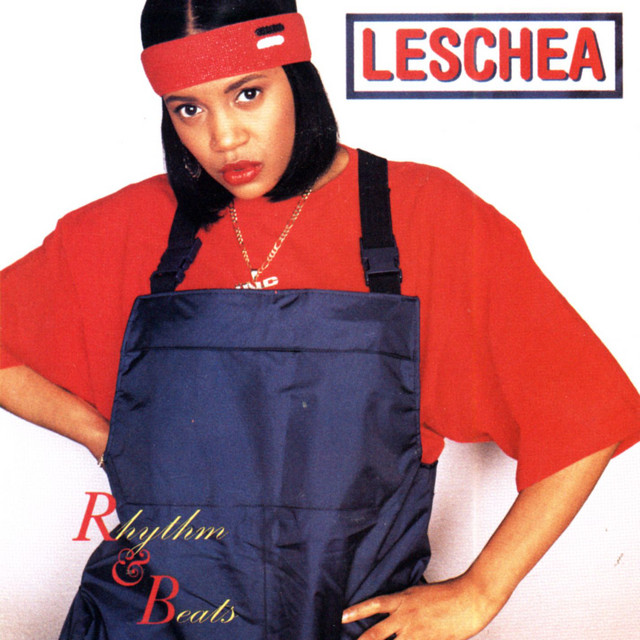
Leschea – Rhythm & Beats (June 17, 1997)

If you’re new to TimeIsIllmatic, I’m Deedub, a self-proclaimed hip-hop junkie who loves collecting CDs and vinyl. I collect other genres of music as well (i.e., R&B, seventies soul, pop, a bit of rock, and jazz), but a large chunk of my collection is hip-hop based. I’ve never listened to a lot of it, which is the main reason I started this blog (as an organized way to work my way through it). Hip-hop albums will continue to be the focus of this blog, with an occasional exception. Like the subject of this post, but it’s still hip-hop-adjacent.

Leschea, whose name you may remember as part of Masta Ace’s short-lived crew I.N.C. (or Masta Ace Incorporated), was the crew’s seldom-used vocalist. The first time I heard her sing was on the SlaughtaHouse album, where she was threatening to smoke wack niggas on “Don’t Fuck Around.” She would make a few more appearances on their second album, Sittin’ On Chrome, and after two underappreciated projects, Masta Ace Incorporated would go out of business. The I.N.C. may have been going out of business, but Ace and Leschea were about to make things super personal as they began dating, and in 2001 they made it official with marriage. But before the marriage, Leschea’s contributions to the Masta Ace Incorporated albums helped her parlay a deal with Warner Bros., and in ‘97 she’d release her debut solo album, Rhythm & Beats.

Masta Ace served as one of the executive producers for Rhythm & Beats and produced half the album. Lord Finesse and The King of Chill are among the other names with producer credits on the album. R&B produced a couple of singles that made very little noise, and the album came and went with very little fanfare.

R&B is another album that I didn’t know existed until about 8 months ago when I came across a used CD copy at one of my favorite record stores (shoutout to Cheapos!). Leschea’s name was familiar; I.N.C. is a brand that I trust, and her husband is an underrated legend. Hopefully, Leschea can live up to her affiliations on her debut.

My Flow Intro – The first five times this came on in the car, I thought my door was ajar due to the dinging noise the song begins with. Megahertz (which is an ill ass alias for a producer) quickly turns the ding into a dope instrumental built around a hypnotically ominous bass guitar loop. The first voice you hear is Leschea’s homegirl (Nikki?), and she introduces the listener to the album, shares words of confirmation to her friend, and shits on “easy pickin’ bitches livin’ in a Versace world.” Then Leschea’s fellow I.N.C alum, Paula Perry, gets off a solid verse before Leschea does a little riffing and borrows the melody from Luther Vandross’ classic “Never Too Much.” Leschea stays in pocket for most of her bit. She gets a little carried away towards the end but reels herself back in before things get out of control.

U Know The Place – Leschea’s joined by her future hubby on this one. Masta Ace gets off two verses listing some of the attributes that define his home borough of Brooklyn. Schea immediately forgets the theme of the record, so instead of crooning about BK, she sings about hanging with her crew. I like the electro-funk feel in Ace’s instrumental, and he sounds dope rapping over it. I know it’s Leschea’s album, but she should have let Ace write a focused hook for her to sing and play the background, while he shines with the bars.

Gimmie Bass – Someone going by the alias of Dirtman is credited for the melodic, warm, and bassy backdrop (the loop, or at least the melody in the loop, sounds a lot like the O.C. Smith piano loop used for Channel Live’s “Sex For The Sport”). Our hostess uses it to boast of her skills, shit on other female R&B singers, and lets us know how much she loves bass (not to be confused with the fish or crack). The lyrics were cheesy, and again, her voice gets a little shaky at certain points. But regardless of Leschea’s performance, I absolutely love the infectious instrumental.

How We Stay – This was one of the singles released from R&B. Ace recycles the James Brown loop used for Biggie’s “Just Playing (Dreams)” for Leschea to sing over. She doesn’t really have anything worthwhile to say, but at least she doesn’t try anything vocally risky.

Let Me Sing It 2 U – Ace flips Isaac Hayes’ “Look Of Love,” the same loop Irv Gotti (RIP) used for Reasonable Doubt’s “Can I Live,” and years later, would shamelessly use again for Ashanti’s hit single, “Rain On Me.” Leschea takes a crack at the sure-shot soul sample and fails miserably. She continues to struggle vocally, and her random lyrics sound like a spontaneous spoken-word poem. This one ends with a skit of Leschea getting a phone call from her girl who caps about some drama she witnessed at the mall. The skit’s not even remotely funny.

Fulton St. – This was R&B’s other single. Our hostess shares a tale about stalking, I mean, meeting her dream man on this busy Brooklyn street. The lyrics are repetitive and corny, but I dug the jazzy, bass-heavy backdrop. This ends with Leschea doing a full-blown Fila ad as she lists all the Fila apparel and accessories she owns, over a simple drum beat and a Roxanne Shante vocal loop that supports her love for the brand. I didn’t know Fila was still a thing in ‘97 (or maybe I just forgot), but I damn sure hope they paid her for this full-throated endorsement.

Let Me Know – There are samples so perfectly flipped and paired with the perfect rhyme that they should never be allowed to be used again. For example: The Patrice Rushen loop that Q-Tip (Tribe Degrees of Separation) used for Mobb Deep’s “Temperature’s Rising.” Fabian Hamilton repurposes the loop on this track as Leschea contemplates whether or not she should leave her street pharmacist boyfriend, played by Ike Dirty, who spits a verse trying to convince her to be his ride or die. Conceptually, the song wasn’t bad, but Leschea and the female vocalist who joins her during the hook (and wisely stays anonymous in the album credits) sound horrendous and completely desecrate the sacred ground that is Ms. Rushen’s “Where There Is Love.” Give it a listen, and I’m sure you’ll agree that I’m not exaggerating.

3 To 5 – Leschea sings about waiting for her incarcerated lover over a dark Sly Johnson loop (with production credits going to Masta Ace and Mister Cee (RIP)) that will forever be remembered in the annals of hip-hop as the foundation for Raekwon’s “Heaven & Hell” off his classic solo debut, OBFCL. Her storyline’s actually decent, but similar to the previous track, this loop belongs to RZA, Raekwon, Ghostface, and Blue Raspberry. Period.

All On You – Leschea doesn’t cover any new territory with this one. She caught her man cheating, moves on from him, and the best way to get over your ex is to get under the next, which is what she does on this track. This song is probably the best that Leschea has sounded vocally on the album. The concept’s not original, but it works, thanks largely to the Megahertz/G.M. produced instrumental, built around a dope Jones Girls loop (their name surfaces again…I’ve really gotta dig into their catalog).

All This Love – I don’t know if Leschea meant them to be, but this track and the previous four tracks tie together in a nice little story line: She falls for a street hustler on “Fulton St.” (he’s gotta be a hustler if he’s constantly crusin’ up and down the same street in his jeep everyday) and struggles with his lifestyle and occupation on “Let Me Know.” He gets caught and locked up on “3 To 5,” and when he finally gets out, he cheats on her, she leaves him, and finds a new man on “All On You.” And finally, she dedicates this hip-hop ballad to her newfound love, whom she eagerly awaits to blow her back out. Ace (the producer of this track and the album’s EP) is a master (no pun) of conceptual albums, so maybe this five-song string was an orchestrated suite and not happenstance. The track is followed by another skit that fails to bring any comic relief.

High Velocity – Earlier in this review, I said some loops aren’t meant to be recycled. But there are some dope ones that I don’t mind hearing used again. Like the Busy Bee “Chief Rocker” loop that Ace reuses for this track. Leschea’s lyrics were forgettable, but the catchy hook and dope beat make this record entertaining.

Hip Hop – Lord Finesse gets his sole production credit of the night, and it’s a thing of beauty. He slides Leschea a smooth melodic groove that she uses to harmonize about not only loving hip-hop, but also living this subculture. Some of the lyrics get weird, but Finesse’s instrumental is so soothingly amazing, it blots out all her minor lyrical transgressions.

Schea’s World – Schea closes R&B by singing about her wish to teleport to a fictional world where there is no crime, race doesn’t exist, jealousy is not allowed, it’s an ill yet serene atmosphere, and…little kids can trade in candy for loaded nines? Her words, not mine. Oh. And according to the hook, she wants to exist in this dream world by herself, which, if she did, would take care of the crime, racism, jealousy, and kids trading in a bag of Skittles for loaded nines (I sure hope that candy/gun line was a mistake). The King of Chill uses the same Heath Brothers sample that Q-Tip used for Nas’ stellar single, “One Love.” The loop has been used a few times since “One Love” (see Redman’s “Soopaman Luva 3,” and the Bud’da-produced track, “Do 4 Love” from Dr. Dre’s Aftermath compilation project), but like Patrice Rushen’s “There Is Love,” it should have been hung in the hip-hop sample rafters after its original usage.

On “Give Me Bass,” Leschea sings, “You can have the best vocals around, but it don’t mean a thing if your beats are wack.” Well, that theory also works vice versa.

Leschea only made a few appearances on Masta Ace Incorporated’s two group projects, with her main contributions coming on Slaughtahouse’s “Don’t Fuck Around” and “Turn It Up” from Sittin’ On Chrome. Other than the end of the latter record when she attempts to hit a big note before reeling it back in when her voice begins to get shaky, she always played it safe, staying in a limited vocal lane. On Rhythm & Beats, Leschea takes center stage, and all her vocal flaws get exposed.

Leschea doesn’t have a big voice or a wide vocal range, which becomes blatantly obvious early on Rhythm. A few times on the album, she ventures outside of her safe space, and to describe those moments as cringeworthy would be an understatement (prime example: “Let Me Know”). Even when she stays in her vocal safe zone, the lyrics sound corny, half-baked, or like she’s coming off the top of the dome. Her feeble songwriting paired with her lack of charm left me yearning to hear Ace, Paula Perry, and Lord Digga provide her with more moral support.

There is flagrant recycling of several already proven winning samples on R&B, which detracts from the album’s musical integrity, even if still sonically sound. The formulaic beats are mixed in amongst some original bangers, making for a solid production bed overall. So at least the music will entertain when Leschea fails to.

I remember the first time I heard Mary J Blige’s voice soulfully belting the hook on Father M.C.’s “I’ll Do 4 U.” It wasn’t the strongest vocal I’d ever heard, but it was heartfelt and had a rough, warm quality that captivated. So much so, in time, she’d be crowned the Queen of Hip-Hop Soul. I blame MJB for making it look so easy to sing with swag over hip-hop beats. Leschea’s performance on R&B is proof that it’s not.

-Deedub
Follow me on Instagram @damontimeisillmatic

Ill Al Skratch – Keep It Movin’

We last heard from the New York City duo, Ill Al Skratch, in 1994 with their debut album, Creep Wit’ Me. The album spawned two moderately successful singles, but neither racked up any hardware (aka RIAA gold or platinum plaques), and the album followed suit. Ill and Al felt the label (Mercury) was responsible for the album’s commercial failure due to poor promotion and backing. I thought the album was cool, but played more like an EP with six of the twelve tracks being tied to the two singles (four were tied to “Where My Homiez?” and two to “I’ll Take Her”), but the production was solid, and Ill and Al, at times, showed potential on the microphone. Whatever the reason was for its failure, Mercury would give Ill Al Skratch one more chance as they’d return in ’97 with their sophomore effort, Keep It Movin’.

LG The Experience (Easy Mo Bee’s little brother) and LoRider were responsible for producing the entirety of Creep Wit’ Me. LoRider’s name is nowhere to be found in the liner notes for Keep It Movin’, but LG is credited with producing five of the album’s twelve tracks. Ill Al Skratch, longtime Rap-A-Lot Records in-house producer, Crazy C, and a few other names fill out the rest of the project’s production credits.

I found a used vinyl copy of Keep It Movin’ at a record store during a recent trip to Chicago. Being the trusting (or gullible) collector that I am, I didn’t do a thorough inspection of the product. I realized, when I began preparing for this review, that the double vinyl in the record sleeve did not consist of “disc one” and “disc two,” but instead, two copies of “disc two.” Needless to say, I’m without a physical copy of the first six songs of Keep It Movin’, so I’m relying solely on Apple Music for the first half of this listen. If by chance you’re reading this and have two “disc ones” of the Keep It Movin’ vinyl, know this is fate, and DM so we can swap the appropriate discs to make both of our Keep It Movin’ sets complete.

Keep It Movin’ Intro – The first thing you hear is an ill, scratched-up (no pun) rock guitar loop that ends way too soon. Then the legendary Kid Capri introduces our hosts, followed by a random verse from Melachi The Nutcracker. The Nutcracker’s verse is a far cry from what he did on Gang Starr’s “Words From The Nutcracker,” but at least the jazzy piano loop underneath his vocal was enjoyable.

Me & The Click – LG turns an Enter The Dragon loop into a gutter atmosphere, as our hosts let off oodles of gun-toting thuggery, and Al Skratch, more so than Ill, excels in the field. Greg Nice unexpectedly drops in to deliver a song-ending verse, and while I’m always down for a Greg N-I-C-E freestyle, this one sounded a little out of place. Still, I was thoroughly entertained by this record.

Get Down – Our hosts do more slick shit-talking over smooth drums, a callous single-piano note loop, and intermittent melodic chords (credited to Crazy C). Speaking of melodic, Al makes an interesting point with his line, “Now everybody wanna sound melodic, I wonder where they got it, guess they on my dick.” I’m trying to figure out who that shot was aimed at. I first thought Bone Thugs, but their debut single (“Thuggish Ruggish Bone”) came out at least a month before “Where My Homiez?” back in ‘94; and it would be a few more years before Ja Rule hopped on the melodic bandwagon. Regardless, Al was definitely one of the first, and more importantly, this track was dope.

Yo Love – With bars like “size in your thighs make my nature rise” and “Gotta hit the puss as soon as I met her,” it’s clear Al and Ill aren’t looking for love, but instead, something to smash. The up-tempo backdrop (credited to our hosts and Muffla formerly of L.A. Posse) samples an old Cameo record, giving the track a party feel. It also features the vocals of Reese Love and a couple of Crystals (Crystal Johnson, whom you heard blow on classics such as Mobb Deep’s “Temperature’s Rising” and Pete Rock & CL Smooth’s “Take You There,” and Crystal “Dadadidadada” Waters) on the hook to add some R&B vibes to the horny affair. It’s not a great track, yet a decent album cut.

Yeah 1, 2 – Al and Ill dedicate this one to “all the real muthafuckin’ niggas” (their words, not mine). They’re also credited with the semi-soulful, southern-fried instrumental. Al gets off a few more clever bully bars (“You wanna floor tussle? Take your chance against the raw hustle, I’ll draw a jigsaw puzzle on your jaw muscle”), but overall, the record was average at best.

Stick-N-Move – Ill sits this one out, as Al is joined by an uncredited rapper (who sounds like a knock-off GZA) and a reggae chanter named Papoose aka Da Black Phantom (not to be confused with Remy Ma’s ex-husband, even though Genius did). DJ Scratch continues to gain more of my respect as a producer as he sets the trio up with a grimy mid-tempo masterpiece to play with. The anonymous guest sounds decent opening things up, but Mr. Raspy sounds right at home rhyming over this gutter gem: “You messing with the wrong nigga G, ‘cause I’ll physically put you out your misery. You think I’m lying? Have a drink, I’m buying, I’m reloading the iron, before my ink is drying…here to pop emcees’ bubble, feel free, please chuckle, take me for a joke, I’ll make your knees buckle.” If you read this blog regularly, you already know I’m not a big reggae guy, and I have no idea what Papoose is saying, but his gritty voice matches Scratch’s grime well.

Gamin’ – LG cooks up a creamy R&B groove for Ill Al Scratch to spit game at the dames while Christopher Williams and Gina Thompson lend their voices for the hook, bridge, and ad-libs. This type of record might sound contrived coming from another rap act, but it sounds authentic and on-brand for Ill and Al. Personally, I love it.

Dance Wit’ Me/After The Dance – LG keeps the smooth R&B vibes coming with this one. Yo-Yo and her self-proclaimed “ice cream thighs” (and I believe her) join the duo as they each get off a verse that has nothing to do with the premise of the song, yet they still sound nice on the mic and together. The true stars of this record are LG’s luscious instrumental (built around a sneaky interpolation of Tony, Toni, Tone’s “It Never Rains In Southern California”), Gina Thompson and Big Ken Stanton’s polished vocals, and the catchy flip of a Marvin Gaye line for the hook. Don’t be surprised if you suddenly get the urge to two-step when this comes on.

Where Ya At? – Crazy C contributes a melodic southern-paced production for the New York duo to exchange bars (hearing Al brag about being 6’2″ and then referring to Ill as “little,” right before calling out his 5’8″ stature was hi-larious; but it was even funnier to hear Ill buck back, interrupting Al on the very next line, saying, “size don’t mean shit”). The hook uses a dope Beastie Boys vocal clip, and often-used Rakim and Q-Tip snippets, making room for the first Tribes Degrees of Separation on TimeIsIllmatic in a long time.

Get Your Swerve On – LG loops up Eddie Kendrick’s “Intimate Friends” to create a soulful backdrop for Ill and Al to spit more game to the ladies and dirty mack in the process (Al: “Party goin’ on over here, no doubt, but your spouse, won’t let you out the house, your crusty lips blow him kisses, he makes promises and wishes, but all you really get to do is dishes”). The rhymes were entertaining, and the instrumental was irresistible.

Can You Feel It? – A little bit. If I had to get rid of one track on Keep It Movin’, this would be it. It’s not a horrible record (I kind of dig the soul vocal loop in the background); it’s just less entertaining than the rest of the album.

Bak Ta Bak – Ill and Al close things out with some M.O.P. energy. I like the track’s intensity, and it would have been nice to hear Fame and Billy rhyming with our hosts over this rugged backdrop. But even as is, it’s still solid.

It’s clear Ill and Al were more focused on rhyming on their second outing than they were on their first. Specifically, Al Skratch, who sounds surprisingly sharp on the mic. Throughout Keep It Movin’, he consistently delivers witty wordplay in his gruff vocal tone as he fully commits to his “pussy seeking, emcee battling, gun-toting thug” image. Ill doesn’t sound nearly as lyrically locked in, but his charisma (along with Al’s shoulder) keeps him afloat. The duo has an uncanny ability to seamlessly go from grimy street bars to softer raps tailored for the ladies, and it all sounds organic. Unlike most rappers who spit love/lust raps, Ill and Al’s don’t sound sappy or cliché, as their blunt approach to the subject makes it feel authentic.

The production on Keep It Movin’ is a blend of melodic R&B grooves, smooth bops, and grimy backdrops, which is the kind of musical diversity a versatile group like Ill Al Skratch needs to rhyme over. The content on Keep It Movin’ isn’t innovative or substantive, but the duo’s hood charm paired with a delicious batch of instrumentals makes for an entertaining and enjoyable 46-minute audio experience.

I mentioned during the opening of this write-up that Ill Al Skratch showed potential on their debut album. Ironically, on Keep It Movin’, the duo finally begins to walk in that potential, but the cold-hearted industry would tell them to keep it moving, putting an end to their rap career.

-Deedub
Follow me on Instagram @damontimeisillmatic

Tracey Lee – Many Facez

Before hearing him rhyme on CRU’s “Bluntz & Bakakeemis,” I had never heard of Tracey Lee. But I like what I heard during the cameo, so a few months ago, when I came across a used copy of his debut album (Many Facez) for three dollars, I had to cop and hear more from the Philadelphia emcee.

Many Facez was released on Universal Records in March of ‘97. The album featured production from some of Bad Boy’s Hitmen (D-Dot Angelettie, Ron “Amen-Ra” Lawrence, and Nashiem Myrick) and cameos from the likes of Busta Rhymes and Notorious B.I.G. (ironically, Many Facez was released just two weeks after Big’s untimely demise). According to the Many Facez liner notes, Tracey suffers from split personality disorder, and all five of his personalities show up to rap on the album. There’s Mr. Lee (“the businessman”), LR (“the serious side of Tracey”), Rock (“the party animal”), Tray (“the ladies’ man”), and L (“the rhymer”).

Apparently, Tracey’s schtick didn’t work. Many Facez was a commercial failure, and Universal would cut ties with him right before his second album was set to be released (the album, Live From The (215), was shelved, but would eventually leak to the public). He released a few independent albums through the years, but they didn’t make much noise. Thankfully, Tracey had a bachelor’s degree from Howard University and a Juris Doctor degree from Southern University Law Center to fall back on as he’d become an entertainment lawyer taking on clients such as Eric Roberson, Kelly Rowland, Solange Knowles, and Kobe Bryant (RIP).

But today, Many Facez will be on trial. Let’s get into it.

Intro: T.R.A.C.Y. L.E.E. – The track begins with a sample of a woman’s voice being manipulated to melodically spell out “Tracey Lee” a few times over. Eventually, D-Dot’s nearly non-existent drums drop, which really weren’t needed, thanks to the ultra-gully bass line that carries the instrumental. Tracey uses D-Dot’s grit to get off a quick eight-bar warm-up verse, and he sounds pretty capable.

Many Facez – Rightfully so, Tracey Lee uses the title track to introduce us to all five of his personalities/alter egos. I like the energy in the instrumental (credited to Cedric Thornton), and the different personas gave me enough to be intrigued.

The Theme (It’s A Party) – D-Dot and Amen-Ra (with a co-credit going to Mark Pitts) craft a rugged banger for the album’s lead single. The liner notes say that Rock (the party animal) is best represented on this song, but Tracey’s Rock tone sounds a lot different from what it did on the previous track (fittingly, Rock does show up for the hook). Regardless of which segment of Tracey’s brain is at work on this track, the verses were serviceable. But it’s the bangin’ instrumental and energetic hook that carries this record.

Big Will – The track opens with some young hustlers pitching their product in front of the neighborhood deli, until the store owner shoos them away. From there, a dreamy Minnie Riperton-sample-driven instrumental drops (brilliantly crafted by D-Dot and Amen-Ra), and Mr. Lee reminisces about his rise from struggling street hustler to an American success story. Cleverly, Tracey’s ambiguous rhymes leave you wondering if he’s referencing the dope game, the rap game, or a combination of both.

Stars In The East – Michael Jeter (also known as KenyaFlow, one-third of the group One Step Beyond) flips an extremely delicious Jones Girl loop (I feel like I’ve been referencing their name in this blog a lot lately) for himself, L, and his OSB bredrin, Middy, to float on like sailboats, and they do it exceptionally. This track alone was worth the album’s three-dollar price tag.

Interlude: What Was Good About Good Times – Tracey and his guy joke about the irony in the title of the classic seventies’ sitcom. I definitely laughed during my first few listens to this one.

On The Edge – Tracey (I think his LR persona is rapping?) gets in his “woe is me” bag as he discusses his struggle to make it in the music industry, borrowing a DMC line for the hook. Unlike most rappers who grew up poor, feeling like they had no options other than to rap or sell crack, Tracey shares that he’s a college grad who chose to hustle (i.e., sell weed, use women, and get public assistance) rather than get a job during his pursuit to become a rapper. Please cue the world’s smallest violin. Speaking of violins, the somber beauty of a backdrop is laced with lovely emotional strings throughout.

Rugged One – LR gets off two solid freestyle verses over a unique flip of Rene & Angela’s “I’ll Be Good.” Shoutout to The Gooch, the greatest unseen television bully of all time.

Interlude: Who’s Crew – A skit that sets up the next track and fails to include a question mark in its title.

Who’s Crew – Tracey questions his friends’ loyalty over a laidback but strong blue-collar instrumental. I’d like to question the person who omitted the question mark that should have been placed at the end of the song title.

Repent – The clown deacon who shares a few opening words and the benediction on this track sounds like Redman’s government name/alter ego, Reggie Noble, but the liner notes don’t confirm or deny this. After the misogynistically foolish invocation, Mr., Dr., Pastor LR gives a two-verse sermon asking rappers who aren’t in the game for the love or the passion to repent over a muddy bass line, flat drums, and angelic church organs: “Fed up with all of you wannabe mobsters, selling your souls for Grammys when you shoulda got Oscars, for actin’, fuck the dramatics.” And the church said, amen.

Give It Up Baby – Casanova Tray is on the hunt for ass, and he invites Erika Kaine (not to be confused with Erica Kane from All My Children) to the party to flirt with and share a chicken head’s perspective. Tracey and DJ Parlay flip a familiar Michael Henderson loop with decent results, but the record as a whole was underwhelming.

Interlude: Airport – A silly interlude that may conjure up a chuckle or two.

The Professionals – This one begins with Tracey blowing the back out of some young tender (while a R&B singer hi-lariously dirty macks through song in the background on T’s stereo), before his sexcapade is interrupted by a phone call from a guy named Gooch asking Tracey and his crew to put a hit out on the industry (music industry is implied) for 20 million, to which they accept. Then Tracey and The Reepz (a trio composed of Pirate, Tru Born, and Feva) lay out the plan to take down the music industry’s “gatekeepers” and execute it (no pun intended) with precision. All four parties play this one well, and Pirate’s brolically cinematic backdrop is the perfect soundtrack for the affair.

Keep Your Hands High – I’ll be completely honest, and you can revoke my true hip-hopper card if you’d like, but I had no idea this song existed. All these years, I thought Jay came up with “Them rings and things you sing about, bring ‘em out, it’s hard to yell when the barrel’s in your mouth” (which T.I. would later use as the hook for his single “Bring Em Out”). Even The Buchanans’ instrumental that Jay-Z spit the borrowed Biggie line on (“What More Can I Say”) samples the same MFSB record that Ike Lee III used for this track (though The Buchanans’ use of the loop sounds way more epic). Big and Tracey go back and forth à la Biggie and Jay on “Brooklyn’s Finest,” but unlike “Brooklyn’s Finest,” the emcee duel doesn’t end in a draw. Tracey puts up a good fight, but Biggie steals the show, annihilating this track with his polished flow and incredible wordplay. This was fire!

The After Party (The Theme II) – Tracey revisits the lead single, which comes with refreshed bars from our host and a brand new, shiny Nashiem Myrick-produced instrumental. It also includes guest verses from Pirate (who sounds heavily congested compared to how he sounded two tracks ago) and the cameo whore, Busta Rhymes. It’s cool, but I prefer the O.G. mix.

Clue (Who Shot LR?) – LR has been shot, and Tracey’s on the case to find out which one of his identities committed the crime. D-Dot and Amen Ra provide the perfect ominous, murder mystery vibes for Tracey’s internal strife, but the story has too many holes, and quite frankly, the whole concept is kind of silly. End scene. End album.

For decades, mental health has been a taboo topic in the Black community. Only in the past ten to fifteen years has the tribe, as a collective, begun to acknowledge it as a legitimate issue that, in most cases, requires professional help. It’s a subject that’s been hard for Black men to admit they struggle with, and even more difficult for rappers in a music genre that promotes “macho posturing” and any signs of weakness are forbidden. The Geto Boys were ahead of their time when they got vulnerable and touched on the subject with their 1991 classic “Mind Playing Tricks On Me.” On Many Facez, Tracey Lee doesn’t advance the mental health conversation. Instead, he uses split personality disorder as a gimmick that fails. Yet, the album still manages to work.

The liner notes to Many Facez lead you to believe that you’ll hear from Tracey’s five different personas throughout the album. The title track does a solid job of presenting all five entities, but Tracey fails to provide character, depth, and real identity for his made-up alter egos thereafter. They all rap with the same cadence, skill level, and pretty much cover the same content. On a handful of songs, it even sounds like Tracey’s confused about which one of his personalities is on the mic, forgetting to put on the correct voice for the appropriate character. If done with strong attention to detail, Tracey may have pulled off the stunt, but his haphazard handling lands him flat on his face.

The production on Many Facez is impressive, and most of the instrumentals on the first half of the album are phenomenal. Tracey may have fallen short conceptually, but he proves to be a competent emcee, shining his brightest on tracks like “Big Will,” Stars In The East,” and “Keep Your Hands High.” And even when he doesn’t gleam on the mic, he’s still adequate, and the top-notch production keeps things entertaining when our host’s content may not be.

Gimmicks come with pros and cons. They can attract attention, increase appeal, and boost sales. But typically, they lack real intrinsic value or long-term usefulness. One can only wonder what Tracey Lee’s rap career would have become had he simply used his debut to introduce the world to Tracey Lee instead of five make-believe beings.

-Deedub
Follow me on Instagram @damontimeisillmatic