2nd II None – 2nd II None (September 6, 1991)

Cousins, Kelton McDonald and Deon Barnett, respectively know as KK and D (or Gangsta D), and together as 2nd II None, were the home boys of fellow Compton native, DJ Quik. After Profile Records heard Quik’s now legendary “The Red Tape” (which has multiple meanings, including being a shoutout to the Piru Blood set that both Quik and 2nd II None rep), they signed him to what was at the time, the label’s most lucrative deal. 2nd II None, who appeared on “The Red Tape”, would also sign with Profile, releasing their self titled debut album in the fall of 1991.

DJ Quik would handle the production duties for the entire album, but unlike his debut album Quik Is The Name, 2nd II None would not have anywhere near the same level of commercial success as the former. 2nd II None would be the only album the duo would release on Profile. They would sign to Death Row Records, and like several other nineties acts, got lost in the shuffle and wouldn’t release a proper follow-up to 2nd II None until signing with Arista and releasing Classic 220 in 1999. And after eight long years, nobody was checking for them anymore.

I bought 2nd II None on cassette when it came out back in the day, but like most of my tapes, it fell victim to the teeth of my Walkman. A few months ago I stumbled upon a copy of the cd at Cheapos, and since it had been on my “want list” for sometime, it felt like destiny. And here we are.

Intro – To kicks things off, KK and D (in that order) each spit a quick verse about foes, hoes, and more hoes, over a nasty Quik instrumental.

More Than A Player – Warning: pimps and hoes are very popular subjects throughout 2nd II None. On the first official song of the evening, KK and D use their verses to discuss just that. Quik samples a portion of Al Green’s “Love And Happiness” for the solid backdrop.

If You Want It – The moral of this song is summed up best by the last line of the song: “Young hoochies, we love coochies, if we want it, let us up on it”. Quik samples the same Isaac Hayes record the Geto Boys would use a few months prior on, what is without question the biggest hit in their catalog (“Mind Playing Tricks On Me”), but of course Quik’s interpretation has a cleaner and smoother feel than the southern trio’s take. After listening to this song once you’ll be stuck bobbing your head while singing the soft porn hook. Resistance is futile.

Be True To Yourself – This was the lead single from 2nd II None. The duo temporarily deviate from their favorite subject (hoes) to discuss the importance of one being true to him/herself. KK spits a verse about a chick who spends all her money flossin’ to keep up with the Jones’, and after blowing all her money she can’t afford to get her hair done, to which K says “now you’re unhappy cause your head all nappy”; after all these years that simple but effective line still cracks me up. Quik continues his streak of dope production, as he builds this beauty around a vintage Curtis Mayfield loop. This one sounds better today than it did back in ’91. Fine wine, baby.

Let The Rhythm Take You – AMG (who sounds a lot better than I remembered him sounding) joins KK and D on this one, as they each get a verse and drop lines over yet another brilliant DJ Quik produced backdrop. The crispy clean melodic instrumental is so pleasing to the ear, no one should have a problem following the instructions given in the song title.

Comin’ Like This – Quik, AMG, and Hi-C join 2nd II None for this cipher joint, as they collectively rep the 304 Posse over a dope reggae tinged instrumental. None of them are amazing emcees, but Quik, who is easily the most polished of the group, steals the show with his swift flow on the second verse.

Underground Terror – The Compton duo give us their version of battle raps on this one, and neither one of them provide any memorable quotes. The instrumental (which uses a rarely used sample of Marvin Gaye’s “Life Is For Learning”) is decent but not as potent as the first six songs on the album.

Just Ain’t Me – Never liked this one and I still don’t today.

The Life Of A Player – Quik samples The Fatback Band’s “I like Girls” and turns it into another nasty backdrop, as his buddies continue to talk about pimpin’ bitches and mackin’ hoes. By this point KK and D’s repetitive content starts to become a bit too much, but just ignore them and enjoy the instrumental.

Ain’t Nothin’ Wrong – The song title and the funky smooth sample, both come from KC & the Sunshine Band. While KC and company’s content was clean and innocent, D, KK and Quik’s verses give the song title a much raunchier meaning.

What Goes Up – D and KK share a few tales of those who were once on top but didn’t stay level-headed and eventually hit rock bottom. D’s last verse is about a church girl who gets wrapped up with a drug dealer, and D curiously points out that she was “seventeen but she lookeded twenty”. No, “lookeded” was not a typo, that is actually how D says it, which unfortunately gives merit to the Young Black Teenagers’ use of “likeded”  (click here to read that post). And what exactly are the physical differences between a seventeen and twenty year old bodies? Hell, I’ve seen thirteen year old girls built like grown women. The line might have gone over better had he said thirty, or at least twenty-five… and if he said “looked” instead of “lookeded”. The instrumental is built around a frequently used James Brown loop and a vocal sample from Blood, Sweat & Tears’ “Spinning Wheel”.  Decent song, but definitely one of my least favorites on the album.

Mystic – Quik builds a mysterious instrumental around a loop from Bobbi Humphrey’s “My Little Girl”, which serves as the perfect backdrop for D and KK’s story about a pretty young seductive girl named Mystic. This was a nice.

Punk Mutha Fuckaz – This one is both a dedication to the dead homies and to those who killed and turned their back on the dead homies. I know that last sentence sounds weird, but listen to the song and you’ll understand what I’m talking about. The instrumental isn’t terrible, but it pales when compared to the incredible production work on the songs before it.

Niggaz Trippin’ – 2nd II None ends the evening with another posse joint, which features the same players involved on “Comin’ Like This”. AMG comes with a nice off beat flow and delivers another decent verse and takes what sounds like a shot, at Too Short (“I don’t joke when I talk about poking, I’m too tall cause I aint from Oakland”). Not a huge fan of the instrumental (which is built around a loop from Tom Tom Club’s “Genius Of Love”), but I’ve heard worse.

D and KK are mediocre emcees at best. Luckily, they were friends with (who would become) one of hip-hop’s most prolific producers, who was gracious enough to lace them with his crispy clean sonic brilliance throughout 2nd II None. If you’re looking for superior lyricism, you’ve come to the wrong spot. But if you’re willing to overlook 2nd II None’s mediocrity and juvenile content in exchange for exceptional production, you’ll appreciate 2nd II None.

-Deedub

Posted in Uncategorized | 1 Comment

Young Black Teenagers – Young Black Teenagers (February 19, 1991)

I first heard of the Young Black Teenagers when they appeared on an episode of The Phil Donahue Show back in the day. I’m not sure what the specific topic of the show was, but I remember seeing five white guys dressed in baggy jeans, hoodies and Timberland boots, take to the mic and share their theory that being black in a state of mind, and because they were of the “black mind state”, they considered themselves black. Even as a snot nose kid I knew their theory was bullshit.

I never checked for them, mainly because of their ridiculous theory, and the fact that I thought they were corny in general. Then a few years ago I read an article and found out that the YBT’s (which consisted of New York natives Kamron, Firstborn and Tommy Never on the mic, and DJ Skribble and ATA on the turntables) were the first act signed to Bomb Squad member, Hank Shocklee’s label, SOUL, which ironically is an acronym for Sound Of Urban Listeners.

Not only were they signed to Shocklee’s label, but the Bomb Squad would also handle the production duties for pretty much the entire album. Unlike most of the other melanin challenged emcees before them, the Young Black Teenagers would not reap the same level of commercial success, as the album failed to chart and wouldn’t even go wood. They would take one more shot at it in 1993, with their sophomore effort Dead Enz Kidz Doin’ Lifetime Bidz, which would do a little better than the debut album, thanks to the mild hit “Tap The Bottle”; but that would be the last release from the YBT’s as a group. Kamron would go on to deejay and produce tracks for the likes of Public Enemy, Ice Cube, Jill Scott and 50 Cent, to name a few, while DJ Skribble would go on to become a prominent deejay, working for MTV, winning deejay battles and releasing several solo albums and mixed tapes.

But the question remains: is Young Black Teenagers worth the wax it was recorded on?

Punks, Lies & Video Tape – Kamron, Firstborn and Tommy Never each take a verse to complain about the lack of radio and video play the YBT’s get (yes kids, there was a time long before YouTube that artist looked for exposure on BET and MTV), crediting the reason for the blackball to their explicit content and for thinking they actually had black balls. Just like the YBT’s verses, the Bomb Squad’s instrumental is also just mediocre.

Korner Groove – The Bomb Squad slides the YBT’s a sick instrumental to spit on, as they pass the mic around the crew like a blunt. And even though none of them say anything worth quoting, their energy is nice. But the real star of this one is the delicious Bomb Squad backdrop.

Traci – Our hosts dedicate this one to a garden tool around the way named Traci. Well, at least the first two verses are dedicated to her. On the final verse, Kamron goes on a side trip and starts spitting battle rhymes. Curiously, the YBT’s chose to censor the curses in this song, or maybe that was a clause that came with permission for using one of the samples in the song. The Bomb Squad’s zany instrumental is decent and sounds nothing like their traditionally sample busy backdrops. Not a terrible song but you probably won’t need to listen to this one more than once.

First Stage Of A Rampage Called The Rap Rage – This is the first song of the evening that the YBT’s actually claim to be black (“I got a question that’s kind of outrageous, about stages of blackness…are you kicking black from the heart or because you want to be a part of a fad, or a trend?”, “So take that you dirty rat, in fact, I said it and I meant it, I’m proud to be black”). They also do this annoying thing were they rap over each other, and it makes it nearly impossible to understand what anyone is saying. The instrumental is kind of dope, and probably would have really shined had more talented emcees finessed it. By the way, the song title is way too wordy and would have been in the running for worst song title had I done a best and worst for 1991.

Nobody Knows Kelli – On this one, the fellas spit nonsensical tales about Bart Simpson and banging Kelly Bundy (who was quite the hottie in the early nineties). Yeah, it sounds as cheesy at it reads. At least the Bomb Squad provide a decent backdrop.

Daddy Kalled Me Niga Cause I Likeded To Rhyme – I have all types of issues with this song. Let me start with the song title: the fact that five white boys thought it was cool to use the n-word in the their song is a problem; and what’s up with “likeded”? Is that how they think black people talk? Secondly, during their verses they have the nerve to consider things like walking with a limp, drinking 40’s, rocking dreads and wearing their hats backwards as attributes that define black. Nigga, please. Their Pops were right for calling them wannabees, and Hank should be ashamed of himself for letting this shit pass.

Chillin’ Wit My Posse – Over a reggae flavored instrumental, Firstborn takes on his self-proclaimed “pale face roster” flow. I’ve heard worst, but I’m still offended by the shit they said in the previous song.

Mack Daddy Don Of The Underworld – Tommy Never gets a solo shot on this one and plays a Mafioso emcee, as he brags about his rhyme prowess and takes out rival crews and competitors with his lyrical tommy gun. Tommy’s rhymes are mediocre at best, but the instrumental is lovely.

Loud And Hard To Hit – This one is very forgettable.

My TV Went Black And White On Me – Firstborn (I think?) goes dolo and spits one verse to discuss a few of the injustices blacks experience in the American justice systems, and of course he puts himself in the black category. The instrumental is decent but I struggle with Firstborn’s content. There is truth in his verse, but for the millions of African-American brothers (including myself) who have been prejudged, profiled, stereotyped, overlooked and mistreated simply because the color of their skin, it’s hard to hear a white guy group himself with “us” and limit the black struggle to a mind state. I’m just sayin’.

Proud To Be Black – The Bomb Squad loop up a piece of James Brown’s “The Boss” for the YBT’s to profess their “black pride”. Awkward.

To My Donna – Kamron and Firstborn dedicate this one to a chick name Donna, as they attempt to finesse her out of her panties. I normally think it’s pretty corny when an artist has a moaning woman on the track, but the moaning kind of works with this sensual instrumental. This was sexy.

My Color TV – This is the just the instrumental version of “My TV Went Black And White On Me”. And we’re done.

For the most part, the Bomb Squad provides decent to solid production for most of Young Black Teenagers, which is a good thing, considering that is really the only reason I bought the album in the first place. As expected, the YBT’s are the demise of Young Black Teenagers. It’s not that their terrible emcees, but their underwhelming song concepts combined with their warped theory on blackness leaves too much to swallow. Hank Shocklee still deserves a mouth shot for letting them say “nigga” on a record, though.

-Deedub

Posted in Uncategorized | 3 Comments

Run DMC – Back From Hell (October 16, 1990)

We last left Run DMC in 1988 with their fourth release, Tougher Than Leather. The album wasn’t as commercially successful as their previous album Raising Hell, but it still would earn the boys from Hollis another platinum plaque. I personally thought it was an okay listen, that hit just about as often as it missed. The trio would return in 1990 with their fifth release Back From Hell, which they would also handled the bulk of the production duties on.

Before Run, DMC and Jay went in the studio to begin recording Back From Hell, their was conflict amongst the crew. By this time, they weren’t getting along as well, Jay allegedly owed the IRS over $100,000 in back taxes, Run was struggling with depression and D started to develop a drinking problem. On top of each their personal issues, Jay and Run thought it was time to update the Run DMC sound, meaning copy the popular trends of the time, while D wanted to stay true to the formula that the world came to love Run DMC by. Ultimately, Jay and Run would win the civil war and (by Run DMC standards)Back From Hell flopped and received negative reviews from the critics, which I’m sure left DMC with a “I told you so” grin on his face.

Considering I’m already not a huge Run DMC fan and what I wrote about the flopping and negative reviews, I’m not looking forward to this listen.

Sucker D.J.’sBack From Hell opens with an intro that has DMC talking and dropping a few rhymes over pretty much the same instrumental they used for their first hit record “Sucker M.C.’s”.

The Ave. – Run and DMC discuss the perils and happenings of the street life on this one, and neither of them sound authentic in doing so. Further more, the backdrop (which is built around a loop from The J.B’s & Fred Wesley’s “Same Beat”) is a bit too laid back for the duo’s content.

What’s It All About – This one picks up where “The Ave” leaves off. Only Run and D briefly make mention of the KKK, Mandela’s freedom and the newly fallen Berlin Wall, to give it a world-wide feel. Imagine a hip-hop version of Marvin Gaye’s “What’s Going On”, only not as good (and neither song ends the question asked in the title with a question mark…grrrrr). DMC completely abandons the song’s original concept on the third verse, as he goes on a tangent about those that question he and his team’s relevance, dropping enough f-bombs in one verse to make Richard Pryor and Sam Kinison roll over in their graves. The instrumental is built around a loop from The Stone Roses “Fools Gold”, and the bass line is pretty nice. Glen Friedman (who was the group’s photographer) and Russell Simmons are given co-production credit for this one, along with Run DMC and Jam Master Jay.

Bob Your Head – Along with Run DMC and Jam Master Jay, Frankie Inglese gets a co-production credit on this instrumental that is built around a loop from James Brown’s “Popcorn With A Feeling”, and it’s pretty sick. Run and DMC don’t say anything memorable and their verses sound like they had nothing to say.

Faces – This was the third and final single released from Back From Hell. Over a New Jack swing r&b flavored instrumental (that Stanley Brown gets his first production credit of the evening over), Run, DMC and Jam Master Jay, each spit a verse about the different faces they’ve come in contact with through their journeys. Not a great song, but I’ve definitely heard worse bad rap and r&b joints.

Kick The Frama Lama Lama – Over a sick instrumental, Run opens the song spitting a nonsensical verse about alligators and the Flintstones’ domestic disputes. D follows with a public service announcement about the importance of wearing your jimmy hats. Run then takes the third verse and sounds like he has a bit of a chip on his shoulder, going for the neck of someone (or anyone) that thinks Run DMC fell off. It was both funny and entertaining to hear the good Reverend threaten to “run this ruler up your ass to measure the shit you’re poppin'”.

Pause – This was the first single released from Back From Hell. Each of the trio spit a verse with a different meaning for the word that makes up the song title: Jay turns the word into a dance, D instructs those using drugs to pause, and I’m not sure what the hell Run’s verse is about. The instrumental (with another production credit going to Stanley Brown and Davy-D) has a bit of an r&b feel to it (I actually like the keyboard chords that come in at the end of DMC and Jay’s verses), but I found it decent.

Word Is Born – For those not familiar with hip-hop in the nineties, the phrase “word is bond”, which simply means you stand by and put everything on the words you speak, was a popular term used by hip-hoppers in that era. I’m not sure what the hell “word is born” means. My guess is our hosts were trying to sound hip and thought they were saying the phrase correctly, but I digress. Over a funky up-tempo instrumental (that kind of reminds me of LL’s “Jingling Baby (Remix)”), Run uses his verse to call out drug dealers, while D uses his to brag about his emcee prowess and call out wack emcees. Once again, our hosts don’t leave us any quotables, but the backdrop in nice.

Back From Hell – For this title song, Run and D tell the stories of three convicts’ prison experiences. Neither Run or DMC are great storytellers, and I’m not sure how the content on this song ties into the album’s overall concept, but the instrumental is hard and sick.

Don’t Stop – Over a cheesy r&b instrumental, Run and DMC attempt to give the listener words of encouragement to help push them through whatever he or she may be facing. Aaron Hall stops by to sing the hook, but even his crooning can’t save this hot mess of a song. Come to think of it, he probably adds more heat to the burning mess.

Groove To The Sound – Speaking of Aaron Hall, this one sounds like it may have sampled his voice from Guy’s “Groove Me” and imbedded it in the backdrop (which also samples one of hip-hop’s favorite sources, Bob James’ “Nautilus”). Neither Run or D impress on the mic, but the instrumental is nice, which is starting to become a running theme.

P Upon A Tree – Silly DMC interlude.

Naughty – Garbage.

Livin’ In The City – Over a very mediocre instrumental, DMC get’s a rare solo moment,  spitting one quick verse on what the title suggest. Hood politics seems to be a popular topic on Back From Hell.

Not Just Another Groove – I have a sneaking suspicion that Stanley Brown is more responsible for the production on this one (and the other three songs he’s listed as a co-producer on) than Run DMC, as all 4 of the songs he’s credited for, have a strong r&b vibe to them. Similar to “Pause”, I kind of like this instrumental, but completely understand if you think it’s garbage. Unfortunately, Run and DMC don’t add much to it lyrically. Considering the song title, It was kind of ironic that they drop random rhymes over the beat and then suddenly at the end of the song try to make it seem like this song actually had a message, instructing the listener to throw up the peace sign while chanting “stop the violence”.

Party Time – The fellas end Back From Hell with a hot mess of a song that Run even refers to as “bullshit”, as the song comes to an end.

Back From Hell reminds me of the “Return Of The King” episode from season 1 of The Boondocks. In this episode, Aaron McGruder explores the scenario that MLK didn’t die in the assassination attempt, but instead was left in a coma and finally comes out of it in the new millennium, where he struggles to adjust to a new America (“Huey, I don’t know if I need a 2o gig Ipod or a 40 gig”). On Back From Hell, it’s evident that the Kings of rock, who ruled the eighties, are trying to find their lane as the new decade begins. Some of the production work on Back From Hell is actually pretty dope, but Run and DMC’s rhymes don’t sound authentic as they come off like O.G.’s trying to sound hip (and hard) by forcing curse words into their lines, unnecessarily. And for every “hardcore” song they have a danceable r&b track, intentionally trying to be all things to all people. That’s acceptable if you’re an Apostle trying to get souls into heaven. Not so much for a legendary groundbreaking hip-hop group just trying to fit in to move units.

-Deedub


Posted in Uncategorized | 6 Comments

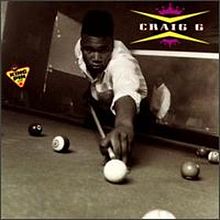
Craig G – The Kingpin (October 24, 1989)

220px-CraigG-TheKingpin

Craig G is not a new comer to TimeIsIllmatic. He spit the lead off verse on the classic Juice Crew Posse cut “The Symphony”, and I reviewed his 1991 sophomore effort Now, That’s More Like a while back (If you’re interested in reading my thoughts on that album, click here). His debut album The Kingpin, has long been out of print and is a hard find, unless you’re willing to pay $30 or more for it on Amazon or Ebay, which I am not. As fate (or luck) would have it, I was able to find and buy a copy on Ebay for a very reasonable price and make it a part of my ever-growing but still very incomplete collection. And here we are.

Craig G was only sixteen years old when The Kingpin was released on Atlantic Records. His mentor, Marley Marl would handle the production duties for the entire project (random factoid: Craig G recorded his first record “Shout Rap” at the age of twelve, which was also produced by Marley Marl). Like it’s predecessor Now, That’s More Like It, Atlantic did little to promote The Kingpin, which would result in lackluster sells numbers.

I’ve waited long enough to hear this album, so without further adieu, let’s get into it.

Love ThangThe Kingpin opens with a feel good Marley instrumental that our host uses to display his storytelling abilities, sharing a few different scenarios loosely based on the subject of love. I say loosely because none of his verses are really about love, but the title does match the semi-catchy hook. Craig does a quality job of putting his verses together, and I like Marley’s bouncy bass line on this one.

Dopest Duo – Craig uses this one to brag about how dope he and his producer/fellow Queens brethren are with this hip-hop thing. Craig’s rhymes were decent but Marley’s instrumental is missing that umph to solidify them.

Rock The House – For those who lived through the mid eighties and early nineties, you’ll recall that house music, with all its repetitiveness and pulsating drum beats, was all the rave during that time period, and of course hip-hop sniffed the fad and dabbled with it (see Latifah’s “Come Into My House” and Jungle Brothers “I’ll House You”, just to name a few). On this one Craig spits his rhymes over a house beat, hence the title. And yes, it sounds just as corny as you think. Craig doesn’t sound that bad, but Marley’s instrumental is really bad.

First Day Of School – Craig reminisces about the childhood experience of summer coming to an end and preparing yourself (physically and mentally) for a new school year. Marley’s instrumental is driven by a bouncy bass line and an organ loop that stabs the beat ever so often. Cute song, but the instrumental doesn’t match Craig’s content.

Shootin’ The Gift – Marley hooks up a simple but funky guitar loop for Craig to recite his neatly written rhymes over. That’s all I got.

Slammin’ – More boasting from our host over a decent Marley Marl instrumental.

Turn This House Into A Home – Craig spills decent rhymes over another Marley house instrumental, but I don’t even think Rakim could have salvaged this hot mess of a backdrop. To add insult to injury, the hook is corn on the cob.

The Kingpin – Craig G takes his rhyming pace down a level and takes on a vocal tone that sounds similar to LL’s on “Going Back To Cali” and “I’m That Type Of Guy”; and it actually sounds dope. Matter of fact, I think this delivery sounds better than his standard one. Combine Craig’s rhymes with Marley’s slick instrumental, and this title track is a winner.

The Final Chapter – Based on the first line of the song (“After 11 songs had your brain captured, here’s the twelve one, this is called the Final Chapter”), Craig must have been planning to have this as the last song on the album, or maybe it was just the last song he recorded for The Kingpin. Regardless, he spits decent rhymes, but Marley’s mediocre backdrop kills the momentum.

Why’d You Have To Go? – TJ Swan must have blackmail pics of each member in the Juice Crew. There is no other explanation to why such a terrible vocalist has been granted the opportunity to sabotage several of the crew member’s songs with his atrocious cameos. I’ve always thought the dude sounded god-awful, but he takes off-key to another level on this one. I considered shooting myself to end the misery, but then I remembered all I had to do was hit the fast forward button. Craig G attempts to sound vulnerable as he reminisces on the love of his life who’s left him down and out in the dumps. Instead of sounding vulnerable, the shit just sounds cheesy, and Marley’s Casio keyboard instrumental makes it sound even cheesier. This was really bad. Think LL’s “I Need Love”, only ten times worst, and I’m not exaggerating.

Smooth – Decent.

The Blues – Craig G and Marley Marl end The Kingpin joking around on this silly outro.

Craig G is considered by many hip-hop historians to be a great freestyle and battle emcee. This may be true, but neither of those attributes are on display on The Kingpin. His written verses are cute and decent but not memorable, and definitely not potent enough to put him in the same conversation as some of his fellow Juice Crew brethren. Marley’s production work on The Kingpin (like much of his work prior to 1990) is lackluster and misses as often as it hits. It’s not that The Kingpin is a terrible album, it just lacks personality, which makes it easily forgettable.

-Deedub


Posted in Uncategorized | Leave a comment

Eazy E – Eazy-Duz-It (September 13, 1988)

220px-Eazy-E_Eazy-Duz-It

Before we get into this next post, I would be remiss to not shout out a fallen music icon and a product of my city, Prince Roger Nelson. You will live forever through your music. May you rest in heavenly peace.

One of the last albums I reviewed from 1992 was Eazy E’s 5 song ep, 5150:Home 4 Tha Sick. If you didn’t read the review, feel free to catch it here, or let me sum it up for you in two short words: hot mess. A few weekends ago while rummaging through the used cd bins at one of the few remaining music stores in Minneapolis (what up Cheapos?!), I came across a copy of Eazy’s solo debut album Eazy-Duz-It. So, since one of my many collection goals is to own the entire catalogs of the members of N.W.A., and one of my readers told me I would enjoy it (I see you DJG!), and additionally the price was right, I copped it.

Eazy-Duz-It was released just over a month after the release of N.W.A.’s debut album Straight Out Of Compton. Dr. Dre would handle the production duties (Yella is given a production credit as well, even though Dre does the heavy lifting) and even though the liner notes don’t give them credit, it’s been well documented that Eazy’s rhymes were penned by the collective of Ice Cube, Ren and The D.O.C.

Eazy-Duz-It would benefit from the momentum and buzz that Straight Out Of Compton created, eventually earning the dry jerry curled rapper a platinum plaque, selling over 2 millions copies in the states, alone.

By the way, congratulations to the N.W.A. on their recent induction into the Rock & Roll Hall Of Fame. Now, let’s jump into this album…

(Prelude) Still Talkin’ – This one opens with The D.O.C. and Ice Cube doing their best old man impersonations, as they brag about knowing Eazy since he was a little guy (At the end of the song The D.O.C. boast about knowing him since he was knee-high, to which Cube replies “he still is knee-high”). Then Dre drops an instrumental built around a funky guitar loop that Eazy actually sounds decent rapping (or talking his shit) over. Granted, he didn’t write the verses but he still sounds decent.

Nobody Move – Dre loops up a funky Rufus Thomas guitar loop for the backdrop, as Ren assists Eazy in recalling the details of a failed bank robbery. Is it just me or is it pretty hypocritical for a man committing armed robbery to refer to those he’s victimizing as “crazy motherfuckas”?  And it sounds like Eazy may have run into Caitlyn Jenner in his second verse. This was actually pretty solid.

Ruthless Villain – Ren returns to help Eazy on this one, and actually does most of the heavy lifting. It’s not often that a rapper spends the length of his verses boasting about the greatness (or in this case the gangsterness) of another rapper; but that’s exactly what Ren does on this one, leaving Eazy to only recite the same 4 bars after each of Ren’s two verses. The verses are okay, but Dre’s bare bones drum machine instrumental kind of brings this one down.

2 Hard Mutha’s – Yella plays live drums on this one (at least the discussion in the intro leads you to believe that, as Yella insist they let him play because he used to “fuck it up” back at Compton High). They lay a simple guitar loop over it, as Eazy and Ren (for the third consecutive song) tag team the microphone. It turns out that Yella is pretty nice on the drums; he’s no Questlove, but he’s decent. This was better than the previous song but still not spectacular.

Boyz-N-The Hood(Remix) – Eazy shares a few of his experiences growing up in the hood (that he more than likely made up) on this one. This song originally appeared on the 1987 release N.W.A. And The Posse (another album that I’ll have to track down eventually). Other than a few alterations to Eazy’s first verse, this plays just like the original. I love the drum break during the hook; it reminds me of The Neptunes’ drums on the Clipse’s “Grindin'”. Or vice versa.

Eazy-Duz-It – After Dre’s real life baby mama Michel’le gets disrespected by Eazy (while in Dre’s presence) for singing praises to Eazy, he drops a sick bass line that sounds like its going to be a monster track for this title song. Then it stops, goes a different direction and everything from that point on is pretty mediocre. It was cool to hear a brief sample of the organ from the beginning of Prince’s “Let’s Go Crazy” during the bridge of this one. May both of these brothers rest in peace.

We Want Eazy – This was the lead single from Eazy-Duz-It. I never cared much for Dre’s cheesy synthesized instrumental and Eazy’s barely decent rhymes. Come to think of it, this maybe the reason I never checked for this album until now.

Eazy-Er Said Than Dunn – Now this is more like it. Dre slides Eazy a slick instrumental (which samples yet another Rufus Thomas’ record) that he uses to recite solid rhymes over (which I’m quite certain were penned by The D.O.C.). At the end of “Eazy-Duz-It” Eazy mentions he was born in 1973; and again during “We Want Eazy”, Ren brings it up again, calling Eazy a liar for the claim. If you do the math, that would make Eazy 15 when this song was released. He ends the hoax on this song admitting it was a lie. I’m still not sure why he would want people to think he was fifteen in the first place. I’m pretty sure this was the second single released from the album, and in my opinion, the best song on Eazy-Duz-It.

Radio – Eazy was so excited about getting his music in radio rotation, he wrote a song about it. You wanna hear it? Here it go. Dre builds the instrumental around a loop of Taana Gardner’s “Heartbeat” (which would later be sampled by reggae artist Ini Kamoze on his hit record “Here Comes The Hotstepper”), and you can’t go wrong with that loop. Eazy manages to sound decent on this one, and overall the song is as well.

No More ?’s – This song plays as an interview, with a woman asking Eazy-E some of the most moronic questions I’ve ever heard (“Were you ever caught slipping?” “What would be the situation when you so-called ganked someone?” “Were you slick?” “So you’re not exactly a role model?”). Based on Eazy’s delivery and cadence, it pretty obvious that Cube wrote his verses. Dre’s instrumental might have worked in ’88, but it doesn’t translate well in 2016.

I’mma Break It Down – Dre hooks up a simple (but effective) up-tempo backdrop for Eazy, and surprisingly, Eazy keeps pace with it and actually sounds pretty good reciting Ren’s rhymes over it.

Eazy-Chapter 8 Verse 10 (B.U.L.L.S.H.I.T.) – Eazy takes a stab at a spoken word piece, which as the title suggest is supposed to work as a sort of hood scripture (not sure if the 8:10 is random or if there is some significance to these chosen numbers, but if you know, hit me in the comments). This song is best described by the letters between the parentheses in the song title.

Compared to 5150:Home 4 Tha Sick, Eazy-Duz-It is a lot more quality listen. A lot of Dre’s production has an east coast feel to it, and some of it is really dope. Eazy sounds decent (at times), but I’m not crazy about giving too much credit to a puppet emcee. With all of that said, Eazy-Duz-It tends to miss as often as it hits, so standing on its own without comparison, it makes for only a decent listen.

-Deedub


Posted in Uncategorized | 3 Comments

1992 – The Best & Worst

FullSizeRender

Aight. So now that I’ve finished my 1992 reviews, I thought I’d start a new tradition and highlight some of the highs and the lows of the year.

I plan to start my ’93 reviews in a few weeks. But before I can do that, I have to take care of a few backdated new additions to the collection. But for now, enjoy this read and stay tuned…

Worst MonikerThe Funky White Nigga: Aka JFN, was once a part of DJ Quik’s crew, who made his debut on “Niggaz Still Trippin'” from Quik’s sophomore effort Way 2 Fonky. Unfortunately, his flow sounded just as bad as his moniker. Honorable Mentions: Rich Lord of the Mix Board (He’s given a production credit on Positive K’s “Friends”…way too long of an alias and he technically should have a comma after “Rich”), Spice 1 (Sex. Pistols. Indo. Cash. Entertainment and a random “1” thrown in for good measure…need I say more?).

Worst Song Title –  SFC – “Glory Halagroovin'” (Phase III):Being the Christians brothers that they are, Super C and company thought it would be clever to play off of the religious phrase “glory hallelujah” for the song title. Instead of sounding cute it comes off cheesy as hell (no pun intended). Honorable Mentions: Lord Finesse – “Funky On The Fast Tip” (Return Of The Funky Man): The title sounds like something you would write on the song’s demo tape until you came up with a proper song title.

Worst Album Artwork –  Spice 1 – Spice 1: The cheesy eighties style double exposure school pic of Spice 1 on the cover was a very bad idea. Luckily for Spice, his fans didn’t judge this book by its cover. Honorable Mentions: Willie D – Goin’ Out Lika Soldier: Willie D comes in at a close second with this horrible cut and paste job of his questionable profile pic slapped in front of a picture of Capitol Hill; definitely a wtf moment.

Worst Album TitleThe Whole Shabang Volume 1 (Future Sound): While it’s not the worst album title I’ve ever heard, it is still kind of corny. Plus, there really weren’t that many options to choose from, so it kind of wins by default.

Worst Song – UGK “I’m So Bad” (Too Hard To Swallow): The concept of the song is built around a LL Cool J sample (“I’m so bad I can suck my own dick”), as Pimp C shares two different sexapades that end with him forcing them to tie back into the hook. This has to be one of the worst songs in hip-hop history. Honorable Mentions: Considering that the majority of hip-hop albums have quite a few bad songs on them, there are way too many to list by name.

Worst Album5150 Home For Tha Sick: You deserve this award if the only way to make your 5 song ep hot is to chop it down to a single. Honorable Mentions: Hypocrisy Is The Greatest Luxury (Too much content, unpolished flow and weak production get this album a mention), Close To You (Father MC gives up too much bad rap and r&b for my taste buds), Little Big Man (Bushwick Bill releasing a solo album is like leaving Jared Fogle alone with a room full of  fifteen year old girls: very bad idea).

Best Song TitleDr. Dre “Lyrical Gangbang”: Dre’s intense track coupled with the bullets the Death Row Inmates let spray all over it, match the dope song title to a tee. Honorable Mentions: The Future Sound “Pixie Groove” (Unique title that describes the song’s instrumental, perfectly), Gang Starr “Soliloquy Of Chaos” (“Soliloquy” and “chaos” have no business being in the same sentence together…but they sound so ill together), House Of Pain “Shamrocks And Shenanigans” (Random stupidness never sounded so clever).

Sleeper AlbumThis Is How It Is & Whole Shabang Volume 1: This one is a tie between Original Flavor and The Future Sound’s debut albums, who were both brought to us courtesy of a young Dame Dash. Neither group had great emcees but both had wonderfully produced debut albums that I completely slept on until hearing them for the first time in 2015.

Best Album Artwork – Music To Driveby: Very ill concept to have the picture on the album cover, on the picture of the album cover. Honorable MentionsSex And Violence & Bizarre Ride II The Pharcyde (because I’m a sucker for animated artwork), Stunts, Blunts & Hip-Hop (It’s pretty sick how Diamond D’s boys are fuzzy in black and white, while he’s the center of attention, shining in living color).

Best Album TitleMusic To Driveby: The double entendre in the title is what ultimately gives CMW the title in this category; and the music is definitely dope enough to bump while driving in the whip, but also gangsta enough to catch a body and peel out to, if required.  Honorable Mentions: Dead Serious (The title is the duo taking a clever tongue in cheek shot at their own animated style), Business Never Personal (I’ve always loved the fact that EPMD stayed true to the “Business” theme for the entirety of the group’s catalog…this title was very fitting, considering the turbulence going on between the E and P at the time), Stunts, Blunts & Hip-Hop (With these three words, Diamond D would simply but effectively sum up the mentality of a generation of young hip-hoppers).

Best SongPete Rock & CL Smooth – “T.R.O.Y.”(Mecca & The Soul Brother): From the beautiful saxophone loop, to the angelic vocal sample that mystically hovers over the song, to Pete Rock’s signature heavy drums and CL’s reminiscent lyrics that sound tailor-made to fit PR’s backdrop, this song is brilliant; and just may be the greatest hip-hip song of all time. Honorable Mentions: The Pharcyde “Passin’ Me By” – Bizarre Ride II The Pharcyde (Only the perfection that was “T.R.O.Y.” keeps this from claiming that number one spot…but I still put it in my top ten hip-hop songs of all time), Eric B & Rakim “Know The Ledge” – Don’t Sweat The Technique (Hard backdrop and precise rhymes from – in my opinion – the greatest to ever do it), EPMD “Head Banger” – Business Never Personal  (Top five posse cut of all time).

Best AlbumThe Chronic: I went back and forth on naming this one the album of the year, only because it was released so late in 1992. Ultimately, I figured since it was officially released in ’92 it deserved to be in the running, and aint no frontin’ on Dre’s stellar production and Snoop and the Death Row Inmates refreshingly innovative sound. Honorable Mentions: Daily Operation (One word: Premo), Stunts, Blunts, and Hip-Hop (Thanks to his dope production and solid rhyming, Diamond D sneaks in an unheralded classic), Music To Driveby (Eiht’s slickness combined with the brilliant production of Mike T, Slip and Unknown, makes for a nearly flawless album).

There you have it. Let me know what you think in the comments.

-Deedub


Posted in Uncategorized | 2 Comments

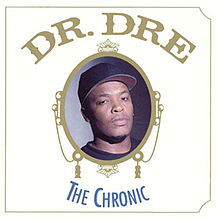
Dr. Dre – The Chronic (December 15, 1992)

220px-Dr_DreTheChronic

After selling millions of copies of their debut album Straight Out of Compton and touring the country performing at sold out shows from city to city, it became pretty apparent to Ice Cube that NWA’s manager Jerry Heller wasn’t handling business right, made evident by the fact when he came home from months of touring, he was broke as a joke. This was Cube’s cue to exit stage right. Fast forward a few years to 1992. Despite NWA selling millions of records on their next two projects A.C. (After Cube), Dr. Dre begin to see a lot of the things Cube was trying to hip the crew to a few years prior, mainly the shadiness of Heller. Dre would end up giving Eazy an ultimatum that either they get rid of Heller or he would leave the group. Eazy chose Jerry, and Dre followed Cube’s lead.

Dre would leave Eazy and Ruthless to link up with Suge Knight and his Death Row Records label (which would also end up being a bad deal for Dre, but we’ll get into that at a later date), where he would release his debut solo album The Chronic. Dre would handle all the production on The Chronic and drop some rhymes (ghostwritten by The D.O.C.), but he would rely on his new-found homie Snoop Dogg (who helped pen some of Dre’s verses as well) along with the Death Row Inmates (Kurupt, Daz, RBX, Rage, Jewel and Nate Dogg [rip]) to do the heavy lifting on the mic.

The Chronic would go on to sell over 3 millions copies, receive tons of critical acclaim (including a revised 5 mic rating from The Source [upon its release, it was given a 4.5 mic rating, but in 2002 they re-reviewed it and gave it 5 mics]) and is considered by many to be one of the greatest albums of the genre.

Did we save the best of ’92 for last?

Side note: Keeping with the weed theme, the artwork on the album cover pays homage to the logo found on Zig Zag rolling papers. Clever, right?

The Chronic (Intro) – Snoop is the first voice you hear on The Chronic, as he introduces the listener to the album and takes a few shots at Mr. Roarke and Tattoo (aka Jerry Heller and Eazy..ha!), Luke and Tim Dog, over a signature whiny Dre synth loop.

___ With Dre Day – This was the second single released from The Chronic. Dre’s instrumental is built around a snippet from Funkadelic’s “(Not Just) Knee Deep”, and he turns it into a certified banger. Snoop assists Dre on the mic ( I still chuckle every time I hear Dre’s line “used to be my homie, used to be my ace, now I wanna smack the taste out your mouth”) as they take aim at Eazy, Tim Dog, Luke Skywalker, and fire indirect shots at Ice Cube (“then we goin’ creep to South Central, on a Street Knowledge mission as I steps in the temple…spot ’em, got ’em as I pulls out my strap, got my chrome to the side of his White Sox hat”).  Some of the rhymes might not sound as potent as they did back in the day, but this one still bangs.

Let Me Ride – This was the third and final single from The Chronic. Dre spends all three of his verses (with a few adlibs thrown in from his new-found patna’, Snoop) rollin’ through the streets of SoCal flossin’ in his ’64. Dre builds the instrumental around a sweet loop from Parliament’s “Mothership Connection (Star Child)” and turns it into a thing of beauty. Similar to the ’64 Impala, this song is a classic.

The Day The Niggaz Took Over – Daz, Snoop, and RBX join Dre on one of the few conscious (well, slightly conscious) songs on The Chronic. Over a dark instrumental with a pulsating bass line, Dre and company discuss the Rodney King riots and the tension between the hood and the police. This one still sounds pretty dope.

Nuthin’ But A “G’ Thang – Dre first introduced us to the smooth flow of Snoop Dogg a little earlier in ’92, with the hard-hitting “Deep Cover” from the Deep Cover soundtrack. A few months later Dre and Snoop would reunite to drop this bomb on the world, that would also be the lead single from The Chronic. Dre hooks up a smooth yet funky instrumental around a loop from Leon Haywood’s “I Want’a Do Something Freaky To You” (I love the bass line on this song), as he and Snoop tag team the mic like WWF. Bonafied classic.

Deeez Nuuuts – The title is a reference to a juvenile game one would play on a friend, where the goal is to get him to ask a question ending with “what?” or “who?” so you could respond with “deeez nuuuts”. If my memory serves me correctly, The Chronic is what made the joke popular from coast to coast back in the day. The song starts with Warren G “Deeez Nuuutting” a chick on the phone, before the beat drops and you hear a sample of Dolemite telling a joke about nuts; and I don’t care how many times I’ve heard the joke, it’s still hi-larious. Snoop acts as the facilitator on this one, as he’s responsible for the hook and introducing each party before they step up to the mic; his contribution may seem minimal to the song, but along with Dre’s beat, he’s the engine that makes this thing go. Dre bats first, Daz goes second, and Dre returns to spit the third verse, before Nate Dogg makes his debut and closes out the song, singing in his signature simple but dope vocal tone. Dr. Dre’s instrumental is a certified banger. Despite the content being a little juvenile, this song is still fun and bangs as much today as it did nearly 25 years ago.

Lil’ Ghetto Boy – The good doctor builds this backdrop around a vocal and musical loop from Donny Hathaway’s song of the same title (only Donny’s version actually uses “Little” as opposed to “Lil” in the song title). Over a calm and melancholy backdrop, Snoop and Dre speak from the perspective of young black men growing up in the hood, who are influenced by the violence, drug dealing and gangbanging in their environment. Neither Dre or Snoop try to put a positive twist or give it a happy ending, but instead just tell it like it is. One of the few serious songs (or songs that should be taken serious) on The Chronic. Love it.

A Nigga Witta Gun – To kick off the second half of The Chronic (I first bought this album on cassette back in the day, and vividly remember this being the first song on the b side), Dre takes a short guitar loop from Johnny Hammond’s “Big Sur Suite” (even though the liner notes credit the loop to “Big Sir Sweet”; the loop is actually from the same song Premo sampled for the instrumental on the interlude “24-7/365” on Gang Starr’s Daily Operation) and turns it into a nasty bass line that creates the mood for Dre’s heartless vocal and cold verses. This is a slept on (or forgotten) banger.

Rat-Tat-Tat-Tat – This one opens with a sound bite from the classic seventies Blaxploitation movie The Mack; then Olinga’s positive message is shot down when RBX (I believe) responds to the sound bite with “nigga, is you crazy?”. Then Dre’s slow thumping instrumental (the liner notes give credit to Daz for programming the drums on this one) comes in as he threatens to pop you and leave you flat on your back. Snoop assists on the catchy hook, which partially imitates the sound Dre’s gun makes when he begins to spray, which also matches the song title. This one is pretty decent, but if I had to take one song off of The Chronic, this would be the one.

The $20 Sack Pyramid – This interlude is mildly amusing the first time you listen to it. It’s kind of sad to hear The D.O.C. speak with his damaged vocal cord on this one. I wonder how many more classic albums he would have blessed us with had he not got into that tragic accident.

Lyrical Gangbang – Dre takes a simple drum loop from Led Zeppelin’s “When The Levee Breaks”, and turns this backdrop into one of the hardest instrumentals in the history of hip-hop. The Lady of Rage, Kurupt and RBX each spit a verse in that order. All parties involved sound up to the challenge, but Kurupt walks away with this one. This song still knocks; and even though it might not be heralded with some of the other classics on The Chronic, it can stand up to any other song on the album.

High Powered – Am I the only one that found it interesting that out of all the members in the Death Row camp, RBX is the only one that gets a solo joint on The Chronic? I guess it’s not completely a solo joint, as Daz does some talking at the beginning and end of the track, and Rage does a little chanting at the beginning of the song. I remember back in the day everybody would go bananas over RBX’s line “have you ever heard of a killer? I drop bombs like Hiroshima” *insert explosion sound*. Dre’s instrumental (that includes his signature whiny synth keyboard sound) is solid and RBX does a solid job of spitting over it.

The Doctor’s Office – Useless interlude.

Stranded On Death Row – Bushwick Bill stops by for this one. He doesn’t kick a verse (thank God!) but instead offers up a few words of wisdom; well I don’t know how much wisdom his words contain but it sounds cool within the context of the song. Dre’s instrumental starts out with an ill organ and then morphs into and uneasy but interesting backdrop that sounds completely different from any other song on The Chronic. Kurupt takes verse one, with RBX, Rage and Snoop following in that order. All of them sound solid, but RBX takes the title on this one (yes, he actually sounds better than Snoop on this one).

The Roach (The Chronic Outro) – Dre recreates the instrumental to Parliament’s “P.Funk (Wants To Get Funked Up)”, as RBX talks about the wonderfulness of the cannabis sativa for four and a half minutes. Not a great song, but I’ll give it a pass, since technically it’s an outro. Plus the instrumental is pleasant and I hear, very accommodating for those who indulge.

Bitches Ain’t Shit – This is a hidden track on The Chronic. Over a dark monster Dre backdrop, Dre, Daz, Kurupt and Snoop all kick a verse about worthless bitches they know. Snoop gets the last verse, rightfully so, as he steals the show with a heartfelt verse about a chick named Mandy May who did him dirty. Jewel wraps this one up, singing and even drops a few explicit rhymes, as the song comes to an end. Yes, most of the content is juvenile, but this one still sounds tight, and acts as a nice bow tied around this nearly perfectly wrapped present call The Chronic.

I don’t care what coast, state, country, or planet you’re from, The Chronic is easily one of the top 5 hip-hop albums of all time (I’ll let you slide if you say top 10, though). Back before Dr. Dre became a production brand name, he was arguably the greatest producer to every make a hip-hop beat, and that ability is on full display throughout The Chronic, as his crisp sonic sound would set a new standard for production excellence. No, Dre isn’t a great emcee, and it’s no secret that he doesn’t write his rhymes, but he has a decent rap voice, and Snoop and D.O.C. make him sound decent on the mic. But he doesn’t have to sound great, as Snoop and the Death Row Inmates take care of the bulk of the rhyming duties, and serve justice to Dre’s brilliant soundscape. Some of the lyrics might sound a little juvenile and not as potent as they did nearly 25 years ago, but there is no denying the power of Dre’s production, which is guaranteed to keep your face screwed and your head nodding.

In the liner notes Dre gives “a special shout out to The D.O.C. for talking me into doin’ this album”. I would like to thank you as well D.O.C. For without your push the hip-hop world may have been robbed of one of its greatest masterpieces.

Did The Source Get It Right? In ’92 they didn’t. For credibility sake, it was wise of them to go back and give it the 5 mics it rightfully deserved.

-Deedub


Posted in Uncategorized | 2 Comments

Eazy E – 5150 Home 4 Tha Sick (December 15, 1992)

220px-5150_-_Home_4_tha_Sick_by_Eazy-E_single_cover_art

After Cube dropped four niggas and started making all the dough, N.W.A. was still able to pick up the pieces and drop two controversial and very commercially successful projects without him. But by 1992 the seams begin to fall apart within the group, as Dre and Eazy (rip) fell out and begin to feud. Ren, who was a neutral party in the beef, was the first to release a solo project after the break up, with his solid debut ep Kizz My Black Azz (read my thoughts on it here). Eazy and Dre would both release their projects on the same day, but we’ll start with Eazy’s first solo project since his 1988 debut Eazy-Duz-It (an album I’ve still never heard in its entirety), an ep titled 5150 Home 4 Tha Sick.

5150 is a 5 song ep (even though the front cover calls it a “maxi-single”) which includes production from Naughty By Nature, Cold 187Um (I’ve always loved that moniker), Bobcat and Dr. Jam. With the exception of the last name (only because I’m not familiar with any of his work), the producer list looks pretty impressive. Unsurprisingly, the project would go on to earn Eazy a gold plaque.

This is my first time listening to 5150 in its entirety. I found it a few years ago for a few dollars at one of the spots I frequent, and since one of my collection projects is to collect all the albums of each member of N.W.A, I picked it up.

If all else fails, at least the beats on 5150 will bang. Right? Right??

Intro: New Year’s E-Vil – A distorted vocal Eazy E opens the show wishing everyone a Happy New Year and, without mentioning his name, extends a big middle finger to Dr. Dre.

Only If You Want It – This was the lone single from 5150. Naughty By Nature is credited with producing this one (which means Kay Gee hooked up the instrumental), and a trained ear can easily (no pun intended) tell that Eazy’s rhymes were penned by Treach. As dope of an emcee as Treach was in the early nineties, not even his pen could make Eazy sound good on the mic. The hook walks a fine line between annoying as shit and super catchy. The instrumental is kind of nice, though.

Neighborhood Sniper – Over a barely average Cold 187Um instrumental, our host goes on a killing spree and gives himself the moniker in the song title. Eazy sets the mood by sniping Rodney King for his “can we all get along” speech, during the song’s intro. I wasn’t impressed by this one.

Niggaz My Height Don’t Fight – As you probably already figured out by the song title, our vertically challenged host uses this one as an excuse (or a warning) to why he doesn’t fight but will pump yo’ ass with led from his 9mm if you test him. Bobcat’s instrumental is kind of decent, but you’ll still forget everything about this song as soon as it fades out.

Merry Muthafuckin’ Xmas – I guess since the album was going to be released less than 2 week before Christmas, Eazy thought this would be a good idea. In all actuality, it’s a hot mess. I found it interesting that the king of dirty poetry Dolemite (Rudy Ray Moore), makes a brief appearance at the beginning of the song before being interrupted by some foul mouth chick. Also, Buckwheat from the Wascals (who made a few cameos on Pharcyde’s Bizarre Ride) spits a few decent bars about Christmas and his two front in the middle of the song. Still, this was a hot mess.

I’ll keep this short and simple. 5150 Home 4 Tha Sick is pretty much a complete waste of time. Respect to the dead, but Eazy was never a decent rapper and the only instrumental on the EP that really works is Naughty’s on “Only If You Want It”. I can’t even use my go to “this would have fared better as an ep” line, because it is an ep.

-Deedub

Posted in Uncategorized | 5 Comments

Paris – Sleeping With The Enemy (November 24, 1992)

Paris_-_Sleeping_with_the_Enemy

When Paris came on the scene in 1990 with his debut album The Devil Made Me Do, he created quite a bit of controversy with the title track and its militant stance, calling out the white man for his many transgressions since the conception of the United States. Through all the controversy, Tommy Boy stood behind their man. For a little while at least.

When he returned in 1992 with his sophomore effort Sleeping With The Enemy, Tommy Boy and the distributor Warner Bros, refused to release and distribute the album due to its content (which speaks of killing then President H.W. Bush [even one of the inner pages of the liner notes has a picture of Paris hiding behind a tree with a tech nine, as Bush approaches on foot] and crooked cops), and ultimately Tommy Boy would drop Paris from the label. This wouldn’t stop Paris from releasing the album, as he would start his own label Scarface Records, and release the project independently.
Paris does mention in the liner notes that the “album was censored and rushed”, which makes me wonder what and why it was “censored”, considering it was released independently; and is “rushed” code for SWTE is a hot mess?

The Enema (Live At The White House)SWTE opens with what is supposed to be a shootout at The White House. Exhibit A for why Paris was dropped by Tommy Boy.

Make Way For A Panther – Over a mediocre backdrop our host demand that you make way for him and his violent black conscious message. Side note: the liner notes gives Shadow-as in the underground legend DJ Shadow-credit for the sample. Am I the only one that finds it interesting that a militant pro-black artist like Paris would let a white guy help with his production? I’m just sayin…

Sleeping With The Enemy – Paris dedicates this one to the brainwashed brothers that assimilate to white America and its European sensibilities. The instrumental is decent (I guess), but Paris doesn’t do a great job of articulating his points on this one.

House Niggas Bleed Too – This one kind of ties in with the previous song. On the title track, Paris calls out the “house niggas”; on this one he threatens to take them off the face of the earth for being “house niggas”. Well, at least the instrumental on this one is slightly interesting.

Bush Killa – The song opens with Paris snipping H.W. (Exhibit B for Tommy Boy dropping Paris). Paris uses the rest of the song to list the many reasons why he wants Bush dead in the first place. The first half of P’s instrumental is kind of nice, specifically the rough drums and bouncy bass line. Then he switches everything up and brings in a backdrop that has a Teddy Riley New Jack Swing vibe to it; needless to say, the dance track doesn’t quite work with Paris’ violent content.

Coffee, Donuts, & Death – Paris dedicates this one to killing crooked cops who’ve done the black community dirty. Exhibit C for Tommy Boy dropping him. Not a great song, but props for the clever song title.

Thinka ‘Bout It – Paris tones things down a bit, as he samples The Gap Band’s “Outstanding” for the instrumental and takes a slightly less violent approach, as he asks brothers to reconsider the destructive choices they make. Not a great song, but I have a soft spot in my heart for any song that samples “Outstanding”.

Guerrillas In The Mist – P’s song title happens to be the same as Ice Cube’s crew’s (Da Lench Mob) debut album and overall concept. Paris must have felt guilty about this, as he inserts a Cube sound bite at the beginning of the song, almost in an attempt to acknowledge them for using the concept first. Regardless, I’m not a fan of this one.

The Days Of Old – I believe this was the only single released from the album, and one of two reasons why I bought SWTE in the first place. Over a beautiful Blackbyrds’ loop (with the sample credit going to DJ Shadow), Paris reminisces on the innocence of yesteryear and how the black community has lost its sense of unity. It was nice to hear Paris put some of the blame for the plight of black America back on us, as we’ve got to start taking responsibility for our own actions ( “or maybe even more of us a blame the white man, before we understand now the problem is not him”). It sounds like Paris was siding with X-Clan on the whole humanist vs pro-black argument, while also taking an indirect shot at KRS-One with his line “What I’m telling ya is actual fact, I aint pro-human cause all humans aint pro-black”. P’s rhymes are solid and the content is still very relevant; and the instrumental sounds even better than I remembered it.

Long Hot Summer – This interlude has Paris having a phone conversation with a few of his boys (Khaliq Asharri & Kif) regarding the black struggle and a pending black revolution.

Conspiracy Of Silence – Paris invites his friend LP and probably one of the most unlikely emcees to appear on a Paris song, Sun Dubious (from Funkdoobiest), to join him on this one. And yes, Sun actually spits some slightly conscious rhymes. None of the three emcees really impress, and to make matters worse, the hook is trash and the Khaliq Asharri & Kif instrumental is ass.

Funky Lil’ Party – Reason# 2 why I bought SWTE. Over a mellow and smooth instrumental (with another credit going to DJ Shadow for the sample), Paris recounts the details of a party he and the crew decided to go to one evening. While making his way to the bar (to get a glass of juice), Paris is approached by a group of fine ladies that make it crystal clear to him that they “want to do the oochie coochie and spread it ’round”. Like any honest warm-blooded heterosexual man, the righteous Black Panther considers the offer for a minute, but ultimately rejects them and leaves them with some “knowledge of self”, warning them of the consequences of being a hoe (“only gets ya kids, AIDS, or crabs”). Then everything goes wrong when a fist fight between two dudes, turns into gunplay and dead bodies. Grim ending and all, this was a dope song.

Check It Out Ch’All – Over raw, heavy, crashing drums, P-Dog spits more black revolutionary rhymes. Paris doesn’t say anything quote worthy, but his instrumental is kind of nice.

Rise – Khaliq Asharri & Kif return to produce and perform (I think?) this spoken word piece. Not live changing, but I’ve heard worst.

Assata’s Song – This is Paris’ ode to the black woman. Over a mellow jazz tinged instrumental (I love the live saxophone), Paris expresses his love and need for his Nubian sisters; he also shows a rare sign of vulnerability, as he apologizes to black women for running game on them and viewing them as just a piece of ass in the past. This was nice.

Bush Killa (Hellraiser Mix) – This mix uses the same instrumental and verses as the second half of the original, with one additional new verse and unnecessary extended instrumental breaks; and this mess goes on for nearly 8 and half minutes.

It’s a tough task for any emcee to make a full length album full of militant pro-black messages both conscious and entertaining throughout. It’s nearly impossible for a tier B (or C) emcee like Paris to pull this off. On Sleeping With The Enemy, the messages become repetitive, the bulk of the production ranges from mediocre to trash, and Paris (who sounds like a poor man’s Rakim) doesn’t have the charisma or lyrical ability to keep the listener engaged for a full album. SWTE would have definitely fared better as an EP.

-Deedub


Posted in Uncategorized | 2 Comments

Gone Too Soon…

47d1b4dc80a64f282ec8e1bf7271bbde_697x495x1

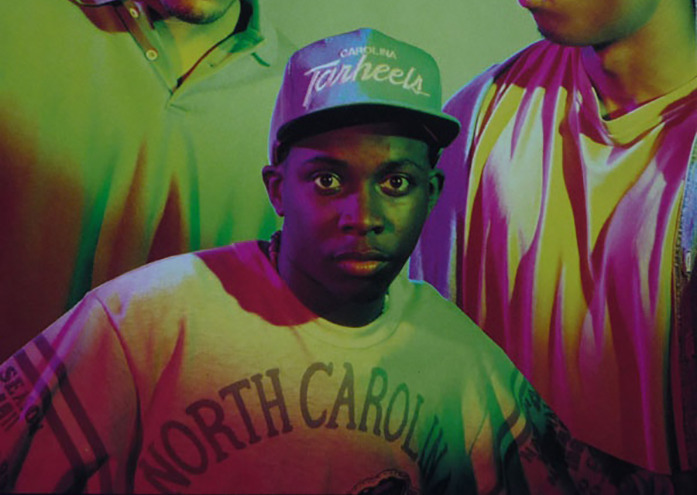
I’ve been feeling under the weather for the passed few weeks (I was actually diagnosed with pneumonia this past Monday), which has caused a delay in me posting reviews. But when I got the news from my sister this morning that one-third of my favorite hip-hop group off all time had past away at the fairly young age of 45, I had to post about the Five Footer.

I immediately starting reminiscing about how Phife, Tip and Ali Shaheed’s music has touched and shaped my life since I was a young teen. Their innovative jazz infused brand of hip-hop, “common man” content, and the undeniable chemistry between the trio (and sometimes quartet, if you count Jarobi) set them a part from the crowd. I can’t count the hours I spent listening and studying their music and rhymes (and I can probably still recite every rhyme from every song off The Low End Theory and Midnight Marauders albums verbatim), as they helped me cope with the stresses of my teen years, and later helped shape my thinking as a young man.

Selfishly, Phife’s passing saddens me when I consider the fact that I will never get the opportunity to see ATCQ rock a stage live. It also made me wonder how much more classic music ATCQ would have given us had they not went their separate ways after The Love Movement album. There will always be regret and questions of what could have been, but I want to thank Malik “Phife Dawg” Taylor for blessing my life through his music. Rest in peace.

-Deedub

Posted in Uncategorized | 2 Comments