Will Smith is easily one of the most recognizable faces and names on the planet. After launching his acting career as The Fresh Prince of Bel-Air for six seasons, he became a mega successful film actor with leading roles in blockbusters like Bad Boys, Independence Day, and Men In Black. He has starred in over 40 movies that have collectively grossed over 10 billion dollars worldwide. In 2022, he won an Oscar for Best Actor for his role as Venus and Serena’s father, Richard Williams, in King Richard. But years before he became an iconic movie star, Academy Award winner, and almost got canceled for the slap seen (and heard) around the world, he had a pretty successful rap career as The Fresh Prince.
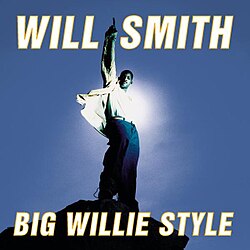
Between 1987 and 1993, DJ Jazzy Jeff & The Fresh Prince released five albums on Jive Records. Three of the five albums earned gold certification (Rock The House, And In This Corner, and Code Red), and two went on to earn platinum (He’s The DJ, I’m The Rapper, and Homebase). The duo would match their commercial success with critical acclaim, receiving the first-ever Grammy Award for Best Rap Performance in 1989 for “Parents Just Don’t Understand,” and again in 1991 for my favorite Jazzy Jeff & FP record, “Summertime.” I don’t believe Jeff & FP ever officially broke up, but Hollywood came calling, putting an end to their run. But despite becoming one of Hollywood’s most bankable stars, the Fresh Prince still had the rapping bug. He would return to the rap game in ‘97 as a solo artist and with a new name. Well, sort of. Under his government name, he’d release Big Willie Style.
Big Willie Style would not only mark a new era for Will without Jazzy Jeff (although Jeff was still technically with him, as he received three production credits on BWS), but it would also be the first time he’d release music without Jive Records, starting his three-album run with Columbia. Led by Trackmasters’ production (they produced most of the album and served as the album’s Executive Producers), BWS would spawn four monster singles (more on that later) and reach double platinum status in less than six months after its release. By July of 2000, it was certified nine times platinum.
As much of a blockbuster release that BWS was, I’ve never listened to it, though I am familiar with the singles that were virtually unavoidable back in the day. Nearly thirty years later, and I’m finally getting around to listening to The Fresh Prince, I mean, Will Smith’s solo debut.
Intro – Jamie Foxx plays the role of aspiring news reporter, Keith B. Real (from Keep It Real Radio and founding editor of Keep It Real Magazine), who antagonizes Will throughout BWS. This is the first of several comedic “Keith B. hatin’ on Will Smith” interludes on the album.
Y’All Know – Mr. Smith warms up the mic in his new Big Willie persona, which sounds much more flossier than the content we got from The Fresh Prince. He gets off a few decent bars, but I was more fond of the bouncy and breezy backdrop, credited to Andreao Heard.
Gettin’ Jiggy Wit It – Trackmasters will always be a production enigma to me. They’ve built their sound on looping and interpolating low-hanging fruit samples with very little imagination. But sometimes the shit works, as with the Sister Sledge break they (and L.E.S.) use for this monster BWS single. The pop feel of the instrumental sounds tailor-made for Will’s lighthearted boasts and party posturing. It’s an innocent bop that you can throw on at any intergenerational kickback without anyone getting offended.
Candy – If you’re going to remake a classic, no better way to do it than to have the song’s original composers join in. Cameo makes a cameo (*rimshot*), singing the hook and sprinkling ad-libs over the track, while Will spills unoriginal pick-up lines and lusty cliches about a girl named Maxine, whom he nicknames Candy. Will’s charm almost sells the record, but then, the third verse rolls around, and things get really bad: In honor of Maxine’s nickname, Will name-drops a bunch of your favorite candies, and it ends up sounding like candy corn.
Chasing Forever – Mr. Smith gets sentimental as he shares this love poem with his newlywed wife, Mrs. Jada Pickett-Smith. Nas is credited as one of the writers of this song, and you can definitely hear his pen’s influence throughout Willard’s bars. Trackmasters and L.E.S. create a tender atmosphere that includes a beautiful piano riff from Stevie Wonder’s “Ribbon In The Sky” and Kenny Greene (RIP) from Intro (who also did a remake of the same Stevie Wonder classic that this song samples), and Trey Lorenz (remember him?) drop by to sing the warm chorus. With all the Will and Jada drama that’s played out in the public eye over the years, I wonder what Will’s thoughts are on this song today. Time is, truly, illmatic.
Keith B-Real 1 (Interlude) – Keith B. Real returns to hate on Will some more at “some Chinese Man’s theater.” He bumps into Jada and asks her a few questions about her husband before letting off a few inappropriate comments that lead to Jada smacking him. Ah ha! So it’s Jada who taught Will to smack comedians in the face if you don’t like their jokes.
Don’t Say Nothin’ – The Fresh Prince reunites with his long-time partner, Jazzy Jeff, on this one. The DJ (along with Keith Pelzer and Ryan Toby) provides a rugged background for the rapper to address his haters and naysayers, who never have anything nice to say about him. Will tries to sound unfazed by his detractors’ critique, bragging about his success and riches, but with rhymes like “My whole life I’ve been smilin’ when I felt like whilin’,” it’s clear the criticism bothers him. I would have liked to hear Will rhyme more from the honest chip on his shoulder and less from the inauthentic “I’m rich and unbothered” perspective.
Miami – Another monster single from BWS. This time, Poke, Tone, and L.E.S. loop up The Whispers’ “And The Beat Goes On” for the instrumental, and Big Willie pays homage to the city he calls his second home. It’s been rumored for years that Nas ghostwrote this song (and “Gettin’ Jiggy Wit It”), which isn’t a far-fetched theory considering he’s credited with writing on two other songs in the album’s liner notes. Either way, it’s a sexy pop record dedicated to a sexy city, and it’s aged well.
Yes, Yes Y’All – It seemed super random to hear Sonny Cheeba from Camp Lo opening the record with a few words, but at least he sticks around to help with hook duties. Nas receives his second writing credit of the evening, once again making Mr. Smith sound smoother on the mic than he normally does. The Isley Brothers’ loop-constructed instrumental was pretty smooth as well.
I Loved You – Big Willie’s ex-flame has left him broken-hearted. He wrote a rap about it. Ya wanna hear it? Here it go. Will’s rhymes were decent, but Jazzy Jeff and the team’s guitar loop sounded stale, and the singing (credited to Ryan Toby and Valvin Roane) was horrendous.
Keith B-Real II (Interlude) – More shenanigans from Jamie Foxx until Charlie Mack once again puts an end to the foolishness.
It’s All Good – Willard gets off a plethora of corny bars on this track, capped off by the closing bar, which is also the album’s corn jewel: “My papa raised no fool, so many zeros on my check it’s like oooooooh.” For the instrumental, Jazzy Jeff interpolates an overly used Chic sample (“Good Times”), which is appropriate for Will’s subject matter, and he makes it moderately enjoyable by adding soothing melodic chords throughout the track.
Just The Two Of Us – This was another big single from BWS. Will turns Bill Withers’ classic into a heartwarming ode to his firstborn son, Trey. This is the kind of record I’d expect a matured Fresh Prince to make.
Keith B-Real III (Interlude) – One last Keith B. Real skit for the road.
Big Willie Style – For the title track, Tone, Poke, and L.E.S. create a smoothly elegant rhyming atmosphere for Mr. Smith to get extra “Willie” on (he’s not credited, but I’d bet a million dollars that Nas ghostwrote these expensive verses that include a shoutout to “Nas Escobar” and a hilarious image of Will with “a gold handle cane and matching gators”). Left Eye joins our host and gets off loads of lady-lavished lines to match Big Will’s. Both of their bars are filled with manufactured fluff, but I absolutely love the instrumental on this track.
Men Black – This song was originally released as the lead single on the Men In Black Soundtrack in the summer of ‘97 (it would also earn Will another Grammy in 1998 for Best Rap Solo Performance). Basically, Will raps on behalf of the character he portrays in the movie (Agent J), and explains the MIB’s mission (“Walk in shadow, move in silence, guard against extraterrestrial violence”). The Trackmasters borrow from Patrice Rushen’s “Forget Me Nots” for the “galaxy defending” hook and instrumental, and I don’t think I’ve ever heard a flip of this loop that I didn’t like. It’s a cool record, but it shouldn’t have been included on the album because MIB has no relation to BWS.
On Big Willie Style, Will Smith sounds like a rapper trying to shed the court jester image he created as The Fresh Prince by adopting a more serious tone and using flossier bars. Willard spends a large portion of the project flaunting his wealth and luxurious lifestyle with help from Nas’s pen and copycat Jay-Z mannerisms. Unlike most rappers who lie about living expensively extravagant, I’m sure it was and still is a reality for Will Smith; the irony is it sounds inauthentic coming out of his mouth. But whether he’s Fresh Prince or Big Willie, Will Smith rhymes with charisma that will hold your attention, good, bad, or indifferent.
Will’s content on BWS may be a conundrum, but the production has clarity. The music behind Mr. Smith’s rhymes is a steady dose of pristine pop-esque instrumentals built around feel-good, familiar soul loops that suit WS’s cleanly suave image well. Needless to say, I enjoyed the music on Big Willie Style more than I enjoyed Big Willie’s style.
BWS made me think about one of my favorite quotes: “Change is inevitable. Growth is optional.” Tracks like “Chasing Forever” and “Just The Two Of Us” capture the once-class clown emcee showing maturity, and they feel like records of natural progression. But most of the album sounds like the hurt inflicted on The Fresh Prince through insults and criticism (that he addresses on “Don’t Say Nothin’”) has him following trends and covering his wounds with empty verses of opulence and a synthetic aura of arrogance. But let him tell it (as he does on “Don’t Say Nothin’), he’s “Will from West Phil, just slightly transformed.”
-Deedub
Follow me on Instagram @damontimeisillmatic


Gotta say, describing Will’s performance/lyrics on this album as “empty verses of opulence with a synthetic aura of arrogance” is the most biting critique one could give to this album, lol. Some of the production/tracks on this album are cool (Ya’ll Know is my shit), but there’s a good portion of this album where it feels like a lot of the tracks are just template beats with familiar samples and Will sounds kinda sloppy reading off some of the ghostwritten lyrics/lyrics he may have wrote himself (man falls off beat on some of these tracks; ala yes yes ya’ll and the title song). It’s ironic that in an effort to escape being considered “””corny””” he technically became a little “cornier” by trying to manufacture a clean polished “rich celebrity for the family” image while also simultaneously getting some leftover Firm-era Nas lines where Will at random points on the album gets descriptive/detailed with his material objects in a way only the Esco would.
Random Related Fact: The “Just Cruisin'” track (produced by the Trackmasters and was confirmed ghostwritten by Nas) on the Men In Black soundtrack was technically a redo of a track that Red Hot Lover Tone of the Trackmasters did on his 1995 “#1 Player” album with the same sample called “BMW” (also produced by the Trackmasters). The “BMW” track had way more vulgar and dirty lines. Strangely enough on the same album on a track called “Like That”, Tone spits the line “MCs play the f*ggot role better than the Fresh Prince/But not from Bel-Air, I’m straight out of Brooklyn”. A little funny to spit that line and then get jiggy with it only 2 years later or so.
“It’s ironic that in an effort to escape being considered corny he technically became a little cornier.” That’s a bar!
A long way From I’m the Rapper… He’s the D.J. I always wonder why he’s still in music at this point in his career. I was just listening to Red Hot Lover Tone’s #1Player yesterday 😄😄. The Trackmasters recycled quite a few beats from both of his albums. I guess nobody noticed unless you bought the albums which many people didn’t.
I own the will album (he’s the dj), but that Red Hot Lover Tone LP is so rare, so only way was listening it through DSPs/streaming, lol. That #1 Player album is quite solid (despite some of Tone’s weirdness that carried over from his first LP). There was quite a few funny coincidences on the #1 Player album (ala the shots he took at r kelly, michael jackson, and will smith; the beat reskins) that makes some of what the Trackmasters did a few years later make them look funny in the light. The funniest easily being that #1 Player is a grimy-sounding album with DITC production (beats like buckwild’s for the peeps, 98, or in the game with big daddy kane and rich nice or diamond’s bust tha manueva/the title song) up the rear that would’ve never seen the light of day on an album like Big Willie Style 2 years later. Even included probably the last “grimy sounding” trackmasters beats (ala Yes Yes Ya’ll and Take Your Time) before they went Mr. Smith mode.
I own both lps on cassette . Even back when it came out back then, it was hard to get on vinyl or CD!!
It’s funny how rare it is considering the Biggie/M.O.P./Organized Konfusion posse cut. You’d think more people would know.