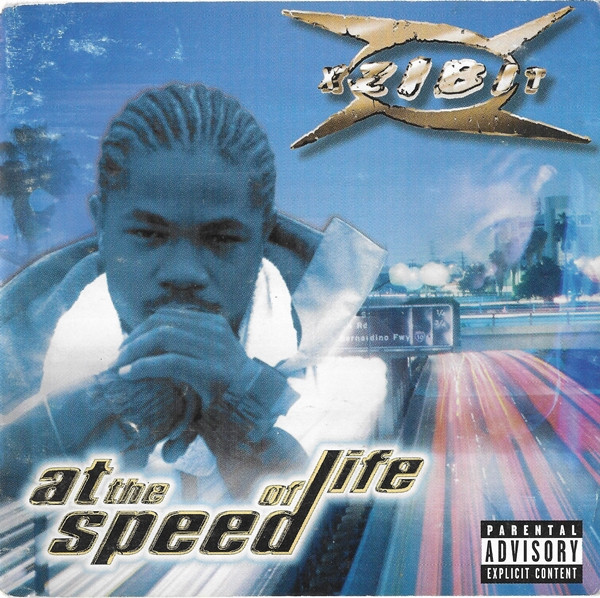
Xzibit – At The Speed Of Life (October 15, 1996)

Before becoming the face of the once super popular MTV show, Pimp My Ride and making several movie appearances (including 8 Mile and The Wash just to name a few), Xzibit made a name for himself as a platinum selling rapper, thanks largely to the Midas touch of the legendary Dr. Dre. But years before the good doctor would help turn Xzibit’s career to platinum status, I first heard the Southern California transplant and self-proclaimed dysfunctional member of the Alkaholik family (aka The Likwit crew, which included Tha Alkaholiks and King Tee) rhyme on Tha Alkaholiks’ “Hit & Run” from their Coast II Coast album, and he would also get off some bars on the Likwit cipher joint, “Free Style Ghetto,” from King Tee’s IV Life album. It would only be a matter of time before Xzibit would sign a deal with Loud/RCA and release his debut album, At The Speed Of Life.

Xzibit would lean on E-Swift, Diamond D and a few others to sonically sculpt ATSOL, which produced two Billboard charting singles and the album itself would peak at number 74 on the Billboard Top 200 and 22 on the Top R&B/Hip-Hop Album Charts. Upon its release, ATSOL received decent reviews from the popular publications of that era and favorable reception overall.

Although I didn’t buy ATSOL when it came out back in the day, I did like two of the album’s singles (that will discuss in a bit). There was so much new music coming out on a weekly basis back then that naturally, even an avid hip-hip fan like myself was bound to miss a few albums. I found a copy ATSOL in the used CD bins years after its release and this write-up will be my first time listening to the album in its entirety…I think. If not, I’m sure my memory will be jogged once we dive into it.

Grand Opening (Interlude)ATSOL opens with a short instrumental that sounds like elevator music, which is pleasant enough, but strange to hear as an intro on a Xzibit album.

At The Speed Of Life – This one starts with a short soundbite taken from the 1976 Robert De Niro flick, Taxi Driver, then Thayod Ausar serves up some dusty boom-bap with a touch of gloom for Xzibt to warm up for the evening and claims to go from “underrated to most anticipated,” which the underrated part I found to be an interesting take, considering this is his debut album. On the third verse, X rhymes: “Before hip-hop was all about drama, anything for a dollar, before Kane fucked Madonna.” Even though we’ve seen the pics of Kane and Madonna naked and tangled up in the pages of her 1992 book, simply titled, Sex (if you haven’t seen the pics, they’re readily available on the net), Kane has always maintained that he didn’t have sex with Madonna, though he has admitted to slipping a finger or two inside her vagina. Look, I understand that Kane was once associated with the Nation of Islam and sleeping with white women was strictly forbidden by the Nation, but Madonna was a sexy chick in ‘92, so I completely understand how Kane fell into her clutches…if he did. I wonder how Kane felt about X’s line, and would X have said that bar five years prior when Kane was still on the throne? Hmm…

Just Maintain – Def Squad affiliate, Hurricane G, and one-third of Tha Alkaholiks, J-Ro, join X over an instrumental that’s loaded with good energy for a good old fashion trash talking session. Hurricane G has always been a bit of an enigma to me: her lackadaisical flow is annoying, but I’m secretly in love with her thick Puerto Rican accent and voice…but I digress. This is a fun record that makes for quality filler material, but I don’t know if that’s a good sign, considering this is only the second song on the album.

Eyes May Shine – This was the second single released from ATSOL. E-Swift crafts a dark backdrop accented by a ridged guitar loop, eerie wah-wah guitar chords and bellowing violins that match the raw quality of Xzibit’s voice, as he continues to spew strong battle-ready bars (I love his “Teflon, napalm, homicide scenes, these are a few of my favorite things” line). This version is cool, but the Mobb Deep assisted remix is stellar.

Positively Negative – King Tee swings by to join X on this drunken duet. As much as I love King Tee, everything about this song was positively mid.

Don’t Hate Me (Interlude) – Over a snobbishly mellow instrumental, X gives shoutouts and then…claims not to have anyone to give shoutouts too??

Paparazzi – This was the lead single from ATSOL. X uses the symphonic canvas, laced with soothing opera notes from a female voice to bark at and call out all rappers who get in the rap game for fame and money instead of for the love of the art: “That’s why Xzibit only roll with a chosen few, you ain’t really real, I can tell when I look at you, so ease off the killer talk you ain’t killin’ shit, it’s not affecting me or the niggas that I’m chillin’ with, I don’t believe the hype or buy wolf tickets, nigga, you make a gang of noise and never seen, like crickets.” I love the darkly sophisticated feel of Thayod Ausar’s production paired with Xzibit’s raspy voice. This is an underground classic.

The Foundation – This was the third and final single released from ATSOL. DJ Muggs gets his sole production credit of the evening, as he steps away from his signature dusty blunted bag and breaks X off with somber vibes built around an ill piano loop and a sample of a female voice hitting high haunted notes. Xzibit uses the touching instrumental to feed his son knowledge and words of wisdom: “Take heed when it’s your turn to bring new life, make sure it’s the woman you gonna make your wife, be prepared for the worst but expect the best, no matter where life take you come home to the west, survival takes more than just gats and guns, that’s words to live by from a father to a son.” This is another great record that I’d classify as an unheralded classic.

Mrs. Crabtree – A Hurricane G assisted interlude that after several listens, I still have no idea what purpose it serves.

Bird’s Eye View – Tha Liks stop by to join X and turn this one into an intoxicated cipher session, while Hurricane G assists with the hook, blessing us with her wonderful voice one last time. Diamond D gets credit for the dark backdrop that matches X’s gruff and bully bars but doesn’t quite suit the light-hearted content from J-Ro and Tash, nevertheless, all three emcees entertain. And of course, I have to pick a winner: Tash by a landslide.

Hit & Run (Part II) – As I mentioned in the opening, Part 1 was on Tha Alkaholiks’ sophomore project, Coast II Coast, which paired Xzibit with all three legs of the Liks: Tash, J-Ro and E-Swift, all looking to find a chick to…you know where I’m going with it. This time around, X rolls solo, as a lazy Sunday night quickly turns into an amazing adventure in ass, thanks to a generous man named Ron Hightower, who must run a brothel or something. I wasn’t crazy about the song, but it does provide a hell of a fantasy.

Carry The Weight – Thayod Ausar’s instrumental sets the melancholic mood for our host to share the traumatizing events from his childhood (i.e., his mother’s death at the age of nine and dealing with his physically abusive preaching father and stepmom), which eventually led to him running the streets with thugs and involved in a life of crime. Xzibit adds a heartfelt hook (“Niggas wonder why I sit up in the club and drink, say “what up” to Xzibit and I still don’t speak, I’m tryna contemplate, the next move to make, gotta find some way, to release the hate”) that serves as the perfect framework for his vulnerable verses, and I always find vulnerable hip-hop songs compelling.

Plastic Surgery – The Golden State Warriors (not to be confused with the reigning NBA Champions) were a short-lived super group made up of Xzibit, Ras Kass and Saafir (who will always be Caine’s cousin Harold in my mind). The trio turn their microphones into scalpels and metaphorically perform surgery on fake emcees that bite the next man’s style. They stray off the path a few times (like when X recommends one wack emcee to bring his girl in to get her C cup enhanced to a Double D, or when Ras Kass says he only has sex with girls that weigh 215 pounds, because their low self-esteem makes it easier to get the pussy (a statement that might have gotten him canceled in today’s climate)), but overall the fellas complete the mission and entertain with witty and humorous bars.

Enemies & Friends – The final song of the evening finds Xzibit sounding like a man who’s been burned by so-called friends one too many times, to the point he now can’t separate his foes from his bros. DJ Pen One’s dark and grimy backdrop sounds like the big brother to the instrumental for the title track and works well enough underneath Xzibit’s bitter and callous verses.

Last Words (Interlude) – Contrary to the title, there are no words on this Outro. Just the same random elevator music from the Intro.

The album title would lead you to believe that Xzibit is going to give you an album full of insightful life lessons and sage like wisdom. And he does drop off a few jewels (see “The Foundation” and “Carry The Weight”), but the bulk of At The Speed Of Life finds Xzibit in hungry emcee mode trying to prove to the world that he deserves to be here. X does prove to be a more than capable emcee with a great rapping voice, an adequate deliver and lyrically proficient. And the album’s host of producers provide a quality batch of cohesive dusty boom bap scores, yet after the two stellar singles, the rest of ATSOL sounds pedestrian.

Maybe pedestrian is s a bit harsh, because ATSOL is a respectable debut album from Xzibit. But what better way is there to sum up an album with two strong singles sandwiched in between a bunch of decent filler material? Wait…that’s it. A single sandwich.

-Deedub

Posted in Uncategorized | 1 Comment

Ras Kass – Soul On Ice (October 1, 1996)

John R. Austin II, better known to the world as Ras Kass is an emcee out of Carson, CA who started making a name for himself in the early nineties. His rap alias was inspired by the 18th Century Ethiopian Emperor, Yohannes IV, whose government name was Ras Kassa prior to him becoming ruler. In 1994 Ras Kass independently released a single called “Remain Anonymous,” which would help garner his first national attention and earn a spot in the once highly touted Hip-Hop Quotable column in The Source. My first time hearing Ras Kass rhyme was also in ‘94, when he rhymed alongside Ahmad and Saafir on the single, “Come Widdit” from the Street Fighter Soundtrack. He would go on to make more cameos (see Sway & King Tech’s “Wake Up Show Anthem ‘94” and “Riiiot” from Chino XL’s debut album) and spit impressive freestyles on several different radio station appearances, which would eventually lead to him signing a deal with Priority, where he would release his debut album (on Patchwerk/Priority), Soul On Ice.

Ras Kass would recruit relatively unknown producers to construct the music for Soul On Ice, and he as well would lend a helping hand with the production, as he’s credited with several co-production credits in the album liner notes. Soul On Ice would produce three singles and cracked the Billboard Top 200, peaking at 169, while the critics’ reviews on the album ranged from decent to great. Over the years Soul On Ice (and Ras Kass) has developed a cult like following, as many hail it as a classic.

The album title was influenced by and borrowed from the former Black Panther, Eldridge Cleaver’s classic book of conscious Black militant essays. Would Ras Kass’ Soul On Ice live up to the classicness and consciousness of its inspiration? Let’s discuss.

On Earth As It Is… – The first song of the evening finds Ras Kass paralleling God and religion with hip-hop and other earthly things: “It’s a blessing just to live another day they say, ‘cause the Lord giveth and the Lord taketh away, so my niggas pray five times a day, and still carry a trey-five-seven…I’ll be walking through the pearly gates with an infrared scope ten millimeter heater, ‘cause if my name ain’t in The Book of Life, I’m snuffin’ St. Peter.” Props to Ras for the unique concept, and he does get off some clever couplets, but his choppy flow and the atrocious instrumental malign what had potential to be a great record. Oh, and that terrible mishap with the drums at the beginning of the third verse is unforgivable. I can’t believe no one in his camp caught that in the mixing and mastering of the album.

Anything Goes – This was the second single released SOI. Ras and Lamont “Bird” Holdby (or “Holbdy” depending on which song credit you read in the liner notes…I’ll just call him Bird from here on out) loop up Al B. Sure’s “Oooh, This Love Is So” to create an airy melodic groove that our host uses to discuss the never ending pursuit of money, by any means necessary: “I rock beats without bakin’ soda, and money gets washed, it’s only illegal if you get caught, thought you knew, ‘cause the DEA do it too, keep separate books for the internal revenue, capitalism is pimps and hoes, in ‘96 I suppose, anything goes.” I love this instrumental. I’m pretty sure I stole the cassette single back in the day so my crew could freestyle over the instrumental. This one ends with a misogynistic but funny interlude to set up the next song…

Marinatin’ – This is another instrumental we used to freestyle over back in the day (I thought it was the B-side to the “Anything Goes” single, but I guess it wasn’t…anyhoo…). Bobcat hooks up a relaxed and smooth backdrop that sounds submerged in haunted synthesized water, as Ras Kass details a night filled with intoxicated debauchery. Oh, and don’t forget, it’s BYOB: Bring your own bud, brew and bitches. Not the most original song idea, but still enjoyable.

Reelishymn – Ras and Bird hook up a beautiful laidback instrumental that finds Ras jaded by the politics of the music industry and voicing his frustrations: “Fools be on my dick like foreskin, but what before then? Now when niggas prop me, I’m skeptical, because this rap shit is extremely unethical, and with slight notoriety, comes anxiety, Now I’m supposed to play celebrity, when nobody celebrated me at my D.O.B.? And label reps wanna play me, but I’m familiar with record company rule# 4080, fuck Luther and Sade, for takin’ food out my baby’s, mouth denying sample clearance, I’m losing my mind, outer body experience.” Gypsy adds bluesy notes on the hook to enhance the melancholic beauty of the track. This is easily one of my favorite records on SOI.

Nature Of The Threat – Ras Kass takes nearly eight minutes to breakdown the evolution of the white man and all his devilish deeds since the beginning of mankind. Our host shares some pretty interesting information (some that’s factual and some that’s debatable, but it’s all interesting), but this is way too much complex content to squeeze into one song and expect the listener to be able to digest it all in one sitting. Ras’ choppy delivery and the horrible instrumental don’t help matters, either. This would make for great text for a book or a lecture at a university, but it doesn’t translate well as a record.

Etc. – Super mid.

Sonset – Some rapper from the East Coast done pissed Ras Kass all the way off, as he uses this one to fire shots back at any New York emcee dissin’ his coast, purely off “geographic prejudice”: “So why these niggas actin’ like since they live in the state, that rap originates, they automatically all-time greats? It takes, classic material to make phat shit, not proof of New York residence and an accent.” Ras’s battle bars are sharp, but this instrumental is “watching paint dry” boring. This one ends with one of Ras’ guys spittin’ a hi-larious freestyle before the next song comes in.

Drama – Coolio joins Ras Kass on this pimp duet, as the two take turns painting game all over this sneaky slippery smooth musical canvas. We can also mark Tribe Degrees of Separation off for this post, thanks to Ras’ reference of The Abstract’s government name: “The bitch saw me in the Lex and didn’t know it came from Avis, now she’s on the tip like my name was John Davis.” I still can’t believe Coolio is gone…and shoutout to the short-lived Sega CD gaming system.

The Evil That Men Do – Ras Kass sounds like he’s at a therapy session sharing some of the traumatic experiences that scarred him and eventually led to him becoming a convicted felon (the baby powder incident back in ’81 was kind of crazy, though). Ras’ honest bars combined with the emotional instrumental make for a powerfully compelling song, and it’s the second consecutive song that jacks a line from an Ice Cube record for the hook (see “Color Blind” and “Who’s The Mack?” for the previous song). After all that heavy content, Ras follows it up with a lighthearted interlude to break up the tension and make you chuckle a bit.

If/Then – Ras keeps the playful energy from the previous skit alive with this one, as he spits clever bars, witty punchlines, and sounds a little like his buddy, Chino XL, when he takes heartless jabs at a few of hip-hop’s fallen soldiers (Trouble T Roy and Eazy-E) for the sake of shock value and a laugh, which I’m sure he got out of me back in my immature teenage years, so who am I to judge? For the hook, Ras puts a humorous twist on the refrain from the misogynistic masterpiece that was “Bitches Ain’t Shit” off The Chronic, and the thick hypnotic bass line, accompanied by the mystic horn loop makes for an addictively dope instrumental.

Miami Life – This was the lead single off SOI, which was originally released on The Substitute Soundtrack in April of ‘96. The track opens with beautiful harp led chords that make you feel like you’re entering heaven’s pearly gates, then your ascension is suddenly interrupted by police sirens that bring you crashing back to earth, before the beautifully breezy backdrop comes in conjuring up visions of bangin’ bathing suited bodies relaxing on South Beach in the middle of June (damn, I gotta get back to Miami soon). The Substitute was a movie starring Tom Berenger who plays a substitute teacher at a Miami High School, hence the song title, and Ras builds his rhymes around Miami pop-culture (I love his opening line: “I’m launchin’ rockets and scuds at Crockett and Tubbs,” and the bar that starts the second verse: ”Walk these streets, with more heat than Alonzo Mourning”), politics (i.e.; Senator Bob Dole and C. Delores Tucker’s “war on hip-hop”) and other random rhymes that occasionally reference the movie. I’ve always loved this song. Easily my favorite record in Ras Kass’ catalog.

Soul On Ice – This was the title track and the third single off SOI. Ras gets off more witty bars, but his offbeat delivery and the below average instrumental distract his clever rhymes from fully shining.

Ordo Abchao (Order Out Of Chaos) – Vooodu (with a co-credit going to Ras Kass) takes the listener on an airy and mysterious odyssey, while Ras weaves facts and conspiracy theories together, providing a heapin’ helpin’ of food for thought placed over great music to end the show.

They say it’s not what you say but how you say it, and that “how” might be even more important when it comes to emceeing. On Soul On Ice, Ras Kass proves to be an intelligent emcee with wit and great ideas, but at times his execution gets stifled by his unorthodox choppy delivery. Most of SOI sounds like Ras Kass laid the verses and hooks a cappella, then later placed instrumentals to fit underneath his vocals. Sometimes the instrumentals work well with Ras’ unique delivery, but a handful of them don’t and the bewildered bars morph into a bunch of words that sound like awkward spoken word poems over hip-hop beats. And things become excruciatingly hard to listen to when the instrumentals are horrible (i.e., “On Earth As It Is…” and “Nature Of The Threat”). Like fingers on chalkboard excruciating.

Soul On Ice is a decent album (I enjoyed more than half of it), but considering the anticipation and hype built around it when it came out, I was expecting more. Maybe Ras should have taken the Soul off Ice and let it thaw all the way out.

-Deedub

Posted in Uncategorized | 3 Comments

Wreckx-N-Effect – Raps New Generation (September 24, 1996)

In the annuls of hip-hop, Wreckx-N-Effect will forever be remembered for their Teddy Riley assisted smash hit, “Rump Shaker,” that even to this day if it comes on at a club, bar, or party, is guaranteed to make the ass of some forty-year-old woman twerk. That crossover sensation would become a double platinum single for Akil and Mark, and single handedly (no pun intended) propelled the duo’s 1992 sophomore album, Hard Or Smooth, to platinum status. But prior to Hard Or Smooth, WNE released projects that had some modest success: a self-titled EP in ‘88, followed by their self-titled debut album in ‘89 that featured the mild hit record, “New Jack Swing.” But all WNE’s pre-Rump Shaker output would be overshadowed by that massive single. Four years later, Akil (aka A-Plus, not to be confused with the kid from Hempstead or one-fourth of the Oakland based group, Souls of Mischief) and Markell (aka Miggidy Mark) would return to build on the momentum of HOS, with their third full-length album, Raps New Generation.

On Raps New Generation (the omission of the apostrophe before the “s” in “Raps” is WNE’s error, not mine), WNE would pay homage to eighties hip-hop by naming each song on the album after a classic eighties hip-hop song, showing respect to the pioneers as they look forward to the future (or past?). Like all their previous projects, WNE would handle most of the production duties with some help from their mentor and creator of the New Jack Swing sound, the legendary, Teddy Riley. New Generation was a commercial failure and would be the only WNE album to not make it on the Billboard Top 200, and the critics weren’t warm to the album, either, as it received unfavorable reviews.

I mentioned during the write-up of WNE’s debut album that I enjoyed it enough that I’d be willing to shell out a few dollars to check out the next two. HOS was mediocre at best, so I’ll keep my fingers crossed while I root for New Generation.

Intro: New Generation – The album opens with a female voice chanting the names of WNE and the members of their Posse Deep crew in a Ms. Mary Mat like cadence (after my first few listens, I swear she was saying “forty-one, all beef, plus Mickey D’s, Tasha’s knowledge eats all Nutter Butter”). Then a baritone male voice that sounds like an announcer at the circus, prepares the listener for what they’re about to experience, makes a bunch of random statements (I’m not sure what the hell the Oklahoma City bombing or the OJ Trial had to do with anything) and a few outlandish claims, like referring to Akil as “the hottest lyricist to ever walk the muthafuckin’ planet” and that the album contains “the dopest beats to ever come across man’s mind.” Anyhoo…

Tha Show – The track begins with dark synthesized chords and Natasha Laing singing a hook that borrows and remixes a portion of Mary J. Blige’s “Real Love.” Then Akil is joined by Rugged Baztud (yes, I know…super corny alias) and Heat, as all three of the trio spit overly aggressive hardcore soliloquies (and what the hell was Akil talking about with his “I got the body of a scarecrow, heart of a lion” line? It’s obviously a Wizard Of Oz reference, as he mentions having the mind of the Wiz and calls wack rappers “Dorothy emcees” later in the rhyme, but the lion didn’t have heart, he was a coward; and I have absolutely no idea why he would brag about having the body of a scarecrow). Despite some of Akil’s head scratching bars and the nonsensical hook, this was a decent record.

Top Billin – Akil (with a co-production credit going to Chris Smith) hooks up a cheesy poor man’s mid-nineties Dr. Dre instrumental that he raps dolo over, spittin’ random shit, while his blasphemous ass continues to try and convince the listener that he’s “lyrically, Jesus.” Mark and the rest of the crew are left to handle the hook for this easily forgettable record.

Criminal Minded – Akil combines funky drums with more synth chords and rock tinged-guitars to create this electrically charged backdrop, as the self-proclaimed Lyrical Jesus (who hi-lariously claims he is “no longer rump shakin’ with goddesses” during his verse), Rugged Baztud, an uncredited rapper (who rhymes right after Rugged Baztud and tries so hard to sound tough, you can hardly understand his rhymes) and Knowledge match the instrumental’s energy with enthusiasm and vigor making for a fire record (Knowledge’s raw vocal tone paired with his ill reggae-flavored flow makes him the standout on this one, even though a rapper who claims to smoke, drink and fuck 365 days a year, has no goals or morals, and murders his own people, should not have the alias of Knowledge). Peace to BDP, KRS-One and Wendy’s, even though those crispy chicken sandwiches y’all gave me a couple of weeks ago were trash.

Harlem (Interlude) – Akil has a phone conversation with one of his Harlem homeboys for this short skit.

Planet Rock – Another Akil produced dolo joint that he uses to spew more bars of blasphemy. This time it’s done over a hard backdrop, driven by funky drums, and accompanied by a catchy hook.

Move Da Crowd – Teddy Riley (who the liner notes oddly credit as Teddy “Street” Riley) gets his first production credit of the night with this one, while Akil continues with his God obsession, and seven tracks into the album, Miggidy Mark finally gets off his first verse (where he hilariously claims to be “your favorite rapper”). It’s too bad he had to wait all that time to rhyme over such a wiggidy wack track. TR’s zany synthesized bullshit of an instrumental sounds horrible. I’m sure Rakim shook his head in disappointment after hearing this one.

Funky (Interlude) – A short skit that sets up the next song…

Funk Box – Now this sounds more like something Teddy Riley would produce. TR sprinkles a little New Jack Swing seasoning over the plush and pristine instrumental, and invites Darryl Adams to sing the hook, giving the track a deeper R&B flavoring. I thought for sure Akil and Mark would use the breezy track to rap about the ladies, but instead they stay true to the braggadocious thread that’s dominated New Generation up to this point. Along with more Jesus comparisons, Akil gets off a few bars that pay homage to Mobb Deep’s The Infamous album, which we find out during his verse, he’s such a big fan of it that he’s committed the album’s release date to memory, and I’m sure his admiration for the Queensbridge duo had some influence on the naming of his crew: Posse Deep. Mobb Deep. He could have at least changed the “Deep” to “Dense” or something. Regardless, I enjoyed this one.

Somethin For Da Radio – Akil’s backdrop sounds like something Daz would have cheffed up, and I mean that in the most complimentary way. “Lyrical Jesus” sits this one out for the most part (he does make a brief appearance at the midway point and chimes in on the hook) and lets his Posse Deep crew take center stage. A-Q, Knowledge, Bad Newz and Rugged Baztud collectively do a decent job carrying the lyrics load, while Natasha Laing jacks and reinterprets a portion of Lionel Richie’s classic record, “All Night Long” on the hook. Continue to rest easy, Biz Markie.

Da Vapors – Rugged Baztud and Akil pair up to lyrically spar over this hard, dark and polished instrumental that’s sure to make you stiffen your neck as you bop your head to the rhythm. This is also one of the few records on New Generation that Akil doesn’t compare himself to God or Jesus.

Rap Acting School (Interlude) – What’s supposed to be a funny skit ends up just being annoying.

Boomin System – Mark, Nutta Butta, D-Moody and Akil form a cipher and take on the subdued drums and ominous keys, while Knowledge sprinkles a little dancehall flavor on the hook that’s bound to make some young tender whined her body. D-Moody makes his first appearance of the night and boldly calls out Akil (who once again raps praises to KRS-One) in a friendly competitive kind of way: “I’m wreckin’ shop like Miggidy Mark and the Armenian devil, A-Plus, meet your match, the attack of a rap rebel.” Moody’s challenge must have inspired Akil, as he sounds determined to out rhyme his protégé, and it’s safe to say he does.

Grandma (Interlude) – Akil crank calls his grandma on this skit that sounds a little cruel but made me chuckle a few times.

Sucka MC’s – TR lays down a smooth synth heavy backdrop for Akil to get off one last “Lyrical Jesus” reference (and he threatens to “stick his dick in the career” of rival emcees), Knowledge (the son of Roberta) makes another entertaining appearance, and Nutta Butta…does Nutta Butta. More entertaining than the instrumental and the bars is Mark’s humorous and catchy hook. This is easily my favorite record on New Generation.

It’s Yours (Play On Playa) – Akil sits the final song of the album out and lets Nutta Butta, Mark and Six-Two take turns bragging about their player mannerisms, with mediocre results.

Outro – Another dumb skit to end the album.

Raps New Generation has a few different meanings and agendas at play. It obviously honors the pioneers and the era that came before it with its song titles, but it also finds WNE introducing their crew, Posse Deep, as the next young crop of talented emcees, while Akil and Mark (more so Akil) act as their mentoring veterans trying to distance themselves from the soft R&B image they built their brand around and out to prove to the “new school” emcees (who are not a part of Posse Deep) that just because WNE is seasoned, doesn’t mean they’re done.

The production on New Generation sounds like it was influenced by the synth-heavy West Coast sound that was so dominant in the mid-nineties, and the “all mics on deck” approach with the rhymes is reminiscent of The Chronic, but don’t get it twisted. New Generation is far from The Chronic. That’s not to say that the production on New Generation is bad, as I found the majority of it ranged from decent to solid, but it would be blasphemous to put it next to the good doctor’s masterful production work or compare Posse Deep’s serviceable output to the entertainment and lyrical fire power that Snoop Dogg and his Dogg Pound Click provided on Dr. Dre’s certified classic. Speaking of blasphemy, Akil’s God complex gets annoying by the midway point of New Generation, which wouldn’t be so bothersome if he actually deserved a spot in the conversation of God emcee. Akil’s a decent lyricist, but his overly aggressive delivery coupled with his lisp, works as a stumbling block, and with the repeated mentioning of KRS-One’s name on the album, I was sure he would pop-up and make a cameo at some point. He never does.

There’s an age-old adage that your reputation precedes you, which is what I believe, at least partially, hobbled the reception of Raps New Generation back in the day. WNE abandons their core fanbase by substituting their pop/R&B sound with a hardcore image, while the hardcore heads they were trying to appeal to weren’t willing to forget their softer past and take their newfound “tough guy emcee“ persona serious. It’s an unfortunate conundrum because New Generation is actually a decent album. If only WNE would have heeded TLC’s advice about the dangers of chasing waterfalls. Please stick to the rivers and lakes that you’re used to, folks.

-Deedub

Posted in Uncategorized | Leave a comment

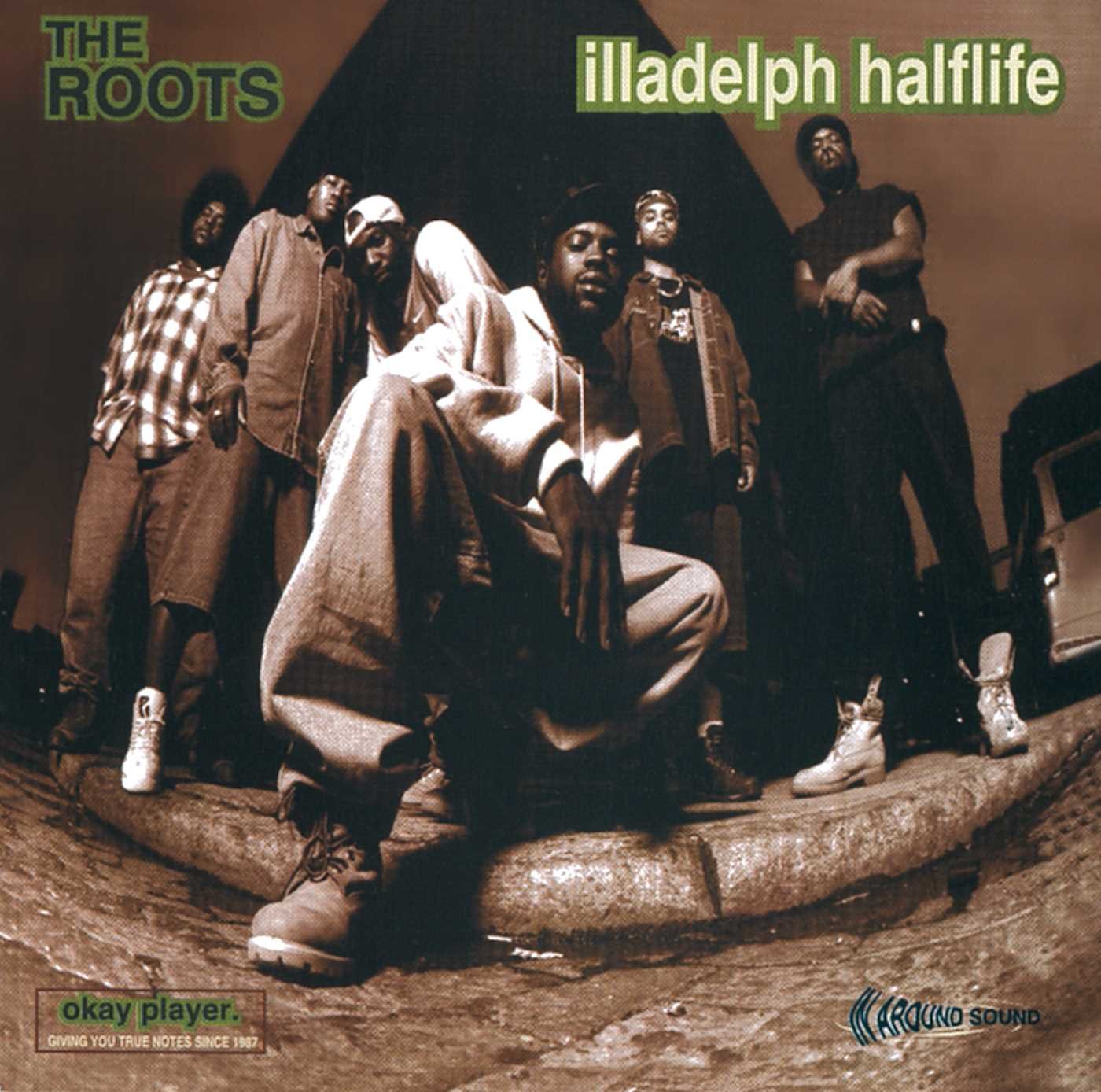
The Roots – Illadelph Halflife (September 24, 1996)

First things first, I’d be remiss if I didn’t start this post by saying rest in peace to Artis Leon Ivey Jr., better known to the world as Coolio. From your earlier work with W.C. and The M.A.A.D Circle to your tremendous solo career, thank you for your significant contribution to hip-hop and the culture.

The last time we checked in with The Roots was on their 1995 sophomore effort, Do You Want More?!!!??! The album wasn’t an immediate commercial success (it took twenty years for it to earn a gold plaque), nonetheless, it would slowly become a critical darling and even to this day is one of my favorite albums in The Roots dense and highly quality catalog. Led by Questlove on the drums and Black Thought on the mic, The Roots would return in ‘96 (making a few alterations to the band; most notably, Kamal Gray would replace the soon to be superstar producer, Scott Storch on keys) with their third release, Illadelph Halflife.

Since their debut album Organix, The Roots have used a continuous track numbering format on their albums, with Illadelph containing tracks 34 through 53. The Roots’ albums (at least prior to 2010) have also had great liner notes, filled with nerdy tidbits, a little self-deprecation and amusing inside jokes (some that you’re invited into once you listen to the album, and others that will tickle you even though you remain an outsider to the jokes). Illadelph (which is The Roots’ slang for their hometown, Philadelphia) would render three solid singles, even though they made little noise on the charts, and like its predecessor, it didn’t put up big sales numbers, but it received great reviews and heaps of critical acclaim, including a spot on The Source’s 1998 list of 100 Best Rap Albums.

It’s been a hot minute since I’ve listened to Illadelph, so this should be a fun refresher. Rest in peace to Malik B and Leonard “Hub” Hubbard.

Intro – The album opens with a collage of soundbites, which the liner notes say were taken from an audio documentary called “Hip-hop 101; On The Road With The Roots,” which features clips from the likes of Dr. Cornel West, Chuck D, Harry Allen and Questlove.

Respond/React – The Roots waste no time getting things jumpin’, as the band whips up an energetic mid-tempo bop (which includes some dope inconspicuous harp plucks courtesy of a Julia Haines) that finds Black Thought (aka The Bad Lieutenant) and Malik B (aka The M-Ill-itant) shredding the microphones and emcees, simultaneously, with witty battle-ready bars and razor-sharp lyricism. From Thought’s opening bar that finds him introducing himself as “The attractive assassin” to Malik’s closing verse where he threatens to “take away your last breath when you got asthma,” this was fire. I wish an emcee or crew would have reacted or responded to this shit.

Section – If my memory serves me correct, this was the first song off Illadelph that I ever heard while playing on a late-night radio show around my way back in the day. Quest and the gang create a cool groove that Thought mutilates with the smoothness of The Fonz, leaving Malik to salvage what’s left of the mic on the second verse, before he returns with the collars on his butter leather fully popped to tell you what he and Malik’s purpose on the mic is. I have no idea what the “Luther Van, lyrical contraband” is, but dammit, Thought makes it sound cool as hell. This one still sounds great twenty-five plus years later.

Panic!!!!! – Over subdued but urgent instrumentation, Thought gets off a quick verse about being awaken just after midnight (twelve seventeen to be exact) by “shots and sirens” (or “sireens”) in his South Philly hood. Obviously, this was recorded years before Thought and the group started gettin’ them steady Jimmy Fallon checks and were able to get up out of those crime infested Philly streets.

It Just Don’t Stop – The dark instrumentation and uber pessimistic hook would lead you to believe the verses on this song would be filled with gloom and doom. And while some of Malik and Thought’s rhymes are dimly lit, Malik balances the dark and heavy with a few light-hearted battle bars. It’s not the strongest song on the album, but it makes for a solid album cut.

Episodes – Sticking with the dark vibes from the previous two songs, Thought and Malik are joined by Dice Raw, as the three take turns addressing the crime and senseless acts of violence in the Philly streets, while the Jazzyfatnastees and Fatin add mournful harmonies in between the verses to accentuate the already somber feel of the track.

Push Up Ya Lighter – Our hosts change the mood from dark to grey with this melodically serene backdrop that sounds like the perfect music for a cold wintery Midwest Monday morning. Thought and Malik continue to touch on Philly’s violence issues, but from a more optimistic perspective (at least Thought’s rhymes are), while fellow Philadelphian, Bahamadia swings by to get off her shit and flex her “anti-gangsta bitch” rhetoric. This was dope.

What They Do – This was the third single released from Illadelph. Quest lays down Ummah issued drums, Kamal tickles the keys, Hub provides the irresistible bass line, someone named Spanky (whom the liner notes hi-lariously credits for his “Wes Mongomeration”) gets off seductive guitar licks, Angela Slates and Raphael Saadiq sing the hook, and Black Thought indirectly disses all phony, materialistic, one-dimensional rappers, while offering a free clinic on wordplay, word connection and flow: “The principles of true hip-hop have been forsaken, it’s all contractual and about money makin’, pretend to be cats don’t seem to know they limitation, exact replication and false representation, you wanna be a man? Then stand your own, to emcee requires skills, I demand some shown.” This is a slept-on classic that is just as relevant today as it was twenty-six years ago.cl

? Vs Scratch – This short interlude finds Questlove playing a simple drum beat and Scratch (from the School of Thought) gettin’ his Rahzel on, cuttin’ up the ones and twos with his vocals. The liner notes hi-lariously parenthesize the song title as “The Token DJ Cut.”

Concerto Of The Desperado – For single number two off Illadelph, the band creates a classical atmosphere, punctuated by epic cello plucks courtesy of Hubbard. The music sets the mood for Black Thought (the Desperado), who starts the song out on some poetic shit (“In the glow of the moon, over the melancholy metro”) and quickly shifts gears, transforming into the unorthodox hip-hop minister who preaches a boastful sermon to son emcees and ultra-magnetize the brains of his listeners: The Desperado, that refuse to follow, the Fifth aficionado, break you up into parts like vibrato, I’m deep like the dark of the night, niggas is sweet and sound silly when they talk on the mic, they use simple back-and-forth the same, old rhythm that’s plain, I’d rather ultra-magnetize your brain, it’s the hip-hop purist, to leave you lost like a tourist, inside the chorus, niggas is bringing nothing for us, as we breakin’ ‘em down to fraction, tell your squadron, it’s time to go to war, respond/react once more.” Shoutout to the beautiful Amel Larrieux, who licks her opera chops and sprinkles those high octaves all over this sensational track. This is easily my favorite record on Illadelph and possibly in my top ten Roots joints of all-time.

Clones – This was the lead single from Illadelph and probably the grimiest record in The Roots entire catalog. M.A.R.S. and Dice Raw join Black Thought and Malik B for this Philly cipher session that’s backed by Quest’s hard drums and incredible drum rolls in between the verses that sound like he’s spraying the crowd with an automatic weapon (which I’m sure is why the liner notes credit him for the “hi-hat and triggers”). All parties involved turn in solid performances (with BT’s shining the brightest, of course), making for an entertaining posse record.

UNIverse At War – Common stops by to join Thought on this duet that on paper reads to be a cerebrally impressive record, but in real time it sounds drab as hell, thanks mainly to the extremely dry and extraordinary boring instrumentation.

No Alibi – The band whips up a smooth slightly somber groove for Malik and Tariq to let their stream of consciousness flow, and after Malik forms a puddle, Thought uses the next two verses to create a fuckin’ ocean (that “Evelyn Champagne King” line was ridiculous sick!).

Dave Vs. US – A quick interlude that has Quest and Rahzel squaring up with saxophonist, Dave Murray on some inside joke shit.

No Great Pretender – Finally, Malik gets a solo joint that finds him dissin emcees, dreaming of buying out Tommy (Hilfiger) and Helly Hansen, while plotting to kidnap America and give it to Tariq to hold for ransom. Unfortunately, Malik’s outshined by Rahzel’s brilliant verbal drums and horns.

The Hypnotic – BT uses the drowsy jazz instrumentation (that sounds perfectly suited for an afterhours jazz lounge) to share a story about a girl he was once infatuated with, named Alana (whom he cleverly credits for “lubricatin’ his meridian points” with great massages). Over time, Thought loses touch with her and later finds out she lost her life after becoming a “victim of the wicked system that controlled her.” D’Angelo drops in to add his signature falsetto vocals on the adlibs, adding to the already melancholic vibes of the track. I’ve never cared much for this one. The music feels sleepy and something about Thought’s story feels hollow and contrived.

Ital (The Universal Side) – Thought and Q-Tip (Tribe Degrees of Separation: check) join forces on this jewel-filled duet that finds a primed Q-Tip spewing rhymes full of sage wisdom and Tariq focused on schooling lesser emcees with super sharp stanzas. Quest and the band provide a soulful groove for the two talented emcees to get their dazzle on, completing this sensational record.

One Shine – According to the liner notes, this jam session was pieced together from several different sessions between 1993 and 1996. Along with a plethora of musicians, this spacious cool jazz mash up also features Cassandra Wilson, Amel Larrieux and Questlove’s dad, Lee Andrews aka “Poppa ?uestion” (rip). This song sounds a bit misplaced (more suitable for an elevator or customer service hold music), but I enjoyed it in a regal kind of way.

The Adventures In Wonderland – Over ultra-mellow instrumentation, Ursula Rucker keeps an early Roots’ album tradition and gets off an album closing spoken word poem. The last (and first) time we heard from Ms. Rucker on a Roots album, she came (no pun intended) from the perspective of an angry pussy poppin’ recipient of an eight-man train, only to turn around and pop all eight of the “shriveled cock men” (her words, not mine) afterwards. This time around, she shares a poem from the eyes of a struggling single mother turned crack dealer, who ends up paying the price for living that risky lifestyle. She also manages to make a “pussy” and “cock” reference in this poem as well.

Outro – The album ends with, who I think is Cornel West, talking about The Roots being “a little bit of an enigma,” due to the fact they’ve reached the level of their dreams (a major record deal and international notoriety), but their jazz hip-hop band concept still hadn’t blown up, to which Dr. West bleakly ends the album saying, “it is possible it won’t.”

Dr. West’s assessment of The Roots being “a bit of an enigma” was accurate in ‘96 and has remained true throughout their career. They’re a group who are respected by all yet underappreciated by most. They’ve never experienced consistent commercial success, yet they’ve consistently put out quality music, compiling a blue-collar catalog that should be revered more than it is, and Illadelph Halflife serves as the perfect evidence to support that argument.

On Illadelph, The Roots stick to the same organic jazz hip-hop fundamentals that they followed on their previous two albums, but this time around the music feels a little darker and more focused, while Black Thought and Malik’s content touches on more serious topics, giving balance to their boastful bars, lighthearted freestyles and verbal jabs at superficial emcees that they deem lesser. Speaking of Black Thought, he continues to blossom into (on my list) the GOAT he would soon become, as his delivery sounds more polished and refined than prior, the bars and wordplay are more chiseled, and his ability to suavely bend words as he purposely mispronounces them, along with his overall mastery of the English language, is alien like. And Malik B makes for a quality B-mic.

Illadelph does come with a few underwhelming moments (i.e., “UNIverse” and “The Hypnotic”), but those blemishes are easily overlooked when the overall body of work is this gorgeously entertaining. Illadelph’s a classic album and a key component in The Roots’ legendary underdog legacy.

-Deedub

Posted in Uncategorized | 4 Comments

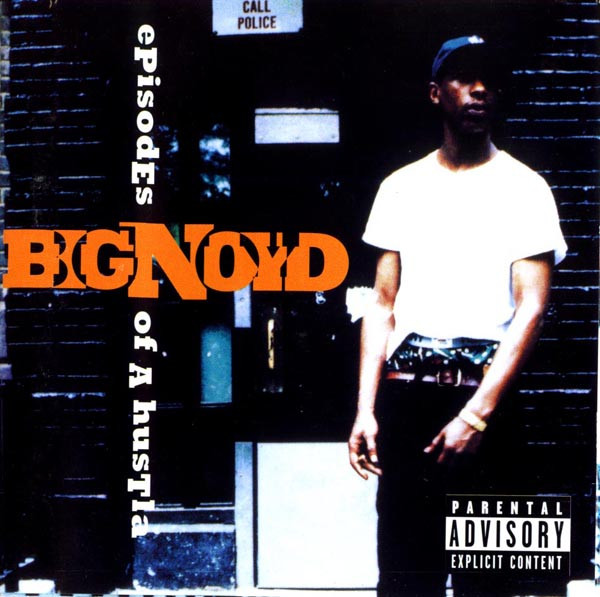
Big Noyd – Episodes Of A Hustla (September 16, 1996)

In 1995, Mobb Deep released a bonafied classic with their sophomore effort, The Infamous. The album was a masterpiece in callous Queensbridge thuggery backed by Havoc’s intriguingly dark and grimy production. While Prodigy and Havoc would carry most of the lyrical load, the album would also feature cameos from a few grade A emcees, like Nas, Raekwon, Ghostface Killah and Q-Tip. It would also include a few verses from newcomer and Mobb Deep affiliate, Big Noyd, who would make quite the first impression, delivering some dope verses (specifically on “Give Up The Goods” and “Right Back At You”). Noyd’s impressive cameos, along with his association with Mobb Deep and their commercial and critical darling of an album, would lead to him getting a solo deal with Tommy Boy, where he would release his debut album, Episodes Of A Hustla.

Naturally, when you have a producer in your camp that was as hot as Havoc was at the time, you rely on him to shape the sound of your project, and that’s exactly what Noyd did with Episodes. He would also call on Prodigy and a few more of his thug buds to lend some lyrical assistance over the course of the album’s eleven tracks. Even with Mobb Deep’s strong co-sign, Episodes would go under the radar with little commercial success or fanfare.

I found Episodes years after its release for a dollar at a used bookstore. I’ve listened to it once or twice over the years, but this will be my first time thoroughly digging into. So, without further ado…

It’s On YouEpisodes begins with a medley of Noyd related soundbites taken from The Infamous album and placed over a semi-funky instrumental for this makeshift intro.

The Precinct – The intro is followed by this interlude that begins with the “The Grave Prelude” from The Infamous album. Then a Curtis Mayfield loop (borrowed from “We The People Who Are Darker Than Blue”) plays while a couple of heavy New York accented Italian detectives rant and rave about wanting to catch the elusive and notorious, Noyd.

Recognize & Realize (Part 1) – Now that we got all the preliminaries out of the way, the first actual song of the night pairs Noyd with his mentor, Prodigy, as the duo take turns trying to out thug each other over a decent Havoc produced instrumental. It’s far from a great record, but still passable.

All Pro – Noyd invites Ty Nitty, Twin, Prodigy and Havoc (though Hav only contributes a few adlibs) to the party for this street hustler cipher session. All parties involved turn in serviceable verses (I love our host’s bar: “Rapper Noyd the soloist, four-pound controloist, comin’ out The Infamous, controllin’ the shit”), but Havoc’s laidback gutter backdrop is the true star of this track.

Infamous Mobb – Havoc provides hauntingly grimy music for Noyd and P, who continue to cover the same territory as the previous two songs.

Interrogation – The detectives from “The Precinct” (who identify themselves as Officers Bruno and White) return for this interlude to question some unidentified brother about the whereabouts of The Infamous Mobb and Noyd over the same Curtis Mayfield loop from “The Precinct.” This adds absolutely nothing to the album, folks.

Usual Suspect – Havoc slides Noyd an energetic bop (I love the animated piano break brought in during the hook) to spit over and he gets off some of his strongest bars of the night (my favorite line being: “My standing, for gat handling is outstanding, I be the thug bustin’ slugs while ya tec jammin’”). And just when you thought this would be Noyd’s first dolo joint of the evening, Prodigy pops up and closes the song with a verse full of rambling that fades out before he finishes.

Episodes Of A Hustla – He faked us out on the previous song, but this title track does give Noyd a chance to shine dolo. Well, almost. P does rear his thugly head to take care hook duties. Unfortunately, Havoc’s sleepy borderline boring instrumental does nothing to help him illuminate.

Recognize & Realize (Part 2) – Havoc gives the original version a facelift, hooking up a sinister backdrop that recycles a portion of Noyd and P’s bars from Part 1, and he temporarily steps from behind the boards to join his thug brothers on the mic, adding a few verses to the record. This version sounds way more impressive than Part 1.

I Don’t Wanna Love Again – After the track opens with the sound of blowing wind, guest vocalist Se’Kou comes in sounding like a woman scorn, as she sings the hook about not “wanting to love again,” followed by two vague verses that lead you to believe some man left her heart broken. Then Noyd gets off a verse that clarifies that this song is not about a romantic love lost, but a dead homie that lost his life in the heartless streets. I’m sure Se’Kou’s indistinct verses and hook, along with the cheesy artificially flavored R&B music, was a strategic ploy to get Noyd a crossover record, which, didn’t work. According to the confusing liner note credits for this song, this is the remix (credited to After Six Entertainment), with Havoc credited for producing the original, which is not included on the album and I’m completely okay with never hearing it.

Usual Suspect (Stretch Armstrong Remix) – Stretch Armstrong (half of the legendary New York radio duo, Stretch Armstrong & Bobbito) remixes the original track and gives it a breezy summertime feel, and he lets Prodigy’s rambling closing verse from the original play all the way through. I like the original (and after having to hear P’s verse play to the end on this remix, shoutout to Hav for cutting it short), but this remix is super fire.

Episodes Of A Hustla delivers exactly what it promises in the album title. Noyd uses the album’s eleven tracks to celebrate the trife life with Havoc orchestrating the thuggery with his raw and murky production scheme, while Prodigy does his best Ghostface Killah on Only Built 4 Cuban Linx impression, showing up on nearly every track, but unlike Ghost, he doesn’t get a “featuring” credit or his pic on the album cover. The content on Episodes quickly becomes redundant and it would have been nice to hear Noyd (who proves to be a competent emcee) stand on his own two with less lyrical assistance from P and the crew, but it’s still a decent debut album from “Rapper Noyd, the soloist.” And in this case, the term “soloist,” is used very loosely.

-Deedub

Posted in Uncategorized | Leave a comment

DJ Shadow – Endtroducing…… (September 16, 1996)

Davis, California is a small city just west of Sacramento with a population of around sixty-eight thousand people. It’s nearly 105 years old and its claim to fame (if that’s what you want to call it) is being the home of the United States Bicycling Hall of Fame. Davis is not known for its hip-hop scene or influence, but it is the home of Joshua Davis, better known to the world as DJ Shadow.

DJ Shadow got his start deejaying for the University of California, Davis campus radio station, KDVS. By that time, he was already an avid record collector and certified hip-hop head and started experimenting with sampling and creating beats. You can research the intricate details on how, but Shadow would eventually ink a deal with the British Label, Mo’ Wax, which was at the forefront of the trip-hop/alternative hip-hop sub-genre in the mid-nineties. After releasing a single and at least one EP on Mo’ Wax, Shadow would release his debut album, Endtroducing in 1996.

Shadow said he named the album Endtroducing because it was his debut album and the “end” of the production style he would use on the project, which he created entirely with only his AKAI MPC60 drum machine, a pair of turntables, Pro-Tools and a heapin’ helpin of records that he would study, chop up and dissect. Endtroducing is widely considered a classic and in 2006 it would earn itself a spot on Time Magazine’s 100 Greatest Albums of All-Time and a ranking of 329 on Rolling Stone’s 2003 list of Greatest Albums of All-Time. It is also in the Guinness World Records for being the first album made completely by samples, and more importantly, Shadow gave Ali Shaheed Muhammed a shoutout in the “More Masters” section of the liner notes, so we check off Tribe Degrees of Separation for this post.

Through the years, Endtroducing has definitely accumulated its share of fanfare, accolades and hype, but is the music worthy of all the hoopla and praise? Let’s discuss.

Best Foot Foward – DJ Shadow brilliantly chops up a collage of soundbites to introduce himself and Endtroducing to the listening audience.

Building Steam With A Grain Of Salt Endtroducing has some great song titles, with this being one of them. The track begins with a soundbite that cleverly does the speaking for Shadow and his music, while three different piano loops create an emotionally dark mood. Then Shadow adds heavy drums and a ghostly harmony, and right before your eyes the grain instantly turns into vapors. Shadow shows off later on in the track by throwing in a few ill drum breaks and slick wah-wah guitar licks, making an already amazing record sound even better. Random factoid: A portion of this song was used in a Chevrolet commercial. I wonder how nice those Chevy checks was for the kid.

The Number Song – Metal guitars collide with hard drums, placed underneath a bunch of countdown soundbites. This reminded me of some vintage PE/Bomb Squad shit. Dope.

Changeling – Shadow combines airy vibes with plush guitar licks, sweet sax notes and rumbling drums that create a serene experience, except for that moment when the dark storm cloud moves in to disturb the peace. I’d be interested to hear Shadow’s backstory for the song title, but even without an explanation, I enjoyed the track.

Transmission 1 – This short interlude features a staticky voice speaking over a fuzzy radio frequency about dreams, transmitting and broadcasts, while a dark and dull noise lurks in the background, creating spooky tension. Listen to this shit when you’re outside by yourself in the middle of the night and I guarantee you that it’ll give you goosebumps.

What Does Your Soul Look Like (Part 4) – A few years before DJ Shadow released Endtroducing, he released and EP on Mo’ Wax called What Does Your Soul Look Like, which consisted of four different parts, all named after the EP’s title. Well, as I’m sure you were able to figure out based on the song title, this is Part 4 from that project. Shadow mixes and stirs the perfect loops together to create this mystical instrumental that sounds like the perfect soundtrack to do some introspective soul searching to.

Untitled – Shadow lays down a funky loop and places a random soundbite of a man talking about Maureen and her five sisters, who apparently all have voluptuous asses, but the sister with “eyes as big as Jolly Ranchers” has the beauty to match her booty. This is a super random interlude, but it left me wanting to take a gander at the backyards of these six sisters.

Stem/Long Stem – This one begins with calm instrumentation, but Shadow puts just enough tension in the music for you to sense a storm is brewing. Slowly, the storm clouds move in, and about a minute and a half into the track, you’re smashed in the face with epic EDM vibes and frantic metal chords that join forces to completely fuck your head up. The calm, temporarily, comes back in, accompanied by sophisticated violin strings, and just when you’ve recovered from the first round of musical assault, Shadow whacks you in the dome with another round of mania. This would sound great in an action movie like The Fast & The Furious (interesting enough, DJ Shadow’s “Six Days (Remix)” featuring Mos Def was on the soundtrack for the F&F third installment, Tokyo Drift in 2006). The second half of this (“Long Stem”) uses a lot of the same pieces as the former, but it never moves from its calm state, and after experiencing the brilliant chaos that was the first half, it pales in comparison. But the masterful musical work of the first half more than compensates for the second.

Transmission 2 – This interlude combines a muffled water submerged bass line with solemn piano taps that would work as the perfect theme music for Batman as he looks down at Gotham from the city’s tallest skyscraper after a successful night of crime fighting. Then his proud peace is interrupted by that damn staticky voice, fuzzy frequency and dark noise from “Transmission 1.”

Mutual Slump – I’m not sure who or what Shadow’s referencing in the song title, but he’s definitely not talking about his drums. Once again, our host puts on a clinic in drum sampling and programming with this one.

Organ Donor – Shadow brings back the organ loop that “Long Stem” began with (it reminds me of the Incredible Bongo Band organ loop that Will.i.am flipped at the beginning of Nas’ “Hip-Hop Is Dead” record) and puts a dope drum beat underneath it, turning this into an incredibly entertaining little diddly with a clever song title.

Why Hip-Hop Sucks in ’96 – The song title works as a riddle and during the middle of the smooth pimped out groove, a quick soundbite provides the answer.

Midnight In A Perfect World – Shadow brings back the musical pieces used on “Transmission 2” and adds pounding drums and a little harmony into the mix. The song title matches the wonderfully somber music to a tee.

Napalm Brain/Scatter Brain – This one starts with random soundbites about dogs on the moon and playing checkers, before the listener is greeted by a hypnotic bassline and drums, and seductive wah-wah guitar licks. Then after a short break, “Scatter Brain” shows up to the party and takes the listeners’ ears on a thrilling ride backed by frantic drums that sound like they were diagnosed with ADHD, and that Uncle Luke would be proud of. After three minutes of bouncing off the walls, Scatter Brain finally takes his medication and slowly begins to tire, bringing the record to an end. This was genius.

What Does Your Soul Look Like (Part 1 – Blue Sky Revisit) – Part 4 gave us mystique and Part 1 falls somewhere in between relaxing and melancholic, built around a jazzy sax sample, slick drum rolls and a soothing vocal melody. Like Part 4, this version is also very suitable for soul searching.

Transmission 3 – More of the same weird dark antics as the first two “Transmissions” with a few additional quirks to creep you out even more.

Over the course of thirteen tracks (or sixteen if you listen to it on a DSP) and just over an hour runtime, Endtroducing takes the listener on an exhilarating musical ride, as DJ Shadow showcases his layered genre-bending production style that’s rooted in hip-hop but too grand to be contained in its confines. Endtroducing combines elements of jazz, soul, rock, metal, classical, electronica and random soundbites, which all sound great, but it’s Shadow’s wide variety of drums that shine the brightest. Via a soundbite on “Grain,” Shadow warns the listener that he’s not only a student of the drums but also a teacher, and he gives a Masterclass throughout Endtroducing with an array of monster drum patterns. The music on Endtroducing creates a gumbo mix of moods, ranging from self-reflection music to exciting cinematic scores, and at least six of the album’s tracks are nuclear bombs that will leave you mesmerized and thoroughly entertained.

Shadow once said in an interview that he chose not to use rappers on Endtroducing because “lyrics were confining” and “too specific.” With the absence of the emcee on the album, you experience that limitlessness in his music. Endtroducing is an absolute classic that stands as a testament to why sampling is and should be respected as a true art form.

-Deedub

Posted in Uncategorized | 4 Comments

A+ – The Latch-Key Child (August 27, 1996)

Through the years, hip-hop has given us our fair share of kid rappers. Jermaine Dupri set the bar back in the early nineties when he discovered two young teens at an Atlanta mall and groomed the duo into becoming the backwards clothes wearing, platinum selling, pop rap sensation, Kris Kross (rip to Chris “Mac Daddy” Kelly). The success of Kris Kross opened the market for kid rappers and the next few years would bring on quite a few acts looking to duplicate the success of JD and the Krises: Chi-Ali, Da Youngsta’s, Illegal, Shyheim, and the subject of today’s post, A+.

At the age of fourteen, Andre “A+” Levins would release his debut single “All I See,” and a few days before his fifteenth birthday he would release his debut album, The Latch-Key Child on Universal. Backed heavily by the production and the pen of Smith Brothers Entertainment (a production team comprised of the three Smith brothers: Elliott, James and Charles), The Latch-Key Child would peak at thirty-six on the Billboard Top R&B/Hip-Hop Charts and received mostly positive reviews. For one reason or another (probably because Universal stopped believing in the project), only one single was released from The Latch-Key Child, and it would quickly fizzle out becoming a mere footnote in the annuals of hip-hop. Universal would give A+ one more shot with his 1999 sophomore album, Hempstead High, but after that project failed commercially, A+ would fade away into hip-hop obscurity.

Let’s revisit The Latch-Key Child and assess if it’s worthy of more than footnote status.

Next Level (Intro)/Enter Hempstead – The album opens with a snippet of A+ giving shoutouts during an interview, then a dark slow-rolling mystically muddy instrumental (credited to Fabian Hamilton) drops and A+ spits a few boastful verses to warm up for the night. The second half of this (“Enter Hempstead”) starts with a couple of news soundbites about the streets of Hempstead, followed by a different beat that’s not as dope as the previous one, but sufficient enough for A+ to get off another quick verse.

Move On – Our host dedicates this one to a few of his deceased peoples. Over a melancholic backdrop that incorporates a slick Ron Isley soundbite for the hook, A+ offers up three verses that each explain the sad demise of three different young people (Black, KayShawn and Amanda), all lost to senseless gun violence. A’s sad rhymes combined with The Smith Brothers’ somberly beautiful instrumental make for a compelling and powerful listen that sends my parental anxiety through the roof.

Me & My Microphone – Buckwild gets his first of two production credits on the night, creating a dope semi-somber instrumental that A+ uses to discuss his relationship with his first love, his microphone (get your heads out the gutter, kids). A+ compares his microphone to a girl, and while his metaphoric storyline isn’t executed to the level of Nas’s gun comparison on “I Gave U Power” or Common’s love/hate relationship with hip-hop on “I Used To Lover H.E.R,” it’s decent enough. Q-Tip drops by to provide the hook, providing the cherry on top of this enjoyable record and satisfying Tribe Degrees of Separation for yet another post.

All I See – This was the lead and only single released from TLKC. Carl Carr (say that name fast ten times) interpolates Shalamar’s “This Is For The Lover In You,” creating a feel-good skating vibe that A+ uses to express his gratitude and affection for a young lady that’s got him wide-open (so much so that her love detoured him from becoming a thug). This is bubblegum hip-hop in its purest form, and the guest vocalist, Shakira Atily’s adlibs and hook are designed to make the gum even easier to chew (speaking of the hook, how bad is second part: “Give me a chance to know your name, and I’ll never turn and walk away”? Huh? Flaws and all, I still enjoyed the Shalamar flip.

Gusto – A+ is joined by fellow Hempstead native and one-half of Mobb Deep, Prodigy for this unlikely duet. Miladon (dope alias) hooks up a grimy backdrop that sounds like something Havoc would chef up, as A+ spits PG-13 rated thug rhymes and P holds nothing back, spewing his standard uncensored dark bars full of death and violence, and he takes care of hook duties. Even though this pairing feels unnatural, it still makes for a decent record.

Hard Times – The hook on this one makes it sound like a song of encouragement, but A+’s verses kind of contradict the optimistic refrain (Oh, and by the way, “Brothas are tired of being broke, so maybe that’s why they freebasin'” might be the most ridiculous bar I ‘ve heard all month). The song’s conflicting content sounds like lazy writing and when combined with the Smith Brothers’ sleepy instrumental, this one is easily skippable.

A + Z – If you’ve never heard this song before or didn’t already figure out based on the semi-clever song title, this one pairs A+ with AZ. Ike Lee hooks up a smooth mid-temp groove with a deep bass line for the two parties to exchange bars over, but unfortunately, AZ only spits about eight bars and is left to handle hook duties, while our host tries his best to justify rhyming on the same track as a lyrical monster like his guest.

Wanna Be Rich – Over Buckwild’s warm and creamy backdrop, A+ shares his dreams of being rich and successful, or as he so cleverly puts it on the hook, “turn these paper plates to silver platters.” I don’t know if he ever achieved his financial goal (he definitely didn’t as a rapper), but it makes for a dope record.

My Thing – A+ spits more “rah-rah” rhymes over a fire Brothers Smith instrumental.

Parkside Coalition – Miladon gets his second production credit of the night, providing another gully backdrop for this Parkside posse record. A+ is joined by three other uncredited rappers that sound heavily influenced by Mobb Deep, but collectively, they turn this into an entertaining record that Hempstead can be proud of.

Party Joint – As you can probably tell from the song title, this one is designed for the clubs. The Smith Bros. build the instrumental around a loop from The S.O.S. Band’s “No One’s Gonna Love You” that our fifteen-year-old host uses to rap about sippin’ Moet and baggin’ bad chicks in the club, to which I say, all of its cap. The production work is decent, but the song ends up sounding as generic as the song title.

Alpha 2 Omega – A+ uses this dope instrumental to get on some boastful battle shit. That’s all I got.

Shout It Out (Outro) – A+ brings back the instrumental from “Next Level” and raps a few shoutouts to close out the album.

Based on the album title, cover artwork and the puppy love content of the radio friendly lead single, you would assume The Latch-Key Child (I hate the way “Child” sounds in the title; “Kid” sounds and would have flowed so much better) was going to present A+ as an innocent teenager with a bunch of playful themes and light-hearted songs. There’s a reason they say don’t judge a book, or in this case, an album, by its cover. Over the course of thirteen tracks, young Andre (who sounds like a mix of Shyheim and Jamal) recites the scripts written for him (courtesy of the The Smith Brothers), which mostly cover street life tales and thuggery that our teenage host sounds way too young to be rapping about. Musically, TLKC sounds great, as The Smith Brothers and company create a thorough batch of dope instrumentals for our host to rap over, so even while you’re shaking your head in disbelief at young Andre’s street/thug narratives or laughing at his fabricated episodes of sippin’ Moet and baggin’ ladies in the club, you can still zone out and enjoy the soundscape that backs his fairy tales.

-Deedub

Posted in Uncategorized | 3 Comments

MC Lyte – Bad As I Wanna B (August 27, 1996)

MC Lyte is considered by most to be one of the greatest female emcees of all-time. Before becoming the voice for most of BET’s Award Shows and the voice behind a bunch of TV commercials (and might I add, more beautiful the older she gets), her sturdy feminine voice helped pioneer the way for the ladies in the mid-eighties, as she and Latifah led the charge for female rappers to be taken as serious on the mic as their male counterparts. The last time we checked in with MC Lyte was in ‘93 with her fourth album and final release on First Priority, Ain’t No Other. The album would render Lyte her first gold-selling single (“Ruff Neck”), but the album didn’t do as well commercially and, in my opinion, it was a bit uneven. Still in her mid-twenties, Lyte was looking for a new label situation and eventually would land at East/West/Electra where she would release her fifth album, Bad As I Wanna B.

MC Lyte would recruit SoSo Def head and music mogul, Jermaine Dupri to oversee Bad As I Wanna B as the executive producer, and he and Rashad Smith would produce most of the album’s ten tracks. Bad would reach fifty-nine on the Billboard Top 200 and bear fruit to two gold-selling singles, but the album itself received mixed reception from the critics and I don’t know if the streets was even checking for Lyte by ‘96.

I’m very familiar with the singles from Bad, but I have never listened to the full album since finding it in the dollar bin at a used bookstore several years ago. But like they say, there’s no time like the present, so…lets go back in time.

Keep On, Keepin’ On – The first song of the night was also the lead single from Bad. JD builds the slick instrumental around an interpolation of MJ’s “Liberian Girl”, as Lyte plays a manizer, flexing her feminine flirt that gets mildly dirty: “I get loose and produce large amounts of juice, can you get use, to that or do you need a boost, of energy, to enter me and get it on… beat on my drum if you feel the need to, as I proceed to, open up and feed you.” JD (who also receives a co-writing credit for this song along with Lyte) adds discreet adlibs throughout the song and Xscape takes care of hook duties, giving the shimmering track an even shinier R&B feel. Lyte has never sounded so sexy and enticing on a record, and I enjoyed it. Thanks, Jermaine.

Have U Ever – Lyte puts the sexy shit to the side and sets out to prove to all “the ruffnecks and hoodrats” (her words, not mine) that she’s still lyrical and has maintained her street edge. Am I the only one that found it hilarious that during the second verse when Lyte shouts out Da Brat and asks her to holla if she’s down when our hostess that JD’s protégé gives no response? I mean, they could have at least let her give a quick “what up” adlib. Speaking of JD, his bland backdrop does nothing to breathe life into Lyte’s decent rhymes.

Everyday – This was the second single released from Bad. Lyte comes off like a arrogant pimptress as she lists her needs and requirements for any would be suitors: “I got a wish list that must be fulfilled, and you gets none until I get my toes sucked, and my eyebrows plucked, I need my car waxed and my floor shellac, I need my back rubbed, and the bubbles in the tub, that float me to the bed so that we can make love.” JD hooks up another smooth and pristine R&B bop (and receives another co-writing credit), but this time only Kandi Burruss from Xscape drops by to sing the hook, completing this satisfactory groove.

Cold Rock A Party – This was the third single released from Bad. Well, kind of. The album features a super mid Rashad Smith produced instrumental that our hostess uses to get off a few brags and boasts. The “Bad Boy Remix,” which is built around a loop from Diana Ross’ “Upside Down” and features new verses from Lyte and cameos from Puffy (of course) and Missy Elliott, was the version used for the single that most of you probably remember. It wound up being a great business decision, as it would propel the single to gold status, plus the remix sounds a thousand percent better than the O.G. mix.

TRG (The Rap Game) – Lyte comes off like the seasoned veteran that she was by 1996, sharing some of her wisdom and own experiences in the fickle and fleeting rap game: “I got trapped in the rap game at sixteen, and saw it’s no more than a crap game, know what I mean? Like when you feel you shake ’em right they fake roll snake eyes, in this industry that’s how quick niggas die, through my eyes it’s like Russian roulette, never do you know when you’re about to get wet, so you should stay set so you don’t fall and go under, have people saying I wonder what happened to him or her.” Lyte’s commentary was pretty interesting, and even though JD’s interpolation of a portion of Barry White’s classic, “I’m Gonna Love You,” sounds stripped of its soul, I still dug the polished synthy instrumental.

One On One – This record finds Lyte yearning and lusting after one unnamed gentleman but based on the trail of clues she leaves throughout the song, I think I figured out who he is. Let’s run through them, shall we: He’s been on the cover of Vibe Magazine. He’s starred in movies (“Hollywood got a hold of that behind”). He has a woman/wife. He has a nice body (she longs for the opportunity to rub his backbone, deltoids and biceps). He’s a musical artist (“I like the video you got out, the song is butter”). It has to be LL Cool J (Hit me in the comments if you agree or if you have another possible candidate). The Rashad Smith/ Goldenboy produced instrumental is dope and sounds great behind Lyte’s riddled rhymes.

Zodiac – Lyte (or her co-writing friend, credited as Allah) got the bright idea (no pun intended) to make a song about zodiac signs. The only problem is none of her rhymes sound the least bit interesting and JD’s instrumental is even less effective.

Druglord Superstar – Lyte plays the role of a fed-up girlfriend, whose drug dealing boyfriend’s lifestyle is starting to affect hers and she uses the song’s three verses to outline his evil deeds and exploits. After leaving Lyte hanging on “Have You Ever,” Da Brat stops by to play Lyte’s supportive friend, adding a few aggressive adlibs and helps with the hook, but no verse, which I’m sure they could have easily fit into the song and storyline. The hook is kind of random, but the urgent feel of Rashad Smith’s instrumental works well backing Lyte’s semi-interesting storyline.

Keep On, Keepin’ On (Remix) – Same lyrics as the original with a way less interesting instrumental, and Xscape changes up the hook just enough to not get a fuck.

Two Seater – If LL can swing an episode in the backseat of his Jeep, then why can’t Lyte get freaky in her two-seat coupe? Over the course of three verses, Lyte mixes sexual innuendos with car references (hi-lariously boasting that her car has “automatic locks” and “newly installed shocks.” Oh, you fancy, huh?), but whatever you do, don’t try to spark a blunt while in her fancy ride. R. Kelly is credited for the lifeless backdrop that sounds like an unfinished idea and Lyte ‘s hook is horrendous: “If you wanna ride good life, baby, you can’t smoke the weed-a, in my two seata.” Come on, Lyte.

Bad As I Wanna B finds a matured MC Lyte embracing her feminine side and sexuality, and out to prove that she’s still a viable emcee. While I’m sure the recruitment of JD to produce and oversee the project and Puff Daddy’s work on the “Cold Rock A Party (Bad Boy Remix)” were more calculated moves than organic, the choice paid off commercially for Lyte and the polished easily digestible R&B saturated singles are pleasing to the ear, even if they neglect her hardcore fanbase. Ironically, most of the songs on Bad that are designed to appeal to the hardcore fanbase suffer from production that’s plain as vanilla and drier than Tyrone Biggums’ lips, while Lyte struggles to find anything interesting or entertaining to rap about, even with the help of a few writers.

Bad As I Wanna B is far from terrible, but in a year packed with so many heavy-hitting albums, it sounds a little…Lyte.

-Deedub

Posted in Uncategorized | 4 Comments

Outkast – ATLiens (August 27, 1996)

I’ll start this post off by wishing ATLiens a happy 26th birthday, which it celebrated this past Saturday. I hope you enjoy the read!

If you’re a regular reader of TimeIsIllmatic, then you already know how much of a Stan I am of A Tribe Called Quest. Through thick or thin, rain or snow, classic album, or mediocre project, (hell, I even have a whole segment on this blog dedicated to them) I will always be a loyal (but honest) ride or die chick for my forever favorite hip-hop group of all time. But as ATCQ was about to begin their descent from the top of hip-hop’s mountain, there was a duo out of the south positioning themselves to take the baton and start their journey up that mountain.

The Atlanta based duo, OutKast (comprised of Andre 3000 aka 3 Stacks and Big Boi aka Daddy Fat Sax) made quite the first impression with their debut album, Southernplayalusticadilacmuzik (that I’ll admit, I was late to the party on). Backed by the heavily live instrumentation production style of the three-man production team, Organized Noize, SPCM would render two hit singles, one of which would earn OutKast a gold plaque (“Player’s Ball”) and a year after its release, the album would become certified platinum. OutKast wouldn’t rush to come back with a follow-up, but two years and change later, they would resurface with their sophomore effort, ATLiens.

The title, ATLiens, is a combination of OutKast’s home base (Atlanta) and a reference to their alien status, which is kind of a synonym for the group’s name. The album cover for ATLiens is a dope comic book illustration and the CD jacket is an elaborate twenty-six page booklet, which is mostly a comic book with a detailed storyline (credited to longtime OutKast collaborator and poet, Big Rube) that stars “Bin-Hahmin” and “Dad-Efat-Sax” as super heroes at war with their arch nemesis, Nosamulli and his Dark Horde, whose mission is “to control all music that will be made from here on out.” And what would become OutKast tradition, the physical CD itself features eye candy in the form of an animated naked curvaceous soul sista that I’m assuming you didn’t get on the cassette version of ATLiens. Wait. Now I’m curious how bangin’ the cartooned caramel goddess’ body looks on the larger vinyl platter. Am I a pervert for thinking about that?

Like SPCM, OutKast would call on Organized Noize to produce the bulk of ATLiens, but Andre and Big Boi would also be credited with producing five of the albums’ tracks with help from a host of musicians. ATLiens would be an even bigger commercial success than its predecessor, becoming OutKast’s first double platinum selling album. It would also receive great reviews from the critics and is considered by most a classic and one of the greatest hip-hop albums of all-time.

And they were just getting started.

You May Die (Intro)ATLiens opens with somber music and a woman saying a Catholic Portuguese prayer. Then Joi, Whild Peach and Trina (I’m pretty sure it’s not “da baddest bitch” from Miami) join in singing melancholic words of encouragement, allowing the ear and heart that needs to hear their message a moment to weep before getting back up and continuing this journey called life. If you cried (or teared up) while listening to this beautifully sorrowful intro, don’t feel bad. You won’t be the first person or the last to do so.

Two Dope Boyz (In A Cadillac) – After a stereotypical alien voice (that was also used on the intro to “D.E.E.P.” on SPCM) gives his salutations to all of us lowly earthlings, Organized Noize drops a tough drumbeat coupled with a dark piano loop that finds Big Boi and 3 Stacks sounding refreshed but a bit disgruntled. The fellas voice their frustration with copycats, sucka emcees and groupie chicks, all while representing for the “south coast slums” aka Atlanta. This is a dope record (no pun intended) that will get your head nodding after the emotional rollercoaster that the intro took you on.

ATLiens – This title track was also the second single released from ATLiens. OutKast gets their first of a handful of production credits on the evening, hooking up rolling drums, a sturdy bass line and what sounds like an alien gospel choir singing in between the verses. Big Boi stays “cooler than a polar bears toenails” as he talks his southern player shit and Andre begins his transformation to alien status emcee, getting off two stellar thought-provoking verses (Dre’s second verse might be the best verse spat in ‘96 and its definitely one of his top ten verses of all time). This monster record is a bonafide classic that has aged very well.

Wheelz Of Steel – Lyrically, Boi and Dre clash to perfection on this one, as Boi spits hood shit in his Daddy Fat Sax persona, while Stacks continues to scorch the phenomenal production that ATLiens has begun with, spewing fire verses full of substance. OutKast is credited with producing this one, but Chanz is responsible for the anxious organ chords and Craig Love for the face-scrunch inducing guitar riffs that are the meat and potatoes of this production. The Premo like high-pitched squealing cuts (i.e., “Who’s Gonna Take The Weight?” and “Code Of The Streets”) at the end of the song are the cherry on top of this musical masterwork.

Jazzy Belle – This was the third and final single released from ATLiens. The song opens with somber angelic female voices (Debra Killings and the Jazzyphatnastees) harmonizing, then pulsating drums drop, accompanied by grey melodic tones that our hosts use to rebuke sistas for being scandalous and promiscuous (hence the song title which is a play-off of the name of the wicked biblical Queen, Jezebel). In today’s cancel culture, I don’t think Kast would have gotten away with releasing this one, but I’m also sure that OutKast’s (or at least Andre’s) stance on the subject has changed since this was recorded. There’s also the “Swift C’s Remix” that doubled as the single version for this song. It’s pretty much the same, just with jazzed up drums and male vocalists singing over the voices of OutKast’s angels, giving it a crossover R&B feel. I prefer the original, and shoutout to Trends of Culture.

Elevators (Me & You) – This was the lead single from ATLiens. Kast creates a cool atmosphere with warm and grumpy keyboard notes, a hypnotic bass line that sounds like its sneaking through your window to burglarize your home while you sleep, drums that aren’t needed but add to the track’s mystique, all brought together by a super catchy nonsensical hook. Both Boi and Dre sound locked in, but of course Dre outshines his partner in rhyme with yet another alien performance during his second verse, where he recalls a bump in with an old classmate from high school. Yet another undeniable classic that has held up well through the years.

Ova Da Wudz – Andre spits one sharp verse about shady record companies and the struggle some brothers go through to feed their family, sandwiched in between two Big Boi verses about pussy, weed, and a bunch of randomness, while their homie, EJ Tha Witch Doctor, chants on the hook. I have no idea what the song title means, but the ill drums on this one immediately conjured up visions of Shaka Zulu dancing around his South African kingdom in celebration of another successful battle.

Babylon – The instrumentation on this one sounds like imminent doom is approaching, while faint wah-wah guitar licks and even more faint drums try to give the track some semblance of hope. Dre and Big Boi spit compelling verses and Andrea Martin’s (rip) chilling vocals on the hook keep this record interesting.

Wailin – The instrumentation on this one sounds like it’s the little brother to “Wheelz Of Steel,” and I had no idea that the wailing voice in between verses was that of Cee-Lo‘s (I blame that on ATLiens’ convoluted liner notes). While I’d much rather hear a meaty sixteen from Mr. Green, I enjoyed his gritty soulful moaning over Organized Noize’s southern fried production work.

Mainstream – Goodie Mob’s Khujo and T-Mo join Dre and Big Boi on this weary ON produced backdrop, as they all take turns discussing how one’s naivety and bad choices can lead to their demise. Per usual, Andre turns in a dope verse, but Khujo’s abstract verse delivered in his signature angry vocal tone was impressive as well.

Decatur Psalm – Big Boi is joined by Big Gipp and Cool Breeze to discuss some of the drama and illegal business that goes down in dem Decatur streets. I wasn’t crazy about Big Boi and his guests’ content or subject matter (which is probably why 3 Stacks sat this one out), but I did enjoy the soothing vocals of Joi, Whild Peach and Trina on the hook and the gloomy instrumental sounds better today than it did back in ‘96.

Millennium – Organized Noize orchestrates a dark layered mid-tempo bop that’s finds a depressed Andre rapping about his struggles to mentally maintain, while Boi is just looking for some unity in his community (I love his “they don’t feel like marching ‘cause they shoes is overrun” line). Dre’s humming on the hook is borderline annoying and the guest female (ShaJuanna Edghill) who rambles on about “planets, stars, clothes, hoes, cars, etc.” sounds like she high on heroin. Yet in still, I enjoyed this one.

E.T. (Extraterrestrial) – OutKast says “the hell with drums” and decides to spit over dark mysterious chords, eerie otherworldly sounds, and a faint war chant in the background, while EJ Tha Witch Doctor stops by again to sing the hook, celebrating are hosts’ extraterrestrialness. Dre and Boi do a solid job on this one and the uniquely quirky production is truly…out of this world.

13th Floor/Growing Old – This one begins with solemn piano notes and Big Rube sharing a conscious poem (which would become tradition on OutKast’s albums) that explains the meaning and importance of the number thirteen. The second half of this record incorporates the same piano chords, along with simple drums and Debra Killings comes back to sing the sad hook, while Stacks and Boi rap about change, maturity and death. Dre’s poetic closing bars sum things up best: “Fat titties turn to teardrops as fat ass turns to flab, sores that was open wounds eventually turn to scab, tress bright and green turn yellow-brown, autumn caught ‘em, see all them leaves must fall down growing old.” Those laws of nature even apply to the bosom and bottomed blessed naked Afro queen that graces the CD surface of ATLiens. Laugh to keep from crying.

Elevators (ONP 86 Mix) – The final record on ATLiens finds Organized Noize tampering with a masterpiece. The biggest difference in the two mixes is the absence of the sneaky bass line on this version, which makes all the difference in the world.

ATLiens will forever be remembered as the album that Andre 3000 made his metamorphosis from decent rapper to alien emcee (if you look close enough at the ATLiens’ album cover you’ll notice Dre’s Martian antennas peeking through his turban). On “Growing Old” 3 Stacks proclaims that he “takes this rap shit serious while others entertain,” and while he doesn’t waste a bar on ATLiens, each of his meaty sage like verses are wildly entertaining (we might have to partially credit Erykah Badu’s vagina for that). Big Boi, who is clearly not as lyrical as his partner, still manages to be an interesting B mic, and the contrast in the duo’s content provides a healthy balance of ratchetness and righteousness. Along with Dre’s lyrical maturation, Organized Noize and OutKast’s production would also continue to blossom, as they collectively construct an amazing soundscape of inconspicuously dark layered instrumentals for the Atlantis duo to comfortably maneuver through.

I can’t say that Andre and Big Boi were able to save the rest of hip-hop from the evil clutches of Nosamullii and his band of goons, but they definitely issued them an L with ATLiens. From top to bottom, ATLiens is an undeniable classic that still mesmerizes twenty-six years after its birth.

-Deedub

Posted in Uncategorized | 1 Comment

The Gotee Brothers – Erace (August 20, 1996)

Gotee Records is a contemporary Christian music label based in Franklin, Tennessee (which is about twenty miles from Nashville) that was founded in 1994 by Joey Elwood, Todd Collins and Toby McKeehan (aka TobyMac, who a few of you may know as one third of the Christian rock/rap group, DC Talk, who were pretty popular during the late eighties/early nineties). The label began as a production company, but when the white male trio were unable to get their all-Black female r&b group, Out Of Eden, a record deal, they decided to start their own label. Gotee Records would go on to launch the careers of several artist from different genres, including the Grits (rap), Christafari (reggae) and Jennifer Knapp (folk/rock), just to name a few. A few years after the label was up and running, Joey, Todd and Toby decided it was time to step from behind the scenes to the forefront as artists, collectively calling themselves The Gotee Brothers. The GB’s would release their debut album, Erace in 1996.

The album cover for Erace is a 3Dish photo, which depending on the angle you look at it reflects Frederick Douglass or some white colonizer (and some angles give you a weird mix of the two), and underneath the plural photo it reads “A project to eliminate racism.” The Gotee Brothers are credited with producing the entirety of the album but would receive heaps of help from their musician friends and a few artists from their label. Erace would be the only project released by The Gotee Brothers as a group, but they would continue to co-exist as label owners and the label is still running and functioning well to this day.

I discovered Erace during my secular music sabbatical in the late nineties. It’s been a long minute since I’ve listened to it, so let’s see how it sounds all these moons later.

Yoknapatawpha (A Mental Mississippi) – What I found in my Google search is: Yoknapatawpha is a fictional county, fictitiously located in northwestern Mississippi. The author, William Faulkner dreamt it up and often used it as the setting for the characters in several of his novels. Over a jazz-funk fused jam session (that includes some great piano solos and a silly hillbilly moment), Brothers Gotee use this opening track to mentally transport to Mississippi as they express their appreciation for southern living through abstract bars. I wasn’t crazy about the rhymes (although the uncredited female rapper who pops in for a quick second, did come off a little bit), but the hook is catchy, and the instrumentation is a whole entire vibe.

Celia (Queen Of The Senseless World) – Brothers Gotee are joined by Bonafide (one-half of the rap group Grits, who were signed to Gotee Records at the time) on this ode to a young Mississippi girl named Celia, who has come of age and been “pricked of her thorns detached from the vine,” which is a fancy way of saying she strayed from God and started sinnin’. Lisa Kimmey (one-third of Out of Eden, who I mentioned in the opening of this post) sings from the perspective of a struggling Celia, as the fellas encourage the “crooked letter Cinderella” to continue to fight the good fight of faith despite her shortcomings. I enjoyed this one, especially the smooth funk groove that it’s built on.

Sweet Tea – Our hosts use their favorite southern beverage as the focal point to reminisce about growing up in the Deep South and the good times spent with family. Bonafide drops in again and steals the show with a dope closing verse that makes this mediocre trip down memory lane sound somewhat interesting. This song is followed by a short snippet of some random dude (who sounds a lot like Bill Withers) discussing the difference between Black dialect and slang, and based on his usage of terms like groovy, out of sight and “white blue-eyed soul brothers and sisters,” this was clearly taken from some form of media circa the seventies.

Poetry, Prose & Other Sundry Items – The poetry and prose portions of this song come in the form of a collage of quotes about racism and equality from Joey, Todd and Toby, and the “other sundry items” include some pretty amazing singing from Lisa Kimmey and Kevin Smith (not to be confused with the filmmaker of the same name), and bassy sophisticatedly funky instrumentation.

Wages Of Sin – This one starts out with Spinners “I’ll Be Around” vibes before morphing into a hippyish musical scheme that our hosts use to address the racial sins of their ancestors: “Looking for the paths beyond this lunacy, I burnt my hands while touching history, never can agree always disagree, our heads are full of waste, a mental eulogy, so now we paid the price from our fathers’ dice, I wouldn’t do the things they’ve done but now I wear their vice.” It’s not a great song, but I respect these brothers for acknowledging their white privilege.

New South (The Gotee Idyll) – The band creates a bluesy southern atmosphere (complete with Deep South gut-wrenching soulful harmonica chords) for one of the Gotee boys (I’m not sure which one) to lament the sins of his father, seek redemption, praise God and reclaim the south: “Oh things have changed since I was a boy, my father’s past is something I can’t avoid, I asked my preacher who lived through the storm, he said ‘Son, my hands ain’t clean but my soul’s been reborn.’” The content of this song leaves you with a lot to chew on, while the instrumentation is hard to resist.

One Of Monk’s Dreams (Interlude) – Based on the title and The Gotee Brother’s low-key obsession with Mississippi on Erace, I’m guessing this instrumental interlude is an inside reference to Thelonious Monk’s “Bright Mississippi” record from his Monk’s Dream album. Anyhow, the African drums mixed with rock guitar chords were mildly enjoyable.

Brothers Keeper – This song is built around Genesis 4:9, where God asks Cain about Abel’s whereabouts (in the previous verse, we learn that Cain murdered Abel) and Cain snarkily responds “Am I my brother’s keeper?” The GB’s invite an uncredited female vocalist to revisit Cain’s infamous question on the hook, while they respond with a yes and define who their “brother” is: “Prior to elaborating I must define, who is my brother, who is my kind, who gets the props when I gets to drop, the birds of a feather, they stick together, forever we’ve been thinking that our kind is our race, but all of us got two eyes, a nose and a face, pride in the past is a serious bind, but aren’t we to have some pride in mankind? I am my brother’s keeper to this I am agreeing, but I define my brother as another human being.” Some of the rhymes sound a little too simplistic, but the message is positive and I kind of enjoyed the dark undertones in the music.

I Don’t Understand – Our hosts and company build this instrumental around a portion of George Benson’s “Breezin’” as they question and ponder why all humankind just can’t get along (shoutout to the late Rodney King). Some of the rhyming on this one gets super elementary and extra cheesy, but it’s nearly impossible to mess up the infectious groove that is “Breezin’.”

Dancing With The Stars – This instrumental interlude features an acoustic guitar dueling (or dancing) with a flamenco guitar, resulting in an emotional two-minute musical adventure.

Why Can’t We Be Friends – This time around The Gotee Brothers tinker with War’s classic seventies record of the same name. It makes for a decent cover, with the biggest differences being that our hosts invite Mark “Tansoback” Mohr from the Christian reggae band Christafari (who were also signed to Gotee Records at the time) to chant on the verses instead of sing, and War properly placed a question mark at the end of the song title.

Say Amen – This interlude features a potent portion of Pastor Chris Williamson’s sermon on racism in America, placed over a somberly soulful backdrop (it’s worth noting that Pastor Williamson was also a pioneering Christian rapper with a group called Transformation Crusade back in the late eighties/early nineties). This was powerful. I would love to hear this sermon in its entirety.

Hidden Track – Brothers Gotee bring back “New South” as a hidden track to close out Erace. It’s pretty much the same as the original mix, just substituting the keyboards chords with twangy guitar plucks.

I have and will always love and respect the art of sampling. The hood ingenuity (that blossomed from economic restraints) to take a short fragment of a record (or several records) and turn it into a completely brand-new musical experience is simply genius. But as much as I love dusty jazz and soul loops placed over sampled drums and boom bap beats, there is something uniquely special about live instrumentation. Over the course of Erace’s thirteen tracks, The Gotee Brothers and company create a cohesive jam session with live instrumentation, as they stand proud in their southern roots, ashamed of their ancestors’ transgressions and attempt to rectify racism in America through their music, sprinkling their Christian beliefs into the batter without sounding preachy. The Gotee Brothers aren’t great rappers or superb lyricists, but what they lack in talent, they make up for in sincerity, humility and intent. Plus, most of the music sounds pretty good.

Obviously, The Gotee Brothers didn’t rid America of racism with Erace. But even if they were able to change the heart of one person with their message and music, that’s progress.

-Deedub

Posted in Uncategorized | 4 Comments