Erick Sermon – No Pressure (October 19, 1993)

When it comes to hip-hop groups with more than one emcee, EPMD is easily in my top five. From 1988 to 1992 the duo (technically, the trio, if you count DJ Scratch) put out 4 very impressive albums, which were all commercial, as well as critical successes, sealing EPMD’s legacy as hip-hop legends. So when the news broke that the microphone doctors were parting ways (the rumor was E-Double, or someone in his circle, robbed Parrish Smith’s house), my heart broke, a little bit. After the break up both emcees would begin their solo careers. PMD would sign with RCA and release his solo debut in 1994 (an album I never checked for because his flow on the lead single “I Saw It Cummin'” was so corny I couldn’t waste my time (or money) listening to that crap for an entire album…if I find it now for a few bucks I’d probably buy it…just out of curiosity), but Erick Sermon would strike first. Sticking with Def Jam, he would release his solo debut album, No Pressure, in the fall of 1993.

Throughout EPMD’s catalog, E and P both played a part in the production process. For No Pressure, the Green-Eyed Bandit no longer had Parrish to assist him, as he would handle the production single-handedly (for the most part) and round-up a bunch of guest appearances to help carry the lyrical load. No Pressure didn’t move as many units as the previous EPMD albums and it received mixed reviews.

Let’s see how No Pressure stacks up nearly 25 years after its release.

Intro – The album opens with Erick Sermon being swarmed by the Press, then one reporter asks him what he’s going to do to show his appreciation to all his loyal fans, and his response is the next song…

Payback II – The first official song of the evening has Erick paired with newcomer, Joe Synystr (I wonder what happened to that guy), and the two exchange verses, mixing sharp wordplay with comical metaphors. E-Double stays true to his EPMD funk roots, and hooks up a mid-tempo track, whose bass line sounds a lot like the one he and Parrish used for “The Crossover”, but it works well with the bell-like sample sprinkled over it. Nice way to start the show.

Stay Real – This was No Pressure’s first single. E-Double continues to bring the funk with this ruggedly funked out backdrop that has him talkin’ shit and instructing the listener to “stay real”(which was an overly used cliché in the mid nineties). Not a terrible song, but far from great.

Imma Gitz Mine – Erick’s instrumental seems uninspired and his rhymes follow suit.

Hostile – I believe this was the second single from No Pressure, and the song that would introduce the world to Keith Murray. The Green-Eyed Bandit hooks up a cold and dark backdrop, as he and Keith talk tough all over it. I love Erick’s line “for your protection, go sit in the r&b section, for this session”, but Keith Murray walks away with this one, giving us an early glimpse of his huge vocabulary and uncanny ability to manipulate the English language (“Damage to your medulla, cerebrum and cerebellum, ya got a crew ya better tell ’em”). This one still sounds sick.

Do It Up – It was nice to hear E-Double shoutout Commissioned, arguably the dopest gospel group of all time. But that’s the only good thing I can say about this song.

Safe Sex – This is a corny PSA attempt on behalf of our host, placed over an unimaginative sample of James Brown’s “The Payback”.

Hittin’ Switches – This song was original included on the Who’s The Man soundtrack, that was released in April of ’93, and the second single from that album. It’s decent enough, I guess.

Intro – The second half  (or side two) of No Pressure begins similar to the first half: a reporter asks Mr. Sermon who does he think he is and what makes him think he can still sell records, and I guess the next song is supposed to be the response.

Erick Sermon – The rhymes and the instrumental sound a lot like “Hittin’ Switches”.

The Hype – Trash.

Lil Crazy – Shadz Of Lingo (I’m sure most of you won’t remember those guys) join E-Double on this cipher joint. SOL sounds decent on this one, but Erick sounds uninspired and tired, and his instrumental is boring as watching paint dry.

The Ill Shit – Left Coast natives KAM and Ice-Cube drop by to join the E-Double on this one. E’s line about flipping “more vowels than Pat Sajak’s white bitch” (aka Vanna White), sounds forced and like he was trying to appease his black militant counterparts. All three emcees seem like they were more consumed with shouting each other out in their rhymes instead of spitting quality bars. And to add insult to injury, E-Double’s instrumental is trash.

Swing It Over Here – Keith Murray and Redman joint E for what I believe to be the first Def Squad cut featuring all three of its original members. Mostly do to E’s terrible instrumental, it doesn’t go over well, but Keith, Redman and our host’s rhymes aren’t that impressive, either.

Interview – It plays exactly as it reads.

All In The Mind – Erick invites another newcomer Soup (not to be confused with Sup The Chemist) to share mic duties, and Keith Murray, Soup is not. Collin Wolfe stops by and lends some much needed help, giving this instrumental a little bit more life than the previous 7 or 8 songs, but it’s still far from great.

Female Species – The final song of the evening is the only song that Erick Sermon is not the primary producer on. He does get a co-production credit, but Brent Turner is the main production man. Turner hooks up a super laid back instrumental for E-Double to talk about a few fly ladies he’s met. You might not feel this after the first listen, but give it a spin late night after leaving the bar, and I’m sure you’ll love it.

I’ve said it before and I’ll say it again: I’ve never been a big fan of Erick Sermon’s solo production work. Without PMD, who helped construct the hardcore funk beats that helped shape the EPMD sound, most of E-Double’s funk on No Pressure sounds like soulless boring noise. Speaking of Parrish, his presence is sourly missed on the mic as well, as Erick Sermon has no business (no pun intended) trying to hold down a solo album. Even with the abundant amount of guest appearances on No Pressure there is still too high a dosage of lazily lisped underwhelming rhymes from the green-eyed bandit. Maybe if E-Double put a little pressure on himself for this album the results would have been better. As is, No Pressure is a hot mess.

-Deedub

Posted in Uncategorized | 6 Comments

Black Moon – Enta Da Stage (October 19, 1993)

By 1993, the paradigm in hip-hop had shifted. New York, the mecca of hip-hop, had dominated the streets and charts since its commercial beginnings with the Sugarhill Gang’s “Rapper’s Delight” back in 1980, but thanks in large part to Dr. Dre and Snoop who helped usher in the G-Funk era, the West Coast was dominating radio and the charts for the first time. You still had some artist making noise on the East coast (i.e. the Native Tongue collective, LL Cool J, Gang Starr), but nothing matched the hardness and gangster swag of the West. Until Black Moon entered da stage.

Black Moon was the Brooklyn based three-man collective consisting of Buckshot Shorty, 5Ft. Excellerator, and one half of the production team known as Da Beatminerz, DJ Evil Dee. Buckshot, who would pretty much become the voice of Black Moon, wasn’t a part of the original conception of the crew (they actually went by the name Unique Image before wisely switching their name to Black Moon), but after the lead emcee of the original group left because, as Buckshot says in Brian Coleman’s book Check The Technique, “he thought that a record deal was taking to long”, Buckshot, who was a dancer first, decided to put away his dancing shoes and pick up the mic, and the roster that the world would know as Black Moon was formed. The trio began their quest for a deal in early 1991, signed with Nervous in February of 1993, and would release their debut album Enta Da Stage in the fall of that same year.

Evil Dee and his older brother (and production mentor) Mr. Walt (collectively known as the Da Beatminerz) would handle all of the production work on Enta Da Stage. The album sold a decent amount of units and was heralded as a classic by most critics and fans.

Let’s revisit Enta Da Stage and see if it lives up to those accolades.

Powaful Impak!Enta Da Stage opens with a dirty boom-bap backdrop courtesy of Evil Dee, and a young and eager Buckshot Shorty warming up for the rest of the album. This was a nice way to start things and get the listener ready for what’s to come.

Niguz Talk Shit – Now this is hip-hop. From the muffled drums, to the grimy bass line, to the warm horn loops, to Buckshot’s gritty and aggressive shit talkin’; this is what hip-hop is supposed to sound like. This is a guaranteed head noddin’-screw-face classic.

Who Got Da Props? – This was the first single released from Enta Da Stage. Evil Dee slows things down with his smooth and melodic instrumental, as Buckshot displays a third different style in as many songs. This is a classic.

Ack Like U Want It – I remember buying this on cassette back in the day and this song wasn’t on it, but it was on the cd version that I bought a little later after my cassette was eaten by my boombox. 5Ft. Excellerator makes his first appearance of the evening, as he and Buckshot share microphone duties. Da Beatminerz instrumental is a bit cleaner and bouncier than the other songs on the album, but it’s still an enjoyable listen.

Buck ‘Em Down – And we’re right back to the grime. I love Evil Dee’s instrumental, but Buckshot’s ability to adapt his style to go with any instrumental at any BPM, is severely underrated. Side Note: the smoothed out remix to this is even sicker than the original mix. You don’t believe me? Go ahead, listen to it on YouTube and then find your way back and finish reading this post.

Black Smif-N-Wessun – Tek and Steele, better know as Smif-N-Wessun, join Buckshot, as the three bless Evil-Dee’s dark banger (and even though I have no idea what the guy is saying in the vocal sound bite, it’s arguably the sickest sound bite that I’ve ever heard). Tek and Steele are decent, but Buckshot easily has the best verse on this one.

Son Get Wrec – After a Buckshot dominated first half of the album, 5Ft Excellerator shows up for only the second time so far on Enta Da Stage, and this time he gets a solo joint. Evil-Dee’s instrumental is dope and 5Ft sounds decent over it, but this song makes it very clear why Buckshot was the dominate emcee throughout Enta Da Stage.

Make Munne – Just in case you were wondering, “Munne” is the ebonic spelling for “money”. Over a hard and grimy Mr. Walt produced backdrop, Buckshot worships the all mighty dollar bill. This is one of my least favorite songs on the album, but it’s still solid.

Slave – 3rd Bass and Main Source both sampled the same 9th Creation record that Evil Dee uses to build his backdrop around , and while Large Professor’s interpretation of the loop might be the strongest of the three, there is no doubt that Buckshot has the tightest bars out of those same three songs. Another strong record for an already banger filled album.

I Got Cha Opin – Speaking of bangers, Mr. Walt hooks up a nasty headnodder for Buckshot to, um, get open over. It’s amazing how Buckshot can match the grit of Mr. Walt’s instrumental, then come back and do a complete 180 and melodically float over Evil Dee’s breezy Isaac Hayes sampling remix. And both versions are equally dope.

Shit Iz Real – This is arguably my favorite song on Enta Da Stage. Evil Dee does a flawless job on the production side (I love the warm horn loop placed at the beginning of the song and brought in during the hook…and the keyboard sample from Faze-O’s “Riding High” is placed perfectly), and as usual, Buckshot obliterates the track and makes it sound easy in the process.

Enta Da Stage – Take out the first two sentences of my thoughts about  “Make Munne” and insert the rest here.

How Many MC’s… – This was released as the B-side to the “Who Got Da Props?” single , but kind of ended up being its own single (the video for it was pretty ill), and is one of only two songs on Enta Da Stage that both parts of Da Beatminerz get credit for producing. Buckshot takes the mid-tempo banger and turns it into a classic record with his incredible lyrical display.

U Da Man – If there is one song that I had to leave off of Enta Da Stage, this is that song. Buckshot and 5Ft Excellerator invite one of  the EP’s of Enta Da Stage and future co-founder of Duck Down Music, Dru-Ha, aka the ill Caucasian (who according to his verse on this song “always gets the pussy cause I tell ’em that I’m Spanish”…which reminds me of another pet peeve of mine: When people refer to “Spanish” as an ethnic background…it’s a language, people!!), Tek and Steele (Smif-N-Wessun) and Havoc from Mobb Deep to join them on this album ending cipher joint. Sadly, Prodigy didn’t make the song because he was in the hospital due to complications with sickle cell anemia when it was recorded.  Nearly 25 years later, complications with that sickness would end up claiming Prodigy’s life. Time is truly illmatic. Rest in peace, P.

Enta Da Stage is a muffled, gritty and grimy exhibition of excellent hip-hop recorded in arguably the greatest time period in hip-hop’s history, the golden era. From beginning to end Da Beatminerz masterfully mash-up dusty drums and filthy bass lines with rough guitar licks and beautiful horn loops, while Buckshot (sorry 5Ft) plays the conductor, switching his flow up like he suffers from bipolar disorder. And not only does he hold the listener’s attention, but he mesmerizes with his colorful voice and entertains with his quality lyricism. Even with the barely decent posse cut “U Da Man”, Enta Da Stage is nearly flawless and a sure shot classic.

In Brian Coleman’s book Don’t Sweat The Technique, Mr. Walt’s quoted as saying “People say different things about how it went down, but technically we were the ones who brought hip-hop back to the East Coast at the time. Us and Wu-Tang- not Nas and Biggie.” He’s got a point.

-Deedub

Posted in Uncategorized | 5 Comments

Salt ‘N’ Pepa – Very Necessary (October 12, 1993)

After two gold selling albums, 1990’s Blacks’ Magic earned Salt ‘N’ Pepa their first platinum plaque, thanks to some pretty solid singles and the magic of Hurby Luv Bug, aka Geppetto. After working Blacks’ Magic for nearly three years the ladies would return in late ’93 with their fourth release Very Necessary.

Other than Spinderella being more involved on the mic, Very Necessary would basically use the same formula as their previous albums: Hurby Luv Bug. It would become a huge commercial win for Salt ‘N’ Pepa, as it produced some pretty big pop hits and would go on to sell over 5 million units in the U.S. alone.

Now, if you read TimeIsIlmatic with any regularity, you already know that commercial success means nothing here. Let’s revisit Very Necessary and see if it lives up to its title.

Groove MeVery Necessary opens with a generic reggae instrumental, produced by Geppetto himself. Salt, Pepa, and Spinderella (who strangely, channels Onyx on her verse and sounds ridiculous in the process) invite the listener to groove with them, while someone going by the alias of Futuristic Prophet (new nominee for worst moniker of the year) drops by to add some chanting to the track. This was pretty weak.

No One Does It Better – Pardon me, I had some bad rap and R&B. The only thing I enjoyed about this song was Salt’s convincing verse where she plays a certified side chick, very well. Other than that this was trash.

Somebody’s Gettin’ On My Nerves – More trash.

Whatta Man – This was the second single released from the album and would eventually become the biggest commercial hit in Salt N Pepa’s catalog. SNP remake Linda Lyndell’s sixties hit with the same title (well, almost same title -“What A Man”) and invite En Vogue to sing the hook. I wouldn’t call it a classic hip-hop record, but it was a huge pop hit that I happen to find slightly enjoyable.

None Of Your Business – I believe this was the third single from Very Necessary. Salt, Pep, and Spin use this one to tell the world it’s none of their business what they do with their vaginas (even if they want to be a “freak and sell it on the weekend”). Years later, Salt would denounce their content and message on this song, but whatever. I don’t know if this is a song I’d want my daughter to look to for inspiration, but it did earn the trio their only Grammy for Best Rap Performance by a Duo or Group in 1995. I never was a fan of it, though.

Step – This is easily my favorite song on Very Necessary. Spinderella and DJ Grand take a funky piano loop and turn it into a wonderfully bouncy instrumental that vaguely reminds me of some of the music from the old Fat Albert and the Cosby Kids cartoon. Salt, Pep, and Spin each spit a verse telling their no good men to hit the road. And even though the liner notes don’t credit him, I’d be willing to bet that Dres (from Black Sheep) penned the verses. Listen to the song again and tell me it doesn’t sound like Dres’ bars and flow (ecspecially Pepa’s verse).

Shoop – This was the lead single from the album. It may not have been as huge a hit as “Whatta Man,” but it was still a pretty big record for SNP. Mark Sparks and Salt (with a co-production credit going to Pep) sample an old Ikettes’ record and turn it into a horny girl anthem. I’ve never cared much for this one and time hasn’t changed my sentiment.

Heaven Or Hell – This was the fourth single released from Very Necessary. Salt, Pepa, and Spin all get a little socially conscious on this one and actually spit some solid rhymes that will leave you with something to chew on. But Steve Azor’s (must be Hurby’s brother, cousin or somethin’) instrumental is the true star of this song. This was dope.

Big Shot – Hurby’s instrumental was decent, but this is still a throw away track.

Sexy Noises Turn Me On – Corn.

Somma Time Man – More corn.

Break Of Dawn – Salt and Pep take turns spitting random rhymes over a solid melodic Mark Sparks’ backdrop. Pretty enjoyable.

I’ve Got AIDS (PSA)Very Necessary closes with a short skit by a group of kids know as WEATOC Inc. that has a girl confronting her boyfriend after finding out she’s contracted HIV by having unprotected sex with him. Pretty deep (and dark) way to end the album, but hopefully it helped save someone’s life.

Very Necessary may have been a huge commercial success for the lady trio, but as a hip-hop album, not so much. There are only about four songs that really work and the rest of the album is smothered in mediocre production, corny R&B hip-hop blends, and below average rhyming.  That doesn’t sound very necessary to me.

-Deedub


Posted in Uncategorized | 1 Comment

Leaders of the New School – T.I.M.E. (October 12,1993)

In my opinion, the Leaders of the New School’s debut album, Future Without A Past, was a hot mess with a few bright spots. So, when LONS returned with their follow-up in 1993, I wasn’t rushing to the store to buy it, even if the lead single was fire (but more on that later). A few years ago I came across a copy of their follow-up, T.I.M.E. (which is an acronym for “The Inner Mind’s Eye”) in the used bins for the right price, so I copped it. I mean, it was only a few bucks, so even if everything else on the album is garbage the lead single would justify the purchase. Plus, they’re an extended member of one of the greatest hip-hop collectives of all time: The Native Tongue, so that has to count for something.

T.I.M.E. was received with mixed reviews (which is code for the critics and fans weren’t feeling it) and would be the final project in LONS’ short lived catalog. And while Charlie Brown, Dinco D and Milo’s hip-hop career would begin to fade, Busta Rhymes was just getting started.

I’ve listened to T.I.M.E. a few times over the past few years, and like their debut, I wasn’t crazy about it, but let’s see if that changes now.

EternalT.I.M.E. opens with a simple beat and LONS chanting the group’s name…followed by a different simple beat underneath Busta, as he repeats the album title, both the acronym and the long hand, several times over.

Understanding The Inner Mind’s Eye – For the first official song of the evening, Charlie Brown hooks up an airy and melodic backdrop for he, Busta and Dinco D to help the listener understand the meaning of T.I.M.E. They didn’t really do a great job of explaining it, but you’ll definitely understand and appreciate the instrumental.

Syntax Era – I remember hearing this one quite a bit on the late night hip-hop mix on a local radio station around my way back in the day, and I never cared for it. Today I still don’t care much for Busta, Charlie and Dinco’s bars, but Backspin’s instrumental sounds kind of cool now.

Classic Material – This was the second single released from T.I.M.E. Backspin’s instrumental is dry as The Sahara Desert, and the foursome’s (Milo (I refuse to call him Milo In De Dance) makes his first appearance of the evening) mundane rhymes don’t help matters. Side note: The jazzy Diamond D remix is kind of dope, and gave the song a new life.

Daily Reminder – More mundane rhymes from LONS, but R.P.M’s (from Rumpletilskinz) production work is actually kind of nice on this one.

A Quarter To Cutthroat – More of the same humdrum rhymes from the foursome, but the heavy drums and piano loop on the production end are decent.

Connections – Trash.

What’s Next? – This was the lead single from T.I.M.E. , and pretty much the only reason I was interested in buying the album in the first place. Dinco D sets the tone with his feel good summertime backdrop, and it instantly makes all four of the emcee’s rhymes come to life, especially Busta and Milo’s verses. Yes, I said Milo’s verse.

Droppin’ It-4-1990-Ever – Quick interlude that mashes up pieces of the songs on T.I.M.E.

Time Will Tell –  It may be worth noting that Rampage (who would later be known for being part of Busta Rhyme’s Flipmode Squad), along with Backspin, get credit for the production work, and I’m on the fence whether I like it or hate it. But I’m positive that LONS’ rhymes are sub par.

Bass Is Loaded – Bass Is Loaded…bases loaded…get it? Busta Rhymes licks his production chops and knocks this one out the park (HA!) as he and each of his team members take a swing (HA!) at his rough backdrop.

Spontaneous (13 MC’s Deep!) – LONS invites a few of their friends to join them on this cipher joint, which as you can probably tell from the song title, includes a total of 13 emcees: Cool Whip, Brittle, Saltine, Rampage, Blitz, Kallie Weed, and three of the members of Rumpletilskinz (The Capitol L.S., Sha-Now aka Remedy Man and Jeranimo) join Milo, Charlie, Dinco and Busta on a very underwhelming posse cut (where is Q-Tip, Posdnuos, Phife and Trugoy at?). Long Time 3rd Bass contributor, Sam Sever hooks up a cool laid back instrumental, but it doesn’t have enough energy to support a posse joint.

Noisy Meditation – Busta gets his second production credit of the evening and this one is also a winner. If “Bass Is Loaded” was a homerun (prepare for another corny baseball pun coming up next) “Noisy Meditation” is a double. But a hit’s a hit, right?

The End Is Near – This was pretty weak.

Zearocks – Somebody (no one is credited for it in the album’s liner notes) hooks up a fire instrumental for this interlude. I wonder why they didn’t use this one to rhyme over. Maybe they didn’t want to take away from the track’s fierceness.

The Difference – Busta gets production credit for the last official song on T.I.M.E. and I’m convinced that LONS should have just put the production keys in Busta’s hands for the entire album. While his first two instrumentals had a heavy jazz flavor, this one is gutter, and all four of the emcees adapt to and sound pretty decent rhyming over it.

The Final SolutionT.I.M.E. ends with Busta blabbing about T.I.M.E. and how controlling and mastering it is man’s only real purpose in this life (*yawn*). And we’re done.

When I bought T.I.M.E. a few years ago, I listened to it a few times and wasn’t a fan. After revisiting the album this week I have to admit that it’s not as terrible as I originally thought. A few of the instrumentals on T.I.M.E. are actually fire, but there are just not enough flames throughout. The majority of the instrumentals range from decent to mediocre, and unfortunately, the foursome’s rhymes fall in between those parameters as well (yes, including Busta…his energy is there, but he had yet to sharpen his lyrical razor; that wouldn’t happen until he went solo). So, even though T.I.M.E. is not as terrible as I once thought, it’s also not a solid effort, either. Instead of grading it a an “F”, I’d give it a “C+” or a “D+”. Proven the old adage true that time heals all wounds. Sort of.

-Deedub

Posted in Uncategorized | 4 Comments

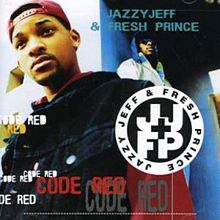
DJ Jazzy Jeff & The Fresh Prince – Code Red (October 12, 1993)

We last heard from DJ Jazzy Jeff & The Fresh Prince in 1991 with their platinum selling album Homebase, whose commercial success was directly linked to the album’s hit first single “Summertime”. Not only did the duo have a successful album under their belt, but The Fresh Prince also had one of the hottest TV shows on television at the time (if you don’t know what show I’m referring to I’m going to ask you to do a little research), so the world was pretty much at their feet. So, what would they do next? Release another album, of course.

Even though it did earn the duo a gold plaque, compared to Homebase, Code Red was a bit of a commercial flop, and the critics and fans didn’t think highly of it, either. Code Redwould be the final album from DJ Jazzy Jeff & The Fresh Prince as a group, though they would both go on to release solo projects afterwards. And The Fresh Prince bka Will Smith, was just beginning his rise to superstardom.

Somethin’ Like Dis – Wow, I had no idea that Pete Rock produced this song. Unfortunately, it’s not one if his stronger pieces of work, but I probably wouldn’t waste my best work on Will, I mean, The Fresh Prince’s flimsy rhymes, either.

I’m Looking For The One (To Be With Me) – This was the second single released from Code Red. If you absolutely hate this song, I completely understand. It does meddle in the road of cheesy R&B and hip-hop, but I kind of like it. Specifically, I like Teddy Riley’s synthy r&b backdrop, as it has good vibes dripping all over it. I could care less for FP’s weak rhymes, but the instrumental is definitely suitable for your summertime old school mix, if that’s even really a thing.

Boom! Shake The Room – This was the lead single from Code Red, and it sounds even cornier today than it did back in ’93. FP stays consistent, delivering more garbage rhymes (including an embarrassing third verse where he takes on a ridiculous stutter style) and a laughable hook, while Mr. Lee serves up a trash instrumental to match. I’m sure this song is the reason I never checked for Code Red when it came out back in the day.

Can’t Wait To Be With You – More corn. Will Smith, I mean, The Fresh Prince, gets the production credit for this one, as he swipes a loop from Luther Vandross’ “Never Too Much” for the backdrop, and invites Christopher “I never liked you anyway, pretty muthafucker” Williams to sing on the hook. Pardon me, I had some bad rap and R&B.

Twinkle Twinkle (I’m Not A Star) – On the song “Pride” from his classic DAMN. album, Kendrick Lamar says “I won’t fake humble because your ass is insecure”, and that is exactly what FP does on this song. It’s safe to say that Will Smith (or The Fresh Prince) has been a celebrity since the late eighties, and with the help of his hit TV show The Fresh Prince of Bel-Air, he was a bona fide star by 1993, and I’m sure he was fully aware of that. Props to DJ Jazzy Jeff for the fresh instrumental, though.

Code Red – I’m so disappointed right now. Before today, I was completely oblivious to the fact that Pete Rock produced two songs on Code Red, with “Somethin’ Like Dis” being the first, and this being the second, and both of them are terrible. FP’s storyline and rhymes on this one are just as terrible.

Shadow Dreams – FP uses this one to inspire the listener to chase their dreams. I’m not sure why he decided to take on the monotone delivery for this one, I guess that’s his serious voice? Regardless of how simple his lyrics are, kudos to FP for the positive message, and strong props to Hula and K. Fingers for the dope instrumental.

Just Kickin’ It – Hula and K. Fingers keep the good times rolling with this smooth backdrop that FP uses to spit his strongest rhymes of the entire album over. Even if you don’t like FP’s rhymes, if you have a soul, you’ll feel the beautiful instrumental.

Ain’t No Place Like Home – This is easily my favorite song on Code Red. Xavier Hargrove hooks up a laid back soulful instrumental that FP starts off reminiscing over, and that quickly leads to him getting home sick and making his way back home to Philly to catch up with the family. Yes, the rhymes are a bit sloppy and a little cheesy at points, but they’re heartfelt, which allows you (or at least, me) to overlook the flaws in them. I never get tired of listening to this one.

I Wanna Rock – FP pays homage to Jazzy Jeff, as he also gets to displays some of the DJ skills that make many consider him one of the best to ever do it. This was decent.

Scream – Dallas Austin gets a production credit for this one. It’s not a bad song, it’s just that it’s not that good, either.

Boom! Shake The Room (Street Remix) – As Trip from Juice so elegantly put it: “Just ’cause you pour syrup on shit doesn’t make it pancakes”.

There are way too many bad songs on Code Red to justify its twelve song length. While there are a handful of quality instrumental, FP’s rhymes are consistently bad throughout. Maybe Hollywood was taking his focus away from the bars. I mean, he was never a top-tier lyricist, but I’m sayin’.  Code Red might have worked as a five or six song EP, but as a full length album, not even close.

-Deedub

Posted in Uncategorized | 1 Comment

Souls Of Mischief – ’93 Til Infinity (September 28, 1993)

And today’s post completes the trilogy of September 28th 1993 releases.

When Del The Funky Homosapien came on the scene in ’91 with his debut album I Wish My Brother George Was Here (read my thoughts on that album here) he definitely introduced the world to a different perspective than it was used to hearing from a west coast emcee. Even though he was from Oakland, he didn’t present a pimp or gangster persona (despite the fact that his cousin was Ice-Cube), but instead he represented the common man that did and talked about everyday Joe kind of things. And after Del established his footing in the game, he would introduce the world to his Hieroglyphics crew, who shared a like mindset. The first installment of his Hiero crew that he would introduce to the world, would be Souls of Mischief.

Like Del, Souls of Mischief (which consists of A-Plus, Opio, Phesto and Tajai) were also born and raised in Oakland. The four met in junior high and high school, where they formed the group, and soon would sign a deal with Jive, and release their debut album 93 ‘Til Infinity. Even though it didn’t move a ton of units, 93 ‘Til Infinity was a critical darling, and The Source (when the magazine still had street cred) named it one of The 100 Best Rap Albums of all time.

Through the years, some of the members have recorded solo albums, but they have all stayed faithful to the foundation, and have recorded 6 albums, with the latest being released in 2014. So far they’ve stayed true to their debut album’s title.

Let ‘Em Know93 ‘Til Infinity opens with mid-tempo drums, a thumpin’ bass line and a sick trumpet loop, that has all four members of Souls Of Mischief dropping the most articulate battle rhymes that I’ve ever heard. Seriously, these dudes sound like nerd emcees, but don’t get it twisted, these dudes can spit.

Let ‘And Let Live – Opio, Tajai and A-Plus each give their dissertation about gun violence in America’s inner cities, and Phesto’s left with hook duties. Domino hooks up a mid-tempo jazzy backdrop, and Bill Ortiz adds some live trumpet chords. All these piece come together to form a masterpiece of a song.

That’s When Ya Lost – Most probably forgot about this song, because of the massive hit that the second single became, but this was actually the first single released from 93 ‘Til Infinity. Del gets his first production credit of the evening, and he cooks up a dope instrumental for the Souls to spit all over. It’s awesome to hear four emcees with four distinctively different voices, that are all equally skilled. This one still sounds sick.

A Name I Call Myself – Hey, even nerd emcees like sex. Del continues his streak of dope instrumentals, and constructs this smooth backdrop for the foursome to wax poetic about smashing PYT’s. Side note: Phesto sounds like the early years version of Phife-Dawg on this one (rip).

Disseshowedo – If I could leave one song off the album this would probably be the one.

What A Way To Go Out – On this one each member of Souls plays the role of a dude living life in the fast lane, until the consequences of their actions come back to bite them square in the ass. If kids actually learned from other’s experiences instead of having to experience things for themselves, this would be a great warning record to play for pre-teens and above. By the way, Domino’s backdrop is super low-key , but still pretty dope.

Never No More – This is tied for my favorite song on 93 ‘Til Infinity. Usually, I’m not a fan of battle rhymes being spewed over quiet storm instrumentals, but this is an exception. A-Plus’ soothing instrumental would be the perfect soundtrack for a massage, and the Souls’ rhymes work over it because of their articulation and instrument like vocal tones. I don’t care how many times I listen to this song, I never get tired of it.

93 ‘Til Infinity – This was the second single, and may be the greatest hip-hop album title track of all time. A-Plus’ instrumental is both intense and melodic, and the way A-Plus, Tajai, Opio and Phesto tag team the mic, they sound like an updated west coast version of the Cold Crush Brothers. This is a flawless classic.

Limitations – Casual drops in to contribute a verse, and Del handles the hook (and parting words), while the Souls continue to boast of their greatness and discredit all other emcees, over a Jay Biz produced instrumental. This was solid.

Anything Can Happen – Tajai sets up the scene with his verse, as he watches his childhood friend get murdered by gun shots, and his mom also gets hit when the shots are fired. Instead of calling 911, Tajai finds the nearest payphone (some of ya’ll may need to Google “payphone” to find out what that is) and calls Opio, and the rest of the Souls crew get involved seeking revenge for Tajai’s injured mom and deceased buddy. Yes, I know this is hard to believe coming from these guys, but at least they do a great job of sticking to the storyline, and the instrumental is solid. Plus, murder has never sounded so elegant.

Make Your Mind Up – And this is the other song tied for my favorite on 93 ‘Til Infinity. Del gets his final production credit of the evening, and he definitely saves his best for last, as he flips the shit out of a Ramsey Lewis loop and turns it into beautiful perfection (I absolutely love the way the bass line gyrates up and down the track). Phesto sits this one out, and lets A Plus, Opio and Tajai talk their shit over Del’s masterpiece, and they compliment his canvas, wonderfully.

Batting Practice –  Remember what I said about “Disseshowedo”? This one runs neck to neck with it for weakest song on the album.

Tell Me Who Profits – SOM uses the last real song of the evening to get slightly conscious, as they address/question the drug epidemic in America’s urban cities, amongst other things. You may recognize one of the loop’s Casual uses for the instrumental from Jay-Z’s “Coming Of Age”. Not my favorite song on 93 ‘Til Infinity, but it’s solid.

Outro – Over a simple Domino produced instrumental, SOM give their shoutouts, which coincidentally includes a shoutout to their same day debut release buddy, YZ.

On 93 ‘Til Infinity, Souls of Mischief sound like a hybrid of hip-hop and Shakespeare, kind of like when Mekhi Phifer played Othello in the movie “O”, only 93 ‘Til Infinity is actually worth the cost of admission. Over the course of thirteen songs, SOM construct meticulously articulate rhymes over hard-hitting drums and jazz vibes, that would lead one to believe these dudes were from the east coast, as they sound nothing like the west coast g-funk sound that dominated the left coast in the mid nineties. 93 ‘Til Infinity is not without flaws, but it’s a strong statement from SOM that holds up well, all these years later.

-Deedub

Posted in Uncategorized | Leave a comment

KRS-One – Return Of The Boom Bap (September 28, 1993)

Part deux of the September, 28 1993 releases.

We last heard from KRS-One (not withstanding his cameo appearances on other artists’ albums) on BDP’s 1992 release, Sex And Violence, which would be the final album released by Boogie Down Productions. As I mentioned in my post for Sex And Violence, Kris had pretty much cut out the bulk of the members in BDP before the album was released, so it was only a matter of time before he would go solo. And he would do just that in 1993 with his first solo effort, Return of the Boom Bap.

For ROTBB, Kris would recruit the legendary DJ Premier and Kid Capri to produce the bulk of the album, and he and a few others would handle the remaining balance of songs. ROTBB wasn’t a commercial success, but it was a critical darling, which should come as no surprise, considering how respected of an emcee that KRS-One is.

KRS-ONE AttacksROTBB opens with a Premo instrumental built around a dope piano loop, with KRS-One soundbites placed over it. Nice way to start to the evening.

Outta Here – This was the lead single from ROTBB. Kris uses his verses on this one to paint a brief bio of his humble hip-hop beginnings to his rise to emcee supremacy with Boogie Down Productions. Premo hooks up a simple, but intense, instrumental as Kris discusses living in the shelter, meeting Scott LaRock, meeting Rakim and Public Enemy, loosing Scott LaRock, and rappers who cool off and lose their record deal, video and $5,000 loveseat. I didn’t really like this song back in the day, but I can definitely appreciate Premo’s beat and Kris’ sharp lyrics more today than back then. Fine wine, baby.

Black Cop – On this self-produced track, KRS discusses the crooked, misguided and brainwashed black cops that mistreat the black community in which they are supposed to serve. Kris’ ragamuffin’ delivered content is solid, but I’ve never been able to get into his drab instrumental.

Mortal Thought – Premo whips up a beauty of a backdrop for this one, as Kris’ limber tongue and lyrics dance wonderfully all over it. This one is fire, and a classic boom bap record.

I Can’t Wake Up – Our host is stuck in a dream that he’s a blunt, but not just any blunt. Over the course of three verses, Kris has the pleasure of getting smoked by several of your favorite hip-hop artists (including his once enemy, Das EFX…apparently they made up by the fall of 1993) before finally being refused by the drug free emcee, Chubb Rock (Kris references a line from Chubb’s verse from “Back To The Grill”). I’m not a huge fan of Premo’s instrumental or Kris’ storyline.

Slap Them Up – Kris is joined by his buddy Ill Will, as the two tag team the mic over a dope melodic mid-tempo instrumental that’s credited to a Norty Cotto and Douglas Jones. Ill Will does a decent job of keeping up with the teacher, until Kris completely obliterates him, and the beat, on his final verse. This was dope.

Sound Of Da Police – This is another one that I wasn’t really a fan of back in the day. Showbiz hooks up a simple and dark backdrop for Kris to discuss the history of police in America (which includes a borderline stretch of “officer” being derived from the term “overseer”) to the current state of police brutality on black men, which sadly, is just as relevant today as it was 25 years ago. “My grandfather had to deal with the cops, my great-grandfather dealt with the cops, my great-grandfather had to deal with the cops, and then my great, great, great, great…when is it gonna stop?”. This one definitely sounds better today then it did in ’93.

Mad Crew – Kris’ instrumental is cool, but his lyrics are the true star of this one. So, just sit back and watch one of the best to ever grip a mic show you how it’s done.

Uh Oh – This one is unique. Kris gets credit for the production, so I’m assuming it’s his own voice that he loops and stacks to create the instrumental. He then pulls out his ragamuffin’ style to share three different tales of kids with guns that all end in death. Kris’ “beat” is kind of weak, but the stories were clear and delivered effectively.

Brown Skin Woman – Kris gets his ragamuffin flow on over a solid Kid Capri (who, thanks to his cameos throughout Kendrick Lamar’s DAMN, is now known by a whole new generation of hip-hop lovers) instrumental, showing respect to the black women, so you can’t hate on that.

Return Of The Boom Bap – I hated this song back in the day, and I still hate it now. The only thing about this song that I enjoyed was the quick and effective jab he takes at his nemesis, PM Dawn (“On and on to the PM Dawn, two buckshots and your squad is gone”…rip Prince Be). Other than that, this song was pretty worthless, which is sad, since it is the title song.

“P” Is Still Free – Kris picks up where he left off at on Criminal Minded’s “Remix For P Is Free”, as he shares a few tales about scandalous women doing whatever it takes to get the crack, rock that is. This may be my least favorite Premo produced song in his legendary catalog, and it’s easily the weakest song on ROTBB. But, I’m sure there is somebody out there that completely disagrees with me on that.

Stop Frontin’ – Kid Capri gets his second production credit of the evening, placing a smooth piano loop over soft drums, and a cool horn sample, that Kris uses to breeze through, making the art of emceeing look like elementary. Capri also squeezes a quick verse in between KRS-One’s, and he doesn’t sound bad. This is definitely one of my favorite songs on ROTBB.

Higher Level – Premo gets his final production credit of the evening, and he saves his best for last, as he turns a sick loop from Gene Page’s “Blackula” into a disgusting instrumental that will make you screw your face and nod your head, uncontrollably. Kris uses it to discuss religion and politics in America, as he instructs the listener to “vote for God, don’t vote for the devil”. There is not any better way he could have ended the album than with this monster of a masterpiece.

The chip that was squarely on KRS-One’s shoulder throughout Sex And Violence is clearly gone on Return of the Boom Bap. But don’t get it twisted, the teacher is still sharp as a razor. KRS-One laces the album with pristine rhymes and sound lessons throughout. It would have been nice to hear Premo produce the entire album, instead of just half, as the production is a bit uneven throughout ROTBB, but there are still enough bangers to keep you attentive, and Kris’ lyrical dexterity and clarity will keep you entertained, even when the instrumentals fail.

-Deedub

Posted in Uncategorized | 7 Comments

YZ – The Ghetto’s Been Good To Me (September 28,1993)

September 28, 1993 was a busy day for hip-hop. Here is the first of three reviews for albums that dropped that day.

When you think of New Jersey hip-hop, some of the common names that come to mind are Queen Latifah. Naughty By Nature. Redman. Fugees. Poor Righteous Teachers. These are all names that helped shape the sound and legacy of New Jersey hip-hop, but the subject of today’s post is a name that is often forgotten, but should be mentioned, as he is clearly a New Jersey hip-hip pioneer. Ladies and gentlemen, YZ.

Born Anthony Hill, YZ grew up break dancing and battling emcees in north New Jersey in the mid-eighties. After making a name for himself on the local scene for his battling skills, YZ would get the attention of Tony D (best known for being the man behind the boards for most of Poor Righteous Teachers’ first few albums), and the two would form their own Production company, Two Tone Production (because they were both named Tony and one was black and one white…pretty clever). They recorded a demo together that got into the hands of the right people and led to an indie deal with a small indie label, which later led to YZ buying into and becoming part owner of another small indie label (Diversity Records), where he released his first official singles “Thinking Of A Masterplan” and “In Control Of Things”. YZ would later sign Poor Righteous Teachers to Diversity, but according to YZ, Tony D got in Wise Intelligent’s ear and caused a riff between Y and PRT. This lead to PRT leaving Diversity before ever releasing music on the label, and eventually YZ would also leave Diversity and sign a deal with Tuff City Records, where he would release his debut album, Sons Of The Father (an album I’ve never heard, but will continue to wait to listen to until I can track it down for less than $50). Sons Of The Father was received well on the underground scene, and helped YZ get a deal with Livin’ Large, a subsidiary of Tommy Boy, where he would release the follow-up to Sons Of The Father, The Ghetto’s Been Good to Me. Damn, that was a lot of information.

The Ghetto’s Been Good to Me (which I will refer to as TGBGTM from this point on) produced at least two singles that I can recall, but the album came and went without much praise or fanfare. I copped TGBGTM a few years ago on the strength of those singles, but have never listened to the album in its entirety, until now. And there is no time like the present, folks.

Second To Nobody – The album opens with a dark and dusty Mark Spark produced instrumental that YZ uses to brag and boast, as he takes his shot at the imaginary throne. YZ might not be on the same lyrical level as say a Rakim or Kane, but was pretty nice with the verbs in his own unique way, and it’s on full displays on this opening track. This was dope.

The Return Remix – I’ve always thought it was strange to have the remix of a song before the original version in the album sequencing, but that is exactly what YZ does with this song. He also dedicates the third verse to Naughty By Nature (on the original mix, YZ makes that very clear when he starts off the verse with “I hear somebodies talking naughty naughty about me”), with whom it was pretty common knowledge that he was beefin’ with back then. The TrakMasterz (who now that I think about it have been making dope hip-hop records since the early nineties and well into the new millennium, but never seemed to get the props they deserve) are tapped to produce this one, and they provide a pleasant instrumental, but in my opinion, it’s too clean for YZ’s grimy rhymes. I definitely prefer the rugged Murders The Medicine’s o.g.  mix.

Barber Shop – This was kind of weird. I’ve never been the type that liked to post up and hangout at the barber shop. That’s why I always call (or text) my barber to schedule an appointment, so I don’t have to sit and wait for him forever. But YZ takes the hangin’ out shit to the next level. According to his rhymes, he likes to commit crimes (specifically, shoot niggas) and then chill at the barbershop all day as his alibi. Mark Spark builds the instrumental around the same loop that Marley Marl used for Intelligent Hoodlum’s “Party Animal” a few years prior, but it still sounds proper, even if YZ’s lyrical content is ratchet as hell.

Drink At The Bar – After one catches a body and hides out at the barber shop until the smoke clears, it’s only natural that he heads to the bar for a drink or two. YZ grabs a Becks and treats the PYT he meets to a “Sex on the Beach”, as he spits game to her over a laid back melodic Mark Spark instrumental. This was nice, suitable for listening to after the last call at the bar.

(So Far) The Ghetto’s Been Good To Me – And this is the reason I bought TGBGTM in the first place. YZ gets his first production credit of the evening (with a co-production credit going to Trakmasterz), knocking it out the park with a slightly drowsy bass line, balanced out by perky jazz horns, as our host struts with ghetto pride, confidently boasting about the respect he’s earned with his microphone in these here streets. This one still sounds amazing today.

It’s Got To Stop – If I had to leave one song off of TGBGTM, this would be the one. YZ sounds pretty solid, as he demands that sucka emcees stop with the bullshit, but Terminata’s chant of the song title during the hook gets annoying, and God Lequan’s instrumental is sub par.

Newborn – YZ is in high spirits on this one, as he anxiously awaits the arrival of his newborn seed. He also gets his second production credit of the evening, but this time it all goes to him without a co-credit, and it’s pretty solid.

Life Under Pressure – I’m not a huge fan of Murder’s The Medicine’s (or Murders The Medicine, as he’s credited in the liner notes on “The Return Of The Holy One”) instrumental, but YZ’s rhymes are colorful and very amusing, as he vents all over this song. It sounds like he may have taken some shots at the Fugees on his second verse when he mentions something about “Ruffhouse is buggin’ suckin’ your dick” and later “when I see a nigga front I wanna knock out his fronts, and kick the bitch in the cunt, all up in my face but she pulls too many stunts” (if you have more info on it, hit me in the comments).

Acid Rain – YZ invites his buddy City Morgue to join him over The Deviators’ dark instrumental, as both emcees take a verse to brag and boast about their greatness. It was hi-larious to hear City Morgue call YZ an ugly “muthafucka” on his verse. Overall, this was decent.

Dead Love – After several listens, I’m still not sure if this one is about a dead lover or if the “she” YZ speaks of is a metaphor or riddle for something else. Regardless of who he’s talking about, his eerie, yet melodic flow, is very intriguing. YZ gets credit for programming the drums, and invites Jamaaladeen Tacuma to play bass and Richard Tucker the rhythm guitar, and the results are damn near hypnotic.

The Return Of The Holy One – See my comments above for “The Return Remix”. And…wrap.

Most hip-hop artist underestimate the importance of an album’s length. I’ve always said it’s best to keep an album between 10 and 13 tracks, that way the listener doesn’t become overwhelmed and are able to digest the complete project and get familiar with the artist. On The Ghetto’s Been Good to Me, YZ does just that. With just 11 tracks, YZ allows the listen to familiarize themselves with his unique style and consume is content, while they nod along to a pretty solid bunch of instrumentals. There are a few mediocre songs on TGBGTM, but with the album only having 11 songs, it makes listening to the average songs easier to digest. TGBGTM isn’t a classic album, but it’s solid, and a nice discovery for me.

-Deedub

Posted in Uncategorized | 2 Comments

De La Soul – Buhloone Mindstate (September 21, 1993)

After releasing great back to back debut and sophomore albums, by 1993 De La Soul was quickly establishing themselves as some of hip-hop’s newest generals. They came on the scene in ’89 proudly representing the daisies, but that era quickly came to an end when the hip-hop community mistook them for soft hippy rap dudes. That led them to them proclaiming their own deaths their second go round in an attempt at a new beginning, but in reality they pretty much stuck to the same script as their first outing. So, what would the trio do with their third effort? Well, if it ain’t broke don’t fix it.

Buhloone Mindstate, which was De La’s way of saying that no matter how successful they are with their music they won’t sellout, would pretty much use the same formula as the first two albums: Abstract rhymes from Plugs One and Two (Posdnuos and Trugoy, respectively), and jazz drenched production from all three Plugs (resident deejay, Maseo being Plug 3), and the unofficial fourth Plug, Prince Paul. Like their first two albums, Buhloone Mindstate was received with heaps of praise by critics and hip-hop heads alike. Hell, In his 2004 Rolling Stone’s magazine list of greatest hip-hop albums of all-time, Chris Rock even scored Buhloone Mindstate number 10.

I’ve always felt that Chris was a great comedian.

Intro – The album open with a lonely loop from The Outlaw Blues Band’s “Deep Gully” and De La and crew reciting what is ultimately the theme and meaning of the album title: “it might blow up, but it won’t go pop”.

Eye Patch – I never really understood the concept behind this song. Posdnuos and Trugoy’s rhymes are too coded for my liking, and the instrumental behind them is so mediocre you won’t even want to put the effort into decoding whatever the hell it is that they’re talking about. It was kind of comical to hear Maseo talk his shit to “all those rappers that dissed” De La “on records” at the end of the song, though.

En Focus – Pos and Trugoy exchange verses about fleeting fame and the fickleness of fans in the music industry. Pos’ abstract rhymes work better on this one than the first song, but Trugoy’s lines are still too much for me to try to get to the bottom of. Plus, Prince Paul and company hook up yet another uninteresting instrumental.

Patti Dooke – Over a smooth jazz flavored backdrop carried by some warm sax notes, Posdnuos and Trugoy abstractly, as our friends at Genius.com so eloquently put it, speak on” the never-ending phenomenon of the misappropriation of Black influence into mainstream musical culture without proper accreditation”, or in laymen terms: how throughout time the white man has consistently stole black folk music and made way more money off of it than the creators. Patty Duke was a child actress in the sixties best known for her starring role in The Patty Duke Show, whose name would later become the name of a popular hip-hop dance in the eighties. Guru (from Gangstarr, rip) stops by to assist with the hook, and Paul and the boys masterfully place soundbites from The Five Heartbeats (I love that movie) throughout.

I Be Blowin’ – De La Soul invites the legendary jazz saxophonist, Maceo Parker to blow the shit out of his horn over an emotional and somber backdrop. No rhymes. No hook. Just Maceo Parker playing his horn over an instrumental that is bound to make you reflect and make some introspections, as you try to figure out how you became the piece of shit that you are today. I’m just sayin’.

Long Island Wildin’ – SDP and Takagi Kan stop by, fresh off a plane from Japan (Konnichiwa, bitches!), to spit a quick verse in Japanese. I have no idea what they’re saying, but whatever, it’s over pretty quick.

Ego Trippin’ (Part Two) – This was the second single released from Buhloone Mindstate. Paul and De La borrow a few loops from Al Hirt’s “Harlem Hendoo” (the liner notes in Buhloone Mindstate credit the song as “Harlem Hendo”, but you get the drift) and turn it into a beautiful instrumental for Pos and Tru to poke fun at the hardcore gangster/pimp persona that was becoming popular in hip-hop at the time. Well done, fellas. Side-note: there is no part 1 to this song, but the “Part Two” in the title is more so paying homage to Ultramagnetic MC’s classic song with the same title.

Paul’s Revenge – This short interlude has Prince Paul leaving a venting voicemail about not getting credit for some songs he apparently produced for Slick Rick (I’m assuming he’s referring to The Ruler’s Back album?). It’ll make you chuckle at least the first few times you listen to it.

3 Days Later – Posdnuos and Trugoy each share cautionary tales where lust and pride, respectively, do them in. This song has never been one of my favorites. The instrumental might not grab you right away, but after a few listens, you’ll begin to appreciate it, but I have and always will hate Pos and Trugoy’s elementary flow on this one.

Area – Brothers De La use this drab backdrop to shoutout the different area codes they dwell in, their people dwell in, or where they had to kick niggas asses at. I never cared for this one in the past and still don’t today.

I Am I Be – De La revisits the instrumental from “I Be Blowin'”, but this time around they substitute Maceo Parker’s sax solo with rhymes from Posdnuos and Trugoy, who give brief bio’s to explain who they are and “what they be”. The intro (and outro) of the song have De La’s extended family members (i.e. Q-Tip, Shortie No Mass, Busta Rhymes, Dres, to name a few) introducing themselves and “what they be”, which brings me back to a line from Posdnuos’ first verse: “faker than a fist of kids, speakin’ that they’re black, when they’re just niggas trying to be Greek, or some tongues who lied and said “‘We’ll be native to the end”, nowadays we don’t even speak”. I’ve always wondered which of his Native Tongue brethren (or sisters) that line was meant for. If you know, hit me in the comments. This is definitely one of the best songs on the album.

In The Woods – This is one of my favorite songs on Buhloone Mindstate. The fellas hook up an upbeat jazz flavored backdrop, complete with warm horns on the hook, as Posdnuos, Trugoy, and female emcee, Shortie No Mass (who is to Buhloone Mindstate what Consequence would later be to Tribe’s Beats, Rhymes And Life), each spit a verse over its splendor. Posdnuos, as usual, walks away with the title, as he spits what is probably his best verse of the entire album, with bars like “Catch me breathin’ on planes where the gangstas outdated, fuck being hard, Posdnuos is complicated”. This one sounds better today than it did when I first heard it two decades ago.

Breakadawn – This was the lead single from Buhloone Mindstate. Paul and the boys rip a loop from MJ’s “I Can’t Help It” and turn it into a beautifully melodic instrumental that Pos and Trugoy spill their rhymes over.

Dave Has A Problem…Seriously – Trugoy (also known by his government name, Dave) uses this interlude to quickly makes what starts out as a routine voicemail go from weird to downright disgusting. It’ll make you laugh at least the first two times you listen to it, though.

Stone Age – De La Soul ends Buhloone Mindstate with what may be the worst song in their entire catalog. From the empty instrumental, to Pos, Trugoy and special guest, Biz Markie’s, garbage rhymes, everything about this song was wrong.

I love De La Soul. Maybe not as much as ATCQ, but I still have a significant amount of love for the Long Island threesome. Any true hip-hop head or historian will agree that De La Soul’s prime years were their first four albums (3 Feet High And Rising, De La Soul Is Dead, Buhloone Mindstate and Stakes Is High). That doesn’t mean that the rest of their catalog is garbage. They definitely had some fire songs and pretty solid albums after Stakes Is High, but they were no longer relevant.

I say all of that to say that of De La’s prime albums, Buhloone Mindstate is without question the weakest of the four. Posdnuos and Trugoy have always been abstract with their rhymes, but on Buhloone Mindstate they take their abstractions to new levels, to the point I get headaches trying to decode them. And to make matters worse, most of the production ranges from boring to trash. Don’t get me wrong, Buhloone Mindstate does have a handful of dope songs (see “Patti Dooke”, “I Am I Be”, “In The Woods” and “Breakadawn”), but the majority of the album is barely passable from an early nineties De La Soul. Or, maybe I’m just deaf, dumb and blind (I’m actually not that far from being legally blind, but that a story for a different day).

-Deedub


Posted in Uncategorized | 3 Comments

Poor Righteous Teachers – Black Business (September 14, 1993)

We last heard from Poor Righteous Teachers in 1991 on their sophomore effort Pure Poverty, and while it didn’t move as many units as their gold selling debut album, Holy Intellect, some critics and fans considered it classic record (I personally found the album’s title more interesting than the actual album itself, but that’s neither here nor there). The Trenton, New Jersey trio would return in 1993 with their third effort, Black Business.

Tony D (rip) handled most, if not all, of the production duties on the first two PRT albums, which I’ve always thought was interesting, considering he’s white and PRT’s black militant stance. For Black Business, PRT decide to do it themselves, as they handle the bulk of the production, only leaving Tony D to produce 4 tracks. Like Pure Poverty, Black Business was another critical success for the trio, but it didn’t match the commercial success of Holy Intellect.

But we don’t care about commercial success here at TimeIsIllmatic, only quality music. So let’s see if PRT handled their um, business, this time around.

144K – PRT start things off with a bangin’ reggae-tinged instrumental that has Wise Intelligent displaying his flow and seamlessly shifting from a standard flow to raggamuffin style (sometimes within the same verse), spilling black consciousness mixed with shit talk (damn, that was a long sentence!). This was a great way to kick things off.

Da Rill Shit – Interesting to see a posse cut appear this early in the sequencing, but Wise Intelligent, Culture Freedom and Father Shaheed are joined by Power Israel, Black Prince and Omar Superstar (yeah, I never heard of any of them either), as each party kicks a verse in this cypher. The instrumental is decent, and even though no one sounds spectacular on the mic, every one holds their own and sounds like they had fun recording this one.

Nobody Move – This was the first, and I believe, only single released from Black Business. Over a bleak and rugged backdrop, Wise Intelligent continues to pimp slap the beats with his commanding ragamuffin flavored flow. Dope.

Mi Fresh – Long time PRT collaborator, Tony D gets his first production credit of the evening, and it’s fairly decent instrumental. Wise and Culture Freedom take turns talking their shit, dropping a few lesson and defending their own righteousness when their critics are “drinking brew, puffin’ blunts, shootin’ dice and shit”. Well done, gents.

Here We Go Again – More black conscious rhymes mixed with emcee bars from Wise and Culture on this one. This instrumental kind of reminds me of the one used on “Mi Fresh”, but different enough to sound dope in its own right.

Selah – Black Business’ momentum slows down quite a bit with this one. Tony D slides Wise Intelligent a sleepy paced instrumental that he continues to teach over. And Wise may have been just as dope on this one as the previous songs, but Tony D’s instrumental is so boring it distracts your attention from anything else going on during the song.

Black Business – Talk about redemption. Tony D comes right back and turns hard drums and a breezy horn loop into a gem of a backdrop for the title track. Wise Intelligent serves it justice, but Tony D’s backdrop is the true star of this one, as he provides the best instrumental of the entire album.

Get Off The Crack – On this one PRT take things back to the dark and dusty zone they’ve been it for most of the album. Wise and Culture Freedom take turns mixing lessons with shit talk, and while Wise has nothing to worry about as far as being the number one emcee of the crew, Culture Freedom sounds pretty nimble with his flow on this one.

None Can Test – The energy comes down a bit from the previous song. Over a decent instrumental, Wise continues to “New Jersey drive” over the track (he must have loved that movie, because this the third song on Black Business that he mentions it on). Wait. Did Wise take a shot at Brand Nubian (“if there’s a foe that’s in the place that’s willin’ to fuck with this, you punks jump up to get beat down for playing that stupid shit”)? Regardless, this song is decent, but definitely not one of the strongest songs on the album.

Ghetto We Love – Wise uses this one to reminisce about his ratchet upbringing in the ghetto (“rats in my front room, roaches in the back, junkies in the alley running sells for the crack”), while at the same time singing praises for the childhood trials that helped shape him into the man (or god) that he is today. Add a decent backdrop to the mix and this turns out to be a well sculpted track.

Rich Mon Time – Over a reggae tinged backdrop, Wise pulls out his “stummer step” style (which is basically his reggae/ragamuffin flavored flow), and Culture Freedom contributes a useless verse that makes me want to take back everything nice I said about his rhyme on “Get Off The Crack”. The song opens with Wise saying “this is a rich man time…unless poor people fight for their rights”, but neither he or Culture’s rhymes have anything to do with the that statement or the song title. The PRT produced instrumental is a nice mellow groove that kind of reminds me of the acoustic mix of Arrested Development’s “People Everyday”.

Lick Shots – The final song of the evening has Wise licking shots at his adversaries over a hard and dark Tony D produced instrumental. Not my favorite song on Black Business, but still a solid ending to the album.

Black Business is easily the most consistent of Poor Righteous Teachers’ first three albums. With some help from Tony D, PRT manage to string together a cohesive batch of backdrops, mixing in a few certified bangers (see “144K” and “Black Business”) amongst a bunch of blue-collar instrumentals that more often than not work well behind Wise Intelligent’s strong and flexible flow. Black Business does come with a few hiccups, but overall winds up being a black business worthy of your support.

-Deedub

Posted in Uncategorized | 1 Comment