Ant Banks – Big Thangs (July 8, 1997)

My first post of 2024 was on Ant Banks’ second solo album, The Big Badass. Ant Banks is known as a producer, but on Badass, he not only controlled the boards but also stepped behind the mic, handling most of the album’s rhyming. Unlike Diamond D, Pete Rock, and Large Professor, Ant Banks is not in the running for best producer on the mic. Lyrically, I wasn’t expecting much from Banks on Badass, but I was looking forward to the dense funk I’d heard him create on Too Short and Spice 1 tracks. There were a few great funk moments on Badass, but they were few and far between. Banks would release one more solo project (Do Or Die) and was a part of The Dangerous Crew album, Don’t Try This At Home, before parting ways with Jive, the label home for his first three solo projects. He would begin his next chapter on Priority Records, releasing Big Thangs in the summer of 1997.

Big Thangs is a compilation project produced by Banks with a pretty impressive guest list: Dr. Dre, Ice Cube, Ice-T, Spice 1, and King Tee, to name a few. The hefty guest list must have helped, as the album climbed to number 20 on the Billboard Top 200. But even with a top twenty position, the album wasn’t a huge commercial success and would end up being the only album Banks would release on Priority. Other than a few collab albums with the vanity group T.W.D.Y. (an acronym for The Whole Damn Yay) released on Thump Records, Big Thangs would be the end of Ant’s album career. He would continue to produce tracks for other artists, though.

Big Thangs is another first-time listen for me. Let’s get into it and see if them thangs are as big as Ant claims. Pause.

Intro – The album begins with our host sharing a few words to introduce and hype up the album. He also invites us all to take a whiff of his funky “poot” (“poot” is his word, not mine) while Otis and Shug (the album’s house singers) harmonize the album title over super mid instrumentation.

Big Thangs – The first song of the night pairs Ice Cube with Too Short as the two exchange thrown-together misogynistic bars tied together with a beyond-elementary hook. It’s fair to say the duo doesn’t recapture the magic they created on “Ain’t Nothin’ But A Word To Me” (see Short Dog’s In The House). At least Ant’s breezy Kool & The Gang’s “Summer Madness” interpolated backdrop was pleasant.

Coolin In The Luff – The legendary Bay Area radio host Chuy Gomez stops by and drops a few lines on this short interlude.

Can’t Stop – Sticking with the duet theme, Ant brings E-40 and Mack 10 together to form E-Mack 50. Mack 10 gives a decent performance, and E40 sounds like he has split personalities. At the end of the record, 40 sounds like he may also suffer from Tourette’s Syndrome. I’ve never been a fan of E40, and after hearing him rhyme over Banks’ underwhelming instrumental, my opinion hasn’t changed.

West Riden’ – Here’s a pairing I didn’t know I needed to hear: King Tee and Spice 1. The Likwit Crew founder and The East Bay Gangsta bring L.A. and the Bay together, respectively, and ride for the West Coast. The duo sounds good rhyming together, and Ant’s smooth groove behind them only makes the track more enjoyable.

Hard Knox – W.C. shows up for this one, making him the third and final member of Westside Connection to contribute to Big Thangs. He’s joined by a rapper named J-Dubb as the two take turns gangster posturing because, as the hook says: “Bitch, I know my ABCs, but all I ever did in life was fuck with Gs.” Both Dubbs give a serviceable performance on the mic, but Banks’s semi-dark G-Funk-esque instrumental was way more entertaining than the rhymes. Warning: if you listen to this in your car, beware of the nagging beep embedded in the instrumental that might make you think the door is ajar or your seatbelt is unfastened.

Gamblin’ Wit Ice T – Ice-T sends Ant a line from a yacht floating on the Mediterranean Sea. Allegedly. It sounds more like it was recorded in somebody’s home studio with sound effects thrown in for good measure.

4 Tha Hustlas – Ant chefs up one of his standard stank backdrops, but it’s Shorty B’s understatedly funky guitar riff that really makes this track smell (understated goes out the window at the end of the record when he goes full-on rockstar with the licks). Too Short, Tupac, and MC Breed take turns jabbing at Banks and Shorty B’s funk. All three hold their own, but I was thoroughly impressed by Breed’s closing verse. It’s crazy to think that two-thirds of the guests on this track are no longer with us. May Pac and Breed continue to rest in peace.

Time Is Tickin’ – Bad-N-Fluenz is a crew I’d never heard of before looking through the Big Thangs’ liner notes. Through a little Googling, I discovered they were an Oakland collective, and two emcees in the crew, Ant Diddley and Mr. Ill, rap on this track. Ant Diddley starts the record off shouting out his fallen comrade and former partner in rhyme, Rappin’ Ron, who passed away in a car accident in January of ‘97. Then he and Mr.Ill take turns discussing everything from the streets to the beach (and the solar system) with flows and vocabulary not usually heard from Oakland emcees (Mr. Ill raps about the “Choice words” that come from his “mandible.” I’m pretty sure I’ll never hear another rapper use “mandible” in a rhyme). The eerie, slightly mystic vibes in Ant’s instrumental complement the high-level lyricism exhibited by these two talented emcees, which I’m thankful I discovered on this track.

Cutaluff – Dr. Dre shows love to Ant Banks by doing the intro for this track. Then Slink Capone gets off one short, forgettable verse, followed by a mediocre refrain and vocal performance from Stacey Hogg.

Hoo-Ride Ant Banks – This was a cute interlude. B-Legit (from The Click), Mean Green, MC Ant (who claims to be the first rapper Ant Banks ever recorded with), and Baby D (the kid rapper that Short Dog haphazardly gave a solo track to on Gettin’ It ) all leave disgruntled voicemails for Banks, expressing their disappointment for not receiving an invite to rap on Big Thangs. The eerie background music left me waiting for Ice Cube to say, “Fuck All Ya’ll.”

Make Money – CJ Mac and K-Dee spit hustler rhetoric with so much West Coast bravado I wanted to jump on the hood of a ‘64 Impala and crip walk. Add Otis and Shug’s catchy jingle on the refrain with the slippery guitar licks, jazzy keys, and a string loop with cloudy sophistication, and you get arguably the best record on the album.

Play Paraphernalia – Coolio (RIP) intros this record, showering Ant with verbal love. Then J-Dubb (making his second cameo of the night) and Rappin’ 4-Tay team up to share some “pimpish ass shit with a gangsta twist.” Decent rhymes over a moderately funky backdrop.

Fien – AllFrumTha I was a two-man team, Binky Mack and Squeak Ru, hailing from Inglewood, California, hence the corny group name. The duo uses this record to discuss their addiction to money, hoes, narcotics, bitches, switches, and hydraulics. Ant lays a slick mid-tempo groove with discreetly funky wah-wahs to support the duo’s pimpology. I don’t fully know what it means, but I love the “My office be the streets, can’t let no grass grow under my feet” line. It sounds like some ole slick Oakland pimp shit.

You Want Me Back – Ant gives the floor to a songstress named, Audrian for the final record of the night as she sings another “You fucked up, but now you want me back, and I’m not interested” song dedicated to her ex. J-Dubb and CJ Mac add raps from the perspective of her ex and her new man, respectively, over Ant’s instrumental, which is the perfect balance of lush R&B chords and Oakland funk. Audrian reminded me of Michel’le, until she attempted to hit a big run and failed miserably. If Ant wanted an R&B record on the album, I wonder why he didn’t let Otis & Shug get their own joint.

Outro – Our host brings back the beat from the title track to share a few parting words. And we’re done.

During the album’s “Intro,” Ant Banks says, “We bout to pull off the biggest bank robbery ever known to man.” This statement could be interpreted in a few different ways. Is Banks implying that the album is so bad that he’s robbing the fans who spent their hard-earned money on it? Or is he giving the listener the inside scoop on him and his team’s planned criminal activity? Or is it just a poorly executed play on his last name and a really bad metaphor for Big Thangs being a monster of an album? If you guessed C, you’re correct.

Ant’s solo run at Jive taught him one thing for sure: rapping isn’t his strong suit. Other than the intro, outro, and a few adlibs here and there, he leaves the microphone alone on Big Thangs and lets his lengthy list of guests handle the rhyming, with mixed results. The guest list includes heavy hitters, all the way down to unknown newcomers, all with one common goal: to represent the West Coast. Most of the big guns’ contributions felt mailed in, and the hustler/pimp/gangsta themes consume most of the album. But scattered amongst the heavy hitters’ coasting and the repetitive subject matter are a few great emcee moments: see “West Riden,” Time Is Tickin’, and “Make Money.” But when the rhyming doesn’t tickle your fancy, Banks’ production bears the load. Without the responsibility of having to worry about rhyming, Ant focuses solely on the production, and it pays off. Big Thangs has a few mediocre musical moments, but most of the album is filled with Ant’s signature Oakland funk, and the stank is way more consistent than it was on Badass.

Before Banks’ horrible heist metaphor happens during the “Intro,” he asks the listener a series of times if they “can smell it,” referring to the funk in his music. On Big Thangs, Banks’ poot provides a sufficient amount of odor to keep the listener’s face scrunched up in satisfaction.

-Deedub
Follow me on Instagram @damontimeisillmatic

Posted in Uncategorized | Tagged , , , , | 2 Comments

Puff Daddy & The Family – No Way Out (July 1, 1997)

With all the drama, accusations, charges, and, more importantly, the Cassie tape, I’m sure some of you have already canceled Diddy and his musical catalog from your playlist, which I can understand. I’ve never been the biggest Diddy fan, but no matter how you feel about the man, there is no denying his label, Bad Boy, was responsible for some pretty great music in the mid-nineties to early 2000s. Craig Mack warmed things up with the label’s inaugural single, “Flava In Your Ear,” in the summer of 1994. The R&B acts Faith Evans, Total, and 112 all released platinum-selling albums, and I’d be remiss not to mention the impact Biggie made with Ready To Die and Life After Death. Even after Big’s death, Bad Boy’s R&B roster, along with Mase, The Lox, and Black Rob, would carry on the label’s platinum tradition. Diddy, who always made it a point (as Suge Knight said at the 1995 Source Awards) to be all in the video and all on the records of his artists, decided he didn’t just want to be a backup dancer or a hypeman for the label’s talent, but wanted to become the label’s talent as well (this would eventually cause issues with some of the other Bad Boy artists, but that’s a story for another day). His first stab at being an artist would come in June of 1997 with the release of Puff Daddy & The Family’s No Way Out.

No Way Out was released on the heels of the murder of the label’s biggest artist, Notorious B.I.G., and his posthumous release, Life After Death. Diddy would enlist his Hitmen production team to set the album’s musical tone and call on a host of guests, aka the Family, including the ghost of his fallen superstar emcee. No Way Out received mixed reviews from major publications, but that wouldn’t stop it from climbing to number one on the US Billboard Top 200 and becoming a four-time certified platinum album six months after its release. To date, it has sold over seven million units.

I was pretty much done with secular hip-hop by June of ’97, so other than a couple of singles, I don’t know a whole lot about No Way Out. I repurchased one of the seven million copies sold for a few bucks at a thrift store a few years back, long before all the allegations began to surround the business mogul (although there were rumors about his lifestyle and dirty deeds long before).

A reader asked in the comments of my Life After Death write-up if I would give a fair and balanced review of No Way Out. I will try my best to do that and not judge Diddy for the piece of shit that I believe him to be.

No Way Out (Intro)No Way Out begins with somber chords sung by a celestial choir while a grieving Puffy whispers a prayer that I’m sure he’s probably repeated a few times in the past year, now with new meaning. The choir loop is embedded with cliche sirens and helicopter propellers. Unless it’s completely necessary, can we retire the use of sirens in hip-hop songs?

Victory – From the moment you hear Stevie J’s solemnly triumphant chords come in, along with Biggie’s opening “One” adlib, you can feel this is going to be epic. Puffy helps build the anticipation with a few warm-up lines while the tension in the backing music grows until the drums drop and Big commences to K.O. the track in two rounds. I know this is essentially Puffy’s solo album, but after his opening words, he should have bowed out and let his deceased star emcee shine without interrupting with his minuscule verse sandwiched in between Biggie’s brolic bars. Busta Rhymes comes through to add an energetic hook to what was already an enthused musical experience. This is certified fire. After the music ends, Puffy comes back in yelling, “What I’mma do now? Huh? It’s all fucked up now,” as if hearing Biggie’s vicious verses reminded him that Big’s demise meant the label’s cash cow was now gone.

Been Around The World – Coming off the success of their duet, “Can’t Nobody Hold Me Down,” Puff and Mase reunite to brag about their material possessions, boast of their sexual exploits, and address all the haters whose favorite emotion is directed towards them. In this current climate, hearing Puff say, “Let the Freak Show begin,” and talk about anything sexual is crazy uncomfortable to hear, but much like the album’s lead single, Diddy and Mase’s expensive and explicit chemistry works. Biggie’s catchy Lisa Stansfield-inspired hook, along with D-Dot and Amen-Ra’s smooth but playful David Bowie-fueled backdrop, makes the record even more appealing. This one ends with a skit of The Madd Rapper (first introduced on Life After Death) introducing us to The Madder Producer. It’s silly shit, but whatever.

What You Gonna Do? – An ordinary lunch date with a friend turns into a shootout with unknown rivals on Puff’s first solo joint of the evening. The writing credit for this one is given to Diddy and Lil’ Kim, but I’d be willing to bet Big also had a hand in penning this drama (at least the first verse). Puff fails to sell it as he sounds like he’s reading the script directly from the paper, and the storyline gets confusing, falling apart by the midway point. Despite Puffy’s performance, I still enjoyed Nashiem Myrick’s (with co-credit going to Amen-Ra) slick, gangsta thriller of an instrumental.

Don’t Stop What You’re Doing – Puffy summons Amen-Ra to loop up Yarbrough & People’s classic funk joint, “Don’t Stop The Music,” which is a no-brainer considering Puff’s favorite tagline. Lil’ Kim makes her first appearance on the album and shares the mic with Puff while the incomparable Kelly Price stops by to sing the hook and adlibs on this feel-good record.

If I Should Die Tonight – J-Dub hooks up a polished, sexy R&B groove with Carl Thomas crooning in the background, which makes for an odd set-up for Puff to reflect on death.

Do You Know? – D-Dot hooks up a soulful mid-tempo groove punctuated by sparkling, sophisticated piano keys (credited to J-Dub), and Kelly Price drops in again to add her voice to the Diane Ross-influenced hook. Puffy goes dolo once again and doesn’t sound convincing. J-Dub jumps back on the piano and completely kills with his closing solo.

Young G’s – Diddy, Jay-Z, and Biggie each spit a verse *in my Snoop Dogg voice* From a young G’s perspective. Kelly Price recreates the refrain from Donny Hathaway’s “Little Ghetto Boy,” and Rashad Smith provides a cool xylophone-driven instrumental to back the pow-wow. I bet you can figure out who the weakest link is on this record.

I Love You Baby – Other than his hit record, “Whoa,” I didn’t know much about Black Rob. I recently discovered a couple of cameos he made on CRU’s Da Dirty 30, which I enjoyed. Puff gives him an opportunity to shine on this track as he spins a dark tale about betrayal and revenge. Rob’s premeditated murderous getback, delivered with his gruff voice, sounds great over The Hitmen’s elegant strings and piano keys that were tailor-made to converse about sex and deceit. I have one issue with this record: Puffy. Why in the hell does he jump in on Rob’s story to give us the last verse? This is Rob’s narrative, so give him the floor and keep your contribution to the whispers you put on the hook, dammit. J-Dub returns at the end of this track to put down another passionately disgusting piano solo. Rest in peace, Black Rob.

It’s All About The Benjamins (Remix) – The liner notes and back CD panel list this as a remix, but it’s the only version of the song that I’ve ever heard. Puffy’s joined by Jadakiss, Sheek Louch, Lil’ Kim, and B.I.G. for this blinged-out cipher session (I wonder why Styles P didn’t make the record). D-Dot’s credited with the hard-hitting mid-tempo backdrop (if you listen to the original Love Unlimited loop the instrumental is built on, D-Dot’s flip sounds even more impressive), but my favorite part is when the beat changes to the flute-led Jackson 5 loop and we get one last charismatic and expensive verse from Frank White.

Pain – Over somber piano play, Puff shares some of the painful events that have him wanting to check out (i.e., his father’s murder when he was a kid, his haters wishing for his downfall, and Biggie’s murder, which is the theme of the third verse). I respect Puff showing vulnerability, but this should have gone right after the “If I Should Die Tonight” interlude. There’s no reason to have two separate “woe is me” moments on the album. Speaking of pain, it was painful to listen to the uncredited voice that sings the hook.

Is This The End? – Puffy gets really ambitious with this one as he attempts to rap double-time, a la Twista. Speaking of Twista, I remember him when he went by Mista Tung Twista in the early nineties. Back then, he was more concerned with speed and getting into the Guinness Book of World Records than style and creating dope records. He reinvented himself with his cameo on Do Or Die’s “Po Pimp,” which was cool stylistically, but I didn’t think it was lyrically phenomenal. He pops up on the second verse of this song and saves Puffy, both figuratively (Puffy was struggling heavily to keep the double-time pace) and literally (in the song, he shows up to give Puff a ride to escape some “unholy men” looking to kill him) and completely obliterates Stevie J’s chirping birds and innocent harp plucks. I didn’t care for the Carl Thomas/Ginuwine hook, but Twista sounds incredible on this record. I’m going to hunt down a copy of Adrenaline Rush immediately!

I Got The Power – Two words come to mind to describe this one: bully and gully. The Lox batter and bruise Jaz-O’s electronically grimy backdrop. This record only increased my anticipation to finally listen to and break down Money, Power & Respect in the near future.

Friend – This was a complete train wreck. Stevie J builds a decent sonic canvas around an Average White Band loop, but Puffy and Foxy Brown’s exchange, along with Simone Hines’ hook, feels recklessly thrown together and simply doesn’t make any damn sense.

Senorita – After an extremely too-long pillow talk exchange between Puff and his Spanish-speaking vixen that ends the previous track, Yogi (from The CRU) drops a hypnotic pulsating bass line and sprinkles melodic chimes from heaven over it to set the mood for Puffy’s ode to his sexy Latino goddess, Carmen (I wonder if JLo was the muse for this song). Puff sounds more convincing rhyming on this song than any of his other solo joints on the album, but nowhere near spectacular. But his catchy hook will have you singing along while you bob your head to the plush instrumental.

I’ll Be Missing You – With “Can’t Nobody” (which will get to real soon) being released six months before No Way Out, this is the album’s unofficial lead single/official second single. Stevie J taps The Police’s “Every Breath You Take” for the backdrop, and Faith Evans and 112 lend their vocals to Puffy’s dedication to his fallen friend or deceased bitter employee, depending on who you ask. Puff spews simple, sappy, and cliche bars, but the music and Faith and 112’s voices on the hook and bridge will surely stir your emotions as you reminisce over Big or any of your lost loved ones.

Can’t Nobody Hold Me Down – As promised, Diddy closes the album with the lead single. Six July and Nashiem Myrick recreate the vintage electronic funk of “The Message” for Puff and Mase to tag team the mic and boast about materialism and excess and excessive materialism. The hooks and refrains on the album version sound shortened compared to the original mix that I remember, but even in its truncated form, it still sounds great. My only issue with this record is its placement. You have to close the album with the Biggie dedication joint, bro.

“Do You Know?” begins with Puffy saying, “There are times in my life when I feel trapped. I feel there’s no way out. No escape. To be honest, I don’t know where my life is going. Where I’ll end up at. I just don’t know.” I’m sure he didn’t think he’d end up where he is now. Maybe the album title, No Way Out, was Puffy’s way of subliminally crying out for help to escape the dark, twisted, and perverted world he felt trapped in. Needless to say, it didn’t help him escape, but it may have helped produce some great music.

There’s a reason No Way Out is credited to Puffy Daddy & the Family. Of the album’s seventeen tracks, only five feature Puff rhyming by himself. This was a wise move, considering Puff is a horrible rapper. I’ve often criticized rappers in the past for not writing their rhymes, but after listening to Puff recite rhymes written by some of hip-hop’s greatest pens (i.e., Jay-Z, B.I.G., and Jadakiss) on this album and still sounding terrible, it made me respect what Lil’ Kim does even more. It’s well-known that Big penned most of her rhymes for the Hard Core album, but she sold it with her personality, charisma, and believable promiscuity. Ironically, Diddy, the ultimate salesman, fails to close the deal as an artist on No Way Out, but everything works well.

The production on No Way Out is stellar as The Hitmen laced the project with so much soul, heat, and flavor you’d swear it was an audible New Orleans seafood boil. All of the Family and special guests, not named Foxy Brown or that horrible uncredited voice that sings the hook on “Pain,” deliver with solid to great efforts. Biggie’s handful of contributions were a nice added touch, and more importantly, they sound authentic and not like posthumous patchwork added to gain clout, even if that was Puff’s purpose for including them. Despite a few track sequencing issues, “Friends” and Puffy’s rapping, No Way Out is a really good listen if you can look past Diddy’s disgusting highly-publicized transgressions. How’s that for fair and balanced?

-Deedub
Follow me on Instagram @damontimeisillmatic

Posted in Uncategorized | Tagged , , , , | 1 Comment

The Beatnuts – Stone Crazy (June 24, 1997)

The last time we checked in with The Beatnuts here at TimeIsIllmatic (at least as far as an album is concerned) was in 1994 with their first full-length release, Street Level. A year before, The Nuts released their debut EP, Intoxicated Demons, which was flavorful but just an appetizer compared to the delectable audio goody that was Street Level. Street Level received a positive response from fans and critics, helping establish a solid foundation for The Nuts, but things would soon change.

The Beatnuts were billed as a trio (JuJu, Les, and Fashion), but they were really a foursome, with V.I.C. being the fourth official or unofficial member, depending on who you ask. After Street Level, V.I.C. would sever ties with the group, and Fashion would depart to start a solo career as Al’ Tariq, officially leaving The Beatnuts as a duo. Like they say, the show must go on, and after a three-year hiatus, JuJu and Psycho Les would return in 1997 with Stone Crazy.

With V.I.C. and Fashion gone, JuJu and Les would be forced to handle all microphone and production duties on Stone Crazy. Well, most of the microphone duties as they’d invite a handful of guests to share the lyrical load. The album produced four singles and was well-received, including a 3.5 mic rating from The Source.

I stopped following The Beatnuts after Street Level, but I bought a copy of Stone Crazy at least ten years ago, and I’m finally getting around to listening to it for the first time with this review. I’ve always respected The Nuts’ early production work, so I’m interested to hear how it sounds with half the team gone.

World Famous – Not to be confused with the intro from their debut EP, Intoxicated Demons (which has the same title), the Nuts kick things off with an ill David Axelrod loop and rugged drums. At the same time, a male voice repeats the track’s title, which is occasionally interrupted by sirens and screams. Dope beat to practice your freestyles over.

Bless The M.I.C. – The Beatnuts turn what was probably an innocent ukulele chord into a dark and demented loop. Les is back to his juvenile antics (driving drunk and wiping his ass with emcees) while JuJu assumes the role of… a drug dealer? The duo’s joined by Gab Gotcha (who also cameoed on “2-3 Break” from Street Level), aka the Hustler of bangin’ jargon, and the clever aliased emcee delivers a sufficient enough verse. This was a dark way to kick things off, but a dope record, nonetheless.

Intermission – Apparently, the previous track took a lot out of Les and JuJu. So much so they had to take a little break way early in the track sequencing. At least they left us with a funky little diddly to vibe to while they catch their breath.

Here’s A Drink – Thankfully, JuJu comes down from the gangsta persona he presented on “Bless The M.I.C.” as he and Les get back to their typical subject matter: ladies, liquor, and L’s. The loop in the instrumental borders on boring, but after a few listens, I found my head bobbing to the bouncy beat, and I’m sure the hook (which samples a Q-Tip line (Tribe Degrees of Separation: check)) helped make the track more digestible.

Off The Books – The Nuts build the backdrop around a loop of the perfect music for a belly dancer to twerk to. They invite Big Pun (rip) to the party, and we quickly learn that Pun’s girl has “the meanest ass” that he enjoys eating when he’s not “clotheslining muthafuckas” (envisioning Pun clotheslining some random rapper like he’s Hackshaw Jim Duggan is hilarious in my mind). Pun sets the bar high with his verse, and Les, JuJu, and their other guest, Cuban Link, never come close to reaching it. Yet still, this shit bangs.

Be Proud/Interlude – It plays just as it reads.

Do You Believe – This was the second single. The Nuts turn a Los Angeles Negroes loop into a hard-hitting emo-boom bap experience that finds JuJu paying respect to his gun (he also gives a nod to another classic Q-Tip line) while Les drinks, smokes, and talks about the greatness of their music. It’s a solid record, even if they did forget the question mark in the song title.

Finger Smoke – Yet another musical interlude. This shit sounds spooky if you’re listening to it outside when it’s pitch dark.

Stone Crazy – The title track’s instrumental is built around a sample from a record with the same title by an obscure seventies rock band called The Bozone. Aiming to live up to the song title, JuJu and Les present as manic maniacs, with JuJu doing a better job selling the persona than Les. I didn’t buy either of their contrived psychotic energy, but the bluesy-funk Bozone loop is absolutely bananas! The track ends with a random chick leaving a voicemail about how fucked up she is after smoking three blunts with her cousin.

Niggaz Know – The Nuts unleash haunted organ chords and do their best Mobb Deep impersonation: Les gives us a “What up, thun?” and JuJu’s whole bit sounds like imitation Prodigy.

Horny Horns – A fitting title for a Beatnuts interlude, but it sounds too peppy to be amongst the rest of the darkness that has overshadowed the album thus far.

Find That – JuJu and Les have a simple message for niggas, bitches, and promoters. If you owe them money, pay them, or they’ll kill you. Their violent message is backed by a gloomy loop and drab drums. This was decent, I guess, but an interesting choice for the lead single.

Supa Supreme – Les and JuJu’s tough guy talk rumbles with somber Italian mob vibes.

Thinkin ‘Bout Cash – The Beatnuts are joined by another duo, Hostyle and The Poet (collectively known as Screwball), turning this into a quartet cipher session. None of the four embarrass themselves as they take turns spewing hardcore bars (although JuJu sounds extra angry for some reason), but the Nuts instrumental sounds way more entertaining. They brilliantly weave dueling organ loops together (they sound like a demon and angel perched on each of the track’s shoulders), seamlessly rotating them in and out throughout the record. The instrumental sounds better with each listen.

Uncivilized – JuJu and Les take it to the gutter with a pensively grimy backdrop. They invite their homie, Don Gobbi, to join them and play in the muck and mire (it sounds like Les may have taken a shot at his former group mates, Fashion and V.I.C., with his line: “Why too many ears at my session with opinions? But not this year (no question)”). It’s a decent record, but it wouldn’t be missed if it were left off the album’s final cut.

Give Me Tha Ass – The Beatnut don’t normally use low-hanging fruit samples, but as Les says, for this cut, they chose to “hit you in the head with a joint you familiar with,” which comes in the form of Patrice Rushen’s “Forget Me Nots.” JuJu and Les take a break from their newfound thuggery and revert to the horny clowns chasing ass that we’re used to.

Strokes – This one begins with a very blunt chick leaving a voicemail for Les to let him know she wants to feel his agony. JuJu sits out for the last record of the evening and lets Les and his guest, Horny Man (who only adds adlibs to the track), get extra horny. This is easily the weakest record on the album. The instrumental is boring, the laughing/moaning chick sample on the hook was annoying, and I can’t tell if the male vocal snippet on the other side of the refrain is bustin’ a nut or taking a shit.

With the success of Jay-Z, Mobb Deep, and Nas’ Escobar persona in the mid-nineties, a slew of East Coast acts would copycat the thug/mafioso formula, looking to cash in on the lucrative sub-genre. When some of these acts jumped on the bandwagon, it was no surprise, as they never had any true artistic integrity, making it easy for them to go wherever the wind blew them. But when other artists jumped on the trendy style, it was shocking, or at least a bit surprising. Enter The Beatnuts.

On Stone Crazy, The Beatnuts abandon the playful hood frat boy energy that fans came to know them for on their first two projects. This time around, the duo (more so JuJu) adopt a hardcore edgy image. It’s not like the Nuts didn’t talk about violence and guns on Intoxicated Demons and Street Level, but it always felt like lighthearted banter. On Stone Crazy, their thuggery comes with a serious tone, and coming from these Native Tongue affiliates, it feels inauthentic. But does anyone really listen to a Beatnuts album for the rhymes?

A lot of hip-hop producers/beatmakers use samples, but The Beatnuts are what I call true crate diggers. The Nuts don’t recycle low-hanging fruit or Captain obvious loops from the catalogs of commonly sampled sources (i.e., James Brown, Issac Hayes, Barry White, Earth Wind & Fire, The Isley Brothers, etc.). They go deep into the crates, scouring every nook and cranny for the most obscure loop to stifle their competitors but, more importantly, blow the listener’s mind. Stone Crazy has a darker feel than their previous projects, but except for “Give Me Tha Ass,” all the loops are drenched in obscurity. There are a few dry moments on the album, and there’s a section during the second half where three or four songs kind of run together, but most of the tracks on Stone Crazy feature dope production from the newly thugged-out Queens duo. But it’s not nearly as dope or consistent as it was on Street Level.

-Deedub
Follow me on Instagram @damontimeisillmatic

Posted in Uncategorized | Tagged , , , | Leave a comment

Craig Mack – Operation: Get Down (June 24, 1997)

In the summer of 1994, Craig Mack became the first artist to release a single on Puff Daddy’s new label, Bad Boy Records. “Flava In Your Ear” would become a Billboard Top 10 hit, reach platinum status, and lay the foundation for Diddy’s musical empire. Craig Mack seemed prone to become rap’s next star, but there was one small problem. Biggie.

Mack released the label’s first single, but Biggie would release his debut and the label’s first full-length, Ready To Die, one week before Mack’s Project: Funk Da World. Biggie blew up, becoming a bonafide rap superstar and the label’s main attraction and focus. Craig Mack would get lost in the shuffle, and eventually, Puff would send Mack packing and looking for a new label home. Thankfully, he wouldn’t be homeless for long as Eric B, who had just become an executive at Street Life Records (a subsidiary of Scotti Brothers Records), would scoop him up and sign him, where he’d release his sophomore album, Operation: Get Down.

Eric B would get one production credit on the album but mainly served as the executive producer. Instead, Prince Markie Dee, Johnny J, and a few lesser-known names would be responsible for sculpting the album’s sound. OGD would produce a couple of singles, but without the Bad Boy machine behind it, the singles and the album didn’t make much noise or move many units. OGD would spell the end of Craig Mack’s rap career, and when you factor in the way he died in 2018, he makes for the perfect subject for TV One’s Unsung. Does that show still come on? Does TV One still exist?

I bought a used CD copy of OGD several years ago, and this is my first time listening to it. Let’s jump into it and see if Get Down was a successful Operation for Mr. Mack.

Can You Still Love Me – Mr. Mack begins OGD with an elegant R&B instrumental (credited to Eric B), complete with an elaborate chord progression and sultry female vocals (courtesy of Natasha Barr) on the hook and adlibs. It kind of plays like a new age, hip-hop version of The Isley Brothers’ “Work To Do.” Craig spends three verses trying to convince his insecure woman that he has to travel and tour to provide the extravagant lifestyle she enjoys living (“Now the type of things/like diamond rings, mink coats/cars and boats/come from notes that come out my throat/the rhyme I wrote got me making paper/hate to tell you this but I’mma list the things you got/cause my style’s hot/like it or not/I gotta go on tour/keep ya chillin’/gots to make some more/million dollar house with marble floor”). This is a much different sound than Mack gave us his first go-round, but I like the concept, and Craig sounds comfortable and in sync with the music. And please, fellas. When he’s out on tour, keep your hands off his girl!

What I Need – This was the lead single. Mack attempts to get his Heavy D ladies’ man persona on but comes off sounding too thirsty and extra horny (letting a random chick walk up and start sucking your toe is crazy). I didn’t care for the generic electronic-sounding backdrop, and the talk box (the O.G. autotune) crooning on the hook was godawful.

Jockin’ My Style – This sounds like something that could have been on Funk Da World. Craig uses Tyrone “Sugarless” Fyffe’s bouncy backdrop to brag and boast about the bodaciousness of his bars (tongue twister much). The instrumental sounds like it’s trying to recapture the magic of “Flava In Your Ear” (which might also be why it was the second single), and even though it doesn’t, it’s still a decent record.

Rap Hangover – The late Johnny J (whose name you may recognize for his production work on some of Pac’s albums) taps a Dianna Ross classic for Mack’s ode to rap. During his first verse, Craig gets personal as he addresses the state he was in after his separation from Bad Boy: “I was broke in the corner, Street Life picked me up/two days away from asking for some change inside a cup/Now “Flava In Ya Ear” was the jam to rock the many/but at the time my rhyme did not make a penny.” Craig uses the last two verses to talk shit and pledges his allegiance to emceeing. You can’t really mess up an interpolation of “Love Hangover,” and La Shawn Monet’s seductive vocals on the hook make it sound even more enticing.

Sit Back & Relax – Al West and Prince Markie Dee (rip) interpolate Tony! Toni! Tone!’s “It Never Rains (In Southern California),” turning it into a silky-smooth R&B groove, which it already was in the first place. Mack stays true to his emcee mentality and uses the refined canvas to battle emcees (his “dig into your ass quick” line sounded a little crazy, though). Demarkie “Meech” Sheki and PJ DeMarks sing the hook that gives the track an even more sophisticated feel, and I took the duo’s advice. Rest peace to D’Wayne Wiggins.

Do You See – Mack picks up where he left off on Funk Da World’s “When God Comes.” Instead of using a ruggedly monster Easy Mo Bee backdrop, Meech slides him a soft and tender R&B instrumental to speak on the perilous times and the impending apocalypse (Mack gets into his bag on the second verse, which is easily the best verse on the album). I didn’t necessarily need Meech and PJ’s singing on the hook, but I like hearing from Apocalyptic Craig Mack.

Put It On You – Mack keeps the R&B theme going with this one. Meech gets the production credit and sings the hook. The instrumental was decent, and Mack sounds cool, but the hook didn’t make any sense or correlate with Craig’s bars. Maybe I’m expecting too much from a hip-hop record.

Rock Da Party – I didn’t realize how beloved a record Sweet G’s “Games People Play” was to nineties rappers. This is at least the third album I’ve reviewed in the past few years that pays respect to the old-school eighties joint by recycling its instrumental (built around a sample of Issac Hayes’ “Ike’s Mood I”). Craig Mack assumes the role of “King Emcee” and raps from that perspective. God bless the dead, but I’m calling cap on Craig’s crown. Still, he sounds decent enough over this sufficient beat.

Today’s Forecast – Sugarless returns behind the boards and lives up to his moniker because there’s nothing sweet about this tough backdrop. Craig sounds inspired by the instrumental and harder than normal spittin’ over the blazing heat: “I shake the concrete hard when I walk/fuck the smooth talk/peace to all my niggas from New York/Erect to wreck/ all emcees hit the deck/mic check/you bitch ass niggas get no respect.” Fittingly, he recycles a line from “Get Down” (off PFDW) for the hook, and the shit is catchy and sounds hard as hell.

Style – Mack pays homage to Spoonie G’s “Spoonin’ Rap” and proves that all homage isn’t good homage.

You! – Craig sounds extra nimble, navigating through Johnny J’s frantic backdrop, driven by anxious keys. This was a nice find this late in the track sequencing.

Drugs, Guns And Thugs – Craig takes a break from battling emcees to go into storytelling mode. Jewel, Pamela, and his unnamed mans who lived down the street from him each get a verse dedicated to them in this cautionary tale about living a life of crime. Craig delivers a cool PSA, but Meech’s instrumental has a synthetic Casio keyboard sound that I couldn’t get with.

Prime Time Live – Coming completely out of left field, Deion Sanders takes center stage for the last song on OGD. You kids may know him as Coach Prime, but before he coached college football, they called him Prime Time for what he did on the football field and baseball diamond. Deion Sanders is arguably the most talented athlete of all time (the man once hit a home run as a New York Yankee and returned a punt for a touchdown as an Atlanta Falcon in the same week), but rapping was never his strong suit. He released an album called Prime Time in ‘94 on Hammer’s Bust It Records label. I’ve never heard the album, but the lead single, “Must Be The Money,” was horrible. If you want a good laugh, watch the video on YouTube. I don’t know what sounds worse on this track: Deion’s laughably bad rhymes or Al West and Prince Markie Dee’s embarrassingly corny instrumental. What a terrible way to close out the album.

If you read my review of Craig Mack’s Project: Funk Da World, you already know I wasn’t the biggest fan of his debut project. The production was hit or miss, and while Craig proved he could rap, his mumbled mouth delivery and lack of diverse content stifled the album’s momentum. Thank God for second chances.

On Operation: Get Down, Mack deviates from the traditional rugged East Coast boom-bap that filled his debut in exchange for a heaping helping of heavily seasoned R&B canvases to paint on. Unlike most rappers who chose this sound (i.e., Heavy D, Prince Markie D, Father MC), Mack doesn’t use the R&B-drenched instrumentals to talk about love or please a female fanbase (at least not on most of them). He sticks with the themes that occupied most of PFDW: boasting and battling emcees. The clean, chilled, and pop-accessible backdrops help Mack’s semi-drunken, lackadaisical style breathe, allowing his rhymes to sound more vivid, and in turn, the listener can appreciate his rhyming ability more. The R&B formula is only used for half of the album. The other half of the production is where OGD runs into problems.

I loved “Today’s Forecast.” “You!” was solid, and “Jockin’ My Style” was decent. The rest of it falls in the mid-to-trash range. But even with its lackluster finish, I found OGD more enjoyable than its more commercially successful predecessor.

On “Sit Back & Relax,” Craig Mack asks, “Can you imagine a world without me rapping?” I can, and we now live in that world. But that doesn’t mean we can’t occasionally take some time to sit back, relax, and appreciate the handful of audible treats he left in the world.

-Deedub
Follow me on Instagram @damontimeisillmatic
Posted in Uncategorized | Tagged , , , , | 1 Comment

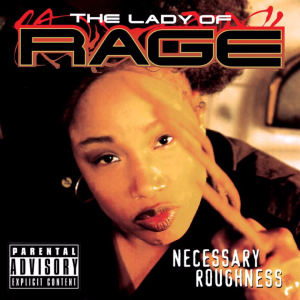
The Lady Of Rage – Necessary Roughness (June 24, 1997)

In December of 1992, Dr. Dre released one of the best hip-hop albums of all time, The Chronic (top five, in my opinion). Before ‘92, Dr. Dre was already a platinum-selling producer and the sonic brains behind The D.O.C.’s classic album, No One Can Do It Better), and N.W.A.’s landmark album, Straight Outta Compton. None of his prior work could compare to the pristine synth G-Funk sound he would slap the world in the face with on The Chronic, which was also the cornerstone for his and Suge Knight’s new label, Death Row Records. Along with his new musical sound and label, Dre would introduce the world to a new crop of emcees: Snoop Doggy Dogg, RBX, Tha Dogg Pound (Kurupt and Daz), and The Lady of Rage. Snoop would get the most shine on The Chronic and quickly became the breakout star of the bunch. RBX’s elegant gangsta sound was interesting, and Kurupt was dope, though not nearly as nice with the pen as he would soon become. But The Chronic was Rage’s platform to show and prove she was a true spitter (her contributions to “Lyrical Gangbang” and “Stranded On Death Row” made me a believer). In ‘93, she would continue to impress as the opening act on Snoop’s undisputed classic Doggystyle, where she swiftly and sturdily dismantled Dre’s Funkadelic-inspired “G-Funk Intro.” In ‘94, the Above The Rim Soundtrack was released on Death Row, which eventually went double platinum and featured Rage’s debut single, “Afro Puffs.” The song became a hit, and the anticipation for a Rage solo project grew. Then everything began to fall apart.

Rage has said in interviews that after The Chronic and Snoop’s Doggystyle, she was supposed to be next up to bat in the Death Row line-up. But she would get shoved aside for Tha Dogg Pound, who released their debut album Dogg Food in 1995. Then, in October of ‘95, Suge bailed Pac out of prison and signed him to Death Row, making him the label’s main focus. Shortly after the release of Pac’s mega-successful All Eyez On Me, Dre and Suge were no longer on good terms. In March of ‘96, Dre left Death Row and its roster of talent to start Aftermath Entertainment. Before his departure, Dre and Rage had begun to work on her debut album, Eargasm, but with Dre gone, the album would be permanently shelved. Six months later, Pac was murdered in Vegas, which would shake up the entire hip-hop culture and spell the start of the ending for Death Row. With Dre gone, Pac dead, Suge locked up, and Snoop and Kurupt unhappy, Rage still managed to release her debut album, Necessary Roughness, on the crumbling label, nearly five years removed from her debut on The Chronic, and over three years after her “Afro Puff” buzz.

With Dre gone from the team, Rage would rely mainly on Daz to give Necessary Roughness its West Coast sound, but staying true to her Virginian roots, she would call on some East Coast legends and vets to help shape the sound of the album as well (Premo, Easy Mo Bee, and Kenny Parker). The album received favorable reviews from critics (including 3.5 mics from The Source), but it was a commercial failure compared to the Death Row albums that came before it.

Necessary Roughness would be the only album we’d get from The Lady of Rage, as she’d get lost in the sauce as the Death Row empire folded. She transitioned into acting and has been in a handful of movies, including Next Friday, Judas and The Black Messiah, and most recently, as Miss Cleo on the Lifetime movie Miss Cleo: Her Rise and Fall. I’ll always remember her role as Coretta “The Ox” Cox on The Steve Harvey Show, but I digress.

I haven’t listened to Necessary Roughness in well over a decade. Let’s see if time has been kinder to Rage’s debut album than Death Row was.

Riot Intro – This may be the worst/driest intro/skit in the history of hip-hop albums. Or at least of any Death Row release.

Necessary Roughness – Without looking at the liner notes, I could tell the title track was produced by Easy Mo Bee. His blunted bass line, crisp drums, and blaring horn stabs proceed him, and the crystallized keys, sprinkled in just the right places, sound amazing. Speaking of sounding amazing, Rage comes in spitting venom and verbal darts at male and female emcees alike (she’s an equal opportunist, and her “Quarterbacks at Grambling State” bar was incredible”). This feels like a warm-up track for our hostess, but she still shreds Mo Bee’s dope production.

Big Bad Lady – Rage becomes one of the first artists to use a posthumous Pac cameo (Scarface was the first with “Smile” a few months prior). Pac’s melodic baritone chant turns into a dope hook paired with Daz’s smooth, ominous synth keys and choppy drums. Robin transforms into Rage, aka the Lyrical Murder, and relentlessly devours the instrumental and all “pigeon shit” emcees with it. She also manages to shout out A Tribe Called Quest via a “Bonita Applebum” reference during the massacre (Tribe Degrees of Separation: check). Kevin Vernado drops in at the end of the song to rightfully bow and sing of Rage’s greatness on the song’s closing adlibs. If Pac calls you “the baddest lyricist born,” you must be pretty badass.

Sho Shot – This was the album’s lead single. Sean “Barney” Thomas’ backdrop sounds like a mad scientist concocted a diabolical instrumental to destroy the world, and even though you know its evil intent, you can’t stop bobbing your head to the exhilarating music. Speaking of destroy, Rage continues with the verbal destruction she caused on the previous two tracks. The callback to her “Hadouken” line from “Afro Puffs” at the end of the song seemed forced, but other than that, this shit was bomb, just short of nuclear.

No Shorts – Daz brings the intensity down a bit with this backdrop, but it’s still a solid instrumental. Rage proves that even when the bpms slow down, she can kick back and rap her ass off.

Get With Da Wickedness (Flow Like That) Remix – I said it before, and I’ll say it again: I hate when the remix of a song appears in the sequencing before the original mix. Regardless, Daz puts his foot in this remix that reminded me a little of the instrumental for Pac’s “Against All Odds.” Rage continues to shred shit and clears up the rumor (or assumption) that she’s lesbian: “Cause I ain’t nothin’ nice, turnin’ men to mice, women are fallin’ all over me like I’m some kind of dyke, but uh, you can take that bull and miss me, because when it comes to sex, I’m strictly dickly.” Yet another enjoyable Rage/Daz concoction.

Raw Deal – Daz slows things down, serving up a pristine and smooth bop for our hostesses to do her thing while the female R&B group, B.G.O.T.I. (who were also signed to Death Row), sings of her lyrical prowess on the hook. Rage gives a strong performance, but her line about her unborn son, Zykee, left me with a lot of questions.

Breakdown – Easy Mo Bee gets his second and final production credit of the night. The booming horn loop and vocal scratch made me double-check the liner notes to make sure it wasn’t Premo’s work. As usual, Rage handles Mo Bee’s fire instrumental like Shadrach, Meshach, and Abednego.

Rough Rugged & Raw – Rage is joined by a couple of her Dogg Pound brothers, Snoop and Daz, for this somewhat of a cipher session. I say somewhat because Snoop spits about six bars but mainly supplies the refrain. Daz spits a passable verse while Rage gets off two formidable verses over Reg Flair’s gully backdrop. It’s too bad Kurupt had already left Death Row, as it would have been nice to hear him attack the track next to Rage’s razor-sharp bars.

Super Supreme – For those who don’t know, Kenny Parker is KRS-One’s younger brother, who has produced tracks for BDP and KRS-One. For this record, Kenny recycles the sample he used for “Like A Throttle” off BDP’s Sex And Violence album. Like she’s done with every beat up to this point, Rage forces it into submission, and I love her Black Pentecostal preacher-sounding adlib (“Heeey!”) that’s sprinkled throughout the song. By the way, there is something very sexy about a woman revealing her weight on record.

Some Shit – Premier gets his first of back-to-back production credits with this one. He loops up a dramatic Quincy Jones sample that sounds like Big Foot and King Kong are about to square up. Rage spits a monster “freestyle” (pun intended) with no hook or breaks. It’s three minutes of Rage’s brutal bars wrestling Premo’s bangin’ boom-bap. The results: another fire record.

Microphone Pon Cok – Premo digs up grim violins and places them over choppy boom-bap drums for Rage and her guest, Madd 1, to rhyme over. Edi Ameng also joins the duo, providing the hook, delivered with a stern orator’s voice that makes him sound like he’s reciting Shakespearean reggae. I liked the first Premo track more, but this was still solid.

Get With The Wickedness (Flow Like That) – Rage is credited for producing this O.G. mix. The instrumental is decent but not nearly as fire as Daz’s work on the remix.

Confessions – Rage takes a break from murdering emcees and uses the last track on Necessary Roughness to get introspective. Over her and Daz’s desolate G-funk backdrop, she converses with God and grapples with her faith and her demons: “Because I like good lovin’ will I burn in an oven? Fiery furnace, cause sometimes the yearn gets tempting, so I yield into temptation, intoxication mixed with fornication, face the nation, face the revelation, the ending. Will I be caught up in the rapture? Or will I be left behind because what I’m caught up in got me captured?” It was nice to see the lyrical murder show some vulnerability, but the empty instrumental could have used a little more soul, and the mini-female choir’s contribution (B.G.O.T.I.) was miscalculated and almost laughable.

When I dug my copy of Necessary Roughness out of the crates for this review, I looked at the tracklist on the back CD panel and forgot that “Afro Puffs” wasn’t included on the album. It was Rage’s signature record, and though it was three years old by 1997, it would have been a nice addition for die-hard fans to have, even if tacked on as a bonus track. Its inclusion may have also helped with album sales. But after living with Necessary Roughness for the past few weeks and revisiting “Afro Puffs” as well, Rage made the right choice by leaving it off. During the three years in between, Rage’s skill set advanced tremendously, to the point her rhymes and flow on “Afro Puffs” sound almost rudimentary compared to her work on her debut album. On the opening lines of “Afro Puffs,” Rage begins: “Let me loosin’ up my bra strap, and um, let me boost ya with my raw rap.” On Necessary Roughness, the bra is completely off, and her raw raps matured into well-drafted, swaggering essays.

Rage doesn’t waste any time trying to be seductive, brag about her material possessions, claim to be a gangsta-bitch, or force contrived conscious messages down the listener’s throat. Her only goal is to prove she can out-rhyme and annihilate any emcee, male or female, delivering potent boastful/battle raps and strong hooks with her commanding voice. Along the path of lyrical homicide, Rage fully embraces her femininity and 175-pound full-figure frame without sounding sleazy or slutty but done with a confidence that gives the big-body girl an understated sexy aura without even trying.

Led by Daz, Necessary Roughness upholds the traditional G-Funk sound found on Death Row’s previous releases, but it also includes a handful of boom-bap slaps (courtesy of Premo, Easy Mo Bee, and Kenny Parker). The album may not have a cohesive musical sound, but the well-balanced soundscape keeps things entertaining, and Rage’s ability to rap comfortably over any beat is the attribute that unifies the music.

One could knock Necessary Roughness for its lack of diverse content and Rage’s serial usage of “lyrical murder” and “emcee cold killer” throughout the album. She’s also a much better rapper than a producer. But I thoroughly enjoyed Necessary Roughness. It’s an incredible debut album from an abundantly talented emcee that I wish gave the world more music. Because, as she profoundly puts it on “Breakdown,” ‘Chicks like this come in short supply.”

-Deedub
Follow me on Instagram @damontimeisillmatic
Posted in Uncategorized | Tagged , , , | 1 Comment

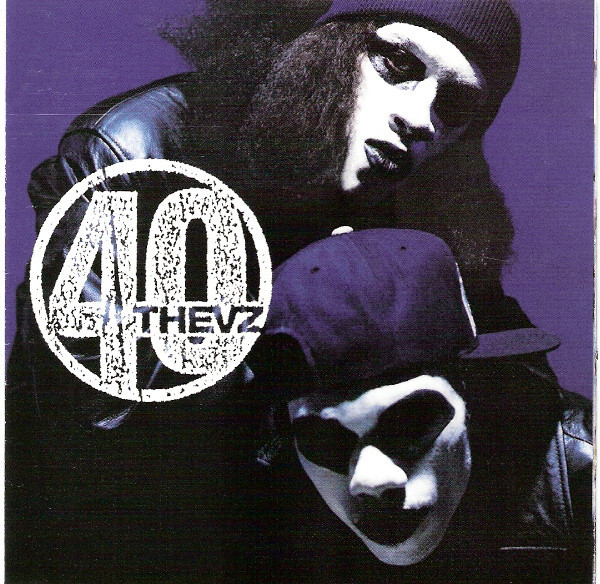
40 Thevz – Honor Amongst Thevz (June 24, 1997)

I don’t know a whole lot about 40 Thevz. I do know (despite the group name) that they were a two-man group from Compton, California, comprised of the brothers Henry and Malieek Straughter, who went under the rap aliases of P.S. and Leek Ratt (worst moniker candidate), respectively. I also know they had a song with Coolio (rip) on the The Jerky Boys Movie Soundtrack in 1995 (“Dial A Jam”). They would later make a handful of appearances on Coolio’s third solo album, My Soul, released in August of ‘97. But before all that, Brothers Straughter would get a deal with Mercury, releasing their debut album, Honor Amongst Thevz, in June of 1997.

In the liner notes, 40 Thevz attempt to explain the meaning behind the group name and album title: “There are multiple types of Thevz that date back to B.C. Man has been stealing other people’s property and possessions for centuries. We are the elite of all criminals. A group with individual specialties with an honor amongst us. We’ve stolen our minds back from the corrupt way of thinking because ‘Joe Blow’ has been programmed. True Thevz will never surrender or submit to society, for society is transparent. Thevz practice deception. The greatest trick the devil ever pulled on the world was to make the world think he didn’t exist. Most Thevz are forced into this way of life, while others are born kleptos. Eventually, it manifested into a profession. Some thevz can be violent, but most rather go unnoticed. There’s a thief in every family. We come in all shades, sizes, and colors. Taking from the greedy, and breaking bread with the needy. From Compton to Tahiti…”

After reading that scatteredbrained soliloquy, I have no idea what to expect from this album. Coolio serves as Honor Amongst Thevz executive producer, and the legendary Stan The Guitar Man lends his musicianship to a handful of songs. Hopefully, those are positive signs.

It’s Alright – After a quick snippet of a military march chant, the listener’s earlobes are greeted by live James Brown “Living In America” style horns, slippery guitar licks, and a thick bass line for Brothers Straughter to give their first affirmation of the album, which you get to hear during the hook (“It’s alright…alright yeah…’cause Imma get mine…when it’s my time”). The patient duo encourages the listener to dream, discuss avoiding hood traps laid for black men, and talk about why they chose rap over crime (“Cause they passin’ out time” and “sittin’ niggas down and they ain’t never gettin’ out”). The grand instrumentation was cool, but it overpowers 40 Thevz vocals, making them sound small.

Mad Doggin – “Mad Doggin” is what we called ice grillin’ in the Midwest in the nineties. It’s basically when someone stares someone else down with aggression. 40 Thevz addresses those who practice the habit and issue a warning to perpetrators with bad intentions: “I don’t really wanna have to blast nobody, so don’t be staring at me like you’re planning to rob me.” P.S. and Leek Ratt’s rhymes were decent, but the hook is cheesy, and the instrumentation (that loosely interpolates a portion of One Way’s funk classic “Cutie Pie”) sounds like a stock DJ Quik instrumental.

Tennis Shoe Pimpin – Our hosts use this record to pledge their allegiance to rockin’ tennis shoes and shit on those who chose to wear hard bottoms: “Now what you gon’ do/when they come to get you/when your ass is stuck in a suit and dress shoes?/You just might slip/catch one to the lip/cause there ain’t no traction in those Stacey (Adams) wing tips.” The hook and the instrumentation borrow from Kurtis Blow’s “Christmas Rappin’.” Stan The Guitar Man makes his first of several contributions to HAT, but even his marvelous musicianship can’t save this corny remake of a song that hasn’t aged well in its own right.

One For The Money – Coolio lends his platinum voice and joins P.S. and Leek for this cautionary tale about gold-digging women. They use their homeboy Ronald as the example in this story of lust, deception, and double murder. That last sentence makes the story sound pretty dark, but 40 Thevz and Coolio make the violent content sound more lighthearted than it should (probably because some of their bars leading up to the climax made me chuckle). I dug the semi-somber instrumentation (Stan’s understated licks sound wet) and the well-played Ras Kass vocal sample for the hook.

Never Gonna Get Nowhere – P.S. and Leek use this song to speak on the importance of unity in the Black community. Cool message and passable bars, but Stan’s slick wah-wah guitar licks are the highlight of this record.

Let My Mind Be Free – Vic C’s credited for the breezy backdrop, and Stan The Guitar Man laces it with discreet wah-wahs and a subduedly funky bassline. 40 Thevz are joined by Shorte as the trio discuss punk ass niggas, petty hoes, and using mics like scepters in their search for peace of mind (Shoutout to Shorte for the “scepter” line. It’s a word you haven’t heard too many rappers use in songs). Well done, fellas.

Thank God For The Children – P.S. and Leek are joined by Spidaman on this heartwarming dedication to our future. Over beautifully solemn instrumentation, the three fathers show appreciation for their seeds and vow to give them everything they didn’t have growing up as kids. 40 Thevz guest, Spidaman, delivers the song’s most insightful bars: “I done been to prison, and my pops done been to prison, and his pops done been to prison, so where that leave my children? I’m tryna break the cycle that can break up my families, all these kids growin’ up in homes without no daddies. I had to stop…and take a look at what I helped give life to and thank God.” What a powerful record.

All I Wanna Do – P.S. teams up with Malika for this battle of the sexes duet. P keeps it real by letting her know he’s just looking for a bed buddy, and she lets him know she needs his time and something more serious. At some point in life, most guys have shared P.S.’s perspective, and most girls have probably been in Malika’s shoes. The verses and hook were effective and relatable, and Hank and Sleepy score the back and forth with an irresistible funk groove punctuated by stank funk guitar licks. This completes a fire two-piece combo.

Crazy Love – Sleepy filler that left me feeling crazy empty.

Get Away – Our hosts live up to their group name on this one. P.S., Leek Ratt, and Spidaman go on a robbery spree over semi-ominous instrumentation while Johnnae Edwards and an uncredited male voice co-sign the threesome’s thievery on the hook. So much for reform and breaking the criminal cycle that has plagued their families for generations.

What Would I Be – P.S. sits this one out and lets his bro go dolo. Leek reminisces about his rough upbringing and past life of crime in hopes of keeping someone else from going down the same road. But the hook (crooned by Kenneth Blue) sounds like it’s celebrating his gangsterism, which kind of contradicts Leek’s message. The song was mid, but I dug Chris Fletcher’s rock guitar riffs.

I Like It – Did these negroes really sample KC & The Sunshine Band’s “That’s The Way (I Like It)”? Next…

Fly Away – This was interesting. Ernest and David Straughter (I’d be willing to bet they’re related to 40 Thevz) interpolate the Commodores’ “Zoom” for the backdrop, then bring in The Dramatics to sing the Commodores’ hook from the same song. It’s weird hearing a legendary group sing another legendary group’s song, especially when they’re from the same era. They would have been better off letting an unestablished singer, like Kenneth Blue (who joins The Dramatics on the chorus), sing it with other nobodies. But even if Kenneth Blue and The Nobodies sang the hook, this song would still sound cheap and cheezy.

Group Therapy – Cute song title for a cipher session. 40 Thevz bring back Malika and Spidaman to join them on this crew joint. No one embarrassed themselves, but none of the emcees wowed me with their performances either. I wonder why Coolio didn’t get on this one. It would have been nice to hear him rhyming over Wino’s cool instrumental and Stan The Guitar Man’s funky g-licks.

All I Wanna Do (P.S. Version) – 40 Thevz ends the evening by bringing back the album’s strongest track, which, according to the back of the CD panel, is only available on CD. This mix deletes Malika’s verse and replaces it with a new verse from P.S. Other than that, it plays just like the original.

I mentioned during the opening of this write-up that I wasn’t familiar with 40 Thevz or their music before this review. So, as we all do, I inadvertently judged the book (or the album) by its cover (long before I read the ridiculous explanation for their group name in the liner notes). The group name and the white “I’m bout to do a bank heist” face paint they’re adorned in on the album cover led me to believe this would be your typical gangsta rap album. But I should have paid closer attention to the album title.

On Honor Amongst Thevz, P.S. and Leek Ratt do show remanence of their gangsta/criminal side, but it’s mostly looking back as reformed hoodlums. But don’t get it twisted. The hood remains in the lum. They share old scars and war stories (some of their war stories were current), celebrate their gangsta attire (creased khakis and air ones), aren’t ready to commit to one woman, and if you test them, they might convert back to their old gangsta ways. On the flip side, they’re also doting fathers with a conscious side, and most of their content is filled with cautionary tales, calls to action, and positive messaging, making Brothers Straughter well-rounded, likable dudes.

Likable as 40 Thevz may be, there are still limits to their rhyming abilities. P.S. is the more charismatic and polished of the two, but neither are super lyrical, and at times on HAT, they sound sloppy and get lost in the musical sauce. Much stronger than the emceeing is the production that maintains a cohesive West Coast nineties sound with plenty of live instrumentation that adds an extra layer of musicality. But even with the magnificent guitar play from the legendary Stan The Guitar Man on a chunk of the album, less than half of the records are worth going back to.

Honor Amongst Thevz isn’t a horrible album, but it would have worked better as an EP. With that said, thank you, 40 Thevz, for the musical jewels I discovered in “Thank God For The Children” and “All I Wanna Do.”

-Deedub
Follow me on Instagram @damontimeisillmatic

Posted in Uncategorized | Tagged , , , , | 3 Comments

Wyclef Jean – The Carnival (June 24, 1997)

The last time we heard from Wyclef Jean was earlier in 1997 with his featured record on DJ Muggs’ Soul Assassins project. That record came on the heels of the Fugees’ landmark 1996 album The Score, which not only is a Grammy-winning certified classic but would go on to move a staggering seven million units. But as the story goes, Wyclef and Lauryn Hill’s affair began to get messy, putting a rift in the group and stifling their musical production. Unfortunately, we would never get a proper follow-up to The Score. Meanwhile, Wyclef would sign a solo deal with Columbia Records (which was also the label home to Fugees). Since Fugees weren’t working on new music, Clef would look to build on The Score’s momentum as a solo artist, releasing The Carnival in June of ‘97.

Wyclef would be the main conductor of The Carnival with his partner, Jerry “Wonda” Duplessis, receiving production co-credit for most of the album’s twenty-four tracks (you may recognize his name as co-producer for most of The Score). Even though Clef and Ms. Hill were in the midst of a tumultuous relationship, she still lends her voice to a handful of the album’s tracks. Wyclef’s Refugee Camp bredrin, Pras, and John Forte also make a couple of appearances, along with a few other unexpected guests that will get into later. The Carnival wasn’t as commercially successful as The Score, which would be a nearly impossible feat to achieve. Still, double platinum for your debut solo album is nothing to sneeze at. The Carnival also received two Grammy nominations and would become a critical darling, receiving positive reviews from most critics and major publications.

Ladies and gentlemen, boys and girls. Without further ado, let The Carnival begin!

Intro/Court/Clef/Intro (Skit/Interlude) – Continuing with the movie theme from The Score, The Carnival begins with Blaxploitation style music (courtesy of Manu Dibango’s “Soul Makossa”) and a narrator introducing the movie’s, I mean, the album’s cast of characters. Things then move to a courtroom scene, where Wyclef is on trial for being a player and a bad influence (I didn’t know those were criminal offenses), and we meet the prosecutor and Clef’s animated Haitian defense lawyer. After the court skit, our host welcomes the listener to the album, and now we can get on with the rest of the show.

Apocalypse – In true Wyclef eclectic form, he builds the backdrop around an obscure loop of the Opera-style vocals of a French female singer (Danielle Licari) that will surely put you in a trance and open up a few endorphins in your mind. During the first verse, Clef talks his abstract shit before sharing the deeds of a mele at The Tunnel in Manhattan that somehow leads to mistaken identity and Clef in a high-speed chase with an undercover detective. Does it end tragically? Qui, qui, y’all. Qui, qui.

Guantanamera – This was the third single released from The Carnival, which also earned a Grammy nomination for Best Rap Performance by a Duo or Group in 1998. Clef remakes Cuban singer Celia Cruz’s song of the same title, giving it a soulful, hip-hop facelift (that includes some clean, well-placed cuts from Funkmaster Flex) without abandoning its original Cuban feel, and he kindly invites Ms. Cruz to join him on the track. He also invites Jeni Fujita to sing from the perspective of Guantanamera while he and L-Boogie rap about the Cuban Mexican seductress, whose beauty and body are bad enough to bring broke niggas, businessmen, and politicians to their knees. With that said, I’d love to meet her.

Pablo Diablo (Interlude) – Back to Wyclef’s trial. The prosecutor calls his first witness to the stand: the Spanish-speaking Pablo Diablo. Unfortunately, things don’t go quite the way Mr. Prosecutor thought they would.

Bubblegoose – After a quick jingle over a tender guitar riff, our host makes it seem as if he’s going to kick a kids’ story, calling for them to gather around. Instead, he kicks two playful mafioso-style verses centered around a street hustler getting shot through his Bubble Goose jacket. Salaam Remi gets his sole production credit of the evening, concocting a dreamy melodic instrumental that sounds like the perfect score for floating on a cloud. The doo-wop melody and guitar riff at the end of the record was cute and clever.

Prelude To “To All The Girls” (Interlude) – A clip from a sixties record called “Only A Fool” by (here are some interesting group names for you) Mighty Sparrow and Byron Lee and The Dragonaries (from a collab album cleverly titled Sparrow Meets The Dragon) plays to set up the next track.

To All The Girls – Clef dedicates this record to all the girls he’s cheated on in his lifetime. It almost plays as an explanation letter that attempts to justify his dirty deeds (“Here’s what happened/it wasn’t my intention/to fall into seduction while playing in temptation/I thought I had it figured out/but games don’t last/the hourglass ran out/I got sprayed with the teargas”). Wait. Does this mean he’s admitting guilt to the allegations brought against him in the intro? Regardless, I wasn’t crazy about this record, but if it came on at the kickback, you could get off a nice little two-step.

Down Lo Ho (Interlude) – The prosecutor calls his second witness to the stand: the Asian martial artist Down Lo Ho. I’m pretty sure he and the Chinese restaurant owner from The Score skit, Chang Wang, are first cousins.

Anything Can Happen – This was the second single. Clef’s random rhymes and the drowsy instrumental did nothing for me. By the way, this song was recorded almost thirty years ago, and the Knicks still haven’t won a championship. That may never happen again.

Gone Till November – This was the album’s fourth single. Wyclef’s acoustic guitar teams up with an elaborate string orchestration for this theme song for hustlers trying to provide for their families via rocks or raps. It took me a few listens, but I really like this record.

Words Of Wisdom (Interlude) – Before the next song begins, Clef gives a quick PSA on how men can avoid rape accusations.

Year Of The Dragon – Clef and Ms. Hill exchange stories about things they’ve seen that have shaped and molded them in this cautionary street tale. Clef scores the record with a dark, stripped-down backdrop that matches the content to a tee. I wish this dynamic duo would have never fallen out. There’s no telling how much great music they may have made together. *Sigh*

Sang Fezi – I took two years of high school French and one semester in college. At one point, I could speak it and write papers in French. But if you don’t use it, you lose it, so I have no idea what Clef is saying on this record (I’m pretty sure he’s rhyming in Haitian Creole, a French-based language, but you get my drift). Regardless of language, L-Boogie’s warm vocals sound amazing over the scorching hot and soulful church organ chords.

Fresh Interlude – Wyclef kicks a little freestyle rhyme while DJ Skribble lets his hands do the talking. This was a nice, organic hip-hop moment.

Mona Lisa – I’ve heard of The Neville Brothers, but I’ve never listened to their music. Come to think of it, the only Neville records I’m familiar with are Aaron Neville’s “Everybody Plays The Fool” and his duet with Linda Ronstadt, “Don’t Know Much.” Wyclef maestros up a fire soul joint that the Neville boys absolutely smoke. If this is how the rest of their catalog sounds, I might have to start digging into it. ASAP.

Street Jeopardy – The track begins with Wyclef playing a music exec encouraging his artist to make more hardcore gangsta music. Then the Jeopardy game show jingle comes in. Thankfully, Clef dresses it up with emo-acoustic guitar chords and rough drums. He, John Forte, and R.O.C. (not to be confused with Jay-Z’s Roc-A-Fella team) use it as an audible deterrent for those considering taking street chances. Another solid record.

Killer M.C. (Interlude) – This interlude/skit serves as a bridge between the previous record and the next.

We Trying To Stay Alive – This was the album’s lead single and the yang to “Street Jeopardy’s” yin. Wyclef, Pras, and John Forte playfully celebrate life and the joys that come with living it. The Bee Gees’ “Stayin’ Alive” loop felt a little cheap, but Clef manages to verbally dance with it during the opening verse, making it feel a little less low-hanging fruit-esque. The record’s lighthearted energy and pop vibes make it an obvious choice for the lead single.

Gunpowder – Clef breaks out the guitar once again to hit somber acoustic notes as he sings about senseless gun violence. L-Boogie and the I Threes (Rita Marley, Judy Mowatt, and Marcia Griffiths) sing background vocals for our host’s powerful lament. If this song doesn’t touch you, you might be soulless.

Closing Arguments (Interlude/Skit) – I didn’t find most of the skits and interludes on The Carnival amusing, but this one actually made me laugh. The “bishop” bit is hi-larious.

Enter The Carnival (Interlude) – While Caribbean vibes play in the background, Wyclef shouts out the world and welcomes the listener to The Carnival’s “change phase,” which basically means the next three tracks will be Haitian-Creole based.

Jaspora – According to a translation I found, Clef chants about Haitian heritage and pride on this one. Musically, he merges reggae with rock, and that nasty guitar riff is vibrantly electric.

Yele – Our host grabs his guitar and L-Boogie for this somber, acoustic-folk-reggae blend that supports his message of social upliftment. This is another record that took a little time but eventually won me over.

Carnival – Clef saves the title track for last. He’s joined by Sweet Mickey, Jacob Desvarieux, and Jocelyn Berouard as the four come together for what is easily the worst track on the album. The lyrics are all sung in Haitian-Creole/French, but randomly, you hear our host singing about Kentucky Fried Chicken, six-piece nuggets, and Chinese food over PBS Kids-style music. What in the Caribbean CoComelon was this?

The Carnival is a prime example of why it’s important to listen to an album more than once before forming a final opinion. Due to my hip-hop hiatus, I missed The Carnival when it came out back in ‘97, but I bought a used CD copy about ten years later and listened to it once, maybe twice. There were a couple of records that stood out, but for the most part, I remember it being mid. On my first listen to it for this review, I was very underwhelmed, might I say disappointed. But after a couple of weeks in rotation, my view of The Carnival began to change drastically.

Part of Wyclef’s tagline for The Carnival is “Anything can happen,” and just about everything does on the album. Clef takes the “everything but the kitchen sink approach,” stewing together traditional hip-hop with classical, Cuban vibes, acoustic, folk, soul, gospel, rock, reggae, orchestra, champeta, raps, chants, singing, bellowing, English, French, Haitian Creole, and usually, at least three of these elements show up on each record. Just as eclectic as the music is on The Carnival is the content, which will make you laugh, cry, think, dance, nod your head, and, a few times, take a bathroom break. Clef also invites a diverse guest list, from DJ Skribble to his Refugee Camp to The Neville Brothers, even reaching overseas to bring in Celia Cruz and members of the French Caribbean group Kassav to join in on the fun. On paper, it may read as too many different musical flavors and far too much going on, and while there are a few intermission-worthy moments, this wild audible circus ends up being a nearly flawless event that is sure to entertain.

Like The Score before it, The Carnival is another cornerstone that serves as a testament to Wyclef’s musical genius. It’s not a great hip-hop album, but instead, a masterful musical adventure orchestrated by a brilliant yet severely underappreciated Ringmaster.

-Deedub
Follow me on Instagram @damontimeisillmatic

Posted in Uncategorized | Tagged , , , , | 1 Comment

Capone-N-Noreaga – War Report (June 17, 1997)

Years before N.O.R.E. would become a bonafide podcaster with Drink Champs or help make Reggaeton a popular musical genre in the states, Victor Santiago Jr. was half of the Queens-based rap duo Capone-N-Noreaga. Though both rappers were from Queens (different neighborhoods), they didn’t meet until 1992 while serving time at Greenhaven Prison in New York. The two bonded over their Queens connection, a shared love for hip-hop, and illegal activity. After being released on parole and encouraged by Intelligent Hoodlum, aka Tragedy Khadafi, the duo recorded a demo that eventually led to their deal with Penalty/Tommy Boy, where they’d release their 1997 debut album War Report.

During the War Report recording sessions, Capone would get sent back to prison for violating his parole, leaving N.O.R.E. to pick up the pieces and finish the album without his partner in crime. This might explain all the guest appearances that pop up on War Report. Along with the guest appearances, a slew of hands would receive production credits, including Marley Marl, Buckwild, Havoc, Lord Finesse, and Tragedy Khadafi (who also served as the album’s executive producer). Though War Report’s sales weren’t impressive, it did peak at number four on the US R&B/Hip-Hop Charts and twenty-one on the US Billboard 200, and it received positive reviews from the critics (The Source gave it four mics at a time when the publication still had some credibility). But more importantly, the streets approved, as many consider it a seminal body of work, aka a classic.

I haven’t listened to War Report in almost twenty years, and other than “L.A. L.A.,” I don’t remember much about the album. Hopefully, this will be a pleasant rejogging of my memory.

Intro – Most hip-hop album intros are useless, and War Report’s isn’t much different. Capone-N-Noreaga, aka the last of the Mohicans (Capone is so dramatic), kick things off by listing all their homies that “Jake” has snatched off the streets and locked up, which has N.O.R.E. looking to “revolt the revolution” (what does that mean? Your guess is as good as mine). Uselessness aside, I did enjoy the dusty, grey-tinted piano riff that supports the duo’s nonsense.

Bloody Money – Noreaga finds himself rolling dolo for the first song of the evening. EZ Elpee places a frigid piano loop over sleepy drums for N.O.R.E. to puff out his chest and celebrate the illegal thug life that he so proudly embraces (his “I don’t even drink like that, I sell crack” line is hysterical to me for some reason). I love the piano chords in the backdrop, but the drums don’t mesh well, and N.O.R.E.’s vocals sound like they’re warring with the music.

Driver’s Seat – N.O.R.E. invites Imam T.H.U.G. to stand in for Capone as the two thug-out over the slow-rolling, funky, organ-based production of Nashiem Myrick and Carlos “6 July” Broady. Oddly, Busta Rhymes shows up at the end of the record to add a few energetic adlibs, which left me thinking: why didn’t he just have Busta spit a verse in place of his amateurish crony?

Stick You – The record begins with N.O.R.E. and Tragedy Khadafi discussing the weak coke they recently got from their supplier and planning their get back while rain pours in the background. After about a minute and a half of this rain rant, a lively jazz piano loop and poppin’ drums come in for N.O.R.E. and Tragedy to rap about their revenge. Capone makes his first appearance since the intro, joining his partners in crime on the payback rhyme. I’m curious why they chose to self-censor some curses and let others fly freely (i.e., a bunch of “shits” are replaced with “ssshhh,” but F-bombs get to land without restraint). The song left me with one question: If your supplier sold you garbage product, why would you rob him and take more trash coke?

Parole Violators – Havoc (of Mobb Deep) and Tragedy join N.O.R.E. on this criminal celebration. Havoc’s responsible for the hook, and Tragedy’s credited for the cool, reserved instrumental. Trag takes the revenge on his enemies thing too far when he repeatedly claims to videotape raping his foe’s girl (it’s censored, but you can easily deduce what he’s saying). This record has a very incomplete/demo-esque feel to it. It definitely needed a little more time in the oven.

Iraq (See The World) – N.O.R.E. invites four more of his hood soldiers to report on the street war he and his troops are engaged in with Jake: Castro, Musaliny, Mendoza, and Troy Outlaw. None of the five rappers’ bars end up being newsworthy or memorable, and the whiny violin loop in the instrumental is annoying enough to hit the skip button after a minute in.

Live On Live Long – N.O.R.E. dedicates this one to Capone and the rest of his incarcerated crew as he grapples with missing them and encourages them to stay strong while on lockdown. N.O.R.E.’s rhymes sound heartfelt and authentic, and I absolutely love G-Money’s flip of a soulful Smokey Robinson and the Miracles loop.

Neva Die Alone – Buckwild gets his sole production credit of the album, building the instrumental around an energetic, hard-keyed Herbie Hancock loop as CNN and Tragedy continue to thug their way through the album. Not that he sounded bad in his previous cameos on War Report, but Tragedy sounds extra sharp on this one. And why didn’t they title the record “Gorilla Rap Song,” as Trag suggests at the end of his verse?

T.O.N.Y. (Top Of New York) – This was the third single released from War Report. N.O.R.E., Capone, and Tragedy continue to rap about Jake, drugs, crime, and their enemies. Speaking of enemies, Tragedy spits one of my favorite lines of the entire album towards his: “I’m mad iller, organized thug killer, now you little monkey niggas wanna play gorilla.” War Report’s vast cast of producers score again (this time, it’s Nashiem Myrick and Carlos “6 July” Broady) with a slick cinematic instrumental to back the threesome’s thuggery.

Channel 10 – N.O.R.E., Capone, and Tragedy celebrate the album’s midway point with more thuggery, and can someone please tell me what the hell an Arab Nazi is? Lord Finesse combines muddy drums with a darkly airy melody, making for a phenomenal instrumental and one of the best records on War Report.

Capone Phone Home (Interlude) – It plays just as it reads. Shoutout to ET.

Thug Paradise – My pressing of War Report has this song mistakenly listed as “Stay Tuned (Interlude).” This record was also on the Nothing To Lose Soundtrack under the correct song title. D-Moet takes a break from the “S.W.A.T.” theme song and turns it into a funky head noddable groove. Once again, Tragedy joins our hosts, spitting a verse that sounds like it could have been written by Mr. It Was Written (aka Nas). This was dope.

Capone Bone – Capone goes dolo and sounds as horny as an inmate who just finished serving a twenty-year bid (Shoutout to Capone for admitting he’ll go down on a chick during an era where most rappers acted too tough to admit they did). Marley Marl builds the backdrop around a funky jazz piano loop, turning it into an irresistible groove for Cunnilingus Capone, who finds his pocket and sounds right at home, seducing the object of his erection and gets a little dirty mackin’ in during the process.

Halfway Thugs – N.O.R.E goes dolo again. This time, it’s one long verse over an instrumental that sounds like a sedated skeleton version of the backdrop for Mobb Deep’s “Drop A Gem On ‘Em.” Very mid.

L.A., L.A. – This is CNN’s response to Tha Dogg Pound’s 1995 joint, “New York, New York.” Much like Kurupt and Snoop did with their disses, CNN, Mobb Deep, and Tragedy don’t take direct shots at their West Coast counterparts but instead fire a bunch of lines that could be perceived as subliminals. Marley Marl scores the affair with a rigid instrumental that sounds great behind the team’s stone-faced rah-rah. My only issue with this record is all the censoring. Why would you bleep up a diss track? And for the record, none of these dudes is fuckin’ with the lyrical wizardry Kurupt whipped up on “New York, New York.”

Capone-N-Noreage Live (Interlude) – Capone and N.O.R.E. do an almost three-minute call-and-response bit, which may entertain at a live show but not so much recorded and sequenced in the middle of an album.

Illegal Live – This is the record that introduced the world to Capone-N-Noreaga. A Middle Eastern-tinged loop meets dark spiraling chords and grimy drums. The production credit is given to Tragedy and Havoc, who also handles hook duties (If I were a betting man, the Middle Eastern loop was Tragedy’s idea, and everything else was Havoc). Based on the song title, I think you can figure out what the subject matter is about, but the raw and gritty backdrop takes the ease off the duo’s monotonous content.

Black Gangstas – This is fat that should have been trimmed and left off the album.

Closer – The original pressing of War Report has the DJ Clark Kent-produced version that samples Surface’s “Closer Than Friends” and features Nneka singing the hook. My copy of War Report has the Sam Sneed-produced version (even though the liner notes credit the Clark Kent mix). Sam builds the instrumental around a chill Luther Vandross piano loop, and some guy who sounds a lot like Tony Sunshine sings a completely different hook than the original mix. The record captures N.O.R.E. looking back at his life as a hustler before he and Capone got a deal (“Last year, around the time this year, if I would have got locked yo, I wouldn’t even care”). Rest in peace to the legend DJ Clark Kent, but Sam Sneed’s version is galaxies more appealing than the O.G. mix and more cohesive with the rest of the album.

Capone Phone Home OutroWar Report ends with Capone talking to Jungle, Nas, and E. Money Bags via phone from prison. This interlude adds nothing to the album, but it did leave me wondering why Nas didn’t spit a verse at some point on War Report.

If Al Capone and Manuel Noriega were ever to meet at Bar Afterlife and discuss their infamous careers over a few beers, I would love to be a fly on the wall. Or even better, a patron taking down a couple of Crown cranberries while ear-hustling. I’m sure they’d relive their glory days and reminisce about the power they both yielded during their lifetimes. They’d share their regrets and secrets, and a few drinks in, cry as they look back on their downfalls. The conversation would be filled with amazing stories and intriguing tidbits. Vastly different from the content that Capone-N-Noreaga deliver on War Report.

Capone-N-Noreaga are direct descendants of the Queens mafioso/thug rap tree that produced Mobb Deep and Nas’ alter-ego, Esco, and on War Report, the apple doesn’t fall far from it. Most of the album’s content revolves around crime, drugs, money, and so much talk about Jake I thought the album was part of a State Farm commercial. Tragedy Khadafi emerges as the third unofficial member of CNN, appearing on almost half of War Report’s tracks. His drastic style change from conscious content/inspirational speaker, Intelligent Hoodlum, to the thug drug lord, Tragedy Khadafi, was shocking and a little disappointing. But regardless of what rap image Tragedy embraces, the man can rap and effectively leans into his new persona, sounding better than his gracious hosts for most of the album.

That’s not to say that Capone-N-Noreaga aren’t skilled rappers. The first half of War Report plays like a Nore and Friends project, as Capone’s incarceration has him missing in action, leaving their inept homeboys, not named Tragedy Khadafi, to fill in the gaps. But when Capone does consistently show up for the second half, it starts to feel more like a Capone-N-Noreaga project. Their content is not riveting or original (and some of their QB homies have covered the same territory and done it better, i.e., Nas and Prodigy), but you can feel and appreciate the chemistry between the duo and their big O.G. Tragedy Khadafi. And when our hosts’ thug rhetoric gets monotonous, the raw and rugged production (which at times flirts with sounding amazing) keeps things interesting.

War Report is a bit bloated, and the “Capone locked up” running theme is kind of confusing, especially when the intro makes it sound like CNN are the last two free ones in their crew. They could have easily shaved four songs off the final cut, along with the Capone skits, to make it a more well-balanced CNN project. As is, War Report is a solid debut from the duo (or trio), but calling it a classic is a stretch.

-Deedub
Follow me on Instagram @damontimeisillmatic
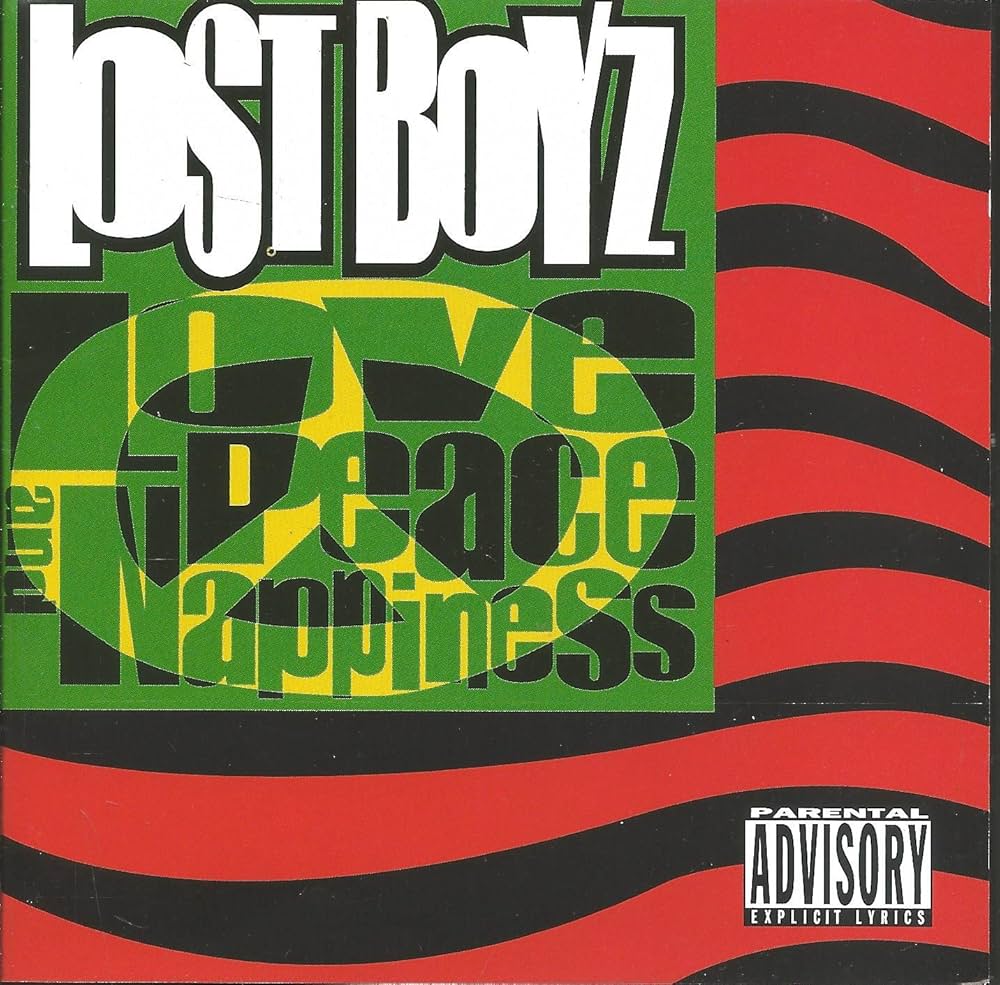
Posted in Uncategorized | Tagged , , , , | 3 Comments

Lost Boyz – Love, Peace & Nappiness (June 17, 1997)

1996 was a good year for the Lost Boyz. The Queens collective would see five singles reach the Billboard Hot 100 Charts, and their debut album, Legal Drug Money, would peak at number six on the Billboard 200 and receive a gold certification just sixty days after its release. The commercial success of LDM would lead to a handful of cameos appearances from Mr. Cheeks, which, in turn, would help raise the Lost Boyz’s profile. Almost a year to the date of LDM‘s release, Lost Boyz would look to build on their freshmen momentum with the release of their sophomore effort, Love, Peace & Nappiness.

Like its predecessor, LP&N would use a production-by-committee approach, enlisting some of the same producers that worked on the debut (Charles Suitt, Mr. Sexxx, Buttnaked Tim Dawg, and Easy Mo Bee). It would also include work from Ron G, and fresh off the success of co-producing Black Street’s hit “Don’t Leave” with Teddy Riley, Bink would also supply a handful of instrumentals for the album. The producer selection was a winning combination for LB as LP&N would earn them their second consecutive gold plaque. But even though the sales for LP&N matched those of their debut, the reviews for the former weren’t quite as flattering.

LP&N is another album new to my ears. I’m not sure how this will go, but at minimum, they came up with a clever album title.

Continue to rest in peace, Freaky Tah.

Intro – The album begins with an ominous slow-rolling instrumental (credited to Bink and Charles Suitt) and Mr. Cheeks greeting the listeners with a few super rough draft freestyle bars that are headed nowhere fast. And, of course, Freaky Tah’s signature ad-libs are hardwired into the track.

Summer Time – Who doesn’t like summertime in the city? Cheeks paints a picture of warm weather, hot chicks, blunts, brews, and hangin’ out with the homies. Tah supplies ad-libs, and an uncredited female vocalist (I use the term “vocalist” loosely) sings the hook. Cheeks’ take isn’t groundbreaking material, and the record is not as good as DJ Jazzy Jeff & The Fresh Prince’s 1991 rendition, but it’s a decent, mildly funky bop.

Me & My Crazy World – This was the lead single from LP&N. Mr. Cheeks sounds like he’s on the therapist’s couch, sharing the details of his complex love life that has him smitten by two women. The first two verses were intriguing, but by verse three, the story loses its legs, and I was over it. Ron G’s “happy-go-lucky” backdrop was a little dry for my tastebuds, and the background singing from an anonymous man was unwarranted.

Beasts From The East – After a quick weather forecast, Bink drops an epically fire instrumental with pensive undertones for this Group Home/Def Squad cipher session. Cheeks is joined by A+, Redman, and introduces the world to the lyrical dexterity of Canibus. Cheeks, A+, and Redman spit decent to solid verses before Canibus transforms into a lyrical hyena and completely devours his co-workers and Bink’s backdrop with an incredible fifty bars. To say Canibus stole the show would be a severe understatement. His verse might be the best verse spat in 1997.

Love, Peace & Nappiness – The title track (which was also the album’s second single) finds Mr. Sexxx (horrible moniker, by the way) revamping the instrumental to Slick Rick’s “Hey Young World.” Mr. Cheeks’ rhymes are all over the place, Freaky Tah returns to sprinkle more of his ad-libs throughout the song, and King Keiwanee and Da Blak Pharoah add a little reggae flavor at the end of the record. It’s not a great or horrible record. I guess that would make it mediocre, but I’m trying to stop using that word so much.

Black Hoodies (Interlude) – Aarian Pope shares a short-spoken word poem that speaks from the perspective of hood cats. It’s a nice start, but it needs more meat on its bones.

So Love – Mr. Cheeks is in the mood for love, or at least he pretends to be during this record. Ike Lee III (not to be confused with Spike) hooks up a radio-friendly bop for Mr. Cheeks to spew fluffy cliches to express his love and affection for the apple of his eye, while another unnamed male singer sings the hook, accompanied by off-key singing from Cheeks and the crew. I like the warm, feel-good vibes this record radiates.

My Crew – Easy Mo Bee gets his only production credit of the album, and he makes sure to make it a good one. Mr. Cheeks, once again, is joined by A+ and Canibus as the three use the handsomely rugged and raw backdrop to celebrate their Group Home click. Canibus doesn’t match the fiery performance he astounded with on “Beasts From The East,” but he still sounds impressive. It’s a solid record with a catchy hook.

What’s Wrong – Buttnaked Tim Dawg and Terence Dudley build the backdrop around a funky Quincy Jones loop as Cheeks addresses those who have a problem with his lifestyle. The head noddable instrumental and catchy hook make this one a winner, even with the missing question mark at the end of the song title.

Certain Things We Do – Cheeks shares the deeds of a night out with the crew at a new spot, where the liquor is flowing, the blunts are blowing, and the fly ladies are abundant and ready to be chosen (sounds like a great time to me). Ron G’s slick backdrop fares much better than his work on “Me And My Crazy World,” giving meaning to Cheeks’ superficial commentary.

Games – Mr. Cheeks opens up and gives the listener a glimpse into his tumultuous upbringing, and I’m the biggest sap for vulnerable raps (bars!). Mr. Sexxx soundtracks Cheeks truncated bio by interpolating Sweet G’s 1983 record “Games People Play” (I feel like I’ve mentioned that song before on the blog), which features an interpolation of Issac Hayes’ “Ike’s Mood I” (a sample you can’t really go wrong with). Shoutout to Lost Boyz for giving the pioneering emcee, Luv Bug Starski, a cameo on this track.

Get Your Hustle On – Mr. Cheeks takes a rare break and hands the mic to Freaky Tah to hold things down solo. Tah definitely had one of the most unique voices in hip-hop, but this track reconfirms why Mr. Cheeks was the mouthpiece for the group. I like the dark, laidback instrumental, though.

Tight Situations – Cheeks jumps back into his storytelling bag for this one. Bink sets the tone with a cinematically suspenseful backdrop that Cheeks uses to share a tale of “pussy traps” and retaliation. It’s the equivalent of a hood flick I’d watch on Tubi.

Day 1 – Though he raps three verses, Cheeks doesn’t have much to say, but I’m a sucker for drowsy melodic grooves like this. Thanks, Bink.

Why – This one starts with a faux news reporter discussing Allen Iverson and his issues with the media during his rookie season before going into a report about Lost Boyz inciting riots at their shows. It’s a super random skit, but it tripped me out to think AI’s rookie year was almost thirty years ago. Then, as A Tribe Called Quest did with “What?” and Common and Mos Def (excuse me, Yasin Bey) would later do with “The Questions,” Cheeks and Freaky Tah ask a series of rhetorical questions. The only difference is Cheeks and Tah’s questions come with no insight, depth, or wit, making for embarrassingly bad content over a decent instrumental.

From My Family To Yours (Dedication) – The LB, along with Queens Most Wanted, close out the album with a record dedicated to those who crossed over to the other side, with a strong emphasis on Biggie and Pac. Bink’s sorrowful chords put you at the scene of a Black Pentecostal Church funeral, and when paired with the sad content, it’s enough to move one to tears. The “Baby bay-bay/holler if ya hear me!” chant at the beginning and closing of the track was another heartwarming homage to the two fallen icons. A powerful record built around some very sad shit.

From the little that I knew about Lost Boyz, I went into Legal Drug Money thinking it was going to be a legal crock of shit. From the few singles I’d heard, I didn’t believe Mr. Cheeks had the presence or lyrical ability to carry an entire album, and I most certainly didn’t think the production would be strong enough to entertain. Surprisingly, the shit was alright. Cheeks didn’t sound as bad as I thought he would, and I was pleasantly surprised by the solid hooks and quality production. Much of the same applies to Love, Peace And Nappiness.

Someone must have told the Lost Boyz that Freaky Tah’s ad-libs on LDM were too much as they sound scaled back on LP&N, and when they do appear, they’re turned down and more contained, which I appreciated. Mr. Cheeks will never be mistaken for a wordsmith, yet his raspy, high-pitched vocal tone and simple rhyming style start to grow on you. Or maybe he just becomes more tolerable. Or it could be the catchy hooks and enjoyable production that make Cheek’s rudimentary rhymes easier to digest.

Whatever the case, Lost Boyz manage to pull it off again. They introduce the world to one of the most masterful emcees to ever grace a mic (Canibus) and give the hip-hop nation another solid album.

-Deedub
Follow me on Instagram @damontimeisillmatic
Posted in Uncategorized | Tagged , , , , | 2 Comments

Cru – Da Dirty 30 (June 17, 1997)

CRU was the Bronx-based trio comprised of Yogi, Chadeeo, and The Mighty Ha. As legend has it, CRU spotted Chris Lighty (who had recently left Def Jam to start Violator Management) going into a club and were able to slide him their demo tape. Lighty was impressed by the tape, leading to CRU (who were then going by the group name Rhythm Blunt Crew) signing a deal with his former employer, Def Jam. CRU would release their debut album, Da Dirty 30, on the label in June of ‘97.

According to a Chadeeo interview I found on YouTube, the album title was inspired by a corrupt Harlem Police Department, often called the Dirty 30. They also chose the title to describe the album’s thirty tracks as dirty and grimy. Yogi would produce the entire album, which included a handful of special guest appearances. Despite favorable reviews, the album was a commercial failure, especially considering it was a Def Jam release. Da Dirty 30 would be the first and last time the world would hear from CRU as a group. Yogi would join the Bad Boy production collective, The Hitmen, producing tracks for Diddy, Busta Rhymes, Terror Squad, G.Dep, and Method Man. Chadeeo would release a few solo and joint independent projects, and there’s still an APB out on The Mighty Ha.

As I’ve mentioned probably too many times during this blog, 1997 was the year I began my four-year and change separation from secular hip-hop. There were a lot of new artists that came out during that timeframe that I knew about but never listened to their projects. CRU and Da Dirty 30 completely went under my radar. That was until I finally listened to Foxy Brown’s Ill Na Na and heard a snippet of their lead single (“Just Another Case”) that I then remembered hearing years ago on an XM Radio hip-hop mix. Thanks to the plug on Ill Na Na, I finally had the name of the group responsible for the audible treat that I had completely forgotten about. I tracked down a used CD copy, and here we are today.

I bought Da Dirty 30 seven months ago but have patiently waited until now to listen to it. This is one I’m actually excited to get into.

DJ Footlong (Intro)Da Dirty 30 is hosted by DJ Footlong, who is clearly a knockoff character/clone of DJ EZ Dicc from Doggystyle. Over a smooth West Coast-esque groove, Footlong introduces the CRU to the listener, gives some shoutouts (including a RIP to Notorious BIG), and dabbles in his misogyny bag before summoning the bass line for the next record to drop. Unlike DJ EZ Dicc, I found none of Footlong’s buffoonery even remotely amusing.

Bluntz & Bakakeemis – Yogi, The Mighty Ha (though he contributes less than one bar), and Chadeeo invite a few members of their extended Rhythm Blunt Crew to join them on the opening track. Tracey Lee gets off a solid verse, and someone named Jim Hydro delivers a proficient performance. But it’s MC Lyte’s former arch nemesis and self-proclaimed Queen of the CRU, Antoinette, who sounds sharper than all the parties without a vagina that rhyme on this track. She wittingly addresses her beef with Lyte, summarizes her rap career, and talks her shit convincingly. The bass line sounds a little monotonous and stale, but the rugged drums and verbal vitality of the emcees rhyming over it make it feel harder than it really is.

That Shit – This time around, Yogi, Chadeeo, and The Mighty Ha display their skills without help from outside sources, and they sound pretty nice bouncing off each other. Yogi makes a tongue-in-cheek reference to sounding like Q-Tip during his last verse, which is a comparison you can’t deny (Tribe Degrees of Separation: check). The trio kept me engaged, and the crispy, steady drums rescued the aimless bells in the instrumental.

Just Another Case – This was the lead single from Da Dirty 30 that was partially played during the Ill Na Na intro/Def Jam artist promo. Yogi and Chadeeo share a cautionary tale that references the life and times of a drug dealer named L. They incorporate pieces of Slick Rick’s “Children’s Story” into their rhymes and hook before yielding and letting the storytelling guru himself spit a verse about Sid (home on “work release after doing a three to life bid”). Ironically, the pupils’ (CRU) storyline was more intriguing than the teacher’s, but more enjoyable than both was the wonderfully tender guitar licks and melodic strings sampled in the instrumental.

Hoe 2 Society – This short skit pays a carnal homage to the hood classic scene from Menace II Society, where Bill Duke’s character interrogates the main character in the film, Caine. There is no need to listen to this more than once.

Nuthin’ But – Black Rob, who I became familiar with through his hit record “Whoa,” joins the Rhythm Blunt Boys and goes back and forth like Aaliyah with Yogi and Chadeeo on the mic. The Mighty Ha only rears his head for hook duties. The trio’s playful banter was semi-interesting, but the gully Scooby Doo mystery bass line was enchanting.

Straight From L.I.P. – Yogi samples the elegant and irresistible strings and bass from Portishead’s “Sour Times” for the backdrop as CRU represents for their Bronx hood. This was pretty dope.

Goin’ Down – All three parts of CRU play roles in this theatrical hood tale that features Petey (played by Yogi) going to a Bronx project to get some ass before running into the antagonist, played by Chadeeo. I followed the storyline up to when Petey calls his man, Shah (played by The Mighty Ha). After that, everything gets fuzzy until the episode ends in gunfire. The story was poorly executed, and the instrumental was a snooze fest.

Shoot Out – A minute-long skit that plays exactly as it reads.

Ten To Run – Yogi gets the first solo joint of the evening, and it’s one verse over an off-kilter piano loop and smackin’ drums. The ten-numerical group countdown that he closes with was pretty clever.

Wreckgonize – Black Rob returns to lead off this record with a sharp and murderous verse. Yogi follows, rhyming about the neighborhood drug addicts and their drugs of choice, while Chadeeo uses his time to touch on a little bit of everything. The warmly warped vibes and quiet drums make for great late-night chill music.

Bulletproof Vest – A dude selling bulletproof vests gets shot by a potential customer on this skit. That’s all I got.

The Ebonic Plague – CRU adds to Da Dirty 30 guest list. Ras Kass pops up to rub shoulders and share the mic with Yogi and Chad. According to one of Yogi’s lines, this song was going to be titled “Da Dirty Understanding Cipher.” Instead, they settled on “The Ebonic Plaque” (sounds like something Ras Kass came up with). Yogi’s verse sounds uninspired, Ras continues to rhyme with the same underwhelming, choppy, unorthodox style he used on Soul On Ice, and Chad closes things out with a decent verse (his use of “adorable” as an adjective to describe a dime chick sounded creepy). Yogi’s instrumental is sturdy but not spectacular.

Up North – Since “Up North” was a common term East Coast rappers used to describe people in prison in the nineties, I assumed this song would be about the CRU’s incarcerated homeboys. It’s not. Yogi and Chadeeo spit all kinds of randomness, and Mighty Ha adds an energetic hook (that resembles something Fatman Scoop would do (rip)). I love the seductive bass line and the “Pastime Paradise” sample inserted into the instrumental.

R.I.P. – DJ Footlong sends a rest in peace to his homeboy, TreQuan, who must be the same joker that got smoked on the “Bulletproof Vest” interlude.

Live At The Tunnel – The CRU gets a little three-on-three action going on as they go head-to-head with The Lox. I enjoyed the chemistry between the two squads, and CRU more than holds their own against the revered Yonkers threesome. This record is hard, and that intermittent trunk-rattling bass is a monster.

Pronto – Yogi hooks up a mid-tempo West Coast-esque G-Funk groove for himself and Chadeeo to tag team the mic, and The Mighty Ha delivers a hard hook magnified by his raw vocal tone. This is one of my favorite records on the album.

You Used To – An uncredited female vocalist performs an emasculating parody of Faith Evans’ “You Used To Love Me.” Yet another useless interlude. Thankfully, it’s super short.

Fresh, Wild And Bold – Yogi’s instrumental sounds like the big cousin to his work on “Wreckgonize.” He, Chad, and The Mighty Ha vibe out over the chill backdrop that gives early Slum Village Dilla Years energy while the sista from the previous interlude harmonizes on the hook. The Mighty Ha closes the record that bleeds into the next interlude (no pun).

O.J. – As much as I love nineties hip-hop, some of the things the genre made fun of and laughed at back in the day are appalling today. This domestic violence skit is a prime example.

Lisa Lipps – Mighty Ha gets a solo joint, and it’s dripping with fabricated “Brooklyn Zoo” energy. Next…

Bubblin’ – This was the album’s second single. Question: Since the lyrics on this track are censored, should the album still be titled Da Dirty 30? The instrumental sounds very Ummah-esque, and Yogi sounds more like Q-Tip than usual on this track (it doesn’t help matters that he borrows one of Tip’s lines). This was a fun record that only sounds better with each listen, minus the censoring.

Goines Tale – Yogi and The Mighty Ha got their shot at solo joints, so it’s only right that Chadeeo gets one, too. Chad uses it to pay homage to Donald Goines by stringing together his own hood tale referencing some of Goines’ book titles and characters. I’ll give Chad an A for the original concept and a C for the execution.

The Illz – Filler material that left me a bit empty.

Footlong – DJ Footlong introduces, “The label made us do it part of the tape.”

My Everlovin’ – This is a fly love song with slightly disrespectful undertones (mainly during the hook). Yogi and Chadeeo both rap praises to the ladies they love over a very Zen Sade sample, sexy horns, and heavy drums (Mighty Ha pops up for a quick and useless second, but the record remains unharmed). This is one record I’m glad the label made them do, as it’s one of my favorite joints on the album.

Pay Attention – This record definitely had pop aspirations. Yogi loops up The System’s (remember them?) “Don’t Disturb This Groove,” and a young Anthony Hamilton remixes some of the lyrics from the same song, making for an embarrassingly corny hook. Despite the horrible hook and the unimaginative Caption Obvious sample, Yogi and Chadeeo sound nice rapping over it.

Loungin’ Wit My Cru – This is one the label shouldn’t have made them do.

Dirty 29 – I thought my CD skipped the first few times I listened to this. Then I discovered CRU was playing a dirty trick on me. They got me!

Armaggedon – The grand finale finds Yogi and Chadeeo spinning a bizarre tale that name-drops a slew of your favorite East Coast rappers (including Biggie) fighting and ultimately killing each other at a nightclub (The Mighty Ha adds a colorfully violent hook to it). Coming on the heels of the Tupac/Biggie murders, the CRU’s calculated shock value might have been poorly timed, but my dark sense of humor makes me laugh every time I hear Chadeeo rhyme “Wonder where Yogi’s at in this piece/LL slumped over the bar, deceased/Redman a dead man, essence forever/Latifah in the corner with her fuckin’ head severed” (I warned you that my sense of humor was dark). And just in case someone may have been offended by the song’s content (which probably includes all the rappers mentioned in the song), DJ Footlong ends the track with a few words that make it sound like this song was a PSA for the Stop The Violence Movement. He also gives some parting shoutouts and farewells before signing off.

Sometimes, I wonder how different The United States would be today if Martin Luther King Jr. lived through the new millennium. Sometimes I wonder how many rings Jordan would have gotten had he not retired for a year and a half in between his three-peats and stayed with the Bulls for the remainder of the nineties. Da Dirty 30 left me wondering what CRU would have evolved into if Yogi had turned down Puffy’s invitation to join the Hitmen and remained the glue that held the trio together.

For much of the album, CRU seems to aimlessly occupy the microphone space without clear direction. The Mighty Ha’s contrived copycat animation works for a few hooks, but most of his contribution feels forced and just weird. Then there’s Yogi, whose rap voice might naturally resemble Q-Tip’s, but on a few songs, he leans into the comparison and ends up sounding like he’s doing Tribe karaoke. There are too many skits (none of which are funny) on the album, and I never need to hear from DJ Footlong again. Despite The Mighty Ha’s weirdness, the trio’s identity crisis, and the overabundance of senseless interludes, I enjoyed Da Dirty 30.

Throughout the album’s thirty tracks, Yogi and Chadeeo prove to be competent emcees with tons of potential, bouncing off each other with a blossoming chemistry that’s easy to spot. All the guest appearances on Da Dirty 30 are well-placed, and nearly all put their best foot (or bars) forward with their contributions. But Yogi’s production is more impressive than CRU and its guests. Yogi embraces his East Coast roots, hooking up raw boom-bap slaps, and proves he’s just as capable of making dope beats with soul and jazz samples. On the album’s intro and tracks like “Pronto,” he shows more musical diversity, hooking up smooth G-Funk style grooves that feel authentic. All of Yogi’s instrumentals aren’t winners, but most are fire, making the bulk of the album an enjoyable listen.

The hood poet Keith Murray once said: “If your “if” was a spliff, we’d be all fucked up.” And If Da Dirty 30 were the Da Dirty 18, it would probably be a classic. And if CRU would have stayed and grown together, there’s no telling where their potential could have taken them.

Damn you, Puffy.

-Deedub
Follow me on Instagram @damontimeisillmatic

Posted in Uncategorized | Tagged , , , , | 3 Comments