Arrested Development – 3 Years, 5 Months & 2 Days In The Life Of… (March, 16, 1992)

ArrestedDevelopment3Years,5Months&2DaysintheLifeOf

Arrested Development was a Atlanta-based collective by way of Milwaukee, which (originally) included Headliner (the group deejay), Aerle Taree, Montsho Eshe, Rasa Don, Baba Oje, and the front man and voice of the crew, Speech. Speech and Headliner, who were best friends, formed the group in ’88 as a positive alternative to the gun-totting thuggery that begin to consume hip-hop in the early nineties. After 3 years, 5 months and 2 days of trying to get a record deal, AD inked a deal with Chrysalis, thus the name of the album. 3 Years 5 Months & 2 Days in the Life of…was produced entirely by Speech and released in early ’92.

3 Years was a massive commercial success as it would move more than 4 millions units, donning some of the biggest pop hits of the nineties, and earned the collective two Grammy’s in ’93 for Best New Artist and Best Rap Performance By a Duo or Group (we’ll get to that a little later on). AD would release an MTV Unplugged album in early ’93, which would earn the collective a gold plague. By ’94 when they returned with their official sophomore effort Zingalamaduni, their 15 minutes of fame had expired, as the album was a commercial failure, the group would soon disintegrate and AD was a thing for the history books. Temporarily. They would later reunite, making quite a few changes in the roster (including the departure of the co-founder Headliner) and release several independent projects. Speech would also release a slew of independent solo albums (with the exception of his first solo album, which was released on Chrysalis in ’96) but he and the group were never able to recapture the commercial magic they found in the early nineties.

I haven’t listened to 3 Years in over 10 years, and honestly, I’m probably more familiar with their live Unplugged album then the original. I don’t remember being crazy about this album but maybe time as been kind to 3 Years.

Man’s Final Frontier – Intro.

Mama’s Always On Stage – Speech hooks up an up-tempo bluesy instrumental that he uses to show appreciation for all the black mothers who hold it down for their children, and fires a shot at all the dead beat dad’s as well. This was solid. I enjoyed the nasty harmonica sample laced throughout the song.

People Everyday – I believe this was the third single released from 3 Years. Over a mediocre instrumental and a chorus that borrows from the Sly and The Family Stone’s record with the same title, Speech spins a tale about a relaxing afternoon with his girl that turns violent when some brothers attempt to disrespect his black queen. The remix, which was actually used on the video and single version, uses an acoustic guitar which gives the song a different feel and sounds so much better behind Speech’s storyline.

Blues Happy – Briefly, Speech introduces the members of Arrested Development, while Larry Jackson plays some sick bluesy guitar licks, that lead directly into the next song…

Mr. Wendal – This was the 2nd single released from 3 Years. Speech discusses the life of a homeless man (or as Speech refers to him as, a bum) that he calls Mr. Wendal. Over the course of two verses he uses the life of Mr. Wendel to remind the listener to be thankful, that one man’s floor is another man’s ceiling, and that we all need to do a little self-evaluation from time to time to keep in perspective what’s most important in this short life we live. Back in the day I didn’t really care much for this one, mainly because of the instrumental that came across as cheesy. Twenty years later the instrumental doesn’t sound as bad and Speech’s content is pretty well thought out.

Children Play With Earth – In a slightly distorted voice Speech opens this one up telling African (African-American) kids to stop acting like European kids and put down the Nintendo (today that would be the PS4 or Xbox) remote, unplug the tv and go outside and play in the dirt. It’s kind of comical that he refers to two devices made in Asian countries as a “European thing”, but I get his point. After an extended instrumental break and a chant of “dig your hands in the dirt, children play with earth”, Speech then returns in his distorted vocal to finish up his spoken word piece in an attempt to get kids motivated to become acquainted with nature. I think this song speaks both literally and figuratively as a wake of call to the black youth to not only get off their asses and outside away from technology but also a call to snap out of the brainwashed state the black youth were and still are in. Cleverly done, Speech.

Raining Revolution – Over a slightly depressing instrumental Speech speaks about the impending revolution, but he never makes it clear as to what revolution is coming, so you can choose and apply any meaning you want, I guess. Not, a terrible song, but I’m sure it’s nobodies favorite either.

Fishin’ 4 Religion – Over a decent up-tempo instrumental Speech criticizes the black church for teaching faith but not teaching the people to act on their faith to help change their condition. Preach! Overall, the song was so-so.

Give A Man A Fish – I didn’t like this one.

U – This one starts out with Aerle Taree speaking about marriage over some funky piano keys. Then the same piano sample is sped up a bit, giving it a zany feel, and Speech commences to rhyme sing about finding the woman of his dreams, getting marriage and building a family. Some may find this song corny but I dug the message in the song and found the instrumental interesting.

Eve Of Reality – Interlude

Natural – Over deep guitar licks and two piano key strokes over the chorus, Speech speaks about meeting the perfect natural woman. Full of intellect, conversation and free of fake hair, lips, and other body parts, so he obviously didn’t meet her in California. This could be the companion piece to India Arie’s “Video” record. Decent.

Dawn Of The Dreads – Easily my least favorite song on 3 Years.

Tennessee – This was the Grammy winning monster first single that put Arrested Development on the map and helped catapult 3 Years sells to quadruple platinum status. Over rough and heavy drums, in his signature singy (new word) vocal, Speech wearily converses with God seeking his guidance, that eventually lands him in Tennessee where he revisits the disgraceful and proud past of his southern ancestors. But I’m still thirsty. If King David was a head this is probably what one of his Psalm would have sounded like. Classic.

Washed Away – Over an interestingly awkward low-key instrumental, Speech discusses the serpent (or Satan) and his plan to deceive mankind and wash him away by blinded him to the Lord and his truth. Speech ends the song by stating his purpose, which is to spread the good news so others lives can be saved. Speech tastefully shares his Christian beliefs without sounding too preachy or judgmental. The instrumental will grown on you, then win you over after a few listens.

People Everyday (Metamorphosis) – This was the remix that I mentioned early. The acoustic guitar sounds so much better than the backdrop on the original.

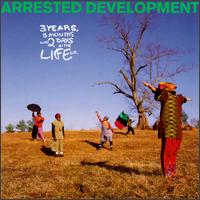
They say never judge a book by its cover, but sometimes a record’s artwork will tell you exactly what you can expect as far as content. 3 Years is one of those albums.

The album cover depicts Speech and company in the wilderness, decked out in a mix of African attire and hipster garb as Speech and Headliner look up to the heavens as if they’re praising God, while the rest of the crew looks to be in the mist of African dance with one waiving the African flag. Musically on 3 Years, AD combines African pride themes with hippy like philosophies and a touch of spiritual overtones, placed over backdrops that mesh traditional hip-hop with folk, blues, and African sounds. Speech (who’s style is a mix of Q-Tip and Prince B) has a lot to say and makes some strong points along the way but a large portion of the production is spotty and awkward, and will make even the most patient listener give up on listening to Speech’s, um, speeches.

-Deedub

Posted in Uncategorized | 3 Comments

Original Flavor – This Is How It Is (March 17, 1992)

220px-Original_Flavor_-_This_Is_How_It_is

Original Flavor was a New York based duo that originally consisted of Ski and Suave Lover (Suave would leave the group after the first album and was replaced with T-Strong and DJ Chubby Chub, which may be the funniest deejay moniker in the history of hip-hop), who were managed by Damon “Rock-A-Fella” Dash and his cousin, Darien Dash under Damon’s Dash Entertainment imprint. Ski’s name may sound familiar to a lot of you, as it’s the same Ski that created the backdrops for 4 songs on Jay-Z classic debut Reasonable Doubt, including “Dead Presidents II”, and has produced tracks for several other artist over the years (Ski Beatz). Ski is kind of like the Darren Sproles of hip-hop producers: very productive but consistently slept on and under appreciated.

I first became familiar with Original Flavor by hearing the lead single “Can I Get Open” off of their second album Beyond Flavor. The single featured a cameo from Jay-Z when, as Nas put it, he used to rap like the Fu-Schnickens (which makes this the second time I’ve mentioned Nas, Jay-Z and the Fu-Schnickens together in the same post in the last three posts). None of the rhymes stuck with me but the sick instrumental behind the emcees made an impact. As much music as I was buying at the time, I’m still not sure why I never bought the Beyond Flavor album. I digress.

About 6 years ago while digging through the used cd bins at one of the music store that I frequent, I came across Original Flavor’s debut album This Is How It Is. Since the price was right and my only memory from them was a cameo from one of the best to ever do it over a sick instrumental, I did what any bona fide hip-hop head would do. I downloaded it illegally from the internet. Just kidding, I bought it.

This Is How It Is was released in 1992 on Atlantic records, and with the exception of two songs, was produced entirely by Ski, with executive producer credits going to Damon Dash, Darien Dash, and the legendary DJ Clark Kent (who gets production credits on a couple of songs). This Is How It Is didn’t get a lot of publicity, which is kind of surprising being it was released on a major label and all. I personally didn’t even know it existed before I ran across it that fateful day in January of 2009 (no, I don’t record the dates that I purchase albums. I just happened to find the receipt stuck in the cd case today. There are limits to my music geekiness, folks). Needless to say, the album didn’t move a lot of units, but it did allow Original Flavor the opportunity to release one more album before they disbanded and went their separate ways.

At the end of Original Flavor’s shoutouts in the liner notes it reads “P.S. SPECIAL O-FLAVOR BIG CRUNCHY DISS GOES OUT TO… N_ _ _ _ _  AND R _ _ _ _ _!” FILL IN THE BLANKS SUCKERS!” Kind of cowardly to only give their first initial, but I’m still interested to know who the two recipients of this “crunchy diss” are. If you know hit me in the comments.

This Is How It Is – To kicks things off, Ski lays down a mid tempo beat with a smooth guitar sample, that sounds suitable for laying on the beaches of Hawaii with a lay around your neck, while sipping on a margarita and eating a bag of Lay’s potato chips. You like how I laid that out? Ski and Suave don’t sound super impressive on this title track but I’ve heard a lot worse.

When I Make It – Ski and Suave each take a verse to explain to their parents their plans to skip the traditional route of going to college or getting a job, but instead will pursue a career in music, regardless of what their parents think. The duo then splits the third verse and encourages the listener to pursue his or her dreams no matter who doesn’t believe in you. Ski uses some smooth George Benson guitar samples for the backdrop and turns them into a thing of beauty. This was nice. Props to Original Flavor for coming with an original concept for this song.

Best Friend’s Girl – Over a jazzy instrumental driven by a sick piano loop, Ski relives the time when he completely violated the bro code and banged out his best friend’s girl. Not an associate’s women. Not a co-worker’s women. Not a casual friend’s girl. His best friend’s girl. I don’t care if this chick had Halle Berry’s face on Kim Kardashian’s body, that’s a complete no-no. To make matters worse, at the end of the song he then brags about how the song is based on a true story and that he got away with it, until he decided to snitch on himself by writing this song. Asshole.

Way Wit Words – Ski hooks up another jazzy instrumental with a buttery piano loop sprinkled over the verses and a sophisticated saxophone sample over the hook. He and Suave take turns bragging about how nice they are with the lyrics, but neither of them bother to live up to their boasts. The instrumental is so yummy you won’t really care what they’re saying over it.

Kick The Butta – Ski and Suave invite a few of their dudes, Sean Wan and Big Pub (or Big Rock?), to the cipher that takes place on this one. Ski takes a break away from the boards and lets legendary deejay Clark Kent and Larry Larr handled the production duties, which wasn’t a good idea. When you combine sub par rhymes with mediocre production, you get a hot mess of a song aka “Kick The Butta”.

Waitin’ 4 My Break – Our hosts move thing back in the right direction as Ski hooks up a decent instrumental that he and Suave use to discuss industry politics and the struggle of trying to get their foot in the door of this fickle music industry while staying true to their art. This was cool.

Handle The Technique – Ski samples the same Grover Washington Jr. record ATCQ used for “Push It Along” (“Loran’s Dance”) and add a nice horn sample, making this some ole smoothness. This is probably my favorite instrumental on an album that is stacked with beautiful backdrops. Again, if you’re looking for jaw dropping lyricism, you come to the wrong spot. But if you enjoy layered jazzy instrumentals you’re in for a treat.

Give ‘Em Some Wrek – This was passable.

Gumdrops – Ski samples the sick bass line from Herbie Hancock’s “Watermelon Man” as he and Suave sing praises to the first food sources of every baby. The titties, foo!

I Like It (Freestyle) – The first 20 seconds of the song starts with a sick guitar loop that will leave your face all crunched up. Then all hell breaks loose when the beautiful guitar loop is suddenly replaced with a basic drum beat and a messy instrumental, then I looked at the liner notes and read that Clark Kent (with a co-production credit going to Sean Wan) produced the track and it all made sense. Needless to say, I wasn’t feeling this one.

Brain Storm – Ski takes his seat back behind the boards and steers this ship back in the right direction as he hooks up another beautiful jazz infused instrumental. Again, listening to Ski and Suave rhyme is equivalent to Charlie Brown’s teacher talking, so just enjoy the beautiful background noise.

Swingin’ – Original Flavor ends This Is How It Is with an up-tempo groove, complete with a nasty bass line, brought to you courtesy of yours truly, Ski. Suave and Ski both give their parting shots, and speaking of shots, I’m curious if Ski’s comment “I’m not from a Shaolin temple” was aimed at anyone in particular. Maybe not the Wu, as they weren’t quite poppin’ yet, but possibly the UMC’s? Fu-Schnickens? Hit me in the comments if you have the scoop.

If you completely remove “Kick The Butta” and “I Like It”, then remove the vocals from the remaining songs, This Is How It Is would be nearly flawless. Even back then, Ski-Beatz was a monster on the boards as he leaves plenty of prove on this album. The problem is This Is How It Is is not an instrumental album and Ski and Suave just aren’t that good with the rhymes. So, if you want to hear some quality early nineties hip-hop production (less two songs) and can block out or don’t mind listening to middle of the road emcees, This Is How It Is is the perfect album for you.

-Deedub


Posted in Uncategorized | 5 Comments

The Disposable Heroes Of Hiphoprisy – Hypocrisy Is The Greatest Luxury (March 3, 1992)

Hypocrisy_Is_the_Greatest_Luxury_-_Album_Cover

This is one of those albums that I look at and have to ask myself “why did I buy this album, again?”. I don’t mean that in a this-album-is-hot-garbage kind of way, especially considering this is the first time I’ve ever listened to Hypocrisy Is the Greatest Luxury. I say that in more of a I-don’t-reconginze-any-of-the-songs-listed-in-the-liner-notes-so-why the-hell-did-I-by-this kind of way.

The Disposable Heroes Of Hiphoprisy (who going forward I’ll only refer by the acronym TDHOH) was a Oakland based duo of Rono Tse and Michael Franti, who most of you now know as the front man for Spearhead (another group that I’ve heard about but have never listened to one of their songs, that I’m aware of). The two met while they were attending San Francisco University and with a few other cats formed a punk/spoken word band called Beatnigs. Between ’86 and ’90, the Beatnig’s would release a full length album and an EP on the indie record label Alternate Tentacles. Michael and Rono would leave the Beatnigs to form TDHOH, signed a deal with 4th & Broadway, and released their debut album Hypocrisy Is The Greatest Luxury (which I’ll refer to as HITGL from here on out) in 1992.

With the exception of some live instrumentation from a few friends, HITGL is completed produced by the duo, and would go on to receive critical claim (which is a relative term), which naturally means it didn’t move a ton of units. The album was also included in Robert Dimery’s book 1001 Albums You Must Hear Before You Die, which means I now only have 1000 more albums to listen to before I croak. Life is all about progression, son.

Satanic Reverses – Over a solid bass line and decent instrumental, Franti opens things up calling out the contradictions and inconsistencies that existed in America in 1992, and many of his thoughts are still relevant today. There is a lot of meat on this bone. You’ll have to listen to it a few times to decipher through it all. Thanks to a mediocre instrumental, I didn’t really feeling this one.

Famous And Dandy (Like Amos ‘N’ Andy) – Ah! The one song from HITGL that I do remember. Once I heard the intro it immediately brought the video for this song back to memory. For those who may not know, here’s a little episode of Kid’s Korner: Amos ‘N’ Andy was radio shows that ran from the late 20’s to the mid 50’s. The show starred two white actors who played two African-American men, and played heavily on ethnic stereotypes as the characters spoke and acted buffoonishly, aka a minstrel show. On this one Franti addresses how a large portion of black entertainers, and blacks in general, will almost sell their souls to become rich, famous, or just get noticed. Franti makes a lot of solid points in this one, but his substance gets lost in his awkward delivery that falls somewhere in between traditional hip-hop rhyme form and spoken word. Plus the terrible instrumental completely buried the song.

Television, The Drug Of The Nation – If you didn’t already figure it out based on the song title, this one is about the dangers of television that, as Franti puts it, is “breeding ignorance and feeding radiation”. Franti sounds like a poor man’s Chuck D when he recites the hook on this one. Instead of mixing delivery methods, Franti sticks with the spoken word approach, and it works for the most part. Charlie Hunter is credited for adding some live guitar licks to the enjoyable instrumental. This was solid.

Language Of Violence – Michael (I had to take a short break from referring to him as Franti) shares a tale of a teenage boy who is possibly struggling with homosexuality (it’s never made clear as I’m sure Franti left it that way on purpose), being bullied at school.  The bullies start of by calling the boy derogatory names, then things quickly escalate, when the bullies follow him home from school one day and beat the boy to death. An eye-witness catches the act, so the main conspirator is tried as an adult and after being convicted and sent to prison, becomes the recipient of what “comes around goes around”. Franti closes the song with some pretty powerful questions, leaving the listener with something to chew on. The instrumental is not spectacular, but it works, as it’s understated form allows you to focus on the content.

The Winter Of The Long Hot Summer –  In an almost whisper of a voice Franti recalls the events leading up to and through the Gulf War. This was painful to listen to. The boring instrumental mixed with Franti’s choppy delivery make this song feel like it’s 25 minutes in length.

Hypocrisy Is The Greatest Luxury – Over a mediocre up-tempo instrumental, Franti acknowledges his own hypocrisies before calling out America on its hypocrisies, which is kind of hypocrisy in itself, right? I love the violin sample that comes in during the hook, though.

Everyday Life Has Become a Health Risk – Franti rambles on about government experiments and tests that damage our air quality with toxic chemicals and animals being injected with hormones to grow faster for human consumption. I believe there is truth to his thoughts, but never have I been so bored listening to someone discuss conspiracy theories in my life. This was almost as bad as “The Winter Of The Long Hot Summer”. Furthermore, based on the song titles on HITGL, the album could have appropriately been titled “The Album With The Long Ass Song Titles”.

INS Greencard A-19 191 500 – I’m assuming this interlude was included to set up the next song…

Socio-Genetic Experiment – Over a decent instrumental and some live guitar licks from Charlie Hunter, Franti discusses his multi-ethnicity (he’s Native American, African-American, Irish, and German), how growing up this way in America makes one in his shoes feel, and despite all the challenges he faces, he’s still proud of who he is. This was a decent listen.

Music And Politics – Over some simple but pleasantly peaceful acoustic guitar licks from Charlie Hunter, Franti gets introspective as he discusses the things he would focus on if all his thoughts weren’t tied up on music and politics. Must be an Aries thing, because I can feel him on all his introspections. Easily, my favorite song on HITGL.

Financial Leprosy – Still planted firmly in his pulpit, Mike (by this point we’re acquainted well enough to be informal) uses this one to address the irresponsible spending of the American consumer as well as the misguided spending of the American taxpayer’s money by the government. The garbage instrumental mixed with Mike’s awkward delivery make this one nearly impossible to listen to.

California Uber Alles –  The song title (which when translated from German to English means “California above all others”) is taken from the late seventies song of the same title, from the rock group The Dead Kennedys, which takes shots at then California governor Jerry Brown. Like the Dead Kennedys before them, TDHOH use it to criticize then current republican governor Pete Wilson and his policy. I’d rather watch paint dry than listen to this song again.

Water Pistol Man – After listening to this one 4 times and reading the lyrics from the liner notes, I’m still not sure who the “Water Pistol Man” is or what the hell this song is really about. Thankfully, this is the final song of this 13 song sermon, because I’m starting to get a migraine listening to this.

Franti’s style can be best described as Chuck D meets Gil Scott-Heron. Like those two legends, Franti has a lot to say on HITGL, as he brings some original concepts and makes many solid points, leaving the listener with a lot to chew on. At times, maybe too much to chew on. I’m all for substance in music, but if the substance is presented in an unentertaining format, the music suffers, which results in the artist losing the listener’s attention. Unfortunately, the majority of the production on HITGL ranges from mediocre to painfully boring, while Franti struggles to find a delivery that works, and sounds uncomfortable throughout, as he crams more content in to each song than the human brain is able to consume; and more importantly, enjoy.

Not a good album but I’ll have to seek out the rest of Franti’s work as the dude definitely shows potential on this one.

-Deedub

Posted in Uncategorized | 1 Comment

Boogie Down Productions – Sex & Violence (February 25, 1992)

220px-Sex_and_Violence_BDP

BDP has always been respected for their hardcore formula of hip-hop, substance, and unlike many of their peers, the integrity to never follow the trends. I’ve always thought their first three albums were a bit inconsistent, but on the fourth album Edutainment, Kris Parker and company seemed to finally find the perfect blend of consistently quality production placed behind the blastmaster’s masterfully meaty verses. Edutainment (which has to be one of the best album titles of all time) was not only the most consistent album in BDP’s catalog, but it was also the first and last BDP album to earn the crew a gold plaque.

Still at his peak in ’92, KRS-One and company would return with their fifth album Sex And Violence. While the title may lead you to believe that BDP had succumb to the pressures of the industry to follow current trends in pursuit of record sales and the almighty dollar, that was not the case. In the liner notes (by the way, I love liner notes. All this good information doesn’t come with an iTunes purchase) Kris explains that the album title “Represents radio and television, in that order. I call the album Sex & Violence because that is what entertainment has become in ’92 thus creating a more sexist and violent youth in America via the world!”.

While BDP’s message may not have changed on Sex And Violence, the faces in the crew definitely did. In the liner notes Kris holds no punches as he clearly spells out who BDP is:”BDP in 1992 is KRS-ONE, Willie D and Kenny Parker! BDP is 1992 is not D-Nice, Jamal-ski, Harmony, Ms. Melodie and Scottie Morris. They are not down with BDP so stop frontin’. We roll tight and hard this year because too many people want something for nothing.” That’s what I call direct and to the point. Sex And Violence would include production from long time BDP member and Kris’ little brother, Kenny Parker, Pal Joey (who produced “Love Is Gonna Get’cha”), long time BDP studio engineer D-Square, and the legendary Prince Paul. The album did not move a ton of units but most of the albums that I hold in high regard didn’t, so that don’t mean shit.

This would be the final album under the Boogie Down Productions name as Kris would go onto to release a sleuth of solo albums, which is kind of funny considering BDP was pretty much KRS-One and friends, in the first place.

The Original WaySex & Violence opens with the Parker boys poking fun at the industry and deejays moving away from using vinyl for alternative methods (i.e. cds and laptops) to rock a show. Then a warm reggae tinged instrumental drops before Kris’ voice comes in slightly distorted, giving the song a live feel (which I’m sure is what he intended). The warm reggae instrumental is quickly replaced with a simply drumbeat that Kris chants over before he and Freddie Foxxx (who you may also know as Bumpy Knuckles) exchange verses with Kid Capri making a brief cameo at the end of the song. This was okay, I guess.

Duck Down – For some reason I remember this being the lead single from Sex And Violence, but apparently from everything I can find online it was the second single. Regardless, this song is bananas! From the hard drums, to the sick guitar sample, to Kris’ crisp and precise lyrics, this song is a monster and a certified banger. Easily one of the top 5 song in BDP’s catalog and KRS-ONE’s solo catalog as well. Classic.

Drug Dealer – Prince Paul concocts a mid-tempo groove with a slightly reggae feel that Kris puts his teacher’s hat on for. Today’s lesson is for the black drug dealer as Kris’ message isn’t telling them to stop but instead suggest that if their going to sell drugs at least put the money into building up the black community, like all the other races have done in the history of this country. Even if you don’t agree with Kris’ ideology, he definitely makes some strong points on this one. Solid.

Like A Throttle – Kenny Parker hooks up a sick instrumental that Kris completely obliterates, displaying why he must be in the argument for GOAT, and definitely in the top 5 dead or alive. Over the course of his two verses he drops lessons, sprinkles in a bit of dancehall (that he comically snaps himself out of at one point to get back to the hip-hop), and smacks all competitors in the face while warning them to “get the fuck out my face, I run this place, you’re lucky we’re from the same race”. Listening to this today reminded me of why I fell in love with hip-hop in the first place. Sit back and enjoy a wordsmith at work, kids.

Build And Destroy – X-Clan had fired a few shots at Kris, criticizing him for his humanist views, as they felt he should focus more on the black man and the pro-black movement that they were about. Over an average Kenny Parker instrumental, Kris defends his humanist stance and explains why he doesn’t focus solely on the pro-black movement, and even shoots down the belief that the black man is god, which was the popular thing to say amongst hip-hoppers in the early nineties. Kenny’s instrumental could use a little life but Kris’ rhymes will leave you with something to dissect.

Ruff Ruff – Freddie Foxxx makes his second appearance of the evening, as he and Kris split mic duties again, over a solid up-tempo instrumental produced by D-Square. Kris will always be in my top 5 dead or alive, but Freddie Foxxx steals the show on this one. That’s just my opinion, though. What do you think?

13 And Good – This was the lead single from Sex And Violence. Pal Joey gets his second production credit of the evening and hooks up an understated, slightly reflective backdrop that Kris uses to tell a story about a well built female that he meets at the club and takes home for a one night stand. Things get interesting the next morning, when while having pillow talk, the female reveals that she is only 13 and threatens to cry rape and get her father involved if Kris’ character doesn’t agree to turn their one night stand into a commitment. Speaking of her father, he just so happens to be a police chief. For those not familiar with the song I won’t completely spoil the ending, but the song is over 20 years old, so you might want to get on that. Heather “All Glocks Down” B makes a small cameo in between verses on this one, which I figured I’d mention since I’m an unofficial citizen of Sway In The Morning and all. But I digress. Entertaining storytelling from Kris. This is a slept on classic.

Poisonous Products – Kenny Parker samples a portion of Isaac Hayes’ “Joy”, strategically sprinkling it over a killer bass line that Kris rips the heart out of. The sample of the relaxing male vocal speaking over a melodic female harmony in between Kris’ verses was a nice added touch.

Questions And Answers – Over a mediocre Pal Joey instrumental Kris interviews himself. No, I’m serious. Over the course of two verses he literally asks himself questions and then replies. Yes, it sounds as corny as it um, sounds. To make matters worse, Kris sounds like a whiny 5 year old as he complains about not being able to get on the cover of a magazines. This one should have been left on the cutting room floor.

Say Gal – KRS-ONE puts on his dancehall hat as he chants about women who dress seductive, seek out celebrities, go back to their hotels and then cry rape. Very controversial, especially considering Kris makes it clear where he stands in the matter, which I’m sure many would perceive as judgmental and possibly masochistic. I’m shocked he didn’t receive a ton of backlash from the female fan base and feminist groups back in the day. Over twenty years later this topic couldn’t be more relevant. Two words: Bill Cosby.

We In There – Kenny Parker hooks up a grimy and bleak instrumental that makes for the perfect backdrop for Kris to dish out verbal ass whippings over. While no names are said on the record, it’s clear that he was taking shots at Ice Cube and PM Dawn. He later admitted he didn’t appreciate Cube’s line in “Rollin’ Wit The Lench Mob” where he appears to take a shot at Kris’s Stop The Violence Movement (“some rappers are heaven sent, but Self-Destruction don’t pay the fucking rent”) or PM Dawn questioning what kind teacher he is in a magazine article. You may remember in January of ’92, while PM Dawn was performing at a club in New York, Kris and his crew rushed the stage, literally throwing Prince Be and DJ Minutemix off the stage and then proceeded to rock three of his own classic records. Some of Kris’ peers saw his actions as a contradiction to his Stop The Violence Movement and called him out on it. Das EFX was one of them. On the video remix version of “We In There”, Kris adds a third verse and fires direct shots at Das, even accusing them of stealing their style from Treach (of Naughty By Nature). Eventually, Das and Kris would squash their beef and few years later work together on Kris’s second solo album, but I digress. I never cared much for the instrumental on the remix, as it sounds a bit soft. The album version is sick, though.

Sex And Violence – Prince Paul samples Booker T & The M.G.’s “Boot-Leg” record creating an infectiously bouncy backdrop. Kris is in full dancehall mode as he chants the entire song, venting about the over abundance of sex and violence on tv and radio, as well as his disdain for commercial radio and deejays. This is a feel good joint that would be fun to hear live. Which by the way, if you’ve never seen KRS-One perform live you have not truly experienced hip-hop. I’m just sayin’.

How Not To Get Jerked – Kris builds on Q-Tip unwritten industry rule# 4080, as he gives advice on how to avoid getting played in the music industry, for those interested. Prince Paul get his third production credit of the evening, at it’s decent. This definitely wasn’t one my faves.

Who Are The Pimps? – First off, I’d like to think the Blastmaster for punctuating the song title with a question mark. Pal Joey gets is 4th and final production credit of the evening and hooks up a hot up-tempo instrumental that Kris uses to equate the pimp and the hoe relationship to the IRS and the tax payer. Very clever and well done, Kris.

The Real Holy Place – Over what sounds like the soothing music they play at a massage parlor, Kris begins his 4 1/2 minute rant lecture on what the song title suggests. At this point in the ever changing philosophy of Kris Parker, he was into the whole metaphysics thing. As much as I respect KRS-One as an emcee I’ve rarely agreed with his forever evolving spiritual beliefs. I mean, the guy changes Gods as often as The View changes it’s roster.  This didn’t add anything value to the Sex And Violence experience.

It’s evident while listening to Sex And Violence that not only was KRS-One fed up with what America deemed as entertainment, but he also raps like he has a chip on his shoulder. With different crews taking shots at him and his philosophy, it’s almost like he felt he needed to defend the rep he had built for himself the previous 6 years. Luckily for  the listener, that pressure results in Kris producing some of the best records in the BDP/KRS-One catalog (i.e. “Duck Down” and “Like A Throttle”). Over the course of 15 tracks and pretty solid production, Kris sews lessons, boasts, and lyrical mouth shots together, resulting in a quality assembled quilt, I mean, album. While there are some forgettable moments on Sex And Violence and its not as consistent as it’s predecessor, it’s still dope in its own right.

-Deedub


Posted in Uncategorized | 5 Comments

Fu-Schnickens – F.U. “Don’t Take It Personal” (February 25, 1992)

220px-FUDontTakeItPersonal

In the early 00’s, Nas was in the middle of a war of words with Jay-Z. After Jay-Z released the monster dis track “Take Over”, it appeared he had ended Escobar’s career, which was seemingly on life support at the time anyway, since as Jay-Z put it, he had a “1 hot album every 10 year average” at the time. With his back against the wall and the world ready to stick a fork in him, Nas wiped the dirt off his shirt, grabbed Eric B & Rakim’s classic “Paid In Full” instrumental and recorded a song called “Stillmatic (Freestyle)” (not the intro to his album with the same name), firing shots back at his adversary and his team. This of course would set the stage for his classic dis record “Ether”, that would solidified Nas’ victory in this epic clash of titans. But I digress.

Few remember Jay-Z during his pre-Reasonable Doubt days, when he made a few cameos on other artist’s songs (i.e. Big Daddy Kane’s “Show And Prove” and Original Flavor’s “Can I Get Open”). During those days, Jay didn’t have the laid back conversational flow that we’ve all come to know and love, but instead he used to rhyme with a quick rapid fire delivery. On “Stillmatic (Freestyle)” Nas calls him out on this and says “I rule you, before you used to rhyme like the Fu-Schnickens, Nas designed your blueprint who you kidding”. This line obviously accuses Jay of being a biter, but I’ve always perceived it as an unintentional jab at the Fu-Schnickens as well. In hindsight, many viewed the Fu-Schnickens as a corny gimmick. Do you, remember the Fu?

The Fu-Schnickens were the Brooklyn trio made up of Moc-Fu, Poc-Fu, and the chief emcee of their three-man crew (and the emcee Nas’ compared Jay-Z’s early sound to), Chip-Fu. Like the UMC’s before them (and a few years before the Wu-Tang Clan) the trio was influenced by Asian culture, as they would often makes references to Chinese food and Kung-Fu movies, and could often be found rockin’ Chinese tunic suits in videos, photo shoots, and at shows. The trio created a bit of a buzz with their first single “Ring The Alarm” in ’91 and followed up on the buzz in ’92, releasing their debut album F.U. “Dont Take It Personal” on Jive.

On the strength of the groups non-threating and almost cartoonish persona, mixed with a few strong singles, the Fu-Schnickens were able to parley F.U. “Dont Take It Personal”
into a gold plaque. They would release one more album in ’94 (Nervous Breakdown) that failed commercial before the group disbanded.

Gimmick or not a gimmick, that is the question.

True Fuschnick – This was the third and final single released from F.U. “Dont Take It Personal”. A Tribe Called Quest is given the production credit for this hard-driving instrumental that Chip, Poc, and Moc (who sounds a lot like Phife) use to proclaim how true they are to the Fu-Schnicken name. It’s been said that Chip-Fu’s style is the father to Das-EFX’ early diggidy-fliggidy flow. Listen closely to Chip’s verse on this song and I’m sure you hear some similarities. None of the trio sounds great on the mic, but the hyped hook and sick instrumental will keep your head bobbing. Which should come as no surprise considered who constructed it. I’m just sayin’.

Movie Scene – This one opens with reenactments of what is supposed to be scenes from old karate flicks (hence the song title). Then the beats drops and things fall a part quicker than Kim Kardashian and Kris Humphries marriage. From the basic drum beat, to the annoying Chinese singing sample on the hook, to our hosts rhymes, nothing went right on this song.

Ring The Alarm – As I mentioned in the intro, this was the first single and the song that put the Fu-Schnickens on the map. Lyvio G samples dancehall artist Tenor Saw’s eighties hit of the same name, and turns it into a banger that Chip-Fu uses to go dolo over. Although I can’t make out half of what Chip is saying, his slightly dancehall rapid fire flow sounds nice over the backdrop. I completely slept on this song back in the day.

Back Off – The Fu-Schnickens and Lyvio G are credited for the instrumental as Chip-Fu gets his second consecutive solo joint. The backdrop samples the same haunting Lowell Fulsom (“Tramp”) bass line that EPMD used for “Rampage” and Cypress Hill borrowed for “How I Can Just Kill A Man”, with a nicely placed Grand Puba vocal sample for the hook. Chip-Fu uses it to spray his rapid fire flow every where and he even takes a shot at Rob Base, Too-Short, and every rapper’s favorite targets in the early nineties, Young MC and Vanilla Ice.  I just wish I could understand what Chip’s saying without having to read the lyrics from the liner notes.

Heavenly Father – A Tribe Called Quest gets their 2nd production credit of the evening as they borrow liberally from Alicia Myers eighties hit “I Want To Thank You”. Moc and Poc return from their short vacation and join Chip as they each get a verse to give praise to God, and they all submit pretty solid verses. If you’re looking for substance this is about all your going to get on F.U. “Dont Take It Personal”, so feel free to check out now. As unoriginal as the instrumental is, I still dig this one. I guess I’m a sucker for praise and worships raps. And A Tribe Called Quest.

La Schmoove – This is easily my favorite Fu-Schnickens song in their limited catalog. A Tribe Called Quest gets their third and final production credit of the evening for this one, which was also the second single released from F.U. “Dont Take It Personal”. Over a mid-tempo groove with an infectious bass line, the Fu-Schnickens invite Phife-Dawg to the cipher as all parties involved spit a verse. Like “True Fuschnick” none of the emcees spit life changing rhymes but the instrumental and energetic hook with get you into this one.

Props – I didn’t care much for this one back in the day. It’s still not a great song but I do dig the trumpet sample on the break during the hook.

Generals – Over a boring instrumental, our Fu brethren do their best Cold Crush Brothers rendition. Next…

Check It Out – Riding high off the success of Black Sheep’s debut A Wolf In Sheep’s Clothing, Dres cooks up a mildly interesting instrumental and spits a quick verse on this one. Brothers Fu also invite 40 Love, Kung-Fu (who is given props a few different times during the course of the album), and B5 to the cipher. Dres spits a nice verse and Chip, who closes this one out, spits another rapid fire flow that sound interesting but the lyrics for this one aren’t printed in the liner notes, so I’m left in the dark to what he was saying for most of his verse.

Bebo – Nothing like a nice warm bowl of hot garbage to close things out. I’ve never a sample of George Clinton’s “Atomic Dog” sound so unfunky.

F.U. is definitely not fine wine. Chip-Fu shows potential on the mic but his brethren come to the battle with empty guns, and as a unit their rhyme style sounds a bit dated and cartoonish. F.U. is not all bad, though. Chip-Fu’s solo songs are solid, and A Tribe Called Quest’s presence adds a nice touch as they produce probably the three strongest songs on the album, with Phife dropping a verse on one of them, and ATCQ’s Native Tongue brethren, Dres producing and rhyming on a fourth song.

Thankfully, F.U. “Dont Take It Personal” is only 10 tracks in length, so you won’t have to sit and listen through too much filler material, in case you’re doing a stunt blog like this or you own a copy of F.U. “Dont Take It Personal” in it’s 8-track format. Listening to F.U. “Dont Take It Personal” today definitely confirms the Fu-Schnickens were yesteryear’s flavor of the month, without any truly timeless quality in their music. Time is definitely illmatic.

-Deedub


Posted in Uncategorized | 4 Comments

Lord Finesse – Return Of The Funky Man (February 11, 1992)

Returnofthefunkyman

Oh, how time flies when you’re…living. I can’t believe its been nearly three years (almost to the date) that I posted on Lord Finesse’s debut album Funky Technician. Funky Technician was released on the now defunct Cold Chillin’ label, and would be the only album Finesse would release on the label. Unsurprisingly, the album didn’t move a ton of units but it did gain Finesse some critical acclaim, and more importantly, I dug it. Nearly two years after his debut, Lord Finesse would return in ’92 and release his follow-up effort Return Of The Funky Man on the Giant/Reprise label.

Like it’s predecessor, Return Of The Funky Man would feature production credits from Finesse’s D.I.T.C. brethren, Showbiz and Diamond D. Premo (who provided the sound scape for about half of Funky Technician) is absent from this project, which would leave room for a few others (that we’ll get to in a bit) and Finesse himself, to sit behind the boards and fill the Premier void.

In my opinion, Diamond D and Showbiz out produced Premo on Funky Technician anyway, so his presence shouldn’t be missed that much, right?

Lord Finesse Intro – In a slightly altered voice, but not disguised well enough not to recognize whose voice it is, Lord Finesse introduces himself to the stage, followed by a nice Showbiz instrumental with a vocal sample sprinkled throughout.

Return Of The Funky Man – The title song was the first single released from the album. I’ve never cared much for this song. Finesse sounds pretty good but Showbiz’ instrumental sounds empty and boring.

I like My Girls With A Boom – Finesse lays down a decent instrumental that he uses to describes the type of female he’s looking for, which doesn’t go beyond her physical attributes. While his requirements are super shallow, his comical punch lines are bound to make you chuckle a few times.

Yes You May – Finesse invites Percy P and fellow Diggin’ In the Crates crew member Andre the Giant to the studio for this cipher, over a nice up-tempo Showbiz produced backdrop. Making his professional debut, Percy P bats first and makes a damn good first impression and he shows he’s lyrically proficient and nimble of tongue. A.G. bats second with Finesse rapping wrapping things up and they both deliver hot verses as well. It’s rare when all parties involved in a cipher match each others energy and performance, but this is one of those rare occasions. This was fire!

Hey Look At Shorty – On this one our host reminisces on his early emceeing days and how he honed his skills in high school. Finesse spits entertaining rhymes and witty punch lines but his instrumental is so scant he might have come off better spitting it acapella.

Praise The Lord – Diamond D lays down a funky mid-tempo groove that Finesse sounds right at home rhyming over. Finesse completely devours this one as he drops potent punch lines, boasting of his greatness. This was nice.

Save That Shit – Aladdin (I’m sure as in DJ Aladdin since he gives the Rhyme Syndicate a shoutout later on in the album) and S.L.J. hook up a mediocre backdrop that Finesse uses to discuss the ladies who use to dis him but suddenly caught a bad case of the vapors once he got on. Finesse has never had the tightest flow but once again, his punch lines save this song from being a complete waste of time.

Show ‘Em How We Do Things – This Aladdin/S.L.J concoction is 100 times stronger than their work on the previous song. This time around Finesse shares the floor with two rookies, Shel Rumble and his cousin Harry-O, as each party involved spits a verse. Neither of the newcomers says anything that will make you hit the rewind button but they produce serviceable verses. Finesse bats last, and what seems like an attempt not to embarrass his guests, spits an average verse. This was decent.

Isn’t He Something – Over a sick Diamond D instrumental (I love the trumpet sample sprinkled throughout this one) Lord Finesse does what he does best: talk shit. I would love to hear an entire Lord Finesse album produced by Diamond D. This is sick.

Fat For The 90’s – Aladdin and S.L.J. improve their batting average to .800 as they provide a solid backdrop for this duet between Finesse and A.G, who exchange quality boasts.

Stop Sweating The Next Man – Ralph Waldo Emerson once said that “envy is ignorance”, and Lord Finesse pretty much uses this song to expand on that idea. Showbiz samples the same Lou Donaldson record (“It’s Your Thing”) that Brand Nubian would later use for their street hit “Punks Jump Up To Get Beat Down”, which coincidently was produced by Showbiz’ fellow Diggin’ In The Crates crew member Diamond D. This was okay, I guess. It was a nice break away from the braggadocio and battle rhymes.

Funky On The Fast Tip – This song title sounds like something you would write on the demo tape label as a holder until you thought of a meaningful song title. Over his self-produced instrumental (with a co-production credit going to Peter Wane) Finesse sets out to prove he can spit over up higher bpm’s as well. I’ve always liked Finesse for his witty punch lines, but his flow at times can stall, which he displays at points during this song. Still a decent listen.

That’s How Smooth I am – Diamond D hooks up a laid back instrumental, sprinkling a spacey sounding sample throughout that is so damn yummy to the ears you’ll have to listen to it again. Finesse uses this one to discuss his, um, finesse when it comes to the ladies. He does a good job, but Diamond D’s instrumental is the true star of this one. In my opinion, this is the best instrumental on the entire album.

Party Over Here – If this isn’t the weakest song on Return Of The Funky Man then it’s tied with the title track. Not a fan.

Fuck ‘Em – This is Finesse’s dedication to all the people who didn’t believe in him back in the day. Diamond D hooks up a smooth instrumental for Finesse to tell his naysayers to “look at me now”.

Kicking Flavor With My Man – Over a solid Finesse produced backdrop (I love the guitar licks during the refrain) Percy P makes his second appearance of the evening. Unfortunately, he doesn’t come off as strong as he did on “Yes You May”, but Finesse on the other hand, literally and figuratively, shuts this one down with a stellar verse (“and I show men, them muthafuckas have no wins”). Wait…did P give a shoutout to Organized Konfusement? Ha! This was a solid way to end Return Of The Funky Man.

Return Of The Funky Man would benefit to take a pointer out of Rick Ross’ book and shave off a few pounds, because at 16 tracks it’s a bit robust. On the production side, Diamond D (speaking of robust) doesn’t disappoint on the 4 tracks he produced but everybody else hits and misses, including Finesse himself. Speaking of Finesse, there is no doubt he is great when it comes to delivering witty punch lines, but like I mentioned in the Funky Technician post, his flow gets choppy at points and he sounds like he’s just throwing words together to fill out his verses. Even though Return Of The Funky Man is 4 or 5 tracks too long and not as solid as his debut, overall it is still a decent listen.

-Deedub

Posted in Uncategorized | 4 Comments

Sir Mix-A-Lot – Mack Daddy (February 4, 1992)

220px-SirMix-a-Lot-MackDaddy

We last heard from Sir Mix-A-Lot in ’89 after the release of his sophomore album Seminar, which I found in the dollar bin a few years ago. While a few of the singles did stir up a bit of nostalgia (i.e. “My Hooptie” and “Beepers”), overall I wasn’t feeling the album. About a year ago, while perusing the dollar bins at one of my favorite used music stores, I came across Mack Daddy. Curiosity and the hip-hop historian in me, forced me to buy it, because any one who reads this blog on a regular basis knows I’m a sucker for dollar cd.

Mack Daddy is Sir Mix-A-Lot’s third album and will always be remembered for its massive crossover hit single “Baby Got Back”, that I’ll discuss a little bit later. Mack Daddy earned Mix-A-Lot his second platinum plaque as it topped the million units sold mark in less than 6 months after it’s release.

Today will be my first time listening to Mack Daddy in its entirety. We all know “Baby Got Back” was made for the pop charts, I’m curious to see if Mix-A-Lot had some hidden gems on this one.

One Time’s Got No Case – No matter what era you pinpoint in the history of America, racial profiling and police brutality on black men has always been a relevant issue, and is no stranger to being the subject of a hip-hop song. Over a Mix-A-Lot/Nate Fox produced backdrop (that samples Stevie Wonder “You Haven’t Done Nothing”), Mix-A-Lot spins a tale about an episode that covers both the former and the latter, with a bit of a comical twist. But there is a lot of truth spoken in jest. Nice way to kick things off.

Mack Daddy – Over a funky instrumental complete with a trunk rattling bass line, Mix-A-Lot jacks the alias of one half of the nineties kid sensation duo Kriss Kross (rip to Chris Kelly) for the title track. Mix-A-Lot spends the next 4 1/2 minutes scolding his haters, stuntin’ on the world, and makes it clear that he will take your chick. This was actually a decent listen. The instrumental has a way of growing on you.

Baby Got Back – This is arguably the most popular and one of the most commercially successful single in the history of hip-hop. Everyone one from 0 to 1000 has heard Mix-A-Lot’s ode to thick chicks with the bubble in the back. Speaking of bubbles in the back, Nikki Minaj recently sampled a portion of this song for her hit single “Anaconda” (which sucked ass). Needless to say, Mix-A-Lot will probably continue to eat off of this song for years to come. I never really liked this song, but it’s not terrible. It’s more entertaining when you watch the video, though.

Swap Meet Louie – In his “Posse On Broadway”/”My Hooptie”/”Beepers” cadence, Mix-A-Lot offers a little comic relief as he paints the picture of an Asian swap meet shop owner named Mary Phong (ha!) who sells fake Louis Vuitton. Things get interesting during the last verse when Mix-A-Lot discovers Mary is also selling bootleg versions of his tapes (kids, if you don’t know what a tape is, google “cassette tape” for more info). This was pretty entertaining.

Seattle Ain’t Bullshittin’ – Over a slowed down funk instrumental, that sounds like something Too-Short would sound comfortable spitting on, Mix-A-Lot rep his hometown. This was so-so.

Lockjaw – Mix-A-Lot is in battle mode over this hard instrumental. He may be known for his light-hearted songs, and while he’s not the greatest emcee, on this one he proves he’s got a few bars up his sleeve.

The Boss Is Back – I wasn’t feeling this one.

Testarossa – Over a cheesy Mix-A-Lot/Strange (that’s the co-producer’s alias) produced instrumental, our host compares his rhyme style to a Ferrari. Next…

A Rapper’s Reputation –  Hot Garbage.

Sprung On The Cat – This was really bad.

The Jack Back – Mix-A-Lot and guest The Wicked One each get two verses that they use to send death threats to the skinheads and the KKK as payback for all the black people they’ve brutalized and murdered over the past 400 plus years. I guess Mix-A-Lot was so disgusted with both groups he didn’t even one to waste a good instrumental on them.

I’m Your New God – Our host discusses cocaine and how both the user and the dealer praise and worship at its feet. This could have been a decent song had not the instrumental been garbage.

No Hold’s Barred – Mix-A-lot makes it clear what side he stands on with all the gun control debate (at least where he stood in 1992). Over the course of three verses he gives a few different reasons why he believes the 2nd Amendment should be upheld. The instrumental is garbage, but props to Mix-A-Lot for writing something to give the listener something to think about.

Surprisingly, Mack Daddy starts off pretty decent, before things start to slip and by the midway point this plane takes a steep nose dive before exploding into fiery flames. Mediocre rhyming mixed with sub par production equals a garbage album. No need to waste any more words on this one.

-Deedub


Posted in Uncategorized | 2 Comments

Biz Markie – Goin’ Off (February 22, 1988)

220px-GoinOff

Hope you’ll had a wonderful Labor Day weekend. You can file this one before He’ s The DJ, I’m The Rapper.

As I mentioned a few post ago, the 4th piece to my Biz Markie collection was due to arrive by the end of last week, and it did, in the form of Goin’ Off.

Goin’ Off is the debut album from Biz Markie, the O.G. of humorous hip-hop. As the regular readers know, I’ve written posts on The Biz Never Sleeps and I Need A Haircut, and other than a co-production credit going to his cousin/deejay Cool V,  Biz handled the production duties on both of those albums. So, I was a bit surprised to look in the liner notes of Goin’ Off and see that Marley Marl was credited for producing the album from beginning to end.

Goin’ Off didn’t move a ton of units but it did spawn a couple of mild hits, setting the stage for Biz’ sophomore effort The Biz Never Sleep, which would earn Biz a gold plaque as well as don one of the most commercially successful singles in hip-hop history. The Source also included Goin’ Off on their list of 100 greatest hip-hop albums of all time.

This is my first time listening to Goin’ Off in its entirety. Being that it was released in ’88 and at that stage Marley Marl’s production was hit and miss on his other works of the same time period, I’m curious on how this will play out.

Pickin’ Boogers – What better way to kick off the first song on his debut album then with a comical song like this. Over a simple Marley Marl drum beat Biz Markie recites Big Daddy Kane written rhymes about pickin’ boogers, and delivers them in a fashion only the Biz can. I mean, do you really think Kane would write rhymes for himself about such a juvenile subject? This was pretty entertaining. I’ll never look at spaghetti the same after listening to this.

Albee Square Mall – Over a funky Marley instrumental Biz shows love for his favorite mall in the entire world and invites TJ Swan to butcher serenade the Albee Square Mall during the hook. I hope the Albee Square Mall compensated Biz for the advertising he gave them on this one.

Biz Is Goin’ Off – Over a simple mid-tempo instrumental, the Biz makes a little music with his mouth (I love the high pitched squeally noise he makes at the beginning and end of the song) and mixes some comedy into his boastful rhymes for this title track. This was decent.

Return Of The Biz Dance – One of my hip-hop record pet peeves: when the sequel of a song is sequenced on the album before the original. This is the remix to the original that we’ll get to in just a few tracks. Not a great song, but I’ve heard worse.

Vapors – Marley samples James Brown’s “Papa Don’t Take No Mess” and hooks up a funky backdrop that Biz uses to dedicate a verse each to TJ Swan, Big Daddy Kane, himself, and Cool V as he repaints how people use to dis each of them but caught the vapors once they got one. Classic.

Make The Music With Your Mouth Biz – This was the second single released from Goin’ Off. Over a decent instrumental (that samples Isaac Hayes’ “Ike’s Mood”, which Marley has sampled at least three times over the past 25 years) the Biz spits random rhymes and drops in an occasional beatbox.  This is a remix, which is kind of annoying as it cuts out chunks of Biz’ rhymes.

Biz Dance (Part One) – The sequel was definitely better than the original.

Nobody Beats The Biz – I believe this was the second single released from Goin’ Off. Over a dope Marley instrumental the Biz spits arguably his best verses of the album while TJ Swan sings out of tune praises to Biz on the chorus. In Brian Coleman’s book Check The Technique the Biz says that he wrote this song (even though the liner notes credit Big Daddy Kane as the writer) after a group called Brothers released a record called “You Can’t Win” on B-Boy Records (the same independent label that BDP released their debut album Criminal Minded on) firing shots at the Biz. This may be the most vocally sampled song in the history of hip-hop. Seriously, there are no less than 100 vocal samples that have been taken from this song and use in other songs over the years. You don’t believe me? Listen and count them off.

This Is Something For The Radio – Over a decent Marley instrumental the Biz gives his shoutouts and rambles on about just about every and anything that comes to mind. Next…

Cool V’s Tribute To Scratching – Biz rhymes praises to his deejay Cool V as he adds scratches in between Biz’ verses. In Brian Coleman’s Check The Technique, Biz says Cool V originally wanted to do a track using all Michael Jackson records but couldn’t get them cleared, so they went with this.

Of the three Biz Markie albums that I’ve listened to and wrote about in the past few months, Goin’ Off is easily my least favorite. It’s not terrible, as it has a few undeniable classics, but the majority of the 10 tracks range from blah to hot garbage. This might come off as blasphemous to some but the biggest issue I have with Goin’ Off is Marley Marl’s lackluster production. I know Marley’s a highly revered hip-hop producer, rightfully so, but Biz is no slouch behind the boards either, as both The Biz Never Sleeps and I Need A Haircut are testaments to. Biz sounds more comfortable rhyming over his own beats, which may also have something to do the fact he was more involved with writing his own rhymes after Goin’ Off. Biz’ colorful personality does shine through at moments on Goin’ Off, but only enough to make the album an average listen.

-Deedub

Posted in Uncategorized | 3 Comments

K-Solo (Tell The World My Name) – May 22, 1990

220px-Ksolo-tell-the-world-my-name_L

For those keeping record at home: file this one after Amerikkka’s Most Wanted.

Kevin Madison, better known to the world as K-Solo, is a New York native that came of age during the golden era of hip-hop. He was known for his gimmick knack of spelling words in his rhymes. He is also known for his ongoing feud with DMX, who he met in prison while doing a bid back in the eighties. The beef was sparked over an argument of who originated the spelling rhyme style, as both K-Solo and DMX claim to have invented it. The feud has been documented on the Beef series and K-Solo has even taken a lie detector test to prove that he is truly the inventor of the style (the result of that test were inconclusive) and he has also challenged DMX to a boxing match to resolve the matter. I personally can’t believe this nonsense had carried on for nearly 30 years over a gimmick style that no one gives two shits about, including the two parties involved at this point. And to make matters worse, the style isn’t even that nice.

I first became familiar with K-Solo when he annihilated EPMD’s “Knick Knack Patty Wack” joint in ’89. PMD and Erick were both formidable emcees but K-Solo stole the show and completely shut it down with his hungry and aggressive verse. He would become the first member of EPMD’s Hit Squad and his verse (and his affiliation with the legendary duo) would lead to him signing a deal with Atlantic records. He released his debut album Tell The World My Name in 1990 and with the exception of one track (which was produced by Erick Sermon) PMD would produce the entire album. Tell The World My Name was well received and would go on to move a decent number of units.

K-Solo would go onto release one more album on Atlantic (Time’s Up, which I’ll get to at some point down the road) before falling out with EPMD and the Hit Squad and moving to L.A. and signing with Death Row, where he got lost in the shuffle with the Suge Knight/Dr. Dre fall out during the early nineties. More recently he started his own label Waste Management (which is a terrible name for a hip-hop label) and formed a new crew of spitters called the Sharp Shooters, in which Canibus was once affiliated, I couldn’t tell you a damn thing about the rest of them. Solo’s been talking about the release of his third album, tentatively titled There Will Be Hell To Pay, for almost a decade now, but to date nothing has surfaced. But we’re not concerned with that now.

We’re going back 25 years when a young Kevin Madison just wanted the world to know his name. Or his alias.

Spellbound – This was the first single from Tell The World My Name. Over a decent Erik Sermon produced instrumental, K-Solo kicks off his debut by showing the world how well he can s-p-e-l-l four and five letter words. I’ve never been mesmerized by the whole spelling words in your rhymes thing. He then feels the need to say the word after he spells it as if his verse is a hip-hop Spelling B or he thinks the listener’s illiterate. I don’t know who created the style but DMX does a better job with the style on his version of “Spellbound”, as he incorporates it throughout his rhymes, while Solo only dabbles with it from time to time. The hook is a vocal sample of his verse from EPMD’s “Knick Knack Patty Wack”, and he actually revisits a portion of that verse on the second verse of this song. Unfortunately it’s not delivered with the same tenacity as his “Knick Knack Patty Wack” verse. Overall, this was a decent track.

Rockin’ For My Hometown – Solo dedicates this one to his hometown Central Islip, NY aka CI, and for the second consecutive song he recycles a portion of his verse from “Knick Knack Patty Wack”. Solo also shows his deejay Biggie Smalls (no, not that Biggie Smalls) some love on this one. I like PMD’s simple but hard instrumental, as Solo’s rhymes match it perfectly.

Everybody Knows Me – PMD hooks up a monster instrumental that sounds like the perfect backdrop for Rakim do devour (I absolutely love the sample of what sounds like someone touching numbers on the key pad of one of those old school touch tone phones, that PMD strategically sprinkles throughout the song). Instead, K-Solo gets his paws on it and does a serviceable job as he tells his version of the “no one believed in me but I made” story, which has become a staple song idea throughout the history hip-hop.

Speed Blocks – Over some sick drums and guitar licks Solo is finally able to recapture some of the aggression and hungry he gave us on “Knick Knack Patty Wack”. This was fire.

Fugitive – This was the third single released from Tell The World My Name. PMD loops up Grover Washington Jr’s “Knucklehead” for the backdrop as Solo revisits the true story that landed him behind bars after being convicted on assault charges. I love the bass line and the epic feel of PMD’s instrumental. Solo’s storyline fits perfect within its scope.

Tales From The Crack Side – Solo spins a bizarre tale about one morning when PMD (at least I think its PMD. Solo refers to him as “R” at the beginning of the song but at the tail end of the song he blames P for giving him the crack, so either PMD has a few different aliases, R and P are two different people and Solo purposely confused the two in the song to show the effects of the crack, or Solo just made a blooper.) comes by the crib and offers his pal crack, because that’s what good friends do, I guess. Solo must have believed the rock would enhance his rhymes so he smokes it, grabs the pad and pen and before you know it his rhyme comes to life, jumps off the page nearly kills his sister, rapes his girl, and leaves PMD’s head bleeding after pounding him with a hammer. But was it the rhyme that did all these dastardly deeds or our crackhead host? PMD’s instrumental and the song itself are lackluster. Kudos to Solo for the unique song concept, though.

Your Mom’s In My Business – This was the second single released from Tell The World My Name and is probably the closet thing to a pop record in Solo catalog, as it stands out like a sour thumb compared to the rest of the songs on the album. Over a bangin’ bass line brought to you courtesy of a sample of Frankie Beverly & Maze’s “Before I Let Go”, Solo explains to his girl, that her moms is trying to ruin their relationship and if she doesn’t check her, he’s going to call it quits. Solo’s verse about the three of them going to the drive-in together and how ma dukes keeps sending him on concession stand runs for more snacks still makes me chuckle. Slept on classic.

Real Solo Please Stand Up – I know Solo had beef with DMX over the whole spelling gimmick but I’ve always wondered who the culprit is that he’s accusing of stealing his “Solo” moniker (if you’re reading this Tony A Wilson and have the scoop, hit me in the comments, bro). PMD lays down a serious funk sample for Solo to talk tough and make threats of bodily harm over, and once again he revisits his verse from “Knick Knack Patty Wack”. But even with the regurgitated rhymes, this was nice.

Renee-Renee – K-Solo spits rhymes on this one that would even make Too-Short blush. Through the course of three verses he talks about the promiscuity of a girl around his way named Renee. Apparently her sexual appetite was awaken at the age of eight when Renee hid in the closest to watch her mom get banged out by her boyfriend. After they were done, Renee’s mom goes to make her man a snack and Renee comes out of the closest and gives her mom’s boyfriend head. I’m sure this is Jared Fogle’s favorite hip-hop song. Oh how the times have changed as there is absolutely no way this song would be released on a major label in today’s politically correct climate. As a juvenile the lyrics on this one were pretty entertaining and arousing. Now that I’m all grown up with daughters of my own, it’s a little uncomfortable to listen to. The PMD/Al B instrumental still sounds dope, though.

Solo Rocks The House – Decent.

The Messenger – Over hard drums and a bouncy bass line, Solo shows he’s not only a storyteller and battle rapper, but he’s also got a conscious side. On this one Solo speaks about his Islamic faith and the struggle of being a black man in America. This was pretty solid..

Drums Of Death – For the finale PMD creates a raw backdrop, complete with hard drums and chaotic samples that blend together to form the perfect battle instrumental as Biggie Smalls adds some well placed scratches to it. K-Solo is in battle mode and does a serviceable job. I’d be very interested to hear how Kane or Rakim sound attacking this rough instrumental.

After listening to Tell The World My Name upon its release back in the day, I wasn’t crazy about it. I liked the singles “Fugitive” and “Your Mom’s In My Business” but I thought the rest of the album was so-so and that Solo was only an average emcee, never matching the ferociousness he showed on “Knick Knack Patty Wack”. 25 years later, Solo still sounds average but PMD’s hard production sounds so much more entertaining than it did back then. There are a few slow moments on Tell The World My Name but most of the production will keep your head bobbing, and while Solo is not stellar on the mic, he delivers enough not to disappoint, making Tell The World My Name a solid debut.

-Deedub


Posted in Uncategorized | 4 Comments

Biz Markie – The Biz Never Sleeps (October 10, 1989)

220px-The_Biz_Never_Sleeps

For those keeping track at home file this one after All Hail The Queen.

After reviewing I Need A Haircut and finding it pretty entertaining, I made mention of getting a hold of the rest of Biz Markie’s catalog, and by the end of this week I will have successful tracked down and/or stumbled upon all 4 of Biz Markie’s first four albums (I’m not too concerned with hearing his last album Weekend Warriors, but I’m sure I’ll run across it eventually). So today’s post marks (no pun intended) the beginning of my review of the rest of The Diabolical’s back catalog.

The Biz Never Sleeps is the sophomore album from hip-hop’s first court jester. It is Biz Markie’s most successful album to date on the strength of his biggest hit and one of the most commercially successful songs in hip-hop history (more on that in a minute). Like I Need A Haircut, The Biz Never Sleeps was entirely produced by Biz with a co-production credit going to his cousin and deejay Cool V.

Without further adieu lets get this circus album under way…

Dedication – As he would later do on I Need A Haircut, the Biz opens The Biz Never Sleeps with a shoutout track or as he refers to it as a “dedication record”. The instrumental is solid but it sounds a little too somber to be giving shoutouts to those still in the land of the living. With all the recent controversy surrounding Drake not writing his own rhymes, it was kind of interesting to hear Biz shoutout Big Daddy Kane for penning some of his shit (most famously “The Vapors”). I wonder if Kane wrote anything for The Biz Never Sleeps since he’s not credited in the liner notes.

Check It Out – Over a funky bass line and mid tempo groove Biz proves that before Trick Daddy and Ol’ Dirty Bastard, he was the first hip-hopper to love the kids. Over the course of 3 verses Biz talks to the youth about the importance of staying in school and away from drugs. Normally when these topics are covered in hip-hop the artist tends to come off corny. Biz doesn’t completely escape sounding cheesy but he fares better than the many emcees who have tried to inspire the youth over the years.

The Dragon –  This is vintage Biz Markie. Over a sick sample of Baby Huey’s “Hard Times” (which has been used a few different times over the years (I know someone from the Wu-Tang used it, though I can’t recall who or what song at the moment) Biz discusses the dreaded “dragon”. The dragon is code name for body odor, be it the hair, the breath, the pits, the junk, or feet. Good stuff.

Spring Again –  I believe this was released as the second single from The Biz Never Sleeps. Over a feel good slightly disco like groove that samples no less than 5 different songs and ironically evokes summertime vibes, Biz discusses the wonderful weather spring brings and relationships. Of course he leaves his signature on the song with his humorous singing of the chorus. Nicely done.

Just A Friend – In case you hadn’t figured it out by now this is the song I was referring to in the intro about being a commercial success. If you’ve never heard this song before you must live under a rock as it’s been used in commercials over the years and I’m sure you can catch it playing on some radio station or tv show somewhere in the world on a daily basis; hell, I even heard it playing at the casino this past weekend. For those not familiar with it: Biz borrows handsomely from Freddie Scott’s “(You) Got What I Need” as he spins a tale about a college girl named Blah, Blah, Blah, who claims she doesn’t have a man, just a “friend”, until Biz goes to visit Blah, Blah, Blah at her dorm and catches her in a lie. Biz’ out of tune singing of the chorus rockin’ the Amadeus wig in the video just adds to the classicness of this song.

She’s Not Just Another Woman (Monique) – Over a soulful instrumental Biz reminisces about a girl he’s loved since childhood and the pleasant surprise he gets when he bumps into her years later after they’re both all grown up. Biz really struggles with his flow on this one but no one buys a Biz Markie album to hear mesmerizing flow and content anyway, so he gets a pass.

Mudd Foot – For the second time in as many posts I get to mention Bill Cosby. This time it’s because Biz names his dance (which he apparently thought was going to sweep the nation) after Muddfoot Brown who was the old man who gave advice to the Cosby Kids on Bill Cosby’s Fat Albert cartoon series. Biz samples a portion of Muddfoot’s theme music for the instrumental and it may be the sickest instrumental on the entire album. Really, it’s that good. Who would have thought Bill Cosby would have this many connections to hip-hop.

A Thing Named Kim – If this were released today it would be called “Katelyn Jenner” (on second thought, with all the political correctness and sensitivity in this day an age, maybe not). Over a mid-tempo but hard instrumental (Downtown Science would later use the same sample on their record “Catch The Wave”) Biz repaints an evening at the club that drinks and dimmed lights almost cause him to make a terrible mistake. Hi-larious!

Me Versus Me – This is apparently supposed to be a battle between Biz’ beatbox (which works as the instrumental) and his rhymes. His first verse was kind of nice, but from their on things get progressively worse, so clearly the beatbox wins this battle. While the song is only decent, it was kind of refreshing to hear Biz spit real freestyle rhymes as the song closes.

My Man Rich – One of the rare serious moments in Biz Markie’s catalog. Over a somber instrumental Biz reminisces over his childhood friend Rich, who had good intentions but got caught up in the fast life and fell victim to the streets. Biz’s flow has never been tight but it completely collapses on this one. Maybe he was overcome with emotion when recording it, I’m not sure, but it’s almost embarrassing.

I Hear Music – Over a smooth soulful groove Biz discusses the legitimacy of hip-hop as an art form and declares that it’s here to stay. Over 25 years later hip-hop is bigger and more relevant than ever, so it’s save to say he was right. This was nice.

Biz In Harmony – Hot garbage.

Things Get A Little Easier – The Biz closes with a public service announcement about the dangers of crack. Over a solid mid tempo instrumental Biz paints the picture of three different subjects: subject 1 is the crack dealer who ends up getting busted and doing time, and the final two subjects are once productive and attractive women turned out by the crack, affectionately known as crackheads. He brings in a sick saxophone sample and invites some kids in to sing the hook, which was a nice touch. Solid way to close the album.

The Biz wins again. Despite his limited flow (that sound downright awful at times on this album) the Biz is able to create a solid album on the strength of his entertaining subject matter mixed with charisma, comic relief, and quality production. Over the course of 13 songs there is really only one moment that I felt the urge to hit the skip button. The Biz Never Sleeps may be remembered by casual fans as the album with “Just A Friend” but it has so much more to offer than that as their a handful of much stronger songs on the album.

The artwork for The Biz Never Sleeps comically portrays Biz Markie as a mad scientist mixing chemicals as if he’s in search of the perfect formula. The Biz Never Sleeps may not be perfect but Biz definitely found a winning formula to keep the listener entertained.

-Deedub


Posted in Uncategorized | 5 Comments