King Tee – At Your Own Risk (September 24, 1990)

If you read this blog regularly, you already know how I feel about King Tee. But if you’re here for the first time, I’ll tell you that he’s quickly becoming one of my favorite underappreciated emcees. At least five years ago, I found a used CD copy of the Compton emcee’s fourth album, fittingly titled, IV Life. I was so impressed by the album that it sent me on a mission to find physical copies of the rest of his catalog (again, to those new to this blog, I’m a collector of CDs and vinyl). A few years later I was able to track down copies of his debut, Act A Fool, and his third release, The Triflin’ Album. Maybe a year after that, while sifting through the used CD bins at Cheapos, I found a copy of his sophomore effort, At Your Own Risk.

Like the other three King Tee albums mentioned above, At Your Own Risk would feature a classic car on the album cover. This time around, KT rides shotgun in a clean light green drop top ’64 Impala, as he and the crew go for a ride through the streets of South Central Los Angeles on what appears to be a peaceful and lovely day. Like Act A Fool, DJ Pooh would be responsible for sonically sculpting the majority of AYOR. The album spawned four singles and would peak at 175 on the US Billboard Top 200. Needless to say, no plaques were handed out for its sales numbers.

This is my first time listening to the album since I bought it. Feel free to listen to the album as you read along. But remember…it’s at your own risk.

Introduction – King Tee kicks off the album with a scarce bi-polar backdrop, as he cordially welcomes the listener to the album, gives a bunch of shoutouts, and sends a playful death threat to those who didn’t purchase the album (I’m not sure how they would get the message, but, whatever).

At Your Own Risk – The title track finds our host flossin’ and talkin’ his shit as he takes claim at being “the champ, smashing all contenders.” King Tee does a solid job, lyrically, and the live jazz piano play, courtesy of The Piano Man (not to be confused with Stan the Guitar Man), helps liven up an otherwise bland instrumental. The “Buddha Mix” on The Triflin’ Album was much more entertaining.

Ruff Rhyme (Back Again) – Pooh builds this funky backdrop with his “hypso-change-o-calypso-beat-o-matic (not to be confused with Doc Brown’s flux capacitor). Tee uses the “masculine beat” to celebrate his return from his short-lived hiatus and joins the exclusive club of “rare word” rappers when he breaks out “impresario.” Teela’s rhyme was rough, but Pooh’s instrumental was rougher.

On The Dance Tip – Thanks to Teddy Riley, the New Jack Swing musical styling (which was an up-tempo synth-heavy driven sound) was very popular in Black music in the late eighties and early nineties. It was generally considered an R&B sound, but rappers would also tap into it if they were trying to diversify their fanbase or score a pop hit. King Tee was definitely fishing for crossover success with this one. Bronick Wrobleski and J.R. Coes (with a co-credit going to DJ Pooh) are responsible for this New Jack Swing-adjace track that our host hi-lariously refers to as a “Rhythm & Blues tune.” Over the song’s three verses, King Tee gives a dance tutorial to those with two left feet and invites anyone within earshot to “Dance all night/‘til your kneecaps break/do the Biz Markie, even the Heavy D shake.” This was very formulaic, but I still mildly enjoyed the record’s contrived vibes.

Jay Fay Dray – Pooh loops up Grover Washington Jr.’s “Hydra” for Tee to get off a silly verse about a drug dealer named Jay, a crackhead named Dray, a chick named Fay (who apparently is down to give you head if you ask politely), and some other randomness. Moving on…

Skanless – Don’t leave your girl around King Tee. Or your mom, sister, auntie, or daughter for that matter. Our host uses this one to brag about his nefarious ways over an infectious bluesy backdrop that will keep your face scrunched up while you simultaneously shake your head in disbelief at King Tee’s triflin’ deeds.

Take You Home – Teela talks more shit over a dark and airy Pooh/ J.R. Coes concoction that goes down smoother than a glass of Grey Goose chased with pineapple juice (bars!).

Diss You – The good times between Tee and his love interest have turned sour, leaving our host with the inclination to diss her before he kicks her to the curb. He wrote a song about it. You wanna hear it? Hear it go. I wasn’t too impressed with KT’s storyline, but the southern-fried soulful instrumental laid underneath his rhymes sounds amazing.

Time To Get Out – Throughout his career, most of King Tee’s rhymes have been filled with lighthearted boast and clowning, but every now and then, he gets into his conscious bag, like this one. Over a slightly zany backdrop with a thick drunken bassline, King Tee calls for an end to gang violence, while an uncredited male sings the hook: “You got the Blood gang shootin’ up churches and shit/L.A. and Compton don’t mix, so its Crips fightin’ Crips/back in the days it was whites against coloreds/now you got brothers just killing each other/and drive-by shooting’s like a sport for you now/but when you shoot for your victim with him you hit a child.” Tee does a solid job of getting his point across without sounding self-righteous or cheesy, and I enjoyed the backing music.

Can This Be Real (Remix) – Super mid. Hopefully the O.G. mix was more entertaining.

E Get Swift – King Tee dedicates this one to one-third of Tha Alkaholiks and his deejay, E-Swift. Pooh lays a very manilla backdrop for King to rap praises to E. And King, being the gracious host that he is, leaves room for E-Swift to get off a quick verse and display some of his scratching techniques. No need to listen to this more than once.

Do Your Thing – DJ Pooh serves up an up-tempo soulful bop for this short intermission break (complete with the crooning vocals that sound like Otis Redding (or maybe Syl Johnson?) scratched into the record), while an anonymous male has nothing but flattering words to shower our host with.

King Tee Production – King Tee playfully boasts and belittles his competition over a cool jazz mash up that takes you on a handful of enjoyable musical trips along the way (the sample of the jazzy guitar take of The Jackson 5’s “I Wanna Be Where You Are” was my favorite). DJ Pooh cleverly places a few J.J. Evans vocal snippets throughout the track, making him serve as the tour guide through this entertainingly zany two-and-a-half-minute ride.

Played Like A Piano – Tee saves the best for last. Pooh builds this dark groove around a few loops from Grover Washington Jr.’s “Knucklehead” (the same record sampled for K-Solo’s underrated banger, “Fugitive”) and invites Ice Cube and Breeze from L.A. Posse to join him on this album closing cipher session. Cube’s presence must have sparked the gangsta in Tee, as his bars sound more hard and violent than the rest of his content thus far this evening (“I’m just anxious to whoop some ass/I went to high school, but I flunked every class/So what makes you think I give a fuck about respect?/I’ll put your bitch in check, and I bet you won’t run up/ son of a punk and a bitch too/I should of did a drive-by on you and your crew”). Speaking of Ice Cube, he easily delivers the strongest verse, spewing gangsta raps with his stern poker face voice and delivery (King Tee’s adlib: “Ice Cube, I heard you was singing now,” right before Cube opens his verse with a disgruntle “Do, Re, Mi” is hi-larious). Breeze bats third and gets off a decent verse (although someone should have explained to him that you get “blue balls” from not busting a nut…and I’ll never forgive him for trying to make “Kangol” rhyme with “piano”) before King Tee comes back to put a thugged-out bow on things (by the way, “three black negroes” is extremely redundant and hi-larious). Awesome way to end the album.

When I write about an album on this blog, I pretty much live with the album for at least three to four weeks. During that time frame, the albums get anywhere from twelve to twenty spins, from beginning to end (sometimes well over twenty…I’m a truck driver, so I spend a lot of hours driving with just me, myself, and the music). This gives me a fair amount of time to make a thorough assessment of an album and not rely on a knee jerk reaction after a spin or two based on a random mood I may have been in on an arbitrary Tuesday. Using this method can make an album that I initially thought was trash, win me over after a handful of spins. But it also can have the reverse effect, making me change my opinion and see all the iniquities of an album I once deemed superior.

After my first few listens to At Your Own Risk, I was surprisingly underwhelmed and disappointed. Act A Fool, The Triflin’ Album, and IV Life, all sounded at minimum, good if not great, on my first few listens to them. And just when I thought Teela had rendered his first dud of an album, week three of listening to AYOR came and suddenly the same charisma and wit that shone brightly on the other three albums began to enlighten my ears; and like a few shots of tequila, the instrumentals snuck up on me, seemingly out of nowhere, and begin to hit and move me a little. What was once ordinarily mediocre came alive and begin to dance in my eardrums (end dramatic dialogue, here). AYOR is by no means flawless, as there are still a handful of tracks that do nothing for me. It’s easily my least favorite of KT’s car edition albums, but time has helped me see its qualities, and it’s an overall enjoyable listen.

On the album’s title track, King Tee claims that people call him the King of the West. I don’t know if KT’s worthy of the fictitious crown, and honestly, he probably wouldn’t want the throne if it did exist. Who needs a crown and throne when you’re a talented and severely underappreciated court jester with great album covers?

-Deedub

Follow me on Instragram@damontimeisillmatic
Posted in Uncategorized | 2 Comments

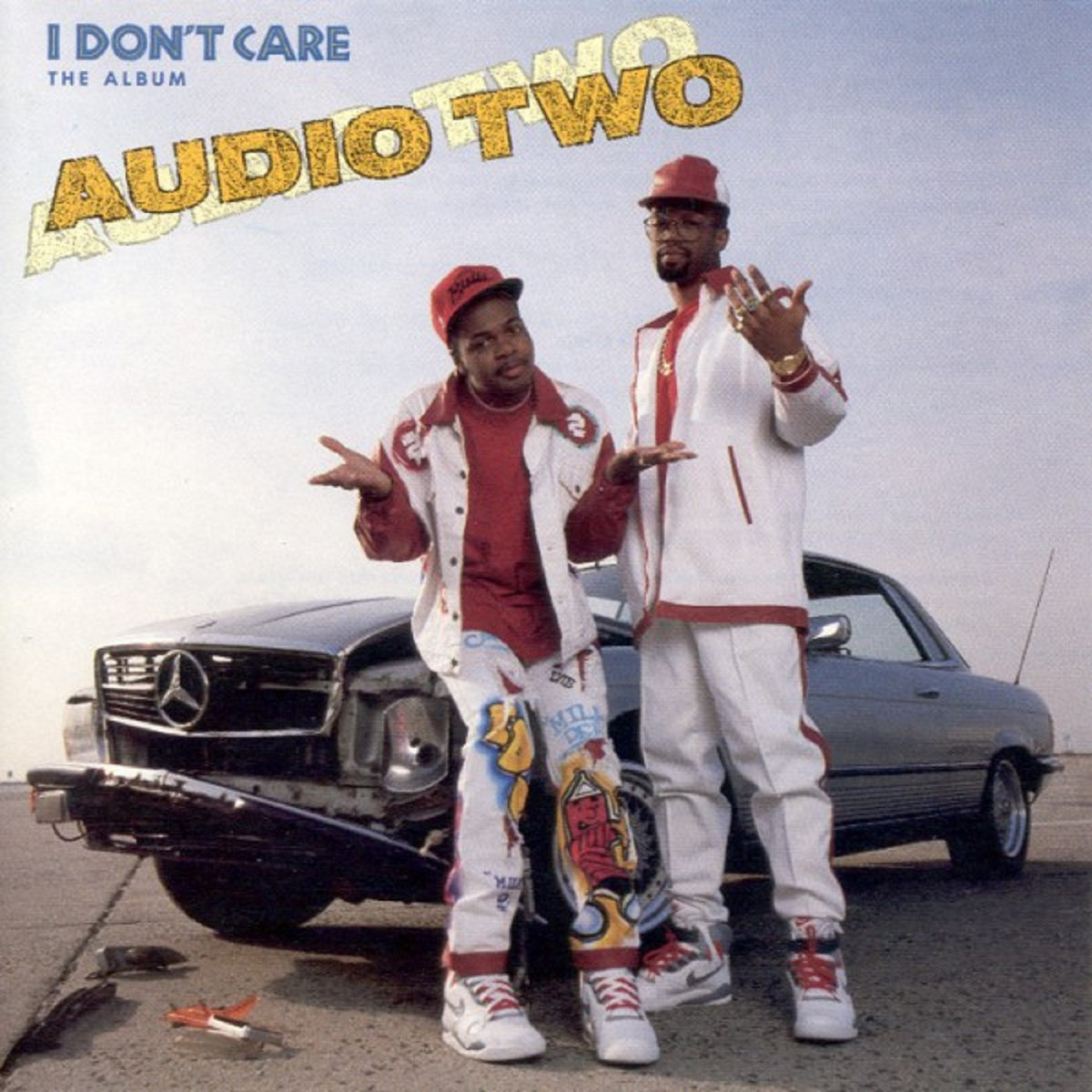
Audio Two – I Don’t Care: The Album (April 17, 1990)

Audio Two was a duo out of Brooklyn, New York consisting of the brother duo of Kirk “Milk Dee” Robinson and Nat “Gizmo” Robinson, who will forever be remembered for their biggest record, “Top Billin’.” The record was released in October of 1987, and while it wasn’t a hit in a commercial sense, it became a hood staple and certified hip-hop classic that has stood Teflon strong through the test of time. Everyone from Mary J. Blige, 50 Cent, Kanye and Jay-Z, Fergie, Compton’s Most Wanted, Cassidy, Luniz, 2Pac, Dr. Dre, Ne-Yo, Ruben Studdard, and numerous others have sampled and borrowed elements of the definitive record over the past thirty-five plus years. The enormity of the record has overshadowed Audio Two and the rest of their contributions to hip-hop. Many forget that they helped spark the career of MC Lyte (they produced several of her early records and Milk Dee is credited with penning a large chunk of her rhymes) and released two albums of their own: their 1988 debut album, What More Can I Say, and the subject of today’s post, I Don’t Care: The Album.

Ironically, the album title was taken from a line from “Top Billin’.” Audio Two would be responsible for the bulk of the production on I Don’t Care, with a few assists, including a couple coming from King Of Chill, and a few cameos that we’ll discuss later. I Don’t Care didn’t move a ton of units and would peak at 74 on the US Top R&B/Hip-Hop Albums Charts. The duo recorded a third album, titled The First Dead Indian, but they would go their separate ways before its release and the album would never see the light of day. But with a little research, aka googling, you can find some of the unreleased tracks online.

I bought a used vinyl copy of I Don’t Care for a couple of bucks a few months ago at a local record store. This post marks my first time listening to the album, and if the zany album cover is any indication of what the music will sound like, I’m anticipating a bizarre audio appearance.

On The Road Again/ Interlude One – I had to check the liner notes to make sure Teddy Riley wasn’t responsible for the New Jack Swing seasoning sprinkled over the instrumental of this opening track. Thankfully, TR had nothing to do with the low-budget knockoff; you can blame it all on Terence Dudley and Audio Two. Speaking of Audio Two, Milk Dee sounds like someone put a gun to his head and forced him to rap over this bullshit. Even in reluctancy, he entertains with a few humorous lines (“Hold your girl ‘cause I might pull her, it doesn’t matter what the color, I take them white, light, brown, and duller, what I’m saying is I don’t discriminate, any size or color’s great”) and witty battle bars (“Step in clubs with Milk Dee tactics, flying kicks and double backflips, many styles will come to play, when Milk Dee must destroy and slay them”). The song is followed by a short skit with some dude who sounds like Leon Phelps from The Ladies Man, scolding Milk Dee for his “I don’t care” attitude.

Get Your Mother Off The Crack – Over a muddled low-quality instrumental, Milk chops it up with an anonymous person, discussing their mother’s crack addiction: “Boom! I’m here to talk about your mother, she ain’t nothing but a cheap crack sucker, suckin’ on a pipe like a pipe is a straw, she’s gotta extra pipe in the hall by the drawer.” I can’t tell if this is a PSA on the dangers of smoking crack or a dis to the anonymous person’s mom (the reinterpretation of The Temptations’ “War” chant was definitely a dis). All these years I thought Whitney Houston coined the phrase “Crack is wack.” Who would have known she stole it from Milk Dee? Regardless, I hope Milk’s comedic commentary helped prevent someone from smoking crack and motivated a crackhead or two to quit the deadly habit.

Undercover Hooker – Milk Dee uses this one to call out all the closeted freaky ladies, boasts about his “customized condoms, fitted to perfection” and “enticing young ladies with his best eye lingo.” He also proudly admits to being a part of the promiscuous community that he shames through most of the song: “Cause love is a game that you play to win, there are hookers in the house, so let the games begin.” Unfortunately, King Of Chill’s drab instrumental doesn’t match the liveliness of Milk’s rhymes.

Worse Than A Gremlin – Other than a few ad-libs from Giz, Milk’s been the only voice we’ve heard from to this point. He takes a backseat on this one and lets his partner and group deejay, Gizmo shine (hence the song title), as he gets off a quick verse over a sleepy backdrop. And we quickly find out why Milk Dee is the emcee and Giz the deejay.

Whatcha’ Lookin’ At? /Interlude Two – Milk Dee runs into a mesmerized male fan that can’t take his eyes off our host, leaving Milk all the way pissed off as he angrily addresses the male groupie on this record: “I understand you’re a little excited, if you want an autograph, yo, I’ll write it, but don’t stare like you have no sense, or you might get dead, and dead’s past tense, if you see me walkin’ down the street, say “hi” if it’s me that you wanna meet, if not then don’t say jack, keep your eyes to yourself and stay the hell back!” Speaking of pissed and angry, Milk drops a few homophobic slurs that would surely get the LGTBQ community riled up calling for his cancellation if this record came out today (no pun intended). The underlying revamped “Go Brooklyn” chant from “Top Billin’” (which Audio Two borrowed from Stetsasonic’s “Go Stetsa I”) was unnecessary, but the bodaciously arrogant vibes on the instrumental match Milk’s cocky “lay-my-dick on the table” bravado. The track is followed by a skit of Milk using the bathroom while another man (maybe Gizmo?) rushes him to get back in the studio to lay his vocals, while the instrumental for the next song plays in the background.

I Get The Papers – AT revamps the instrumental from “Top Billin’” and Milk Dee uses it to talk more shit. It doesn’t quite recapture the magic from their classic record, but Milk turns in a serviceable performance. If you’re listening to I Don’t Care on vinyl (like me), this song marks the end of side one. If you bought I Don’t Care on CD, the following CD-only bonus track is next…

Milk Does The Body Good (Remix) – Milk turns the catchphrase from a popular eighties milk commercial into a pick-up line/endorsement of his sexual prowess with the ladies. I’m not sure what the O.G. version of this song sounds like, but I sure hope the mix sounds better than this hot mess. Milk’s mic sounds like he rescued it from a lake. And the part of the refrain where Milk says, “the matter on hand” (instead of “at hand”) annoys the shit out of me for some reason.

Start It Up Y’all – MC Lyte and Positive K join Milk Dee for this posse joint, as all three emcees get off a verse over a vibrant instrumental. All parties involved turn in solid verses (imagining MC Lyte in a bikini in 1990 is crazy) with Milk shining a little brighter than his compadres, thanks to his comedic content, which includes a clear out-of-left-field shot at MC Hammer and his female protégés, Oaktown’s 357 (remember them?). It’s not a top-tier posse record, but I was entertained.

When Milk’s On The Mic/Interlude Three – King Of Chill builds this understated funky groove around a looped bassline from Average White Band’s “T.L.C.,” as a fired-up Milk drops another homophobic slur before going for the neck of his competition and adversaries: “I play to win like the New York Yankees, so to all you emcees, I’m handing out hankies, blow your nose, wipe your snot and whatnot, you wish you could get what I give ’cause what I got, red hot, whistles like a teapot, wanna be like me, that’s sayin’ a lot.” This was dope and easily one of the strongest records on the album. The song is followed by the final interlude of the evening that finds a bootleg Robin Harris so frustrated by those with the “I don’t care attitude” that he threatens violence on them (“Put my foot so far in your ass your breath smell like shoe polish”).

Build Up Back Up – The song title is a term Audio Two uses to describe semen build up due to a dry season with the ladies. I don’t think the sexual appetite will ever override the need to eat, as Milk claims during his verse, but I get his exaggerated point. Thanks to his boy K, who sets him up with a young tender, Milk’s condition gets resolved by the end of the song, which bleeds into the next track…

The Nasty – For those under thirty, “The Nasty” was a slang term used for sex back in the late nineteen hundreds. Milk and Giz spend the length of this song talking about the subject in a playful manner (and once again, Milk irritates my ears by saying “on hand” at one point during the record). The Janet Jackson vocal snippet on the hook was a clever touch, but not clever enough to make the bland instrumental sound interesting.

6Teen – This is easily the most uncomfortable record on I Don’t Care. Milk Dee shares an encounter with a young lady, and the two eventually begin to fall for each other. There’s just one problem: Milk was at least twenty years old in 1990, and the young lady, sixteen. After finding out her age, Milk spends the rest of the song contemplating whether or not he should continue dating her, and let’s just say he doesn’t make the most sound legal decision. MC Lyte co-signs Milk’s pedophilic behavior by singing the hook and the instrumental was so insignificant, Milk might as well rapped his story a cappella.

Step – Gizmo gets another solo joint. This time around he’s on a mission to get the listener to dance and party, while Milk plays his hypeman. If you’re listening to I Don’t Care on vinyl, it makes for a pretty pedestrian way to end the album. But if you’re listening to the CD format, you get yet another bonus track…

Many Styles – The fellas loop up some classic Curtis Mayfield to create a pimp strut inducing backdrop, while Milk substitutes his ordinarily animated high-pitched vocal for a suaver tone, but the rhymes are still solid.

If a hip-hop DNA test was given to Milk Dee to determine which emcees in the game he’s fathered, Westside Gunn and Ghostface Killah would come back as 99.999 percent positive matches. Milk’s technique is a hybrid of the two rappers. His animated high-pitched nasally tone is the precursor to Westside’s, while his colorful, wildly random, and energized verbiage is undeniably the predecessor of Ghost’s style. The combination makes Milk’s charismatic banter nearly impossible not to enjoy, as he entertains throughout I Don’t Care.

While Milk Dee’s star shines brightly throughout the album, much of the production sounds like an afterthought, chalked full of low-quality bland and boring instrumentals. Most of the tracks on I Don’t Care sound like demos, begging for a better mix, and the constant revisiting of “Top Billlin’” feels like some form of brainwashing. It’s like a constant looming reminder that they made the classic record, so you should feel obliged to overlook and turn a blind eye to all the flaws and blemishes on this project.

Ultimately, the inferior production and poor mixing that plague I Don’t Care, overshadow Milk Dee’s commendable mastering of the ceremony. Maybe they should have cared more.

-Deedub

Follow me on Instragram@damontimeisillmatic
Posted in Uncategorized | 3 Comments

The Jaz – Word To The Jaz (May 2, 1989)

When the hip-hop history books are written, The Jaz, aka Jaz-O will probably be remembered for introducing the world to arguably the greatest (and undisputed most financially successful) emcee of all time, Jay-Z. While he was Jay’s friend, mentor, and entry point into the game, many overlook that he also had a rap career of his own. Ironically, I was introduced to Jaz-O through Jay-Z when he joined Jay and Sauce Money on the classic Premo-produced mafioso posse joint, “Bring It On” from Reasonable Doubt. It would be a few years after “Bring It On” (thanks to Nas’ “Ether”) that I would discover Jaz-O had released a couple of albums and an EP on EMI Records, long before Reasonable Doubt existed: His 1991 EP, Ya Don’t Stop, 1990’s To Your Soul, and his 1989 debut album, Word To The Jaz.

The liner notes for WTTJ credit Jaz, Bryan “Chuck” New, and Pete “Q” Harris for the production. The album made very little noise, nationally and would come and go faster than a sixteen-year-old boy losing his virginity to a hooker in an alley. EMI would give Jaz a couple more chances with To Your Soul and Ya Don’t Stop, both yielding similar commercial results. Along with making a couple of cameos and producing a few tracks on Jay-Z’s nineties batch of albums, Jaz would also produce songs for the likes of Puff Daddy, Rakim, Queen Latifah, M.O.P., Gza, Rass Kass, and Group Home, just to name a few.

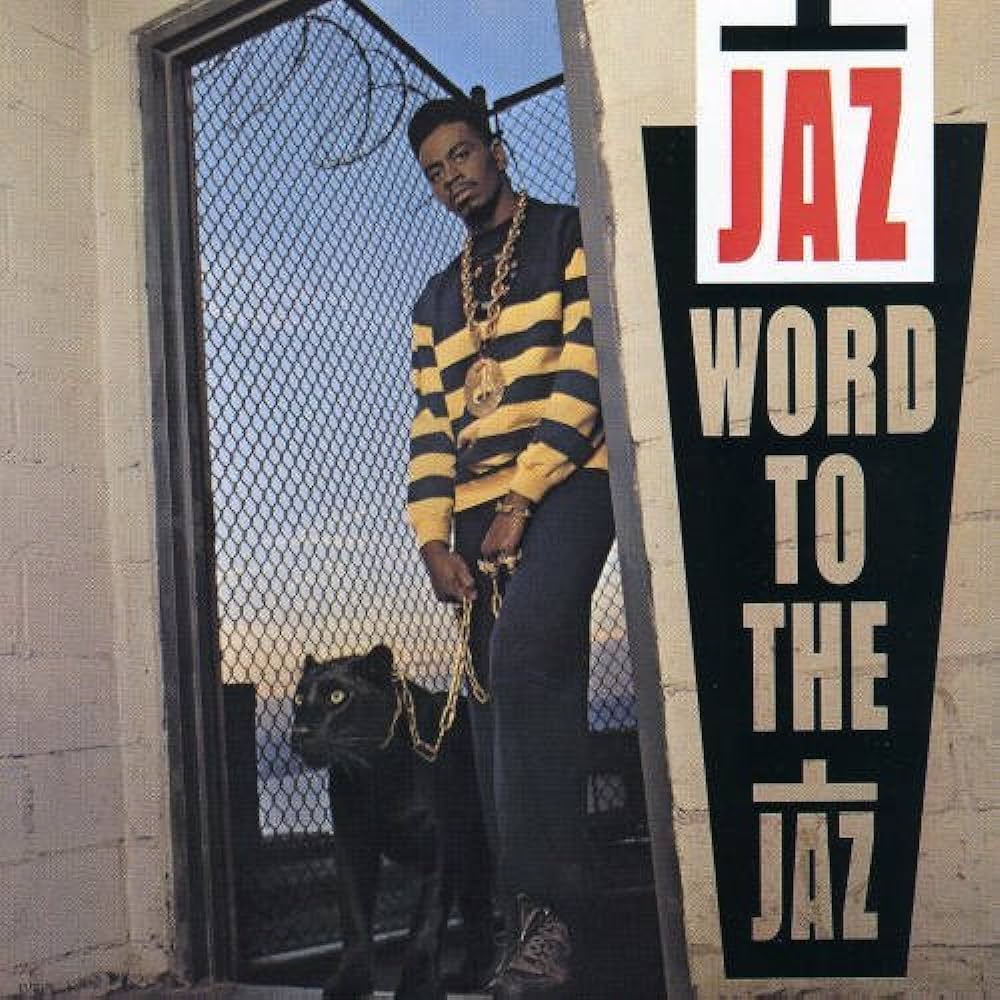
The album cover for WTTJ displays Jaz posted up with gold finger rings and a dookie rope gold chain with a Cobra-Spinx medallion around his neck, with a leashed black panther by his side. LL Cool J’s Walking With A Panther album would don a similar cover, with LL squatting next to a black briefcase, while a black panther sits in front of him sporting a gold dookie rope. WTTJ came out a month before WWAP. Were the similarities in the album covers a coincidence or a classic case of biting? I’d love to hear what Jaz and LL have to say about the matter.

Dance To This – Jaz kicks things off with a danceable mid-tempo instrumental and lyrically embarks on a mission to get the listener up to shake that ass. His tone and swag sound a lot different from my introduction to him on “Bring It On,” as he sounds more wholesome than he would later in the mid-nineties. Jaz sounds adequate on the mic and even gives a bite-size sample of the speedy rap style that Jay-Z would use during his early nineties string of cameos. Speaking of Jay-Z, he makes his first appearance of the night, sharing a few words in between Jaz’s verses. It felt kind of odd to hear a hip-hop album start with a low-energy party joint, but it’s still a decent record.

Pumpin’ – Jaz follows up the previous low-energy track with a boost, thanks to a sexy bass line borrowed from KC & The Sunshine Band’s spin on George McCrae’s “I Get Lifted.” It’s worth noting that Big Daddy Kane rapped over the same break from McCrae’s version on “Mortal Combat.” Jaz sounds serviceable over the break, but make no mistake about it, he’s no Kane (who along with MC Shan, Rakim, Chuck D, and KRS-One, Jaz graciously shouts out during his opening verse). Jay-Z makes another minimal contribution to the record, adding a few words in between Jaz’s verses. All in all, another decent record.

Hawaiian Sophie – When Nas mentioned Jay-Z’s “Hawaiian Sophie fame” on “Ether,” at the time, I had no idea what he was talking about. Later, I would find out it was a record on WTTJ, which I also didn’t know existed before Nas’ diss track. The song features Jaz rapping about a trip to Hawaii where he meets and falls for a bangin’ Hawaiian chick named, you guessed it, Sophie. Jaz spends the length of the song trying to win the heart and affection of the Island hottie, but Sophie’s brolic Hawaiian boyfriend (I think it’s her boyfriend, but it’s never clearly confirmed) stands in the way. In true pseudo-masculine barbaric fashion, the two men square up to decide who gets the girl, instead of just asking her who she wants to be with. Other than one or two adlibs (and appearing in the video), Jay-Z’s cameo was just as minimal as his previous contributions on WTTJ, which explains Nas’ tongue-in-cheek reference to his “fame” on this record. Jaz’s storyline is average at best, but I thoroughly enjoyed the Bo Diddley drum loop under the lap steel guitar sample. It sounds like D.C. Go-go crashing a Hawaiian luau.

Give A Little Extra – Our host gets struck by the love bug on this track, and like a man newly in love, he’s prepared and willing to go all out for his new boo. Jaz gets vulnerable during the second verse, recalling a failed relationship with a cheating partner (whose family he hi-lariously puts on blast for being on welfare and using food stamps), and the third verse he uses to give a Sesame Street elementary-level PSA on being faithful to your mate, which comes off corny in a naive kind of way: “Cheaters never win, they live a life of sin, skeezin’ is for heathens, and loyalty’s in…so if you really love someone, cheatin’ ain’t smart, your relationship will tear apart, you’ll break somebody’s heart.” Jaz’s positive message is scored by a loop from The Sylvers’ “Misdemeanor” (the same one Dr. Dre used for The D.O.C.’s classic “It’s Funky Enough”), which sounds cool, but things get choppy during the hook when a second loop from the same record is brought into play.

Fun – Jaz has one goal on this record: to have an unadulterated drama-free good time. His rhymes aren’t spectacular, but his untainted perspective and pure message were refreshing. The Dennis Coffey-aided funk groove, along with the blaring jazzy horn break during the hook were pretty entertaining, though.

Word To The Jaz – If you’re listening to WTTJ on vinyl, this title track marks the end of side one. Our host gets into some good old-fashioned boasting, and I have to admit, I almost clutched my pearls when I heard him drop an F-bomb, as his bars have been relatively clean up to this point. Jaz’s rhymes were passable but other than the tantalizing horn break in between verses, the instrumental was blander than Bobby Blue. Easily the weakest track on side one of the album.

Let’s Play House – In the late eighties/early nineties, house music was all the rave, and several rappers made house-fused hip-hop records. The Jungle Brothers made “I’ll House You,” Queen Latifah gave us “Come Into My House,” De La Soul got “Kicked Out The House,” and MC Shan made sure you knew “It Ain’t A Hip-Hop Record.” You can add this song to that list. Like all the other records that jumped on this trend, this one also feels contrived, but like most of those records in that sub-genre, I enjoyed the fusion.

Boost Up The Family – Jaz gets into his conscious bag, calling for peace, justice, and unity in the Black community, fittingly backing his content with tribal-esque African drums. I dug the message, the instrumental was decent, and I absolutely love the drowsy jazzy horn break brought in during the hook.

Shana – Shana might be the chick that broke Jaz’s heart during the second verse of “Give A Little Extra” (you know, Ms. Welfare). He dedicates this song to the conniving gold digger and cleverly samples The Silhouettes’ fifties doo-wop classic, “Get A Job,” to assist with the music and calling her out by name during the hook. The instrumental feels a little Fresh Prince of Bel-Airish, but it’s a catchy record that will win you over after a few listens.

I Can Dig Rappin’ – Jaz uses this one to discuss the rise of rap music, gives a brief history on the art of rapping (which is severely in need of some fact-checking), and for the second time on the album (the first time came during “Dance To This”) he mentions his former life as a singer that he apparently gave up to become a rapper: “I was once a singer, but I had to renege it, rap is the move today, and I can dig it” (I’ve heard Jaz mention in an interview that he was offered a singing deal with an unnamed label but turned it down. Later, the same label would offer the deal and sign Keith Sweat (I’m going to assume the label was Elektra, as that was Keith’s label home for the fruitful years of his career). You can also hear Jaz sing on the hook to Jay-Z’s “Ain’t No Nigga,” which he’s also credited with producing). Jaz’s rhymes are backed by up-tempo drums, a hyperactive bass line, and a James Brown co-sign on the hook. I could definitely see B-boy gettin’ busy to this one back in ‘89.

Look Out – Over a basic drum beat and a few slight musical accessories, Jaz goes into battle mode, coming “harder than an ex-con,” which makes for a very pausable moment. It’s s not a terrible record, but I wasn’t crazy about it either.

Buss The Speaker – Jaz puts on his clergy collar and steps back on his soapbox to get off an album-closing sermon that charters the same territory as “Boost Up The Family,” and for those keeping track at home, he drops his second F-bomb of the evening: “Fight for justice, peace, and education, non-discrimination, and equal representation, we got the power, so give some resistance, equal opportunity, fuck welfare assistance, purchase from your own and your community too, and in time ya see money come back to you, those in position, you sit on a throne, you’re hiring them, you better hire your own.” Jaz and company create a decent instrumental with their flip of the overly used James Brown sample, and it’s hard to say anything negative about positive content, so I won’t.

As I mentioned during the intro, my introduction to Jaz-O came from Jay-Z’s “Bring It On,” where he was running with “drug dealing apostles,” “bangin’ bitches out the Bahamas,” and never putting “the pure brown sugar before the dirty green cream.” So, I was a bit baffled when I heard him denounce drug dealing and side chicks with the mission statement: “To restore the good thoughts and release the foul” on Word To The Jaz. It almost sounds like life and time tainted his view of the world in the seven years between WTTJ and Reasonable Doubt, or maybe he changed his approach to rhyming as thug drug raps became more popular and lucrative in the mid-nineties.

The wholesome unjaded version of Jaz-O is still a competent emcee, and while there are a few cringe worthy “goody-two-shoes” moments on the album, most of Jaz’s youthful optimism was refreshing to hear, even if it is phony. The back album cover, which shows Jay-Z posing with Jaz and receiving a “special guest appearance” credit, made me believe he was going to give a Ghostface Killah on Only Built 4 Cuban Linx type assist, but he doesn’t even get to spit the half a bar he gave to his adversaries not named Nas or Mobb Deep on “Takeover.” Matter of fact, Jay’s contribution on WTTJ is so minimal that if you sneeze while listening to the album, you could miss it. Even without much help from Jay, Jaz proves to be an efficient enough emcee to carry his own weight on WTTJ, as he does a decent job navigating the bundle of standard eighties east coast hip-hop instrumentals.

Unfortunately, decent and standard will sometimes leave you forgotten. Or remembered for putting someone else on who made a more memorable mark.

-Deedub

Follow me on Instragram@damontimeisillmatic
Posted in Uncategorized | 4 Comments

Kwame – Kwame The Boy Genius (January 31, 1989)

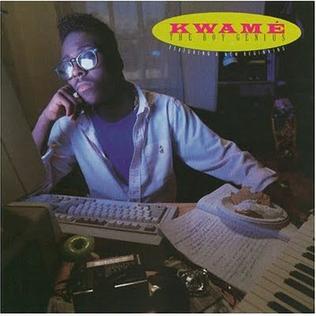
Kwame was a rapper out of Queens, New York, who is probably best known for his dyed blonde Gumby, polka dot clothing, and later, he and his polka dot wears would be notoriously (no pun intended) deemed “played out” by Biggie on his classic, “Unbelievable,” which would basically end Kwame’s career as a rapper. But years before Biggie would deliver that devastating lyrical blow, Kwame would experience moderate success in the industry. He had a few mild hit singles, releasing four albums between 1989 and 1994, including the subject of today’s post, his debut album, Kwame The Boy Genius: Featuring A New Beginning.

The liners notes for Boy Genius credit the legendary and underappreciated, Hurby Luv Bug for producing the entire album, but Kwame is on record saying he produced the whole album himself and Hurby only served as a coach/overseer of the project, mainly because Kwame was only sixteen when the album was released and for business purposes (mainly sales), the label felt Hurby’s name should be on the project (Hurby was red hot at the time, thanks to the success of Salt-N-Pepa and Kid ‘N Play whom he was responsible for producing). Boy Genius didn’t receive any RIAA certifications and peaked at 114 on the US Billboard 200. After his fourth and final album, Incognito, Kwame would switch his alias to K-1 Million and focus strictly on producing. This move would revitalize his music career, as he would go on to produce tracks for the likes of Mary J. Blige, LL Cool J, Lloyd Banks, Will Smith, Janet Jackson, Talib Kweli, Fantasia, Christina Aguilera, and the list goes on and on.

My older brother had Boy Genius on cassette back in the day, so when I came across a used CD copy at one of my spots for the reasonable price of three dollars, nostalgia, and my frugalness moved me to buy it, and here we are.

Random Factoid: Kwame and Vin Diesel are cousins. I’ve never watched one of those mind-numbing Fast & Furious movies, but I did enjoy Boiler Room.

Boy Genius – For the opening track, Hurby Luv Bug, or Kwame, loops up a funky Meters’ break for Kwame to get off, what he claims in the song’s intro to be, “the perfect rap.” It’s far from perfect, but according to his adlibs in between his verses, he typed his rhymes on a typewriter (remember those?), so maybe he meant perfect in a grammatical sense. Either way, it’s a decent opening performance from Kwame and an overall satisfactory introduction to the album.

U Gotz 2 Get Down! – This was the third single released from Boy Genius. Kwame picks up where he left off on the previous track, spewing battle-ready bars, and again, he makes sure to shoutout his Islamic faith. Kwame’s bars are backed by a solid soul sample-driven backdrop that was much more entertaining than our host’s rhymes.

The Rhythm – This was the album’s second single and the main reason I bought Boy Genius. Kwame seems to settle in more on the mic than the previous two tracks, as he efficiently manages this mid-tempo jazzy bop. This one has held up well through the years, and I love the Bob James sample flip. The music video for this song was pretty cute too.

The Man We All Know And Love – This was the lead single from Boy Genius. The music video will forever be etched in my mind, as it got heavy rotation on Jukebox Network back in ‘89 (Bars!). Kwame builds the instrumental around a couple of Rufus Thomas loops and shares three zany adventures about three different women. In the mix of his rhymes, he also manages to sing a little Sesame Street, Louis Jordan, Minnie Riperton and even dips into his white girl fifties pop bag with a reinterpretation of a Debbie Reynolds joint (who also happens to be Carrie “Princess Leia” Fisher’s mother). This record doesn’t sound nearly as entertaining as it did back when I was twelve years old. Time is, truly, Illmatic.

The Mic Is Mine – Some samples are just foolproof, and the opening guitar riff from Kool & The Gang’s “More Funky Stuff” is one of them. Kwame places the twangy funk guitar licks over an ill Funk, Inc. drum break to form a pretty incredible instrumental to rap over. The music must have sparked something within Kwam’s soul as he sounds more convincing than he’s sounded all night and gets off a few witty bars along the way: “I turn any penny into the Latin Quarter,” “Let me on the mic and make the party dance, I take no shorts cause I’m the smarty pants.” It also sounds like he may have taken indirect shots at Rakim (“You move a crowd, brother, I move an audience”) and Big Daddy Kane (“You was a tough cookie, to me you a crumb” (Kane called himself “one tough cookie on “I Get The Job Done,” although, It’s A Big Daddy Thing came out eight months after Boy Genius, poking all types of holes in my theory)).

Keep On Doin’ (What You’re Doin’ Baby) – Mid.

PushThePanicButton!!! – More mid, and the only song on Boy Genius that Kwame curses on. For those curious, the curse is “asshole.”

Sweet Thing – Kwame wraps up Boy Genius with a remake of the Chaka Khan/Rufus classic of the same name. Our host confuses infatuation with love for a chick he’s known all of one week, spending his three verses dropping cheesy cliches and corny one-liners (Why the hell is he writing this chick’s name on his bedroom wall?). The rhymes were disposable, but the soulful instrumentation was kind of dope.

Kwame doesn’t sound like a typical sixteen-year-old on Boy Genius. When I think of other teenage rappers who released their debut albums around the same age, like Shyheim The Rugged Child, Chi-Ali, and Illegal, their voices still had the squeaky pre-puberty residue. While Kwame’s voice doesn’t boom with the power of a Chuck D or come with a rich baritone like Big Daddy Kane, something about his slightly raspy tenor vocal tone sounds mature beyond its sixteen years. But maturity doesn’t necessarily equate to skills.

That’s not to say Kwame doesn’t have talent. I appreciate his lighthearted approach to rhyming, his clean content, and his ability to express his faith without wearing his religion on his sleeve. He’s a decent emcee and lyricist, who was clearly influenced by the legendary Big Daddy Kane, but his rhymes and voice don’t pack the same punch to deliver that knockout blow like the former. The production on Boy Genius follows the standard James Brown-esque sampling format that was so prevalent in East Coast hip-hop in the late eighties, and while it’s not spectacular, it is efficient, and much more entertaining than Kwame’s rhymes.

On “U Gotz 2 Get Down!” Kwame raps “I rock break beats, but none of them get broken. In a nutshell, that explains our host’s performance on Boy Genius, though not the way he intended.

Follow me on Instragram@damontimeisillmatic
-Deedub

Posted in Uncategorized | 1 Comment

Too Short – Life Is… Too Short (1988)

Todd “Too Short” Shaw is just as important to Oakland culture as the Golden State Warriors and the Oakland Raiders. I know that both teams have relocated from Oakland, but just like Short who left Oakland for Atlanta in the nineties, all three entities remain deeply ingrained in Oakland’s soil and consciousness even in their absence. Too Short’s admiration isn’t limited to Oakland, though. His respect in the game stretches from coast to coast and all points in between. He’s collaborated with most of your favorite rappers, including Ice Cube, Snoop, Scarface, Biggie, Jay-Z. Hell, he even made the Midnight Marauders album cover (Tribe Degrees of Separation: check). That kind of respect doesn’t come overnight, as the saying goes: you have to earn respect. Short’s been earning his respect, dating back to the eighties, which is the same decade he released the subject of today’s post, Life Is…Too Short.

Life Is…Too Short is the second album Too Short released after signing with Jive Records and would mark the beginning of his incredible six consecutive platinum selling album stretch. Produced entirely by Too Short with help from R. Austin, T. Bohanon, and Al Eaton, Life Is would climb to number thirty-seven on the US Billboard 200. It would also reach the two million units sold mark, and sixteen albums and thirty-five years later, it’s still Short’s best-selling album to date. In 2022, Rolling Stone placed Life Is at 186 on their list of the 200 Greatest Hip-Hop Albums of All Time.

Life Is comes with some pretty gaudy stats, but here at TimeIsIllmatic, we’re more concerned with quality and the music’s ability to stand the test of time. So, without further ado, let me do what I do.

Life Is… Too Short – There’s nothing like opening an album with the title track, which in this case was also the album’s lead single. Our host could have gone super narcissistic with the title and rapped about the world revolving around him. Instead, he builds around the original cliché saying, discussing the value of life, those who despise it, waste it, take it for granted, and cherish it. Short also talks about the motivating factor in his own life: money. As usual, Sir Too Short drops a few jewels off along the way and sounds right at home rhyming over the rubbery funk groove, built around a couple of loops from Average White Band’s “School Boy Crush.” This record still goes hard.

Rhymes – Todd follows up the infectious funk groove on the previous track with arguably the barest and most basic drumbeat ever heard by the human ear. He raps for four-plus minutes with no breaks or hooks and manages to get off a few clever bars, but his monotone voice and fundamental flow don’t sound flattering over the scarce beat.

I Ain’t Trippin’ – Our host transforms into “Sleepy Short” for this track as he shares some of his musical bio and brushes off his haters and naysayers, while rapping in a whisper of a voice that sounds like he just woke up: “Benzes roll, Beamers jet, and Caddies keep on dippin’, you keep talkin’ all that crap…and I ain’t trippin’.” Sleepy Short does a serviceable job on the mic, but the darkly tinted bouncy bass line (that reminds me of the bass line from his future classic, “Blow The Whistle”) is the true star of the track. Side note: Fellow Oakland native and comedian, Mark “Hangin’ With Mr. Cooper” Curry plays one of Short’s haters in the music video, spewing comical hate and rumors in between Short’s verses of the single/radio mix.

Nobody Does It Better – Short and company chef up a slow-rolling backdrop built around Tinker Bell drums and a suffocated vibrating bass line. Our host uses it to continue to talk his shit as he boasts, calls out a few of his West Coast contemporaries for using “New York slang” (he doesn’t give names, which left me wonder who he could be referring to in 1988), and gives a brief and very random PSA about smoking dope, square in the middle of the song. The instrumental feels underdeveloped, making it really easy to lose interest in Short’s flat vocal tone.

Oakland – Sleepy Short makes his return for this ode to his hometown. Maybe Seductive Short is a better description, as our host puts on his bedroom voice to recite a repetitive spoken word love poem to the Bay area city he represents. Short gets a little assistance from an adlibbing talk box voice and a few uncredited ladies who sensually chant “Oakland” and “Oaktown” during the hook, making Oakland sound like the sexiest city in the world. The sparkling, pristine backdrop makes things sound even more appealing.

Don’t Fight The Feelin’ – During “Nobody Does It Better,” Too Short raps “I know you wanna hear my triple X, foul language, girls and sex.” This song provides that portion of his fanbase exactly what they paid admission for. Short & Co. loop up One Way’s record of the same name, creating a thick infectious funk groove as our host transforms into Playboy Short and gets deep into his misogyny bag. Throughout his three verses, our vertically challenged host shoots aggressively direct shots at a few females in his scope. His targets (Entice and Barbie of The Danger Zone, who remind me of the rapping twins from Coming To America (“My name is Peaches and I’m the best, all the deejays want to feel my breast”)) shoot down his attempts and clap back, making several references to his alias being related his dick size and not being adequate enough to please them. The cruelest diss of the whole record comes when Entice and Barbie suggest that Short’s mom should have killed him at birth (their exact words are “Your mother should have hung you from her umbilical cord”). Rappin’ 4 Tay randomly drops in to add a verse and share his two cents in this explicit battle of the sexes, turning an already long affair into an eight-minute and change affair, but an entertaining one.

CussWords – Too Short follows up the previous eight-minute raunch fest with another nearly eight-minute track. Like “Rhymes,” Short disregards a hook and spends seven minutes and forty-five seconds spewing all kinds of randomness, including a shot at Ronald Reagan, claims that Nancy Reagan gave him head (along with some random chicks named Helen and Betty), a plethora of bitches, hoes, and pimp references, and a few bars aimed at wack emcees. He also gets off what might be one of my favorite Too Short rhymes: “People out here droppin’ dead like flies, I used to see a homeboy, give him five, now I say, “Man, you still alive?” And I laugh every time I listen to his song-ending tirade, where he lets off a couple of wicked combination of curses. Despite the generic instrumental, I enjoyed Short’s simple but entertaining rhymes.

City Of Dope – On “Oakland,” Too Short paid homage to his hometown, framing it in a glimmering desirable light. This record shows the dark side of Oaktown, as Todd addresses the crack epidemic that rattled his city like it did most large urban areas in the eighties. Short’s bleak content is backed by a deep semi-twangy funk groove that sounds custom-made for Short’s straightforward flow and is just as addictive as the dope he raps about.

Pimp The Ho – Short adapts an uncharacteristically aggressive tone for this one as he and the team loop up a few sexy Cameo guitar loops for our host to go for the jugular of wack emcees and put the strong pimp hand down on his bitches.

Hidden Track – The album ends with this hidden outro, which is nothing more than a promo to get the listener to go buy Too Short’s 1987 Jive Records debut, Born To Mack. Short brings back the drums from “Life Is… Too Short” and a couple of his vocal snippets (one saying “Too Short,” the other “I was born to mack”) are scratched into the record. There is absolutely no reason to listen to this track more than once. And why do the drums sound so damn janky?

The 1989 reissue of Life Is… Too Short (which I also own a copy of) removed “Don’t Fight The Feelin’,” “CussWords,” and the “Hidden Track” and added the following two songs:

Mack Attack – Short Dog recaptures a portion of the energy he flowed with on “Pimp The Ho,” as the mack goes on the attack, rapping his ass off and lyrically slapping up all hoes and foes in his path without dropping one curse. The instrumental is decent (the bass line sounds very similar to the one used on “I Ain’t Trippin’), but Short easily outshines the music. This is probably Short’s best lyrical performance of the album. Too bad it wasn’t included on the original pressing of Life Is.

Alias Crazy Rak – Too Short graciously gives his deejay Crazy Rak a chance to shine dolo. And what does he do with the opportunity? He places pedestrian cuts over a simple drumbeat, resulting in a simply boring record.

I’m sure there’s a segment of the hip-hop population that aren’t Too Short fans, and I can understand why. The misogyny that’s often associated with his name may deter some ladies from listening to his music. His rudimentary flow and non-complex rhyme schemes might not be the cup of tea that satisfies the taste buds of some. Then there’s his deadpan delivery that could easily be perceived as monotonous. But like Short says during “Mack Attack”: “When it’s Too Short baby, ain’t nothin’ plain.” Using his “ordinary” skills to make entertaining music has been Short’s magical superpower throughout his career, and some of that magic shows up on Life Is…Too Short.

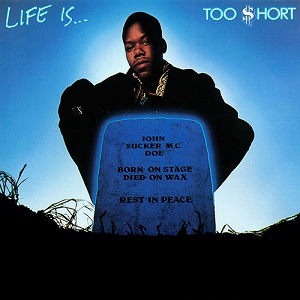
The album cover for Life Is shows Too Short perched behind John “Sucka MC” Doe’s tombstone (it also hi-lariously reads: “BORN: ON STAGE DIED: ON WAX”), which is fitting as Short spends half the album spewing boasts and battle raps. The other half of the album focuses on social commentary and, of course, the Prime Minister of Misogyny gets into his ministry for a few joints. Too Short’s bars are backed by a bed of head bobbin’ stank face-inducing funk grooves, which is the secret weapon that has made Short’s music so enduring through the years. With two of the album’s ten tracks coming in at eight minutes, and three more reaching the six-minute mark, our host definitely didn’t get his alias due to the length of his tracks. Still, at just under fifty-five minutes, the album feels like the perfect runtime, not too long or…too short. *rimshot*

There are a few dry moments on Life Is, but overall, it’s a solid album from one of hip-hop’s most beloved rappers. Beeatch! Sorry, I couldn’t resist.

-Deedub

Follow me on Instragram@damontimeisillmatic

Posted in Uncategorized | 1 Comment

N.W.A. And The Posse – N.W.A. And The Posse (November 6, 1987)

My introduction to N.W.A. came through the lead single and title song from their album, Straight Outta Compton. Thanks to the Jukebox Network (for you youngins, Jukebox Network was a channel you could call and request to see your favorite music video for a small fee), the menacing mob dressed in all black, reppin’ Compton, jumped through my television screen and bumrushed my parents’ living room throughout the summer of 1988 with the album’s title track. Their gangsta persona, mixed with their violently brash rhymes backed by unsettling sirens and threatening drums, created an audio-visual experience that scared the shit out of me but also left me deeply intrigued. But before Straight Outta Compton existed, there was NWA And The Posse.

N.W.A. And The Posse is the official unofficial debut album from N.W.A. It’s a compilation project, originally released in 1987 by Macola Records (which was a small Los Angeles-based music label/distributor) featuring songs from N.W.A. and a few of their friends: The Fila Fresh Crew, Ron-De-Vu, and Arabian Prince, with all the production credit going to Dr. Dre. After the success of their first release on the Ruthless imprint, Straight Outta Compton (which reached platinum success just over a year after its release), Ruthless, with Priority as the distributor, would re-release NATP in 1989 with a few alterations to the track list, which is the version that I own (I’ll get more into the alterations later). The re-release cash grab worked for Ruthless, as NATP would earn a gold plaque in April of 1994.

Like me, I’m sure most of you didn’t know this album existed until well after SOC. And some of you probably didn’t know this album existed until now reading this write-up. Either way, I hope you enjoy walking with me through it as I experience it for the first time.

RIP to Eric “Eazy E” Wright and shoutout to Candyman for making the album cover. And why did they cover up DJ Train’s face like that?

Boyz-N-The Hood – The album starts with an Eazy-E solo joint. Mr. Wright spits what feels like twenty verses (it’s really only five), spinning serious subject matter into zany tales that cover everything from him killing his friend-turned-thieving fiend, domestic violence, and an angry chick shooting up a courtroom in an attempt to free her man who’s in police custody. Eric’s dark comedic hood antics are backed by a primitive drumbeat, a squeaky synth chord, and an aggressive guitar riff that was clearly influenced by LL’s “Rock The Bells.” The musical highlight comes in the form of a thunderous drum break during the hook, which sounds like it might have inspired The Neptunes’ “Grindin’” instrumental. Side note: The remix for this record was included on Eazy’s 1988 solo debut, Eazy-Duz-It, with the same instrumental but a new intro and an extra verse, adding an additional minute to the track’s runtime.

8 Ball – This record completes an album-opening Eazy-E double play. Our Jheri curled host sends this ode to his drink of choice, a vodka/Olde English concoction affectionately called 8-Ball. He starts things off with a subtle shot at the Beastie Boys and their “Brass Monkey” record (which rapped praises to their favorite libation, Olde E mixed with orange juice), then proceeds to get lit on 8-Ball and wreak havoc through the streets of Compton. Ironically, Dre’s trunk-rattling backdrop sounds influenced by the production sound of the very man who produced the Beastie Boys’ License To Ill album, Rick Rubin. N.W.A. would put the remix of this record on the Straight Outta Compton album, which pretty much uses the same instrumental, but Eazy’s rhymes are much dirtier. And shout out to Eazy for shouting out his ghostwriter, Ice Cube, on the final verse. If you tell the truth, they can’t use it against you later.

Dunk The Funk – Dre tops clunky drums with regally triumphant sounding synth chords as two-thirds of The Fila Fresh Crew, Doc-T (better known as The D.O.C.), and Fresh K make their first appearance of the evening. The D.O.C. shows glimpses of the monster emcee he would transform into a few years later on No One Can Do It Better, easily outshining Fresh K and Dre’s decent instrumental (the “Bombs away!” vocal snippet on the hook gets annoying as hell very fast).

A Bitch Iz A Bitch – Ice Cube makes his first appearance of the night, putting on his misogynist hat as he raps his definition of a “bitch,” which in a nutshell is a stuck-up, bougie gold diggin’ female who thinks her shit don’t stink. Cube hi-lariously clarifies that “the title bitch don’t apply to all women, but all women have a little bitch in ‘em.” Dre borrows the drums and a bass line from Joe Tex’s “Papa Was Too” to complete this playfully entertaining listen. Side note: The Macola pressing of NATP had a record called “Scream,” performed by the duo, Rappinstine and Microphone Mike (he would later change his moniker to Myka 9 that some of you may know from the Los Angeles-based collective, Freestyle Fellowship). The Ruthless reissue would remove “Scream” and replace it with “A Bitch Is A Bitch.” I’ve listened to “Scream” on YouTube a few times, and Ruthless made a wise decision by making that alteration.

Drink It Up – TFFC returns to center stage for this one. After a short Richard Pryor vocal snippet about winos, Dre interpolates “Twist And Shout” over 808 drums that The D.O.C. uses to amusingly croon about getting drunk, mimicking the screaming singing style that Ronald Isley used on The Isley Brothers 1962 rendition of the song (that John Lennon would copycat on The Beatles’ interpretation of the same song a year later). It’s a cute record that might provide a little comic relief the first few listens but not much after that.

Panic Zone – Dr. Dre cooks up a brilliant techno-electro groove that I’m sure was a sheer delight for West Coast poppers and lockers when it came out in the eighties. Arabian Prince (with an assist from Krazy Dee) hosts this three-and-half-minute trance-inducing experience, talking the listener through the frightening audio area that sounds like a darker version of “Planet Rock” on steroids.

L.A. Is The Place – Over pulsating drums and another hard guitar loop that sounds very similar to the one used on “Boyz-N-The-Hood,” Eazy-E and Ron-De-Vu express their love and admiration for Los Angeles. It’s not a terrible record, but no need to listen to it more than once.

Dope Man – This one begins with a crack fiend knocking on a drug dealer’s door (rightfully played by Eazy) in hopes of scoring a hit. Their exchange quickly gets interrupted by some man demanding that Dre “Kick in the bass!” and he gladly obliges. Along with the bangin’ bass line comes monster drums and the classic Ohio Players “Funky Worm” siren loop. After that incredible break, Ice Cube uses the next three verses to matter-of-factly break down the lifestyle of a dope dealer and some of the crackheads he serves. Cube also leaves room at the end of the third verse for the dope dealer (Eazy-E) to offer a rebuttal for “messin’ up people’s health.” Eazy gives no real justification and basically doubles down on his devilish deeds, selfishly boasting about the benefits that being a street pharmacist brings him (mainly money and pussy). Side note: The remix was included on Straight Outta Compton, which is pretty much the same as the original mix, minus the monster “Funky Worm” break, which adds an extra layer of hardness to the record.

Tuffest Man Alive – The D.O.C. goes dolo and throughout two verses, rips Dre’s bareboned drumbeat to shreds, leaving nothing left for Fresh K to do but talk shit to wack emcees at the end of the record like a little brother to his bully after his big bro knocked him out for stealing his little bro’s lunch money. This was hard. I have to add The Fila Fresh Crew’s Tuffest Man Alive EP to my want list.

Fat Girl – Eazy-E and Ron-De-Vu return as Ron provides a weak beatbox for Eazy to “tell you a tale bout this big fat hippo.” Eazy’s rhymes clearly poke fun at the big girl he raps about, but the beatbox feels like a subtle poke at the Fat Boys. There is no way this record would see the light of day in the ultra-sensitive climate we live in today. Unless, of course, Eazy’s rap was about a fat boy.

3 The Hard Way – N.W.A. and the Posse keep the jokes coming as the album ends with The D.O.C. playfully calling out three individuals: The Bad Breath Bandit, Promiscuous Tammy, and Sour Smelling Sue. The D.O.C. isn’t really known for comedic raps, and while I still prefer the stern fire-spittin’ version of our host, his lighthearted bars were slightly entertaining. I can’t say the same for Dre’s minuscule instrumental, though.

As I mentioned in the opening of this post, my introduction to N.W.A. was the Straight Outta Compton album. Our bad-attitude hosts spent most of SOC flexing their gangsta bravado, but it also had a decent share of playful banter. On N.W.A. And The Posse, the focus is reversed as it shows traces of the hardcore gangsta energy from the former, but most of the album is spent joking and partying. The frat-like festivities are led by Eazy-E, The D.O.C., and Ice Cube, as at least one of them appears on ten of the albums’ eleven tracks with Eazy entertaining as the gangsta prankster, while Cube and The Doc show early signs of the sharp emcees they would become in the near future (and despite the sticker on the album cover that advertises features from MC Ren, he never shows up to the party). On the production side, it’s clear Dre was still searching for his musical identity, as a large chunk of his work sounds like knockoff early Def Jam Rick Rubin beats. But even “soul-searching” Dre manages to catch a few bangers.

There’s an old saying, “To know your future, you must know your past,” and another popular one is “You have to know the past to understand the present.” Neither of those quotes really apply to this write-up, but I felt moved to say them, anyway. NATP is not a stellar compilation or essential listening, but it is a decent precursor to their landmark follow-up, and it gives an interesting glimpse into the beginning stages of some of hip-hop’s most legendary contributors.

-Deedub

Follow me on Instragram@damontimeisillmatic
Posted in Uncategorized | Leave a comment

Fat Boys – The Fat Boys Are Back (June 1, 1985)

There’s an old saying that laughter is the best medicine, and scientific evidence supports that claim. It’s been proven that laughing enhances your oxygen-rich air intake, increases the endorphins released by your brain, stimulates your heart, lungs, and muscles, helps relieve stress, and can improve your overall emotional state and mood. This medication comes in many different forms: a good joke, when an old incident suddenly pops into your head, brutally honest comments from the mouths of babies, a look, a gesture, and sometimes, a song. Since its inception, hip-hop has provided numerous comedic rappers looking to heal the listener’s soul (or earn a buck) through the healing virtues of laughter. The Fresh Prince, Biz Markie, Flava Flav, Ol’ Dirty Bastard, Redman, D12. And even more recently, emcees like Danny Brown and Lil Dicky. But way before any of these jokesters would grace the genre, the OGs of hip-hop court jesters, Fat Boys, would lay the funny foundation.

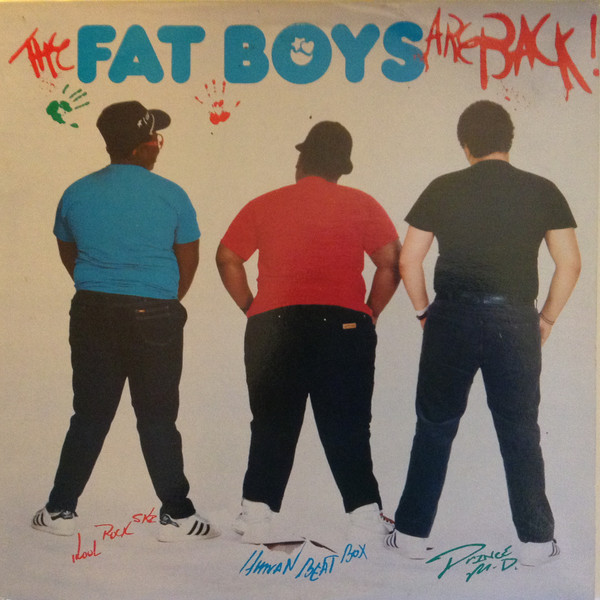
The Fat Boys were a three-man team (comprised of Mark “Prince Markie Dee” Morales, Damon “Kool Rock-Ski” Wimbley, and Darren “Buffy” Robinson, aka The Human Beat Box) who met as teens growing up in Brooklyn, New York. Legend has it that the trio met and bonded by playing football in the Brooklyn streets and eventually began rapping, formed a group, and called themselves the Disco 3. While most groups had emcees and a deejay, what set the Disco 3 apart was their secret weapon, Buffy The Human Beat Box, who was not only the group’s deejay but could create beats with his mouth. Buffy’s unique ability would help the Disco 3 stand out in a crowd and eventually would help them win a talent show in The Bronx with a record deal as the grand prize. The teenage trio would sign a deal with Sutra Records, change the group name to Fat Boys, releasing their eponymous debut album in May of 1984, with the album cover displaying a pic of the threesome holding a pizza, hamburger, soda, and ice cream to reinforce their self-deprecating “fatso clown” image. It all worked, as the album would earn the Fat Boys their first gold plaque. They would return the following year, simply titling the album The Fat Boys Are Back.

Like their debut, TFBAB would be entirely produced by Kurtis Blow (who was also the first rapper to earn a gold plaque with his 1980 single, “The Breaks.” That stat might deserve an asterisk next to it, as The Sugarhill Gang’s “Rapper’s Delight,” released nine months before “The Breaks,” has sold well over five hundred thousand copies, but because Sugar Hill Records co-founder Joe Robinson refused to pay for an RIAA membership, the record was never certified). TFBAB would peak at sixty-three on the US Billboard 200 and earn the chunky crew their second consecutive gold plaque.

The Fat Boys would release five more albums between 1986 and 1991, with two earning gold certifications, before the trio decided to go their separate ways. Prince Markie Dee would go on to write for the likes of Shabba Ranks and Mary J. Blige (he helped pen her classic single, “Real Love”) and would experience moderate success with his solo career, releasing two albums, Free in ‘92 and Love Daddy in ‘95. Sadly, Buffy would pass away at the tender age of twenty-eight in December of ‘95. In 2021, Prince Markie would pass, leaving Kool Rock-Ski as the lone surviving member.

I bought a used vinyl copy of TFBAB a few months ago. Let’s jump into it and see how it’s held up over the years.

The Fat Boys Are Back! – The FBs kick off the album with this title track (which was also the lead single) as they celebrate their return to the mic with large amounts of gluttony. Mr. Blow provides a cheesy synth canvas with the perfect dosage of zaniness to match Prince Markie Dee and Kool Rock-Ski’s whimsical brags and boasts of eating and drinking themselves into a food coma. Buffy gets off a beatbox during the final verse, and a few uncredited ladies sing the hook to round out this musical in food buffoonery.

Don’t Be Stupid – Our hosts follow up their hijinks on the opening track with far more serious content on this one. Markie Dee and Rock-Ski outline three cautionary tales (a bank robbery, the abduction of big booty Judy, and a gambleholic) about making bad decisions. Even though the rhymes sound primitive, I can appreciate the message, and the aggressive guitar riffs and tough bass line were semi-dope.

Human Beat Box Part II – Part one was on the Fat Boys’ debut album, featuring Buffy as the main attraction, providing the music with his mouth while Markie Dee and Rock-Ski rapped praises to his beatboxing abilities. Part two follows the same format and yields the same middling results, but I’m sure Buffy’s beatboxing sounded more impressive live than on record.

Yes, Yes, Y’all – The FBs wrap up side one of the album (if you’re listening to it on vinyl) with this lighthearted joint. Kurtis lays down cool drum claps accompanied by a few simple but effective synth chords as the trio each gets off a verse. Buffy kicks things off with a rare verse (and it quickly becomes clear why he’s usually regulated to only beatbox duties), followed by a random nonsensical story about The Incredible Hulk from Markie Dee, and Rock-Ski closes things out with passable braggadocious bars. Mr. Blow’s backing music is easily the most entertaining part of this record.

Hard Core Reggae – Side two of TFBAB begins with a slow-rolling reggae-flavored track, lined with a thick hypnotic bass line that Markie Dee and Rock-Ski use to take turns paying homage to some of reggae’s pioneers. Markie Dee sounds absolutely horrible on the first verse, sloppily talking his way through it as he lists some of the genre’s greats. Rock-Ski fares a little better but struggles to find a pocket and sounds uncomfortable over the beat; he does add a dope MOP-esque adlib that I’m shocked Premo hasn’t scratched into a record at some point over the past thirty-plus years (“Sit ‘em down…shoot ‘em up…sit ’em down…shoot em up!”). This record has great intent with poor execution. The instrumental was solid, though.

Pump It Up – The first twenty-five seconds or so of this track sounds like a goofy Three Stooges skit. Then Kurtis Blow drops a shiny and smooth groove backed by a subtly funky bass line, as Markie Dee and Rock-Ski shoutout a few of their peers, boast a bit but mainly use it to spew feel-good party rhymes. And, of course, they leave room for Buffy to get off a few beatboxes that feel a bit forced. Much like the previous track, Kurtis Blow’s production is the star of this record. Side note: The Fat Boys performed this song in the movie Krush Groove, which hit theaters about four months after TFBAB was released.

Fat Boys’ Scratch – When he wasn’t fulfilling his role as the group’s resident Human Beat Box, Buffy would transform into the group’s deejay, Doctor Nice. Over a basic drum beat, Markie Dee and Rock-Ski talk up Buffy’s deejay skills, only for him to disappoint with pedestrian scratches and cuts. It was such a pedestrian performance that Kurtis Blow fell asleep during the session, according to Markie Dee’s closing adlibs.

Rock-N-Roll – The Fat Boys close the album with another short goofy interlude before the rock guitar- fueled backdrop comes in for Markie and Rock to get off one last round of lackluster boasts and battle raps. Buffy manages to sneak in a beatbox bridge that sounds completely out of place. I wonder if Kurtis Blow’s rock-fused instrumental was the catalyst for Run DMC’s collab with Aerosmith in remaking their hit record, “Walk This Way,” the following year. Hmmm…

I went into listening to The Fat Boys Are Back with very low expectations. Even though I’ve never listened to a Fat Boys album in its entirety before this, I’m familiar with enough of their songs to gather a decent idea of what audio experience a full album from the weighty crew would sound like. I got exactly what I expected from the Fat Boys with this album, yet the album exceeded my expectations. Allow me to explain…

Prince Markie Dee would become a much better rhymer after leaving the Fat Boys and starting his solo career, but during his Fat Boys stent, he and Rock-Ski were far from lyrical monsters. In fact, they are the epitome of the elementary rhyming from the early eighties that I find so hard to listen to today. Overly simplistic rhymes, a few beatbox solos, and a touch of slapstick comedy are what I anticipated and received from our heavy hosts, but Kurtis Blow’s production was a bit of a surprise. I wasn’t necessarily blown away by Kurtis’ production (no pun intended). However, when you mentally set the bar as low as I did for this album, just one mediocre instrumental is enough to exceed expectations. To my surprise, Mr. Blow was able to chef up not only one but four instrumentals that range from decent to solid, giving TFBAB some redeemable value.

The Fat Boys should be applauded for their contribution to showing that hip-hop music could be a commercially viable art form, loved and embraced by fans around the globe. The irony is over time, their fat shtick and mediocre music have left questions about their authenticity and loomed much larger. Pun intended.

-Deedub

Follow me on Instragram@damontimeisillmatic

Posted in Uncategorized | 1 Comment

Whodini – Escape (October 17, 1984)

When it comes to this blog, I try my damnedest to keep things in chronological order. But since I’m often adding old and even older albums to my collection, that’s not always feasible. Take, for instance, my journey through Whodini’s catalog, which has been all over the place. I remember hearing Whodini’s music on the radio, blaring through my older siblings’ stereo speakers, and on music video shows throughout the eighties. But the first Whodini album I purchased was a used CD copy of their third release, Back In Black, sometime in the mid-2000s. Five years ago or so, I would discover a used vinyl copy of their self-titled debut album, and a couple of years later, I’d stumble upon a used CD copy of their fifth release, Bag-A-Trix. About six months ago, while perusing the used vinyl bins at one of my favorite record stores (shout out to Cheapos!), I came across Whodini’s sophomore effort and the subject of today’s post, Escape.

Whodini’s entire eponymous debut album was recorded in Europe (one part at Battery Studios in London, UK, the other part at Can Studios in Weilerswist, Germany) and produced by Thomas Dolby, Conny Plank, and the production team, who curiously called themselves the Willesden Dodgers (comprised of Nigel Green, Richard Jon Smith, and Pete Q. Harris). For Escape, Whodini would return to Battery Studios to record the entire album, but this time around, they would put the production keys solely in the hands of Larry Smith, who had just finished producing Run DMC’s landmark debut album, which dropped seven months before Escape’s release and was well on his way to becoming hip-hop’s first super producer. Escape would produce four singles, climb to thirty-five on the Billboard Top 200, and earn Whodini their first gold certification (it would reach platinum status a few years later). Escape would also be the second consecutive Whodini album to disrespectfully omit the third member and group deejay, Grandmaster D, from the album cover. Bastards.

While we celebrate the fiftieth birthday of hip-hop, I would like to thank John “Ecstasy” Fletcher for his contribution to this great genre. Continue to rest easy.

Five Minutes Of FunkEscape begins with Jalil and Ecstasy mixing boasts with party rhymes, while Larry Smith blends synth horns with lurking ominous melodic chords and a monster bass line, resulting in a five-minute funk masterpiece (a courtesy computer-voiced host kindly counts down the song each minute of the way). I remember this song from way back, and nearly forty years later, it sounds just as great as I remembered it.

Freaks Come Out At Night – This was the second single released from Escape. Ecstasy and Jalil discuss and describe the freaks that roam the New York City streets and clubs, excuse me, discos after the sun goes down. Beware of this colorful-haired, tightly clothed, one glove-wearing bunch, who, according to Ecstasy, also make for “real good lovers.” Whodini’s playful case study is backed by Mr. Smith’s cool funk groove. All the “hut-hut” adlibs during the hook and tail end of the track were kind of weird (maybe they were trying to draw the beat offside?), but not weird enough to distract from the undeniable classicness of this record.

Featuring Grandmaster Dee – Don’t let the song title fool you. This ain’t nothing but the instrumental version of “Five Minutes Of Funk.”

Big Mouth – This was the third single released from Escape. Whodini dedicates this one to all those people who love to spread lies, rumors, and your business: “They call you Mouth Almighty, tongue everlastin’, you ain’t satisfied unless somethin’s happenin’, you don’t have to be there no more than a minute, but you always got to have your two cents in it, so to all you big mouths, this jam’s for you, somethin’ else you could run and go tell your crew.” Jalil and Ecstasy’s relatable commentary has held up much better than the vacant instrumental that backs it.

Escape (I Need A Break) – If you’re listening to Escape on vinyl, this title track (which was also the fourth and final single) marks the beginning of side two. Jalil uses the first two verses to vent, addressing his frustrations with his job (that he’s been working at for three years without a vacation, and he hi-lariously claims, “Until I got this job, I never used to curse”), his friends, and girlfriend (“She wants diamonds, furs, and now she wants kids, but what she needs is somewhere else to live”), yearning to get away from it all. Ecstasy, being the good friend that he is, offers his partner some great practical advice on the song’s final verse: find a new job, leave your girl, and immerse yourself in the music. Larry Smith backs the duo’s well-executed mental health message with an energized bass line and strong chord progressions to fill out the instrumental. Well done, fellas.

Friends – This was the second single released from Escape and is arguably the biggest hit in Whodini’s catalog. Whodini addresses the importance of having quality friends and gives a few examples of inferior ones. More impressive than Jalil and Ecstasy’s content is Larry Smith’s monster synth backdrop that has stood Teflon strong through time, so much so that the Trackmasters would rework it twelve years later for Nas’ hit record, “If I Ruled The World (Imagine That).” This is a certified classic and the older I get, the more the message resonates.

Out Of Control – A decent instrumental track with a few dramatic musical stabs, wild drum breaks, discreet harmony, and a reoccurring dialogue between the trio trying to escape from some unidentified place. I could hear this working for a scene in Beverly Hills Cop, which coincidentally also came out in 1984.

We Are Whodini – Just in case you listened to the entire album and still didn’t realize who you were listening to, Whodini reminds you on the album’s closing track. The repetitive talk box voice repeating the song title during the verses and the hook from the beginning to the end of the record is mildly annoying, but Mr. Smith’s borderline cheesy instrumental grows on you with each listen. During the final verse, Ecstasy proclaims Whodini as the “Pied Pipers of the 1980s,” and he and Jalil’s swag and confident boasts live up to that title on this record.

I’ll be honest with y’all. I find many of the early eighties hip-hop records hard to listen to, which I’m sure has everything to do with my coming of hip-hop age during the late eighties and early nineties. Some of the elementary rhymes and overly simplistic deliveries used during that era are almost cringe-worthy today, but an even bigger issue I have with many of the records from that era is the production. Before sampling became the backbone and bloodline of hip-hop music, many early records relied heavily on basic drum machine beats and amateurish keyboard chords to create the soundscape. Unfortunately, many of these records have aged poorly and now sound scarce, empty, and cheesy. I’m not shittin’ on the pioneers of this revolutionary musical genre that was created with ingenuity and limited resources. The Tesla would not be a possibility without first the creation of the Model-T, but I’ll be dammed if I’m caught driving one of those prehistoric tin cans on wheels. On the other hand, some classic cars have stood the test of time: the Ford Mustang, Chevy Corvette, Dodge Charger, ’64 Chevy Impala, and the Porsche 911. Likewise, some early eighties hip-hop records have aged well, like Escape.

Whodini has always been ahead of the curve when it comes to layered musical schemes, dating back to their 1983 self-titled debut album. That tradition continues on Escape, as Larry Smith maestro’s a batch of quality synth instrumentals that competently merge melodious with minimalism. Ecstasy and Jalil complement the production well, as they confidently and charismatically navigate through the instrumentals with refreshing content and commentary, finding the perfect balance of silly and serious. While Whodini had a few dope records, all eight tracks on Escape are solid at minimum, and at least three of them are nuke bombs (“5 Minutes Of Funk,” “Freaks Come Out At Night,” and “Friends”) that would cause just as much destruction if thrown on today as they did damn nearly forty years ago.

I’ve now listened to four of Whodini’s six albums, and without ever hearing Open Sesame or Six, I’m willing to proclaim Escape as Whodini’s finest hour. It is the audio equivalent of the Mustang. Corvette. Charger. ’64 Impala. Porsche 911. It’s a fine bottle of Cabernet Sauvignon that has aged well and tastes deliciously smooth today. Cheers!

-Deedub

Follow me on Instragram@damontimeisillmatic
Posted in Uncategorized | 1 Comment

Best and Worst of 1996

It’s coming a little late, but finally, the best and worst of 1996! In the next few weeks, I’ll begin diving into a handful of housekeeping items before jumping into 1997. In the meantime, enjoy the read, and then celebrate hip-hop’s 50th birthday by listening to your favorite hip-hop album.

Worst Moniker: Cockni O’Dire (featured throughout House Of Pain’s Truth Crushed To Earth Shall Rise Again) – The Irish styled name in itself sounds amusing, but the fact that the alias is donned by a Black reggae artist makes it hi-larious. The first Black leprechaun.

Honorable Mentions:

D.V. Alias Khrist (Sometimes spelled “Khryst,” but it sounds equally as bad).

Tangg Da Juice (The All Mighty RSO – Doomsday: Forever RSO).

Nutta Butta (Wreckx-N-Effect – Raps New Generation).

Poon-Skoon (Dr. Dre Presents….The Aftermath).

Worst Posse Record: “All Star Freestyle” (The Conscious Daughters – Gamers) – TCD invites a slew of their Bay Area friends (Saafir, Mac Mall, Mystic, and Money B, just to name a few) to spit subpar freestyle rhymes over a horrible instrumental, resulting in a cringe-worthy seven-minute cipher session.

Honorable Mentions:

“Bouncin’ Down The Strezeet” (Ice-T –VI: Return Of The Real) – The Tinker Bell production combined with a laughable performance from Ice-T and his friends (which includes an embarrassingly bad hook that finds Mr. Wesside rhyming “streezeet” with “beazeet” and “heazeet” with “seazeet”) makes this a close runner up to “All Star Freestyle.”

“Da Ill Out” (Redman – Muddy Waters) – Def Squad is notorious for bad posse records and this one goes up there as one of their worst.

Worst Album Title: Str8 Off Tha Streetz Of Muthaphukkin Compton – The title to Eazy-E’s first posthumous release is way too long and has way too much Ebonics and incorrect spelling going on.

Honorable Mentions:

(Ice-T) VI: The Return Of The Real – The Roman numerals are cool, but “Return Of The Real” sounds like something a washed-up rapper would say.

(A+) The Latch-Key Child – It just sounds stupid. No one says “latchkey child,” it’s “kid,” and kid would have worked much better since it was a popular term of endearment in East Coast hip-hop during the nineties.

Worst Album Artwork: (Wise Intelligent) Killin’ U… For Fun – There are two different album covers for Wise Intelligent’s debut solo album. One is a chilling image of a bunch of white men casually gathered around to watch a Black body burn at the stake like their watching a football game on a Sunday afternoon. The alternate cover (which is the cover for the CD copy that I own) features a low-quality, poorly angled pic of Wise looking angry in a wife beater with unkempt locks and nappy edges, accompanied by generic lettering of his name and the album title, making this an easy selection for this award.

Honorable Mentions:

(Dynamic Twins) Above The Ground – The artwork reminds me of those yellow generic brand cereal boxes from back in the day. A very close runner-up to Killin’ U… For Fun.

(Poor Righteous Teachers) New World Order – The generic image of the trio placed in the middle of the reverse side of the Great Seal of the United States with “Novus Ordo Seclorum” translated to English, makes for terrible Photoshop.

Worst Album: (Dynamic Twins) Above The Ground – Thanks to poor mixing and mediocre emceeing, the fourth release from the god-fearing identical twins makes for a goddamn hard listen.

Honorable Mentions:

(Eazy-E) Str8 Off Tha Streetz Of Muthaphukkin Compton – A perfect example of why ninety-nine percent of posthumous hip-hop albums suck.

(Ice-T) VI: The Return Of The Real – The result of a legendary rapper overstaying his welcome.

(Originoo Gunn Clappaz) Da Storm – Calmly disappointing.

(Snoop Dogg) Tha Doggfather – Snoop’s lack of focus and the good doctor’s absence results in a severely troubled sophomore effort.

Best Moniker: Fuckamon (The Almighty RSO – Doomsday: Forever RSO) – Who or what can fuck with this badass alias? Pun intended.

Honorable Mentions:

Rubbabandz (Shyheim – The Lost Generation)

Pop “The Brown Hornet (Shyheim – The Lost Generation)

Best Album Artwork: Muddy Waters – The amusing and colorful artwork (which includes a green screen television, and a wood table donning a beautiful sunflower, while Redman relaxes in a chair with one leg folded up, muddied from skully to Timberland with dark shades on) is a great reflection of Red’s personality and the music contained on the album.

Honorable Mentions:

(Fugees) The Score – The album cover is a clever homage to the theatrical release posters for Martin Scorsese’s classic movies, Goodfellas and Casino. Thankfully, the music follows the films’ standard of excellence.

(O.G.C.) Da Storm – I’ll always be a sucker for dope animated artwork.

(2pac) The Don Killuminati: The 7 Day Theory – Insert previous note about Da Storm. Plus, Pac’s untimely demise adds a mystique to the artwork that only grows over time.

(OutKast) ATLiens – Dungeon Family member and resident spoken word poet, Big Rube, is responsible for the dope comic book illustration that paints the Atlanta duo as superheroes, Bin-Hahmin and Dad-Efat-Sax (which serves as the cover to an elaborate twenty-six-page CD booklet with an in-depth storyline that finds OutKast battling Nosamulli and his Dark Horde, who are out to control and destroy all of music).

(Kool Keith) Dr. Octagonecologyst – The dark cartoon image of Kool Keith’s skeleton-framed death and pussy obsessed alter-ego (one of his many alter-egos) decked out in a black doctor’s coat and stethoscope does a great job of piquing one’s interest in the album and luring them in for a listen.

(Lil Kim) Hard Core – The pic of Queen B (pre-plastic surgery and MJ skin bleaching) on all fours looking just as sexy as beautiful in her modest lingerie will always make for classic eye candy.

Best Album Title: (A Tribe Called Quest) Beats, Rhymes & Life – While many felt Tribe’s fourth album was a dud (for the record, I strongly disagree), the simple yet profound title made a strong statement.

Honorable Mentions:

(Nas) It Was Written – Nas poetically flips a biblical term into a fitting album title for one of the greatest writers to ever grace a pen and pad.

(Lost Boyz) Legal Drug Money – Oxymoronic phrase (well, kind of) that makes for a witty album title.

(Keith Murray) Enigma – Great word.

Sleeper Album: (DJ Shadow) Endtroducing… – With the absence of the emcee, Shadow teaches an eclectic master class on the art of drum programming and sampling. Easily one of the greatest instrumental hip-hop albums of all time that I completely slept on for some twenty-something-odd years.

Honorable Mentions:

(Wise Intelligent) Killin U… For Fun – You can’t always judge a book by its cover.

(Kool Keith) Dr. Octagonecologyst – Kool Keith’s kooky alter ego collides with Dan the Automator’s abstract production, merging into an intriguing combination that grows more interesting with each listen.

(The Conscious Daughters) Gamers – The Oakland duo sell their gangster persona well over a consistently solid batch of G-funk instrumentals, without an ounce of consciousness detected.

(Eminem) Infinite – Em’s independent debut may not be backed by the Interscope machine and Dr. Dre’s pristine production, but something about pre-Slim Shady Eminem rhyming over a pallet of raw boom-bap beats makes for an entertaining listen, and pound for pound, might be his best album.

Best Album: (Fugees) The Score – The Fugees make amends for their dismal debut album with this undisputed masterpiece. Dope skits, monster singles, deep album cuts, and at least five records are nuclear bombs.

Honorable Mentions:

(OutKast) ATLiens – Organized Noize’s production continues to blossom, and 3 Stacks’ Martian antennas begin to sprout.

(Ghostface Killah) IronmanOnly Built 4 Cuban Linx on steroids. Yeah, I said it.

(Jay-Z) Reasonable Doubt – The bar for “drug dealer turned rapper” albums.

Best Posse Record: “Iron Maiden” (Ghostface Killah – Ironman) – The opening track to GFK’s debut solo album (and I use the term “solo” loosely) matches the host with his Wu-Tang bredrin, Raekwon and Cappadonna (who shuts shit down with a razor-sharp closing verse), as the threesome take your eardrums on an exhilarating ride over Rza’s clever Blaxploitation flick samples and a soulfully cinematic backdrop that is guaranteed to get your adrenaline pumping.

Honorable Mentions:

“Affirmative Action” (Nas – It Was Written) – A great introduction to The Firm that showcases a potential they collectively never lived up to.

“Got My Mind Made Up” (2pac – All Eyez On Me) – At the height of the East/West Coast beef, 2pac boldly invites a couple of East Coast All-Stars (Red and Meth) to join him and his Death Row inmates, resulting in a fire coastal unbiased cipher session.

“Bring It On” (Jay-Z – Reasonable Doubt) – Jay and friends (Jaz-O and Sauce Money) vividly paint Premo’s elegant and emotional boom-bap with raw drug dealer strokes. The menacing Fat Joe vocal snippet used on the hook is impactful enough to make The Bronx emcee worthy of a feature credit.

“Winter Warz” (Ghostface Killah – Ironman) – Much like “Iron Maiden,” Cappa steals the show with an amazing closing verse. I have to start collecting this man’s solo catalog.

Cameo Whore: This is a new award that will go to the artist that made the most cameo appearances on the albums I reviewed for said year. I thought it would go to Sadat X, who seemed to appear on everything in 1996, but after crunching the numbers, to my surprise, it was not Sadat (although he did finish in a four-way tie for second with four cameos, along with Common, Havoc, and D.V. Alias Khrist). The first annual cameo whore award was a four-way tie, each with five appearances, between:

Method Man, Redman, Q-Tip, and Prodigy.

Congratulations to all these microphone promiscuous emcees!

That concludes my best and worst list of 1996. Feel free to hit me in the comments with your thoughts. I’ll catch you all in 1997!

-Deedub

Follow me on Instragram@damontimeisillmatic

Posted in Uncategorized | 2 Comments

Summertime!

Well, fine folks, I’ve finally completed the reviews of my 1996 hip-hop collection, and I’d like to thank you all for rockin’ with me through it. This blog is a labor of love, but labor, nonetheless. So, as much as I love chronologically walking through the hallowed halls of hip-hop, one album at a time, I also recognize when it’s time to take a break. With summer soon approaching and a handful of family obligations on the agenda, I won’t be posting weekly for the next few months. I will drop in occasionally, though, to take care of some house cleaning, before I begin my trek through 1997.

In the meantime, check out some of my old posts, which will hopefully evoke nostalgia or lead to you discovering a gem of an album you may have missed along the way. Enjoy your summer!

-Deedub

Follow me on Instragram@damontimeisillmatic

Posted in Uncategorized | 8 Comments