DJ Muggs is one-third of the Los Angeles area trio Cypress Hill and has been the main maestro of music for the group for the past thirty-plus years. During that stretch, he’s also branched out, producing tracks for damn near everybody: KRS-One, House of Pain (he’s responsible for the immortal energetic party anthem, “Jump Around”), Ice Cube, Janet Jackson, U2, Depeche Mode. Even though he didn’t receive credit for it, he produced Ice-T’s 1988 gangsta classic, “Colors.” By 1997, Cypress Hill had three platinum-selling albums under their belts and was working on their fourth release (that would aptly be titled IV). Muggs would also begin his solo career, releasing Muggs Presents…Soul Assassins Chapter I in ‘97.
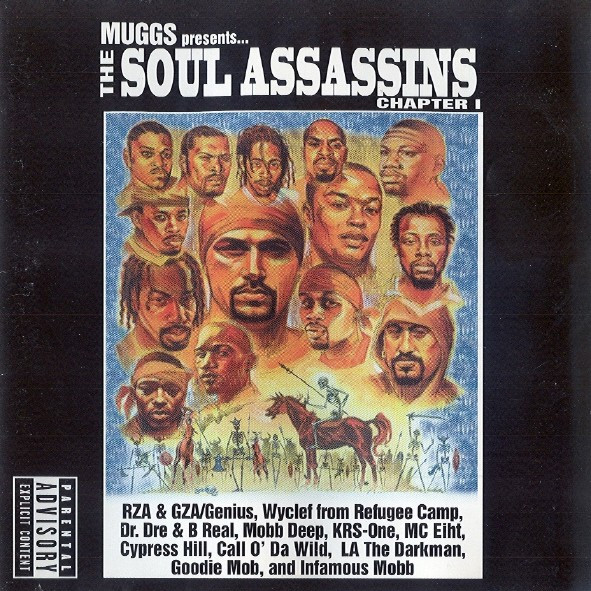
Soul Assassins is a twelve-track compilation album produced by Muggs. The album cover features a collage of caricature paintings of all the album’s featured artists hovering over a bunch of war-ready skeletons. If you cannot make out all of the artists’ faces (like me), the list of names is just below Skeletor and ‘em’s feet. The album received mostly positive reviews, climbing to twenty on the Billboard Top 200.
Soul Assassins is another album I didn’t listen to when it came out. I stumbled on a used CD copy for a few bucks in the mid-2000s, and now, I’m finally listening to it for the first time. The featured guest list looks impressive, and Muggs is a more than capable producer. Hopefully, what is written on paper translates audibly.
The Time Has Come – This one begins with a clip from the 1977 film Wizards that features melodramatic drums, horns, and a soundbite of a male voice saying the song title. Then vanilla drums, a gentle piano loop, and curious strings play while Muggs scratches in several soundbites of people saying “Soul Assassin,” occasionally bringing back the male voice from the Wizards snippet. Now that we’ve gotten the useless opening intro out of the way, we can move on.
Puppet Master – A clown with a stereotypical distorted voice and a sinister laugh invites the listener to step up and experience the masters of the puppets while merry-go-round music plays underneath his diabolical voice, creating a creepy atmosphere. Then, Muggs loops up arguably the funkiest instrumental in music history but severely overused in hip-hop (Issac Hayes’ “Hyperbolic”) for Dr. Dre and B-Real to verbally spar over. Both spit competent verses, though I have to refute Dre’s line about Micheal Jackson losing his Black fans (Even during the height of MJ’s child sexual abuse allegations, he never lost his Black audience). Speaking of Dr. Dre and puppets, I wonder which Geppetto wrote his bars for this record.
Decisions, Decisions – After a short soundbite of a man saying, “Atlanta, gateway to the south,” flat drums drop, accompanied by a bland four-note harp loop. Muggs tasks Goodie Mob with the job of bringing his drab musical creation to life. Big Gipp, Khujo, and T-Mo’s southern social commentary gets smothered by the humidity of the dry instrumental, but CeeLo’s grand finale (which finds him sharing game with a newly signed rapper) rises above the oppression of the backdrop’s blandness, temporarily making you forget just how bland it is.
Third World – A snooty string-led loop with the Rza mic checking/talkin’ shit over it, followed by a clip of some guy talking about being at “the crossroads of the worst war man will ever know,” preludes the next song. Helicopter noise, gunshots, and staticky walkie-talkie communication put the listener in the middle of the war that the British accented soundbite predicted. Eventually, Muggs drops an instrumental that gives off dusty snob energy (and ironically, sounds like Muggs attempting to make a Rza beat), as Gza and Rza (who mistakenly refers to Michael J. Fox’s Back To The Future character, Marty McFly as Jordan McFly during his verse) wage war against their enemies, exchanging solid verses over the quality backdrop, in a losing cause.
Battle Of 2001 – The war rages on. After the battle that took place on the previous record, a communications officer reads a distress signal sent to headquarters from Rza, warning them that enemy troops are moving west toward them and that Yakub (a Black scientist that the Nation of Islam believes created the white race) and Dr. Titus have released a new deadly virus to infiltrate the Western States (which Rza also mentions towards the end of his verse on “Third World”). A few war soundbites set up the next battle, led by B-Real, who gets off a short combat-laden verse over classical piano chords, strings, and crashing percussions. Spoiler alert: B-Real and his troops lose the battle, the virus decimates the population, and the survivors are put under martial law with all their constitutional rights revoked. Sounds like something that could happen if they put Trump’s orange ass back in office. Stay tuned.
Devil In A Blue Dress – LA the Darkman is a Wu-Tang affiliate rapper out of Brooklyn, who I first mentioned on this blog for his cameos on Blahzay Blahzay’s “Danger Part 2” and “Posse Jumpa” off their debut project, Blah Blah Blah. I’m sure it’s his Wu connection that scored him a spot on Muggs’ Soul Assassins roster. Our host provides one of his standard dusty musical canvases that LA paints with typical hood rapper rhetoric: lyrical supremacy, battle bars, gun talk/threats of violence. LA does get a little scatterbrain at the end of his second verse (he goes into the details of a gun shooting that claimed the life of a young girl named Shelly, which is very sad but sounds extremely random placed within the context of his rhymes), but he still gives a proficient performance on an overall decent record.
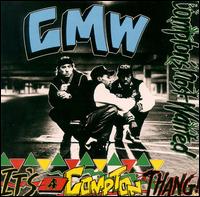
Heavy Weights – When I saw the pairing of MC Eiht with Muggs in the liner notes, I was curious how it would play out. I’ve been an MC Eiht fan since CMW’s It’s A Compton Thang, and Muggs is usually good for a dope dusty boom bap production, which isn’t usually the type of bullet trap Eiht shoots at. After a short clip from the 1936 film The Petrified Forest plays, Muggs brings in a soothingly mystical backdrop built around a classical piano loop, which sounds pleasant, but it didn’t necessarily stir up anything inside of me, either. Eiht commences to lace the track with his standard money/murder discourse but uses a weird cadence to deliver his rhymes, and he sounds very uncomfortable in the process. To make matters worse, he stacks his vocals with a singy delivery that I found annoying as shit.
Move Ahead – Rampage may have faked me out and made me believe that KRS-One was going to make a cameo on Politics & Bullshit, but the Blastmaster actually shows up on Soul Assassins. Kris lets his stream of consciousness flow (and his stream is full of consciousness) as he addresses the East/West feud and the importance of unity in hip-hop: “The East created it, the West decorated it, learn the lesson, the unified picture is Black expression, when Black expression bites itself, it becomes Black digression, leading to depression in health.” Muggs lays energetic boom-bap drums, an emotional key riff, and dramatic horns underneath the Teacher’s vocals, making for arguably the best record of the evening.
It Could Happen To You – What better way to follow KRS-One’s message of non-violent unity in the community than with a Mobb Deep record? After some rambling dialogue from their cronies, Infamous Mobb (not to be confused with Mobb Deep’s classic sophomore album, The Infamous) over a deep bass line and a sexy piano riff that creates quite the deep groove, Muggs brings in a harp loop that sounds stuck between haunted and heartbroken, smeared over dusty boom bap drums that gives the loop some grit. Havoc and Prodigy plaster the tantalizing musical bed (that sounds like something Havoc would produce) with the same violent thug agenda that has riddled the majority of their catalog. Despite the redundant content, magically, they make the shit sound entertaining.
Life Is Tragic – Muggs starts this one with another 1930s movie soundbite (the generically titled, I Am A Fugitive From A Chain Gang). Then Infamous Mobb (what a lazy and lousy group name to settle on when your mentors already go by Mobb Deep): Godfather PT III (great song, but horrible alias), Ty Nitty, and Twin Gambino do their best Mobb Deep impersonation with poor results (what the hell was going on during that third verse? Atrocious). The trio’s amateurish performance is met by a dry-ass instrumental (that also sounds like something Havoc would produce), making an already underwhelming listen even more dreadful.
New York Undercover – I’d never heard of Call O’ Da Wild before this review, but they appear to be a duo, and based on the name of this song, it’s safe to assume they’re from New York. After a short somber choir clip introduces the track, the two emcees each spit spirited verses, describing the physical structure of the “Big Rotten Apple” and the behavior of its inhabitants. Muggs backs Da Wild’s poetic street commentary with a drum-less, warped, cinematic thriller-esque loop that makes the duo’s description of NYC more visual. This is easily one of my favorite records on Soul Assassins (and the shortest, not counting the intro). I would love to hear more music from these guys.
John 3:16 – Soul Assassins ends with this Muggs/Wyclef collabo. Clef uses a beautiful, weeping string concerto to spit eclectic bars full of pop culture references, biblical characters, and zany one-liners, all in the name of getting his moral of the story off: “Live reality and don’t get caught up in your fantasy.” I enjoy Wyclef when he’s in abstract creative mode, but I’m not letting him off the hook for the corny “Superman left the gang cause his weakness was crips, tonight” line. Despite that mishap, this was a solid record to end the album.
On Cypress Hill’s first three albums, Muggs created a signature soundscape for B-Real’s nasally diatribes and Sen-Dog’s baritone bravado. Thick pulsating bass lines, dusty loops, and raw drumbeats were the foundation the Hill was built on and would find commercial and critical success with in the early nineties. With Soul Assassins, Muggs deviates from the regular Cypress script.
Soul Assassins does have some of Muggs’ signature blunted residue on it (see “Decisions, Decisions” and “Devil In A Blue Dress”), but the majority of the album uses classical piano and string loops, giving it a regal orchestral feel. I’m not opposed to classical fused hip-hop. I loved Nine’s stringed-out “Uncivilized,” and Salaam Remi’s clever Beethoven flip turned Nas’ “I Can” into a cute, catchy tune. Most of Muggs’ classical samples technically work, but something about them rings hollow, almost soulless, no pun intended.
Soul Assassins does have some really good records, but most of those moments come when Muggs steers clear of his classical theme for more traditional hip-hop sounds, and the emcees rhyming over those tracks (KRS-One on “Move Ahead,” Mobb Deep on “It Could Happen To You,” and my personal favorite, “New York Undercover” with Call O’ Da Wild) sound inspired. The rest of Soul Assassins falls somewhere between decent and boring, including the emceeing. Thankfully, most of the music leans toward the decent side.
When it’s all said and done and Muggs tires from finding obscure samples and decides to hang up his MPC, his jersey will hang in the hip-hop rafters. He’s a legendary producer with critical and commercial success to back it. But even legends have less-than-spectacular moments in their legacies.
-Deedub
Follow me on Instragram @damontimeisillmatic


 Time Is Illmatic
Dope review, but you kinda passed some shade on the Decisions, Decisions’ beat ngl. That simple guitar riff is catchy (dun dun dun da-dun). Cee Lo’s verse on that song got him Source Rhyme of the Month too, lol, and he apparently didnt like the beat either like you did according to a Complex interview Muggs did.
*harp riff
wow!! 90The Notorious B.I.G. – Life After Death (March 25, 1997)