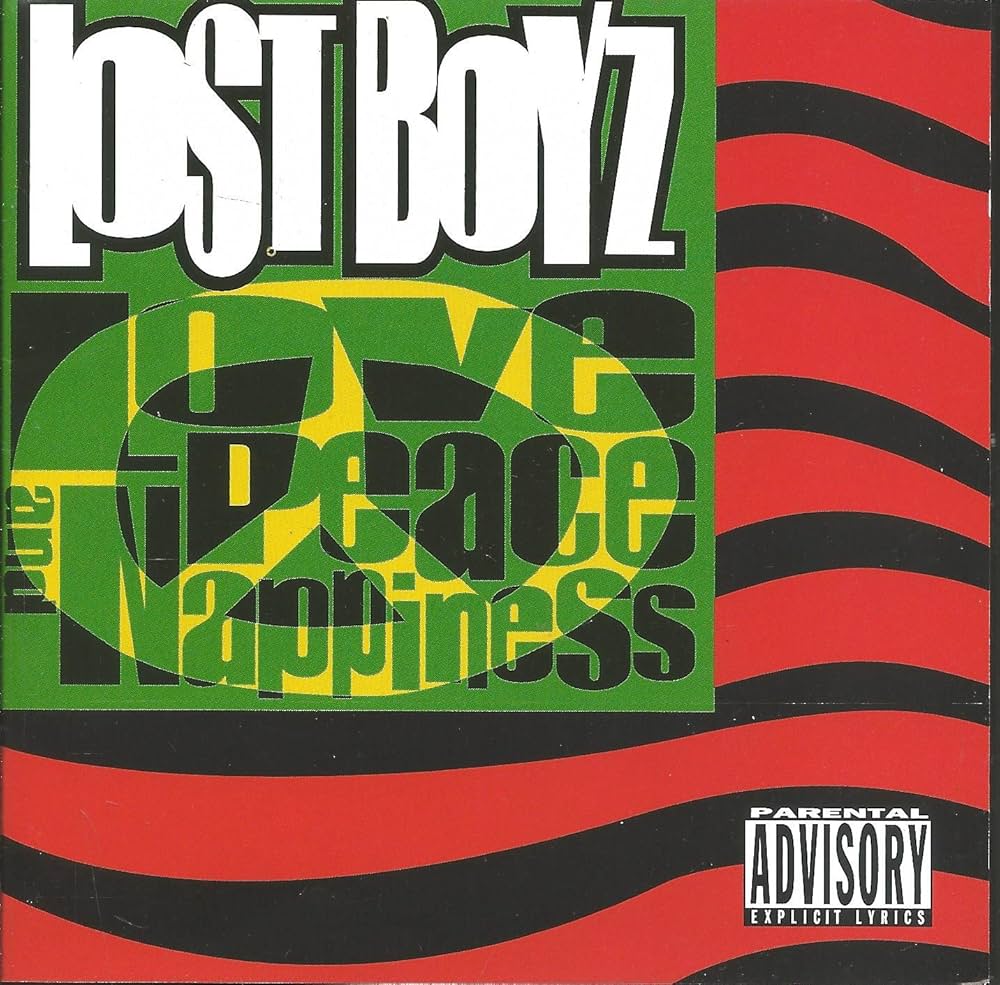
Lost Boyz – Love, Peace & Nappiness (June 17, 1997)

1996 was a good year for the Lost Boyz. The Queens collective would see five singles reach the Billboard Hot 100 Charts, and their debut album, Legal Drug Money, would peak at number six on the Billboard 200 and receive a gold certification just sixty days after its release. The commercial success of LDM would lead to a handful of cameos appearances from Mr. Cheeks, which, in turn, would help raise the Lost Boyz’s profile. Almost a year to the date of LDM‘s release, Lost Boyz would look to build on their freshmen momentum with the release of their sophomore effort, Love, Peace & Nappiness.

Like its predecessor, LP&N would use a production-by-committee approach, enlisting some of the same producers that worked on the debut (Charles Suitt, Mr. Sexxx, Buttnaked Tim Dawg, and Easy Mo Bee). It would also include work from Ron G, and fresh off the success of co-producing Black Street’s hit “Don’t Leave” with Teddy Riley, Bink would also supply a handful of instrumentals for the album. The producer selection was a winning combination for LB as LP&N would earn them their second consecutive gold plaque. But even though the sales for LP&N matched those of their debut, the reviews for the former weren’t quite as flattering.

LP&N is another album new to my ears. I’m not sure how this will go, but at minimum, they came up with a clever album title.

Continue to rest in peace, Freaky Tah.

Intro – The album begins with an ominous slow-rolling instrumental (credited to Bink and Charles Suitt) and Mr. Cheeks greeting the listeners with a few super rough draft freestyle bars that are headed nowhere fast. And, of course, Freaky Tah’s signature ad-libs are hardwired into the track.

Summer Time – Who doesn’t like summertime in the city? Cheeks paints a picture of warm weather, hot chicks, blunts, brews, and hangin’ out with the homies. Tah supplies ad-libs, and an uncredited female vocalist (I use the term “vocalist” loosely) sings the hook. Cheeks’ take isn’t groundbreaking material, and the record is not as good as DJ Jazzy Jeff & The Fresh Prince’s 1991 rendition, but it’s a decent, mildly funky bop.

Me & My Crazy World – This was the lead single from LP&N. Mr. Cheeks sounds like he’s on the therapist’s couch, sharing the details of his complex love life that has him smitten by two women. The first two verses were intriguing, but by verse three, the story loses its legs, and I was over it. Ron G’s “happy-go-lucky” backdrop was a little dry for my tastebuds, and the background singing from an anonymous man was unwarranted.

Beasts From The East – After a quick weather forecast, Bink drops an epically fire instrumental with pensive undertones for this Group Home/Def Squad cipher session. Cheeks is joined by A+, Redman, and introduces the world to the lyrical dexterity of Canibus. Cheeks, A+, and Redman spit decent to solid verses before Canibus transforms into a lyrical hyena and completely devours his co-workers and Bink’s backdrop with an incredible fifty bars. To say Canibus stole the show would be a severe understatement. His verse might be the best verse spat in 1997.

Love, Peace & Nappiness – The title track (which was also the album’s second single) finds Mr. Sexxx (horrible moniker, by the way) revamping the instrumental to Slick Rick’s “Hey Young World.” Mr. Cheeks’ rhymes are all over the place, Freaky Tah returns to sprinkle more of his ad-libs throughout the song, and King Keiwanee and Da Blak Pharoah add a little reggae flavor at the end of the record. It’s not a great or horrible record. I guess that would make it mediocre, but I’m trying to stop using that word so much.

Black Hoodies (Interlude) – Aarian Pope shares a short-spoken word poem that speaks from the perspective of hood cats. It’s a nice start, but it needs more meat on its bones.

So Love – Mr. Cheeks is in the mood for love, or at least he pretends to be during this record. Ike Lee III (not to be confused with Spike) hooks up a radio-friendly bop for Mr. Cheeks to spew fluffy cliches to express his love and affection for the apple of his eye, while another unnamed male singer sings the hook, accompanied by off-key singing from Cheeks and the crew. I like the warm, feel-good vibes this record radiates.

My Crew – Easy Mo Bee gets his only production credit of the album, and he makes sure to make it a good one. Mr. Cheeks, once again, is joined by A+ and Canibus as the three use the handsomely rugged and raw backdrop to celebrate their Group Home click. Canibus doesn’t match the fiery performance he astounded with on “Beasts From The East,” but he still sounds impressive. It’s a solid record with a catchy hook.

What’s Wrong – Buttnaked Tim Dawg and Terence Dudley build the backdrop around a funky Quincy Jones loop as Cheeks addresses those who have a problem with his lifestyle. The head noddable instrumental and catchy hook make this one a winner, even with the missing question mark at the end of the song title.

Certain Things We Do – Cheeks shares the deeds of a night out with the crew at a new spot, where the liquor is flowing, the blunts are blowing, and the fly ladies are abundant and ready to be chosen (sounds like a great time to me). Ron G’s slick backdrop fares much better than his work on “Me And My Crazy World,” giving meaning to Cheeks’ superficial commentary.

Games – Mr. Cheeks opens up and gives the listener a glimpse into his tumultuous upbringing, and I’m the biggest sap for vulnerable raps (bars!). Mr. Sexxx soundtracks Cheeks truncated bio by interpolating Sweet G’s 1983 record “Games People Play” (I feel like I’ve mentioned that song before on the blog), which features an interpolation of Issac Hayes’ “Ike’s Mood I” (a sample you can’t really go wrong with). Shoutout to Lost Boyz for giving the pioneering emcee, Luv Bug Starski, a cameo on this track.

Get Your Hustle On – Mr. Cheeks takes a rare break and hands the mic to Freaky Tah to hold things down solo. Tah definitely had one of the most unique voices in hip-hop, but this track reconfirms why Mr. Cheeks was the mouthpiece for the group. I like the dark, laidback instrumental, though.

Tight Situations – Cheeks jumps back into his storytelling bag for this one. Bink sets the tone with a cinematically suspenseful backdrop that Cheeks uses to share a tale of “pussy traps” and retaliation. It’s the equivalent of a hood flick I’d watch on Tubi.

Day 1 – Though he raps three verses, Cheeks doesn’t have much to say, but I’m a sucker for drowsy melodic grooves like this. Thanks, Bink.

Why – This one starts with a faux news reporter discussing Allen Iverson and his issues with the media during his rookie season before going into a report about Lost Boyz inciting riots at their shows. It’s a super random skit, but it tripped me out to think AI’s rookie year was almost thirty years ago. Then, as A Tribe Called Quest did with “What?” and Common and Mos Def (excuse me, Yasin Bey) would later do with “The Questions,” Cheeks and Freaky Tah ask a series of rhetorical questions. The only difference is Cheeks and Tah’s questions come with no insight, depth, or wit, making for embarrassingly bad content over a decent instrumental.

From My Family To Yours (Dedication) – The LB, along with Queens Most Wanted, close out the album with a record dedicated to those who crossed over to the other side, with a strong emphasis on Biggie and Pac. Bink’s sorrowful chords put you at the scene of a Black Pentecostal Church funeral, and when paired with the sad content, it’s enough to move one to tears. The “Baby bay-bay/holler if ya hear me!” chant at the beginning and closing of the track was another heartwarming homage to the two fallen icons. A powerful record built around some very sad shit.

From the little that I knew about Lost Boyz, I went into Legal Drug Money thinking it was going to be a legal crock of shit. From the few singles I’d heard, I didn’t believe Mr. Cheeks had the presence or lyrical ability to carry an entire album, and I most certainly didn’t think the production would be strong enough to entertain. Surprisingly, the shit was alright. Cheeks didn’t sound as bad as I thought he would, and I was pleasantly surprised by the solid hooks and quality production. Much of the same applies to Love, Peace And Nappiness.

Someone must have told the Lost Boyz that Freaky Tah’s ad-libs on LDM were too much as they sound scaled back on LP&N, and when they do appear, they’re turned down and more contained, which I appreciated. Mr. Cheeks will never be mistaken for a wordsmith, yet his raspy, high-pitched vocal tone and simple rhyming style start to grow on you. Or maybe he just becomes more tolerable. Or it could be the catchy hooks and enjoyable production that make Cheek’s rudimentary rhymes easier to digest.

Whatever the case, Lost Boyz manage to pull it off again. They introduce the world to one of the most masterful emcees to ever grace a mic (Canibus) and give the hip-hop nation another solid album.

-Deedub
Follow me on Instagram @damontimeisillmatic

Posted in Uncategorized | Tagged , , , , | 2 Comments

Cru – Da Dirty 30 (June 17, 1997)

CRU was the Bronx-based trio comprised of Yogi, Chadeeo, and The Mighty Ha. As legend has it, CRU spotted Chris Lighty (who had recently left Def Jam to start Violator Management) going into a club and were able to slide him their demo tape. Lighty was impressed by the tape, leading to CRU (who were then going by the group name Rhythm Blunt Crew) signing a deal with his former employer, Def Jam. CRU would release their debut album, Da Dirty 30, on the label in June of ‘97.

According to a Chadeeo interview I found on YouTube, the album title was inspired by a corrupt Harlem Police Department, often called the Dirty 30. They also chose the title to describe the album’s thirty tracks as dirty and grimy. Yogi would produce the entire album, which included a handful of special guest appearances. Despite favorable reviews, the album was a commercial failure, especially considering it was a Def Jam release. Da Dirty 30 would be the first and last time the world would hear from CRU as a group. Yogi would join the Bad Boy production collective, The Hitmen, producing tracks for Diddy, Busta Rhymes, Terror Squad, G.Dep, and Method Man. Chadeeo would release a few solo and joint independent projects, and there’s still an APB out on The Mighty Ha.

As I’ve mentioned probably too many times during this blog, 1997 was the year I began my four-year and change separation from secular hip-hop. There were a lot of new artists that came out during that timeframe that I knew about but never listened to their projects. CRU and Da Dirty 30 completely went under my radar. That was until I finally listened to Foxy Brown’s Ill Na Na and heard a snippet of their lead single (“Just Another Case”) that I then remembered hearing years ago on an XM Radio hip-hop mix. Thanks to the plug on Ill Na Na, I finally had the name of the group responsible for the audible treat that I had completely forgotten about. I tracked down a used CD copy, and here we are today.

I bought Da Dirty 30 seven months ago but have patiently waited until now to listen to it. This is one I’m actually excited to get into.

DJ Footlong (Intro)Da Dirty 30 is hosted by DJ Footlong, who is clearly a knockoff character/clone of DJ EZ Dicc from Doggystyle. Over a smooth West Coast-esque groove, Footlong introduces the CRU to the listener, gives some shoutouts (including a RIP to Notorious BIG), and dabbles in his misogyny bag before summoning the bass line for the next record to drop. Unlike DJ EZ Dicc, I found none of Footlong’s buffoonery even remotely amusing.

Bluntz & Bakakeemis – Yogi, The Mighty Ha (though he contributes less than one bar), and Chadeeo invite a few members of their extended Rhythm Blunt Crew to join them on the opening track. Tracey Lee gets off a solid verse, and someone named Jim Hydro delivers a proficient performance. But it’s MC Lyte’s former arch nemesis and self-proclaimed Queen of the CRU, Antoinette, who sounds sharper than all the parties without a vagina that rhyme on this track. She wittingly addresses her beef with Lyte, summarizes her rap career, and talks her shit convincingly. The bass line sounds a little monotonous and stale, but the rugged drums and verbal vitality of the emcees rhyming over it make it feel harder than it really is.

That Shit – This time around, Yogi, Chadeeo, and The Mighty Ha display their skills without help from outside sources, and they sound pretty nice bouncing off each other. Yogi makes a tongue-in-cheek reference to sounding like Q-Tip during his last verse, which is a comparison you can’t deny (Tribe Degrees of Separation: check). The trio kept me engaged, and the crispy, steady drums rescued the aimless bells in the instrumental.

Just Another Case – This was the lead single from Da Dirty 30 that was partially played during the Ill Na Na intro/Def Jam artist promo. Yogi and Chadeeo share a cautionary tale that references the life and times of a drug dealer named L. They incorporate pieces of Slick Rick’s “Children’s Story” into their rhymes and hook before yielding and letting the storytelling guru himself spit a verse about Sid (home on “work release after doing a three to life bid”). Ironically, the pupils’ (CRU) storyline was more intriguing than the teacher’s, but more enjoyable than both was the wonderfully tender guitar licks and melodic strings sampled in the instrumental.

Hoe 2 Society – This short skit pays a carnal homage to the hood classic scene from Menace II Society, where Bill Duke’s character interrogates the main character in the film, Caine. There is no need to listen to this more than once.

Nuthin’ But – Black Rob, who I became familiar with through his hit record “Whoa,” joins the Rhythm Blunt Boys and goes back and forth like Aaliyah with Yogi and Chadeeo on the mic. The Mighty Ha only rears his head for hook duties. The trio’s playful banter was semi-interesting, but the gully Scooby Doo mystery bass line was enchanting.

Straight From L.I.P. – Yogi samples the elegant and irresistible strings and bass from Portishead’s “Sour Times” for the backdrop as CRU represents for their Bronx hood. This was pretty dope.

Goin’ Down – All three parts of CRU play roles in this theatrical hood tale that features Petey (played by Yogi) going to a Bronx project to get some ass before running into the antagonist, played by Chadeeo. I followed the storyline up to when Petey calls his man, Shah (played by The Mighty Ha). After that, everything gets fuzzy until the episode ends in gunfire. The story was poorly executed, and the instrumental was a snooze fest.

Shoot Out – A minute-long skit that plays exactly as it reads.

Ten To Run – Yogi gets the first solo joint of the evening, and it’s one verse over an off-kilter piano loop and smackin’ drums. The ten-numerical group countdown that he closes with was pretty clever.

Wreckgonize – Black Rob returns to lead off this record with a sharp and murderous verse. Yogi follows, rhyming about the neighborhood drug addicts and their drugs of choice, while Chadeeo uses his time to touch on a little bit of everything. The warmly warped vibes and quiet drums make for great late-night chill music.

Bulletproof Vest – A dude selling bulletproof vests gets shot by a potential customer on this skit. That’s all I got.

The Ebonic Plague – CRU adds to Da Dirty 30 guest list. Ras Kass pops up to rub shoulders and share the mic with Yogi and Chad. According to one of Yogi’s lines, this song was going to be titled “Da Dirty Understanding Cipher.” Instead, they settled on “The Ebonic Plaque” (sounds like something Ras Kass came up with). Yogi’s verse sounds uninspired, Ras continues to rhyme with the same underwhelming, choppy, unorthodox style he used on Soul On Ice, and Chad closes things out with a decent verse (his use of “adorable” as an adjective to describe a dime chick sounded creepy). Yogi’s instrumental is sturdy but not spectacular.

Up North – Since “Up North” was a common term East Coast rappers used to describe people in prison in the nineties, I assumed this song would be about the CRU’s incarcerated homeboys. It’s not. Yogi and Chadeeo spit all kinds of randomness, and Mighty Ha adds an energetic hook (that resembles something Fatman Scoop would do (rip)). I love the seductive bass line and the “Pastime Paradise” sample inserted into the instrumental.

R.I.P. – DJ Footlong sends a rest in peace to his homeboy, TreQuan, who must be the same joker that got smoked on the “Bulletproof Vest” interlude.

Live At The Tunnel – The CRU gets a little three-on-three action going on as they go head-to-head with The Lox. I enjoyed the chemistry between the two squads, and CRU more than holds their own against the revered Yonkers threesome. This record is hard, and that intermittent trunk-rattling bass is a monster.

Pronto – Yogi hooks up a mid-tempo West Coast-esque G-Funk groove for himself and Chadeeo to tag team the mic, and The Mighty Ha delivers a hard hook magnified by his raw vocal tone. This is one of my favorite records on the album.

You Used To – An uncredited female vocalist performs an emasculating parody of Faith Evans’ “You Used To Love Me.” Yet another useless interlude. Thankfully, it’s super short.

Fresh, Wild And Bold – Yogi’s instrumental sounds like the big cousin to his work on “Wreckgonize.” He, Chad, and The Mighty Ha vibe out over the chill backdrop that gives early Slum Village Dilla Years energy while the sista from the previous interlude harmonizes on the hook. The Mighty Ha closes the record that bleeds into the next interlude (no pun).

O.J. – As much as I love nineties hip-hop, some of the things the genre made fun of and laughed at back in the day are appalling today. This domestic violence skit is a prime example.

Lisa Lipps – Mighty Ha gets a solo joint, and it’s dripping with fabricated “Brooklyn Zoo” energy. Next…

Bubblin’ – This was the album’s second single. Question: Since the lyrics on this track are censored, should the album still be titled Da Dirty 30? The instrumental sounds very Ummah-esque, and Yogi sounds more like Q-Tip than usual on this track (it doesn’t help matters that he borrows one of Tip’s lines). This was a fun record that only sounds better with each listen, minus the censoring.

Goines Tale – Yogi and The Mighty Ha got their shot at solo joints, so it’s only right that Chadeeo gets one, too. Chad uses it to pay homage to Donald Goines by stringing together his own hood tale referencing some of Goines’ book titles and characters. I’ll give Chad an A for the original concept and a C for the execution.

The Illz – Filler material that left me a bit empty.

Footlong – DJ Footlong introduces, “The label made us do it part of the tape.”

My Everlovin’ – This is a fly love song with slightly disrespectful undertones (mainly during the hook). Yogi and Chadeeo both rap praises to the ladies they love over a very Zen Sade sample, sexy horns, and heavy drums (Mighty Ha pops up for a quick and useless second, but the record remains unharmed). This is one record I’m glad the label made them do, as it’s one of my favorite joints on the album.

Pay Attention – This record definitely had pop aspirations. Yogi loops up The System’s (remember them?) “Don’t Disturb This Groove,” and a young Anthony Hamilton remixes some of the lyrics from the same song, making for an embarrassingly corny hook. Despite the horrible hook and the unimaginative Caption Obvious sample, Yogi and Chadeeo sound nice rapping over it.

Loungin’ Wit My Cru – This is one the label shouldn’t have made them do.

Dirty 29 – I thought my CD skipped the first few times I listened to this. Then I discovered CRU was playing a dirty trick on me. They got me!

Armaggedon – The grand finale finds Yogi and Chadeeo spinning a bizarre tale that name-drops a slew of your favorite East Coast rappers (including Biggie) fighting and ultimately killing each other at a nightclub (The Mighty Ha adds a colorfully violent hook to it). Coming on the heels of the Tupac/Biggie murders, the CRU’s calculated shock value might have been poorly timed, but my dark sense of humor makes me laugh every time I hear Chadeeo rhyme “Wonder where Yogi’s at in this piece/LL slumped over the bar, deceased/Redman a dead man, essence forever/Latifah in the corner with her fuckin’ head severed” (I warned you that my sense of humor was dark). And just in case someone may have been offended by the song’s content (which probably includes all the rappers mentioned in the song), DJ Footlong ends the track with a few words that make it sound like this song was a PSA for the Stop The Violence Movement. He also gives some parting shoutouts and farewells before signing off.

Sometimes, I wonder how different The United States would be today if Martin Luther King Jr. lived through the new millennium. Sometimes I wonder how many rings Jordan would have gotten had he not retired for a year and a half in between his three-peats and stayed with the Bulls for the remainder of the nineties. Da Dirty 30 left me wondering what CRU would have evolved into if Yogi had turned down Puffy’s invitation to join the Hitmen and remained the glue that held the trio together.

For much of the album, CRU seems to aimlessly occupy the microphone space without clear direction. The Mighty Ha’s contrived copycat animation works for a few hooks, but most of his contribution feels forced and just weird. Then there’s Yogi, whose rap voice might naturally resemble Q-Tip’s, but on a few songs, he leans into the comparison and ends up sounding like he’s doing Tribe karaoke. There are too many skits (none of which are funny) on the album, and I never need to hear from DJ Footlong again. Despite The Mighty Ha’s weirdness, the trio’s identity crisis, and the overabundance of senseless interludes, I enjoyed Da Dirty 30.

Throughout the album’s thirty tracks, Yogi and Chadeeo prove to be competent emcees with tons of potential, bouncing off each other with a blossoming chemistry that’s easy to spot. All the guest appearances on Da Dirty 30 are well-placed, and nearly all put their best foot (or bars) forward with their contributions. But Yogi’s production is more impressive than CRU and its guests. Yogi embraces his East Coast roots, hooking up raw boom-bap slaps, and proves he’s just as capable of making dope beats with soul and jazz samples. On the album’s intro and tracks like “Pronto,” he shows more musical diversity, hooking up smooth G-Funk style grooves that feel authentic. All of Yogi’s instrumentals aren’t winners, but most are fire, making the bulk of the album an enjoyable listen.

The hood poet Keith Murray once said: “If your “if” was a spliff, we’d be all fucked up.” And If Da Dirty 30 were the Da Dirty 18, it would probably be a classic. And if CRU would have stayed and grown together, there’s no telling where their potential could have taken them.

Damn you, Puffy.

-Deedub
Follow me on Instagram @damontimeisillmatic
Posted in Uncategorized | Tagged , , , , | 3 Comments

Wu-Tang Clan – Wu-Tang Forever (June 3,1997)

Once Upon a time in 1993, a group of lyrical ninjas descended on the hip-hop world, firing lyrical darts into the ears of those who dared to Enter their 36 Chambers. Reigning from Shaolin, the capital of an Island called Staten, the nine-man militia, better known as the Wu-Tang Clan, slowly began attacking the hip-hop world until it surrendered into their clutches by the end of 1994.

The greatness of the Wu lay in the fact that all nine members were individual artists with the ability to form like Voltron and wreak havoc as one. After Enter The Wu-Tang reached platinum success (as of 2025, it’s three times platinum), it was time for the team to shine individually. Meth would strike first in ‘94 with Tical, followed by solo releases from Old Dirty Bastard (Return To The 36 Chambers), Raekwon (Only Built 4 Cuban Linx), and GZA (Liquid Swords) in ‘95, and Ghostface (Ironman) in ‘96 (I’m fully aware that RZA, as part of Gravediggaz, released 6 Feet Deep in August of ’94, but I’m only talking about solo albums, so no need to correct me in the comments, folks). These solo releases would help the legend of Wu-Tang grow as a few would become bonafide classics, and all would earn platinum certifications. But their solo successes couldn’t trump the synergy the collective generated with Enter The Wu-Tang. Wu-Tron would reassemble, releasing Wu-Tang Forever in June or ‘97.

Following the path that All Eyez On Me and Life After Death lay before it, Forever would be a double album featuring twenty-seven tracks. Naturally, RZA would be responsible for the bulk of the album’s production, occasionally letting 4th Disciple, True Master, and Inspectah Deck contribute to the project’s soundscape. The album was instantly praised by critics and fans alike. It would sell more than two million units, and since it’s a double album, that’s four times platinum, but y’all already know how I feel about that numbers game.

I haven’t listened to Forever in, um, forever, but I’m looking forward to this revisit. For shits and giggles, I’ll keep a running tally of all the aliases Method Man uses on the album.

Without further ado, let’s jump into it.

Wu-Revolution – Poppa Wu picks up where he left off on “Black Jesus” and “All That I Got Is You”(Ironman), spewing Five Percent teachings and all kinds of other randomness over a subdued and very uneventful RZA production. Uncle Pete joins Poppa Wu and sounds like an old uncle attempting to croon adlibs behind Poppa’s rambling soliloquy. Unc’s performance is embarrassingly bad but simultaneously extremely amusing (his gravelly, poor man’s James Brown tone screaming “Malcolm X!” was the part that had me dying). An uncredited female vocalist adds a little feminine touch to some of Unc’s adlibs, but if you sneeze at the wrong time, you’ll miss her contribution. As amusing as this intro was, its absence from the album wouldn’t be missed.

Reunited – GZA, ODB, RZA, and Meth get their Peaches & Herb on for the album’s first real song. All four emcees sound refreshed and locked in as they shine as bright as the elegant classical violin play underneath their vocals. The strings are accompanied by RZA’s rugged drums, and Roxanne (who might be the same female voice adlibbing on the opening track) adds a simple but potent lyric to the hook. Since the record is titled “Reunited,” it would have been nice to hear the whole team on it, but as is, it’s a great track that has aged very well. Meth begins his alias count: Iron Lung (1) and Twisted Metal (2).

For Heavens Sake – Inspectah Deck, Masta Killa, and Cappadonna wage war against RZA’s horror movie-ready instrumental. If the eerie chords and the possessed strings that come in during the hook weren’t chilling enough, the tempo change halfway into the refrain sounds downright spooky, and I loved every second of it.

Cash Still Rules/Scary Hours – Raekwon spins one of his signature hard-to-follow street chronicles, and Meth (recycling his Iron Lung alias) sounds razor sharp, but it’s Ghostface who bodies 4th Disciple’s light-in-the-ass beat and out raps his Wu bredrin.

Visionz – Meth issues one thousand lashes to those who walk into his “dead zone,” while Rae’s out to cleanse the game with his pussy Massengill rap. Masta Killa slaps up the comp with Allah’s mathematics, then Inspectah Deck transforms into the “mind arson” and gets wild like mechanical bulls. Ghostface, starring as Thurston Howell III, plays the closer and gets off another entertainingly erratic verse: “Coconut juice, walnut colored shoe, ninth annual, Moses lost his sandal, hiding the manual, blowing evangel, buggin’ off of Bon Jovi hits, Grandma Lowvey’s famous murder weapon was a trophy.” Inspectah Deck scores the track with dark chords and brilliantly ominous keys, and Meth adds a couple more to his alias count: Tical (3) and Meth Candyman (4).

As High As Wu-Tang Get – RZA hooks up a conservative offspring of his work on “Liquid Swords.” GZA and Meth’s raps and ODB’s colorful and catchy hook help loosen up the backdrop’s tie, turning this into a funky little album cut. Add another one to Meth’s alias list: John John (5).

Severe Punishment – After a Kung-Fu movie snippet plays, U-God, GZA, Raekwon, RZA, and Masta Killa spar over a bland RZA-produced backdrop, followed by karate kicks and more Kung-Fu flick soundbites. Other than Masta Killa’s “fiend for the capo regimes of the Wu-Tang Academy, to fuck up your anatomy, with assault and battery” line, everything else about this record was mediocre.

Older Gods – Ghost, Rae, and GZA team up for this one, and surprisingly, none of their rhymes moved me. The drab drums and puny piano chords didn’t help matters, either.

Maria – Wu-Tang is always good for a little misogyny music, and we get our first dosage of the evening with this record. ODB takes two stabs at it (verses one and three) and lives up to every ounce of the Dirty in his acronym. Cappadonna bats second and spits an intriguing verse of infatuation that includes some questionable bars about the object of his erection (“You walked by smelling like watermelon, you might make me a felon, my eyes balls swellin’, my nuts start yellin’”). RZA finishes this X-rated affair with a vivid tale about a promiscuous and very seductive Maria. The slightly demented string loop and pulsating drums work well with the threesome’s debauchery. This one ends with another Kung-Fu movie snippet to set up the next song.

A Better Tomorrow – This song would later be the muse for the title of Wu-Tang’s sixth group album. Over sorrowful strings and piano taps, Inspectah Deck, Masta Killa, U-God, RZA, and Meth speak on the troubles in the inner cities across America, with a hook aimed to change the minds and actions of the hood inhabitants, so their kids can do and be better. All parties involved deliver, but it’s Meth who spits one of the most substantive verses of the whole album. This is easily one of my favorite records on Forever and proof that Wu-Tang is for the kids. Sometimes.

It’s Yourz – RZA brings back the horrorcore vibes from early in the sequencing with a diabolical organ loop placed over head noddable drums for Rae, U-God, himself, Rebel INS, and Ghost to clutch the globe and motivate the listener to do the same. It’s not a spectacular record, but a decent way to end disc one of Forever.

Intro – Disc Two of Wu-Tang Forever begins with shimmering cymbals, wavering vibraphone chords, and RZA venting about the current state of hip-hop. GZA adds a couple of words to the rant as well.

Triumph – This is the only record on Wu-Tang Forever, and the first record in their catalog to this point, that features all nine clan members (Cappadonna also jumps on it). RZA unleashes rigid violins to wage war against each member, while angelic chords, a soulful chipmunked female voice, and ODB periodically drop in to celebrate each emcee’s victory. It’s a great record that will forever be remembered as the time Rebel INS “bombed atomically” and outrapped his entire crew. Meth also adds to his alias count: He reuses Iron Lung and adds Ghost Rider to the list (6).

Impossible – RZA opens this one up with a few words, while 4th Disciple’s unsettling backdrop makes you feel like something terrible is on the verge of happening. Tekitha adds to the anxious dramatics with soulful opera-style singing during the intro, between the verses, and at the track’s end. RZA spits an exceptional verse filled with theories on the earth’s creation, societal ills, and conspiracy, and U-God adds on, warning the listener to prepare before “the fuckin’ Illuminati hit.” But Ghostface steals the show with a brilliantly vivid verse about watching his homeboy Jamie die in his arms (so brilliant that I’ve forgiven him for his mispronunciation of “photogenic”). The track ends with Raekwon giving a quick PSA on gun violence. This may be an unpopular opinion, but I think Ghost’s verse on this record trumps Inspectah Deck’s verse on “Triumph” for best verse on Wu-Tang Forever. Feel free to agree or disagree with me in the comments.

Little Ghetto Boys – This one begins with a skit that finds the Clan in conflict with the po-po. Then, the soulfully warm voice of Donny Hathaway, along with Middle Eastern-flavored flutes and exuberant drums, set the musical tone for Rae and Cappadonna to rhyme. In his own roundabout way, Rae sticks to the subject at hand, while Cappa completely abandons the topic, going into full-blown battle mode, easily outrapping the chef on this track.

Deadly Melody – RZA brings the energy down with this instrumental, giving the listeners a chance to gather themselves after the emotional ride the previous two tracks took us on. Masta Killa, U-God, RZA, Meth, GZA, Ghostface, and Meth’s mans, Street Life, take turns verbally punching the understated backdrop. Meth adds two more aliases to the list: Mr. Mef (7) and my personal favorite, Hot Nickels (8).

The City – The emotional rollercoaster continues. A quick verbal exchange takes place, followed by gunfire and a brief mele. Then, 4th Disciple makes weeping violin strings dance over a depressed bass line and inconspicuous drums for Inspectah Deck’s solo street commentary. It’s not as strong a record as “Better Tomorrow,” “Impossible,” or “Little Ghetto Boys,” but still a solid effort.

The Projects – The track begins with a quick phone conversation between Rae and Shyheim. Then Rae and Meth discuss the antics and criminal side of life in the projects, respectively. Ghost uses the final verse to describe a sexual encounter with a project chick, and in true Ghostface fashion, he keeps it blunt and graphic. I like RZA’s dazed piano loop and the quirky buzzing sound in the instrumental. Meth adds Johnny Dangerous to his alias count (9).

Bells Of War – This is easily my favorite instrumental on Wu-Tang Forever and one of the dopest song titles in Wu’s lengthy catalog. RZA places soft but sneaky bells in between U-God, Meth, his, Masta Killa, and Ghostface’s verses and unleashes beautifully tender strings that sound like they morph into organ chords by the end of the track. Ghost and Rae randomly get into a little boxing commentary right in the middle of the song, which I found hilarious, and it made me think of how entertaining it would be to hear these two host their own sports podcast. Meth adds two more aliases to the list: Johnny B. Good (10) and Meth-Tical (11).

The M.G.M. – Rae and Ghost return to the boxing conversation they so rudely interrupted the dopest instrumental of the album with on the previous track. The duo share the specifics of the September 10, 1994 fight between Julio Cesar Chavez and Pernell Whitaker, held at the MGM Grand Hotel and Casino in Las Vegas, hence the song title (shoutout to Chante Moore, one of the most underappreciated beauties of the nineties). I found True Master’s backdrop more appealing than Rae and Ghost’s recap of the star-studded event.

Dog Shit – ODB becomes the second recipient of a solo joint on Wu-Tang Forever, and I’m always down to hear Old Dirty wild-out. RZA provides a brilliantly bizarre screeching string-laden backdrop that winds up being the perfect match for ODB’s outrageous misogyny. The track ends with some unidentified dude snappin’, aka roasting his homies, and it’s funny as hell.

Duck Seazon – RZA takes Rae, himself, and Meth through the gutter via slivering bells with a splash of suspense. Even though Rae gets two cracks at the beat (and RZA makes a ballsy and memorable reference to Loud Records co-founder and CEO Steve Rifkin and then Tommy Boy Records President Monica Lynch), Meth metamorphoses into a snake and out raps both his counterparts (I’m still trying to make sense of his Tempestt Bledsoe line. Did he have beef with her? Did Vanessa Huxtable do porn after her Cosby days?). Add one more to Meth’s alias count: Ticalon (12).

Hellz Wind Staff – Signature Wu Kung-Fu movie snippets and kicks accompany True Life, Ghost, Inspectah Deck, Meth, RZA, and Rae through this exhilarating Wu experience. Meth also gives us his final alias of the night: Johnny Unitas (13).

Heaterz – Based on True Master’s instrumental, this song has the right title. The gully orchestra break paired with the soulful female voice was straight fire. Raekwon, Rebel INS, ODB, and U-God sound solid rapping over it, but Cappa delivers another show-stealing performance (one of these days, I gotta dive into his solo catalog). The track ends with a conversation skit featuring Killarmy and Wu-affiliate Dom Pachino and Tekitha, which sets up the next record.

Black Shampoo – U-God gets the third dolo record of the night, and he’s in the mood for love, showering his lady with lots of affection throughout one extended poetical verse. And, of course, Meth tries to ruin Golden Arms’ romantic rhetoric with a little male chauvinism at the end of the record.

Second Coming – A short skit plays to set up the next record, a solo joint that Wu graciously grants to Tekitha. RZA gives her an instrumental full of despair, and she gets into her theatrical bag, painting the world and hip-hop as hopeless spaces in need of a savior. Then, “The Wu-Tang sign appears in the sky,” and they fill the world and hip-hop’s voids with Wu-Tang Forever. It’s a bit dramatic, but I enjoy Tekitha’s singing. This would have made more sense as the intro on disc one.

The ClosingWu-Tang Forever ends with a Raekwon rambling, which is always entertaining (I’m still amused by the part when he says, “Them niggas is really, really, really, really, really, thinking it’s their shit”), punctuated by a random helicopter flying over. I have two questions: What the hell was the meaning of the helicopter, and how many of you took Rae’s advice and bought a uniform when you purchased Wu-Tang Forever?

I’m a strong proponent that less is more, and I would gladly take quality over quantity, which is why I will always be pessimistic when it comes to double album releases. Through the years, many have tried to pull off this feat. Kendrick Lamar (Mr. Morale & The Big Steppers), Jay-Z (Blueprint 2), Nas (Streets Disciple), Outkast (Speakerboxxx/The Love Below), Bone Thugs-N-Harmony (The Art Of War), and, as I mentioned during the intro, Pac (All Eyez On Me) and Biggie (Life After Death). Some of these bloated projects fared better than others, but all included excess blubber that could have been trimmed off and disregarded. Wu-Tang Forever almost becomes the exception to that rule.

The time in between Enter The Wu-Tang and Forever served the whole team well. Most of the main characters (RZA, GZA, Method Man, ODB, Raekwon, Ghostface, and Inspectah Deck) had the opportunity to hone their skills on cameo appearances and solo projects during the in-between time, as they all sound more polished on the mic than they did on the Wu debut. Even Masta Killa and U-God (who felt like extras on Enter The Wu-Tang) find their voices on Forever. While collectively, all nine emcees sound sharper this go round, Method Man (and all thirteen of his aliases) and Ghostface Killah are the undeniable standouts on Forever, delivering the most entertaining verses on the album. Cappadonna also makes a lasting impression with his handful of guest appearances, making a strong argument for why he should be the official tenth member of Wu.

RZA and his production understudies lean heavily on string samples and interpolations on Forever, giving the album a more refined feel than any of the previous Wu albums, but it still maintains the rugged and raw elements that defined the Wu-Tang sound through the years. I enjoyed most of the production, but when it’s churned at this capacity (twenty-seven tracks), you’re bound to miss at least a few times, and they do.

More so than a solo artist, a double album makes sense for a group as large as Wu-Tang Clan. It allows space for each emcee to display their unique style and distinct personality. But even a talented super group like the Wu can’t completely justify a twenty-seven-track album. There are a few instrumentals that fall flat (mostly on disc one), some lyrical redundancy, and a few meaningless ramblings that slow the album’s momentum at times, but the number of great joints far outweighs those moments. At twenty-two tracks, Forever might have been perfection. As is, it’s pretty damn close.

-Deedub
Follow me on Instagram @damontimeisillmatic
Posted in Uncategorized | Tagged , , , , | Leave a comment

Jungle Brothers – Raw Deluxe (June 3, 1997)

If you’re a faithful reader of TimeIsIllmatic, you’re already fully aware of my deep admiration for the Native Tongue collective. From the ladies: Queen Latifah, Monie Love, Shortie No Mas, and the beautiful Ms. Vinia Mojica (if you don’t know who she is, do the knowledge aka Google her). To the fellas: Leaders Of The New School, Black Sheep, the legendary De La Soul, and my favorite hip-hop group of all time, Rock-N-Roll Hall of Famers, A Tribe Called Quest. The Native Tongue has had a big influence on my musical taste, and I’d go as far as to say their music has made a lasting impression on my life. Oh yeah. I couldn’t finish this paragraph without mentioning the patriarchs of the movement. Jungle Brothers.

As much as I adore the Native Tongue collective, I have never been fond of the founders, Jungle Brothers. Plain and simple, their music has never appealed to me. Before starting this blog, I was only familiar with a couple of their singles and their cameo on De La’s classic joint, “Buddy.” I loved “Buddy” (the song and the act) and the extended collective remix, but that love really had nothing to do with the JBs’ contribution to the record. I eventually bought and listened to their first three albums, Straight Out The Jungle, Done By The Forces Of Nature, and J Beez Wit The Remedy. I wasn’t impressed by any of them. They all had a few bright moments, but ultimately, Afrika, Mike Gee, and Sammy B’s rhymes were underwhelming, and their production didn’t pack a potent enough punch to win me over. But when I follow an artist’s catalog, I see it through to the end. In cases like the Jungle Brothers, who didn’t woo me with their first three joints, I don’t necessarily search for the rest of the catalog, but if it finds me during a random search through the used bins and the price is right, I’ll continue my trip through their musical journey. So, when the JB’s fourth release, Raw Deluxe showed up for the low price of one dollar, I had to add it to my collection.

After releasing their previous two albums on Warner Bros., Raw Deluxe would begin the JBs’ new relationship with the London-based label Gee Street (also once the home to PM Dawn and Gravediggaz). This relationship would last as many albums as their stent with Warner Bros. (two). Like their previous three albums, Jungle Brothers would keep most of the production in-house, only occasionally asking for outside help. Raw Deluxe would peak at thirty-seven on the Billboard Top R&B/Hip-Hop Albums Charts and received poor reviews from the critics.

Raw Deluxe is another first listen for me, and I can’t say I’m excited to go into this deep dive. But for the sake of Native Tongue, I will get through it.

Jungle Brother (True Blue) – The JBs loop up, distort, and bass out the opening frame of The O’Jays “Family Reunion” for the opening track’s instrumental. Mike Gee, Afrika, and Sammy B sound like mature hip-hop veterans, sharing their insight on life, hip-hop, and everything else that comes with being a Jungle Brother in urban North America. This is grown-man hip-hop, and I enjoyed every second of this record.

Changes – Our hosts discuss the inevitable fate of change, which we all will have to deal with at some point: (Mike Gee) “Schooling when we’re all live performing/keep the cats all roaring/throughout the towns that we’re touring/comps that once stood are now heading for the door and/don’t want to see you no more, no more/first I’m hot then cold, first I’m new than old/but still pull out the mic and make the jam explode.” The trio’s rhymes were cool, but I really dug the uber-chill, rainy-day vibes in the instrumental. The liner notes don’t say, but is Vinia Mojica singing the hook?

Black Man On Track – The JBs use this one to speak on staying true to themselves in hip-hop and everyday life: (Afrika) “X-files, I check styles/wreck rappers for miles/detect conspiracies to clear me out the industry files/and it goes deeper/when the world starts to treat you like an obsolete creature/and expect you to come back perpetrating the main feature.” The lively instrumental matches the fellas’ message, and the ill horn break is dripping with perseverance and integrity.

Toe To Toe – Afrika and Mike Gee take turns talking their shit over a vanilla mid-tempo backdrop. This sounds like a leftover from the J. Beez Wit The Remedy sessions and the kind of mediocrity that has placed the JBs so low on my Native Tongue totem pole.

Moving Along – Despite the distractions of shady people and the corrupted music industry, our hosts vow to keep pressing forward. Nice message and I dug the soothingly soulful mid-tempo groove.

Gettin Money – As the song title suggests, Mike Gee and Afrika discuss…I don’t think I need to finish that sentence. Mike approaches the topic from more of a necessity point of view, while Afrika sounds more like some of their flamboyant younger contemporaries with lines like “Money quench my thirst like Dr. Pepper soda” and “People acting shitty when they see me counting fifties.” Their rhymes weren’t riveting, but I was entertained by the dreamy Quincy Jones loop the instrumental was built around. Rest in peace to the legend.

Where You Wanna Go – Love is in the air over this laidback, bluesy jazz instrumental that finds Afrika and Mike Gee sounding like teenagers freshly in love (so much in love they forgot to put the question mark at the end of the song title). It was nice to hear the lovebirds express their affection without making a bunch of cliche physical/sexual references.

Brain – I believe this was the lead single from Deluxe Raw that I completely forgot existed until this review. The Roots break the JB’s off with one of their signature mid-nineties neo-hip-hop soul grooves that Mike Gee, Afrika, and Sammy B use to attempt to explain some of the funky shit that goes on inside their brains. It would have been nice to hear Black Thought (who adds additional verbal additives to the hook) spit a verse over this smooth backdrop that was custom-made for his flow, but even without a sixteen from the top-tier emcee, this was dope and has aged very well. By the way, the chord progression during Sammy B’s verse was insanely fire.

Handle My Business – As men, we must all handle our B.I. The JBs wrote a song about it. You wanna hear it? Here it goes. By the way, I love the shimmering piano loop used in the backdrop.

How Ya Want It We Got It (Native Tongues Remix) – Afrika and Mike Gee invite Posdnuous, Trugoy, and Q-Tip (Tribe Degrees of Separation: check) to join them on the mic, turning this into a Native Tongue cipher session. All five emcees sound lively and attentive, and while Mike Gee gets off the cleverest line of the entire song (“Don’t front, now I’mma play you like the government and give ya what I think ya want”), it’s Trugoy who sounds looser than usual and outshines his NT bredren. The instrumental is a little dry for my taste buds, but I enjoyed the fun energy exuded by the reunited collective. My only wish is that Phife would have been on the record (continue to rest in peace, Phife and Trugoy). By the way, did they ever release the original mix of this record?

Bring It On – The JB’s resort back to the experimental shit that plagued J Beez Wit The Remedy. Maybe they were going for an Onyx-style mosh pit-type record. Regardless, this was not good.

Jungle Brother (Stereo MC’s Mix) – I prefer the original mix, but I love the grandiose sound of the instrumentation, which is fitting for the album’s grand finale.

I mentioned in the opening of this post that I wasn’t looking forward to this review. While I respect what the Jungle Brothers stand for and essentially created (my favorite hip-hop collective and group of all time), their music never appealed to me. Even after going back and deep-diving into their first three albums, decades after their release, I still was unimpressed. Then I discovered Raw Deluxe.

Raw Deluxe could be the poster child for adult contemporary hip-hop music, and that’s not a dis. Afrika, Mike Gee, and Sammy B keep most of the album’s content on some grown-man shit, discussing love, the ups and downs of life and the music industry, and surviving it all with a slightly jaded but optimistic outlook. Unlike some other seasoned veterans, the JBs don’t try to sound like their younger contemporaries who came up during that era. Instead, they embrace their age, best shown when they use the ancient eighties lingo, cold chillin’, on the hook of “Black Man On Track.” None of the Jungle Brothers are top-notch lyricists, and they never get too complex with the bars on Raw Deluxe, but there’s a sage-like profoundness in their simplicity.

The inconsistent production on the Jungle Brothers’ previous albums was an issue to my ears. On Raw Deluxe, the trio builds a consistently quality collection of musical canvases around savvy soul samples and delectable warm jazzy loops, which helps their words of wisdom stand out more in the crowd. The JBs fall short on a few records, but most of Raw Deluxe is competent bars entangled with delightful hip-hop beats, and what more could one ask for from a hip-hop album?

We’ve all heard the old saying “three times a charm.” or “three is the magic number,” but you rarely hear about the power of four. Since prehistoric times, the number four has represented what is solid or a strong foundation, which is a fitting analogy for the Jungle Brothers’ anthology. Not only was I able to make it through Raw Deluxe, but I thoroughly enjoyed the album. Hopefully, the “homegrown sound” they concocted on Raw Deluxe carries over to the rest of their catalog. But if not, I’ll cherish the lightning the trio captures in a bottle.

-Deedub
Follow me on Instagram @damontimeisillmatic

Posted in Uncategorized | Tagged , , , , , | 4 Comments

Chubb Rock – The Mind (May 27, 1997)

I have a list of rappers that I believe are underrated or underappreciated, and Chubb Rock is one of the latest that I’ve added to that growing list. As I stated during my previous few Chubb Rock reviews, it’s not that I was completely ignorant of his music. I rocked with his singles (no pun) and enjoyed the handful of cameos he made on other artists’ records in the nineties, but before 2016, I had never listened to an entire Chubb Rock album. I bought a used copy of I Gotta Get Mine Yo! sometime in the early 2000s, and in 2016, I found a CD copy of And The Winner Is. Neither album was spectacular, but Chubb Rock gave me enough on the albums to gain a newfound respect and appreciation for his lyricism. It also put me on a mission to track down the rest of his catalog, which is why we’re here today.

The Mind is Chubb Rock’s fifth album and his second consecutive release without the production help of his longtime partner, Hitman Howie Tee. This time around, Mr. Rock calls on KRS-One, Easy Mo Bee, Frank Nitty, Elliott Ness, Nick Wiz, Rob Swinga, Domingo, and a few more names that I don’t feel like listing. Just know there were a lot of hands that helped shape the sound of The Mind.

I didn’t even know that The Mind existed until a couple of years ago when I saw a three-dollar used CD copy staring at me from the bargain bins at a spot I frequent. I’m excited to listen, and hopefully, it fares better than the other two albums.

Reputation – Chubb kicks things off with assistance from KRS-One as the two emcees talk their shit over the Teacher’s rugged instrumental. Chubb flexes a rougher vocal tone than usual, which works with the backdrop, and Kris does a little of his signature chanting before he gets into Blastmaster mode. The track feels more like a KRS-One vibe, but Chubb still pulls his own weight on it (no pun).

I Am What I Am – Chubb uses Easy Mo Bee’s sinister audio canvas to rap from God’s perspective, through his point of view, of course: “I live in the souls of men, and women, and pilgrims and children who wiggle to the rhythm/ Just go, the people have corrupted themselves/ They toke the devil’s smoke, puffing their Ls/I’ll send my only son down to bless you, and observe how you know him, and that will test you.” This was a cool concept, and Chubb made it sound intriguing.

Beef – Das EFX and PMD join Mr. Rock as the group has a round table discussion about hip-hop beef and how it evolved from innocent verbal wars to full-blown murder, which makes for a fitting conversation on the heels of the Tupac and Biggie tragedies. Frank Nitty slides the team a slick instrumental that slivers abundantly and magnificently. All parties involved deliver adequate performances, but Chubb’s wit is on full display during the song’s closing verse (I love how Chubb playfully addresses a beef one of his guests on the record was involved in).

Life – Chubb gives a short bio about his childhood and entrance into the rap game, while his then-label mate, Billy Lawrence, fills in the hook with a solemn revamp of the refrain from Diana Ross’s “Theme From Mahogany.” The hook and instrumental sound too sad for Chubb’s content, but it’s still a decent record.

The Mind – The title track fittingly finds Chubb Rock’s cerebral artistry on display with a well-played vocal clip from another intellectual emcee and Chubb’s fellow Crooklyn Dodger alum, Jeru The Damaja, on the hook. I like Chubb’s brainy content, but Nick Wiz’s flip of Bob James’ “Nautilus” (a hip-hop staple) is stale as a four-month-old loaf of bread that someone forgot to twist-tie the bag close.

The Man – Elliott Ness samples Alexander O’Neal’s “Sunshine” to create an R&B-stained groove for our host to speak to the ladies about men. Even though his message is for the ladies, men could learn a lot from his lessons (I’m sure some women would refer to Chubb’s oration as mansplaining, but whatever). The catchy singing on the hook and the instrumental reminded me of “Brenda’s Got A Baby.” All in all, I enjoyed this record.

Games We Play – Easy Mo’s instrumental sounds like the sedated version of Craig Mack’s “When God Comes,” which he also produced. Chubb’s “dad reprimanded his bad ass kid” vocal tone and well-thought-out rhymes complement the grim production well.

I Will Survive – Mr. Rock reflects, boasts, and shows appreciation for the decade-long rap career he’s cultivated. I literally chuckle every time I hear Chubb’s Charles “Rock” Dutton kick line, and how many rappers can you name that refer to their catalog as an anthology? The rhymes were solid, but even if they were not, you can’t go wrong when sampling Roy Ayers’ “Searching” for the instrumental.

Don’t Sleep – Elliott Ness continues with his eighties R&B-themed backdrops. This time, he feeds Chubb Rock an S.O.S. Band-assisted instrumental (the song title and the hook come from the same record) that our host takes to task, handcuffing it and beating it into submission. I’m fully awake now. This was fire.

East Vs West (Remix) – This is kind of a continuation of “Beef” from earlier in the sequencing, but this time, Chubb tackles the subject with no assistance, specifically addressing the so-called coastal feud. The original mix (which is not included on The Mind) used the same Ahmad Jamal sample that Premo used for Fat Joe’s “The Shit Is Real.” The Domingo-produced remix comes with energetic, ominous vibes that I thoroughly enjoyed, and it sounds better with Chubb’s content than the original instrumental. Despite the awkward “you’re still a nigga” rant toward the end of the third verse, this was dope.

Clear The Decks – Chubb’s rhymes remain sharp, while the chimes and horns woven through the instrumental sound pretty but a little boring.

Mr. Rock – Chubb does a little reminiscing about his journey through this “roguish genre” and touches on how it’s changed for the worse through the years. He also shouts out some of his contemporaries that inspired him, which includes A Tribe Called Quest (Tribe Degrees of Separation: check)). Al B. Sure joins in on Chubb’s recollection by singing the hook, and he sounds horrendous. Rob Swinga’s somberly melodic instrumental works well with Chubb’s trip down memory lane.

Party Right – Chubb continues with the nostalgic theme from the previous record. This time, he’s looking back at the party scene of yesteryear, when you didn’t have to “Roll ten deep ‘cause kids get ill after eleven.” Rob Swinga and Swanny D soundtrack the affair with an interpolation of Cheryl Lynn’s “Shake It Up Tonight,” with Kya singing on the hook. This was a fun, upbeat way to close out the album.

The Mind is essentially Chubb Rock’s swan song. He would re-emerge in the mid-two-thousand with a mixtape and a couple of independent collaborative projects, but let’s be honest. No one was checking for Chubb Rock by then. And if you were one of the few, it was strictly out of loyalty. Ironically, not many were checking for Chubb Rock in ‘97, which is a shame because he was still in his prime.

The Mind is a fitting title for Chubb Rock’s fifth LP. Throughout the album’s thirteen tracks, he puts that prestigious Brown University education to work, filling each track with cerebral rhymes and well-timed wit, delivered in his stern baritone vocal tone. The Mind doesn’t have Chubb’s signature singles that featured his backup dancer, Hotdog, going crazy in the videos. But his shrewd bars paired with the overall quality production make it a much more consistent and enjoyable listen than And The Winner Is and I Got To Get Mine Yo!

Maybe Chubb Rock’s underrating is due to his intellectual rhyming style, which may be too meaty for the average hip-hop fan to grasp or appreciate. On “Clear The Deck,” Chubb raps: “My cerebrum tends to gas then leave ’em.” Chubb might just be talking shit, but many a true word is spoken in jest.

-Deedub
Follow me on Instagram @damontimeisillmatic

Posted in Uncategorized | 1 Comment

KRS-One – I Got Next (May 20, 1997)

Once upon a time, during the early stages of the new millennium (2005-06ish), a friend and I went to a hip-hop show at a nightclub in downtown Minneapolis. It was a small venue, maybe a thousand people, but the place was filled to capacity. Standing room only. The show began with a handful of local artists opening up for the main attraction. Rapper after rapper spit muffled rhymes as they amateurishly cuffed the mic and struggled to maintain breath control. The soundman was just as responsible for the show’s poor sonic quality as he struggled to properly maintain the balance between the music and the microphone levels. After an hour and a half of this debacle, a hero came to the stage. He didn’t wear a cape, tights, knee-high boots, or have an emblem stretched across his shirt. Just fresh b-boy attire. Oh, his name. KRS-One.

Immediately, he took control of the stage, demanding excellence. He checked his mic and the soundman until the acoustics were perfected. Then, The Blastmaster commenced to tear shit down, leaving me and the rest of the crowd mesmerized for the next forty-five minutes with his upper-echelon display of emceeing. He performed classics from the BDP era and joints from his solo albums: Return Of The Boom Bap, KRS-One, Sneak Attack, and the subject of this post, I Got Next.

After years of being the main cog behind the production known as Boogie Down, KRS-One began to relinquish more and more of the production duties when he went solo. That trend continues on I Got Next as he handles half of the album, bringing in Showbiz, DJ Muggs, Jesse West, Commissioner Gordon, and Domingo to handle the rest. I Got Next would climb to number three on the Billboard 200 and earned KRS-One his first gold plaque since ending the BDP module. The album would also be his last release on Jive, ending his decade-long relationship with the label.

It’s been a while since I listened to I Got Next, but if my memory serves me correctly, it wasn’t one of his brightest moments. But my memory has deceived me before.

1st Quarter – The CommentaryI Got Next opens with an Alexa-style female voice welcoming the listener to hip-hop culture. And remember: “You are not doing hip-hop. You are hip-hop.”

2nd Quarter – Free Throws – This clip from a live show features KRS-One performing a poem about the rich and the poor and how your state of mind can determine which one you become. It’s a nice little thought appetizer from the Teacher.

The MC – KRS-One sounds like a wise sensei presenting a rhetorically riddled demonstration to his seito on the requirements and virtues of an emcee: “Who am I? (The MC). La-di da-di, I don’t wear Versace, I wear DJs out quickly at the party, who am I? If ya like me, hip-hop is in ya body, who am I? (The MC) When the jam is slow and you need a proceeder, who am I? (The MC) When you need a lyrical leader with oratorical triple features, who am I? (The MC) When you need to rock your three thousand-seat arena, best believe, uh, who am I? (The MC) When you need to get the word on the street with demeanor, who am I? (The MC).” Domingo’s dramatically bleeding string-laden backdrop is the perfect companion to the Blastmaster’s razor-sharp lyrical exhibition. I still love the energy of this record. I’m surprised he didn’t release it as a single.

I Got Next – Neva Hadda Gun – The first half of this features Kris getting off a few rapidly-paced battle bars while bouncing basketballs and chatter linger in the background. Then a short but dreamy deejay scratch session comes on, followed by two more verses from our host, but this time he rhymes over a plane Jane drumbeat. For the second half, Kris uses a raw backdrop and a well-played Chuck D vocal clip to spin a short tale about a rapper who flaunts his wealth and brags about his guns, only to end up paying the price when he gets caught slippin’ weaponless at a red light. I’m not sure why all these pieces were grouped together, but whatever.

Heartbeat – KRS-One pays homage to The Treacherous Three by revamping the instrumental and part of the song title from their 1981 record, “Feel The Heartbeat,” on this one. Angie Martinez and Redman join the tribute as they both get off a verse, along with Kris (Red also hosts the affair with lively adlibs throughout the song). I appreciate the song’s sentiment, but I’d be okay never hearing this song again.

Step Into A World (Rapture’s Delight) – This was released as a single and is hands down the biggest record on I Got Next. Jesse West loops up a snippet from The Mohawks’ “The Champ” that KRS-One uses to completely spaz out on (he also claims not to be obsessed with being number one, even though he mentions it twice during this song). Keva reworks the refrain and melody from Blondie’s “Rapture” for the hook. I never liked this record. Keva’s whiny voice singing those mournful notes is the audio equivalent of chalk scratching a blackboard. Today, I can look past Keva’s dreadful dirge and appreciate what Kris did on record.

A Friend – Showbiz gets his first production credit on the album, sliding Kris an irresistible swinging, jazzed-up groove he uses to rap about the importance of having reliable friends and being one to his own: “We boys, we boys, we can stand on the corner with a hat selling toys, it ain’t about your Benz, I hope it ain’t about mine, my man, I be dissin’ in my freestyle rhyme, gettin’ G’s around the world, I can trust you with my girl, my man, we chillin’ at the jam, what’s the plan? I’m not a yes man, and none of my friends are yes men or women I’m driving, I see my peeps yo, get in, where you fit in, true friends are quick to sit in, the beginning of all trouble, and when your bankroll doubles, Fred Flintstone and Barney Rubble, still I got my own space like Hubble.” This is my favorite track on I Got Next and one of my favorite records in KRS-One’s decorated catalog.

H.I.P.H.O.P. – KRS-One invites a gentleman by the alias of El-Toro (who sounds like a poor man’s Freddie Foxxx) to share the mic on this celebration of our chosen genre as our host transforms from Knowledge Reigns Supreme to Killing Rhyme Sessions. This record sounds harder than I remembered it.

Halftime – Commissioner Gordon provides a smooth bop for KRS-One’s PSA on guns and the mental state of the gun user. I like the message, but I wish he used this dope instrumental for an actual song idea.

3rd Quarter – The Commentary – The computerized female voice from the intro returns to give a quick plug for KRS-One’s Temple of Hip-Hop, which you could join by filling out the registration form in the album’s pull-out panel. If you didn’t do it twenty-five years ago, I don’t recommend you try it now.

Klassicks – DJ Cipher takes the listener down memory lane via a medley of some of KRS-One’s greatest hits.

Blowe – Redman makes his second cameo on I Got Next. This time, he doesn’t rhyme but plays the watcher of KRS-One’s one-man channel-changing television (which is pretty well-orchestrated, I might add). He also proudly plays KRS’ son while assisting with the hook. Kris’ verses were quality, and Showbiz’s instrumental was decent, making for an overall solid record.

The Real Hip-Hop – Part II – Part 1 featured a Showbiz-produced instrumental lined with a dense and playful bassline and a Das EFX cameo. Part II uses a dark mid-tempo backdrop, courtesy of KRS-One, that he spits quality bars over. He also invites Mic Vandalz to take care of the track’s final verse. This song was decent, but I enjoyed its predecessor much more.

Come To Da Party – I’ll decline that invitation. I never need to hear this record again. Or any record Anthony Mills is over-singing on.

Can’t Stop, Won’t Stop – DJ Muggs repays KRS-One the solid he did for him on Soul Assassins with one of his vintage blunted boom-bap slaps. Our host uses the dark and frantic canvas to paint a picture from the eyes of a drug dealer who gets snatched up by the Feds to do some informant work, and things get extra messy from there. It’s not one of my favorite KRS-One storylines, but it’s cool.

Over Ya Head – Kris and Commissioner Gordon invite a whole damn horn section to join in on this one. G. Fontenette on trumpet, Keith Loftis on tenor sax, and Dupor Georges on trombone collectively give the track a soothing touch with their brass and woodwind in between the song’s verses. Meanwhile, a bluesy bass guitar loop does the balk of the musical lifting as Kris goes into teacher mode, giving the listener a quick lecture on a whole bunch of randomness. His “Us must trust us” verse epitomizes talking in circles.

Just To Prove A Point – Mr. Parker sticks with the live instrumentation theme from the previous track. This time, he tries his hand at a rock record. Peter Mengede is on guitar, Edward Nappi is on bass, and Peter Hines is on drums, as they back our host, who spends most of the song screaming about an unfaithful lover or friend, or both. Choose your own adventure. Our host’s wife, G. Simone, and Bervin Harris add their vocals to the hook, making this audio atrocity sound more atrocious.

4th Quarter – Free Throws – Like his previous “Free Throws” session, this clip was taken from one of Kris’ live shows. He spits a verse about how Christianity’s inception comes from astrology over the instrumental from De La Soul’s “The Bizness.” I don’t necessarily agree with Kris’s theory (soon, he wouldn’t agree with it either, as he would release a whole Christian album a few years later (see Spiritual Minded)). I did find it intriguing and appreciate the art of putting it all together.

Step Into A World (Rapture’s Delight) (Remix) – Though not listed in the album’s liner notes, I Got Next ends with this Bad Boy remix of the album’s biggest record. The Hitmen build the backdrop around a clip from The J.B.’s “More Peas” as Kris and Diddy share the mic, exchanging bars. Keva’s back for the remix, and her vocals still sound annoying as shit. I always thought this was a weird pairing: the king of consciousness meets the king of materialism. Random thought: I wonder if Kris ever attended one of Puffy’s freak-offs.

KRS-One is a top ten emcee in my book, and he checks all the major statistical boxes to back it up. With four gold-selling albums under his belt, he’s had commercial success. He has classic singles and albums, all of which speak to his longevity. He’s battle-tested (ask MC Shan or X-Clan), and more importantly, he’s a lyrical monster who could probably still out-rap your favorite rapper even as he approaches sixty years of age. While his GOAT status is undeniable, even legends have off days. Or albums.

KRS-One starts “2nd Quarter: Free Throws,” telling the crowd, “I want to add authenticity to your tape.” Authenticity has never been a problem for the South Bronx emcee. Since “The Bridge Is Over,” KRS-One has been one of the realest ever to grip a mic. He’s never pretended to be gangsta but naturally kept a hardcore sound, mixing consciousness with confidence and a little bit of conceit. KRS-One’s pen is still sharp on I Got Next, but he sounds a little unfocused and insecure about his placement in the game, giving us way more Blastmaster and not enough Teacher. The lack of focus seems to carry over to the production as it doesn’t consistently hit as hard as some of his previous projects, severely feeling like it could use a boost from Premo’s boom-bap.

Ironically, I Got Next would be KRS-One’s last relevant project. It isn’t a bad album. It has some legitimate slaps (see “The MC” and “A Friend”) and some other decent material (and one atrocious experimental moment). But if I were to sum up I Got Next, sticking with KRS-One’s basketball theme, I’d say it’s the equivalent of Jordan’s two seasons with the Washington Wizards.

-Deedub
Follow me on Instagram @damontimeisillmatic
Posted in Uncategorized | 1 Comment

Boot Camp Clik – For The People (May 20, 1997)

In the fall of 1993, Black Moon blessed the hip-hop world with one of the genre’s most underappreciated classic albums, Enta Da Stage. You could blame it on timing, as the following month, The Wu-Tang Clan would drop their debut album (Enter The Wu-Tang (36 Chambers)) on the same day as A Tribe Called Quest’s Midnight Marauders. And if that wasn’t a big enough whammy, just two weeks later, Snoop would unleash his phenomenal debut album, Doggystyle, into the universe. All three of these mammoth releases may have overshadowed Enta Da Stage, but there was no denying the winning combination of Da Beatminerz dusted jazzy hardcore boom-bap production, paired with Buckshot’s versatile rhyming style. Black Moon would also use Enta Da Stage to introduce the first leg of their extended crew, Boot Camp Clik, with the eponymous track “Black Smif-N-Wessun.” Steele-N-Tek would build on that opportunity, releasing their phenomenal debut album, Dah Shinin’, at the beginning of ‘95. The Clik would continue to grow in ‘96 with debuts from Heltah Skeltah and Originoo Gunn Clappaz, and they would help birth the rap career of the Representativz, who would make cameos on both groups’ albums. It would only be a matter of time before the Boot Camp Clik would form like Voltron for a full-length crew album, releasing the first one in 1997, For The People.

Da Beatminerz were completely responsible for the brilliant production on Enta Da Stage and Dah Shinin’ and contributed to both Nocturnal and Da Storm. Their name is nowhere to be found in the For The People liner notes. Instead, a handful of guest producers handle the music for the album’s fourteen tracks. For The People received mediocre reviews (including a 3 1/2 mic rating from The Source) and peaked at 15 on the US Billboard 200.

I walked into this review completely blind. I bought a used CD copy of For The People many moons ago without being familiar with any of the album’s tracks. But if Buckshot, Smif-N-Wessun, and Heltah Skeltah are involved, there’s gotta be some heat on it.

1-900 Get Da Boot – Over the instrumental from O.G.C.’s “Da Storm,” K.I.M. Tha Original leads off a series of voicemails left by fans showering Boot Camp Clik with love, praise, and appreciation. In return, they get a production credit in the liner notes (“Produced by the People”). How cute. The album is full of fan voicemails placed between tracks, which I won’t mention each time they pop up. Just know that they exist.

Down By Law – Tony Touch joins Smif-N-Wessun, Buckshot, Heltah Skeltah, Dru Ha, Starang, and Top Dog (which the liner notes hi-lariously credit as “Everyone & their mother”) for this warm-up session. It was refreshing to hear them temporarily park their hardcore personas, letting their guards down to have genuine fun, which you can’t help but do over Fab Five Freddy’s classic “Down By Law” instrumental that has party vibes dripping all over it.

Night Riders – Buckshot, Tek, and Steele give their interpretation of midnight marauding as they discuss the jackers looking for someone to victimize after dark. The criminal mood is set by eerie flute notes and silky guitar play, complemented by LaVoice, who gives a solid vocal performance on the hook. LaVoice’s record-ending adlibs lose focus on the song’s theme, and Buckshot’s short soliloquy on change was super random, but I still enjoyed this one. Those closing guitar licks from an uncredited someone are fire.

Headz Are Reddee Pt. II – Technically, this isn’t a sequel, as its predecessor, originally released on the New Jersey Drive Soundtrack, was titled “Headz Ain’t Redee,” but you get their drift. All the participants from “Headz Ain’t Ready” (OGC, Smif-N-Wessun, Heltah Skeltah, and Buckshot, also known as The Great 8) return to participate on this record, and everyone sounds motivated and, um, ready. BJ Swan and Mark “Boogie” Brown provide a hard instrumental intertwined with ill-key riffs that make the bars sound tougher.

Watch Your Step – The Representativz (Supreme The Eloheem and Lidu Rock) show up for the first time on For The People. The two emcees take turns punching at the string-laden backdrop while Lidu Rock’s big brother, Rock, and Louieville Sluggah take care of hook duties. I wasn’t crazy about this one, but still, a decent record.

Illa Noyz – Illa Noyz is the little brother to Sean Price, aka Ruck, and one of the lesser-known members of the BCC. Based on the song title, you’d think this would be an Illa Noyz solo record, but big bro and his partner in crime, Rock, bogart their way onto the track, which ends up being a blessing. Illa Noyz sounds decent on the mic, but Ruck and Rock were much more seasoned at this emcee thing, and they sound great rhyming over the odd bass line and quirky synth chords.

Rag Time – Ragtime is a heavily piano-driven musical style popular in the States in the early 1900s (if you need a reference point, Google Scott Joplin’s “The Entertainer.” It’s probably the most recognizable rag record). On this record, Steele, Mada Rocka, Buckshot, and LS attempt to revive the genre and fail, epically. It’s not their fault, as all four put their best foot (or feet) forward. But there’s only so much you can do with the drab backing music that Boogie Brown provides on this track.

Blackout – This one is dedicated to the art of getting so high and drunk that you blackout. BJ Swan, Rock, Starang, Louieville, Supreme, Steele, and Illa Noyz are the participants in this low vibrational affair that did nothing for me.

Ohkeedoke – This record features MS (short for Man Slaughter, not multiple sclerosis), Starang, and Tek getting their tough guy rah-rah on and letting all opposition know they’re not for play-play. Starang takes what sounds like a subtle shot at Ice Cube during his last verse (“Niggas say, “Starang smooth,” just like ice without cubes, I’m nice without dude, on my muthafuckin’ track), which left me wondering where the potential beef stemmed from. All three emcees spit quality verses, but EZ Elpee’s militant bass line, paired with tribal drums, sounds phenomenal. This is definitely one of the highlights of For The People.

Rugged Terrain – Top Dog, Twanie Ranks, and Smif-N-Wessun use this rugged terrain to get off their dancehall shit. Unless something thick is whining her body to it, I never need to hear this song again.

The Dugout – Louisville Sluggah gets the first and only solo record on For The People with this one (Illa Noyz made us believe his eponymous record earlier in the sequencing was a solo joint until Heltah Skeltah showed up on it). Louieville slings his Shakespearean-esque cadenced rhymes all over the slow rolling but very hard instrumental that makes me one to do the Biz Dance. Clever song title and Buckshot’s flip of Richard Berry’s “Louie Louie” for the hook was catchy.

Go For Yours – I’ll be honest with y’all. This song is the first time I’ve ever heard of The B.T.J.’s. The three-man crew, comprised of D. Real, El Sha, and Lil Knock, get blessed with a delectable instrumental, courtesy of Shawn J. Period, that sounds like melodic drops of audio manna falling from heaven.

Likkle Youth Man Dem (Bonus Track) – Tek-N-Steele share their perspective as the seasoned O.G.s dropping gems on the young boys, O.G.C., who rebuttal their mentors’ wisdom from the youth’s point of view. I enjoyed their exchange, but it’s the warm Caribbean vibes in the Buckshot/Boogie Brown-produced instrumental that make this a bonafide feel-good groove.

Last Time – BCC closes For The People with a contrived song of encouragement. Buckshot, BJ Swan, and Steele each get off a verse sharing their struggles and disappointments, vowing to never go through either again, which is completely detached from reality, but whatever. A group called FLOW harmonizes on the hook over cute guitar plucks and tender strings that all sound way too soft for Buckshot and Steele to rap over. The album ends with one last fan voicemail from a dude who claims to be “the nicest nigga in Nebraska” and clearly thinks Sean Price is the nicest member in the BCC.

I’ll be honest. During my first few listens to For The People, I missed Da Beatminerz’s rugged production that soundtracked some of my favorite records on Enta Da Stage, Dah Shinin’, and some of the records they produced for the rest of the Clik. But the more I listened to the album, I began to appreciate the new direction they were taking things sonically. A handful of the instrumentals on For The People fall flat on their faces, but a sizable chunk of the production works. The music is more layered, cleaner, and includes more live instrumentation and singing than BCC fans may have been accustomed to, but it still maintains some of the grime and grit that came with Da Beatminerz’s dusty boom-bap sound. The subtle musical changes feel more like natural evolution than chasing the current trends and waves of time.

The music may have changed a bit, but Buckshot and the team keep the content hardcore and raw for the most part. Buckshot doesn’t sound nearly as impressive as he did on Enta Da Stage (or the more recent 60 Minutes Of Funk two-piece, “No Joke/Follow Me”), but he, Heltah Skeltah, and Smif-N-Wessun make sure to maintain the lyrical integrity that the Boot Camp brand is known for. Even the B and C-tier BCC soldiers put their best feet forward, some faring better than others, but none embarrass themselves.

When the conversation of legendary crews comes up, you often hear the same names mentioned: Juice Crew. N.W.A. Hit Squad. Native Tongue. Wu-Tang Clan. Death Row. Bad Boy. You rarely hear Boot Camp Clik’s name mentioned in the discussion, and there might be some merit to that. None of the BCC groups have had great commercial success or massive hit records that crossed over to a pop audience. I don’t think that was ever their goal. The BCC might not be a top-tier hip-hop collective, but they’ve gained the respect of their peers and the heads, aka the people, and that’s who they do it for. For The People is far from classic, but there’s enough entertaining material to make it a worthy listen.

-Deedub
Follow me on Instagram @damontimeisillmatic
Posted in Uncategorized | 3 Comments

Lil’ Raskull – Cross Bearing (May 20, 1997)

Delbert Harris grew up in Houston’s 5th Ward in the eighties, which was notoriously known for its crime and violence. During his high school years, he witnessed some of the violence firsthand when a friend of his was turned into human Swiss cheese by buckshots from a sawed-off shotgun. As he grew, Delbert would become a product of his environment, taking on the occupation of street pharmacist. But even while peddling drugs, he continued to pursue his dream of becoming a rapper. In 1991, he signed to a small independent label, Dead Game Records, where he released his debut project. Around the same time, his conscience began to work on him as he became convicted about his lifestyle. He went to church with a friend, which would end up being his Damascus Road experience. Delbert would give up secular rap, begin to pray and fast, and over time, started rapping for Jesus under the alias of Lil’ Raskull.

Lil’ Raskull would sign with the Houston-based Christian hip-hop label, Grapetree Records, which I often refer to as the Christian version of No Limit Records due to its tendency to sign southern acts and use incredibly cheesy album cover artwork. He released his debut Christian album, Controverse All-Star (which might be the cheesiest album cover of all his Grapetree releases), in 1996, following it up in ’97 with the subject of today’s post, Cross Bearing.

Like No Limit Records’ artists, I wasn’t a fan of most of the artists on Grapetree, either. The combination of elementary rhyming styles and corny synth-heavy instrumentals that most possessed didn’t appeal to me. I don’t remember who or what put me on to Lil’ Raskull, but somehow, in the late nineties/early 2000s, I started buying and listening to his catalog. One thing I know for sure. It wasn’t the album cover that pulled me in.

Intro – The album begins with a soothing little diddly that sounds like the perfect background music for getting a stone massage from a beautiful tender thang. The music is quite the contrast to the dialogue, which features a young lady claiming to be reporting live from Golgotha (the place where Jesus was crucified), and how Lil’ Raskull has returned to the horrific site an attempt to bear his cross, hence the album title. “Keep him in prayer, saints.”

Ashes To Dust – After thirty seconds of airy synth chords playing, Lil’ Raskull begins the record with a prayer asking “Father God” to send Satan, his imps, and every spirit that is not of God back to the pits of hell. Ironically, his prayer is backed by a supremely demonic-sounding bass line and tormented drums. Raskull goes on to rap about Jesus being his Savior, his haters that persecute him for his faith, Satan’s plot to get souls to burn eternally in a lake of fire, and quotes a few scriptures. During his second verse, Ras gets vulnerable, discussing the molestation he experienced as a kid: “Smokin’ weed, steady drinkin’ just to cover the pain/incident since I was young had me livin’ in shame/Why was I another victim being touched as a kid?/Did the Father hate the Ras or was it something I did?/A livin’ hell, but I won’t tell, I’ll just keep it inside/deny the demon that was with me was along for the ride.” Kudos to Ras for his vulnerability on this track, and I liked the hard, aggressively dark feel of the instrumental. The hook (which consists of a stereotypical demonic voice repeating the song title and Courtney “C-Note” Rutherford singing: “Don’t you know where you go, you will stay?”) was almost annoying enough to derail the entire song, though.

Wonder Years – Depending on who you’re talking to, the “wonder years” can mean a few different things besides being the name of an incredible TV show in the late eighties. Ras uses the term to talk about all the sins people commit before and during their walk with Jesus and reminds them during the hook that “If you stumble in the rumble don’t give up the fight, remember Jesus is the way, he’s the truth, and the light.” I like his message, but the grace he grants on the hook gets contradicted by the judgment he dishes out in some of his rhymes: “Sodom, Gomorrah, is fair for you to dress like whore, trick a condom, havin’ sex is what your marriage is for…Too many homies fall in love with the money they got, too many hoochies chasin’ Gucci trade they body like stock.” Despite Ras’ rivaling rhetoric, I enjoyed this record, mainly for the vibrantly crisp drums and that infectious bassline. Shout out to Kevin Arnold.

Good Life – When it comes to late eighties-early nineties R&B, Al B. Sure! is severely underappreciated. His catalog may not be as deep as others from that same era, but he and Kyle West were responsible for a healthy batch of incredible grooves I will forever cherish. Yoggie samples Al B’s “Naturally Mine” and turns it into an epically emotional backdrop for Ras to get off his version of one of King David’s Psalms. After kicking things off by speaking in tongues (heathens, please refer to the second chapter of Acts), Ras lets the listener sit on his conversation with God as he gets honest, discussing his pain, doubts, and struggles and openly wrestles with his faith (“Although I cry sometimes/can I/be the man you called me to be/will I/be the one that makes a difference in this land/and lead another from the state which I was in”). This is one of my favorite joints on the album.

Potter’s Vessel – Raskull invites his labelmate, Nuwine, to join him on this track. Nuwine (whose sound was definitely influenced by Tupac) and Ras both share parts of their testimony, but their main objective (like much of the album) is to get the listener “born again.” Roc A backs the duo with a hard instrumental equipped with a buzzing trunk-rattling bass line that is sure to get your head noddin’. This is the song that I imagine is playing in the drop-top on Clipse’s Lord Willin’ album cover.

Only Voice – This one pretty much covers the same territory as “Good Life,” but this time over a somber loop from Kool & The Gang’s “Summer Madness.” Despite the redundant content (“Nappy-headed walkin’ on the back of my shoes” sounds crazy), I enjoyed this one, mainly for the soulful vibes in the instrumental.

Cross Bearing – The title track finds Lil’ Raskull having a “Take this cup” moment with God (for all you heathens, see Luke 22:42 to make sense of that reference). His struggle is backed by hard 808s and a cool jazz horn loop that gives the track a darkly tinted, leery feeling.

Wolf Tickets – The term “wolf tickets” has a few different meanings. As kids, we used it to describe when a kid talked tough but wasn’t willing to back up his tough talk with action. Ras uses the term to describe counterfeit tickets. In this case, the tickets are being sold by false prophets and other religious leaders whose doctrine conflicts with the Bible. Other than the sassy horn loop laced throughout the instrumental (that reminds me of the horn loop used in the instrumental for Jay-Z’s “Friend Or Foe,” and coincidently (or deliberately), Ras uses the phrase “friend or foe” in the song’s hook), I didn’t like this record.

Necessary Murder – Lil’ Raskull uses each of the song’s three verses to lay out a different tale of murder. Verse one outlines the world’s first murder: Cain slaying his brother, Abel. In verse two, Ras talks about his daily struggle to kill his flesh, and the last verse details the crucifixion of Jesus, the ultimate necessary murder. Ras doesn’t sound great in his verses, but I appreciate his effort in using a different angle to get his “come to Jesus” agenda off. The drums in the instrumental were flat, but I enjoyed the slick wah-wah guitar licks (courtesy of Yoggie) that give seventies blaxploitation energy.

Twisted – No, this is not a remix of Keith Sweat’s 1996 bop. Ras isn’t crooning (or whining) about some woman who’s got him messed up. He’s talking about the people who chose not to follow God, and like much of the album, he takes a few detours from the subject at hand along the way. I wasn’t impressed with Ras’ bars, but Yoggie’s instrumentation was entertaining. His bass guitar provides the track with a deep groove, and those wild guitar solos at the end of the record were dope as hell. Or heaven.

The Door Is Open – Sappy/melancholic chords and a few singing voices (Ter’ell and Sheree Smith) set the mood for Lil’ Raskull’s three-and-a-half-minute alter call.

Old Sunday School – Cute song title. Blaq Gold (great alias, by the way) reinterprets the “Message” instrumental, throwing some well-placed synth chords and a buzzing bass line on it, giving it a cleaner, more smoothed-out feel. This is the most comfortable Ras has sounded on the mic, as he finds his pocket and stays in that thing like two quarters, three dimes, and a nickel. This is one of my favorite records on Cross Bearing, and it makes for great roller-skating music.

Heaven’s Delight – Sticking with the original school hip-hop theme, this one remixes the song title and makes a couple of alterations to the instrumental from “Rapper’s Delight.” Sorry, y’all, but this was corny. That’s all I got.

Will I Ever Fly? – Ras wraps Cross Bearing, giving thanks and reverence to his Saviour, but he also uses the song to acknowledge his shortcomings and asks God for grace while he continues to grow: “Sometimes I wonder, when it thunder, is that God upset? Or when it rain, do that be angel tears that’s gettin’ us wet? ‘Cause we so filthy livin’, guilty, so much sin involved, for Jesus Christ to save a man, you know he had to be God.” Our host’s bars are accompanied by soft and somber R&B-esque instrumentation (which includes lush string chords and Yoggie on bass guitar) and the soft vocals of Kim Robinson on the hook, desperately asking God to help her correct her blemishes. I like hearing from woeful Ras. This is a good record for a Christian to listen to after remorsefully falling from grace, aka sinning.

During my previous post on Heaven’s Mentality, I talked about The Cross Movement being talented emcees with sharp lyrical ability. Yet, their holier-than-thou image and refusal to share anything personal in their music made their message harder to receive and left me questioning who they really are. Lil’ Raskull is their polar opposite.

Lil’ Raskull is not the sharpest lyricist, nor does he have the other traditional technical attributes that most of my favorite rappers come with, but the boy has heart. On Cross Bearing, Ras lays everything on the table, sharing some of his childhood traumas, dramas, and shortcomings, balanced with him openly grappling with his own adequacy and faith while simultaneously trying to get all listeners to come to Jesus. Yes, he does occasionally get into his self-righteous bag, but with all the other layers of him actively on display on the album, his sporadic smugness gets balanced out. The production on Cross Bearing isn’t perfect, but I enjoyed most of it, and it helps Ras’ unorthodox rudimentary rhyming style stand out more.

I’m fully aware that Lil’ Raskull’s music isn’t for the masses, and so is he. During “One Voice,” he raps: “They laughing at the Ras like they did Noah, but when God floods the city with flames, then it will show that maybe it was something to the words that he spoke, maybe it was something to the things that he wrote.” Only time will tell if Ras is a modern-day Noah, but it doesn’t take the world’s end to appreciate him baring his soul while he bears his cross.

-Deedub
Follow me on Instagram @damontimeisillmatic
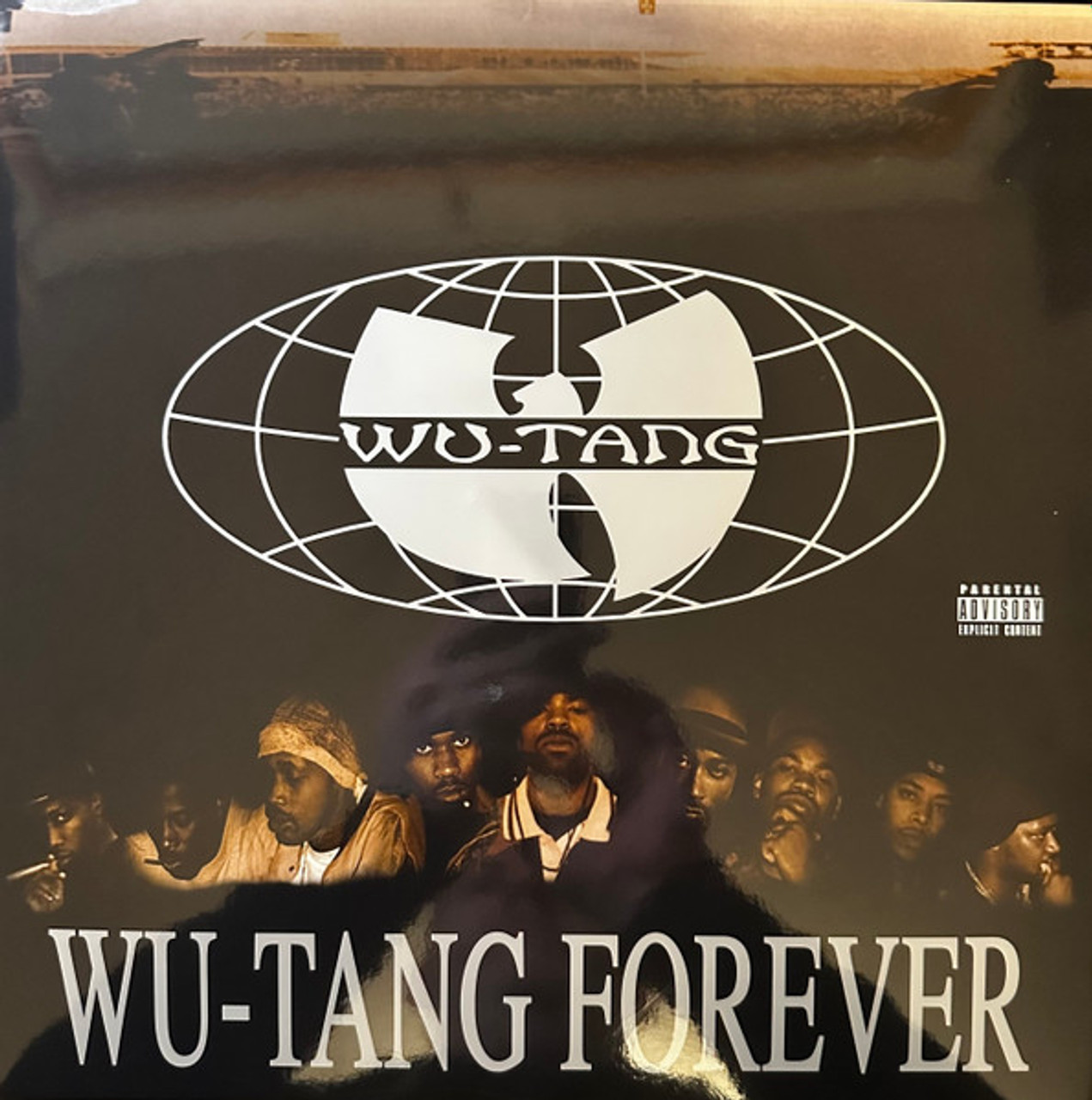
Posted in Uncategorized | Leave a comment

The Cross Movement – Heaven’s Mentality (April 28, 1997)

Lecrae is easily the most successful Christian hip-hop artist of all time. The Houston-born and bred emcee, to date, has eleven albums under his belt, two of which have earned him gold plaques to go along with his handful of gold and platinum singles. In 2013, he became the only hip-hop artist to win a Grammy for Best Gospel Album, and years later, he would add another four Grammys to his collection. You can often catch him breaking bread with Sway on Sway In The Morning or choppin’ it up with Charlamagne Tha God and DJ Envy on The Breakfast Club (he even earned a mention on Kendrick Lamar’s latest record, “Watch The Party Die”). His success and notoriety are pretty impressive, and at this point, I’d say it’s fair to put him in the same category as Kirk Franklin. But if it wasn’t for the subject of today’s post, Lecrae’s career may have never taken off.

You can trace Christian hip-hop’s roots back to the early eighties. MC Sweet released the subgenre’s first single with a record called “Jesus Christ (The Gospel Beat)” in 1982, and in1986, Stephen Wiley released the first full-length Christian hip-hop album, called Bible Break (legend has it that Wiley is also the hand that wrote Kurtis Blow’s 1984 hit single “Basketball,” though his name is not listed in the record’s credits, so believe what you chose to). The late eighties and early nineties saw groups like SFC, T-Bone, Gospel Gangstaz, Dynamic Twins, and Tunnel Rats continue to grow the movement. The movement continued to build momentum into the late nineties, thanks partially to a Philadelphia-based collective known as The Cross Movement. The crew was composed of The Ambassador, Phanatik, Enoch (rip), True Life, Cruz Cordero, and the duo, The Gift (the emcee, The Tonic, and the DJ/producer, Earthquake). They were individual artists but joined forces to create their own label, Cross Movement Records, which would later put Lecrae’s first two albums out. The label’s inaugural release would be the group’s debut album, Heaven’s Mentality.

On the back of the CD booklet, it reads: Heaven’s Mentality advertises and promotes the person and program of the forgotten God (at the bottom of that page, it lists the full Cross Movement roster, which includes someone going by the alias of Prodigy. He must have fallen by the wayside shortly after Heaven’s Mentality was released because I’ve never heard him rap on a Cross Movement record or seen his name on a production credit). The album mainly hones in on The Ambassador, The Gift, and Phanatik, with production coming from The Ambassador, Earthquake, and True Life.

It’s been a minute since I listened to this album. So, without further ado, let’s get into the mentality of heaven, or at least what The Cross Movement perceived its mentality to be.

Blood Spilla’ – The album begins with a little jazzy elevator music and the de facto leader of the team, The Ambassador, eloquently telling the listeners who the Cross Movement is and what their mission is. Then a bass line loop, stuck somewhere between twangy and weary, comes in over a drowsy drum beat, all courtesy of The Ambassador. He uses his production to boast about the sovereignty of the Lord and Savior, Jesus Christ, and challenges those who don’t believe that Jesus is the son of God, aka the Blood Spilla’, to prove him wrong and have their God show his face: “Did is blood leak? Does your God love me? Will he still propose even though I get ugly? Can he turn trouble to ease? Can his love make me weak in the knees like SWV? If he can take the sins of the whole world, swallow ‘em, experience death, then resurrect, then I’ll follow him, but if he can’t, then I’m staying with my champ.” The instrumental is cool, though severely in need of a better mix, but there’s no denying that The Ambassador can really rap.

Test It – The Ambassador is joined by The Tonic and Phanatik as the trio proudly asks all to put their spiritual beliefs on the table for truth testing: “If it’s blessed, then come manifest it, bring it down, let’s test it.” All three emcees articulate themselves well and spit sound bars, but only time (or death?) will prove whose theory is right or wrong. Nevertheless, I enjoyed the jazzy horn loop and the ill organ sample in the instrumental.

Father Forgive Them – The premise of this record comes from the book of Luke Chapter 23:34, where Jesus is being crucified and cries out, “Father forgive them, for they know not what they do,” which is also part of the song’s hook. The Ambassador and Phanatik take turns discussing those who deny Jesus and willingly continue to live in sin despite his sacrificial work on the cross: “But once again the sons of men have formed a pact, another culture without God is on the map, Lord, I apologize for all the guys, who go one way when you clearly say otherwise, Father forgive them for they don’t know your plan, who can stop your motion or even slow your plan?” The duo’s content sounds a little self-righteous, but not enough to make me abandon the song altogether.” The Ambassador soundtracks the saga with somber chords that will move and reinforce the belief of believers and possibly change the hearts of those who don’t.

Who’s Da Man – Even Christian rappers forget to use proper punctuation in their song titles. For his first solo joint of the night, Phanatik uses Earthquake’s triumphant-sounding backdrop to speak on God’s omnipotence and unyielding supremacy. When I first heard this album decades ago, I wasn’t sold on Phanatik, mainly because I felt his voice was too meek and monotone. But the more I listened, the more I looked past his voice and started appreciating how sharp he was lyrically, along with the neatness of his bars and the sage-like quality he delivered them with. With all that said, this is one of my least favorite records on the album. The awkward drums sound weird paired with the string loop, and Phanatik sounds like he’s chasing the beat, always a step behind it.

Catch 22 – The Gift gets their first solo record on Heaven’s Mentality with this one, and boy, it’s a doozy. Earthquake sets the dark tone with a raw backdrop lined with dusty drums, a fuzzy, disgruntled bassline, and a spooky female vocal sample. The first three verses are powerfully gripping, as The Tonic raps from the perspective of a young boy, born a crack baby, who ends up getting molested by his stepfather. Oh, did I mention his stepfather’s a preacher? All of his trauma leads the young man to attempt suicide. Apparently, he survives the attempt, as The Tonic uses the final verse to preach at him instead of offering up practical remedies (like a mixture of prayer and therapy) to deal with his trauma.

Heaven’s Mentality – The Ambassador takes care of the title track by himself. It begins with him sharing a few words about Christ and the Bible. Then energized drums, a sick vibraphone loop, and boisterous string chords drop as The Ambassador discusses adapting God’s point of view on all things. It left me with questions, but it still makes for a solid record. Before the next track begins, a short interlude plays of The Ambassador and The Tonic witnessing on the streets to let the listeners know they’re for real about this Jesus thing. Weird flex, but whatever.

Dust – “All go unto one place; all are of the dust, and all turn to dust again” (Ecclesiastes 3:20). The previous scripture pretty much sums up Phanatik’s content on his second dolo joint. What a humbling perspective to have. And Earthquake’s lo-fi boom-bap has a rawness that captures the essence of Phanatik’s bars.

Shock! – It’s The Gift’s turn again. Earthquake maestro’s the affair with a beautifully cold piano loop placed over staticky drums. The Tonic gets a little fire and brimstoney as he talks about the shock some will experience after they die: “Cause contraire to care, God won’t be mocked, so in your Glock lingo, the hammer is cocked, if the armored Christ vest, breastplate ain’t there to block, prepare for the drama that comes with the…uuh!” Are you prepared?

Lower Case Gods – The Ambassador’s final solo record has a lot of the same energy and content as the title track. The horn loops laced throughout the instrumental are crazy, though.

El Elyon – After a short poetic mini-sermon from The Ambassador, Phanatik uses his last dolo joint of the night to create a grimy hip-hop praise and worship record (El Elyon is a Hebrew term for “God Most High”). This was dope.

Solo Christo – This is The Gift’s third and final solo record of the evening, well, kind of. The Ambassador pops up to get off half a verse, but other than that, it’s The Tonic rhyming about the only hero you need in this life. I bet you can’t figure out who he’s talking about. Earthquake comes through in the clutch again, with a smooth backdrop suitable to throw on when you have a little driving to do. Nice record.

Cypha’ Time – If you’re a Cross Movement fan, then you already know that each of Cross Movement’s five albums has a “Cypha” record, where they invite the extended crew to join in on the lyrical fellowship. This time, Enoch, True Life, and Cruz Cordero join The Ambassador, The Tonic, and Phanatik as they get their “Christian Wu-Tang” on for this holy cipher session. Each man holds their own over Earthquake’s rugged instrumental.

The Love Letter (Bonus Track)Heaven’s Mentality ends with a soothing piano loop over flat drums as The Ambassador, Phanatik, and The Tonic take turns reading a letter they collectively wrote to God to thank him for all his grace, lovingkindness, and tender mercy. This record did nothing for me, but I did enjoy the chilled piano chords.

If you harken back to my write-up of LPG’s The Earth Worm, during my closing thoughts, I mentioned that when it comes to Christian rap, there are two kinds of emcees. There are emcees like LPG, who are rappers who happen to be Christian, and then there are emcees like The Cross Movement: Christian rappers, period.

On Heaven’s Mentality, The Cross Movement has one goal: To uplift the name of Jesus Christ and make believers of all men. You won’t hear them brag about their worldly possessions or boast about their lyrical prowess. There are no raps about baggin’ ladies or claiming to own some imaginary crown. The only bragging or boasting you’ll hear them do is about Jesus and the crown of thorns he wore during his crucifixion. The Ambassador, The Tonic, and Phanatik do a quality job presenting biblical scripture and theology through a hip-hop lens, backed by entertaining instrumentals that give the album a consistently raw feel. Now, allow me to double back to the LPG comparison for a moment.

Emcees who happen to be Christian tend to be more well-rounded artists than Christian emcees. Artists like Tunnel Rats, Sup The Chemist, and Pigeon John proudly professed their faith on wax but were also willing to get vulnerable and discuss their joys, pains, and struggles, which humanized them, making them and their message more relatable to the listener. That’s not The Cross Movement’s forte. On “Catch 22,” The Tonic does venture into vulnerable territory when he paints the picture from the perspective of a tormented young man who attempts suicide. But other than that moment, he, The Ambassador, and Phanatik never leave the pulpit on Heaven’s Mentality. They keep their personal shields up, sounding like theological robots in clergy collars without hearts or empathy for mankind.

It’s hard to believe it’s been almost thirty years since Heaven’s Mentality came out, but it’s aged fairly well. The beats still bang, and the bars, even though they come with a heavy dosage of self-righteousness, have maintained their potency. Heaven’s Mentality is a great listen for those already a part of the body of Christ or people just interested in biblical scripture. Yet, their holy-than-thou persona and arm’s length disposition might not make for the best witnessing tool to the non-believer.

-Deedub

Follow me on Instagram @damontimeisillmatic
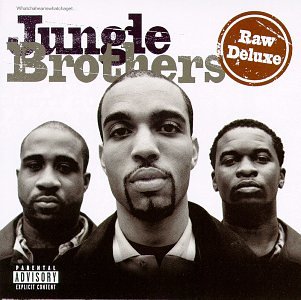
Posted in Uncategorized | 1 Comment

Heavy D – Waterbed Hev (April 22, 1997)

Sometime during the late eighties, hip-hop music started to transform from being a good-spirited, fun, party-fueled genre to more of a thugged-out gangsta art form. With the emergence of artists like Ice-T and groups like N.W.A. finding commercial success and bringing the record labels tons of money, the floodgates were opening for labels to continue to cash in on the new-found subgenre. The next decade would produce a slew of rappers building on the drug-dealing-violent themes started by the O.G.s. Don’t get me wrong, I enjoyed some of it. But much of it consisted of copycats with no artistic value or individuality. Thankfully, there have always been those who go against the status quo. Heavy D was one of them.

Since 1987, Heavy D & The Boyz have been known for their radio-friendly bops and positive image. No talk of guns, murder, and drugs in their music, just light-hearted content with sprinkles of consciousness and a strong focus on lovin’ the ladies. By 1997, Heavy D & The Boyz had five albums under their belts. Together, the four-man team (Heavy D, DJ Eddie F, and dancers Trouble T. Roy and G-Whiz) experienced success and loss. In 1990, Trouble T Roy passed away after falling from a parking ramp (he would be the muse for the group’s 1991 album, Peaceful Journey, and the inspiration behind Pete Rock & C.L. Smooth’s classic record, “They Reminisce Over You”). After T Roy’s passing, the group released three more albums, with Nuttin But Love being the last in 1994. Eddie F would continue to produce and A&R for others, G-Whiz would…continue to dance, and Heavy would continue to make music.

Waterbed Hev is the official solo debut album by Heavy D. With Eddie F out of the picture, Hev would co-produce most of the album under the overseeing of Tony Dofat. Fueled by two singles, Waterbed Hev was not as successful as Nuttin’ But Love, but it would still earn Hev a gold plaque, adding to his understated, impressive commercial resume.

Waterbed Hev is another first listen for me. I’ve always loved the Blue Funk album, Nuttin’ But Love was a pleasant surprise, and hopefully, Waterbed Hev goes well.

Continue to rest easy, Hev.

Big Daddy – Things jump off with a twenty-second conga drum solo that our host declares as “just an interlude.” Then warm and luscious R&B chords consume the atmosphere and set the mood for the overweight lover to overweight love (or lust). Hev spits three verses filled with run-of-the-mill lines of female flattery (apparently, Hev thought the “the genuine and you fine, vision you like dollar signs” line was dope enough to say twice in the same verse, and his “Creepin’ through your room late at night” line sounded more predatory than sexy) and Keanna Henson adds her silky vocals to the hook, enticing Hev to continue with his lover man antics. With all its contrived energy, this is still an enjoyable record and a great choice for the lead single.

Keep It Comin – Over a sample of The Gap Band’s “Yearning For Your Love,” Hev does the same thing that he did on “Big Daddy.” He just switches out Keanna Henson for Nicole Johnson on the hook.

You Can Get It – Mr. Cheeks is an early candidate for cameo whore of ‘97, as he makes yet another one on this track (I wonder if I should include Freaky Tah in the equation since he adds his signature adlibs to all of Cheeks’ cameos. Tandem whores). He joins Hev and Hev’s singing mentees, Soul For Real, for this polished lady lovin’ rap/R&B groove, built around a flip of one of the most amazing basslines, Keni Burke’s “Risin’ To The Top.” I didn’t care much for this one, but the woman Hev describes during his first verse with the “body all lumped up and milkshake thick” sounds like quite the eye candy.

Waterbed Hev – This is a fly love song. The title track samples a sexy Patrice Rushen guitar riff, and the lovely Ms. Vinia Mojica (who I first heard on A Tribe Called Quest’s “Verses From The Abstract” (Tribes Degrees of Separation: check. It’s been a long time since I typed those words)) adds her soothing vocals to the hook. Hev continues with his waterbed stunts, sounding more convincing on this one than on other tracks.

Shake It – The congas we heard during the intro briefly return. Then Tony Dofat and ‘em (’em, being Heavy, Quell, and Med) put together a futuristic-electro instrumental created strictly to get freakazoid robots and human asses on the dance floor. It sounds like something will.i.am would have made ten years later. I wouldn’t have liked this back in ‘97, and I don’t know if I necessarily like it in 2024, but at the very least, it’s intriguing.

I’ll Do Anything – James Brown is undisputedly the most sampled artist in hip-hop, and I’m sure Issac Hayes and Barry White aren’t far behind him, but Hall and Oates might be the most sampled white artists in hip-hop history. Dofat borrows from the duo’s classic “I Can’t Go For That (No Can Do),” while April and Sheree of ASK ME spread their lovely vocals over the pristine track like peanut butter and jelly. Meanwhile, Hev continues to Hev.

Don’t Be Afraid – Dofat builds this instrumental around the infectious and very familiar bassline from Le Pamplemousse’s “Gimmie What You Got,” which is a great choice if you’re looking to make a banger with bounce. For the first time this evening, Hev invites a male vocalist to sing on the hook. Big Bub (now that’s a name I haven’t heard in a while. Much respect to Today) does the honors, while Hev finds the perfect pocket with his flow and attacks the track with swag and personality that outshines the instrumental.

Justa’ Interlude – The conga solo that has already cameoed a few times on Waterbed Hev pops up again. But this time, the production team puts claps underneath it, and Hev uses it to get off a quick sixteen, and for the first time, he doesn’t tailor it to please the ladies.

Can You Handle It – Now, this is a collaboration I never saw coming. Clean image, Heavy D links up with the West Coast gangstas, Daz and Kurupt, aka Tha Dogg Pound. Hev also invites McGruff to the cipher, introducing him to a mainstream audience (McGruff (formerly Herb McGruff) was a part of the Harlem-based group Children Of The Corn, which included Big L, Cam’ron, and Mase). The foursome takes turns rhyming over a reinterpretation of EPMD’s “You’re A Customer” instrumental while Big Bub borrows Tony! Toni! Tone!’s “Anniversary” harmony for the hook. Daz and Kurupt’s influence must have rubbed off on Hev as he talks about “peelin’ caps” at one point during the song, which has to be the most gangsta thing he has said in his entire rap career. Overall, this was a decent record.

Wanna Be A Player – McGruff meanders over from the previous track to jump on this one and joins Hev in spittin’ generic game at the dames. The hook is embarrassingly bad, and the stripped-down backdrop (that desecrates the legendary drums from “Sucker MCs”) sounds incredibly dry and empty.

Get Fresh Hev – Sticking with the stripped-down production sound, Heavy relies solely on a beatbox to impress the ladies on this one. He also spits what may be the corniest sex line in the history of rap: “Here’s what I like, 138, that’s 69 twice in one night, who’s jiggy? Hev Diggy, no question.” Nothing to see here, folks.

Big Daddy (Remix) – Heavy closes Waterbed Hev with a remix of the lead single. Gone are the lush R&B chord progressions from the O.G. mix. Dofat strips the backing music down to a rumbling bassline and borrows the lively drum claps from Soul II Soul’s “Back To Life” (Keanna Henson also borrows some of Caron Wheeler’s lyrics and harmony from the same song for the hook). Our always-confident host corrals the beat and places it in submission while McGruff spits a decent verse that doesn’t add much value to the song. Nevertheless, it’s a fire remix and a great way to end the album.

Long before Biggie would lean into his Big Poppa persona, or Prince Markie Dee would assume the role of Love Daddy, Heavy D had established his place as the Overweight Lover. Except for Drake, no other rapper has been as consistent and successful at making radio-accessible records to appeal to the female fanbase as Heavy D. On Waterbed Hev the O.L. continues to focus on the ladies. However, he fails to make any new waves.

Heavy D has never been a lyrical miracle emcee. Still, the mixture of his baritone voice and undeniable flow, along with his unbreakable confidence and charisma, has not only made women adore his music but has earned him the respect of the hip-hop male population, even when his music doesn’t have them in mind. Those attributes continue to shine through on Waterbed Hev, but Hev’s standard musical formula seems disrupted by the production.

That’s not to say that the production on Waterbed Hev is horrible. On the first half of the album, Tony Dofat and Hev string together squeaky-clean instrumentals lined with alluring harmonies, but all the samples are rehashed material that has been way overused or flipped and put to better use by other artists (with the title track being the exception). The last half of the album finds Hev rhyming over experimental and more stripped-down instrumentals that use uncreative reworks of overly familiar elements that might pass when heard on a dance floor but not so much when you’re listening in the comfort of your home. And as much as I appreciate and respect Hev’s emcee ability, halfway through the album, I was hoping he’d move away from the cliche pick-up lines to something more intriguing. He never does.

Even with its issues, Waterbed Hev isn’t a bad project; it’s just not as entertaining as his previous few albums. But I’m not the target demo that Hev intended to enjoy his waterbed, so who cares what I think?

-Deedub

Follow me on Instagram @damontimeisillmatic

Posted in Uncategorized | Leave a comment