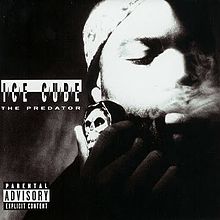
Ice Cube – The Predator (November 17, 1992)

220px-Ice_Cube_-_The_Predator_-_Album_Cover

As I mentioned a few weeks ago in the Guerillas In The Mist post, Ice Cube was the hottest rapper alive in 1992. After helping put Compton on the map as part of N.W.A. with their controversial debut album Straight Outta Compton, releasing two consecutive platinum selling and critically acclaimed solo albums, as well as making his acting debut, starring in John Singleton’s 1991 hood classic Boyz N The Hood, Ice Cube was definitely a force to be reckoned with.

He would return in 1992, with his third solo album The Predator. Cube, along with longtime collaborators DJ Pooh (who I will forever remember as Red, getting knocked the fuck out by Deebo in Friday), Bobcat and Sir Jinx would handle the bulk of the production duties on the album, with DJ Muggs contributing a few tracks as well. The album was released on the heels of the Rodney King verdict and L.A. riots, and both subjects are touched upon quite a bit throughout The Predator.

The Predator would be an even bigger commercial success than Cube’s prior solo albums, as it would become his first double platinum selling record. But here on TimeIsIllmatic we’re more concerned with the critical side of things.

The First Day Of School (Intro)The Predator opens with a sound bite from an unsung hood classic American Me.

When Will They Shoot? – DJ Pooh, Bobcat and Cube hook up a sick instrumental to start things off (I love the clap from Queen’s “We Will Rock You” added in to this one); and Cube picks up where he left off at on Death Certificate, as he comes out brash, fresh and focused, addressing several of the inconsistencies and issues that effect African-Americans in Amerikkka. He also manages to slide in a low-key jab at his former running mates N.W.A. (“cause I bust styles, new styles, standing strong, while others run 100 miles…”). I haven’t heard this song in years and it actually sounds better today than it did in the past.

I’m Scared (Insert) – For some reason Cube labels this as an insert, but it’s really just an interlude with some pretty interesting dialogue created by different sound bites linked together.

Wicked – This was the lead single from The Predator. Torcha Chamba hooks up a high energy backdrop (with some ridiculous drums on it) as our host proclaims how wicked his style is. This is the first song that shows Cube’s gimmicky evolving rhyme style that sounds heavily influenced by Everlast from House Of Pain. Common would later use the video for this song (which features a few members from the Red Hot Chili Peppers) as ammunition on his Cube dis record “The Bitch In Yoo”, where he says “your lease is up at the crib house niggas get evicted, in videos with white boys talking you get wicked”. Despite Cube’s questionable new flow, Torcha Chamba’s backdrop is a banger! Side note: the “Wicked” single’s b side is a song called “U Ain’t Gonna Take My Life”, in which Cube articulately (for the most part) confronts police brutality with maturity beyond his then 23 years. The Mr. Woody produced backdrop isn’t all that great but Cube’s lyrics make it worth checking for.

Now I Gotta Wet’cha – DJ Muggs gets his first production credit of the evening, as he slides Cube one of his vintage dusty drunken backdrops. Cube uses it to declare open season on genocide contributing gangbangers and the 12 jurors that found the four cops that beat Rodney King, not guilty. Overall, this was decent.

The Predator – For the title track DJ Pooh builds this backdrop around a loop from Johnny “Guitar” Watson’s “Superman Lover”. The instrumental is decent but Cube’s rhymes aren’t focused, and at times he sounds pretty sloppy (especially when he gives a shout out to his new homies, Das EFX and attempts to spit in their style).

It Was A Good Day – This was the second and easily the biggest hit of the three singles released from The Predator. DJ Pooh builds the slick instrumental around a sample of the Isley Brothers’ “Footsteps In The Dark”, as Cube reflects on a wonderful day in the hood, filled with mom’s cooking a pork free breakfast, exploiting brothers with Jordan like skills on the basketball court, taking the homies money in craps, bangin’ out a chick he’s been trying to get with since high school, and caps it all of with the Goodyear Blimp declaring him a pimp for all of South Central L.A. to see. Now that’s a good day. While most of Cube’s rhymes are playful on this one, the song does also have a serious undertone: Cube shows thanks for another day in the land of the living, while also staying alert to the very real possibility of becoming a victim of violence by someone who looks like him or the boys in blue. Because as nice as it is to be declared a pimp, it’s equally as nice not to have to use your AK. This song is near genius; and twenty plus years later it still sounds as good as it did the first time I heard.

We Had To Tear This ___ Up – This one opens with sound bites from news coverage of the L.A. riots. Then Muggs adheres to Cube’s opening request to “make it rough” and drops a dope backdrop with a deep bass line, and lays down some rugged drums underneath it. Cube’s discusses the injustice that led up to and ultimately got the community fed up enough to start the riots, and he also throws in an occasional “I told you so” for good measure. This one still sounds dope.

____ ‘Em – I’ll let you fill in the blank for title of this interlude.

Dirty Mack – Cube dedicates this one to all the snitches and haters. Probably my least favorite song on the album.

Don’t Trust ‘Em – Rashad, Ice Cube and DJ Pooh all get co-production credit for the decent instrumental that our host uses to warn brothers that trusting a big butt and a smile can turn into getting jacked.

Gangsta’s Fairytale 2 – The first installment of this song appeared on Amerikka Most Wanted. Over a much slower paced instrumental than the original, Cube picks up where he left off at on the first one, as he puts an urban twist on all your favorite childhood fictional characters (the kid talking at the beginning and end of the song sounds a lot like Riley from The Boondocks, whose voice was done by Regina King). I still chuckle when I hear Cube’s line “what is Mr. Rodgers doing, moved out his Jordan and bought him a Ewing”. Cube’s rhymes are pretty entertaining; and the Cube and Pockets instrumental works well with the song’s concept.

Check Yo Self – This was the third single released from The Predator. The . instrumental on the album version is built around a traditional drunken Muggs loop. Speaking of Muggs, it was kind of interesting to hear Cube take a shot at Muggs’ Irish allies House Of Pain, over his instrumental. The single and remix version borrows the instrumental from Grandmaster Flash and the Furious Fives’ “The Message”. Das EFX stops by to add some  ad libs over the hook. The album version is cool, but I prefer the remix.

Who Got The Camera? – 20 plus years later and this song couldn’t be more relevant. On this one Cube gets the Rodney King treatment, and as he gets his ass kicked he asks the crowd of bystanders the question posed in the song title. Sir Jinx gets his first production credit of the evening and he makes it count, hooking up a dope instrumental that has melodic undertones mixed into its rugged exterior. Cube’s rhymes are decent (wait…did he just say ‘badder”?) but Sir Jinx production is the true star of this one.

Integration (Insert) – Cube puts together more interesting sound bites for yet another thought-provoking interlude.

Say Hi To The Bad Guy – Our host takes more shots at crooked cops on this one, but uses a more playful approach (playful up until he shoots the cop at the end of the song). Sir Jinx gets his second and final production credit of the evening, and it kind of sounds like something Muggs would have created (at least the portion of the instrumental Cube spits his verses over). This wasn’t terrible but definitely one of the weaker songs on the album.

The Predator is actually a pretty solid album. But it also marks the beginning of the end of Ice Cube’s reign as the hottest rapper in the game. Overall, the production is quality, and despite his new-found delivery (or deliveries), Cube still had something to say, even if the messages aren’t as potent as they were on his prior projects. But when compared to the intensity, execution and end product of AMW and Death Certificate, The Predator is a few steps below its predecessors. And as Hollywood continued to pull on Cube’s coat strings, the quality of his music would continue to take steps in the wrong direction.

-Deedub

Posted in Uncategorized | 7 Comments

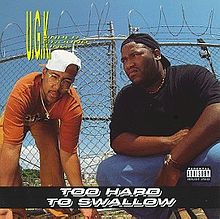
U.G.K. – Too Hard To Swallow (November 10, 1992)

Too_Hard_to_Swallow

When it comes to the Port Arthur, Texas-based duo of UGK (which is an acronym for Underground Kingz, and consisted of Pimp C and Bun B) I’m pretty unfamiliar with their body of work. The first song I ever heard from the duo was “Pocket Full Of Stones” from the Menace II Society soundtrack. I didn’t care much for the song which is why I probably never really checked for them. UGK really didn’t get my attention until I heard them on Jay-Z “Big Pimpin'”, and a decade later when I heard Bun B drop solid verses on Reflection Eternal’s “Strangers” and a Statik Selektah project. So a few years ago when I saw their debut album Too Hard To Swallow in the used bins for a few bucks, it was clearly my queue to start getting familiar with the Texas emcees.
Too Hard To Swallow is UGK’s official debut, released on Jive Records, but 7 of the songs from the album were originally released on the duo’s EP The Southern Way, which was released on the independent label Bigtyme Recordz in April of ’92. Legend has it that there were a handful of songs that Jive deemed too explicit and left off the final cut of Too Hard To Swallow; but Bigtyme Recordz would release the songs a few weeks prior to the album’s release on an EP, appropriately titled Banned.

Too Hard To Swallow wasn’t a huge commercial success but it did do respectable numbers. More importantly, it helped UGK broaden their audience to ears outside of the south. And while the late Houston legend, DJ Screw is widely recognized as the father of the chopped and screwed sound (which involves slowing down the record tempo between 60 and 70 bpms and applying some type of distortion to give it a “chopped” feel), Too Hard To Swallow is one of (if not the) first major label release to put this unique Texas innovation on display for the world to hear.

Pimp C and Bun B would go on to have a pretty successful career as a group and as solo artists. Tragically, on December 4, 2007, Pimp C was found dead in his room at a West Hollywood Hotel. The cause of death is believed to be related to the now popular drink known as “sizzurp” or “lean” (which is basically a high dosage of prescription strength cough syrup that includes codeine and promethazine, usually mixed with a soft drink). May he rest in peace.

Something Good (Extended Version) – UGK kicks things off with a mellow and melodic Bernie Bismark/Shetoro Henderson produced instrumental built around a loop from the Isley Brothers’ “Summer Breeze” (and a loop from Rufus’ “Tell Me Something Good” on the hook), which is pretty dope. From the jump, Pimp C and Bun B each establish their own unique voices. Pimp C makes a memorable first impression when he tells a dude who’s girl he slept with “bet it feels funny when you’re doing 69, knowing that you’re sipping on all my jimmy wine” and “when you get a kiss don’t you feel bad, knowing that you swallowed all the skeeter that I had?”. Hi-larious! By the way, was Bun B’s line instructing an anonymous someone to “take your Raiders’ cap off” a shot at anyone in particular (hit me in the comments if you have the inside scoop)? Like I said in the opening, I’m not familiar with UGK’s catalog, but from the little bit I have heard from them, I’ve always felt that Bun B was the stronger rhymer. That still may be the case, but on this song Pimp C definitely outshines his partner in rhyme.

Use Me Up – Pimp C borrows Bill Wither’s “Use Me”  on this solo joint, as he describes a woman whose body, loving, and cooking (is hot potato pie the same thing as sweet potato pie?) are so wonderful its got him whipped to the point he’s giving her his credit cards, car keys and picking up her little brother from school. Pimp C drops all kinds of entertaining one liners on this one, and when delivered in his thick southern accent, they’re both amusing and enjoyable.

Pocket Full of Stones – This was the song that first introduced me to UGK. The version of the song I heard on the Menace II Society soundtrack uses a different instrumental than the album version, and I wasn’t a fan of the soundtrack mix. But the album version uses the same Eugene McDaniel loop that Pete Rock used for an interlude on Mecca And The Soul Brother; and I love the melancholy feel of it.

Short Texas – Pimp C and Bun B invite their homie, Blue Light to join them on this one, which is pretty much a warning to any out of towners who think they’re going to come to UGK’s neck of the woods to sell dope, to think again. Pimp C’s (who kind of sounds like Spice 1 on this one) hard instrumental fits the song’s content perfectly, and I love the bass line on this one.

Cocaine In The Back Of The Ride – Over a decent Bernie Bismark and Shetoro Henderson instrumental, the duo continue to brag about their successful careers as street pharmacists. I’ll never understand why rappers love to snitch on themselves on record. Regardless, this was a decent listen.

It’s Too Hard To Swallow – For this almost title track (why the hell did they have to throw an “It’s” on there?), Bernie and Shetoro slow things way down, as Bun B and Pimp C use it to talk their “tough guy shit” on. The instrumental is way too mellow and boring to make their “rah-rah” rhymes sound even remotely convincing.

Cramping My Style – Bun B invites guest female emcee Infinity, to help him with this duet. Infinity uses her verses to explain to Bun that she needs to be more than just a booty call if they’re going to have anything; Bun response by letting her know he’s looking for sex without commitment, or as he eloquently puts its: “you just might see me again but not soon, you can keep the wedding I just want the honeymoon”. Bun drops a bunch of clever one liners on this one that will make you chuckle at least a little bit. Bernie and Shetoro loop up arguably hip-hop’s most sampled record (the Isley Brothers’ “Between The Sheets”) for the backdrop. And as many times as I’ve heard the loop used, their interpretation of it sounds fresh. This was dope.

Feel Like I’m The Who’s Doin’ Dope – Pimp C gets another stab at a solo joint on this one. Speaking of stab, Pimp C’s rhymes are pretty gory on this one, as he recalls a brutal dream that has him acting like a murderous dope fiend. I’m not a huge fan of Pimp C’s backdrop, but something about his vividly detailed and morbid rhymes are pretty entertaining. Does that make me a psychopath? If Jive didn’t find the content of this song too explicit I’m afraid to listen to the songs that were left off of the final cut of Too Hard To Swallow.

I’m So Bad – This has to be in the running for the dumbest song of all time. And coincidently, the song’s concept is built around one of the dumbest boast of all time, courtesy of Cool James, who claims (on “Clap Your Hands” from the Walking With a Panther album) that “I’m so bad I can suck my own dick”. Pimp C used that LL line for the hook and builds the instrumental around a loop of the Isley Brothers’ “I Turned You On”, so at least that part of the song was decent.

Trill Ass Nigga – Trill is slang for “real” or “authentic”, and there is no question that UGK was the first to use and make the term popular in hip-hop abroad. On this solo joint, Bun B spends his verses trying to convince the listener of just how trill he is. At this point, Bun B’s flow wasn’t nearly as polished at it would become later in his career. I couldn’t really feel Bun’s rhymes or the boring Bernie and Shetoro instrumental.

976-Bun – Another Bun B solo joint. I’m not feeling this one either.

The following song is listed as a bonus track on the cd version of Too Hard To Swallow:

Something Good (Pimp C’s Remix) – This song is pretty much the same as the original, with a chopped and screwed twist to it and a few changes to the lyrics. The most questionable lyric change is on Pimp C’s second verse, when he talks about bangin’ a chick in his homeboy’s Caddy. On the original he says: “I hit it from the back and the girl just threw me, told me pump it harder and she scratched me on my booty”; but on the remix he says: “I hit it from the back and the girl just threw me, turned me on my stomach and she scratched me on my booty”. What kind of freaky shit was Pimp C into that he would have a woman lay him on his stomach and scratch his ass? I’ll leave that one alone. This mix is not terrible, but I prefer the original.

In case you were unaware, I listen to and collect a lot of music, with a strong concentration on hip-hop. One of the reasons I started this blog was that I felt it would allow me to thoroughly take in and digest some of the pieces that I’ve overlooked or missed through the years, and possibly discover some gems. Now, I can’t quite call UGK’s debut Too Hard To Swallow a gem, but UGK does bring enough to the table for it to be considered a diamond in the rough.

UGK doesn’t cover any new territory on Too Hard To Swallow, as their content doesn’t go beyond money, drugs, murder, and pussy. But the duo manages to make the first two-thirds of the album entertaining with decent to solid production, an occasional clever rhyme, humorous punchlines, and unique slang, all delivered in their thick southern drawl. Too Hard To Swallow would have been stronger as an eight-song EP, since the last four songs should have been scrapped. As is, it makes for a strong first impression, and I’ll be checking for the rest of the UGK catalog.

-Deedub

-Deedub
Follow me on Instagram @damontimeisillmatic

Posted in Uncategorized | 3 Comments

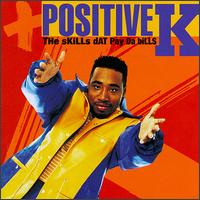
Positive K – The Skills Dat Pay Da Bills (November 3, 1992)

The_Skills_dat_Pay_da_Bills

Every genre of music has had it’s share of one hit wonders. There was Rick Astley’s “Never Gonna Give You Up”, Jane Child’s “I Don’t Wanna Fall In Love” (which I still play from time to time on the IPod), Bill Ray Cyrus’ “Achy Bracky Heart”, and we can’t forget about Ray Parker Jr.’s “Ghostbusters”, or Johnny Kemp’s (rip) “Just Got Paid”. Hip-hop has also had it’s share of one hit wonders: N2Deep’s “Back To The Hotel”, Ahmad’s “Back In The Day”, MC Breed’s (rip) “Ain’t No Future In Your Frontin'”, Skee-Lo’s “I Wish”. But who will ever forget Positive K’s massive hit, “I Got A Man”?

The Bronx born emcee Darryl “Positive K” Gibson first got his foot in the door in the mid eighties, writing and recording songs for an underground compilation project called Fast Money, released on the small short lived label, Star Maker. The project would feature Positive’s first record (“I’m Getting Paid”) as well as a collaborative joint with Rob Base and himself. Eventually, Lumumba Carson  (better know to the hip-hop world as Professor X from the X-Clan, you sisssssssssys! [rip]), son of the activist Sonny Carson, would become Positive’s manager. The relationship with Professor X, would lead to Positive signing with First Priority, the same label that brought us MC Lyte.  Speaking of Lyte, Positive would write more songs and make appearances on some First Priority projects, but the one song that made the biggest impression (and probably the only one anybody really remembers) was the duet with Lyte, “I’m Not Havin’ It” (will discuss that song more in a bit). Positive would continue to pay his dues, which would score him a deal with Island Records, where he would release his debut album The Skills Dat Pay Da Bills.

Thanks to the monster hit single “I Got A Man”, The Skills Dat Pay Da Bills became a gold selling album. But after the buzz from that song died down and a few more singles from the album were released and forgotten about, Positive would never be heard from again. And please don’t mention that album he release 20 years later, because no one was checking for him by then or has heard that album, with the exception of his cousins and grandma.

Back in the day, when “I Got A Man” blew up, I wasn’t really checking for Positive K. The song was okay, but with all the over exposure it got from radio and the video shows, I was tired of it. Plus, something about Positive K’s vibe just seemed cheesy to me; needless to say I never heard or bought TSDPDB when it came out. A few years ago, I ran across a copy of it in the dollar bin at one of my spots, and the historian in me had to cop it.

This is my first time listening to TSDPDB in its entirety. I’m still baffled to why an artist with a gold selling album and one of the biggest hits of the year, never got a chance at a proper follow up.

Intro (Pos K Theme) – Decent jazzy instrumental to open the show.

Pass The Mic – Silver D slides Positive a quality instrumental that he uses to drop mediocre rhymes over. The hook (which takes a vocal sample from Positive’s duet with Grand Puba from “Positive And L.G.” on Brand Nubian’s One For All) starts to grate on the ears by the beginning of the second verse.

One 2 The Head – Jazzy Jay, formerly of Masters Of Ceremony (gets a mention in consecutive posts), and LG get co-production credits for the backdrop, and it’s fairly decent. Positive spits more boasts and playboy rhymes, but his flow sounds sloppy and as if he’s struggling to keep pace with the beat at certain points; which is kind of strange considering the pace isn’t that fast.

Shakin’ – Positive’s flow sounds better on this one then it did on the previous song; but I was more impressed by LG’s smooth instrumental.

How The F*?#! Would You Know – Positive’s energy sounds completely different than what he gave us on the first three songs; he sound a little like Freddie Foxxx (you youngsters may know him by his new alias Bumpy Knuckles) on this one. LG gives him a decent beat and Positive spits arguably his best rhymes of TSDPDB, and gives Premo the perfect sound bite for a classic Jeru Da Damaja record he would produce a few years later (“I can rock a rhyme to just static”).

Carhoppers – This was the fourth and final single from TSDPDB. In a clear attempt to capitalize on the success of the first single “I Got A Man” (which we’ll get to in just a second), Positive completed scrapped the album version of the song for the radio/video mix. The radio version of the song samples The Emotions’ “Best of My Love”, and instead of Positive simply calling out women who get with brothers based on the cars that they drive, he uses the same “man/woman conversation” template from “I Got A Man”. Though it didn’t have the same success as “I Got A Man”, it is more entertaining than this blah LG produced album version. Side note: A fortyish Thelma from Good Times makes a cameo in the video, and the girl was still lookin’ dyno-mite!

Nightshift – Legendary Brooklyn emcee, Big Daddy Kane sits behind the boards and gets the production credit on this one, and it’s actually kind of decent. Positive K plays a pimp that has his hoes, I mean ladies, working the streets for him. While an actual verse from Kane would have been a nice addition to the song, he does drop some clever pimp poetry in between Positive’s verses, which was a nice touch.

Intro (Back The F*?#!? Up) – You might ask why this is labeled as an intro being we’re half way through the album. Well, once upon a time before the digital takeover, most albums were purchased on vinyl or cassette, which contained music on each of the two sides, so you physically had to turn them over to hear the other side of an album. So in essence this “intro” marks the beginning of the second side (or as the back of the album jacket calls it, the “Pay The Bills Side”) of TSDPDB. In reality, it’s just an interlude.

I Got A Man – This was the first single from TSDPDB and the song that will forever define Positive K’s career. LG creates a slightly popish backdrop built around a loop from A Taste Of Honey’s “Rescue Me” for this epic battle of the sexes. Over the course of three verses, Positive tries to spit game to the object of his erection, who has a response for each of Positive’s playboy line (which until recently, I thought was a female rapper, but it is actually Positive playing the role of the resistant female, which he pulls off flawlessly, thanks to a little studio technology). Many have forgot (or simply never knew) that Positive K attempted the same concept with MC Lyte on their 1989 duet “I’m Not Havin’ It”, which wasn’t nearly as successful or executed as well as this. I’ve never been a big fan of this one, but you have to give the brother props for the clever concept.

Ain’t No Crime – Apparently this was the third single from TSDPDB. I don’t recall hearing this song on the radio back in the day, and I actually saw the video for the first time a few days ago on YouTube. Not a great song, but it starts to grow on you after a few listens.

The Shout Out – Over a dope LG instrumental Positive K spits one verse of average battle rhymes before shutting things off and going into his shout outs. With 5 more songs to go, this was kind of a weird spot to stick a shout out record; but whatever.

Friends – Positive sends this one out to all those so called “friends” who use you for their benefit and are nowhere to be found when things get tough. Positive must have really been hurt to spit a line like “who ever made up the word friendship, needs to get beat with a slave whip”. I can feel his sentiment but I couldn’t really feel this song; and the Rich Lord of the Mix Board instrumental probably sounds cheesier than his moniker.

Minnie The Moocher – Laz-E-Laz slides Positive a smooth instrumental that he uses to discuss the exploits of a man eating chick named Minnie. Strangely, Grand Daddy I.U. stops by just to contribute a few ad libs to the song (that don’t really add anything to the song) but doesn’t bless us with a verse, which left me questioning why he even bothered to show up. Regardless, this is easily my favorite song on the album, mainly due to the dope backdrop.

Nightshift (Remix) –  Silver D’s remix has nothing on the original. Not only is the instrumental inferior but Kane’s clever ad libs between Positive’s verses are very much missed.

A Flower Grows In Brooklyn – LG turns a Five Stairsteps’ loop into a dope instrumental that our host uses for the canvas for this ode to his Brooklyn Queen (or Queens). Decent.

It’s All Over – Positive closes out TSDPDB with three solids verses over a slick LG produced backdrop. And we’re done.

After several listens to The Skills Dat Pay Da Bills over the past week, I’ve concluded it’s a decent album. Positive isn’t a great emcee but I’ve heard a lot worst. At times during TSDPDB he shows glimmers of hope of lyrical mastery, but those moments are few and far in between; and he never quite recaptures the charisma displayed on “I Got A Man”, that helped turn it into a hit record. On the bright side, the production is pretty solid on TSDPDB, which makes listening to Positive’s average flow and plethora of mediocre rhymes a little easier.

-Deedub


Posted in Uncategorized | 4 Comments

Grand Puba – Reel To Reel (October 20, 1992)

220px-Reel2reel

In late 1990, Brand Nubian made a great first impression on the hip-hop community with their debut album All For One. Grand Puba Maxwell, Lord Jamar, and Sadat (or sometimes Derek) X’s, combination of solid rhymes, black consciousness, 5 percent teachings, and dope hip-hop beats, had the trio pulling in heaps of critical acclaim. And just when it appeared the threesome were getting ready to take over the game, their chief emcee Grand Puba, decided it was time to leave the group and pursue his solo career.

In hindsight, this shouldn’t have been a surprise to anyone, considering the whole second side of One For All was pretty much a Puba solo album. Regardless, the once front man for Masters Of Ceremony had decided it was time to move on, from his second group in less than two years, and would sign a solo deal with Elektra (the same label Brand Nubian was signed to at the time), releasing his debut album in the fall of 1992, Reel To Reel. Puba, who also had a large part to do with the production on One For All, would produce the majority of Reel To Reel, with a little assistance from a few friends.

Puba would release one more solo album (1995’s 2000) before reuniting with Brand Nubian to release their 1998 album Foundation and 2004’s Fire In The Hole (if you want, you can throw Time Is Runnin’ Out in that group as the 4th album with Puba [and 6th Brand Nubian album overall], though most of the material was recorded prior to Foundation but wasn’t released until 2007). Puba would release another solo album in between Foundation and Fire In The Hole (2001’s Understand This), and Retroactive in 2009; the latter which I bought a year or so ago but still have not listened to. But I digress. For now, we focus on Reel To Reel.

Check Tha Resume – Grand Puba starts off the show with a Funk Inc. drum loop mixed with a soulful Otis Redding sample and some nasty trunk rattling bass. Which all combine to form the perfect canvas for Puba to spill his verbals all over, and put his sick flow on display.

360° (What Goes Around) – This was the first single released from Reel To Reel. Over another simple but solid Puba production, are host spits more of his superior freestyle rhymes.

That’s How We Move It – Puba brings in one of his old Masters Of Ceremony brethren, DJ Shabazz, to produce this one and it’s pretty solid. If you’re looking for songs with a focused topic, you’ve come to the wrong spot. Puba’s lyrics are pretty much interchangeable between songs, but he still makes them entertaining to listen to.

Check It Out – This was the second single from Reel To Reel. Mary J Blige stops by to repay Puba for his contribution on the title track of her classic album What’s The 411? On the original collabo the two had a loose concept: Puba spits a verse (though he steers slightly off course) to get with Mary, who then offers a response (through rhyme), before the two break into singing a portion of Debra Laws’ “Very Special” on the final verse. This time around, Puba spits random lines that never amount too much, while Mary just sings ad libs in between Puba’s rhymes. What’s The 411? also had a dope backdrop; Puba attempts to construct something similar on this one but it comes out sounding a bit empty. This is easily my least favorite song on Reel To Reel.

Big Kids Don’t Play – This Puba produced backdrop is one of my favorites; and Puba’s sick flow is on full display.

Honey Don’t Front – Finally a song that Puba actually has a specific topic for. Puba dedicates this one to his favorite subject: hittin’ the skins. Not a terrible song, but not one of my favorites, either.

Lickshot – Speaking of favorites, this is easily my favorite song on Reel To Reel. Puba and the Stimulated Dummies hook up a sick instrumental built around a loop from Byrdie  Green’s “Return of the Prodigal Son”, and Puba goes hard all over it.

Ya Know How It Goes – I love everything about this bouncy Puba produced instrumental. I know I’m starting to sound like a ball washer, but he makes spitting sound so easy, as he skates all over this track like its second nature.

Reel To Reel – Puba uses the same Lou Donaldson loop Showbiz hooked up for Lord Finesse’s “Stop Sweating The Next Man”; only Puba’s interpretation is nicer and his flow ethers Finesse’s. Yeah, I said it.

Soul Controller – Puba temporarily leaves his playful boasts and skins talk alone to get conscious, as he discusses the “devil”, racism, religion, and hood politics. Back in the day this Latief produced instrumental sounded a lot more effective than it does today; it almost sounds hollow now.

Proper Education – Over a reggae tinged instrumental, Puba chants about the white man’s “tricknology” and how they discreetly uses it on the black man’s subconscious to keep us dumb, deaf, and blind. This is dope, and has aged well. And why does the black jelly bean always taste the worst?

Back It Up – Puba and Kid Capri get the co-production credit on this one, and share microphone duties as well. The instrumental is decent, but Puba is the true star of this one, as he drops arguably his best verse on Reel To Reel. I’m still scratching my head to why Puba didn’t close the song out instead of it ending with Kid Capri’s mediocre verse. But, whatever.

Baby What’s Your Name? – Puba hooks up a lovely instrumental built around a Donny Hathaway loop, as he attempts to sing about a tender young thing he wants to get better acquainted with. Even though Puba can’t sing, he still manages to vibe well with the instrumental, making this enjoyable.

The following two songs are listed as bonus tracks on the cd version of Reel To Reel:

360° (What Goes Around) SD50 Remix – The Stimulated Dummies are responsible for this remix. I’m not really a fan of it. It’s not that it’s terrible, it just doesn’t add anything special to the original.

Who Makes The Loot? – This was originally released on Brand New Heavies’ Heavy Rhyme Experience Vol. 1. Click here to read my thoughts on this song.

In my opinion, Grand Puba Maxwell is one the greatest to ever do it. His lyrical content was never too complex, yet he was able to flip simple words with a complexity that is rarely matched. And when it comes to delivery and flow, even fewer are fuckin’ with Puba’s smooth and polished presentation; on Reel To Reel all of Puba’s attributes are on full display. Similar to his lyrical content, Puba and company keep the instrumentals simple yet quality. If Reel To Reel has any set backs it would be on the conceptual side, since with the exception of three songs, it’s pretty much one long freestyle over different beats. Yet and still, a solid solo debut from an underrated hip-hop legend.

-Deedub

Posted in Uncategorized | 3 Comments

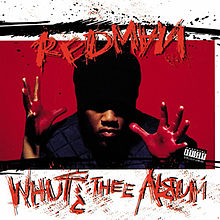
Redman – Whut? Thee Album (September 22, 1992)

220px-Whuttheealbum

We first heard from the Newark, New Jersey native Reginald “Redman” Noble on EPMD’s Business As Usual album, as he would make a solid first impression on “Hardcore” and “Brothers On My Jock”. But both of those cameos would pale in comparison to the show stealing verse he would drop on EPMD’s Hit Squad posse joint “Head Banger” from Business Never Personal. Not long after, Red would release Whut? Thee Album on RAL (Rush Associated Label)/Columbia in the fall of 1992.

Erick Sermon (with a co-production credit going to Redman) would produce the album from beginning to end. And like just about everything else Erick Sermon had a hand it at the time, Whut? Thee Album would go gold, earning Reggie a plaque and heaps of critical acclaim.

But acclaim and gold don’t always translate to quality music. So lets revisit Whut? Thee Album.

Psycho WardWhut? Thee Album opens with Redman in a psych ward as a distorted voiced Dr. Trevis (played by Reggie Noble himself) runs through Redman’s list of criminal acts, before the skit ends with Trevis encouraging Red to “focus his mind” and show him how he would construct an album if the opportunity presented itself. Well, guess what?

Time 4 Sum Akson – The first song of the evening has Redman displaying some of his slightly off kilter flow that would turn him into a rap star (I still chuckle every time I hear his “brother, where your eyes at?” line). I love Erick Sermon’s rough up-tempo backdrop and the dope Cypress Hill sound bite brought in on the hook. Great way to start the show.

Da Funk – I love this backdrop’s laid back adaptation of Parliament’s “P Funk (Wants To Get Funked Up)”. Reggie lays in the cut and hits it perfectly, like a jumper settling into their groove in between the double dutch ropes. And just when Red really starts to find his stride, the song ends abruptly in the middle of his second verse (which interestingly ends with his final line being “I’m well-known like Donald Trump”; who would have thought DT would still be such a relevant figure nearly 25 years later?).

News Break – Short interlude that sets up the next song…

So Ruff – This is probably the closest thing to a conscious song that you’ll ever hear on a Redman album. He uses the first verse to recall a stick up gone bad, the second verse is about a chick he (and E Double) hit raw dog, only to find out later she is HIV positive; and on the 3rd verse Redman reminds men and women about the importance of using protection. And of course Redman puts a lighthearted twist on these serious topics. Too bad the instrumental is garbage, otherwise this may have been a solid song.

Rated “R” – I love this one. Mr. Sermon slides Redman a rough backdrop with a sick saxophone sample and well placed vocal samples from Rakim and Ice Cube on the hook. Reggie picks a part this instrumental as he drops psychopathic rhymes and  destroys all of your favorite horror movie villains in his final verse. If you take it for what it is, which is a playful record, you’ll also still find it very entertaining.

Watch Yo Nuggets – Erick Sermon makes the only guest appearance on Whut? Thee Album, swapping verses with Redman on this duet, and they both sound decent. I can’t quite put a finger on it, but something about E Double’s lazy funk groove is dope as hell to me.

Psycho Dub – Short but pleasantly relaxing interlude.

Jam 4 U – This may be my favorite song on Whut? Thee Album. Redman bugs out (his line “doom doom, dom, dadoom, dong, ding, extremely wild like the hair on Don King” will never grow old) over this ill backdrop built around an infectious bass line and a dope vocal sample from Guy’s “Teddy’s Jam 2”. Nearly 25 years later, this still sounds nasty.

Blow Your Mind – This was the lead single for Whut? Thee Album and I have always hated this song. The instrumental sounds like a bunch of noise, and Redman must have been having a bad day when he recorded it, as his energy doesn’t sound remotely close to the rest of his output on this album. Or maybe he also hated the instrumental but was coerced by E-Double into using it and this was all the energy he could muster up for it. Regardless of how many times I follow Reggie’s instruction to “press rewind if I haven’t blown your mind”, my brain continues to remain in tact.

Hardcore – Redman takes his verse from the EPMD song (which I mentioned in the intro) that introduced him to the world a few years prior.

Funky Uncles – Interlude to set up the next song…

Redman Meets Reggie Noble – For the first time this evening, Redman gets a solo production credit, and it’s actually pretty decent (coincidentally, he uses a loop from the same Emotions’ record his Hit Squad brethren Das EFX would use on “Klap Ya Handz” [but was first effectively used on BDK’s classic “Ain’t No Half-Steppin'”]). Reggie Nobles exchanges lines with his rap alter ego Redman, and it’s pretty entertaining.

Tonight’s Da Night – Okay. So if “Jam 4 U” isn’t my favorite song on Whut? Thee Album, this one is. The smooth backdrop is built around a loop of The Mary Jane Girls’ “All Night Long”. Redman’s rugged rhymes clash with it, yet manage to mesh with it flawlessly at the same time. This one is still dope.

Blow Your Mind (Remix) – Although I love the loop from Zapp’s “Dance Floor” that comes in on the hook, the remix is still not good.

I’m A Bad –  I never really cared for this one and still don’t.

Sessed One Night – Interlude to set up the next song…

How To Roll A Blunt – Pete Rock stops by to drop off a quality instrumental that Red uses to breakdown the art of rolling a blunt. An animated Redman leaves the listener with a pretty entertaining presentation.

Sooper Luver Interview – Interlude to set up the next song…

A Day Of Sooperman Lover – This is the first installment of what would be a part of each of Redman’s solo albums until 2010’s Reggie. Over a dope Johnny “Guitar” Watson loop (and later in the song, a loop of James Brown’s “The Payback”), Red displays his heroism by saving a cat from a tree and returning it to its beautiful female owner, who in turn wants to repay Redman Sooperman Lover with a little something for his good deed. Maybe “little” isn’t the right adjective to describe the “something” she wants to give our host. I won’t spoil the end of the song for those who haven’t heard this, but this was a fairly entertaining listen.

Encore – Just in case you weren’t already bored to death with the shitty “Blow Your Mind” suite, Reggie brings the instrumental back one more time to finish the job.

There are a few bumps along the road (i.e. “Blow Your Mind”), but overall Whut? Thee Album is a solid debut from Redman. Erick Sermon provides a cohesive batch of hard and funky backdrops for Reggie to get loose over, and he handles them well. Redman isn’t the greatest lyricist but his rugged flow, mixed with his knack for clever punch lines and his colorful personality (they don’t call him Redman for nothing) make for a pretty entertaining listen.

-Deedub

Posted in Uncategorized | 3 Comments

Common – Can I Borrow A Dollar ? (October 6, 1992)

220px-Common_-_Can_I_Borrow_a_Dollar

While Lonnie “Common” Lynn wasn’t the first rapper out of Chicago to make noise on a national level (Twista, then known as Tung Twista, would do it a year or so prior), he is definitely one of the early pioneers of Midwest hip-hop and a vital piece in putting Chicago on the map.

Common (then going under the alias of Common Sense) got his first break when his demo was featured in the October ’91 issue of The Source’s “Unsigned Hype” column. This once coveted cosign would help land Common a deal with Relativity, where he would release his debut album Can I Borrow A Dollar? (the original pressing of the album has his full stage name, “Common Sense,” which he would later be forced to change to simply, Common, as a rock group already had the name Common Sense trademarked; I personally think Common sounds better anyway).

Common would stay true to his Chicago brethren that helped get him his deal, by letting The Twilite Tone and Kanye West’s mentor, No I.D. (who when CIBAD was released was still going by the alias of Immenslope, until The Twilite Tone convinced him to change it to his government name [Dion] spelled backwards, which flows off the tongue a lot smoother ), produce the entirety (except one song that will discuss a little later) of CIBAD.

CIBAD is the cornerstone of what would become a very successful music career for Common, despite not having a huge hit record in his catalog. Not only is he still releasing music, but the dude has gone on to lecture at colleges, write books, date some of the baddest chicks on the planet, star in movies, and even has an Oscar under his belt. All that and he’s still regarded as one of the greatest lyricists of all time.

I’m willing to bet that he’s made enough money to never have to ask to borrow a dollar again.

A Penny For My ThoughtsCIBAD opens with a jazzy No I.D.-produced instrumental built around a loop of Eddie Kendricks’ “Intimate Connection,” while Common wields his unpolished lyrical sword and underdeveloped flow all over it (coincidentally, Common refers to the voice of the subject of my last post, MC Eiht, in one of his lines). Common’s flow (which was full of the stuttering style made popular by Das EFX) sounds dated, but No I.D.’s sick instrumental is timeless.

Charms Alarm – This is one of my favorite songs on CIBAD. No I.D. hooks up a smooth backdrop for Common, which he uses to call out those who make “intentionally pop” hip-hop, specifically taking shots at Kriss Kross and Rico Suave. Common’s flow on this one sounds a lot stronger than the previous song, and I still love this backdrop.

Take It EZ – This was the lead single from CIBAD. The Twilite Tone and No I.D. hook up a sick Rasa loop (with some smooth live saxophone provided by Tony Orbach) for Common to drop more of his animated flow and punchlines over. Boy, am I glad Common dropped the whole screechy thing (i.e., his very first word in the song). That shit gets annoying quick. Still love this instrumental, though.

Heidi Hoe – The Beatnuts get their only production credit of the evening, and it’s one of the more unimpressive moments in their legendary production catalog. Common uses this hot garbage to disrespect a garden tool of a woman for her promiscuous ways, which, in retrospect, is a clear display of the maturation of Lonnie Lynn, as he would never make a song like this during the prime years of his career. This was not good.

Breaker 1/9 – Another group that could have made a fortune off of hip-hoppers for sampling their music over the years is the Isley Brothers. As a matter of fact, they could have made a fortune off the “Between The Sheets” sample alone. No I.D. would be one of the first hip-hop producers to loop it up for this ode to cock blockers, which come in all shapes, colors, genders, and objects. The remix version (used in the video) of this song uses the same “Between The Sheets” loop with a slightly different flip, and Common changes his rhymes a bit as well. I’m more a fan of the album mix.

Two Scoops Of Raisins – No I.D. steps from behind the boards (but only after he produces this track) and joins Common on the mic. The two exchange underwhelming rhymes over a forgettable instrumental (that briefly uses the same Billy Cobham sample used for CMW’s “Duck Sick” suite and gives me an excuse to mention CMW for the second time in this post). I’m not a fan of this song.

No Defense – This brief interlude marks the beginning of the second half of the album. I still remember having to flip the cassette to side B before the ingenious invention of auto-reverse.

Blows To The Temple – Common comes out in battle mode over a dope up-tempo Twilite Tone produced backdrop. That’s all I got.

Just In The Nick Of Rhyme – The Twilite Tone loops up Bobbi Humphrey’s “Harlem River Drive” for this wonderfully produced instrumental that Common uses to spit more freestyle rhymes over. This song exposes the holes in Common’s flow and his early tendency to overstuff his bars with words, resulting in poor enunciation from the Windy City native.

Tricks Up My Sleeve – Over a solid and slightly devious No I.D. instrumental, our host discusses the art of macking honies. He leaves the last verse for guest female rapper, Rayshel (whose rhymes were clearly penned by Common, as she even adapts his annoying screech during her verse) to offer a rebuttal to all of Common’s game.

Puppy Chow – The Twilite Tone borrows the second Isley Brothers’ loop of the night for the backdrop on this one. Common once again shows his age and immaturity as he rejects the whole notion of being a gentleman and objectifies women in his verses. He and his crew chant “just dog the bitch” while female vocalist Tarsha Jones sings ever so beautifully, “I never been dogged like this before” over the fellas’ chant on the hook. This would have been the perfect song for cameo appearances from Willie D and Too Short, both experts on misogyny.

Soul By The Pound – This is arguably the most well-aged song on CIBAD. After boasting about how dope he is on mic (“I’m as bad (bad), as Leroy Brown (Brown), I’m pro (pro) without a noun (noun)”), Common calls out the Caucasian culture vultures that he believes are trying to steal soul music, specifically naming Marky Mark (who I just saw along with Common in the terrible Entourage movie) and his Funky Bunch of “Uncle Thomas’s” and Anthrax (who joined PE on the rock remix of “Bring The Noise”). No I.D. hooks up a simple but sick backdrop, and I absolutely love the bridge that incorporates a piece of DeBarge’s “I Like It” during Common’s first verse. Like “Breaker 1/9,” this song would also be remixed and used for the single and video, which ironically strips all the soul out of the song.

Pitchin’ Pennies – The Twilite Tone’s instrumental teeters back and forth between sounding breezy and animated, as Common spits a quick verse before closing the song with a long piss and a Sinbad soundbite. And with that, we’re done.

It’s always interesting to look back at the maturation process of an artist. Common is one of the emcees that I have followed since the beginning of his career, and boy, has he evolved. On his debut, Can I Borrow A Dollar?, Common shows flashes of the great lyricist he would soon become, but overall sounds like a young man looking to find his footing, voice, and style, made apparent by his gimmicky stutter flow, an annoyingly animated screech, and juvenile content. Thankfully, while Common was still soul-searching, Twilite Tone and No I.D. were very much in tune with their own and pouring it into the album’s production.

CIBAD is far from a classic album. Most of the production has aged well and still sounds great, while Common’s underwhelming (sometimes embarrassing) performance has aged like milk. Thank God for second chances.

-Deedub

Posted in Uncategorized | 1 Comment

Comptons Most Wanted – Music To Driveby (September 29, 1992)

Music_to_Driveby

We last heard from CMW on their 1991 severely overlooked sophomore effort, Straight Checkn ‘Em. They would return in ’92, with their third release, Music to Driveby.

Like the saying goes, if it aint broke don’t fix it; Eiht, DJ’s Slip, Mike T, and Unknown do just that on Music to Driveby, as they pick up where they left off at on Straight Checkn ‘Em, with Eiht providing gangsta raps and tales from the hood over soulful production provided by the latter three. In between Straight Checkn ‘Em and Music to Driveby, Eiht would gain a few new enemies (or as the kids call them, haters), as shots were fired at him by DJ Quik and Tim Dog. Eiht would spend a large portion of Music to Driveby, clapping back.

Music to Driveby would be the last album from CMW (until they reunited in 2000 and no one was checking for them), as Eiht would go solo and experience moderate success for the latter part of the nineties. On a side note: the album cover for Music to Driveby has Eiht and a homie rolling in a blue ’64 Impala, with the same picture on what appears to be a cd copy of Music to Driveby sitting next to a gun in the back seat, which cleverly plays off the double entendre the title presents. This definitely goes in the running for best album cover.

Intro – MC Eiht wets hit production chops and opens Music to Driveby with a beautifully somber piano loop (complete with the warm crackling vinyl sound) that ends to quick in my opinion. Perfect way to introduce the listener to the album.

Hit The Floor – Over a funky DJ Slip produced instrumental, Eiht spits two quick verses and fires shots at all would be competitors, including a quick jab (no pun intended) at his Compton neighbor, DJ Quik.

Hood Took Me Under – This was the lead single and could be heard playing in everybody’s boom box, Walkman, and booming system during the summer of ’92. DJ Mike T hooks up a semi-somber instrumental built around a loop from Isaac Hayes’ “Walk On By”, as Eiht pretty much covers the same ground that he did on “Growin’ Up In The Hood”. Despite the regurgitated content, this was still nice.

Jack Mode – Eiht dedicates this one to the art of jacking. He shares 3 different episodes detailing exactly how he does his dirt. DJ Slip hooks up a simple but effective instrumental laid underneath Eiht’s criminal verses.

Compton 4 Life – Someone going by the name of Master Ric Roc hooks up a hard and sinister instrumental, as Eiht paints a grim picture of what goes on in the streets of Compton. The texture of Eiht’s voice combined with his dark rhymes fit perfectly with the backdrop.

8 Iz Enough – Over a smooth and equally funky DJ Slip instrumental, Eiht reps the CPT, makes threats on your life and boasts about his lyrical prowess. Dope.

Duck Sick II – I love part 1 of this song, but part 2 is even better. DJ Slip uses the same Billy Cobham “Red Baron” loop used on the original but gives it a more relaxed feel, as Eiht calls out his adversaries. While it’s not clear who Eiht is referring to on the first two verses, he makes it crystal clear the third verse is aimed at Quik (“just squeezed in like a bitch, I guess that’s why he raps with a high pitch”). I love absolutely everything about this song.

Dead Men Tell No Lies – MC Eiht and DJ Slip both get production credits on this one, hooking up a nasty guitar loop that Eiht uses to spew more battle rhymes aimed at his rivals. Eiht’s rhymes were cool but the instrumental is the true star of this one.

N 2 Deep – Scarface makes the only guest appearance on Music to Driveby, as he and Eiht exchange verses full of gangster rhetoric. It was kind of amusing to hear Eiht refer to Scarface’s stomping ground of Houston as the midwest just to make it rhyme with “best”. DJ Slip hooks up a funky instrumental built around a Lyn Collins’ loop that is guaranteed to get your head nodding, even if you can’t relate to the duo’s hood tales.

Who’s Xxxxing Who? – Thank you CMW for putting a question mark at the end of the question posed in the song title. Eiht took some subtle shots at Tim Dog prior to this song, but he’s extremely clear at who this dis song is dedicated to. Unfortunately, DJ Slip’s instrumental is kind of underwhelming, and Eiht doesn’t land any substantial blows either. Matter of fact, DJ Mike T’s cuts are stronger shots at Tim Dog than Eiht’s rhymes are.

This Is A Gang – Not terrible, but definitely one of my least favorite songs on Music to Driveby.

Hoodrat – Long time CMW affiliate Unknown, gets his first production credit of the evening for Eiht’s ode to scandalous women who’ll do anything for a buck, lurking in a hood near you. Not terrible, but Unknown’s instrumental has a cleaner sound, which sounds more like what you would hear a few years later on Eiht’s official solo debut We Come Strapped.

Niggaz Strugglin – Eiht discusses the every day struggle of trying to make it in the hood, which is apparently a running theme throughout Music to Driveby. Master Ric Roc builds this backdrop around the same Isaac Hayes sample that Irv Gotti would use to perfection on Jay-Z’ “Can I Live”; and while it doesn’t measure up to the Jay-Z classic, it’s still solid.

I Gots Ta Get Over – Master Ric Roc gets his final production credit of the evening and hooks up a solid instrumental built around a hip-hop producer’s favorite Barry White loop (that the Beatminerz would use to perfection a few years later on Black Moon’s “I Got Cha Opin” remix). Eiht rhymes about doing what he has to do to make it by any means necessary, and the consequences that come with some of those actions.

U’s A Bitch – Now here is a song I completely forgot about. Unknown hooks up a beautiful instrumental built around Ronny Jordan’s “After Hours (The Antidote)”, as Eiht calls out the ladies trying to run game on the brothers. This was a pleasant recall.

Another Victim – Unknown completely switches gears as he bumps up the bmps compared to the previous song and pitches Eiht a nasty backdrop built around yet another Isaac Hayes loop (who was sampled so much on Music to Driveby he should have been credited as a producer) to go after his adversaries (specifically Tim Dog) again.  Without landing any significant blows, Eiht still sounds decent; but Unknown’s instrumental is the true star of this one.

Def Wish II – Unknown hooks up a dark and slightly creepy backdrop for Eiht to spit more threats and take his parting shots at his “punk ass perm wearing pussy” Compton brethren, DJ. Quik.

Music To Driveby – Unknown hooks up yet another beauty of a backdrop for Eiht to give his shoutouts over. I found it pretty interesting that he gives a shoutout to AMG, considering he was beefing with his partner, DJ Quik at the time. But he can shoutout whomever he wants to, as long as this soothing instrumental plays on.

Lets be honest. MC Eiht isn’t the most prolific lyricist, and one would be hard pressed to find him on anyone’s top 10 list. That said, his laid back smoothness and undeniable swag (even before the term “swag” existed), often manifested in his signature ad lib “cheah”, are the qualities that made him beloved during the nineties and still move the younger cats, like Kendrick Lamar, to pay homage to him today. But all the smoothness and swagger in the world would mean nothing without quality production behind it. On Music to Driveby DJ’s Slip, Mike T, and Unknown (and Master Ric Roc) provide a nearly flawless array of backdrops for Eiht, whom when he’s not talking about hood politics, is going for the neck of his enemies (i.e. DJ Quik and Tim Dog). At 18 tracks in length, Music to Driveby defies the laws of long hip-hop albums by not having a single skippable moment. Music to Driveby is by far CMW’s (and Eiht’s) magnum opus, and yet another forgotten classic that 1992 produced.

-Deedub

Posted in Uncategorized | 2 Comments

Diamond And The Psychotic Neurotics – Stunts, Blunts, & Hip Hop (September 22, 1992)

Stuntsbluntsandhiphop

Through the years, hip-hop has seen many heralded collectives come through and leave their imprint on the game. There was the Juice Crew with all of their talented lyricists. The Native Tongue made their impact with their hippy sensibilities and innovated the genre with their jazz infused brand of hip-hop. The Hit Squad, Wu-Tang Clan, Dogg Pound and Hieroglyphics would all give us some of the most colorful personalities and influential records in hip-hop history. All of these collectives were legendary and worthy of the props they garnered, but there is one collective that often gets overlooked but deserves to be mentioned in the same breath as the previous crews. Diggin’ In The Crates.

DITC was a collective of producers and emcees (Diamond D, Showbiz and AG, Lord Finesse, Fat Joe, Big L , Buckwild and O.C.) who collectively are responsible for a number of hip-hop classics over the years. But today we focus on the co-founder of DITC, Diamond D. Bronx native Joseph “Diamond D” Kirkland first came on the scene as a deejay for Zulu Nation member Jazzy Jay. In the late eighties he became the deejay/producer and one half of the duo Ultimate Force, who were signed to the Strong City label. The duo actually recorded a full album (I’m Not Playin’) that never saw daylight, thanks to industry politics that kept is shelved for nearly 20 years (it would finally be released in 2007 after the Strong City catalog was purchased by Traffic Entertainment Group). Shortly after his stent with Ultimate Force, Diamond and Showbiz (of Showbiz and AG) begin DITC, and Diamond would make his first real dent in the game producing several tracks on Lord Finesse’s debut album Funky Technician. From there, Diamond would continue to build his production resume, until a deal with Mercury pretty much fell in his lap while playing beats at a studio session. Diamond would release his debut album Stunts, Blunts, & Hip Hop in the fall of 1992.

Stunts would not only feature production from Diamond D, but he would also hold down the bulk of the microphone duties. By the way, don’t let the group name fool ya. The Psychotic Neurotics are just a bunch of Diamond’s boys who stop by to contribute silly interludes throughout Stunts. Without further adieu, lets jump into it.

Intro – The album opens with a dope and semi-creepy instrumental, as a distorted voice introduces the listener to Stunts.

Best Kept Secret – This was the first single released from Stunts. Over his own decent mid-tempo backdrop, Diamond brags and boasts about the duo threat he poses with his ability to rhyme and produce (and he makes it clear that he writes his own rhymes in the first verse). When this originally came out it didn’t grab me right away, but the more I listened to it, it grew on me (thanks largely to the nice flute loop and the Big Daddy Kane vocal sample on the hook), and I grew to dig it.

Sally Got A One Track Mind – On this second single from Stunts, Diamond recalls the life and times of a promiscuous dip named Sally, and all she was willing to do for the lust of money. Diamond hooks up a backdrop that is equally somber and beautiful (the bass line is sick!), as he tactfully approaches the subject with a seriousness that most rappers would cover with masochistic satire (although he does make a comical reference to her later on “What You Seek”). This sounds just as good today as it did twenty plus years ago.

Step To Me – Showbiz gets his first production credit of the night for this mediocre instrumental. Diamond does a decent job with it, but it’s far from one of the strongest songs on Stunts.

Shut The “*!*!* Up – A short interlude featuring Diamond’s Psychotic Neurotic homies (who go by the Psychos for short) singing exactly what the song title suggest. This quickly bleeds into the next song…

“*!*!* What U Heard – This was the third and final single released from Stunts. Diamond (with a co-production credit going to Showbiz) hooks up a dope backdrop with a well placed Sadat X vocal sample (taken from his verse on ATCQ’s “Show Business,” that he appeared on along with Diamond D) on the hook, and a bouncy bass line that’s guaranteed to keep your head bobbing like a hooker in the backseat of a Cadillac. While the instrumental is the true star of this record, Diamond does a pretty solid job on the mic as well.

I’m Outta Here – Diamond D (with a co-production  credit going to Showbiz) hooks up yet another nasty backdrop, as he dedicates this one to “all the brothers who got six or seven different addresses.” On each of his three verses, Diamond shares the story line (with great attention to detail) that has three different “John Doe’s” on the run for different reasons. This was dope, and very well executed by the producer turned rapper.

A Day In The Life – Diamond may have sampled Sadat X’s vocal for “*!*!* What U Heard,” but he actually gets him to spit a verse on this one, along with his Brand Nubian partner, Lord Jamar. Each of the parties involved drop decent verses about what the title suggest, but the laid back understated instrumental is the true star of this one.

Last Car On The 2 Train – The Psychos return for this interlude, as they partake in a ranking session. None of their jokes made me laugh, but maybe you’re easier amused than I am.

Red Light, Green Light – The hook and the first verse would lead one to believe this song is about a chick leading our host on. But from the second verse on, Diamond takes a slight detour and the song just winds up being rhymes about random dating encounters. Not my favorite song on Stunts, but the instrumental is decent, and overall the song is as well.

I Went For Mine – This might be my favorite song on Stunts. The legendary Zulu Nation OG, Jazzy Jay, hooks up a buttery instrumental (with a co-production credit going to our host) that Diamond D tip toes over with nimble precision. This is still dope!

Comment From Big “L” And Showbiz – Interlude that plays exactly how it reads. Rip Big L.

Check One, Two – This slow placed instrumental reminds me of a cowboy duel in an old Western movie. That’s not a diss either, because the backdrop is nasty! Diamond follows suit, as he stays composed and drops some of his best rhymes of the entire album (“now everyone can get a sample, of the skills that won’t trample, when I build an example of the will that’s stronger than Samson, see I’m the champ son, when I relax, I’m off to the Hamptons”). This was sick.

What You Seek – Another dope instrumental and solid rhymes, courtesy of our host.

Lunchroom Chatter – The Psychos pick up where they left off at on “Last Car On The 2 Train,” as they continue their ranking session at the lunchroom table on this interlude.

Confused – Diamond D builds this funky instrumental around a loop from Kleeer’s “Intimate Connection,” as he paints a detailed story about bumping into an ex who dissed him for another man, but now wants to rekindle what they once had. Some may consider this a sellout track for Diamond; and while crossing over may have been his intent (even the liner notes state it was intended to get people on the dance floor), I like this record. You at least have to give him props for shouting out Gang Starr during it.

Pass Dat S**t – Over easily the weakest instrumental on the album, Diamond invites a few of his homies (Whiz One, Maestro, Mike G.Q., and Fat Joe) to join him on this cypher joint, and it’s a hot mess. Next…

Freestyle (Yo, That’s That Sh…) – When the conversation of nicest producers on the mic comes up, you’d be remiss not to mention Large Professor’s name. He drops by to lend a helping hand on the production end and lets our host hold down the microphone duties as he spits more random rhymes about any and everything. This was solid.

K.I.S.S. (Keep It Simple Stupid) – Speaking of producers who can rap, Q-Tip (who some might consider a rapper first, producer, secondary) gets a co-production credit on this one. The instrumental is built around the same Clarence Wheeler loop that Premo would later make popular on the Gang Starr/Nice & Smooth classic collabo “DWYCK”. As much as I love and respect Q-Tip and Diamond’s production skills, their interpretation of this loop aint fuckin’ with Premo’s. Yet in still, it’s a solid backdrop, and Diamond does it justice.

Stunts, Blunts, & Hip Hop – Our host hooks up a beautiful bouncy backdrop (tongue twister much) and dedicates a verse to each of the subjects in the song title. With the exception of his substituting “spent” with the ebonic term “spunt” in order to make his lines rhyme, Diamond executes the plan brilliantly.

Wuffman Stressed Out – This interlude must have been an inside joke. I hate when rappers do that shit! At least the slick guitar loop used on the backdrop was enjoyable.

Feel The Vibe – Showbiz joins Diamond D on this one (and also gets a co-production credit for the instrumental) as each of them address artists who choose to sellout their music in an attempt for quick financial gratification. The simple drum beat isn’t spectacular, but the sexy saxophone loop brought in on the hook is infectious.

A View From The UndergroundStunts ends with a short mad-rapper-type-rant from Fat Joe, complaining about “bullshit rappers getting dope deals.” Ironically, in less than a decade he would become the thing he once despised. Time is illmatic.

Anyone who reads this blog on a regular basis knows how I feel about extremely long albums. But if you don’t, here’s a quick recap: long albums tend to have a handful of filler records that should have been left on the cutting room floor, but instead the artist decides to include these tracks on the album, which tends to bog it down, and ultimately, tarnishes the final product. At twenty-three tracks, Stunts could have easily fallen into this all too common snare, but miraculously it avoids it. I guess it’s not fair to say miraculously, considering seven of the twenty-three tracks are interludes, but if hip-hop were a professional sport, Diamond would have been a strong contender for rookie of the year for his masterful production work (with an occasional assist from a few other hip-hip greats) on his severely underrated solo debut album.

While there’s no question that Diamond D is a better producer than emcee, he still does a solid job behind the mic (with only a few guest appearances), and sums it up best on “Check One, Two” with “the style is dope even though it’s simplistic.” With the exception of the drowsy cypher joint, “Pass Dat Shit,” Stunts is a quality listen from beginning to end, and an often overlooked (or maybe just forgotten?) classic.

-Deedub


Posted in Uncategorized | 4 Comments

Da Lench Mob – Guerillas In Tha Mist (September 22, 1992)

220px-Guerillaslenchmob

By 1992, Ice Cube was arguably the hottest rapper in the game. After leaving N.W.A. he released back to back critically acclaimed and platinum selling solo albums, and begin to get his feet wet in Hollywood, with his debut starring role as the L.A. gangster, Doughboy, in John Singleton’s 1991 hood classic Boyz N The Hood.  1992 would also be a good year for Cube on the music end. Near the end of the year he would release his third and most commercially successful album The Predator (more on that later), and we would see the debut album Guerillas In Tha Mist, from Da Lench Mob, released on his Street Knowledge Records distributed by East West Records.
Though Cube’s full Lench Mob crew runs a lot deeper than 3, the rap group would consist of J-Dee, T-Bone, and Shorty. Cube might as well have been the 4th member of the group as he makes several appearance throughout GITM (and penned most of the album), as well as produced the entire project, with co-production credits going to T-Bone, Rashad, Mr. Woody and Chilly Chill. And like everything else Cube touched in the nineties, GITMwould turn to gold, earning Da Lench Mob a gold plague.

In 1993, J-Dee would be sentenced to 29 years to life for the murder of his girlfriend’s male roommate. Da Lench Mob would replace him with a rapper named Maulkie, and released a second album Planet Of Da Apes in ’94, but not even Cube’s presence could help that album go wood. Needless to say, that would be then end of Cube’s short-lived vanity group, but his individual star power was just beginning.

Capital Punishment In America – The album opens with a simple drum pattern laid underneath a string of sound bites that sound like they were taken from a documentary about the history of capital punishment in America and the different execution methods used over the years. I guess the purpose of this intro was to, in around about way, explain the group’s name and introduce them to the world.

Buck Tha Devil –  Ice Cube joins his Lench Mob brethren on the first song of the evening (rightfully so, since he wrote the song as well), as they express their disdain for the white man and their desire to rid him from the face of earth for all his dastardly deeds. As menacing at they may sound, the fact that Ice Cube now makes family movies, makes their violent rhetoric sound unbelievable. The instrumental is nice, though. The siren like loop gives the song an uncomfortable feel, while the heavy tribal drums laid underneath it give the track a strong foundation.

Lost In Tha System – J-Dee gets his first solo record of the evening. Over a simple guitar loop, J-Dee recalls a Friday that starts out fine, until he takes a trip to the liquor store, decides to drink and drive, which leads to him running a red light and getting pulled over by a cop, who places him under arrest after discovering he has two warrants. From there, things get progressively worse for J-Dee, as he gets into a fight with a fellow inmate and insults a judge; both offenses that get him more time behind bars. By the end of the song J-Dee gets out of jail but states even though he’s back on the street, he’s still lost in the system. In hindsight, considering his fate, it’s almost like that last line was a cry out for help, which is pretty sad. All in all, this was a solid listen.

You And Your Heroes – Cube rejoins his boys as they take shots at quite a few different white celebrities (everyone from Marilyn Monroe to Larry Bird are targets) and fire a few more at some brothers often deemed as sellouts (i.e. Brian Gumble and Arsenio Hall). Ironically, one of the samples used in Cube’s decent instrumental is taken from The Average White Band (contradiction much). Some of their rhymes will make you chuckle a little bit, but overall this song was only average.

All On My Nut Sac – Now here’s one I completely forgot about. Ice Cube and company hook up some ol’ lovely shit with this beautiful instrumental built around a loop from Funk Inc.’s “Goodbye So Long”. Cube plays a drug dealer around the way that J-Dee has grown tired of seeing destroy his community, and seeks to rid him from his block, even if that means putting a bullet in his dome. Over the course of three verses, Cube and J-Dee go back and forth defending both of their stances. The song title really has nothing to do with the song’s content, but it makes for a catchy hook that’s guaranteed to have you singing along with it.

Guerillas In Tha Mist – This was the lead single from GITM. Cube joins his Mob brethren once again, as he and the crew take things to the (concrete) jungle, declaring themselves guerillas and expressing more of their hatred for the “devil”. And who can ever forget Cube’s classic “with the boom, ping, ping” line (and T-Bone sounds like he could have been the father of Onyx’ style on this one)? Cube and associates hook up a sick instrumental, built around a loop from The Main Ingredient’s “California My Way” (which sounds a lot like James Brown’s “The Payback” ), turning this into an enjoyable listen. The video was pretty sick too.

Lenchmob Also In The Group – Interlude

Ain’t Got No Class – J-Dee gets yet another solo joint. Over a decent instrumental, J-Dee calls out crackhead parents whose habit has caused them to neglect taking care of their kids. B-Reel stops by to assist with the hook and adds an occasional adlib. Overall, this was decent.

Freedom Got An A.K. – Cube lends another helping hand with the rhymes on this one, as he and the boys declare that the only way blacks will ever experience true freedom in America is through violence (“don’t come to me with no petition, fool come to me with ammunition”). The instrumental kind of has that blunted Muggs feel to it, and is pretty decent. The Prince vocal sampled embedded throughout, was a nice touch as well.

Ankle Blues – I forgot about this one. Cube and company build the instrumental around a loop of Lonnie Liston Smith’s “Space Lady”, and it’s a beauty. Shorty goes for self, as he raps about falling asleep while watching Cops and dreams about a reversed world, where the brothers “protect and serve” the community. It’s an interesting concept, that a more skillful emcee would have made more interesting than Shorty. But, oh well; at least you’ll enjoy the dope backdrop.

Who Ya Gonna Shoot Wit That – Not really a fan of this one. And the fact they left the question mark off the song title, really doesn’t help matters.

Lord Have Mercy – This is easily my favorite song on Guerillas In Tha Mist. Over a somber and beautiful instrumental, T-Bone has a conversation with God (completely abandoning the hyper style he used on the title track), as he seeks relief from the trials and tribulations of being black in urban America. Amongst all the violent and tough guy talk on GITM, it’s refreshing to hear heartfelt and vulnerable lyrics like this.

Inside The Head Of A Black Man – The album closes with snippets of random yelling, glass breaking, gun shots, and an occasional sound bite of a man saying “Lench Mob”, laid over a simple drum beat. As a black man, I can honestly say these aren’t things that run through my head on a daily basis, or ever.

Time has not done Guerillas In Tha Mist any favors. Ice Cube and his associates do a pretty solid job on the production side, but the once trendy overly violent pro-black themes, now hinder the album. Even more of a hindrance is Da Lench Mob’s lack of lyrical talent. Take away Cube’s presence and this decent album would quickly turn into a hot mess. Then again, if you take Cube away, Da Lench Mob wouldn’t even exist.

-Deedub


Posted in Uncategorized | 4 Comments

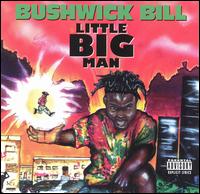
Bushwick Bill – Little Big Man (September 8, 1992)

Bushwicklbm

In the mist of listening to and working on Willie D’s IGOLS write-up, I ran into today’s subject at one of my favorite used music spots. Maybe this was not a coincidence, but more divine intervention. Maybe it was a part of God’s plan for me to write about two of the Geto Boys solo albums, back to back.  I’m fucking with you. Place this one before Public Enemy’s Greatest Misses.

Richard Stephen Shaw, better know to the world at Bushwick Bill, was the Jamaican born Houston transplant who was one of the original members of the Geto Boys. After The Geto Boys’ critically acclaimed and platinum selling album We Can’t Be Stopped, Bushwick Bill would pursue a solo career like his fellow Geto brethren, Scarface and Willie D, releasing his solo debut Little Big Man on Rap-A-Lot/Noo Trybe Records, one week prior to Willie D’s I’m still Goin’ Out Lika Soldier.

Along with Rap-A-Lot CEO and co-founder, J. Prince, Bushwick would call on longtime Rap-A-Lot in-house producer John Bido (with co-production credits going to Rap-A-Lot affiliates Crazy C, Roland, Goldfinger, and Mike Dean) to handle the production duties for the entirety of Little Big Man. The album didn’t move a ton of units, but in-between Geto Boys projects, Bill would go on to release one more solo album on the Rap-A-Lot label, and 4 more independently, including his 2010 release, My Testimony of Redemption, which showcases the former horrorcore rapper rhyming as a born again Christian. I’ve never heard MTOR, but I’d be interested to hear what a sanctified Bushwick sounds like on the mic.

Intro – This extended intro opens with a male voice making random statements about Bushwick’s ideology, rhymes, and stature, to which Bushwick has a rebuttal for each. No need to listen to this more than once.

Little Big Man – Bushwick opens the album with the title track, bragging about his skills on the mic, how tough he is, and his sexual prowess. Our host won’t leave you mesmerized with his lyrical output, but he does a well enough job not to embarrass himself on this one. The instrumental has a bluesy feel, thanks to the rough guitar licks and organ, This was actually pretty enjoyable.

Stop Lying – Bushwick takes the time to dedicate an entire song to calling out brothers who lie about how much booty they get. Yes, I’m serious. The instrumental has both a blues and country feel to it, and isn’t completely terrible. But it’s going to take a stronger backdrop than this to make Bill’s corny content memorable.

Call Me Crazy –  This one opens with a dude cracking short jokes on Bushwick (and most of them are pretty funny), before our host comes on the scene and pumps Mr. Funnyman full of lead. Bushwick proceeds to spit verses about beating and shooting everybody in sight, just to prove how crazy he really is. Not that I would believe him anyways, but the lighthearted singing on the hook and the borderline boring bluesy backdrop (tongue twister much!) don’t do anything to give credibility to our host’s claims.

Chuckwick – This is supposed to be the sequel to “Chuckie” from The Geto Boys’ We Can’t Be Stopped (which Bill makes reference to in the song’s first few bars). Like its predecessor, Bill spits horrorcore rhymes that come off sounding more comical than frightening (“the world’s smallest killer, I can’t wait ’til they bury me, every arm I chop off I give the fingers to charity” and “it’s time for breakfast but I don’t want eggs, just jelly and toast, and bacon and legs”). I’m not a fan of this song or “Chuckie”, but at least the latter’s instrumental tried to create a spooky mood.

Don’t Come To Big – J. Prince and John Bido stay true to the country and blues sound scape they’ve created up to this point on Little Big Man, and unleash this one that is fire. Little Bill uses it to let the ladies know that in spite of his small stature, he’s more than capable of breaking them off proper, while he warns the brothers not to sleep on his hand skills. This was cool.

Ever So Clear – This is easily the crown jewel of Little Big Man (and next to his verse on “Mind Playing Tricks On Me”, probably of Bill’s entire catalog). Over a slightly emotional semi-bluesy instrumental, Little Bill discusses his life, from his birth defect, to becoming a bona-fide rap star, to the pain that caused him to attempt suicide and left him missing an eye-ball (“my eye…why’d you shoot me in my eye? I would have shot you in the body”). Now I don’t have any proof, and the liner notes don’t deny or confirm it, but Bill’s rhymes sound like Face may have penned them (which would not be a surprise, as Face has said in the past that he and Willie D wrote all of Bushwick’s rhymes for the Geto Boys albums). Regardless, this is an unsung classic and one of the best autobiographical songs in hip-hop history.

Copper To Cash – Over a forgettable instrumental, Bushwick spews forgettable rhymes about getting money by any means necessary (be it robbing or rhyming).  As Charles Barkley would say, this song is turrible. And shame on Bill for desecrating The O’Jays’ classic “For The Love Of Money” by incorporating it in to this hot mess of a song.

Dollars And Sense – J. Prince and John Bido steer away from the c&b (my made up acronym for country and blues) theme and build this backdrop around a loop from the Ohio Players’ “Funky Worm” (a record that would become the source material for many artists, and an important piece in the blueprint of the G-funk sound that would dominate hip-hop in the mid nineties), and it’s dope. Bushwick’s theme on this one is simple: whatever you do, if it doesn’t make you money, it’s not worth your time. The first verse sticks to the script, but each verse after strays further and further away from the topic at hand. I love this instrumental, though.

Letter From KKK – This one starts out with Bill reading a letter from the KKK, thanking him and the rest of the black community for their contribution to African-American genocide. Not too far in, Bill loses focus and forgets about the letter as he resorts to spewing out random facts and statements, in an attempt to deter brothers from committing black on black crime. I remember back in the day their was a bogus email circulating with the same idea as this song. First off, why would the KKK sends out a letter like this? That would be like playing hide and seek and letting the person that’s it, know exactly where you’re hiding. Secondly, props for the “conscious” attempt, but this was poorly executed. The Smith/Bido backdrop is cool, but the Curtis Mayfield loop may have worked better with a cleaner mix.

Take Em’ Off – What better way to follow a conscious song than with an embarrassingly misogynistic song disrespecting the black woman you were so concerned about in the previous song? Don’t get me wrong, I can stomach a little misogyny from time to time, but at least make it creative and interesting. Everything about this song is a hot mess.

Skitso – J. Prince stops by to help Bushwick with the last song of the evening. The song opens with the Rap-A-Lot CEO going to visit Bill at a psych ward. The bleak (and kind of boring) instrumental drops and Bill spills more of his horrorcore rhymes, outlining the thoughts and demented deeds that landed him there. Bill’s rhymes on this one are a lot darker than the comedy he shared earlier on “Chuckwick”; specifically his third verse were he talks about raping and killing a woman, then having sex with her corpse before calling 9-1-1 on her behalf. This was some pretty morbid shit that will make any sound minded person feel uncomfortable; which I’m sure is what Bill was going for.

J. Prince and John Bido provide a pretty consistent country and blues infused brand of hip-hop throughout Little Big Man. But don’t confuse consistency with qualityOnly a handful of the instrumentals on Little Big Man are worthy of your time. Which leads me to the biggest problem with Little Big Man, our host himself. Bushwick is not a good rapper, and with the shelter and protection that Scarface and Willie D provided him within the Geto Boys’ camp now gone, all Bill’s short comings (no pun intended) are exposed. Little Big Man may have fared better as an EP, but that’s even a push.

-Deedub

Posted in Uncategorized | 2 Comments