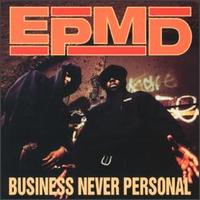
EPMD – Business Never Personal (July 28, 1992)

Businessneverpersonal

EPMD is one of my favorite hip-hop groups and without question one of the greatest groups in the history of hip-hop. The chemistry of Parrish’s no-nonsense lyricism and Erick Sermon’s lazy and heavily lisped flow over their signature funk sound is undeniable. By 1992, EPMD was already three albums deep, and all three albums were certified gold. The duo would return in 1992 with their 4th release, sticking with the “business” theme, titling it Business Never Personal.

While recording Business Never Personal, Parrish and Erick begin to squabble over some financial disputes. Parrish’s home was robbed during this time, and rumors that Erick Sermon hired and sent the culprits to do this dastardly deed begin to surface. Shortly after the album’s release, EPMD would break up, making the album title even more fitting. They would both release two solo albums before kissing and making up and going on to release three more albums together, but we’ll get discuss those in-depth at later dates.

Business Never Personal was a critical success (including a 4.5 mic rating from The Source) and would keep the duo’s Midas touch in tact, as it would go on to be the duo’s 4th consecutive gold selling album. Not too many artist can say that, yet alone an underground hip-hop group.

Boon Dox – EPMD opens up the show with an instrumental that is equally raw, funky, and soulful. Erick and Parrish’s rhymes are decent, but their instrumental is the real star of this one.

Nobody’s Safe Chump – Erick and PMD hook up a pounding semi-mellow mid-tempo groove that the duo use to tough talk all over. This is a slept on beat by EPMD, and very suitable for midnight marauding.

Can’t Hear Nothing But The Music – They can’t all be great, but this is still a decent listen.

Chill – This is probably my favorite instrumental in all of  EPMD’s storied catalog. The duo loop up a portion Foreigner’s “Street Thunder”, lay it over the bass line from Zapp’s “Dance Floor” and the results are epic. Erick and P drop competent rhymes and sound right at home spitting over it. Well done.

Head Banger – This was the second single from Business Never Personal and is easily one of the top 10 cipher songs in hip-hop history. The E-Double and PMD invite fellow Hit Squad members, K-Solo and Redman, to join them as each party involved spits a verse over a raw funk instrumental built around a loop from Parliament’s “One Of Those Funky Things”. Erick, Parrish, and K-Solo turn in decent to solid verses, but Redman steals the show and completely shuts shit down. This song combined with the previous song make for a nice one-two punch.

Scratch Bring It Back (Part 2 – Mic Doc) –  DJ Scratch combines Busta Rhymes’ “wheel up, ease up, bring it back, come rewind” line from “The Scenario” with KRS-One’s “rewiiiiind!” from “Duck Down” and places them over an up-tempo beat that Erick spits a decent verse over. Parrish starts his verse over the same instrumental with an intentionally choppy and sloppy flow (that he would further indulge in on his solo efforts). After being reprimanded by Erick Sermon, who refers to P’s experimental flow as “bullshucks”, Scratch completely changes things up with a raw beat that helps PMD sober up and get back on track. This was dope.

Crossover – This was the lead single from Business Never Personal. The duo build the instrumental around the bass line from Idris Muhammad’s “Say What” and add a Roger Troutman vocal sample on the hook, as they pledge their allegiance to the underground, vowing never to sellout. Ironically, this single was probably the closest thing to a pop hit for EPMD, as it would earn them a gold plaque. This still sounds good today.

Cummin’ At Cha – EPMD hooks up a dope instrumental and lays a Cypress Hill and D-Nice vocal sample on the hook. After Erick drops a mediocre rhyme and Parrish completely mails his verse in, Dray and Skoob (bka Das EFX) take a page out of Redman’s book, closing this one out and once again stealing the show from their mentors.

Play The Next Man – Erick and PMD tell their significant others to kick rocks after discovering their be cheated on by them. This was definitely filler material, but still better than your favorite rapper’s filler material.

It’s Going Down – This was on the Juice Soundtrack. It feels like I’ve been saying that a lot lately. Click here to read my thoughts on it.

Who Killed Jane – Never been a huge fan of the Jane series and this one is no exception to the rule.

Lyrically, throughout Business Never Personal, neither E or P sound completely committed, which may lead one to believe that maybe the internal strife effected the quality of their writing.  There’s occasional flashes in the pan from the duo, but its their strong production and solid contributions from the Hit Squad members that make Business Never Personal a strong effort from one of the best groups to ever do it.

-Deedub

Posted in Uncategorized | 3 Comments

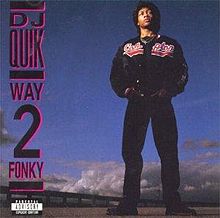
DJ Quik – Way 2 Fonky (July 21, 1992)

220px-Way2Fonky

In 1991, DJ Quik exploded on the scene reppin’ his hometown of Compton on his debut release Quik Is The Name. On the strength of a couple of solid singles (“Born And Raised In Compton” and “Tonite”) and his crisp and clean layered production, the album earned Quik a gold plaque just 4 months after its release (and by ’95 it would reach platinum status). A year and a half later, he would return with his sophomore effort Way 2 Fonky.

Success always has a way of attracting haters, so it was no surprise that along with the success of Quik Is The Name came a few new adversaries. Quik and MC Eiht (of Compton’s Most Wanted) begin to feud, and the King of west coast hating, the late Tim Dog (who single handedly started the east coast /west coast feud that would leave a stain on an otherwise wonderful decade for hip-hop after two of the era’s best emcees became casualties of the meaningless war) fired a few shots at Quik on his 1991 debut solo album Penicillin On Wax. Quik would address both of them on Way 2 Fonky, as well as one of his favorite topics of discussion:pussy. And of course he leaves room to clown around with his horny crew on a few tracks.

Way 2 Fonky was both a commercial (it reached gold status three months after its release) and critical success, as Quik would continue to make a name for himself while establishing himself as one of the game’s sickest producers.

America’z Most Complete Artist –  Quik opens the show with a P-funked out instrumental (and a dope DOC vocal sample added on the hook) that he uses to brag and boast about being what the song title suggest. The song is decent, but it definitely does provide any support for Quik’s bold claim.

Mo’ Pussy – This one picks up where Quik Is The Name’s “Sweet Black Pussy” left off. Quik loops and speeds up the drums and bass line from Blowfly’s “Convoy”, as he talks explicitly about the pleasures of the power u. The lyrics and hook sound a bit juvenile but the instrumental will keep you entertained.

Way 2 Fonky – Quik hooks up a mid-tempo backdrop for the title track, as he fires shots at Tim Dog (“Straight Bronx killa!”) and takes a subliminal shot at MC Eiht in the second verse (“to you suckas in my city claiming I got a death wish, you should try again fool, you aint hittin’ near this”). Quik was and never will be mistaken for a great lyricist, so even though his rhymes sound more like pebbles being thrown than shots fired, his instrumental lives up to the song’s title.

Jus Lyke Compton – This was the lead single from Way 2 Fonky. Over a melodic mid-tempo groove, Quik talks about the “hood experiences” he encountered while touring from city to city, that he naively thought only happened in the mean streets of Compton. This one still holds up well today. Quik’s instrumental is still enjoyable and his content sounds refreshingly honest.

Quik’z Groove II (For U 2 Rip 2) – The first “Quik’z Groove” was designed to remember the dead homies. This one is designed for you to rip the shit out of your girl’s punany to, so no matter which one you listen to, “rip” will be involved (*rim shot*). Decent, but I still prefer the o.g. version.

Me Wanna Rip Your Girl – The previous instrumental sets up what is sort of the companion piece to Quik Is The Name’s “Tha Bombudd”. Quik creates a reggae tinged instrumental as he chants about how much he wants to rip, or fuck, your girl. With hindsight being 20/20, it was kind of uncomfortable towards the end of the song to hear Quik ask that you let Easy-E rip your girl. The content is juvenile but Quik’s instrumental work stands up well. I’m starting to sound like a broken record.

When You’re A Gee – Quik invites one half of the Penthouse Players Clique, Player Hamm to take part in this session, as the two run through the responsibilities and advantages of being a gangsta. Quik rips Roger Troutman’s “I Heard It Through The Grapevine” instrumental at wholesale, but it still sounds dope. This was solid.

No Bullshit – This one opens with an eerie sounding synth chord that sounds like a mix between the Inspector Gadget theme song and the opening chords to “Thriller”. Then the scarce drums drop and Quik and his buddies from 2 II None, KK and Gangsta D, discuss all the speculation on their gang affiliation. They deny being a part of any gang, even though a few years later Quik would openly admit that he is down with the Bloods, but I digress. Not a terrible song, and being its only 2 minutes long, it’s over before you get the urge to hit the skip button.

Only Fo’ Tha Money – 2nd II None join Quik for the second consecutive song, as each party discusses exploiting women to make a buck. This was hot garbage.

Let Me Rip Tonite – Quik, 2nd II None, and a few special guests (or as the liner notes credit them as, Sexy Leroy and the Chocolate Lovelitez) get their Chi-Lites on (for you kids that don’t know who the Chi-Lites are, Google them) as they attempt to croon the ladies out of their panties. The lyrics are a bit cheesy and raunchy but Quik was successful in creating a soulful seventies style soundscape (tongue twister much) that still sounds good twenty plus years later.

Niggaz Still Trippin’ – Quik invites AMG, Hi-C, 2nd II None, and newcomer, JFN (who also goes by the corniest moniker I’ve ever heard in “the Funky White Nigga”??) to join him on this cipher joint. This is a complete waste of wax and time.

Tha Last Word – Quik brings back the instrumental from “Only Fo’ Tha Money” to give his shoutouts and send a few special dedications to his adversaries, Tim Dog and MC Eiht.

If you’re looking for substance or an extremely high level display of lyricism, Way 2 Fonky is not for you. But if you want to be entertained by a sonically sound project from one of the most underrated producers in the history of hip-hop, you’ve got the right album. There’s a reason he goes by DJ, and not MC Quik. There are a few skippable moments on Way 2 Fonky, and some of the juvenile content becomes a bit redundant, but for the most part, Quik’s clean production will keep you interested as you shamefully sing along to his nonsensical hooks.

-Deedub


Posted in Uncategorized | 2 Comments

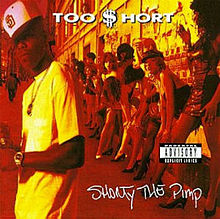
Too Short – Shorty The Pimp (July 14, 1992)

Too_Short_-_Shorty_the_Pimp

We last heard from Too Short in 1990 with the release of his third official album release, Short Dog’s In The House. The album earned Short his second platinum plaque and tons of critical acclaim, as many critics and fans considered it one of the best albums in his lengthy catalog. Too Short would return in 1992 with his fourth official release, Shorty The Pimp.

Too Short would use the same formula on Shorty The Pimp that he used on his previous works: simple rhyme schemes over funk beats. Shorty The Pimp would also mark the beginning of Short’s relationship with Oakland native Ant Banks, who at the time was a new producer on the scene. He would be responsible for about half of the production on Shorty The Pimp. The album didn’t sell as well as his previous two projects and it received mixed reviews from the critics.

Is it just me or do all the chicks lined up on the album cover look like they have STD’s living in condos inside their vaginas? I wouldn’t touch any of them with your dick.

Intro: Shorty The Pimp – This intro is the intro of the theme song of the Blaxploitation movie of the same title.

In The Trunk – Too Short will never be known as a prolific lyricist, but he spits arguably his best rhymes on this one. Over the course of one long verse (like the opening song on Short Dog’s In The House), Short Dog raps like he’s got a chip on his shoulder, as he addresses his haters, the sucka emcees, the bitches, and drops an occasional boast, for good measure. SD is also credited for the instrumental and he hooks up a funky bass line that drives the instrumental. This was dope.

I Ain’t Nothin’ But A Dog – What would a Too-Short album be without a song calling women bitches? On this one he explains why he’s a dog and discusses the only thing he needs from a bitch woman, dropping simple but hi-larious lines like “I be a player for life, forget about a wife, she just aint my type” and  “most brothers try to take freaks out, I get a room and stick my dick in her mouth”. Ant Bank’s slow funk instrumental is a bit too slow for my liking and kind of drags this song down a bit.

Hoes – The same thing stated in the previous song can be applied to this one. Only, Too Short himself is responsible for the mediocre backdrop instead of Ant Banks.

No Love From Oakland – Short’s rhymes are all over the place on this one. I think his main goal was to highlight how tough it is to escape the mean streets of Oakland without ending up incarcerated or even worse, dead. Along the way, he takes the listener on quite a few side trips, including some random story about Tonya, Jack, Mike and Lynn. Banks’ instrumental is pretty nice, but it’s not nice enough to justify the song’s 8 and a half-minute run time.

I Want To Be Free (That’s The Truth) – This was the second single released from Shorty the Pimp. Too Short is notoriously known for his abundance of misogyny, but he has always managed to include a bit of substance on his each of his albums. On this one Short addresses the timeless issue of the volatile relationship between young black men and law enforcement. Ant’s always bass heavy backdrop, sounds solid behind Too Short conscious rhymes (now there’s an adjective you’ve probably never heard to describe Too Short rhymes).

Hoochie – This was terrible. Short dives deeper into his misogynistic rhyme book, while DeWayne Wiggins (from Tony! Toni! Tone!) gets the production credit and sings the godawful hook. Everything about this was bad.

Step Daddy – SD uses this one to discuss his bangin’ out of random baby mamma’s when their man is not around. Yes. It’s very corny. Ant Banks’ instrumental deviates away from his signature funky bass line driven formula and goes for a more traditional nineties west coast sound. Unfortunately, it doesn’t work.

It Don’t Stop – Too Short takes a, um, short break from his misogyny to break off the sucka emcees. Unfortunately, neither his rhymes or his generic backdrop get the job done.

So You Want To Be A Gangster – This was on the Juice Soundtrack that I reviewed a few months ago. You can read my thoughts on it here.

Something To Ride To – This is another instrumental that I looped from tape to tape for my boys and I to spit over back in the day. Ant Banks and Short are credited for the funky instrumental. Short invites Ant Banks, his copy cat protégé, Pooh Man, and Mhisani to each spit a verse during this cipher session. No, you won’t hear superb lyricism on this record, but all 4 Dangerous crew members sound like their having fun, which radiates to the listener and makes for an enjoyable listen. After a short rank session by one of Short’s uncredited crew members (which will make you chuckle, at least the first time you listen to it) the instrumental plays on for an additional 5 minutes, pushing the song’s total run time to a few second short of 12 minutes (which made the whole tape to tape looping process easier for me), so feel free to use the extended ending instrumental to brush up on your freestyle.

Extra Dangerous Thanks – Over a funky Too Short produced instrumental, that sounds slightly similar to the Too Short/Ant Banks produced instrumental on the previous song, Short gives his parting shoutouts. After shouting out his mom, Short strangely gives a shoutout to an Art Brooks, which is followed by “whoever the fuck that is”. Was he running through his list of people to shoutout and when he saw the name he completely forgot who Art Brooks was? Or is that his absentee dad (which would make sense, being he’s mentioned right after his mother) that he only mentioned as a shot at him? Whatever the case, it was good for a quick chuckle.

Too Short does what he does best on Shorty The Pimp: funk beats, with a sprinkle of boastful and conscious rhymes mixed into oodles of misogyny. As long as you don’t take his rhymes too serious, Short Dog’s content is comical and entertaining, even if it does become a bit repetitive and juvenile at times. My biggest issue with Shorty The Pimp is the lackluster production. While I’m a fan of some of the production work Ant Banks has done for other artist (i.e. Pooh Man and Spice 1), he misses just as often as he hits on Shorty The PimpWhich must have rubbed off on Short Dog, as even his funk beats sound less intriguing this time around.

-Deedub

Posted in Uncategorized | 3 Comments

MC Ren – Kizz My Black Azz (June 30, 1992)

KizzMyBlackAzz

I was a bit skeptical when I first saw the trailer for the NWA bi-op movie Straight Outta Compton. Then I started to hear some positive reviews from a few dependable sources, and I became interested in seeing it, and I actually enjoyed it. The movie is about the NWA collective’s rapid rise to stardom and their eventual unraveling as a group, mainly focusing on the lives of Dr. Dre, Ice Cube, and Easy E (rip). In the movie, the lives of the other two members of NWA, DJ Yella and the subject of today’s review, Ren, are almost insignificant as the characters who play them are just pawns in the game, or movie. Coincidentally, the same could be said in reality. Ren is the black sheep of NWA. A talented emcee who went unsung, mostly do to being overshadowed by greater talents and bigger personalities in the group.

After Cube dropped four niggas and started making all the dough, and Dre left to go build the Death Row empire (on Snoop Dogg’s back), NWA was officially over. Ren found himself in a tough spot and was pretty much forced to pursue a solo career. He would stick with Easy and released his debut project Kizz My Black Azz on Easy’s Ruthless label.

Kizz My Black Azz was a 6 song ep, with the bulk of the production being handled by west coast hip-hop pioneer, DJ Bobcat. The ep was well received, and would be followed by 4 more full length solo albums from the Compton villain over the next two decades.

I got nothing else, so lets just jump into this one.

Intro: Check It Out Y’all – One would think if you only have 6 tracks on your ep, you would make good use of each song. Instead, Ren lets a pretty nasty Bobcat instrumental play without dropping any rhymes on it. He could have at least spit one quick verse. What a waste.

Behind The Scenes – Ren kicks off the official first song of the evening with a topic he’s no stranger to: bangin’ out broads. Ren takes a trip down memory lane back to high school, as he recalls the beauty and the body (his line about her having “ass hanging out by the pound” is pretty hilarious) of an anonymous young honey who at school gives the impression that she’s a sweet and innocent straight A student. Ren discovers another side of her when he decides to stalk her follow her home from school and witnesses how much of a freak Anonymous is. And when I say freak, I mean freaky. Bobcat’s instrumental is dope and its sonic energy compliments Ren’s outrageous but entertaining story line, perfectly.

Final Frontier – This was the only single released from Kizz My Black Azz. Bobcat’s instrumental opens with a sick Premo like loop, before he completely switches things up and revisits the instrumental from BDP’s “The Bridge Is Over”. Ren’s in a violent mood as he spits threats of bodily harm, promotes hitting women, and voices his disdain for  r&b singers singing on hip-hop records. I’m not an advocate for beating women, but overall this was a solid record.

Right Up My Alley – This is hands down the best song on Kizz My Black Azz. Bobcat provides an epic instrumental for Ren’s dark and bleak rhymes. The bombastic and pulsating drums compliment Ren’s booming baritone as he matter of factly talks about teenage prostitutes, random acts of violence and murder, as every day occurrences in his alley. Listening to this song will leave a depressing hole in your soul or scare the shit out of you, but either way it will tug at your emotions, which is what great songs are supposed to do, right?

Hounddogz – This is the only song on Kizz My Black Azz that Bobcat didn’t produce. Instead, Ren recruits someone going by the alias of “The Torture Chamber” and DJ Train (with a co-production credit going to Ren) to provide the backdrop for this one. They hook up a soulful mid tempo groove that Ren uses to create his version of the “Vapors” (which happens to includes a Biz vocal sample from that song). Ren sounds sharp on the mic and does a nice job of serving this instrumental real proper like.

Kizz My Black Azz – Ren saves the title song for last as he invites all haters and non-believers to pucker up. Ren sounds decent on this one, the problem is Bobcat’s mediocre instrumental that sounds like a poor man’s Bomb Squad beat. I guess they all can’t be great.

Kizz My Black Azz is a solid EP and a nice introduction to MC Ren as a solo artist. Bobcat provides quality production to which Ren matches with quality rhymes. I’ve never heard any of Ren’s full length albums, but I’m curious if Ren would be able to entertain and effectively hold the listener’s attention over the course of 10 to 13 songs. But that’s an adventure for another day. For now, Ren’s Kizz My Black Azz is the best hip-hop EP release of 1992.

-Deedub

Posted in Uncategorized | 1 Comment

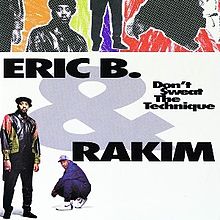
Eric B & Rakim – Don’t Sweat The Technique (June 23, 1992)

Don't_Sweat_the_Technique

We last heard from this legendary duo in May of 1990, with the release of their classic third album Let The Rhythm Hit ‘Em. No one could deny the awesomeness of that album and Rakim’s lyrical mastery laced throughout. It was a critical success that earned the duo their second 5 mic rating from The Source, cemented their legacy in hip-hop, and in my opinion, is the best album in the Eric B. & Rakim catalog. After a 2 year hiatus Eric and Ra would return to release their 4th album, Don’t Sweat The Technique.

Like their previous three albums, Eric B & Rakim would handle the bulk of the production duties (well, at least that’s what the credits said; there has been some controversy regarding claims of ghost production provided by other producer [*cough* Large Professor] on some of their previous works) and it would not feature any guest appearances. Just the R on the mic and Eric on the cut. What else do you need, though?

This would be the last album from the two as a group, as they would soon fall out with each other and go their separate ways. Eric B would go onto to release a self-titled solo album on small independent label (that I’m sure sold exactly 3 copies, which were all purchased by his Aunt Pearl) and Rakim would eventually release a few more solo albums, but neither of the duo were able to recapture the magic or touch the success they had together as a group. There truly is power in numbers.

What’s On Your Mind – Eric & Ra kick things off with a smoothed out, slightly r&b seasoned instrumental that Rakim uses to articulately relay a detailed romantic story (which includes a line about watching the Huxtables, so add another mark to the Bill Cosby tally) in his signature smooth tone, proving once again that love raps don’t have to be corny (see “Mahogany” from Let The Rhythm Hit ‘Em). This song was also included on the House Party 2 Soundtrack, though the instrumental on the soundtrack version had a slightly difference mix than the album version. This was nice.

Teach The Children – The R is in conscious mode as he addresses the snares and traps laid throughout the hood and the importance of making sure the youth don’t becomes victims of them. Kudos for the positive message but this song is average at best.

Pass The Hand Grenade – It took him three songs, but Ra delivers the kind of rhymes the fans are accustomed to hearing from him on this song: the god emcee in battle mode. The rawness of the instrumental (which occasionally brings in a slick trumpet loop to break up the roughness of the track) compliments Rakim’s vocal and rhymes. While Ra doesn’t spit his greatest battle rhymes on this one, they’re still dope enough to fade your favorite emcee.

Casualties Of War – Ra drops the most politically charged rhymes in his career on this one. He plays a Gulf War vet who once followed his commands blindly, but slowly begins to question his superiors, the government and why American troops are over their fighting in the first place. Things get a little more interesting when he starts to question who his true enemies are. The instrumental is kind of underwhelming, but Ra’s rhymes are worthy of your attention and will leave you with something to chew on.

Rest Assured – Over a funky instrumental the R warns both the ladies and the heads not to panic, because 007 is on the mic and everything is under control. This was cool.

The Punisher – This is a monster! Over a dark and epic instrumental , Rakim mixes battle rhymes with torture techniques as he goes for the neck of all competitors. I love his line “your conscious becomes subconscious, soon your response is nonsense”, and the simple hook that has Rakim repeatedly yelling “Kill ’em again!”. This is sick, and more evidence to support the argument that Rakim is the GOAT.

Relax With Pep – Decent.

Keep The Beat – I have an emotional tied to this instrumental. As a kid, I actually looped the opening portion of the instrumental from cassette to cassette for me and my partner in rhyme (what up MD?!) to freestyle over. Ah, the good old days. Over a laid back jazzy instrumental, Ra puts back on the Casanova cap he left on “Rest Assured”, as he finesses the mess out of the woman of his desire. Not my favorite Rakim rhymes but I love the smoothness of this instrumental.

What’s Going On – This one kind of ties in with “Teach The Children”, as Ra addresses some of the issues a lot of young black men face coming up in the inner city. He makes a lot of valid points but the instrumental is so boring you won’t even give a shit.

Know The Ledge – Don’t let the spelling of the song title fool ya. Yes, this is the same song from the Juice Soundtrack. And it still sounds dope.

Don’t Sweat The Technique – The instrumental for the title song and lead single is probably the sickest instrumental in all of Eric B & Rakm’s catalog. The bass line (which is a loop from Young-Holt Unlimited’s “Queen Of The Nile”) is both funky and infectious, while the Kool N The Gang horns samples are the delicious icing on the cake. And of course Rakim’s rhymes are as sharp as Ginsus. I think Target brought this instrumental back a few years ago for a commercial they were running, which proves how timeless this track is. It sounds like the perfect soundtrack to a beautiful summer day on South Beach. Classic.

Kick Along – Eric and Rakim end DSTT with an up tempo instrumental that Ra uses to prove he can rhyme swiftly when the tracks bmp’s are bumped up. Not one of the duo’s best songs, but it’s decent.

Eric B  & Rakim’s DSTT is kind of like Jordan when he left the Bulls and played his final two years as a Washington Wizard. It doesn’t have the same impact or magic as their earlier works, but it’s still better than 90% of what the rest of the league had to offer. Rakim was only 24 when DSTT was released, yet you can hear his maturation from Let The Rhythm Hit ‘Em, as he balances his story telling and battle rhyme ability with more socially conscious concepts. It’s not a perfect album, but a large portion of the beats bang and of course the R doesn’t disappoint on the mic.  Just don’t expect him to drop 60 on a nightly basis.

-Deedub

Posted in Uncategorized | 1 Comment

Yo-Yo – Black Pearl (June 23, 1992)

Black_Pearl_cover

When the discussion of greatest female emcees comes up, names like Latifah, Lyte, Lauren Hill, Salt N Pepa, and even though I think it’s a bit premature, Nicki Minaj, are often thrown around. One name that should be thrown into the conversation and is often overlooked is the artist of today’s subject. Yo-Yo.

South Central L.A. native Yolanda “Yo-Yo” Whitaker was discovered by Ice-Cube, after word spread around the area that she had the gift to spit. Cube got a chance to hear her, liked what he heard, and featured her on “It’s A Man’s World” from his debut solo album Amerikkka’s Most Wanted. The song was never released as a single but it was still a fan favorite, as she and Cube’s chemistry was undeniable on the record and she proved to the world she could hang with the fellas, even if she didn’t write all her rhymes (most of the top females in hip-hop had help writing their rhymes, so she’s not alone). Thanks to that song, her flow and being backed by one of the most respected emcees in the game at the time, Yo-Yo inked a deal with East West and released her debut album Make Way For The Motherlode, in ’91, which was overseen and co-written by her mentor Ice Cube. Yo-Yo, who was very attractive, didn’t rely on her sex appeal to gain attention, but instead, like her mentor Cube (pre-new millennium Cube) her sound was conscious, Afrocentric and hardcore, as she dubbed herself the strong intelligent black lady and rolled with her crew IBWC (Intelligent Black Women Coalition). Make Way For The Motherlode didn’t move a ton of units but is was a critical success, forcing fans to pay attention the blonde-braided black bombshell.

Yo-Y0 would return in ’92, releasing her sophomore effort Black Pearl. Even though Ice Cube is credited as the executive producer, Yo-Yo would have complete creative control this time around, including writing more of her rhymes. Ice Cube’s right hand man Sir Jinx and DJ Pooh (the sight of his name brings a smirk to my face, as I will always associate him as Red trying to get his beach cruiser back from Debo in Friday) would handle the majority of the production duties, with contributions from a few others. A surprise to no one, Black Pearl didn’t do well commercially but it was also considered a critical failure.

Yo-Yo would go on to release two more album on the East West label, and recorded a third one that was never released (Ebony), due to issues with getting proper clearance from the labels of the artists who made guest appearances on some of the album tracks. Yo-Yo would soon grow tired of the industry and walked way from the game for good, hanging up her mic before the start of the new millennium.

The No Intro – Ice Cube is the first voice you hear on Black Pearl, as he introduces Yo-Yo on an intro, that according to the title, shouldn’t exist.

Home Girl, Don’t Play That – DJ Pooh builds the opening song’s instrumental around a loop from Isaac Hayes’ “Joy” (next to James Brown, Isaac has to be the most sample artist in hip-hop history). Yo-Yo uses the solid production to instruct the ladies on how to survive the mean inner-city streets (rule#1 is pretty hi-larious). Ice Cube affiliate Threat is credited with penning this one for our host. Decent start to the show.

So Funky – Pooh borrows a loop from another hip-hop favorite (Zapp’s “Be Alright”) for this instrumental. Yo-Yo uses it to “talk her shit” over, and proves she can hold her own on the microphone.

Black Pearl – Over a r&b tinged instrumental (with the production credit going to Down Low Productions), Yo-Yo dedicates this one to all the sistas out there, encouraging them to press on and be courageous in spite of all the challenges black women face in this cold world. Big Bubba(remember him? the lead singer from the short-lived, late eighties/early nineties, r&b group Today?) stops by to sing the hook on this uplifting record. Some might find this too soft, but I actually like this one.

Cleopatra – Down Low Productions gets their (his? her?) second consecutive production credit of the evening, and this one has a much rougher sound than its predecessor. Yo-Yo’s on her “intelligent black woman” ish as she displays how a strong black woman handles the mic. This was cool.

It’s A Long Way Home – DJ Muggs (from Cypress Hill) gets his only production credit on Black Pearl, as he hooks up a mid-tempo instrumental build around an Otis Redding loop, that has that Muggs signature dusty, slightly drunken sound written all over (matter of fact, he used this same loop for another song, though I can’t think of which song it was at the moment). Yo-Yo uses it to address those suffering from, what I like to refer to as, the Clarence Thomas syndrome: negroes who, with help from others, succeed and make it out the hood but then look back and negatively criticize those who haven’t made it, nor do they bother trying to help others. I like Yo-Yo’s intent, but she sounds like she’s trying to cram too many words into her verses, and Muggs’ borderline boring instrumental, kind of drowns out her voice.

You Should Have Listened – Yo-Yo is back on her soapbox, scolding hard-headed females, who despite being warned of the impending consequences, still make bad decisions. I had to double check the production credit on this one, as Sir Jinx’ instrumental sounds nothing like the harder stuff he used for Cube’s solo work. Yes, this record is soft and squeaky clean, but it’s still decent.

Woman To Woman – This one opens with Yo-Yo getting a phone call from an upset woman (with her friend co-signing in the background) who apparently found Yo-Yo’s phone number in her man’s pants pocket. For the next two verses, Y0-Yo quickly puts sista girl in check, reminding her the person she should really have a problem with is her man, as she sarcastically rhymes “how did I know that’s your man,? It wasn’t like he had a sign in his hand”.  The DJ Pooh/Bobcat/Rashad concocted instrumental wasn’t bad, but Yo-Yo’s concept and flow carrier this one.

Hoes – Threat drops in for this duet with Yo-Yo, as the two swap verses, similar to what Cube and Yo-Yo did on “It’s A Man’s World”. The DJ Pooh instrumental sounds like a slowed down version of the instrumental for BDP’s “Sex And Violence” (though they used different samples: BDP’s loop is from Booker T & The M.G.’s “Boot Leg”, Pooh’s is from the Bar Kays “Humpin'”), and its pretty nice. No, it doesn’t hold a candle to “It’s A Man’s World”, but its decent, and it was nice to hear Threat put his nimble flow on display.

I Can’t Take No More – Yo-Yo comes from the perspective of a battered woman who finally finds the strength to leave her abusive man and begin a new life. Props for the intent, but Yo-Yo’s execution, the chorus and Sir Jinx garbage instrumental send this song crashing in fiery flames.

A Few Good Men – On this one Yo-Yo challenges the brothers to step up and be the strong positive role models the black community needs them to be. Lench Mob affiliated Kam, is credited for writing Yo-Yo’s lyrics on this one. But not even Kam’s pen and Yo-Yo’s voice can hide the mediocrity of DJ Pooh’s instrumental.

Will You Be Mine – Yo-Yo closes Black Pearl with a cheesy love rap, over a sappy r&b tinged instrumental, courtesy of Sir Jinx. This was corny.

Black Pearl is not a terrible album. A third of the songs are fast forward material, but at 12 tracks and a total run time of only 38 minutes, none of the songs run too long, which makes listening to even the bad songs, bearable. I’m sure Yo-Yo was excited to have creative control of Black Pearl, but looking back, I’m sure she would even admit it might have benefited from a little Cube Vision.

-Deedub

Posted in Uncategorized | 1 Comment

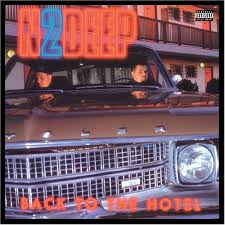
N2Deep – Back To The Hotel (June 23, 1992)

untitled

Over the years, I’ve purchased a lot of used albums, for many different reason. Some because they had an interesting title or artwork. Some because they were affiliated with a group/crew that I liked. Others because a producer I like produced a track on an album for an artist that I normally wouldn’t check for. If I’m remotely interested and the price is a dollar, there isn’t much I won’t buy, folks. Today’s album is one of many in my collection, that I bought used for a dollar on the strength of 1 song, Do you remember N2Deep?

Hailing from the Bay area city of Vallejo, California, N2Deep was the Caucasian duo of James “Jay Tee” Trujillo and Timothy “TL” Lyon. The group originally went by the name 3Deep, and included Jay Tee, TL, and the group’s in-house producer, Johnny “Z” Zunino. Johnny Z decided to take a back seat from being an official member of the group (even though, technically he would remain the third member of the group, producing the entire debut album), which led to Jay Tee and TL changing the group’s name to N2Deep. The duo released their debut album Back to the Hotel on Profile records in the summer on 1992.

Back to the Hotel would earn the duo two gold plaques, one for the album, and another for the lead single and title track (which is the one hit I was referring to in the first paragraph). While Back to the Hotel was a commercial success, it did not receive a lot of critical acclaim. This is my first time listening to Back to the Hotel in its entirety, so lets see if its lack of love from real heads was justified.

Intro – The album opens with a sample of Third World’s “96° In The Shade” (I must add, that they had some tight harmony on that record) and a bunch of random background noise. I’m not sure what the purpose or meaning was behind this intro, but whatever.

Toss Up – Jay Tee and TL kick Back to the Hotel off with what will be a recurring theme throughout the evening: mackin’ and bangin’ out the ladies. Johnny Z builds his funk instrumental around a portion of Newcleus’ “Jam On Revenge”, as the duo discusses finding chicks and using them for one thing, which they affectionately refer to as toss ups, which the kids today would call  “jump-offs” or  “bust downs”. This was garbage.

Back To The Hotel – This is the song that will forever define N2Deep’s music career. Most people probably don’t remember the group’s name or the song title, but as soon as they hear the Lafayette Afro Band horn sample, they’ll think its Wreckx-n-Effect’s “Rump Shaker”, then the drum claps drops, and they realize it’s that hotel song from those two white dudes. Speaking of white dudes, hilariously, for the second consecutive song, TL rhymes “honky” with “donkey”. And while we’re discussing rhymes, Jay Tee and TL are not that nice when it comes to spitting them. Johnny Z’s dope instrumental is what makes this song memorable.

Do Tha Crew – This could work as the prequel to Snoop’s “It Aint No Fun (If The Homies Can’t Have None)”, only less entertaining. On this one our hosts insist that the females they get down with, share the love (or booty) with the homies. Lyrically, this was garbage, but Johnny Z’s instrumental is kind of nice, especially the Johnny “Guitar” Watson horn sample brought in during the hook, which sounds very similar to the sample used on Jay-Z’ “People Talkin’, which actually uses a loop from a different Johnny “Guitar” Watson song. But I digress.

The Weekend – Apparently this was the third single released from Back to the Hotel, though I don’t remember hearing it on the radio or seeing the video back in the day. Over a decent Johnny Z instrumental, Jay Tee and TL celebrate the weekend by getting tore down and poking on something sexy.

Get Mine – Yes, they’re talking about pussy. This was a hot mess.

V-Town – N2Deep shows love for their hometown of Vallejo, that they affectionately call “V-Town”, and invite a few of their fellow V-Town neighbors, E-40 and B-Legit, to join in on the fun. Johnny Z’s instrumental isn’t terrible, but none of the parties involved say anything that makes Vallejo sound like a place I need to visit.

Ya Gotta Go – Jay Tee and TL get their Cold Crush on as they finish each other rhymes on this brief interlude. This was kind of corny.

Comin’ Legit – Jay Tee gets his first solo joint of the evening, and it may as well be a freestyle, as there is really no theme to his rhymes, and his hook is butt. Johnny Z lays down a below average instrumental, as Greg “Starchild” Houston adds some live guitar licks to it, included an extended solo to close the song. From the rhymes to the production, this was weak.

Mack Daddyz – Jay Tee had a solo joint, so it’s only right that TL gets one too, right? (N2Deep’s buddy Daddy Milo, adds a short reggae chant during the bridge of the song, and Jay Tee does stop in close to the end, to drop a few lines as well, but it still qualifies as a solo in my eyes, so there!) Instead of straying from N2Deep’s favorite topic, TL sticks to the script as he brags about his pimp game (his line out about wining and dinning a chick but never spending a penny, was kind of amusing in a, it doesn’t make sense, kind of way). Johnny Z’s instrumental was cool, but TL’s rhymes are subpar and juvenile.

The Revenge Of Starchild -This is a brief guitar solo from their good buddy Greg “Starchild” Houston. Decent.

Shakedown – Jay Tee gets his second solo joint of the evening, but this time around he’s focused. Johnny Z samples Steel Pulse’s “Blues Dance Raid”, which gives the instrumental a reggae feel, with Starchild adding some guitar licks that give it a Latin feel (early stages of the Reggaeton movement, you think?). Jay Tee speaks about the importance of racial unity because “we’re all the same color, underneath”. Jay Tee doesn’t sound great on this one, but I’ll give him props for the positive message. The Johnny Z/Starchild instrumental was decent.

What The F**k Is Goin’ On? – To even things up, TL gets his second solo record of the evening, and like Jay Tee, he’s uses his second solo to bring a little substance. Sort of. Over a decent funk instrumental (and guitar licks from Starchild), TL talks about the violence in his hometown of Vallejo. I wasn’t really feeling this one, and the added expletive in the song title was really unnecessary.

N2Deep (We’re Who?) – Just in case you were curious who N2Deep was, they wait for the final song on the album to answer that question. Johnny Z loops up a JB’s record and turns it into a smooth and funky instrumental. Unfortunately, our hosts don’t put it to good use, which can be said for most of Back to the Hotel.

After several listens to the album, I’ve concluded that Back to the Hotel is not very good. Johnny Z provides a few decent instrumentals, that probably sound even better, if listened to while cruising the streets of California on a beautiful 80°, sunny summer day. But no matter what coast you’re on, Jay Tee and TL’s rhymes just don’t cut it, potna. Johnny Z’s production may have worked better behind more talented emcees. N2Deep should have taken Back to the Hotel, back to the drawing board, before releasing this mess.

-Deedub

Posted in Uncategorized | 4 Comments

Pete Rock & CL Smooth – Mecca & The Soul Brother (June 9, 1992)

Most heads probably don’t remember when Pete Rock remixed Johnny Gill’s “Rub You The Right Way” back in 1990, and along with CL Smooth, spit a verse on it. Pete Rock already had a foot in the game at the time, producing tracks for his cousin Heavy D (rip) in the late eighties, but the “Rub You The Right Way” remix was PR and CL’s introduction to the world as a group. Most heads probably became familiar with the dynamic duo with the release of their EP,  All Souled Out in 1991, which created a bit of a buzz, thanks to “Mecca & The Soul Brother” and more so, “The Creator”. They would return in 1992 with the release of their debut full length album Mecca & The Soul Brother.

The title, Mecca & The Soul Brotheris a reference to the duo’s other aliases (CL being the Mecca Don and Pete Rock the Soul brother).  Like All Souled Out, Pete Rock would produce the entire project (with a little help from a special guest on one song, that we’ll discuss a little later), providing soulful loops over his signature heavy drum, for his partner in rhyme, CL Smooth, to spit over. While Mecca & The Soul Brother didn’t sell a ton of units, it did receive heaps of critical acclaim, as many consider it to be one of the greatest hip-hop albums of all time, and The Source even put it on their 1998 list of 100 greatest albums of all time.

Return Of The Mecca – Pete Rock kicks things off with a short spoken word piece, before his signature heavy drums come in, and CL (whose alias is also Mecca, hence the song title) goes right to work, constructing intelligently articulated battle rhymes, that can easily be missed if you don’t pay close attention. I’m not a huge fan of PR’s instrumental on this one, but it wasn’t terrible.

For Pete’s Sake – Pete Rock hooks up a beautiful backdrop on this one, that CL uses to spill more of his smooth verbals over. PR actually spits a verse on this one too (that he oddly recites half of before the song even begins), courtesy of Grand Puba, who penned it for him; but he’s a producer, so the ghostwriting is forgiven (Pete would actually pick up the pen for Main Ingredient, and write some pretty dope lines [see “Escapism”], but I digress). This is sick!

Ghettos Of The Mind – Hmmm…this PR instrumental sounds very similar to the one he used for “Return Of The Mecca”, which I wasn’t a big fan of. Too bad this one didn’t have a better backdrop to bring out the jewels CL drops, as he challenges all ghetto dwellers to first change their way of thinking, so they can then change their physical condition.

Lots Of Lovin – This was the third single released from Mecca & The Soul Brother, and the perfect example of what a hip-hop love song should sound like. Pete Rock creates a laid back melodic backdrop (with some keyboard work provided by Nevelle Hodge) that has good vibes dripping all over it, while CL articulates his love and affection for the lady in his life. CL avoids the corny clichés and cheesy lines (for the most part) that most of his contemporaries fall into when attempting this type of song, and provides a mature and manly perspective on love, without sounding sappy. Well done, gents.

Act Like You Know – Now this is a legendary production duo: Pete Rock and Large Professor. PR gets the production credit with a co-credit going to Extra P for this funky concoction. CL sounds, um, smooth as usual, but the PR/Large Pro instrumental is the star of this one.

Straighten It Out – This was the second single released from Mecca & The Soul Brother. Over a soulful mid tempo groove, CL confronts bootleggers, older artist that protest hip-hop heads sampling their music, and challenges his team to get things in order to keep their business tight. This was solid.

Soul Brother #1 – Pete Rock rolls dolo on this one, as he spits two more Grand Puba written verses over his own dark, funky, and yet, so smooth, instrumental. Dope.

Wig Out – This was pretty average.

Anger In The Nation – The lyrics on this one are credited to CL Smooth and his cousin, Adofo Abdullah Muhammad. CL states in Brian Coleman’s Check The Technique, “I wanted to make something real conscious, and be deliberate about it. Adofo showed me how to approach it and what I should say”. CL gets on his soapbox as he addresses the racial issues confronting America. Solid rhymes from CL but PR’s instrumental was hard to swallow, apparently even for PR, as he has been quoted as saying he could have done better with the production on this one. Agreed.

They Reminisce Over You (T.R.O.Y.) – This was the lead single, and (brace yourself) it may be the greatest hip-hop song ever recorded. After a soulful instrumental intro that sets the mood for reminiscing, Pete Rock brings in the sickest horn sample ever used in hip-hop, and drops a glorious instrumental built around Tom Scott’s “Today”(which is where the horn sample was taken from as well) and monster drums. CL fittingly, takes a trip down memory lane, as he vividly repaints his journey from birth to manhood, sharing some of his memories along the way. The song title is a dedication to one of Heavy D’s back up dancers, Trouble T-Roy, who died a few years prior in a freak accident. This was and always will be brilliant. I’m sure they made their late homie proud.

On And On – This one begins with a Pete Rock beat box and his younger brother, Grap Luva freestyling. Then the beat drops and the real song begins. Not a terrible song, but quite a drop in quality compared to the monster that the previous song was.

It’s Like That – Filler that should have been left on the cutting room floor. You’ll forget everything about the song as soon as it’s over.

Can’t Front On Me – Now this is more like it. Pete Rock steers this ship back in the right direction with an aggressive instrumental that happens to sample the same song (Where Do I Go?”, from the Broadway play Hair) but a different version, that Pete would later use for easily one of his top 5 greatest instrumentals, Run DMC’s “Down With The King”. CL spits his battle rhymes in such a gentlemen like manner, that his adversaries probably wouldn’t even realize he was coming for their neck. This was dope!

The Basement – PR and CL invite a few of their crew members to the stu for this cipher session: Rob O, Grap Luva, Dido and the overweight lover Heavy D (rip). Each party kicks a verse, and honestly, no one really stands out. PR’s instrumental is decent but not what I would expect to hear behind a cipher session.

If It Aint Rough, It Aint Right – This is another one that probably could have been left off the final cut. CL sounds solid, but PR’s instrumental is only average.

Skinz – It’s only right that our hosts invite Grand Puba to join in on this one, as they each spit a verse about Puba’s favorite topic, and he easily walks away with this one.

Let me first start by admitting that I have severely underappreciated the skill and professionalism that CL brings to the table as an emcee. Pete Rock has and will always be respected as one of the greatest hip-hop producers of all time, but I’m sure like me, many others have also overlooked the Mecca Don and not given him his just dues. After several listens to Mecca this past week, my respect for him as an emcee has gone up, tremendously. Now that I go that out the way, on to my feelings about Mecca.

The chemistry between this duo is undeniable, and for the most part, CL Smooth’s intricate and sophisticated flows sound perfect over PR’s soulful soundscapes, although there are a few dry spots along the way. Mecca has quite a few sick joints and undeniable classics (including arguably the greatest hip-hop song of all-time in “TROY”), but four or five songs should have been chopped off as they sound like filler material. Mecca is a solid full length debut from the duo, but I’d have to take a long hard look at The Source’s top 100 list, twice, before I co-sign their claim.

-Deedub

Posted in Uncategorized | 3 Comments

K-Solo – Times Up (June 2, 1992)

Ksolo-times-up

The original member of EPMD’s Hit Squad, K-Solo, dropped his debut album Tell The World My Name in the spring of 1990. The album was moderately successful, as a few of the singles made some noise on the Billboard urban charts (The Hot Rap Singles), making way for Solo’s follow-up effort, Times Up.

While K-Solo would not completely abandon the production talents of his mentors, Erick Sermon and Parrish Smith (they do get a few production credits on Times Up. Parrish actually gets an executive producer credit as well), he would recruit an unknown producer from Pennsylvania named Sam Snead (who would later join forces with Death Row, remember his single “U Better Recognize”?), to maestro the bulk of Times Up.

Coincidently, the album title would also describe K-Solo’s rap career, as Times Up would be his last album, after falling out with EPMD and the Hit Squad and (like Sam Snead) later signing to Death Row records, only to get lost in the shuffle during the Dr. Dre/Suge Knight fall out. There has been talk about Solo releasing his third album There Will Be Hell To Pay,  for over ten years, so its safe to say that shit aint coming out. And honestly, at this point would anyone even check for it?

I Can’t Hold It Back – This was the lead single from Times Up. Sam Snead gets the production credit for this one, as he borrows a dope bass line and horn loop from Parliament’s “The Big Bang Theory”, a piece of “Atomic Dog”, the Honey Drippers “Impeach The President”, and turns these elements into a dope instrumental. Solo sounds decent, as he addresses “rumors” that he fell off, why he doesn’t feature other artists on his songs, and of course he had to bring up the whole DMX thing again. This was a solid start to the evening. I love this instrumental.

Letterman – This was the second single from the album. Pete Rock turns a sick organ loop and a Kool & The Gang horn sample into a certified banger, that K-Solo uses to spell the hell out of his rhymes over. I remember the video for this had a cool comic book thing going on. This is a forgotten classic that is still guaranteed to make your head bob and put that stank face on.

Long Live The Fugitive – I absolutely love this sample of Funkadelic’s “I’ll Stay” (De La Soul also used the sample on their classic “Millie Pulled A Pistol On Santa” from De La Soul Is Dead). Solo gets the production credit, and he spits one quick verse that revisits “Fugitive” as some cops who are friends of Corky’s (the guy Solo beat down on “Fugitive”) family pull Solo over and give him the Rodney King treatment before locking him up. The story line was a bit strange but I love this instrumental, so I’m willing to overlook any of the songs shortcomings. This song sort of sets up the next song…

Premonition Of A Black Prisoner – Sam Snead (with a co-production credit going to K-Solo)hooks up a solid instrumental that has a serious tone to it, and out host mirrors that tone with his content. Solo relives his experience of being incarcerated and sheds light on some of the corruption he witnessed in the prison system. Technically, this was cool, but the song feels like its missing something, like it’s heart.

Sneak Tip – Solo’s on some Wizard Of Oz type shit on this one. It all starts when Solo goes to Foot Locker to buy some Pumas, and while trying them on he falls into the shoe box and ends up in a village called Shoe Horn, where all the shoes come alive. While in Shoe Horn, Solo makes new friends (the Pumas he was trying on and Tim [as in Timberland]), meets a few honeys (Avia and a red bone named Fila), makes some enemies (Reebok [Fila’s man] and Adidas), before he seeks the Wizard of a Sneaker to help him get back home. This kind of reminds me of Spice 1’s “187 Proof”. Prop’s to Solo for the original concept and clever lines, but the Sam Snead instrumental (with a co-credit going to Parrish Smith) was a bit underwhelming.

The Baby Doesn’t Look Like Me – Erick Sermon gets his first production credit (with a co-credit going to K-Solo) of the evening. The Green-eyed bandit borrows the bass line from Collage’s “Get In Touch With Me” and a vocal sample from Carrie Lucas’ “Show Me Where You’re Coming From” for the backdrop, as solo raps about nearly being duped into believing he’s the baby daddy of his ex-girl’s newborn. No matter how many times I listen to this song, Solo’s line about getting a job at Burger King, so he can buy nice thing for he, she, and the baby, is hilarious. All in all, this was a decent listen.

The Formula (House Party) – I guess this is supposed to feel like a house party performance, hence the reason K-Solo’s mic has a muffled live sound, as he kicks battle rhymes over a decent PMD instrumental. I don’t know how I feel about this one. I would like to hear what it sounds like without the distortion and theatrics.

Who’s Killin’ Who? – Sam Snead hooks up a smooth, semi-melancholy instrumental that Solo uses to ask the song title’s rhetorical question and confront the issue of black genocide. This was nice.

Household Maid – Sam Snead gives Solo a wacky instrumental to match his content, as he talks about bangin’ out his household maid as a shorty. Solo paints some pretty graphic verbal pics on this one, that I’m sure 2 Live Crew and Too Short would both be proud of.

Rock Bottom – Erik Sermon gets his second production credit of the evening (with a co-credit going to Sam Snead) as Solo talks about coming from the bottom, I think. Everything about this song was boring as watching paint dry.

King Of The Mountain – Now this is more like it. Sam Snead hooks up a banger to close out Times Up, and Solo manages not to embarrass himself behind the mic.

Times Up is a decent sophomore effort from K-Solo. The majority of the production work is enjoyable, and Solo sounds decent on most of the tracks as well. But overall, Times Uplacks personality. So even though it’s a decent listen it doesn’t have that unspoken quality to make it memorable, which is probably more the host’s fault than the producers. Give Redman or Keith Murray the same batch of beats and I think you’d have a more entertaining album. Word.

-Deedub

Posted in Uncategorized | 2 Comments

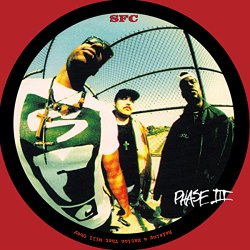
SFC – Phase III (May 19, 1992)

51pKWT35VUL__SL250_

This past weekend I was reading an article from Rapzilla.com, which for those who may not know is a website dedicated to Christian hip-hop music and artists. The article was titled Top 20 Christian Rappers of All Time. I haven’t followed the Christian circuit closely in the last 10 years, so some of the names were unfamiliar to me, and others were names I’ve heard of but never heard their work. There were a few questionable entries on the list and a few names that were missing from the list that definitely should have been included, in my opinion. But I had no qualms with the name at the top of the list. The name at the top of the list is a Christian hip-hop pioneer, arguably the most influential emcee of the sub-genre, and the leader of the group of today’s post, Super C aka Sup The Chemist.

We last heard from Sup and SFC at the tale in of 1990 with their second full length release A Saved Man (In The Jungle). Our believing brethren started out as a 4 man crew, but after the first album (Listen Up!), Brother G and Q.P. left the fold (not necessarily Jesus’ fold, but the SFC fold), leaving only Super C and DJ Dove to uphold the SFC name. A Save Man wasn’t a classic by any stretch, but it was a vast improvement from where they started. In ’92 SFC would release their third album, appropriately titled, Phase III.

Phase III would mark the return of Q.P. to SFC, as he would get a significantly larger amount of time on the mic than he did during his first stint with the group (which makes me wonder if that may be why he left the first time around). Like SFC’s past projects, Sup would handle the majority of the production on Phase III, with help from Dove and a few others on a few tracks.

Of course Phase III didn’t sell a ton of units, as it was released on Brainstorm, which was an independent label focused on spreading the word (of God that is) through alternative types of Christian music, specifically, hip-hop and rock.  It did receive critical acclaim and is considered by those in the know, SFC’s best work.

Intro – Another useless album intro.

Hoods Of Good – Over semi-cheesy sounding rock guitar licks (which completely clash with the Jeff Lorber Fusion”Rain Dance” sample [that Lil’ Kim would later make popular a few years later on her “Crush On You” single] brought in during the hook) Sup and Q.P. use this one to declare themselves “hoods of good”, proclaiming the name of Jesus and shining the light in a hood near you. This whole song was a bit cheesy.

Glory Halagroovin’ – You can put this title in the running for cheesiest ever. Oh yeah, the song wasn’t good, either.

Terror On Tape – It took us three songs, but finally Super C provides the first solid instrumental on Phase III. It’s almost like this higher quality instrumental inspired his flow as he sounds more alert and on point than the first few songs, spewing out battle rhymes aimed at demons. The lyrics are a bit cheesy but Sup proves he can actually spit.

Freedom In Captivity – Sup and Robski (one half of the Dynamic Twins) hook up a decent reggae tinged instrumental that Sup uses to discuss the idea of spiritually appearing free yet still living in bondage to the thing you’ve been freed from. Interesting theory that can be applied to both the spiritual and the natural realms. Props for the unique concept, but Sup sounds uncomfortable and as if he’s trying to force his size 11 rhymes to fit in (or on) a size 10 instrumental. The Bob Marley vocal sample was a nice added touch.

One – Interlude

What We Need – Q.P. stumbles back into the studio after a forty day fast and joins his partner in rhyme Sup as they uplift the name of Jesus, of course. Q.P. is not a terrible emcee, he’s just not memorable or as skilled as the undisputed leader of SFC, Super C (even if his line “Shadrach, Meshach, and a bad negro” was super corny). Speaking of Sup, his mellow mid-tempo groove makes for a pleasant backdrop.

Music Is My Life –  DJ Dove gets the production credit for this solid instrumental that samples Kool & The Gang’s “Dujii” and adds a vocal snippet from C+C Music Factory’s “Everybody Dance Now”.  Sup (Wait. Did he just refer to money as a nigga? I’m sure he caught some slack from the conservative Christians for that line) and Q.P. use this one to express how important music is to their lives and why they do it. Nice.

Phase III – Sup, Dove, and Cut No Slack all get production credits for this one. It starts out with the loop made popular by PE’s “Rebel Without A Pause”, which returns periodically throughout the song. Then a funky, yet so smooth, bass guitar loop (at least I think it’s a loop) is brought in to carrier the song, with a soothing flute break during the hook. Sup is back to dolo on the mic, as he proclaims his freedom in Christ and takes shots at his adversaries, aka Satan and his henchmen. This was pretty nice.

Unity – Someone (that doesn’t sound like Sup, Q.P. or Dove) shares a short spoken word poem about the importance of knowing your purpose and unity amongst all races, that leads into this…

The Setting – This interlude borrows an exert from the beginning of an uncredited preacher setting up his sermon entitled “The Spirit of the Nigga”. Ha! I have to track down a copy of this sermon.

Kill The Spirit – I’m not sure how I feel about this one. Sup and Q.P. invite special guests Alliance Of Light (which would later change their name to the Gospel Gangstas, and even later to, Gospel Gangstaz. I’ll discuss them a little later down the road) to discuss what they collectively refer to as “the spirit of the nigga”. According to their rhymes, this “nigga spirit” is a spiritual force that causes laziness, poverty, ignorance, violence, broken homes and any other negative attribute you can think of, in the black community. So, if someone from another race is suffering from one of these same character flaws, does he also have this so-called “nigga spirit”? Or are SFC and company naïve enough to think that only black folk deal with these issues? Remember, America was founded on violence, and it’s founders weren’t black. This song may have gone over a little better had they not presented the content in such a serious tone, though it would still be inaccurate. The Super C and Cut No Slack instrumental was cool, especially the portion that samples The Brothers Johnson “Tomorrow” on the second half of the song.

In The House – Sup and DJ Dove hook up a monster instrumental that Sup and Q.P. use to discuss their personal experience of receiving the Holy Ghost. Non-believers may not feel (or be able to relate) to SFC’s content on this one, but they’ll definitely be able to feel the music.

Swingin’ – This is probably the closest thing to a battle rap that you’ll here on Phase III. Sup, Q.P. and DJ Dove all come out swingin’ (at sin and the devil), and all three sound pretty nice, including Dove, who spits his verse in Spanglish. The up-tempo Sup produced instrumental is highlighted by a sick bass line sample that sounds reminiscent to the bass line from Curtis Mayfield “We’re A Winner”. This was hot.

Another One – Interlude.

Skanewpid – Super C hooks up a beautiful instrumental, with an absolutely gorgeous sax sample on the hook (I’m a sucker for a nice sax loop). I believe “skanewpid” is Sup’s slang word for “stupid”. Sup spits random foolishness for 3 verses, but still manages to make this enjoyable, which can more so be credited to his production than his verses. This was a nice touch and a break away from the spiritual monotony presented so far on Phase III.

D.J. Dove – As the title suggest, this is a DJ Dove solo. Dove builds his instrumental around One Way’s funky “Cutie Pie” record, adding in some cuts from previous SFC joints, vocal samples from Troop and Run DMC, and a snippet from the Fat Albert And The Cosby Kids theme song (yet another Cosby reference…I should seriously start keeping a tally). Not only does Dove hook up a solid instrumental but he also spits some decent rhymes in Spanglish, or as he refers to it, his Latino style.

113.3 – Sup loops up a piece of Idris Muhammad’s “Crab Apple” for the back drop as he and Q.P. drop lines about their hip-hop ministry. You can’t go wrong with Jesus and the infectious bass line from “Crap Apple”.

Victory – Sup and Dove hook up a decent instrumental that Sup uses to proclaim his victory over the world through his faith in Christ Jesus. I love the smooth Latin flavored break they bring in during the hook.

More Skanewpid – Over an acoustic guitar, Sup comically sings his thank you’s to all those who bought Phase III. This was an original and cool way to end the evening.

From ’89 to ’92, Super C showed signs of being a competent emcee and occasionally displayed his ability to make a dope beat for SFC or his fellow believing comrades (see the Dynamic Twins’ Word 2 The Wize). On Phase III, Sup finally harnessing his potential and it takes shape on a consistent basis. Phase III gets off to a mediocre start, but begins to find its way about a fourth of the way in. By the midway point it’s in full swing, and the second half of the album is packed with solid joints. Sup’s emcee skills were still a work in progress at this stage (and Q.P. is really not even worth mentioning), but he does enough to prove he definitely had talent. Like a lot of Christian hip-hop projects, Phase III‘s content gets stuck in one lane and doesn’t go beyond singing rapping praises to Jesus name, quoting scriptures or battling demons, but unlike their Christian contemporaries, SFC had a way of presenting their message in a lighthearted tone and not taking themselves too serious, which can be heard on their silly interludes and the “Skanewpid” suite.

Phase III is not without flaws, but it’s pretty solid, and it’s the first Christian hip-hop album that I think not only believers, but secular heads as well, would take serious, had they known about it.

-Deedub

Posted in Uncategorized | 3 Comments