O.C. – Jewelz (August 19, 1997)

In 1994, O.C. released one of the best and most underrated albums of the year, Word…Life. I bought a copy of Word…Life, the same week it came out, and was thoroughly impressed by the Brooklyn emcee’s rhymes paired with a young Buckwild’s dusty soul and jazz breaks placed over rugged drums. It was a damn near flawless work that might have been held in the same breath as Illmatic with some trimming to the final track list. But great music doesn’t always translate to great record sales, as was the case with Word…Life. And despite its critical acclaim, it would be the only album O.C. would release on Wild Pitch Records before the two parties parted ways. O.C. would disappear from the music scene for nearly three years before resurfacing on Payday Records in 1997, where he’d release his sophomore effort, Jewelz.

For Word…Life, O.C. relied heavily on Buckwild for the production. On Jewelz, Buck gets a few production credits, but O spreads the production love around, bringing in DJ Premier, Da Beatminerz, Ogee, and a few more of his fellow DITC crew members, Showbiz and Lord Finesse. Similar to Word…Life, Jewelz received strong reviews and critical acclaim, but it didn’t perform well commercially. Like his one-and-done run with Wild Pitch, his run with Payday would end after Jewelz, sending him MIA for nearly four years. He’d return with a deal with JCOR and release Bon Appetit in 2001, but that’s a story for another day.

Today, we’ll focus on the subject at hand. Let’s travel back to 1997 and dissect Jewelz.

IntroJewelz begins with a thirty-second interlude that features a relaxed solo guitar loop placed over crisp drums. That’s all I got.

My World – Before O gets into the meat and potatoes of the matter, he shares a few words giving gratitude for life over a chill but vibrant musical bed. Then Premo unleashes the whistle and chimes, and our host picks up where he left off on “Times Up” (“Oscar Award Winning, your shit I’m bored with it, stop copycatting, son (Why?), cause your dawg did it, get your own lingo, make up your own jingle, ten years later you be bitin’ my single”). This is a tough record and a great way to kick off the album.

War Games – Crooklyn Dodger number two transforms into a “trained rap-killing machine” and is out to draw blood on all rival emcees. He invites his old pals, Organized Konfusion, to help him wage war as they provide an energized hook and a short bridge. It would have been nice to hear verses from Prince Po and Pharoahe Monch over Premo’s devious piano chords and hard drums, but O.C. still completes the mission with limited assistance.

Can’t Go Wrong – This is a fly love song. Ogee lays down a foggy, soulful backdrop that O uses to honor his high school sweetheart, turned common-law wife. O.C. mostly stays clear of the cliche love lines that rappers tend to use in these types of records, and the few times he does use one, his cool delivery makes them sound original.

The Chosen One – O.C. reunites with his main production cog from Word…Life, Buckwild, for the first time on Jewelz. After a short, nondescript instrumental plays, O.C. moves like the Black Fred Astaire on the mic (for you youngins who have no idea who Fred Astaire is, just reference Chris Brown) and verbally dances with smoothness all over Buckwild’s creamily delicious backdrop.

Dangerous – Our host teams up with his DITC bredrin, Big L, as the two go back to back, matching each other’s output line for line. Da Beatminerz back the duo with an average-at-best backdrop, but O and L’s lyricism makes it sound much better than it really is.

Win The G – When it comes to bully rappers, there are two guys I’m always excited to hear from: Sean Price (God bless the dead) and Freddie Foxxx, aka Bumpy Knuckles. The latter jumps on this track and punks the shit out of O.C. and Premo’s underwhelming beat. Give that man his G, dammit!

Far From Yours – This one begins with another short musical interlude. Then Buckwild loops up Brothers Johnson’s original rendition of “Tomorrow” for the buttery backdrop, Yvette Michele harmonizes on the hook, and O.C. articulately raps about his lyrical superiority, making a convincing statement for his claim.

Stronjay – During his ode to his common-law wife, “Can’t Go Wrong,” O.C. raps: “So much temptation, but I don’t pick up strays.” The thick, red-bone vixen, Stronjay, must be the one time he fell short. Da Beatminerz’ dark instrumental sounds much harder than I remembered it.

M.U.G. – O.C. and Bumpy Knuckles come back together to give us one more lyrical dosage, and thankfully, Premo’s jazzy boom-bap sounds light years better than what he gave us on “Win The G.”

The Crow – O.C. spins a two-verse tale about an apocalyptic, out-of-body experience brought on by a crow. It may sound silly on paper, but our host works his magic, brilliantly keeping the listener on the edge of their seat as he builds up the tension and mystery in his storyline. As phenomenal as the verses were, the hook was way too complex for anyone’s good, and it sounds like it was accidentally placed in the wrong song. Showbiz soundtracks O’s movie with a doomish melody paired with a faint and eerie kids’ choir refrain that gives O’s grave bars more muscle. This is not your typical Showbiz production, but I thoroughly enjoyed it and the record.

You And Yours – Ogee brings frigid, jazzy piano notes to tingle the listener’s earlobes. O.C. technically sounds good, but it feels like he doesn’t really have anything to say on this record.

Hypocrite – O uses one long verse to spit about a street hustler and the consequences he faces for living the lifestyle. We find out during the very last line of the song that the dude preached righteousness all along while selling death to his own people, hence the song title. The solemn soul loop that Buckwild builds the instrumental around was cool, but I didn’t find O.C.’s storyline a slight bit interesting.

It’s Only Right – Our host slides back into mic technician mode and surgically dissects Da Beatminerz’ murky bass line and vigorous drums while a KRS-One vocal snippet plays his hypeman between the verses. This was hard.

Jewelz – Interestingly, O.C. ends the album with the title track. It begins with a tragic-sounding piano loop and an accompanying moaning voice (side note: the album is riddled with these short prelude instrumentals, and while none of them suck, none of them were necessary). Lord Finesse gets his sole production credit of the evening as he sets O.C. up with a beautiful backdrop. It’s the perfect instrumental to reflect over or get introspective on, and O.C.’s more than capable of doing both. But what does he do with it? He pretty much wastes it rapping about his wish list: vacations in Tahiti and the Bahamas, lounging on a yacht, sipping exotic juices at fly resorts, and taking champagne bubble baths. He occasionally slips in tidbits about stress and walking a righteous path. It was mega disappointing to hear O.C. fumble such an incredible opportunity to make magic happen on this closing track.

A few years ago, a friend and I were debating over which O.C. album was better: Word…Life or Jewelz? He picked Jewelz, while I went with the former. As I mentioned during the intro, I took my time with Word…Life when it came out, completely absorbing O.C.’s rhymes and Buckwild’s beats into the pores of my hip-hop body. When Jewelz hit the streets, I was inside, deep inside my Bible, not giving a single iota about secular hip-hop. When I eventually got back to listening to unsanctified music, I gave Jewelz a few spins and thought it was solid, but nowhere near as great as his debut. After spending the last three weeks with Jewelz, I still stand by my earlier pick, but not with as much conviction.

When the production team for your project is composed of DJ Premier, Da Beatminerz, Buckwild, Showbiz, and Lord Finesse, you’re pretty much guaranteed a batch of banging backdrops. Except for one track (see “Win The G”), Jewelz’ team of producers (which also includes Ogee) delivers on that guarantee with a fantastic showing, pretty much giving O.C. an easy alley-oop to slam dunk. He completes the dunk, but he doesn’t put it down with the force and flash that he’s capable of. On Word…Life, O.C. showed and proved that he was a talented rapper with the ability to craft boastful bars as well as get introspective, drop jewels, and give lessons through stories. Jewelz O.C. isn’t nearly as versatile. No meaty storylines or soul-searching stanzas, just a heaping helping of braggadocious bars for much of the album’s fifteen tracks. He sounds good doing it, but I prefer my O.C. with a balance of substance and swagger.

On “Dangerous,” O.C. refers to the rap game as his bitch that he lusts after. That line best sums up the difference between Word…Life and Jewelz. Word…Life features O.C. as a young, hungry emcee with a lot to say and a love for the craft that shines through. Jewelz O.C. sounds thirsty to impress, lusting to prove he’s one of the best and spewing vast amounts of vanity in the process. Jewelz is a dope project, but love will always trump lust.

-Deedub
Follow me on Instagram @damontimeisillmatic

Posted in Uncategorized | Tagged , , , , | 1 Comment

Killarmy – Silent Weapons For Quiet Wars (August 5, 1997)

Enter The Wu-Tang (36 Chambers) is one of the most celebrated hip-hop albums, with good reason. The nine-man group of emcees, all with unique styles and voices, took the world by storm with their debut album. The combination of sharp lyricism, grimy production, and kung-fu movie themes proved to be a winning formula for the Staten Island residents, who, through the music, transformed their hometown to Shaolin (a reference and homage to the Shaolin Temple in China). Within six months of its release, 36 Chambers would earn a gold plaque (to date, it’s three times platinum). 36 Chambers would be the cornerstone Wu would build their brand on as a handful of the members would release successful solo albums, including a few classics in the mix, cementing the group’s legacy. In June of 1997, Wu-Tang would reunite, releasing Wu-Tang Forever, which would continue to grow their legacy and commercial success. By then, they had already helped launch the career of Shyheim (who by ‘97 already had two albums under his belt), and the next fruit to fall from the Wu tree would be Killarmy.

Killarmy was a six-man team comprised of 9th Prince, Killa Sin, P.R. Terrorist (aka Dom Pachino), Beretta 9, Shogun Assason, and Islord. 9th Prince is RZA’s younger brother, making the Wu-Tang affiliation easy to track. They released their debut album, Silent Weapons For Quiet Wars, in the summer of 1997, with 4th Disciple handling most of the production and RZA serving as the album’s Executive Producer (he would also get his hands dirty as an actual producer on two of the project’s tracks). The album title is based on a document William Cooper discusses in his 1991 book about conspiracy theories and The New World Order, Behold A Pale Horse (it’s an intriguing read, to say the least). Silent Weapons was the first album released on Wu-Tang Records with distribution from Priority Records. It would yield two singles and climb to thirty-four on the US Billboard 200.

I’m walking into this review completely blind. I’ve never heard a Killarmy song, but a few years back, I stumbled on a used CD copy of Silent Weapons for a few bucks and bought it strictly off affiliation. Let’s dive into it and see if it’s worthy of a Wu-Tang stamp.

Dress To Kill – After a short clip from a dramatic news report plays to introduce Killarmy and the album, Killa Sin, 9th Prince, and ShoGun Assason adorn themselves in army suits, black boots, and military gear. Killa Sin is out to shatter emcees like plexiglass (which is a horrible simile from Sin, considering plexiglass is specifically designed not to shatter), 9th Prince is strapped with a holy MAC-11 and tucking razor blades in bibles, while Shogun’s out to make POWs out of his adversaries. I wasn’t super impressed by the rhymes, but the gritty guitar licks and grimy elements in the backdrop painted a vivid warzone.

Clash Of The Titans – ShoGun Assason, 9th Prince, P.R. Terrorist, and Beretta 9 rock over 4th’s weeping violins, drunken piano keys, and frantic bass line. Long-time Wu affiliate Street Life joins in, adding a verse to this exhilarating ride of a record.

Burning Season – The track begins with predictable police sirens. Then 4th loops up Al Green’s “Light My Fire” (making this the second consecutive post to sample said record (see Atmosphere’s “Ode To The Modern Man”)), creating a soulful music bed for Killa Sin to spit two verses filled with robbery, violence, and murder. Sin’s tone and delivery remind me a bit of Raekwon. 9th Prince (whose choppy, off-beat delivery is reminiscent of his big brother’s) drops in to contribute a way too wordy hook.

Blood For Blood – P.R. Terrorist, ShoGun Assason, 9th Prince, and Beretta 9 are out for blood on this track. 4th Disciple puts the battery in their backs with a folksy chipmunk female vocal sample, backed by emotional strings that give the track a dramatic flair.

Seems It Never Fails – Islord makes his only appearance on Silent Weapons. With his distinctive puny voice (like Westside Gunn, he doesn’t sound a day over twelve), he leads things off with a cocky verse, followed by rhymes of randomness from 9th Prince. Speaking of randomness, the refrain has nothing to do with anything, but I guess they had to fill up the space between the verses with something. The relaxing, jazzy loop that makes up the instrumental is soothing and sounds even better when listened to on a gloomy, rainy day.

Universal Soldiers – Killa Sin, P.R. Terrorist, ShoGun Assason (whose verse sounds like it was recorded in a bathroom behind enemy walls and emailed over), and 9th Prince (who collects heads at The Caucasus Mountains for leisure on the weekends) continue to flex their military style over this edgy and grimy backdrop. The Ronald Isley vocal loop on the hook was well played.

Love, Hell Or Right – Killarmy uses this short interlude to talk about the once loyal soldiers in their crew who lost focus and fell by the wayside. I like the beautiful flute loop in the background.

Wake Up – 9th Prince & Killa Sin square up with a few other Wu-Tang affiliates: Hell Razah & Prodigal Sunn of Sunz Of Man. The foursome has decent chemistry on the mic, leaving you with two options during the hook. Rza gets his first production credit of the evening, giving the track a sinister feel with a darkly possessed piano riff during the verses and soft emotional key taps during the chorus. This was fire.

Fair, Love & War – 4th mixes antagonistic synth chords with a somber melody for Killa Sin, Beretta 9, P.R. Terrorist, and ShoGun Assason to trade hood tales and war stories. The news report clips were a clever way to weave the verses together, giving them cohesion.

Wu-Renegade – Haunted pianos, haughty strings, and a heartfelt female vocal snippet make up the backdrop that P.R. Terrorist, Killa Sin, 9th Prince, and Beretta 9 use to transform into the Destructions. Other than the trash hook, everything about this record worked.

Full Moon – 9th Prince spits a verse celebrating the release of his incarcerated homeboy while Killa Sin reminisces over a childhood friend who was murdered. The two verses are woven together by a soul-stirring vocal loop and melancholic chords that 4th brilliantly adds rev’d up thumping drums to during the verses, giving the record an apprehensive feel. Well played.

Under Siege – The record begins with a snippet of the classic war flick Full Metal Jacket (next to Platoon, it’s probably my favorite war movie. Wait. Did it really come out in 1987? Wow, time flies). Then, a drum beat fit for a marching army platoon and tender harp plucks surface for ShoGun Assason, P.R. Terrorist, and Beretta 9 to wield their silent weapons, preparing for verbal combat.

Shelter – Beretta 9 and ShoGun Assason discuss street hustling, hard times, and trusting God through it all. The instrumental sounds too wacky for their content, but it’s still mildly funky.

Camouflage Ninjas – ShoGun Assason, P.R. Terrorist, Beretta 9, and 9th Prince put down their guns and pick up their swords and nunchucks as they transform into the masked Avengers, aka camouflage ninjas (of course, I’m putting more sauce on it than required). I love the sample of one of my favorite Earth, Wind & Fire songs (“Mom”) for the instrumental.

Swinging Swords – 4th cleverly flips a jazzy Billie Holiday loop, turning her voice into the hook and painting a dark ambiance with the piano and bass line in the music. 9th Prince, P.R. Terrorist, and Killa Sin swing their verbal swords all over the jazzy backdrop. And if you’re like me and were wondering why Islord is listed as a roster of the army but has only shown up for active duty once (see “Seems It Never Fails”), Sin lets us know incarceration is the reason for his absence. Side note: P.R. Terrorist becomes the second rapper to use “phalanges” in a rhyme, knocking Evocalist of the B.U.M.S. off my coveted short list of rappers to exclusively use a unique word in a rhyme.

War Face – This one starts with another clip from Full Metal Jacket, setting up the song’s theme. 9th Prince, ShoGun Assason, Beretta 9, Killa Sin, and their guest, Hoffa, proceed to “run a train on Bobby Steele’s track” and ask the listener to show them their best war face during the hook. It’s not one of RZA’s best productions (with co-credit going to 4th Disciple), but it still works.

5 Stars – Sticking with the war theme, for the album’s finale, 4th turns the M.A.S.H. theme song into a somber and gully boom-bap production. 9th Prince, Beretta 9, ShoGun Assason, and P.R. Terrorist continue to do what they’ve done for the previous sixteen tracks. Masta Killa drops by to get off the album’s closing verse (making him the only Wu-Tang member to cameo on Silent Weapons), and let’s just say it isn’t a 5-star general performance.

The 7th chapter of the book of Matthew finds Jesus in the middle of preaching a sermon to his disciples in the mountains. In the previous few chapters, he gave them the Beatitudes and a plethora of other instructions required to please his Father in heaven. In chapter seven, he hits them with a parable about False prophets. He warns, “By their fruit, you will recognize them. Do people pick grapes from thorn bushes or figs from thistles? Likewise, every good tree bears good fruit, and a bad tree bears bad fruit. A good tree cannot bear bad fruit, and a bad tree cannot bear good fruit.” This parable makes sense, but Silent Weapons left me wondering if a good tree can bear mid fruit.

As a kid, one of my favorite cartoons was G.I. Joe. Every morning before school, I’d watch Duke, Flint, Hawk, Snake Eyes, Lady J, Scarlett, Shipwreck, Bazooka, Road Block (dude was a rapper trapped in a soldier’s body), and the rest of the team battle Cobra Commander, Destro, The Baroness (with her fine ass) and the rest of the Cobra Army for a half an hour. The characters listed above were the main attraction, but in the background, supporting them were generic G.I. Joe soldiers. The main guys would flaunt their personalities and rock their own desired variations of fatigues and army boots (Scarlett was rockin’ leggings decades before they became everyday women’s attire), garnering all the spotlight. The generic G.I. Joe soldiers would remain nameless, without personalities, stuck wearing the same mundane uniform, forever playing second fiddle to the real Joes.

Killarmy aren’t terrible rappers. At certain points on Silent Weapons, 9th Prince and Killa Sin sound semi-interesting. But unlike the Wu members, who each had unique personalities and their own styles (the real G.I. Joes), Killarmy’s roster doesn’t come with charismatic voices or a variation of rhyming techniques (generic G.I. Joe soldiers). Throughout Silent Weapons’ seventeen tracks, the six-man team makes every war reference possible as they engage in an imaginary battle against devils, society, and other emcees, with pedestrian results. But far from pedestrian is 4th Disciple and RZA’s impressive production. Their formidable collection of instrumentals provides the much-needed firepower to protect these green soldiers from getting annihilated on the battlefield by the Cobra army.

My next-door neighbors have a mulberry tree in their backyard. It’s positioned right next to the fence that divides our yards, and one of the branches extends into my yard. Every once in a while, the kiddos and I will eat a few samples from the tree. You can tell by the color if they’re ripe enough to eat. If they’re dark red to purple, expect a delicious treat. If they’re pink or have a light red tint, they need more time on the tree to ripen. Maybe Killarmy isn’t mid fruit, but instead, fruit picked from the Wu tree prematurely.

-Deedub
Follow me on Instagram @damontimeisillmatic

Posted in Uncategorized | Tagged , , , | Leave a comment

Atmosphere – Overcast!

When people discuss musicians from Minnesota, the first name commonly mentioned is the late, great Prince Rogers Nelson, and rightfully so. In the early eighties, he would be a key player in creating the Minneapolis music sound that would bring him mainstream success and almost make him the biggest music superstar of the eighties (love you, Prince, but MJ’s got you on that one. Sorry). Minnesota has produced other successful music artists. Bob Dylan. Soul Asylum. And ripe from the Prince tree came The Time and super producers Jimmy Jam & Terry Lewis (side note: Jam and Lewis were part of Prince’s band until he fired them in 1983 for working on other artists’ records, specifically, the S.O.S. Band, while on tour with him). And on the hip-hop side, a group named Atmosphere began to make a name for themselves in the late nineties.

Sean Daley (aka Slug) and Derek Turner (aka D-Spawn, which later morphed into Spawn) met in high school (my alma mater, Washburn (go Millers!)) where they formed a group, first calling themselves Urban Atmosphere, and later dropping the Urban and going with just Atmosphere. They’d later add Anthony Davis, aka Ant (not to be confused with the injury-prone, unibrow basketball player), to the team as the group’s in-house producer. Atmosphere, along with Musab Saab (aka Beyond) and Brent Sayers (aka Saddiq), would get on the independent bus years before it would become commonplace, forming Rhymesayers Entertainment in 1995. Beyond’s debut album, Comparison, would be the label’s inaugural release in 1996, followed by Atmosphere’s debut and the reason we’re here today, Overcast!, in 1997.

The cover art pays homage to the artwork on jazz pianist Andrew Hill’s 1964 Blue Note release, Judgement! Before Overcast! became a full-length album, it lived as an eight-track EP (two of the records from the EP wouldn’t make it to the full-length). Ant produced the entire album (which would become customary for Atmosphere projects), and it would be the only release Spawn would appear on before leaving the group.

I was on my secular sabbatty when Overcast! came out, but I’m a Minneapolis boy (southside!), so I was fully aware of Atmosphere’s existence. My official introduction to their music wouldn’t come until 2005 when they released You Can’t Imagine How Much Fun We’re Having. I enjoyed the album, and its 2008 follow-up, When Life Gives You Lemons, You Paint That Shit Gold, so much I slowly began to collect their back catalog, and here we are today. And with that said, let’s jump into Atmosphere’s origin album.

1597 – Slug invites the listener to “step within his psychoanalysis” for the song’s first two verses as he waxes poetic, spewing complex battle rhymes. Spawn gets the last verse and sounds like he’s reading his boastful bars straight from the sheet, which might be why they decided to fade out his verse prematurely and end the song (it might also be why he would leave the group after Overcast!). The theatrical feel of the classical string loop complements Slug’s almost Shakespearean rhyming style. I have no idea what the significance of 1597 is. If you know, hit me in the comments.

Brief Description – Slug goes dolo and intricately explains how he started in the game, expresses his love for hip-hop, and discusses his desire to be great and respected as an emcee. Nothing about his three-and-a-half-minute diatribe felt brief, but he does leave you with a lot to chew on and a severely overly worded hook. The track ends with a clip of a man making one of the most profound statements I’ve ever heard on a hip-hop record. If anyone knows where the soundbite came from, hit me in the comments.

Current Status – Beyond (who some of you may know as Musab or Sab The Artist, both monikers he would take on later) joins Slug for this rap duet. Beyond kicks things off with a decent sparring verse. Then after a half-baked chorus performed by both rappers, Slug goes second, pitting “those, flavorless with shitty flows” with a matter-of-fact arrogance. Ant’s backdrop sounds as frigid as Minnesota winters.

Complications – After getting silenced by way of fade out on the opening track, Spawn returns with his first solo joint of the evening, sounding every bit like a stone-cold simp. The object of his simpage, Scribblehead Taliyah, told him she had a man when they met, but he felt he could win her over. He doesn’t. And after years of being used, abused, and manipulated, he realizes that she’s not the one. Three years of being led on and played with, and he didn’t even get to smell the pussy. Certified Simp. Slug does interject for a moment, attempting to get Taliyah out of his partner’s head, and helps Spawn with the hollow hook. Speaking of hollow, Ant’s instrumental is the audio equivalent of a tin can. The best part of the record is the last twenty seconds when the beat switches to an emotional soul loop.

4:30AM – Slug continues to eloquently diss wack rappers while Spawn takes care of hook duties (the whole “It’s 4:30 am, do you know where your head’s at?” was way over my head). Ant’s bluesy backdrop sounds like something Bill Withers would rap over if he were an emcee. Rest in peace to the legend.

Adjust – Other than the second verse, where he appears to be talking to a friend with a coke addiction, I couldn’t follow Slug’s cryptic soliloquy. And Spawn’s stuck with hook duties again. The flute-driven instrumental sounds like a spooky derivative of the James Bond theme music.

Clay – Slug plays the role of some sort of rapping alien sent to Earth to save hip-hop. He leaves you with more meaty bars to dissect, and that string loop (is that a harp?) is hard as hell.

@ – Slug and Spawn take a break and give Ant the spotlight. He uses it to place soundbites and mediocre scratches over an instrumental that sounds like paint drying.

Sound Is Vibration – Plush and bougie harps lay in the background, making Slug and Spawn’s back and forth more enjoyable.

Multiples – This record is all over the place, which makes sense, considering the song title. It goes from Spawn listing some of the things he’s never done to Slug shouting out various groups of people to Spawn throwing out words for Slug to rap the definitions. All of the randomness is supported by a slapstick-esque backdrop, which works well with the content.

Scapegoat – The song title is the answer to Slug’s riddled rhymes. It’s a clever way to tell people to take accountability for themselves instead of constantly passing the buck and pointing fingers.

Ode To The Modern Man (Lightning Blend) – Slug kicks things off with an introspective verse, followed by battle bars from Spawn that find him chewing on emcees’ asses (his words, not mine). Spawn’s ass-chewing must have inspired Slug as he gets back to dissing emcees on the song’s second verse. Ant provides some Al Green soul to assist his group members in getting their points across.

WND – Sean takes on his rap alter ego, Slug. It’s a unique idea, but Ant’s backdrop is beyond mid, making it easy to mentally check out.

Multiples (Reprise) – Slug spews more enigmatic bars over drab drums and the sound of whistling wind.

Caved In – Spawn relives the trauma, pain, and sorrow of losing his dad at the tender age of eleven. As expected, this shit was sad, and Ant’s mournful music damn near made it depressing. My son turns eleven in a few months, so this song did a number on my anxiety level. It morphs into a chilled, slightly bluesy loop at the end, ironically lightening the mood.

Cuando Limpia El Humo – The title, which is Spanish, translates to “when the smoke clears” in English, which is also the song’s hook; well, at least one of the song’s hooks. Besides an occasional chime-in from Spawn, Slug uses Ant’s dry drums and contemplative melody to cerebrally dismantle more emcees.

The Outernet – Over some mysterious outer space type shit, Slug calls for unity in hip-hop, so all involved can benefit from it: “Let’s network, let’s work, let’s all get work, so we can build the overall net worth.” I love the message, but the hook is too wordy, and I wasn’t crazy about the soulless instrumental.

Hidden Track – This record sports a bland instrumental with a tin melody that Spawn and Slug use to each get off a verse, firing one last round of verbal darts at any would-be adversaries or opponents (Slug kindly ends his verse and the song by thanking the listener for the purchase). If you’re patient enough to hang around for another minute, at the four minute mark, a second hidden track surfaces and finds Slug in a completely different mindset than the sage emcee/poet we’ve heard from for much of the album. On this record, he’s drenched in toxicity, hurling insults, threats, and belittling his wife: “This is the middle of hell/you got no job, no diploma/might as well kick it with me and live in Hinckley, Minnesota/ she’s my trailer park chick/with the Pop Tarts and venison/hard liquor to cop a buzz off the over the counter medicine/the rent is in the mail, bitch, pump the cake/fix the antenna, act your age and spread your legs/ this is my castle, white trash hoe, and if I want to I’ll put it in your asshole/you wanna battle, baby? I’ll put a shadow over your sky/now shut the fuck up and fix me turkey pot pie.” The toxins only get worst during the hook (“I own the Camaro and the mobile home, so where the fuck you gonna go?”) and the second verse. Slug’s content is extremely dark and disturbing, but the way he paints the perspective of an insecure, male chauvinist, low-life redneck borders on genius. Ant’s anxious and dusty music bed only makes Slug’s words more vivid.

The term, overcast, primarily describes something that is clouded or darkened, as if covered with clouds or gloom. It’s also synonymous with fog. Overshadow. Dim. Blurry. Hazy. Louring. It can also be used to describe dull, a fitting adjective to describe a large portion of Ant’s production on Atmosphere’s debut album.

Ant’s production isn’t dull as in being wack, but the dreary, drab, and colorless musical theme that dominates the album throughout eighteen tracks easily allows for boredom to set in. On a handful of records, the overcast is lifted, and the penetrating light results in a few solid instrumentals and a few dope beats (see “1597,” “Clay,” “Sound Is Vibration,” and “Ode To The Modern Man”). Ultimately, the clouds win the battle, causing Overcast! to sonically live up to its name.

Slug is easily the more skilled and polished emcee of the two. Much like A Tribe Called Quest during their earlier projects, Spawn plays Phife, only rapping on a third of the album’s tracks, to Slug’s Q-Tip, carrying most of the lyrical load as the group’s chief emcee. Spawn proves to be a competent lyricist, but his delivery sounds stiff, and his lack of personality on the mic allows his voice to get lost in Ant’s musical clouds. Meanwhile, Slug sounds confident, spewing cryptic bars and riddled rhymes, balancing introspective and conscious verses with cerebral verbal darts aimed at his contemporaries for sport. Slug’s an intellectual emcee with a lot to say, but at times, his effectiveness is stifled by his coded content that he even acknowledges on “Clay,” most people won’t take the required time and brain power to “unravel his babble.” Substance is clearly more important than style to Slug as he often overloads his bars with words, abandoning a fluid flow, which makes his delivery feel more suited for a spoken word poet than an emcee.

As I mentioned in the opening, my introduction to Atmosphere came a few albums into their run. Overcast! is a far cry from where I met them. In the in-between time, they would shed some unrequired weight (Spawn), Ant’s production would become more consistent and enjoyable, and Slug would learn to turn his intelligent thoughts into witty bars and more relatable content. You have to crawl before you walk.

-Deedub
Follow me on Instagram @damontimeisillmatic

Posted in Uncategorized | Tagged , , , , | Leave a comment

Rampage – Scouts Honor…By Way Of Blood (July 29, 1997)

Nepotism is one of the oldest practices in the world. The term nepotismo originated in the 14th century to describe the corrupt practice by popes of appointing male relatives to cardinalates and other high positions in the church. It derives from the Latin root word nepos, meaning (in my Snoop Dogg voice) “nephew.” Throughout history, many Asian dynasties have strived on nepotism, and though they no longer have any real political power, the British royal family has passed down royal reign for centuries. Nepotism has also been very prevalent in US political history. John Adams appointed his son, John Quincy Adams, as a diplomat, and after he was elected president in 1960, JFK appointed his younger brother, RFK, as attorney general. Successful businessmen have passed their empires down to their kids to take the reins once they’re gone (the Trumps, the Smurfits, the Murdochs, and the Mistrys, to name a few). The music industry may be the most notorious field for nepotism: Simon Cowell, Miley Cyrus, Willow and Jaden Smith, Enrique Iglesias, and many more have greatly benefited from nepotism. Busta Rhymes would also use nepotism to help his family, Rampage The Last Boy Scout.

Busta Rhymes and Rampage are first cousins. Before his solo career skyrocketed, Busta was in a group called Leaders of The New School. Busta was gracious enough to let Rampage jump on “Spontaneous” from LONS’ second album, T.I.M.E. Their kinship would also lead to Rampage opening up for LONS at shows, and when Busta went solo, it would lead to even more opportunities for Rampage. He’d make a few high-profile cameos (see Funkmaster Flex’s Volume 1: 60 Minute Of Funk, Craig Mack’s “Flava In Ya Ear (Remix),” and Busta’s debut album, The Coming), and eventually, it would lead to a record deal with Elektra, which was also Busta’s label home. Rampage released his debut album, Scout’s Honor…By Way Of Blood, in the summer of ‘97.

Most of Scout Honor’s production was handled by DJ Scratch (from EPMD fame) and Rashad Smith, who blessed Busta’s debut hit single, “Woo-Hah,” and later would become one of Puffy’s Hitmen. Despite three singles, decent reviews, and Busta’s backing, Scout’s Honor wouldn’t perform well commercially and came and went quicker than Flash Gordon getting cheeks from a prostitute, knowing that Ming The Merciless is closing in on him. It would be nearly a decade before Rampage would drop another album, fittingly titled Have You Seen? The album was released independently (Sure Shot Records), so not many knew of its existence, officially ending Rampage’s relevancy in hip-hop.

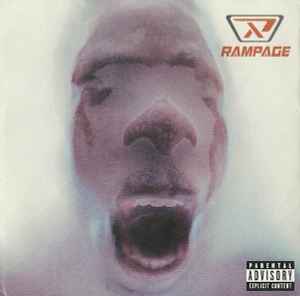
Scout’s Honor is another first-time listen for me, and if the music is anything near as wild as the album cover, this should be a colorful experience.

Intro – The album begins with a three-piece intro suite. First, Kau Kidau introduces Rampage via a bullhorn while complete chaos and destruction occur in the background. Then Rampage introduces himself over some hard Sparta/300-type shit. The last act features Storm hyping up Flipmode Squad and setting up the next record.

Flipmode Iz Da Squad – DJ Scratch serves up a dusty and triumphant boom-bap production for Rampage, Serious (who sounds like a whiny version of Greg Nice), Spliff Star, Busta Rhymes, and Lord Have Mercy to represent Flipmode. Besides Serious (whom I could not take for his name), they all sound competent (Busta? What the hell is an “end of the world nigga”?). It would have been nice to hear a Rah Digga verse over this dope instrumental (she wasn’t yet a part of Flipmode), but it’s still a solid record.

Da Night B4 My Shit Drop – The track begins with a cornball reporter asking our host questions about his forthcoming album (he pops up again between the verses). Then Rampage spits two verses describing his actions and mind state the night before his album’s released: “I’m sittin’ in the room, smokin’ a phat bag of boom, watchin’ a crazy cartoon, plus my hour’s coming soon, it’s a minute to midnight, I’m soon to take flight, I’m sounded right, sucka niggas can’t see my light, I’m nervous, ready, wanna know how I’m coming, The Boy Scout drop the true shit then I’m humming.” The rest of the song features more of Rampage speaking on his confidence, nervousness, and excitement surrounding the album. Props to Rampage for the unique song concept, and Rashad Smith’s backing instrumental is an irresistible banger. The record ends with two West Coast cats (C-Dog and his homeboy) chopping it up about Rampage’s album.

Talk Of The Town – Over crisp drums and a darkly emotional piano loop, Rampage big-ups himself, takes a subtle jab at Son of Bazerk (rip Almighty Jahwell), and shares one of his kinky fetishes with the listeners.

Get The Money And Dip – Scratch keeps the heat coming with a warped, soulful music bed. Our host navigates through it well, and Busta resurfaces to add some spice to the hook.

The Set Up – Rashad Smith gets his second production credit of the night. Rampage uses the creamily somber instrumental to break down the trials and tribulations of a rapper turned thug rapper, turned rapper and thug. It’s a classic tale of the power of the tongue, which I’m sure was inspired by the Tupac and Biggie tragedies (predicting what year someone will die, which Rampage (sort of) does to the subject of this song during the hook, is wild). Dope record. It’s followed by a skit of two White boys, S.O. and Dan-o-the-Mano, looking to get wild for the night on shrooms, but S.O.’s antics bring the evening to a premature end. I chuckle every time I listen to it.

Wild For Da Night – This was the album’s lead single. This time, Backspin The Vibe Chemist taps another dark piano loop to build the backdrop around, and Busta adds his animated energy to the hook. Busta also ends the record by issuing a warning to all “competitive muthafuckas” looking to challenge the Flipmode Squad.

Flipmode Enemy #1 – Rampage pays homage to Public Enemy and their classic record of the same name (replace “Flipmode” with “Public”). It’s followed by a hilarious skit about a booty call that ends in stinky fashion.

Take It To The Streets – This was the second single. Our host is ready to drink, smoke, have sex, and party, and Billy Lawrence joins in on the fun during the chorus and bridge (she was making her hip-hop rounds in ’97). Surely, this processed bullshit was contrived by the label, looking to score a crossover hit. I’m sure even Rampage hated this record. The track ends with a zany Sesame Street type ass whoopin’ skit.

Conquer Da World – Rampage is looking to become the Julius Caesar of hip-hop, and he gets a female vocalist named Meka to encourage him on the hook and adlibs. Ramp’s bars were adequate, but I was more impressed by DJ Scratch’s bassy soul vibes.

Hall Of Fame – Ramp spits a little bit on this record, but it’s far from Hall of Fame status (shout-out to New York Undercover and the Doobie Brothers). I love the mixture of creepy and gully in Scratch’s backdrop.

Niggaz Iz Bad – Serious returns to join Ramp on the mic and doesn’t fare much better than he did on the Flipmode posse joint early in the album. Apparently, this was recorded in ‘94 (there are at least two references made to the year in the song), but it still sounds cohesive with the rest of the album. Give Rashad Smith another pound for this dope beat.

We Getz Down (Remix) – The album closes with what would be the third and final single. Teddy Riley gets his lone production credit of the album, sampling the hypnotic bass line from Cameo’s “Strange” and turning it into a slick groove that Rampage glides through doing figure eights in boastful skates (it’s the same instrumental that plays in the background on the C-Dog skit early in the album). The record has remnants of crossover intent, but its G-funk sensibilities feel good, and it’s one of my favorite joints on Scout’s Honor.

Rampage Outro – Rampage shares a few parting words (which includes a shameless plug for his Flipmode leader and label mate Busta Rhymes’ forthcoming album, When Disaster Strikes) to wrap up the album.

In one season at USC, Bronny James averaged 4.8 points and 2.1 assists in the twenty-five games he played. Those are very mediocre stats, but when your dad’s name is LeBron James, and he makes it clear he wants to play on the same team as his son, those numbers become good enough to get you drafted by the Lakers in the second round of the 2024 NBA draft. During his rookie season, Bronny struggled, and when demoted to the G-League, the struggle continued. It was only his rookie year, so I’m not writing the young man off, but he clearly wasn’t ready for the NBA yet. Busta Rhymes also yielded his influence to get his cousin, Rampage, a deal with Elektra. Much like Bronny’s rookie campaign, Scout’s Honor wasn’t a commercial success, but was it because Rampage wasn’t ready for the big leagues?

The production on Scout’s Honor is damn near flawless. DJ Scratch and Rashad Smith lead and cultivate a sonically top-tier product, skillfully flipping dope soul, jazz, funk, and rock loops over durable drumbeats. Besides the godawful “Take It To The Streets,” it’s quintessential East Coast nineties boom bap. Unlike the production on Scout’s Honor, Rampage is not a top-tier emcee, but he’s proficient on the mic and moderately masters the ceremony throughout. Like his mentor (Busta Rhymes), Ramp rhymes (no pun) with charisma and can switch up his tone and delivery in a heartbeat as if he suffers from DID. There are a few magical microphone moments on the album when Rampage finds the perfect pocket, and his flow rides the beat like Zorro on Tornado (see the beginning of the opening verse on “Da Night B4 My Shit Drop” and “We Getz Down”). But most of Scout’s Honor finds its host spewing random freestyle rhymes that technically sound good but feel aimless and ring hollow.

On the album’s intro, Ramp overzealously says (or, more appropriately, yells), “I feel like I’m about to conquer the world!” Scout’s Honor is not world-conquering material. Nor is it a terrible project. In the annals of hip-hop, it should sit as a sturdy debut project from an emcee with potential who got his chance by way of blood.

-Deedub
Follow me on Instagram @damontimeisillmatic

Posted in Uncategorized | Tagged , , , , | 1 Comment

Missy Misdemeanor Elliot – Supa Dupa Fly (July 15, 1997)

In the past few weeks, my social media timelines have been flooded with various Mount Rushmores. These chiseled four-headed mountains have listed everything from the GOATs of specific sports to the greatest Disney Channel actresses, to the top four male R&B singers of all time, to the greatest female R&B singers of all time; I’ve even seen a couple of Mount Rushmores for the Greatest Off-Key Female Singers. And, of course, there have been several hip-hop-based Mount Rushmores floating around. The Greatest Hip-Hop Producers, GOAT rappers (East Coast, West Coast, and South editions), and a few versions of the greatest female rappers. One of the GLOAT four-headed mountaintops that caught me off guard featured Lauryn Hill, Nicki Minaj, Lil’ Kim, and Missy Elliott.

I’ve often heard Nicki, Latifah, and Kim’s names thrown around in the greatest conversation, but seeing Missy’s name on the list left me a bit baffled. I’ve only watched Missy’s career from a distance and am only familiar with her biggest hits. But from the little I’ve gathered, she’s more of a vibe-type rapper than a lyrical emcee, which is normally the criteria for those who make these lists. But again, my opinion comes from a limited knowledge of her music. This brings me to today’s subject, Supa Dupa Fly.

Supa Dupa Fly is Missy Misdemeanor Elliott’s debut solo album. Previously, she was part of the R&B group Sista, which released an album in 1994 (4 All The Sistas Around Da World) before the group disbanded. The Sista project was produced by Devante Swing (of Jodeci fame) and Timothy “Timbaland” Mosley. Missy was obviously pleased with Timbo’s output on the Sista project, as she would call on him to produce the entirety of SDF. She would also get help in the form of cameos from a few established artists and introduce the world to a few new names. SDF received pounds of critical acclaim (Rolling Stone, which ironically gave SDF a 3.5-star rating upon its release, would list it at ninety-three on their 500 Greatest Albums of All-Time list in 2020) and earned Missy two Grammy Award nominations. It would also earn Missy a platinum plaque, starting her streak of six consecutive platinum-selling albums, a feat I don’t think any other female rapper can claim.

I’ve never listened to Supa Dupa Fly, but I’m confident that in the millions of albums recorded in the past hundred and forty years, more than ninety-two are superior to it. But I’ll play along.

Busta’s Intro – Busta Rhymes is arguably the biggest cameo whore in hip-hop history (I’ve never tabulated the numbers, but it’s surely between him and Lil Wayne). In ‘97, he was still in the early stages of his impressive cameo run. He kicks off SDF with a few energized words and an animated verse over a revised instrumental of SWV and Missy Elliott’s “Can We.”

Hit ‘Em Wit Da Hee – Lil Kim kicks this one off with a verse that has remnants of Biggie’s rhyming residue on it. Then Timbaland unleashes a mildly funky production for Missy to convince a guy who has her open that it’s not his material possessions that have her feeling him. She forces her “hee-ha” tagline into a hook that has nothing to do with the verses but still sounds catchy. The liner notes say the track features an artist named Mocha. Maybe she helps Missy sing the hook? I’m not sure.

Sock It 2 Me – Timbo’s intense instrumental sounds like it’s prepared for war, and Missy sounds ready to get laid. She sings and pleads with the object of her affection to give her some good lovin’, and Da Brat jumps in at the end of the track to add a verse declaring 1997 the beginning of “The bitch era.” Her words, not mine.

The Rain (Supa Dupa Fly) – This was the album’s lead single and biggest hit. Missy’s choppy stop-and-go flow sounds tailor-made for Timbaland’s hypnotic slow-rolling funk, infused with Ann Peebles’ soulful vocal tone. It’s a genius record backed by an incredibly original and entertaining video (by the way, Yo-Yo looks amazing in that video!).

Beep Me 911 – The female R&B trio 702 joins Missy as they play the victims of a sheep in wolf’s clothing’s hit and run/betrayal. Magoo plays the wolf and raps a verse that throws his manipulation in the ladies’ faces (Magoo gives a serviceable performance, but Twista would have completely slayed this slick groove). The hook is nonsensical (if you know the nigga is no good, why in the hell are you paging him to see what he’s going to tell you?), but the beeper reference is a clue to what era the record was made in if you forgot. Timbo’s beatbox-assisted instrumental is soulfully funky and feels good. Rest in peace, Magoo and Irish Grinstead from 702.

They Don’t Wanna Fuck Wit Me – Missy talks her shit over Timbo’s chunky funk, and Tim even jumps on the track to co-sign Missy’s not to be fucked with. Just in case you didn’t get her point during the first minute and forty-five seconds of the track, she harmonizes her shit talk for the last minute and twenty seconds. Dope record that should have ended around the two-minute mark.

Pass Da Blunt – Missy addresses all the producers making “fraud Timbaland beats,” calls out all the bitches that want to be her, brags about goldiggin’ on niggas (did she brag about rolling with Puffy? That line hasn’t aged well), and haphazardly tries to tie all these topics together by passing a blunt on the refrain. Like the content, the music takes on four or five different lives. This record was all over the place.

Bite Our Style (Interlude) – Over a chilled and breezy backdrop, Missy harmonizes about how appealing she and Timbaland’s style is.

Friendly Skies – Ginuwine joins Missy on this slow jam duet. Maybe I should call it a vocal trio, as the electronic voice from Ginuwine’s “Pony” joins the duo and sounds dope as hell in the background. This was pretty smooth.

Best Friends – Sticking with the duet theme, the beautiful Aaliyah joins Missy on this record as the two sing from the perspective of best friends, down for each other through thick or thin. It’s a heartwarming, upbeat R&B record that I enjoyed. Continue to rest in peace, Aaliyah, and hopefully, that’s the last rest in peace I have to give during this write-up.

Don’t Be Commin’ (In My Face) – Get your minds out of the gutter. The song is about Missy growing tired of her man and his cheating ways. Everything about this song was boring as shit. Maybe the record would have been more interesting if it were about Missy telling her man how much she doesn’t like his facials.

Izzy Izzy Ahh – Catchy hook, and I love the country blues funk in Timbo’s instrumental.

Why You Hurt Me – Missy airs the dirty laundry of her homegirl Cutey Tootie, known on the streets as Loosey Booty, for the way she’s (as Missy puts it) “going around humpin’ everybody.” Missy does a serviceable job laying out the storyline, and Timbo’s relaxed, bluesy backdrop accommodates her stop-and-go rhyming style well.

I’m Talkin’ – Our hostess talks more shit over Timbaland’s pensive production.

Gettaway – Missy turns this into an all-female cipher session as she’s joined by Space and Nicole Wray (whose name some of you might recognize for her solo R&B career). The ladies spit decent bars, but the beatbox embedded in the instrumental quickly gets annoying, and at this stage in the album, I didn’t need to hear Missy (for the umpteenth time) harmonize a whole verse about how fly her rhymes are.

Busta’s Outro – Busta shares a few parting words before we get the fuck out of here. Almost…

Missy’s Finale – Per the track title, Missy gives a few thank yous (apparently, it wasn’t enough to do it in the liner notes) before officially closing the album.

As I mentioned in the opening, I was only familiar with a few of Missy Elliott’s singles going into this review. “The Rain” and “Get Ur Freak On” were certified bangers no man or woman could deny or resist. Timbaland’s electrifying rhythms and pulsating bass lines were sure bets to get you out of your seat and move your body, or at the very least, nod your head passionately. Missy rapped on both of those records, but it was Timbo’s production that made more of an impact on me. That sentiment pretty much sums up Supa Dupa Fly.

On SDF, Missy presents as a hybrid artist, singing just as much as she raps. She’s not a powerhouse vocalist, but she knows her limited range and stays in that pocket. She’s not a super lyrical emcee with a great flow, but instead, spoon feeds the listener each word with her choppy, stop-and-go, conversational delivery. Without being a phenomenal singer or an exceptional rapper, Missy efficiently does her thing on the mic, heavily relying on catchy hooks and Timbo’s production, with most of the weight resting on Timbaland’s sonics. Timbaland shoulders the load without budging, stringing together an amalgam of VA funk, R&B/Soul vibes, and sprinklings of pop elements, with traditional hip-hop fundamentals as his sound foundation. There are one or two mediocre production moments on SDF, but most of it consists of solid to bangin’ instrumentals, leaving Missy with the easy assignment to not miss the lay-up.

I enjoyed SDF. It’s a solid debut from Missy Elliott, but its level of flyness isn’t supa dupa or one of the hundred greatest albums of all time. And since she has five more solo albums, the jury is still out on whether she deserves a spot on Mount Rushmore.

-Deedub
Follow me on Instagram @damontimeisillmatic

Posted in Uncategorized | Tagged , , , , | Leave a comment

Slum Village – Fan-Tas-Tic Vol. 1 (July 11, 1997)

James “J-Dilla” Yancey is commonly hailed as one of the greatest hip-hop producers of all time, and rightfully so. In the mid-nineties, he began to make a name for himself, producing a handful of tracks for Pharcyde’s phenomenal sophomore album, Labcabincalifornia. From there, he would produce tracks for De La Soul, Busta Rhymes, and Mad Skillz. Eventually, he’d become one-third of the production team, The Ummah with Q-Tip and Ali Shaheed Muhammad, and the trio would shape the sound of A Tribe Called Quest’s fourth album, Beats, Rhymes & Life, and later, The Love Movement. His resume would continue to blossom as he’d go on to produce tracks for Common, Erykah Badu, The Roots, Bilal, D’Angelo, Janet Jackson, and many more. But let’s go back to 1997 when Dilla was still a member of his original group, Slum Village.

Through the years, Slum Village would see a handful of roster changes, but the original cast consisted of Dilla, T3, and Baatin. The three grew up together in the same Detroit neighborhood and attended the same high school, which is when the group formed amongst a blossoming Detroit hip-hop scene that included the likes of Royce Da 5’9 and Eminem. In 1996, the threesome would begin to work on what would become their first album, Fan-Tas-Tic Vol. 1.

Fan-Tas-Tic Vol. 1 is Slum Village’s unofficial debut album. It’s virtually a demo tape of the group’s early work, recorded between ‘96 and ‘97 (with a few add-ons and alterations), completely produced by J Dilla. It got leaked and passed around the streets like a ten-dollar hooker, creating quite the buzz for the trio on the bootleg circuit. Though it wouldn’t see its official release until 2006, Google lists its bootleg release date as July 11, 1997, which is why I’m placing it in my ‘97 releases (Fan-Tas-Tic Vol. 2 was released in June of 2000 on the GoodVibe label and is virtually a reworking of Vol.1).

With Dilla being one of my favorite producers, Fan-Tas-Tic Vol.1 is an album I revisit every few years. I wasn’t hip to it in ‘97 when it got its original bootleg release, and I didn’t get familiar with it until a few years after its official release. But there’s a reason I keep coming back for more. Rest in peace, Jay Dee and Baatin.

Fantastic – After just enough popping to make you think your CD or vinyl is scratched, soothing melodic bells fall like manna from heaven onto crisp boom-bap drums. Baatin uses the majestic music to get off one short warm-up verse (where he’s on his Moses shit, twice suggesting that brothers “write up a scroll” on their lady “if she don’t act right”) before SV closes the track with the album’s reoccurring theme chant.

Keep It On – Through the years, Keni Burke’s “Risin To The Top” has commonly been sampled in hip-hop records, but I don’t think anyone has ever chopped it up and flipped in the fashion Dilla does for this record. Speaking of Dilla, his witty, frustrated opening verse shines brightly as his music on this track.

I Don’t Know – Over feel-good rhythms and smacking drums, SV interacts with James Brown via cleverly placed JB vocal snippets in this brilliant one-minute musical affair. FYI: Vol. 2’s version is twice as long and more polished, with even more interaction from The Godfather of Soul. It also features superb cutting from the legendary DJ Jazzy Jeff at the end, but we’ll discuss that more in the future.

How We Bullshit – Dilla addresses SV’s haters over a meandering bass line that ends with a Posdnuos vocal clip taken from De La Soul’s “Stakes Is High,” a track Dilla also produced. The interlude ends with the trio acting silly and poking fun at Xscape’s “Just Kickin’ It.” It’s an inside joke, and we’re not on the inside.

Fat Cat Song – This one starts with some weird moaning before a jazzy swing beat comes in, accompanied by scattered scatting from a sampled female voice. SV’s joined by Phat Kat on the mic, and all four parties sound like they’re trying to get their “flows together.” The swing beat morphs into a slick melodic groove shortly before the track ends, but it left me wanting more of it, which I’m sure was by design.

The Look Of Love – The track begins with SV performing the song live while their fans rap along. Then, the beautifully somber strings from the demo recording drop, and Dilla, T3, and Baatin discuss the look of love, or more appropriately, the look of lust. The trio was obviously still working their rhymes out, but the warm, tender melody in the instrumental is perfection, even in its rawest form.

Estimate – Dilla, Baatin, and T3 address phony people and encourage them to stop pretending. At least, that’s part of their message in this song. Dilla’s backdrop sounds like soulful elevator music, and I mean that in the most flattering way.

Hoc N Pucky – Baatin and T3 transform into their alter-egos, Hoc-n-Pucky (at least, I think that’s them; hit me in the comments if I’m wrong), for this minute and forty seconds of animated lunacy.

Beej N Dem – This starts with Dilla sounding like a perverted bootleg Jamaican (which still makes me laugh every time I hear it). Speaking of Dilla, I love his line: “This shit reminds me of some ole EPMD shit.” The instrumental does favor PMD and The E-Double’s work in a clouded, melodic, slightly blunted sort of way. The subtle “Friday the 14th” vocal snippet laced in the track only adds to the zaniness of this record.

Pregnant (T3) – This track finds T3 working out his rhymes over a grey and spacey backdrop. I love the soulfulness in the instrumental, but I hate the loud drum claps placed underneath it.

Forth & Back (Rock Music) – This is the most polished record on Fan-Tas-Tic that you’ll find. Dilla lays down a tantalizing groove you can’t resist swaying to while singing along and following directions to the catchy hook. Despite SV’s censored bars, this one is utterly infectious.

Fantastic 2 – SV brings back the album’s theme chant, which was first heard on the opening track. Dilla’s backing music is on some Sherlock Holmes mystery type-shit with a soulful twist.

Fantastic 3 – The same chant from the previous two installments over instrumentation that gives smoky after-hours lounge spot vibes. Soulfully scrumptious.

Keep It On – This jazzy retouching of the original mix is even more delectable than its predecessor.

5 E’A Remix – Slum Village is joined by another Detroit threesome, who ironically called themselves 5 Elementz. The trio consisted of Thyme, Mudd, and Proof, who most of you know as Eminem’s man, who was also a part of D12. The six emcees pass the mic around like a hot potato blunt, taking short turns spewing rhymes full of juvenile fun over Dilla’s finely chopped loop from Patrice Rushen’s “You Remind Me.” I’ve never heard the original version, but I enjoyed this remix.

Give This Nigga – Dilla goes solo dolo and gets off a quick verse over Roger Troutman/Zapp-inspired funk.

Players – SV addresses all the wannabe players who “need to be smacked open-handedly” for their buffoonery. This joint sounds great when cruising the city after hours.

Look Of Love (Remix) – Yep, another remix. The instrumental is built around the same Minnie Riperton loop ATCQ used for “Lyrics To Go.” Diila’s verse is removed, but he still helps with the hook. T3 softly regurgitates his bars from the original, and Baatin whispers a half-baked new verse. I dug the female vocals on the hook. It felt very Vinia Mojica-ish.

Pregnant (Baatin) – Dilla serves Baatin with some cool luscious shit to give birth to his rhyme. The bars were clearly still not fully developed, but even in their preemie stage, “the one who sold you your kilogram boulder’s” pregnancy went better than T3’s.

Things U Do (Remix) – The rhyme scheme, flow, and cadence SV uses on this record sounds like the template for Q-Tip’s rhyming approach to The Love Movement. I love Dilla’s sexily melodious groove, and Baatin’s closing verse sounds both nonsensical and like poetic genius: “We would fuck on the roof at a Tantra seminar, Autobot stimulator, tantra master visualize the lotus, ladies and women the catch is in my lingam.” The track ends with T3 stuttering while working out another rhyming rendition over a bubbling, bassy backdrop.

Fat Cat (Remix) – The instrumental sounds less soulful and jazzy than the rest of the album, but its tough-guy energy is welcomed. I hate that they censored the rhymes in this mix.

Fantastic 4 – The final installment’s backing music sounds saddened after receiving word that the album will shortly come to an end.

What’s Love Gotta Do With It (Look Of Love Remix) – Musically, Dilla maintains the same melody as the O.G. mix, but the sweetly somber guitar riff transforms into urgent synth chords, giving the song a completely different feel than the other two mixes, but that’s the purpose of a remix, right? The trio also adds new lyrics to this version; unfortunately, they’re censored.

2 You 4 You – Dilla leaves us with one last instrumental before parting ways. It’s best described as animated vibrating soul mixed with a muted melody that only the brilliant mind (and hands) of Dilla could create.

On “Beej N Dem,” T3 rhymes, “Ya’ll muthafuckas think that we don’t be freestyling.” Those who think that have never listened to Fan-Tas-Tic Vol. 1. They’ve only skimmed through it.

From the start of Fan-Tas-Tic, it’s clear that Dilla, T3, and Baatin are coming off the top or at least working out their rough drafts in real-time (I mean, it is a demo). At certain points, you’ll even catch them mumbling inaudibles while trying to find a sound pocket or cadence to stand on. You won’t find top-notch lyricism or chiseled flows and rhyme patterns on Fan-Tas-Tic, but you will discover scattered wit and potential sprinkled over raw bars, and their “Detroit homeboys” chemistry gives their rough drafts even more life. But all the emceeing on Fan-Tas-Tic plays second fiddle to the album’s main attraction: Dilla’s production.

Throughout Fan-Tas-Tic, you can hear the dusty basement residue hovering over Dilla’s lo-fi soul and jazz loops. Most of the loops he builds around are untapped soil (at least they were in 1997), and the few times he does recycle familiar ones, he chops and flips them so uniquely they almost lose their familiarity. Whether familiar or unfamiliar, Dilla’s loops carry addictive neo-soul adjacent melodies and grooves, and brilliantly, he keeps most of the tracks’ run time short, leaving the listener yearning for more.

Revisiting Fan-Tas-Tic Vol. 1 is a bittersweet experience. It’s a great demo, better than many of your favorite rappers’ best mixed and mastered work. But it’s sad when you listen to the project and get reminded that two-thirds of the original team passed away far too early.

-Deedub
Follow me on Instagram @damontimeisillmatic

Posted in Uncategorized | Tagged , , , , | Leave a comment

Ant Banks – Big Thangs (July 8, 1997)

My first post of 2024 was on Ant Banks’ second solo album, The Big Badass. Ant Banks is known as a producer, but on Badass, he not only controlled the boards but also stepped behind the mic, handling most of the album’s rhyming. Unlike Diamond D, Pete Rock, and Large Professor, Ant Banks is not in the running for best producer on the mic. Lyrically, I wasn’t expecting much from Banks on Badass, but I was looking forward to the dense funk I’d heard him create on Too Short and Spice 1 tracks. There were a few great funk moments on Badass, but they were few and far between. Banks would release one more solo project (Do Or Die) and was a part of The Dangerous Crew album, Don’t Try This At Home, before parting ways with Jive, the label home for his first three solo projects. He would begin his next chapter on Priority Records, releasing Big Thangs in the summer of 1997.

Big Thangs is a compilation project produced by Banks with a pretty impressive guest list: Dr. Dre, Ice Cube, Ice-T, Spice 1, and King Tee, to name a few. The hefty guest list must have helped, as the album climbed to number 20 on the Billboard Top 200. But even with a top twenty position, the album wasn’t a huge commercial success and would end up being the only album Banks would release on Priority. Other than a few collab albums with the vanity group T.W.D.Y. (an acronym for The Whole Damn Yay) released on Thump Records, Big Thangs would be the end of Ant’s album career. He would continue to produce tracks for other artists, though.

Big Thangs is another first-time listen for me. Let’s get into it and see if them thangs are as big as Ant claims. Pause.

Intro – The album begins with our host sharing a few words to introduce and hype up the album. He also invites us all to take a whiff of his funky “poot” (“poot” is his word, not mine) while Otis and Shug (the album’s house singers) harmonize the album title over super mid instrumentation.

Big Thangs – The first song of the night pairs Ice Cube with Too Short as the two exchange thrown-together misogynistic bars tied together with a beyond-elementary hook. It’s fair to say the duo doesn’t recapture the magic they created on “Ain’t Nothin’ But A Word To Me” (see Short Dog’s In The House). At least Ant’s breezy Kool & The Gang’s “Summer Madness” interpolated backdrop was pleasant.

Coolin In The Luff – The legendary Bay Area radio host Chuy Gomez stops by and drops a few lines on this short interlude.

Can’t Stop – Sticking with the duet theme, Ant brings E-40 and Mack 10 together to form E-Mack 50. Mack 10 gives a decent performance, and E40 sounds like he has split personalities. At the end of the record, 40 sounds like he may also suffer from Tourette’s Syndrome. I’ve never been a fan of E40, and after hearing him rhyme over Banks’ underwhelming instrumental, my opinion hasn’t changed.

West Riden’ – Here’s a pairing I didn’t know I needed to hear: King Tee and Spice 1. The Likwit Crew founder and The East Bay Gangsta bring L.A. and the Bay together, respectively, and ride for the West Coast. The duo sounds good rhyming together, and Ant’s smooth groove behind them only makes the track more enjoyable.

Hard Knox – W.C. shows up for this one, making him the third and final member of Westside Connection to contribute to Big Thangs. He’s joined by a rapper named J-Dubb as the two take turns gangster posturing because, as the hook says: “Bitch, I know my ABCs, but all I ever did in life was fuck with Gs.” Both Dubbs give a serviceable performance on the mic, but Banks’s semi-dark G-Funk-esque instrumental was way more entertaining than the rhymes. Warning: if you listen to this in your car, beware of the nagging beep embedded in the instrumental that might make you think the door is ajar or your seatbelt is unfastened.

Gamblin’ Wit Ice T – Ice-T sends Ant a line from a yacht floating on the Mediterranean Sea. Allegedly. It sounds more like it was recorded in somebody’s home studio with sound effects thrown in for good measure.

4 Tha Hustlas – Ant chefs up one of his standard stank backdrops, but it’s Shorty B’s understatedly funky guitar riff that really makes this track smell (understated goes out the window at the end of the record when he goes full-on rockstar with the licks). Too Short, Tupac, and MC Breed take turns jabbing at Banks and Shorty B’s funk. All three hold their own, but I was thoroughly impressed by Breed’s closing verse. It’s crazy to think that two-thirds of the guests on this track are no longer with us. May Pac and Breed continue to rest in peace.

Time Is Tickin’ – Bad-N-Fluenz is a crew I’d never heard of before looking through the Big Thangs’ liner notes. Through a little Googling, I discovered they were an Oakland collective, and two emcees in the crew, Ant Diddley and Mr. Ill, rap on this track. Ant Diddley starts the record off shouting out his fallen comrade and former partner in rhyme, Rappin’ Ron, who passed away in a car accident in January of ‘97. Then he and Mr.Ill take turns discussing everything from the streets to the beach (and the solar system) with flows and vocabulary not usually heard from Oakland emcees (Mr. Ill raps about the “Choice words” that come from his “mandible.” I’m pretty sure I’ll never hear another rapper use “mandible” in a rhyme). The eerie, slightly mystic vibes in Ant’s instrumental complement the high-level lyricism exhibited by these two talented emcees, which I’m thankful I discovered on this track.

Cutaluff – Dr. Dre shows love to Ant Banks by doing the intro for this track. Then Slink Capone gets off one short, forgettable verse, followed by a mediocre refrain and vocal performance from Stacey Hogg.

Hoo-Ride Ant Banks – This was a cute interlude. B-Legit (from The Click), Mean Green, MC Ant (who claims to be the first rapper Ant Banks ever recorded with), and Baby D (the kid rapper that Short Dog haphazardly gave a solo track to on Gettin’ It ) all leave disgruntled voicemails for Banks, expressing their disappointment for not receiving an invite to rap on Big Thangs. The eerie background music left me waiting for Ice Cube to say, “Fuck All Ya’ll.”

Make Money – CJ Mac and K-Dee spit hustler rhetoric with so much West Coast bravado I wanted to jump on the hood of a ‘64 Impala and crip walk. Add Otis and Shug’s catchy jingle on the refrain with the slippery guitar licks, jazzy keys, and a string loop with cloudy sophistication, and you get arguably the best record on the album.

Play Paraphernalia – Coolio (RIP) intros this record, showering Ant with verbal love. Then J-Dubb (making his second cameo of the night) and Rappin’ 4-Tay team up to share some “pimpish ass shit with a gangsta twist.” Decent rhymes over a moderately funky backdrop.

Fien – AllFrumTha I was a two-man team, Binky Mack and Squeak Ru, hailing from Inglewood, California, hence the corny group name. The duo uses this record to discuss their addiction to money, hoes, narcotics, bitches, switches, and hydraulics. Ant lays a slick mid-tempo groove with discreetly funky wah-wahs to support the duo’s pimpology. I don’t fully know what it means, but I love the “My office be the streets, can’t let no grass grow under my feet” line. It sounds like some ole slick Oakland pimp shit.

You Want Me Back – Ant gives the floor to a songstress named, Audrian for the final record of the night as she sings another “You fucked up, but now you want me back, and I’m not interested” song dedicated to her ex. J-Dubb and CJ Mac add raps from the perspective of her ex and her new man, respectively, over Ant’s instrumental, which is the perfect balance of lush R&B chords and Oakland funk. Audrian reminded me of Michel’le, until she attempted to hit a big run and failed miserably. If Ant wanted an R&B record on the album, I wonder why he didn’t let Otis & Shug get their own joint.

Outro – Our host brings back the beat from the title track to share a few parting words. And we’re done.

During the album’s “Intro,” Ant Banks says, “We bout to pull off the biggest bank robbery ever known to man.” This statement could be interpreted in a few different ways. Is Banks implying that the album is so bad that he’s robbing the fans who spent their hard-earned money on it? Or is he giving the listener the inside scoop on him and his team’s planned criminal activity? Or is it just a poorly executed play on his last name and a really bad metaphor for Big Thangs being a monster of an album? If you guessed C, you’re correct.

Ant’s solo run at Jive taught him one thing for sure: rapping isn’t his strong suit. Other than the intro, outro, and a few adlibs here and there, he leaves the microphone alone on Big Thangs and lets his lengthy list of guests handle the rhyming, with mixed results. The guest list includes heavy hitters, all the way down to unknown newcomers, all with one common goal: to represent the West Coast. Most of the big guns’ contributions felt mailed in, and the hustler/pimp/gangsta themes consume most of the album. But scattered amongst the heavy hitters’ coasting and the repetitive subject matter are a few great emcee moments: see “West Riden,” Time Is Tickin’, and “Make Money.” But when the rhyming doesn’t tickle your fancy, Banks’ production bears the load. Without the responsibility of having to worry about rhyming, Ant focuses solely on the production, and it pays off. Big Thangs has a few mediocre musical moments, but most of the album is filled with Ant’s signature Oakland funk, and the stank is way more consistent than it was on Badass.

Before Banks’ horrible heist metaphor happens during the “Intro,” he asks the listener a series of times if they “can smell it,” referring to the funk in his music. On Big Thangs, Banks’ poot provides a sufficient amount of odor to keep the listener’s face scrunched up in satisfaction.

-Deedub
Follow me on Instagram @damontimeisillmatic

Posted in Uncategorized | Tagged , , , , | 2 Comments

Puff Daddy & The Family – No Way Out (July 1, 1997)

With all the drama, accusations, charges, and, more importantly, the Cassie tape, I’m sure some of you have already canceled Diddy and his musical catalog from your playlist, which I can understand. I’ve never been the biggest Diddy fan, but no matter how you feel about the man, there is no denying his label, Bad Boy, was responsible for some pretty great music in the mid-nineties to early 2000s. Craig Mack warmed things up with the label’s inaugural single, “Flava In Your Ear,” in the summer of 1994. The R&B acts Faith Evans, Total, and 112 all released platinum-selling albums, and I’d be remiss not to mention the impact Biggie made with Ready To Die and Life After Death. Even after Big’s death, Bad Boy’s R&B roster, along with Mase, The Lox, and Black Rob, would carry on the label’s platinum tradition. Diddy, who always made it a point (as Suge Knight said at the 1995 Source Awards) to be all in the video and all on the records of his artists, decided he didn’t just want to be a backup dancer or a hypeman for the label’s talent, but wanted to become the label’s talent as well (this would eventually cause issues with some of the other Bad Boy artists, but that’s a story for another day). His first stab at being an artist would come in June of 1997 with the release of Puff Daddy & The Family’s No Way Out.

No Way Out was released on the heels of the murder of the label’s biggest artist, Notorious B.I.G., and his posthumous release, Life After Death. Diddy would enlist his Hitmen production team to set the album’s musical tone and call on a host of guests, aka the Family, including the ghost of his fallen superstar emcee. No Way Out received mixed reviews from major publications, but that wouldn’t stop it from climbing to number one on the US Billboard Top 200 and becoming a four-time certified platinum album six months after its release. To date, it has sold over seven million units.

I was pretty much done with secular hip-hop by June of ’97, so other than a couple of singles, I don’t know a whole lot about No Way Out. I repurchased one of the seven million copies sold for a few bucks at a thrift store a few years back, long before all the allegations began to surround the business mogul (although there were rumors about his lifestyle and dirty deeds long before).

A reader asked in the comments of my Life After Death write-up if I would give a fair and balanced review of No Way Out. I will try my best to do that and not judge Diddy for the piece of shit that I believe him to be.

No Way Out (Intro)No Way Out begins with somber chords sung by a celestial choir while a grieving Puffy whispers a prayer that I’m sure he’s probably repeated a few times in the past year, now with new meaning. The choir loop is embedded with cliche sirens and helicopter propellers. Unless it’s completely necessary, can we retire the use of sirens in hip-hop songs?

Victory – From the moment you hear Stevie J’s solemnly triumphant chords come in, along with Biggie’s opening “One” adlib, you can feel this is going to be epic. Puffy helps build the anticipation with a few warm-up lines while the tension in the backing music grows until the drums drop and Big commences to K.O. the track in two rounds. I know this is essentially Puffy’s solo album, but after his opening words, he should have bowed out and let his deceased star emcee shine without interrupting with his minuscule verse sandwiched in between Biggie’s brolic bars. Busta Rhymes comes through to add an energetic hook to what was already an enthused musical experience. This is certified fire. After the music ends, Puffy comes back in yelling, “What I’mma do now? Huh? It’s all fucked up now,” as if hearing Biggie’s vicious verses reminded him that Big’s demise meant the label’s cash cow was now gone.

Been Around The World – Coming off the success of their duet, “Can’t Nobody Hold Me Down,” Puff and Mase reunite to brag about their material possessions, boast of their sexual exploits, and address all the haters whose favorite emotion is directed towards them. In this current climate, hearing Puff say, “Let the Freak Show begin,” and talk about anything sexual is crazy uncomfortable to hear, but much like the album’s lead single, Diddy and Mase’s expensive and explicit chemistry works. Biggie’s catchy Lisa Stansfield-inspired hook, along with D-Dot and Amen-Ra’s smooth but playful David Bowie-fueled backdrop, makes the record even more appealing. This one ends with a skit of The Madd Rapper (first introduced on Life After Death) introducing us to The Madder Producer. It’s silly shit, but whatever.

What You Gonna Do? – An ordinary lunch date with a friend turns into a shootout with unknown rivals on Puff’s first solo joint of the evening. The writing credit for this one is given to Diddy and Lil’ Kim, but I’d be willing to bet Big also had a hand in penning this drama (at least the first verse). Puff fails to sell it as he sounds like he’s reading the script directly from the paper, and the storyline gets confusing, falling apart by the midway point. Despite Puffy’s performance, I still enjoyed Nashiem Myrick’s (with co-credit going to Amen-Ra) slick, gangsta thriller of an instrumental.

Don’t Stop What You’re Doing – Puffy summons Amen-Ra to loop up Yarbrough & People’s classic funk joint, “Don’t Stop The Music,” which is a no-brainer considering Puff’s favorite tagline. Lil’ Kim makes her first appearance on the album and shares the mic with Puff while the incomparable Kelly Price stops by to sing the hook and adlibs on this feel-good record.

If I Should Die Tonight – J-Dub hooks up a polished, sexy R&B groove with Carl Thomas crooning in the background, which makes for an odd set-up for Puff to reflect on death.

Do You Know? – D-Dot hooks up a soulful mid-tempo groove punctuated by sparkling, sophisticated piano keys (credited to J-Dub), and Kelly Price drops in again to add her voice to the Diane Ross-influenced hook. Puffy goes dolo once again and doesn’t sound convincing. J-Dub jumps back on the piano and completely kills with his closing solo.

Young G’s – Diddy, Jay-Z, and Biggie each spit a verse *in my Snoop Dogg voice* From a young G’s perspective. Kelly Price recreates the refrain from Donny Hathaway’s “Little Ghetto Boy,” and Rashad Smith provides a cool xylophone-driven instrumental to back the pow-wow. I bet you can figure out who the weakest link is on this record.

I Love You Baby – Other than his hit record, “Whoa,” I didn’t know much about Black Rob. I recently discovered a couple of cameos he made on CRU’s Da Dirty 30, which I enjoyed. Puff gives him an opportunity to shine on this track as he spins a dark tale about betrayal and revenge. Rob’s premeditated murderous getback, delivered with his gruff voice, sounds great over The Hitmen’s elegant strings and piano keys that were tailor-made to converse about sex and deceit. I have one issue with this record: Puffy. Why in the hell does he jump in on Rob’s story to give us the last verse? This is Rob’s narrative, so give him the floor and keep your contribution to the whispers you put on the hook, dammit. J-Dub returns at the end of this track to put down another passionately disgusting piano solo. Rest in peace, Black Rob.

It’s All About The Benjamins (Remix) – The liner notes and back CD panel list this as a remix, but it’s the only version of the song that I’ve ever heard. Puffy’s joined by Jadakiss, Sheek Louch, Lil’ Kim, and B.I.G. for this blinged-out cipher session (I wonder why Styles P didn’t make the record). D-Dot’s credited with the hard-hitting mid-tempo backdrop (if you listen to the original Love Unlimited loop the instrumental is built on, D-Dot’s flip sounds even more impressive), but my favorite part is when the beat changes to the flute-led Jackson 5 loop and we get one last charismatic and expensive verse from Frank White.

Pain – Over somber piano play, Puff shares some of the painful events that have him wanting to check out (i.e., his father’s murder when he was a kid, his haters wishing for his downfall, and Biggie’s murder, which is the theme of the third verse). I respect Puff showing vulnerability, but this should have gone right after the “If I Should Die Tonight” interlude. There’s no reason to have two separate “woe is me” moments on the album. Speaking of pain, it was painful to listen to the uncredited voice that sings the hook.

Is This The End? – Puffy gets really ambitious with this one as he attempts to rap double-time, a la Twista. Speaking of Twista, I remember him when he went by Mista Tung Twista in the early nineties. Back then, he was more concerned with speed and getting into the Guinness Book of World Records than style and creating dope records. He reinvented himself with his cameo on Do Or Die’s “Po Pimp,” which was cool stylistically, but I didn’t think it was lyrically phenomenal. He pops up on the second verse of this song and saves Puffy, both figuratively (Puffy was struggling heavily to keep the double-time pace) and literally (in the song, he shows up to give Puff a ride to escape some “unholy men” looking to kill him) and completely obliterates Stevie J’s chirping birds and innocent harp plucks. I didn’t care for the Carl Thomas/Ginuwine hook, but Twista sounds incredible on this record. I’m going to hunt down a copy of Adrenaline Rush immediately!

I Got The Power – Two words come to mind to describe this one: bully and gully. The Lox batter and bruise Jaz-O’s electronically grimy backdrop. This record only increased my anticipation to finally listen to and break down Money, Power & Respect in the near future.

Friend – This was a complete train wreck. Stevie J builds a decent sonic canvas around an Average White Band loop, but Puffy and Foxy Brown’s exchange, along with Simone Hines’ hook, feels recklessly thrown together and simply doesn’t make any damn sense.

Senorita – After an extremely too-long pillow talk exchange between Puff and his Spanish-speaking vixen that ends the previous track, Yogi (from The CRU) drops a hypnotic pulsating bass line and sprinkles melodic chimes from heaven over it to set the mood for Puffy’s ode to his sexy Latino goddess, Carmen (I wonder if JLo was the muse for this song). Puff sounds more convincing rhyming on this song than any of his other solo joints on the album, but nowhere near spectacular. But his catchy hook will have you singing along while you bob your head to the plush instrumental.

I’ll Be Missing You – With “Can’t Nobody” (which will get to real soon) being released six months before No Way Out, this is the album’s unofficial lead single/official second single. Stevie J taps The Police’s “Every Breath You Take” for the backdrop, and Faith Evans and 112 lend their vocals to Puffy’s dedication to his fallen friend or deceased bitter employee, depending on who you ask. Puff spews simple, sappy, and cliche bars, but the music and Faith and 112’s voices on the hook and bridge will surely stir your emotions as you reminisce over Big or any of your lost loved ones.

Can’t Nobody Hold Me Down – As promised, Diddy closes the album with the lead single. Six July and Nashiem Myrick recreate the vintage electronic funk of “The Message” for Puff and Mase to tag team the mic and boast about materialism and excess and excessive materialism. The hooks and refrains on the album version sound shortened compared to the original mix that I remember, but even in its truncated form, it still sounds great. My only issue with this record is its placement. You have to close the album with the Biggie dedication joint, bro.

“Do You Know?” begins with Puffy saying, “There are times in my life when I feel trapped. I feel there’s no way out. No escape. To be honest, I don’t know where my life is going. Where I’ll end up at. I just don’t know.” I’m sure he didn’t think he’d end up where he is now. Maybe the album title, No Way Out, was Puffy’s way of subliminally crying out for help to escape the dark, twisted, and perverted world he felt trapped in. Needless to say, it didn’t help him escape, but it may have helped produce some great music.

There’s a reason No Way Out is credited to Puffy Daddy & the Family. Of the album’s seventeen tracks, only five feature Puff rhyming by himself. This was a wise move, considering Puff is a horrible rapper. I’ve often criticized rappers in the past for not writing their rhymes, but after listening to Puff recite rhymes written by some of hip-hop’s greatest pens (i.e., Jay-Z, B.I.G., and Jadakiss) on this album and still sounding terrible, it made me respect what Lil’ Kim does even more. It’s well-known that Big penned most of her rhymes for the Hard Core album, but she sold it with her personality, charisma, and believable promiscuity. Ironically, Diddy, the ultimate salesman, fails to close the deal as an artist on No Way Out, but everything works well.

The production on No Way Out is stellar as The Hitmen laced the project with so much soul, heat, and flavor you’d swear it was an audible New Orleans seafood boil. All of the Family and special guests, not named Foxy Brown or that horrible uncredited voice that sings the hook on “Pain,” deliver with solid to great efforts. Biggie’s handful of contributions were a nice added touch, and more importantly, they sound authentic and not like posthumous patchwork added to gain clout, even if that was Puff’s purpose for including them. Despite a few track sequencing issues, “Friends” and Puffy’s rapping, No Way Out is a really good listen if you can look past Diddy’s disgusting highly-publicized transgressions. How’s that for fair and balanced?

-Deedub
Follow me on Instagram @damontimeisillmatic

Posted in Uncategorized | Tagged , , , , | 1 Comment

The Beatnuts – Stone Crazy (June 24, 1997)

The last time we checked in with The Beatnuts here at TimeIsIllmatic (at least as far as an album is concerned) was in 1994 with their first full-length release, Street Level. A year before, The Nuts released their debut EP, Intoxicated Demons, which was flavorful but just an appetizer compared to the delectable audio goody that was Street Level. Street Level received a positive response from fans and critics, helping establish a solid foundation for The Nuts, but things would soon change.

The Beatnuts were billed as a trio (JuJu, Les, and Fashion), but they were really a foursome, with V.I.C. being the fourth official or unofficial member, depending on who you ask. After Street Level, V.I.C. would sever ties with the group, and Fashion would depart to start a solo career as Al’ Tariq, officially leaving The Beatnuts as a duo. Like they say, the show must go on, and after a three-year hiatus, JuJu and Psycho Les would return in 1997 with Stone Crazy.

With V.I.C. and Fashion gone, JuJu and Les would be forced to handle all microphone and production duties on Stone Crazy. Well, most of the microphone duties as they’d invite a handful of guests to share the lyrical load. The album produced four singles and was well-received, including a 3.5 mic rating from The Source.

I stopped following The Beatnuts after Street Level, but I bought a copy of Stone Crazy at least ten years ago, and I’m finally getting around to listening to it for the first time with this review. I’ve always respected The Nuts’ early production work, so I’m interested to hear how it sounds with half the team gone.

World Famous – Not to be confused with the intro from their debut EP, Intoxicated Demons (which has the same title), the Nuts kick things off with an ill David Axelrod loop and rugged drums. At the same time, a male voice repeats the track’s title, which is occasionally interrupted by sirens and screams. Dope beat to practice your freestyles over.

Bless The M.I.C. – The Beatnuts turn what was probably an innocent ukulele chord into a dark and demented loop. Les is back to his juvenile antics (driving drunk and wiping his ass with emcees) while JuJu assumes the role of… a drug dealer? The duo’s joined by Gab Gotcha (who also cameoed on “2-3 Break” from Street Level), aka the Hustler of bangin’ jargon, and the clever aliased emcee delivers a sufficient enough verse. This was a dark way to kick things off, but a dope record, nonetheless.

Intermission – Apparently, the previous track took a lot out of Les and JuJu. So much so they had to take a little break way early in the track sequencing. At least they left us with a funky little diddly to vibe to while they catch their breath.

Here’s A Drink – Thankfully, JuJu comes down from the gangsta persona he presented on “Bless The M.I.C.” as he and Les get back to their typical subject matter: ladies, liquor, and L’s. The loop in the instrumental borders on boring, but after a few listens, I found my head bobbing to the bouncy beat, and I’m sure the hook (which samples a Q-Tip line (Tribe Degrees of Separation: check)) helped make the track more digestible.

Off The Books – The Nuts build the backdrop around a loop of the perfect music for a belly dancer to twerk to. They invite Big Pun (rip) to the party, and we quickly learn that Pun’s girl has “the meanest ass” that he enjoys eating when he’s not “clotheslining muthafuckas” (envisioning Pun clotheslining some random rapper like he’s Hackshaw Jim Duggan is hilarious in my mind). Pun sets the bar high with his verse, and Les, JuJu, and their other guest, Cuban Link, never come close to reaching it. Yet still, this shit bangs.

Be Proud/Interlude – It plays just as it reads.

Do You Believe – This was the second single. The Nuts turn a Los Angeles Negroes loop into a hard-hitting emo-boom bap experience that finds JuJu paying respect to his gun (he also gives a nod to another classic Q-Tip line) while Les drinks, smokes, and talks about the greatness of their music. It’s a solid record, even if they did forget the question mark in the song title.

Finger Smoke – Yet another musical interlude. This shit sounds spooky if you’re listening to it outside when it’s pitch dark.

Stone Crazy – The title track’s instrumental is built around a sample from a record with the same title by an obscure seventies rock band called The Bozone. Aiming to live up to the song title, JuJu and Les present as manic maniacs, with JuJu doing a better job selling the persona than Les. I didn’t buy either of their contrived psychotic energy, but the bluesy-funk Bozone loop is absolutely bananas! The track ends with a random chick leaving a voicemail about how fucked up she is after smoking three blunts with her cousin.

Niggaz Know – The Nuts unleash haunted organ chords and do their best Mobb Deep impersonation: Les gives us a “What up, thun?” and JuJu’s whole bit sounds like imitation Prodigy.

Horny Horns – A fitting title for a Beatnuts interlude, but it sounds too peppy to be amongst the rest of the darkness that has overshadowed the album thus far.

Find That – JuJu and Les have a simple message for niggas, bitches, and promoters. If you owe them money, pay them, or they’ll kill you. Their violent message is backed by a gloomy loop and drab drums. This was decent, I guess, but an interesting choice for the lead single.

Supa Supreme – Les and JuJu’s tough guy talk rumbles with somber Italian mob vibes.

Thinkin ‘Bout Cash – The Beatnuts are joined by another duo, Hostyle and The Poet (collectively known as Screwball), turning this into a quartet cipher session. None of the four embarrass themselves as they take turns spewing hardcore bars (although JuJu sounds extra angry for some reason), but the Nuts instrumental sounds way more entertaining. They brilliantly weave dueling organ loops together (they sound like a demon and angel perched on each of the track’s shoulders), seamlessly rotating them in and out throughout the record. The instrumental sounds better with each listen.

Uncivilized – JuJu and Les take it to the gutter with a pensively grimy backdrop. They invite their homie, Don Gobbi, to join them and play in the muck and mire (it sounds like Les may have taken a shot at his former group mates, Fashion and V.I.C., with his line: “Why too many ears at my session with opinions? But not this year (no question)”). It’s a decent record, but it wouldn’t be missed if it were left off the album’s final cut.

Give Me Tha Ass – The Beatnut don’t normally use low-hanging fruit samples, but as Les says, for this cut, they chose to “hit you in the head with a joint you familiar with,” which comes in the form of Patrice Rushen’s “Forget Me Nots.” JuJu and Les take a break from their newfound thuggery and revert to the horny clowns chasing ass that we’re used to.

Strokes – This one begins with a very blunt chick leaving a voicemail for Les to let him know she wants to feel his agony. JuJu sits out for the last record of the evening and lets Les and his guest, Horny Man (who only adds adlibs to the track), get extra horny. This is easily the weakest record on the album. The instrumental is boring, the laughing/moaning chick sample on the hook was annoying, and I can’t tell if the male vocal snippet on the other side of the refrain is bustin’ a nut or taking a shit.

With the success of Jay-Z, Mobb Deep, and Nas’ Escobar persona in the mid-nineties, a slew of East Coast acts would copycat the thug/mafioso formula, looking to cash in on the lucrative sub-genre. When some of these acts jumped on the bandwagon, it was no surprise, as they never had any true artistic integrity, making it easy for them to go wherever the wind blew them. But when other artists jumped on the trendy style, it was shocking, or at least a bit surprising. Enter The Beatnuts.

On Stone Crazy, The Beatnuts abandon the playful hood frat boy energy that fans came to know them for on their first two projects. This time around, the duo (more so JuJu) adopt a hardcore edgy image. It’s not like the Nuts didn’t talk about violence and guns on Intoxicated Demons and Street Level, but it always felt like lighthearted banter. On Stone Crazy, their thuggery comes with a serious tone, and coming from these Native Tongue affiliates, it feels inauthentic. But does anyone really listen to a Beatnuts album for the rhymes?

A lot of hip-hop producers/beatmakers use samples, but The Beatnuts are what I call true crate diggers. The Nuts don’t recycle low-hanging fruit or Captain obvious loops from the catalogs of commonly sampled sources (i.e., James Brown, Issac Hayes, Barry White, Earth Wind & Fire, The Isley Brothers, etc.). They go deep into the crates, scouring every nook and cranny for the most obscure loop to stifle their competitors but, more importantly, blow the listener’s mind. Stone Crazy has a darker feel than their previous projects, but except for “Give Me Tha Ass,” all the loops are drenched in obscurity. There are a few dry moments on the album, and there’s a section during the second half where three or four songs kind of run together, but most of the tracks on Stone Crazy feature dope production from the newly thugged-out Queens duo. But it’s not nearly as dope or consistent as it was on Street Level.

-Deedub
Follow me on Instagram @damontimeisillmatic

Posted in Uncategorized | Tagged , , , | Leave a comment

Craig Mack – Operation: Get Down (June 24, 1997)

In the summer of 1994, Craig Mack became the first artist to release a single on Puff Daddy’s new label, Bad Boy Records. “Flava In Your Ear” would become a Billboard Top 10 hit, reach platinum status, and lay the foundation for Diddy’s musical empire. Craig Mack seemed prone to become rap’s next star, but there was one small problem. Biggie.

Mack released the label’s first single, but Biggie would release his debut and the label’s first full-length, Ready To Die, one week before Mack’s Project: Funk Da World. Biggie blew up, becoming a bonafide rap superstar and the label’s main attraction and focus. Craig Mack would get lost in the shuffle, and eventually, Puff would send Mack packing and looking for a new label home. Thankfully, he wouldn’t be homeless for long as Eric B, who had just become an executive at Street Life Records (a subsidiary of Scotti Brothers Records), would scoop him up and sign him, where he’d release his sophomore album, Operation: Get Down.

Eric B would get one production credit on the album but mainly served as the executive producer. Instead, Prince Markie Dee, Johnny J, and a few lesser-known names would be responsible for sculpting the album’s sound. OGD would produce a couple of singles, but without the Bad Boy machine behind it, the singles and the album didn’t make much noise or move many units. OGD would spell the end of Craig Mack’s rap career, and when you factor in the way he died in 2018, he makes for the perfect subject for TV One’s Unsung. Does that show still come on? Does TV One still exist?

I bought a used CD copy of OGD several years ago, and this is my first time listening to it. Let’s jump into it and see if Get Down was a successful Operation for Mr. Mack.

Can You Still Love Me – Mr. Mack begins OGD with an elegant R&B instrumental (credited to Eric B), complete with an elaborate chord progression and sultry female vocals (courtesy of Natasha Barr) on the hook and adlibs. It kind of plays like a new age, hip-hop version of The Isley Brothers’ “Work To Do.” Craig spends three verses trying to convince his insecure woman that he has to travel and tour to provide the extravagant lifestyle she enjoys living (“Now the type of things/like diamond rings, mink coats/cars and boats/come from notes that come out my throat/the rhyme I wrote got me making paper/hate to tell you this but I’mma list the things you got/cause my style’s hot/like it or not/I gotta go on tour/keep ya chillin’/gots to make some more/million dollar house with marble floor”). This is a much different sound than Mack gave us his first go-round, but I like the concept, and Craig sounds comfortable and in sync with the music. And please, fellas. When he’s out on tour, keep your hands off his girl!

What I Need – This was the lead single. Mack attempts to get his Heavy D ladies’ man persona on but comes off sounding too thirsty and extra horny (letting a random chick walk up and start sucking your toe is crazy). I didn’t care for the generic electronic-sounding backdrop, and the talk box (the O.G. autotune) crooning on the hook was godawful.

Jockin’ My Style – This sounds like something that could have been on Funk Da World. Craig uses Tyrone “Sugarless” Fyffe’s bouncy backdrop to brag and boast about the bodaciousness of his bars (tongue twister much). The instrumental sounds like it’s trying to recapture the magic of “Flava In Your Ear” (which might also be why it was the second single), and even though it doesn’t, it’s still a decent record.

Rap Hangover – The late Johnny J (whose name you may recognize for his production work on some of Pac’s albums) taps a Dianna Ross classic for Mack’s ode to rap. During his first verse, Craig gets personal as he addresses the state he was in after his separation from Bad Boy: “I was broke in the corner, Street Life picked me up/two days away from asking for some change inside a cup/Now “Flava In Ya Ear” was the jam to rock the many/but at the time my rhyme did not make a penny.” Craig uses the last two verses to talk shit and pledges his allegiance to emceeing. You can’t really mess up an interpolation of “Love Hangover,” and La Shawn Monet’s seductive vocals on the hook make it sound even more enticing.

Sit Back & Relax – Al West and Prince Markie Dee (rip) interpolate Tony! Toni! Tone!’s “It Never Rains (In Southern California),” turning it into a silky-smooth R&B groove, which it already was in the first place. Mack stays true to his emcee mentality and uses the refined canvas to battle emcees (his “dig into your ass quick” line sounded a little crazy, though). Demarkie “Meech” Sheki and PJ DeMarks sing the hook that gives the track an even more sophisticated feel, and I took the duo’s advice. Rest peace to D’Wayne Wiggins.

Do You See – Mack picks up where he left off on Funk Da World’s “When God Comes.” Instead of using a ruggedly monster Easy Mo Bee backdrop, Meech slides him a soft and tender R&B instrumental to speak on the perilous times and the impending apocalypse (Mack gets into his bag on the second verse, which is easily the best verse on the album). I didn’t necessarily need Meech and PJ’s singing on the hook, but I like hearing from Apocalyptic Craig Mack.

Put It On You – Mack keeps the R&B theme going with this one. Meech gets the production credit and sings the hook. The instrumental was decent, and Mack sounds cool, but the hook didn’t make any sense or correlate with Craig’s bars. Maybe I’m expecting too much from a hip-hop record.

Rock Da Party – I didn’t realize how beloved a record Sweet G’s “Games People Play” was to nineties rappers. This is at least the third album I’ve reviewed in the past few years that pays respect to the old-school eighties joint by recycling its instrumental (built around a sample of Issac Hayes’ “Ike’s Mood I”). Craig Mack assumes the role of “King Emcee” and raps from that perspective. God bless the dead, but I’m calling cap on Craig’s crown. Still, he sounds decent enough over this sufficient beat.

Today’s Forecast – Sugarless returns behind the boards and lives up to his moniker because there’s nothing sweet about this tough backdrop. Craig sounds inspired by the instrumental and harder than normal spittin’ over the blazing heat: “I shake the concrete hard when I walk/fuck the smooth talk/peace to all my niggas from New York/Erect to wreck/ all emcees hit the deck/mic check/you bitch ass niggas get no respect.” Fittingly, he recycles a line from “Get Down” (off PFDW) for the hook, and the shit is catchy and sounds hard as hell.

Style – Mack pays homage to Spoonie G’s “Spoonin’ Rap” and proves that all homage isn’t good homage.

You! – Craig sounds extra nimble, navigating through Johnny J’s frantic backdrop, driven by anxious keys. This was a nice find this late in the track sequencing.

Drugs, Guns And Thugs – Craig takes a break from battling emcees to go into storytelling mode. Jewel, Pamela, and his unnamed mans who lived down the street from him each get a verse dedicated to them in this cautionary tale about living a life of crime. Craig delivers a cool PSA, but Meech’s instrumental has a synthetic Casio keyboard sound that I couldn’t get with.

Prime Time Live – Coming completely out of left field, Deion Sanders takes center stage for the last song on OGD. You kids may know him as Coach Prime, but before he coached college football, they called him Prime Time for what he did on the football field and baseball diamond. Deion Sanders is arguably the most talented athlete of all time (the man once hit a home run as a New York Yankee and returned a punt for a touchdown as an Atlanta Falcon in the same week), but rapping was never his strong suit. He released an album called Prime Time in ‘94 on Hammer’s Bust It Records label. I’ve never heard the album, but the lead single, “Must Be The Money,” was horrible. If you want a good laugh, watch the video on YouTube. I don’t know what sounds worse on this track: Deion’s laughably bad rhymes or Al West and Prince Markie Dee’s embarrassingly corny instrumental. What a terrible way to close out the album.

If you read my review of Craig Mack’s Project: Funk Da World, you already know I wasn’t the biggest fan of his debut project. The production was hit or miss, and while Craig proved he could rap, his mumbled mouth delivery and lack of diverse content stifled the album’s momentum. Thank God for second chances.

On Operation: Get Down, Mack deviates from the traditional rugged East Coast boom-bap that filled his debut in exchange for a heaping helping of heavily seasoned R&B canvases to paint on. Unlike most rappers who chose this sound (i.e., Heavy D, Prince Markie D, Father MC), Mack doesn’t use the R&B-drenched instrumentals to talk about love or please a female fanbase (at least not on most of them). He sticks with the themes that occupied most of PFDW: boasting and battling emcees. The clean, chilled, and pop-accessible backdrops help Mack’s semi-drunken, lackadaisical style breathe, allowing his rhymes to sound more vivid, and in turn, the listener can appreciate his rhyming ability more. The R&B formula is only used for half of the album. The other half of the production is where OGD runs into problems.

I loved “Today’s Forecast.” “You!” was solid, and “Jockin’ My Style” was decent. The rest of it falls in the mid-to-trash range. But even with its lackluster finish, I found OGD more enjoyable than its more commercially successful predecessor.

On “Sit Back & Relax,” Craig Mack asks, “Can you imagine a world without me rapping?” I can, and we now live in that world. But that doesn’t mean we can’t occasionally take some time to sit back, relax, and appreciate the handful of audible treats he left in the world.

-Deedub
Follow me on Instagram @damontimeisillmatic

Posted in Uncategorized | Tagged , , , , | 1 Comment