Organized Konfusion – The Equinox (September 23, 1997)

The last time we heard from Organized Konfusion here at TimeIsIllmatic was during their cameo appearance on O.C.’s “War Games” earlier in 1997. Organized only contributed a refrain to the song, leaving me wanting to hear more from the Queens duo. It had been three years since they released their sophomore effort, Stress: The Extinction Agenda —an album I enjoyed and some deemed a classic. The underappreciated Queens duo would return in September of ‘97 with their third release, The Equinox.

With each of their three albums, Organized Konfusion would relinquish more of the production duties. They handled all of the production on their self-titled debut, bringing in Buckwild and Rockwilder to help with Stress. For The Equinox, OK is credited with producing only five tracks, leaving Buckwild, Rockwilder, and a handful of other producers to shape the sound of the album.

An equinox occurs when the Earth’s axis is tilted neither toward nor away from the sun, resulting in nearly equal amounts of daylight and darkness (equinox comes from the Latin words meaning “equal night”). An equinox occurs twice a year: around March 20, marking the start of spring, and around September 20, marking the beginning of fall. I wonder if the September 23rd release date was a part of Organized Konfusion’s calculated plan.

I didn’t listen to The Equinox for at least a decade after its release, and the few times I did, they were quick skims through. Jay-Z warned us of the dangers of forming an opinion on music when you skim through it. This review marks my thorough listening to The Equinox.

Interior Assasin’s Car 3:35 A.M. (Skit) – Ahh, the coveted hip-hop album intro. The first thing you hear is rain, followed by a conversation between some guys preparing to do a drive-by on some unassuming chumps. The skit ends with the fellas throwing something into the tape deck (remember those?) to set the murderous mood and cue the next record (FYI, I’m fully aware that “Assassin” is misspelled in the song title; blame Organized Konfusion, not me).

They Don’t Want It! – Prince Po shouts out his supporters before addressing OK’s haters (the “individuals that be fakin’ moves and fakin’ jacks (or jax?)”). Then he and Pharoahe dedicate a short refrain to inferior emcees, daring them to step up for a war of words. I find it hard to believe that this bland, low-energy background music would be the soundtrack to anyone’s drive-by shooting. But I’m not a killer, so what do I know?

March 21 3:45 A.M. (Skit) – Apparently, the drab music from the previous track did the trick, because ten minutes later, the fellas from the opening skit complete their murderous mission (note that March 21st is one of the Equinox dates). One of the drive-by kids becomes the story’s narrator. He speaks retrospectively about regretting how out of control his crew had gotten. He also introduces us to the co-star of this hood tale, who also happens to be the most menacing member of his crew, Malice (described by the narrator as “the most ferocious, game-type, pussy getting, mom loving, ego maniac”). This skit bleeds into the next track. No pun.

9xs Out Of 10 – Four tracks into the album and we finally get our first dose of Po and Pharoahe bars; thankfully, they don’t disappoint. The duo sounds sharp as they take turns boasting of their greatness and proudly raising the Organized Konfusion banner over a cloudy yet vibrant backdrop. This was dope.

Questions – Diamond D provides an energetic instrumental backed by a blaring horn break and a warm, groovy bassline for the two P’s, who continue to display their underappreciated rhyming skills. They sound a little haterish on the hook (“Just ‘cause them niggas got dough, don’t mean they got that flow”), but I still enjoyed the track. This one ends with the narrator speaking on his and Malice’s contrasting personalities (he claims to be “logical, dealing with absolutes” while he describes Malice as “emotional, unpredictable fire”) and reminisces back to the night they gained their “nigga stardom” (I’ll assume that’s the night they did the drive-by). You then hear the sound of a crowd lined up to get inside a nightclub.

Soundman – This one begins with Pharoahe Monch doing a mic check, before the soulfully thumpin’ backdrop (credited to someone simply going as Rasheed) comes in for him and Po to effortlessly check the mic and wack emcees, simultaneously. The track ends with a skit that finally reveals the narrator’s name: Life. Life and Malice flirt with a female bartender (who greets them by name) before the next track begins.

Move – During the hook, Organized calls for the listener to get on the floor and move something. But their dull and dingy instrumental says otherwise. Thankfully, Pharoahe and Po’s bars are decent, making this track only a minor mishap.

Confrontations – The DITC continues to get love on The Equinox. Diamond D produced a track earlier in the sequencing (“Questions”), and Showbiz provides the music for this one. P&P get confronted by some OK haters, and in the name of self-preservation, they detail the brawl over a murky bassline and composed drums. I enjoyed this one.

Life & Malice Exterior Club Nite (Skit) – The Life and Malice storyline continues to develop as the duo gets thrown out of the club they were drinking at in the previous skit. This skit closes with the two agreeing that they’re too old to be fighting in the streets and that they need to come up with a plan to make money.

Numbers – Life and Malice’s need to make money bleeds into a track called “Numbers“ (Ah…I see what they did there). Pharoahe and Prince cleverly reference numbers in each bar to get their points across over a hard backdrop that sounds a little Premo-esque (by the way, I hate when rappers ask me if I “get it?” when they think they’ve come up with a super witty bar that’s over my head, like Po does during his first verse; but on the flip side, his “227” line makes me lol every time I listen to this track). OK’s execution of the concept was dope, yet not nearly done as masterfully as Mos Def’s “Mathematics” from Black On Both Sides, which wouldn’t come out for a few more years. The record ends with another skit: Life and Malice come up with a plan to open a check-cashing spot, where Life manages the legal side of the business, and Malice runs the illegal activities (i.e., drugs, prostitution, etc.).

Shugah Shorty – The Pharoahe and the Prince are looking to get their royal penises wet as they both shoot their shots at the objects of their erections. Pharoahe’s shot is ultimately blocked (and in true rejected, salty nigga fashion, he talks shit about her after she denies him; excuse me, sir, but her ass was also fiberglass backboard flat before she dissed you), but Po is successful. Hurricane G stops by to play a baddie named Star, and she’s eating up the game Prince Po is laying down, even referring to him as a “big black piece of chocolate.” Buckwild becomes the third DITC member to produce a track on The Equinox, and it’s discreetly dope. I absolutely loved the East Coast/Puerto Rican accent and tone of Hurricane Gloria’s rapping voice. May she continue to rest in peace.

Interior Car Nite (Skit) – The last track ended with Life speaking on the success of their check-cashing spot. He acknowledges that its success came from them embracing the dark side, and he promises to elaborate on that later in the album. Meanwhile, the listener becomes a fly on the wall inside a car where Life, Malice, and their crew’s bickering is interrupted by a phone call from either Life or Malice’s girl (her sexy accent makes me believe it’s Star, the bizarre body baddie from the previous song), letting him know she’s pregnant.

Invetro – Monch and Po both rap from the perspective of troubled fetuses. Pharoahe plays the future child of a bad diet, cigarette-smoking, crack-addicted mother, whose foul lifestyle has him hoping not to be born, but to no avail. And despite the obstacles Baby Po sees in his future, he’s full of optimism and can’t wait to be born, but his unprepared mom has other plans. Po and Pharoahe’s rhymes can get very intricate, making it easy to miss some of their content. I’d advise reading the rhymes on Genius or Apple Music while listening to this song to catch all the details. The concept was genius, the bars and execution were brilliant, and Buckwild’s bluesy jazz instrumental will stir your emotions while listening to the two unborn babies’ sad stories.

Chuck Chesse – Life is back. He starts this track off with a short monologue about the “other side” and shady friends, which leads right into the song about a young shady thug known as Chuck Chesse (not to be confused with Chuck E. Cheese, though I’m sure he influenced the alias of the YN in this story). Pharoahe sits this one out and lets Prince Po and a few of his cronies (Rude One and Tha Ill Rahlos) share the exploits of young CC. I love the gritty, raw boom-bap feel of the instrumental, but Po and friends’ storyline is way too elaborate for me to follow.

Interior Marisol’s Apartment (Skit) – The woman who called Life or Malice to let him know she was pregnant during the “Interior Car, Nite (Skit)” resurfaces. Marisol had the baby, and now she and the baby’s daddy are arguing, while the baby cries in the background. The skit ends with the BM kicking the BD out of her apartment.

Sin – Not sure how the previous skit ties in with this song, but whatever. Casper (not to be confused with the friendly ghost) serves up audio slop for Pharoahe to vomit his vivacious vocabulary all over, battling wack emcees, supposedly in the name of God. This didn’t do it for me. The beat was horrible, which in turn made Pharoahe’s word salad and animated delivery nearly impossible to tolerate. The track ends with Life expressing his growing disgust for Malice: “Alongside all my family love I had for him, grew a hatred of myself.”

Hate – The track begins with an ill rock guitar riff that makes you believe the instrumental is going to be bananas, but it quickly loses its zest like an ED penis. Sticking with the hate theme, The P’s rap from the perspective of white supremacists. They do a poor job of selling it as their characters’ posh content (especially Pharoahe’s) sounds more like they’re giving a dissertation on white supremacy than expressing their authentic disdain for everything not Caucasian.

March 21 – 3:47 A.M. (Skit) – As Life and Malice are locking up and leaving the spot, someone rolls up on them, letting off a round of gunshots. The timestamp on this drive-by is two minutes after the one at the beginning of the album, and the shooters use the same dialogue as the previous shooters, only in a devilish, distorted tone. I’m confused as shit. What am I missing?

Somehow, Someway – As the tires from the drive-by shooters’ car from the previous skit screech off into the night, a luscious string loop and a mysteriously cool bass line creep into your ear, later joined by lively drum claps. Rockwilder (who’s had an impressive 1997 to this point) receives credit for the irresistibly slick instrumental that OK uses to boast about their extraordinary rap skills, right in the middle of a drive-by shooting. It’s a dope record (one of my favorites of the album), but a weird transition from the previous skit. Speaking of the previous skit, the track ends going back to the scene of the shooting, and it appears Life got hit, as he speaks of feeling the weight of his sweater getting soaked with blood and clinging to his body, but ultimately, he decides he is going to pull through. Suddenly, things fast-forward (or rewind) to somebody knocking on Life’s door (Malice?). Life opens the door for his guest, they exchange words, then leave, get into the car, and you hear the sound of rain. It sounds like the rain from the opening scene. Is this the prequel to the opening skit? If so, why is it placed here? Am I in the Twilight Zone?

Epilogue – The previous two skits left me confused, but Life’s closing monologue left me baffled, befuddled, and bewildered. I was under the impression that Life got shot during the “March 21 3:47 A.M. (Skit).” But during this epilogue, Life talks about going to visit Malice at the hospital as he recovers from thirteen gunshot wounds. Wtf is going on? Did I miss something? Did Malice get hit the same night Life got shot? Or was he shot in a separate incident that didn’t make the album? Are Life and Malice split personalities trapped in the same person, representing a balance of light and darkness, hence the album title, The Equinox? Or was this just a poorly written script that has me overthinking it?

United As OneThe Equinox ends with this hidden track that brings Tha Ill Rahlos back, as they unite with Pharoahe and Po to form…the Medicine Men? They take turns spewing extravagant boasts with their studious vernacular. At this point in the album, I’m in no mood to dissect and decode rhymes, but I thoroughly enjoyed the clouded melody in the instrumental.

I was recently listening to a hip-hop Morning Show on SiriusXM, and they played Organized Konfusion’s “Releasing Hypnotical Gases” from their self-titled debut album. When the song ended, the lead host (who played it because he liked it) went around the room, asking his co-hosts what they thought about the song. The first three said they enjoyed the record, but the fourth was a bit indifferent. He thought the music was “cool,” but felt the rhymes were “too wordy,” causing him to mentally check out. I’ve heard the song, and I completely understand where he’s coming from. His sentiment can also apply to some of The Equinox.

During “Soundman,” both Prince Po and Pharoahe Monch proclaim themselves as “God’s gift to vocabulary.” That gift shines bright on songs like “9X Out Of 10,” “Questions,” “Soundman,” “Confrontation,” “Shugah Shorty,” and two of my favorite records on the album: the creatively clever, “Numbers,” and the emotionally powerful, “Invetro.” But at times on The Equinox, their gift can be a curse. Po and Monch are undoubtedly both talented lyricists (no disrespect to Po, but Monch is obviously the more skilled of the two; maybe that’s why he’s a Pharoahe and Po’s a Prince), and I do enjoy meaty bars and a witty, slightly coded riddle in a rhyme. But at times, Organized Konfusion’s content (especially the second half of the album) becomes verbose, often getting tangled up in intricacies, making some of their rhymes a mental strain to follow.

Speaking of hard to follow, the Life and Malice storyline that plays out between songs on the album is a hot mess. The opening skit and the drive-by scene that follows, “They Don’t Want It,” had my attention. From that point on, the skits and dialogue are hit and miss, sometimes making sense to precede or follow a track, and other times, feeling completely random in the album’s sequencing (I still can’t get over them bragging and boasting about making funky shit every single day on “Somehow, Someway” while Life lays on the ground bleeding to death). The story ends anticlimactically, leaving the listener with questions (whose baby mama is Marisol?) and confusion (Did Life and Malice both get shot while leaving the check-cashing spot?). Pharoahe Monch and Prince Po are very cerebral, so I’m sure there is a hidden message or encrypted metaphor in the saga. Regardless, the storyline is too involved to be effective without a visual.

The core of the production on The Equinox maintains a foggy, soulful feel, occasionally venturing off into grimy waters or jazzy vibes. There are a few underwhelming instrumentals, but the bulk of the production is fire. So, while the rhymes on the album can get a bit complex, and the parallel storyline can be overly convoluted, the production stays consistent and enjoyable.

On “United As One,” Prince Po raps that OK be “Droppin mega jewels on third eyes like smart bombs.” The Equinox is an intelligent hip-hop album (sometimes maybe too intelligent), filled with smart bombs. There are a few duds, but most of the bombs detonate in your mind, causing you to think or giving you too much to think about. It’s a frustratingly solid album. Based on the group name, that was probably by design.

-Deedub
Follow me on Instagram @damontimeisillmatic
Posted in Uncategorized | Tagged , , , , | 11 Comments

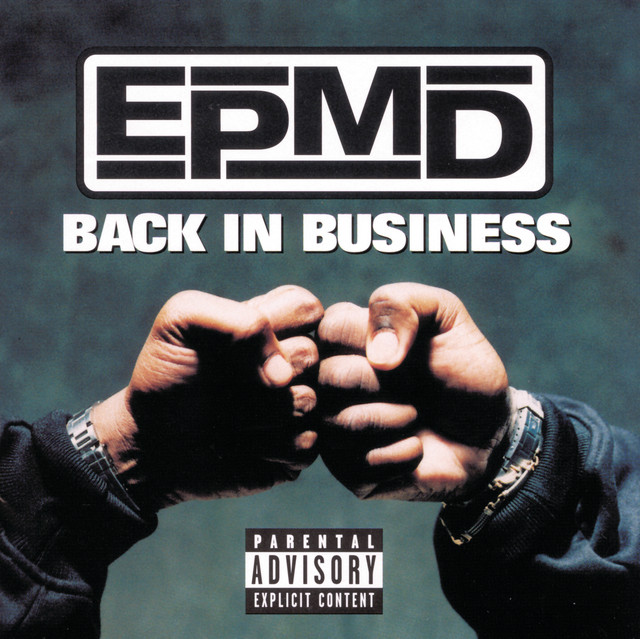
EPMD – Back In Business (September 16, 1997)

I recently read a social media post that listed the best rap duos of all time. I typically scroll past this type of post because they’re subjective and usually put together by people who didn’t start listening to hip-hop until the late nineties, disregarding everything and everyone who came before 1998. But for some reason, I took the time to comb through this one. Some of the names on the list were egregious (so egregious I won’t mention names), but there were quite a few deserving a spot on the list: OutKast, Mobb Deep, Clipse, 8Ball & MJG, and Black Star. All great choices. There were also some glaring absentees. Two that stood out to me immediately were Q-Tip and Phife (of A Tribe Called Quest), and the subject of this post, EPMD.

Between 1988 and 1992, Erick Sermon and Parrish Smith, better known as EPMD (an acronym for Erick and Parrish Making Dollars), put together one of the most impressive four-album runs in hip-hop history. Strictly Business, Unfinished Business, Business As Usual, and Business Never Personal were all critical darlings, and each earned the duo a gold plaque. Ironically, during the recording of Business Never Personal, E and P began to dispute over money, Parrish’s home was broken into (which Parrish felt Erick orchestrated), and the two went their separate ways, bringing the legendary EPMD run to an end. At least temporarily. Erick and Parrish would put their differences aside (home invasion and all) and reunite after a five-year break to release their appropriately titled return album, Back In Business.

Back In Business would be the duo’s fifth group effort and their third release on the legendary Def Jam label. A five-year hiatus wouldn’t affect EPMD’s Midas touch, as BIB would be their fifth consecutive album to earn gold certification. Their Midas touch may still have been intact with BIB, but it received mixed reviews from the critics.

EPMD is one of my favorite hip-hop groups of all time, but I stopped following them after the Business Never Personal album (I guess you can say EPMD and I both went on hiatus). When I saw this one in my review queue, I got excited. I’m hopeful that it lives up to the EPMD standard.

Fun Fact: EPMD were originally going to call the group EEPMD (Easy Erick and Parrish the Microphone Doctors). Dropping one of the E’s was a wise decision, fellas.

Intro – The album opens with E and P informing the listener that they’re back, just in case you weren’t aware that you were listening to an EPMD album. Then somebody gets shot and splashes into a body of water. Not sure what the purpose of this was, but like ninety-eight percent of hip-hop album intros, it was useless.

Richter Scale – E-Double builds the backdrop around a flip of a mildly funky Average White Band loop (that you’ve heard used before on songs like Big Daddy Kane’s “Mr. Pitiful” and Puff Daddy’s “Friend”). Erick shows and proves that he still has the gift of gab (and allegedly, packs “a hell of a jab” to go with it). Meanwhile, Parrish keeps pace, sounding cool and calm with his signature slow flow. It’s a cool record, but I prefer more energy from the opening track on an EPMD album.

Da Joint – Now this is the energy I needed on the previous track. For the album’s second single, The Green-eyed Bandit pairs up with Rockwilder, as the two turn a virtually non-descript Gladys Knight & The Pips clip into a mammoth banger. E and P lace it with standard EPMD bars and a cool homage to the hip-hop pioneers, Funky 4 + 1, on the hook. This was complete fire.

Never Seen Before – This was the lead single, originally released on the How To Be A Player Soundtrack, which explains the track’s musical vibes. Erick and Parrish get their pimp strut on over a Meters loop that sounds like it could be Iceberg Slim’s theme music.

Skit – Completely useless skit alert.

Intrigued – EPMD tag teams the mic with Das EFX (who stay true to the often-jacked stuttering style they fathered, making a few alterations to it and how it’s delivered so it doesn’t sound gimmicky or dated) as all four emcees get loose and entertain over a soulfully explosive Erick Sermon-produced instrumental.

Last Man Standing – Mr. Sermon loops up a Love Unlimited Orchestra sample, turning it into a rugged yet smooth funk groove (it reminds me of the slick backdrop from “Manslaughter” off the Business As Usual album, which ironically, sampled a different Love Unlimited Orchestra record). Erick and Parrish’s hardcore rhymes, along with the Prodigy vocal snippet on the hook, give the track a dark and edgy feel, capturing the essence of late-nineties New York hip-hop.

Get Wit This – This record marks the midway point of Back In Business, which has already given us some great production, but this one is a weapon of mass destruction. E-Double combines a confidently bellowing bass line with an uber-cool piano loop, and the two elements sound phenomenal together with little effort. Erick and Parrish sound dope rhyming over it, but they could have rhymed the alphabet over this beat and still sounded great.

Do It Again – Looping up Tom Browne’s “Funkin’ For Jamaica” in 1997 wasn’t a super original hip-hop idea. But at least Erick gives it a unique flip, completely abandoning its irresistible melody to build around its stripped-down, nasty bass line. Well played.

Apollo Interlude – As great as the songs on Back In Business have been to this point, the interludes have been pointless and pure ass, including this one.

You Gots 2 Chill ’97 – Yep, the song plays just as it reads. E and P bring back the funky “More Bounce To The Ounce” sampled instrumental from their 1988 hit record and make a few updates to the O.G. rhymes. I’m torn on this one. Part of me feels like it’s blasphemous to touch a classic record of this magnitude, but I also semi-dig the nostalgic vibes it brings. My feelings about this remake change with each listen.

Put On – E and P swap street tales about a bunch of “shiesty muthafuckas” and dress it up as a cautionary tale for the listener, even though anybody involved in the streets already knows that shady characters come with the territory. DJ Scratch’s husky instrumental was solid, but Erick and Parrish’s storylines were too involved and not interesting enough to care.

K.I.M. – EPMD are joined by Redman and Keith Murray for what ends up being a Parrish Smith and Def Squad cipher session. I love the warm symphonic feel of E-Double’s instrumental, and all four parties involved do their thing over it, making for a solid posse joint. The record left me with two questions. 1: Where is K-Solo? 2: Since Keith Murray promises during his verse to give “a g a week for life” to the emcee that can defeat him, does that mean he’s sending Fredro Starr a weekly check?

Dungeon Master – Agallah (whom I first became familiar with as 8-Off for his production work on PMD’s Bu$ine$$ Is Bu$ine$$ album) receives co-credit with PMD for this emotionally gully backdrop that sounds like it could be the blueprint for Alchemist’s early work. Erick and Parrish share the first verse and quickly get out of the way for Nocturnal (not to be confused with Knoc-turn’al from the West Coast), whose gritty flow and rhymes blend perfectly with the music. 

Jane 5 – There are two things you can be sure of with every EPMD album: “Business” in the album title and a “Jane” record. Jane is the fictional EPMD groupie/stalker (with an Anita Baker haircut) who, throughout the series, has tasted the microphones of both MDs. The first three Jane records were playful, then things got a little dark on part 4 (“Who Killed Jane?”) when Jane comes up dead and PMD is charged with her murder. “Jane 5” picks up where “Who Killed Jane?” left off, and the storyline comes with quite the plot twist. “Jane 5” is the first time in the series that both E and P didn’t participate, as E-Double sits this one out and lets PMD deal with Jane solo. I’ve never been a big fan of the “Jane” series (although Part 3 was mildly entertaining), and this record didn’t change my opinion. I do respect EPMD for upholding tradition and seeing this Jane thing through til the end.

Never Seen Before (Remix) – This remix recycles the lyrics from the original, but dumps its pimp funk vibes in exchange for a melodic, danceable music bed. It goes against the hardcore EPMD sound they’ve faithfully stood by throughout their run, but I thoroughly enjoyed it much more than the original mix.

During their break-up, Parrish and Erick begin their own separate business ventures (pun intended). Parrish released a few solo projects and served as an EP on a few of Das EFX’s projects, while E-Double would also release solo albums and produce a slew of tracks for his Def Squad crew members and others. Both experienced moderate levels of success as solo artists (E-Double more so than PMD). But thankfully, the two would put the funny business behind them, becoming business partners again, allowing EPMD to get back to business.

With Back In Business, PMD and the Green-Eyed Bandit pick up where they left off in ‘92 without missing a beat. The duo stays true to their M.O.: “hardcore braggadocious” rhymes placed over “mackadocious funk material.” They make a couple of tweaks to keep their sound current (by 1997 standards) but still maintain that vintage EPMD sound. Erick and Parrish have never wow’d with lyrical miracle. Instead, they keep hitting you with steady jabs and an occasional witty uppercut, and their chemistry makes the rhymes sound even stronger. The Microphone Doctors keep the cameos to a minimum on BIB, and none of them are wasted, as every guest (Das EFX, Redman, Keith Murray, and Nocturnal) makes sure their presence is felt. I would love to have gotten a verse from K-Solo, though.

Erick Sermon leads the charge on the production side of BIB, with PMD, Rockwilder, DJ Scratch, and Agallah lending a helping hand, here and there. I’ve often criticized E-Double for his inconsistent production on his solo work, but there must be something about working with PMD that brings out the best in his hands and ears, as the music on this album is pretty tough from beginning to end. There are a few moments that are less than spectacular (like “Richter Scale,” the O.G. mix of “Never Seen Before,” and the rehashed instrumentals for “You Gots 2 Chill ’97” and “Jane 5”). But the majority of the album is filled with exhilarating bangers, with “Da Joint” and “Get With This” serving as the album’s Crown Jewels (the “Get With This” instrumental might be a contender for top five hip-hop beat of 1997).

At the beginning of this review, I mentioned EPMD’s impressive four-album run. Correction. Make that impressive five-album run. BIB is the ideal progression I’d want EPMD to make after returning from a five-year break. Without question, EPMD is one of the greatest hip-hop duos of all time, and when it comes to making dope albums, they did it like it’s nobody’s business.

-Deedub
Follow me on Instagram @damontimeisillmatic

Posted in Uncategorized | Tagged , , , , | 7 Comments

No I.D. – Accept Your Own & Be Yourself (The Black Album)

I’m certain the casual hip-hop fan didn’t become familiar with the name No I.D. until Kanye shouted him out as part of the hook on his ode to Jay-Z, “Big Brother” from his mammoth 2007 album, Graduation. But those in the know (no pun) know that quietly, No I.D. had been putting in work, becoming a highly sought-after producer way before then. I became familiar with No I.D.’s production back in 1992, when he went by the alias Immenslope, producing tracks for his fellow Chicagoan bredrin, Common’s debut album, Can I Borrow A Dollar? By the time Common’s second effort, Resurrection, came out, he was listed as No I.D. in the liner notes (he and Twilite Tone produced the entire album, including “I Used To Love H.E.R., one of the greatest hip-hop songs of all-time). He would contribute to Common’s ‘97 release, One Day It’ll All Make Sense (an album we’ll be discussing in the very near future), and then began to expand his clientele. He’d go on to produce records for Beanie Sigel, Jay-Z, Kanye West, Toni Braxton, Jaheim, DMX, G-Unit, Ghostface Killah, Method Man, Bow Wow, Drake, and Janet Jackson; I could go on forever, but you get the gist. The man has worked with everybody. What I didn’t know, well into the new millennium, was that back in 1997, No I.D. had released a solo album.

The album was titled Accept Your Own And Be Yourself (The Black Album), and was released on Relativity Records, which was also the label home to Common at the time. The album went relatively unnoticed, as it produced only one single, which peaked at 94 on the Billboard Top R&B/Hip-Hop Charts. Accept Your Own would find its way into The Source Record Report, earning a 3.5 Mic rating.

I bought a used CD copy of Accept Your Own almost twenty years ago and have never gotten around to listening to it, until now. Based on No I.D.’s production track record, I’m optimistic. I’m more concerned about the quality of the bars.

Heat – The first thing you hear is a sound that could be mistaken for flatulence, followed by eerie noises and an echoing male voice saying “The Heat” three times. Maybe it was hot in the studio when they were recording, or it’s No I.D.’s way of preparing us for what’s to come. Either way, it was completely unnecessary.

We Rock Like So – The first record of the night features a menacing bass line and mysterious undertones placed over cautious drums. No I.D.’s, Windy City partner, Dug Infinite, kicks things off, giving us our first taste of his “intelligent attack.” No I.D. follows up with his own brainy verse and sounds much more impressive than his sidekick, at least on this track.

Fate Or Destiny – The No I.D./Dug Infinite connection continues. For round two, the duo uses a scorching organ loop to spread their articulate rhymes over. The hook is way too deep to be effective (and has nothing to do with either rapper’s bars), but overall, it’s a solid record.

State To State – Common joins his Chicagoan bredrin (No I.D. and Dug) as each takes a crack at the hard backdrop that only sounds more callous with the DMC (of Run DMC) vocal sample on the hook. To no one’s surprise, Common sons his contemporaries without hardly trying (I love his license bar). This record is fire, and its head-nod factor is off the charts.

I’m Thinkin’ – This interlude begins with a dreamy piano loop, followed by a clip of the 1995 De Niro/Al Pacino flick, Heat (it’s taken from the scene where Justine Hanna waxes poetic in response to her husband, Lt. Vincent Hanna (Al Pacino’s character), being emotionally unavailable). I’m not sure what purpose it serves in the grand scheme of things, but whatever.

Mega Live (That’s The Joint) – No I.D. hooks up a grey-tinted, ruggedly cinematic background for himself, Dug, and their female constituent, Syndicate, to spray with scientific bars and quality rhymes. No I.D. uses a Q-Tip vocal snippet for the hook, allowing for another addition of Tribe Degrees of Separation. This was dope.

Sky’s The Limit (Inf Mix) – The Chicago duo uses this one to encourage the kiddos to rise above their current situation and environment to achieve their dreams and goals. Dug gets his first production credit of the night, hence the song’s subtitle, and he impresses, building his soundscape around a somber but beautiful high-pitched string loop. I love the message, and they deliver it without making it sound like a corny ABC Afterschool Special (only those over forty will understand that last reference; for you young whippersnappers, reference the short Dhar Mann flicks on YouTube). This is easily one of my favorite tracks on the album.

Dreams – Over a creamy backdrop, a woman and a man converse about dreams. There’s a message in this short interlude, but I’ll let you decipher that for yourself.

The Real Weight – The single key piano loop in No I.D.’s instrumental sounds like somebody repeatedly getting their head smashed into the same piano key. I’d like to personally thank that individual for enduring such pain, because the shit hits hard (no pun). Our hosts sound like hip-hop professors as they make the track live up to its name with their heavy rhymes (No I.D. and Dug cover everything from shape shifting to metamorphosis, to mathematics and meteorology). The hook was a little ambiguous, but the inquisitive feel of the instrumental was dope and fit perfectly with the rhymes.

Jump On It – No I.D. and Dug continue to teach the class over a mildly dope backdrop that uses an Extra P vocal snippet for the hook (taken from another A Tribe Called Quest’s joint, “Keep It Rollin’”). This was solid, but if I were forced to take one song off the album, this would be the one.

Gem – No I.D. yields, giving Syndicate the floor for this one. Our host slides her the sweetest Chicago (the rock/pop band) loop, and she fumbles it with a less than a minute, half-baked PSA about the dangers of eating bacon. This was audio blue balls for me.

Original Man – The “awesome twosome” continues to rock ya over a peppy xylophone loop, and No I.D. cleverly cuts up a Greg Nice vocal snippet, which makes for a dope hook.

Pray For The Sinners – This one begins with a piece of a sermon from an uncredited source (I don’t think it’s Farrakhan, but the speaker’s cadence sounds like that of minister from the Nation of Islam) before a delectable guitar loop from a Minnie Riperton sample drops (No I.D. brilliantly weaves in some of Mrs. Riperton’s vocals during the hook, putting her five-octave range on display). No I.D. and Dug use the pretty canvas to talk about their personal pains and struggles, but it’s No I.D. who shines the brightest when he shares his vulnerable conversation with God. This is definitely one of the standout moments on the album.

Sky’s The Limit – This mix uses the same rhymes as the “Inf Mix,” though they are censored (I’m sure the censoring had something to do with the sample clearance, or this is a radio edit, which would make sense as this is the version used for the single/video). No I.D.’s instrumental has a completely different energy than Dug’s, but it’s equally as scrumptious.

Two Steps Behind – No I.D. closes the album with a subtly funky, low bpm, stripped-down beat (laced with yet another dope vocal sample for the hook; this time it comes from a KRS-One clip). No I.D. must have told Dug and Syndicate that the goal for this record was to make it sound edgy as the three leave their studious vernacular behind in exchange for dumbed-down rhymes, filled with more N-words and F-bombs than a Dave Chappelle stand-up special.

Through the years, hip-hop has seen many producers make solo albums. Usually, they come in the form of compilation projects, where the producer handles the music and brings in a bunch of guest emcees to rhyme over his beats (we’ve seen a handful of these already in ‘97: The Lawhouse Experience, Big Thangs, Politics & Bullshit, and The Soul Assassins). And sometimes, the producer lets his beats speak for themselves in the form of an instrumental project (i.e., DJ Shadow’s incredible Endtroducing). Then there are those where the producer dares to stand on his own completely, handling the production and holding down microphone duties (a great example of this was Diamond D’s Hatred, Passions And Infidelity). With Accept Your Own, No I.D. takes from all three models, concocting his own unique hybrid.

First off, calling Accept Your Own a No I.D. solo album is a bit misleading. Yes, No I.D. is responsible for ninety-nine percent of the album’s production, and he raps on every song (notwithstanding the short Syndicate solo joint), but Dug Infinite pulls just as much weight on the mic, along with receiving a couple of production credits. At minimum, the album cover should read “Guest Starring Dug Infinite” in fine print, a la Only Built 4 Cuban Linx. But I digress.

The first time I heard No I.D. rhyme was when he and Common took turns making playful boasts through an infinite number of punchlines (and calling out different cereals) on Common’s “Two Scoops Of Raisins” from Can I Borrow A Dollar? He sounded okay, yet far from impressive, but that was 1992. In 1997, No I.D. sounded sharper on the mic and way more serious. On Accept Your Own, he and Dug Infinite present as cerebral emcees, spewing intellect with a touch of consciousness. The duo’s bars are competent throughout the project, though at times their monotone vocal tones and low-energy deliveries get lost in the music.

Speaking of music, to no one’s surprise, most of the production on Accept Your Own is brilliant (No had already been consistently lacing Common with fire by this point). No I.D. creates irresistible grooves via well-chopped up and arranged soul, gospel, jazz, and rock samples, along with tough drumbeats and a few clever vocal snippets for hooks. The production is strong enough to stand alone, and at times it gives No and Dug something to lean on when they start to sound weary (or too dry).

One of the things that keeps me motivated to do this blog when I feel like calling it quits (which happens at least once every couple of months, and you best believe I thought about it several times over my last blog break) is the never-ending potential to unearth a hidden gem. Accept Your Own is one of those gems. No I.D. sums it up best on “Fate Or Destiny”: “Drop the buried treasure, dig in every measure, it’s for the people’s pleasure.”

-Deedub
Follow me on Instagram @damontimeisillmatic

Posted in Uncategorized | Tagged , , , , | 10 Comments

Busta Rhymes – When Disaster Strikes… (September 16, 1997)

One could argue that Busta Rhymes was the hottest rapper alive in 1997. If you disagree, you at least have to admit he was one of the top five. He was not only coming off the success of his platinum-selling 1996 debut solo album The Coming, but thanks to his undeniable charisma and energetic, animated flow, he was also becoming the most sought-after featured artist in hip-hop (aka, a cameo whore). By the last quarter of ‘97, he had appeared on everybody’s album, from Capone-N-Noreaga to P. Diddy to Diamond D, to Missy Elliot and TLC, just to name a few. In between his massive number of guest appearances, Busta was also working on his own music. He would return in September of 1997, releasing his sophomore solo effort, When Disaster Strikes.

When Disaster Strikes would feature production from some of the same names that helped produce The Coming: DJ Scratch, Easy Mo Bee, Rashad Smith, and J-Dilla (RIP). The liner notes also credit Busta Rhymes with some behind-the-boards work on a few tracks, along with some other names receiving production credits that we’ll get into a little later. The album received heaps of critical acclaim and solid reviews, yielding three hit singles (a couple would earn gold plaques), and became Busta’s second consecutive platinum-selling album.

Like most albums released after March of 1997, I’ve never listened to WDS in its entirety. Hopefully, the strike is enjoyable and not just a disaster.

Intro – Based on The Coming and Scout’s Honor, it’s clear that Flipmode artists had a thing for grandiose intros. That trend continues with WDS, which opens with a three-piece intro suite. Suite 1: Lord Have Mercy uses his authoritative tone to speak about an impending apocalyptic event that is supposed to happen before the year 2000, heavily suggesting that this Busta Rhymes’ album is that prophetic incident. The dramatic, theatrical music supporting Lord’s short story makes it feel like a scene from 300 or Sparta. Suite 2: Omar Glover slides Dolemite, aka Rudy Ray Moore (RIP), a gritty backdrop to give Busta some advice and shoutout the new album (Dolemite’s made a few cameos on hip-hop albums through the years; my favorite is still when he waged a war of words against Kane on “Big Daddy Vs Dolemite”). Suite 3: Busta’s loyal hypeman, Spliff Star, wraps up this lengthy intro by sharing a few energized words about Busta (whom he refers to as the eighth wonder of the world) and the album over DJ Scratch’s spookily gully instrumental. Now that we’ve got all the formalities out of the way, we can get on with the show.

The Whole World Lookin’ At Me – DJ Scratch hits Busta with some electronic boom-bap that has an urgent tone to it as if Busta’s life depends on his performance over it (the hook reinforces that sentiment). Thankfully, Busta’s up for the challenge as he sounds refreshed and hungry, ripping the instrumental to shreds. I don’t even know what “the rhymin’ Lou Gossett” means, but dammit, our host makes it sound sick.

Survival Hungry – Scratch keeps the fire production coming. This one’s a slightly devious, slow-rolling head nodder that Busta completely contrasts with a high-octane performance, but the two variations sound perfect together. The hook was trash, but the title fits our host’s output.

When Disaster Strikes – The title track finds Busta scolding wack emcees with a conversational flow that periodically goes into harmony and smoothly transitions right back to rhyming (in the middle of his reprimand, Busta hi-lariously lists potential alternate career paths for the objects of his wrath before giving them a sarcastic word of encouragement: “You can be something”). Scratch continues to impress with a gritty soul canvas that does sound “miraculous” when Busta summons himself to sing on the hook. This was dope.

So Hardcore – The liner notes credit J-Dilla (J. Yancey), courtesy of The Ummah (a production team composed of Jay-Dee, Q-Tip, and Ali Shaheed Muhammad…Tribe Degrees of Separation: check), for this instrumental. The drums sound flat, but I enjoyed the drowsily animated melody in the loop. The music, Busta’s rhyme pattern, and the hook (taken from a line from “Everything Remains Raw”) make me believe this was a leftover from The Coming sessions. It sounds cool, but slightly misplaced compared to the quality of the previous three tracks.

Get High Tonight – The taxi skit that precedes this record is funny as shit. Busta uses Scratch’s bouncy bass line and simple-but-funky guitar loop to get zooted with his squad, at a high rate, and encourages the listener to go “buy a nickel bag, smoke a little lye, and get high tonight” on the hook. It’s not original material, but it’s a feel-good record that I enjoyed.

Turn It Up – This was the third single from WDS. Well, kind of. The remix, “Turn It Up Remix/Fire It Up,” was released as a single on the Can’t Hardly Wait Soundtrack. The remix is, by all accounts, a completely different song with new rhymes, beat, and hook. The instrumental’s built around an ill loop of the Knight Rider theme song, and Busta rides it impeccably with a rapid-fire flow. It’s easily one of my favorite Busta Rhymes moments. The original mix is built around a flip of a portion of Al Green’s “Love And Happiness,” placed over hard drums that feel like they’re repeatedly punching you in the face (Busta Rhymes is credited with producing both tracks). The original version is solid, but it pales in comparison to the fire remix (pun intended).

Put Your Hands Where My Eyes Could See – This was the lead single and easily the biggest record on the album (it’s also a top-five hit in Busta’s esteemed catalog). Shamello & Buddah, and Epitome concoct a hypnotic tribal funk groove for Busta, who takes his energy level down a zillion levels to match the low-key genius of the instrumental. This is a timeless banger (so timeless, Coi Leray and Honey Bxby have even recycled the beat in recent years) that will still go off when it comes on at the club or kickback.

There’s Not A Problem My Squad Can’t Fix – Jamal (formerly of Illegal) becomes the first guest of the evening, joining Busta on this rhyming duet. On The Coming, the Def Squad (Jamal, Redman, and Keith Murray) got the win after waging war with Flipmode (Rampage, Lord Have Mercy, and Busta) on “Flipmode Squad Meets Def Squad.” Busta gets his revenge on this track, effortlessly rapping circles around a feeble Jamal and his underwhelming bars, while simultaneously annihilating the thumpin’ bassline and drum claps that he’s also credited with producing. This would have been way more entertaining had Def Squad sent one of their stronger soldiers (i.e., Keith Murray, Redman, or Erick Sermon). As is, even with Busta’s solid performance, it doesn’t have much replay value.

We Could Take It Outside – The track begins with a skit that finds The Flipmode Squad running into a few of their haters at a club, and drama ensues. The skit is way too long, but I listened to WDS on Apple Music a few times, which excludes the album skits, and this skit actually helps the following cipher session sound grander. Rampage, Serious, Spliff Star, Baby Sham, Rah Digga, Lord Have Mercy, and Busta (in that order) all take part in the fight that started at the bar and is on the verge of spilling outside, hence the song title and hook. Rampage, Spliff, Baby Sham, and Busta get a few licks in, but it’s Rah Digga (I’m shocked she didn’t catch heat for the bar about Betty Shabazz’s grandson) and Lord Have Mercy (“sipping fresh squeezed milk from the titties of llamas” is crazy) who inflict the most damage to Scratch’s gutter music, laced with a pensive piano loop. Oh, and Serious just showed up to watch the melee. I never need to hear him rap again.

Rhymes Galore – Rashad Smith serves up a bouncy, vibrating musical concoction for the album’s master of ceremonies to do just that. Mr. Smith’s instrumental isn’t great by any stretch, and there are only two rappers that I can think of that could breathe life into such a meager backdrop: Ghostface Killah and Busta Rhymes. Buss had my attention as soon as I heard “Mayday, mayday, mayday, mayday, walk barefoot on niggas like Kunta Kente.”

Things We Be Doin’ For Money Part 1 – Busta plays the role of a stone-cold stick-up kid, and Easy Mo Bee paints the criminal scene with a grimy backdrop that feels like a poor man’s Havoc (from Mobb Deep) beat. The record ends with Busta and a potential victim tussling over his gun. A skit of the tussle follows, setting up part two of this thug melodrama.

Things We Be Doin’ For Money Part 2 – The saga picks up with a dramatically pensive instrumental and Busta making a call to Rampage to send the cavalry, as the potential vic he was tussling with for his gun, had reinforcements show up in the form of a black jeep full of niggas. Long story short: Flipmode shows up, the two crews exchange gunfire, and Busta has an epiphany at the end of the record that his lust for money was the culprit for all this unnecessary violence. Busta’s moment of clarity is followed by Anthony Hamilton and The Chosen Generation choir ensemble singing a quick chorus to drive home his realization. I never need to hear from thugged-out Busta again. And I probably won’t, since we find out at the end of the track that the last two records were all a dream. The Ramapge/Busta phone call skit at the end of this track was the most entertaining part of this entire short series.

One –  Rockwilder loops up a little Stevie Wonder to create a smooth and soulful atmosphere for this Busta Rhymes/ Erykah Badu collabo. It was nice to capture Busta in a serious moment as he and Badu rap and sing on the importance of the family structure and working together in harmony. I’m not used to Rockwilder making mellow beats like this, but I enjoyed it.

Dangerous – This was the second single. After a female voice (Rachelle Weston) talks a bunch of shit, a cheesy electronic instrumental drops, which reminded me of “Rhymes Galore,” which makes sense, considering Rashad Smith is responsible for both of them (Armando Colon gets a co-credit for this track). This record is yet another testament to Busta’s rhyming ability and energy, as most rappers would have succumbed to the music’s cheap feel. But once again, Busta makes that thang do what it do.

The Body Rock – Flipmode dances with Bad Boy, as Ramapge and Busta tango with Diddy and Mase over a sedated musical bed (I should tread lightly using Diddy and bed in the same sentence). De La Soul used the same sample for “The Bizness,” but their interpretation had more bounce to it. Chuckie Thompson’s flip feels flat, drab, and empty. I’d be perfectly fine if I never heard this record again. Before the next track begins, Spliff Star gets off a sturdy verse over a filthy and brolic backdrop, but Busta hi-lariously cuts him off and scolds him for trying to steal airtime on his album. He also hints at a forthcoming Spliff Star solo album that was supposed to be released in ‘98 but never materialized. I wonder if the Flipmode group effort, The Imperial, was originally slated to be Spliff’s solo album, as that project did drop in 1998 (*looking up at the ceiling while my chin rests on my hand*).

Get Off My Block – Apparently, this is the third piece in the “Things We Be Doin’ For Money” series, as Busta begins the record saying “Flipmode Trilogy.” He and Lord Have Mercy put back on their thug personas to aggressively persuade a crew of “unfamiliar cornballs” to get out of their hood. It’s hard to take their thuggery seriously with Busta threatening to have Dinco D, of all people, come through with the heat (“Chill before I call Dinco, to grab the quatro cinco”). Meanwhile, LHM threatens to urinate on them and drown them in “buckets of piss water” (Wtf?). Scratch provides another solid instrumental, but this song was completely unnecessary.

Outro (Preparation For The Final World Front) – Busta brings back the gully backdrop from the third part of the “Intro,” and thanks each listener for “taking time to analyze this new LP.” You’re welcome. Then, to live up to the track’s subtitle, he goes into a rant about being prepared for the final world front that he’s been prophesying about since 1996.

Side note: If you purchased your copy of WDS outside of the United States, you received a nineteenth track, titled “It’s All Good” (if you have this pressing, it’s track nine in the sequencing). I pulled it up on YouTube to give it a listen. It’s pretty much Busta spewing verbal porn (he mentions “dick” and “pussy” no less than ten times each during a two-verse song) over a buttery guitar loop and chill drums. The rhymes are super erotic, and the instrumental sounds yummy enough to eat. You know what else sounds yummy enough to eat? I was thinking about a seafood boil. Get your minds out of the gutter!

It’s interesting how time and distance can distort your view of an artist. I was introduced to Busta during his humble beginnings, rhyming with Leaders Of The New School about Parent Teachers Associations and telling stories about Saabs (may Saab rest in peace). He’d later hit a lick with his cameo on Tribe’s classic posse record, “Scenario,” soon becoming a superstar. I stopped following Busta closely after The Coming, due to my hiatus from secular music. But from my distant view, he seemed to become a caricature, making pop accessible music and making himself available to guest appear on any and everybody’s record. Those perspectives may still hold some truth, but he was also making good albums, at least up until the late nineties.

The album’s titled When Disaster Strikes, but a more fitting name would be When Hunger Strikes, based on Busta’s performance on the microphone. The dude raps like he hasn’t had a meal in over a year, as his hunger and thirst sound more prevalent than they did on The Coming. Busta displays an underappreciated ability to not only adapt to any beat but also completely devour it, regardless of its tempo, mood, color, race, or creed. In the midst of his own feasting, Busta leaves room for others to dine. His guests eat with varying results, but the true star of the show is never in question.

The production on WDS is pretty thorough. My favorite moments come when Busta squares up with DJ Scratch’s gully, understated boom bap (as I continue to do this blog, Scratch is quickly moving up on my list of underrated producers). Scratch’s raw musical beds lay in the cut but hit hard, allowing Busta’s rambunctious rhymes and energy to run wild and shine bright. The rest of the album’s cluster of producers do a pretty solid job, and even when they don’t, Bussa Bust plays Jesus to their Lazarus. And as hard as I’ve been on hip-hop album skits in doing this blog, props to Busta for making a few that add value to the album or make you literally LOL.

There are a handful of records on WDS that could have been shaved off the final product and archived (i.e., all of Busta’s “Thug Trilogy,” the Jamal-assisted “There’s Not A Problem,” and the drab Bad Boy/Flipmode collab, “The Body Rock”). But most of the eighteen tracks work well and have me looking forward to fully delving into Extinction Level Event, when there were only two years left. Allegedly.

-Deedub
Follow me on Instagram @damontimeisillmatic

Posted in Uncategorized | Tagged , , , , | 1 Comment

Domino – Dominology (September 2, 1997)

The last time we checked in with Domino here at TimeIsIllmatic was for his 1996 sophomore effort, Physical Funk. Thanks to his hit singles, “Getto Jam” and “Sweet Potatoe Pie,” his self-titled debut album earned gold certification. Physical Funk didn’t produce any hit records and was a commercial disappointment, even though, pound for pound, it was a stronger body of work than Domino, which was a decent listen in its own right. But like most labels, Outburst didn’t give a shit about music quality; the bottom line is the bottom line. Physical Funk would be Domino’s last project on Outburst (which had distribution through Def Jam), sending him into the independent label realm, which in the nineties was the graveyard for commercial success. He would return in September of 1997, releasing Dominology on his own label, Domino Entertainment.

Interestingly, Dominology was released in September of ‘97, and The World Of Dominology was released two months later in November. You might be thinking, “What is so interesting about that?” and getting ready to commend Domino for his work ethic, but the two albums are virtually the same. The track lists are nearly identical, with the latter adding one additional track and released under Caw Records/Cyber Records. I have no idea what the story is behind these shenanigans, but if you do, feel free to share it with me in the comments. Now, back to Dominology.

After letting DJ Battlecat handle the production on his debut, Domino decided to take the production helm for Physical Funk, and that decision carries over to Dominology. As I mentioned in the opening paragraph, the album was released independently in the nineties, so there is no need to ask if it was a commercial success or not. Dominology would come and go with little fanfare, but like The Little Engine That Could, Domino would continue to release music independently through the end of the decade and well into the new millennium.

I haven’t listened to Dominology since I bought my used CD copy several years ago. Based on Domino’s previous works, I’m going into this review optimistic. The cheesy album cover has me second-guessing myself, though.

Dominology – Our host gets the title track out of the way right away. Over standard West Coast funk instrumentation, Domino serves up one quick verse to introduce the listener to the album (and during that short verse, he twice rhymes “apology” with “Dominology.” There’s biology, physiology, psychology, colony…come on brother; expand your vocabulary). It’s a pretty vanilla opening track, but it beats the useless opening intro/skit that a lot of rappers feel the need to start with.

Shake It Up – Domino samples/interpolates Zapp’s “Doo Wa Ditty” for the backdrop of this party & punani joint. Everything about this record is unoriginal. First off, the one-hit wonder known as Paperboy already used the same Zapp record and turned it into a top 10 Billboard hit in ‘93. Secondly, the cheesy objectifying hook is a blatant rip of Wreckx-n-Effect’s massive 1992 hit, “Rump Shaker” (Domino even references the song during his first verse). Thirdly, our host fills the verses of this song with enough fluff and cliches to build a mansion. Domino was obviously trying to manufacture a crossover hit, but it didn’t work.

On Them Thangz – Domino remakes The Dramatics’ “In The Rain,” turning it into a celebration of West Coast car culture. He invites Frost (formerly known as Kid Frost from “La Raza” fame), who pulls up in his Blue ‘62 Impala, to join in on the fun, and Natra lends her voice to the hook, giving it a sultry feel. This is a slick, laidback groove that I enjoyed.

Keep Goin’ – There were two female rappers named Passion trying to make a name for themselves in the mid-nineties. One rolled with Erick Sermon’s Def Squad and got off to a pretty impressive start with a fire verse on Jamal’s “Unfuckwittable” and a couple of dope appearances on E-Double’s Insomnia compilation project (then she vanished from the scene like cake on a fat kid’s plate). The other Passion was from Oakland and had a short-lived stint at MCA Records. The latter joins Domino on this track. Domino actually sounds smooth rhyming over the synthetic funk groove (that I tried not to like for its artificial stank, but resistance was futile). Passion singlehandedly attempts to undermine the record by embarrassingly jacking the singing rhyme style and melody that Domino used on “Getto Jam” (and to make matters worse, she also references the song during her verse). Her dirty work delivered a staggering blow to the track, but the record still stands up.

Get Yo Money – Domino told us on his debut album that “Money Is Everything,” and he keeps that same energy on this track. The subject matter has been covered by other rappers with much better results, but Domino delivers the wittiest bar of the entire album on this record: “She said money can’t buy you happiness, oh, no? I think that ass was shopping in the wrong damn sto’.” The instrumental was decent, but JoJo from Jodeci stops by to revamp a portion of Rick James’ classic, “Mary Jane,” for the screeching hook. His singing almost reaches fingernails-on-chalkboard proportions.

Come On Over – Domino remakes a Teddy Pendergrass classic with this one (though TP’s song was titled “Come Go With Me”). Our host is on an ass mission, and the incomparable Teena Marie adds her vocals to the hook to help get the objects of Domino’s erection out of their panties. I dug the chill vibes in the live instrumentation on this track.

Sowed Up Like Clothes – The song title (which uses the wrong spelling of “sewed”) and its premise are pretty corny: some young tender has captured Domino’s heart; in slang terms, she’s got him “sowed up” like designer clothing. The hook was extra cheesy (“Donna Karan, Guess, Versace”), and the verses were generic, but the instrumental has a sophisticated soul feel. Its soulfulness is only enhanced by the guest vocalist, Christelyn Davis, on the hook, whose voice captures some of the warmth and grace of Lalah Hathaway’s. Hearing Domino say “Bill Cosby-type chemistry” in relation to women is crazy uncomfortable in 2025.

Daddy Mack – Domino slips into macadocious mode and spends most of the track crooning (with his limited vocal range) about being a player. It sounds like Domino may have been trying to recapture the laidback seventies soul magic of Smokey Robinson’s “Crusin’.” Unfortunately, the lyrics sound like a haphazard freestyle, and the sleepy music nearly lulled me to sleep.

Booty Call – Domino spends two verses out in the streets looking for something he can call later for some late-night strokin’, and he kindly lets a potential prey (Shawnique Ellis) chime in and rap from the perspective of a prostitute/escort. Neither of their rhymes was intriguing (two callbacks to “Sweet Potatoe Pie” on the same song was overkill), and the music was as stale as a ten-year-old loaf of bread.

Just Clownin’ Dominology continues to deteriorate with its third consecutive underwhelming track. Domino gives us a glimpse into some of the shenanigans he gets into in these Long Beach streets, while his homies clash about which side (East or West) is better during the hook. The bars are forgettable, and the instrumental sounds like a bunch of noise posing as a funk backdrop. This was horrible.

Everybody Wanna Be A G – Domino closes the album with a bluesy, somber track. He invites LaQuan (who also cameoed on the closing track on Domino) and CJ Mack (whom I first became familiar with on Ant Bank’s Big Thangs compilation) to join him as they take turns calling out fake thugs and studio gangsters. I’m quickly becoming a fan of CJ Mack. Something about his raspy vocal tone and his Scarface-esque slow-rolling delivery makes his ordinary rhymes sound much better than they really are. The haunting harmony on the hook drives home the three rappers’ message in a hood sage-like warning kind of way. The ill instrumental solo at the end of the record was scrumptious.

The suffix “ology” means a subject of study, a branch of knowledge. Therefore, the album title, Dominology, would lead you to think the album is going to take a deep dive into the lifestyle and mentality of Domino. But this is hip-hop, folks. We make our own rules. And there’s nothing deep about Dominology.

Like the content in his previous works, Domino keeps things superficial, mainly focused on flossin’, partying, women, and partying with women. Similar to his first two projects, he also keeps the track count relatively light. Domino had ten tracks, Physical Funk had twelve, and Dominology comes in at another slim ten. Thankfully.

Domino was never a lyrical rapper, more so relying on his slick vocal tone, smooth flow, and vibey harmonies. On Dominology, rhyming seems to be his weapon of choice, only occasionally using the singy style that helped him garner commercial success early on. Domino’s rhyming is passable (although every guest rapper that appears on the album, not named LaQuan or CJ Mack, offers up a forgettable cameo), and while he keeps his harmonies to a minimum, he does contract a few guests to sing on hooks and adlib, and they mostly deliver. It’s the hit-and-miss production (including a terrible three-consecutive-song stint towards the end of the album) and too many callbacks and references to songs on his first two albums that hinder Dominology.

Dominology is not a complete waste of wax. I enjoyed half of it, but it’s way less consistent than Domino’s first two albums. I wish I could be optimistic that Domino would turn things around with The World Of Dominology, but I doubt that one additional track will change much.

-Deedub
Follow me on Instagram @damontimeisillmatic

Posted in Uncategorized | Tagged , , , , | 1 Comment

Break Time!

Coming on the heels of Labor Day, I’ve discovered I need a little break from this labor of love that I call TimeIsIllmatic. This blog is a passion project that I’m still very passionate about, but with family, work, and everything else that life throws at us, I know when it’s time to take a break and reset.

I plan to start posting reviews regularly again in October, and hopefully, I’ll finish up the rest of 1997 (we’re two-thirds of the way there!). In the meantime, revisit or discover some of the reviews in the vaults. Thanks for your support, and stay tuned!

-Deedub
Follow me on Instagram @damontimeisillmatic
Posted in Uncategorized | 2 Comments

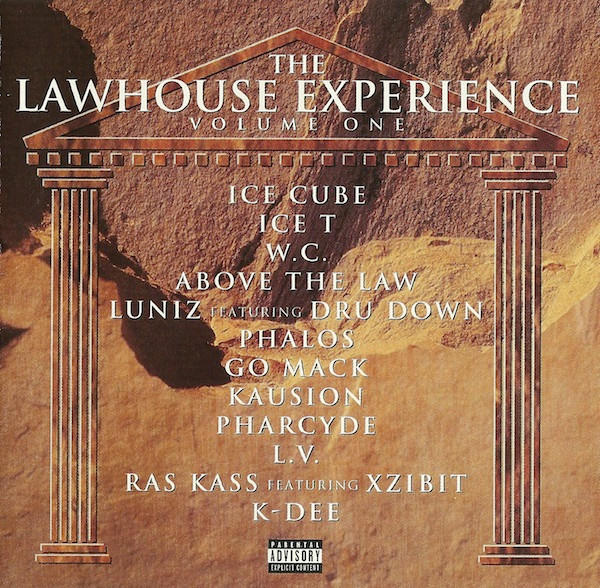
Laylaw – The Lawhouse Experience – Volume One (August 29, 1997)

When it comes to West Coast hip-hop producers, Dr. Dre is indisputably the cream of the crop. His run from Straight Outta Compton to The D.O.C.’s No One Can Do It Better, to The Chronic and Doggystyle, to the magic he created with Eminem and 50 Cent, is unmatched. The West also blessed us with Battlecat, DJ Quik, Madlib, Warren G, and Daz. And I can’t forget about the Bay Area’s own, Ant Banks and E-A-Ski. There are many more names I could list, but today I’ll focus on a man who seldom gets the spotlight. Larry “Laylaw” Goodman.

Laylaw began his career as a solo artist in the mid-eighties, releasing two singles on his Rolodex Records label: “Monster Rapping” (co-produced by a young Dr. Dre) and “What’s Your Name.” For research purposes, I listened to both records on YouTube, and let’s just say Laylaw made a wise decision by ending his career as a rapper to focus on producing. His relationship with Dre would lead to him connecting with N.W.A., who’d soon sign with Ruthless, which led to Laylaw connecting with Above The Law, who also had a deal with Ruthless. Laylaw would help produce ATL’s debut album, Livin’ Like Hustlers, leading to more production opportunities. He’d go on to produce records for Anotha Level (remember them?), Yo-Yo, Kokane, W.C., Ice Cube, and Tupac, to name a few. In ’97, he would release his compilation album, The Lawhouse Experience, Vol. 1.

Laylaw and his production partner, D’Maq, would produce the entirety of TLE. This review marks my first time listening to the album, and based on the track list, it sports a pretty impressive guest list. I’m interested to see how this plays out.

Sadly, Laylaw passed away in January of 2023 after a long battle with cancer. May he continue to rest in peace.

Entrance – Coolio (RIP) interrupts a bunch of crowd noise with an extravagant word salad (Is actual reality the opposite of virtual reality?) to welcome the listener to TLE. Then a laid-back, wah-wah-infused funk groove drops, and Kokane ushers us into the year 2008 (so he says). I’m not sure what the significance of 2008 is, and it may have been explained during Kokane’s hood soliloquy, but the music drowns out his vocals, making it nearly impossible to understand what he’s saying.

Arch Angels – Two-thirds of the short-lived (or should I say underproductive?) West Coast supergroup, Golden State Project, show up for this record: Ras Kass and Xzibit (RIP Saafir). It’s really a Ras Kass solo joint with X to the Z helping out on the hook. Laylaw and D’Maq’s instrumental sounds like their interpretation of East Coast boom-bap, complete with choppy drums and jazzy horns. Ras Kass uses the solid backdrop to showcase his clever wordplay and witty punchlines, delivered through his offbeat flow. I was critical of Ras’s flow on my review of Soul On Ice, but after hearing this record and his verse on Coolio’s My Soul, I may need to revisit his debut album.

Give It Up – Now this is more of the sound I was expecting to hear on TLE. The album’s production duo serves up a trunk-rattling G-funk banger for W.C. to verbally C-walk over, and he sounds right at home in the process (so much so, I’m willing to forgive him for recycling his “kiss my Converse like Sho’nuff” line). This was hard.

Legal Paper – Ice Cube becomes the second consecutive member from Westside Connection to make an appearance on TLE. He uses the smooth synth backdrop to encourage brothers to come up with legal methods of making dough, instead of taking penitentiary chances. By ‘97, Cube’s peak rapping days were behind him. He was clearly more focused on Hollywood than music, but still active in the rap game. This record is far from Cube’s best work, but I like his message and enjoyed the instrumental even more.

Spank That Ass – This interlude introduces the overweight parody rapper, Phat Freddie (shouldn’t it be spelled “Fat”?), who tries to impress Laylaw and his team with subpar bars. There is absolutely no need to listen to this more than once.

Your Hustle Ain’t On – We’ve already heard from one of the legendary West Coast Ice’s, and now we get to hear from the other one. Ice-T surfaces and ironically, his message is the polar opposite of Cube’s, as he encourages the listeners to get their money by any hustle necessary: “If I can’t flip these raps, back to caine” (thankfully, when his rhymes stopped being a reliable source of income, Ice fell back on acting instead of selling dope). Like Cube, Ice-T was also well past his prime in 1997. He technically sounds alright, but not convincing on this record. Thankfully, Laylaw and D’Maq keep the heat coming with another fire instrumental.

One Way In – Go Mack was one of the original members of Above The Law (he left the group after the Black Mafia Life album in 92). I never knew what his role was in the group, but it damn sure wasn’t emceeing. Apparently, he had emcee aspirations all along, as his former ATL co-worker, Laylaw, makes him the featured rapper on this track. Go Mack’s Tourette like flow sounds similar to E-40’s, and if you read this blog regularly, you already know how much I’m not a fan of E-40’s rhyming style. The flow doesn’t work for Go Mack either. He also uses what is arguably the most absurd simile in the history of hip-hop for the hook. At least the instrumental has a pleasant summertime-ready vibe. On a somber note, it’s sad to think half of the original ATL roster and Laylaw are now deceased (rest in peace, KMG and Go Mack.

Lil’ Sumpin’ – This track introduced me to a group I’d never heard of before: Kausion. With a little help from Google, I learned that the three-man crew (Cel, Gonzoe, and Kaydo) released a group project, South Central Los Skanless, on Ice Cube’s Lench Mob label in 1995. I don’t know who is who, but the two guys who rap on the first two verses gave me enough to want to hear more from the group.

Drank Break – Barney Rubble (not to be confused with Fred Flintstone’s partner in crime) shares a few words with hood elegance on this short intermission while a tender Nat King Cole-type piano riff plays in the background. Remind me to add Mr. Rubble to the list of worst alias contenders for ‘97.

Live Yo Life – The Luniz connect with their Oakland bredrin, Dru Down, as the trio make what’s essentially an “advocation for selling dope” record (and they butcher Joe Pesci’s name (see the second verse) along the way). Their commentary did nothing for me, but the semi-spooky, slightly mysterious instrumental was cool.

You Might Get Stuck – Laylaw carries over the dark mood from the previous track. He and D’Maq hook up a chunky, haunted G-funk backdrop for KMG and 187um (of Above The Law) to spit some of their signature pimpology. I’ve always enjoyed KMG and 187um’s chemistry, and it continues to shine through over an instrumental that sounds custom-made for the duo.

Phalosmode – Phalos is another rapper I’d never heard of before this review. During the third verse of his solo joint, he gives the ridiculous meaning behind his alias: “Endless papes in your pocket, bitches ya toss,” and “money on your mind when you wake.” Despite the crock of shit explanation of his moniker and a little blunder during the second verse when he spells his name out (he says the O-S in his name stands for “never settle”), Phalos proves to be decent with the bars. Or is it the sleek production that makes him sound competent?

Housin’ – Eightball and MJG stop by to show Laylaw some love and introduce the next record. It would have been nice to hear them rhyme on a track, but I suppose that would disrupt the West Coast only vibe the album has going.

World Wide – K-Dee (not to be confused with J-Dee from Da Lench Mob, which I often do) gets a solo joint on TLE. Ice Cube provides a placeholder hook, and K-Dee fills three verses with random mediocrity that doesn’t sound ready to leave Los Angeles, let alone go worldwide. But fret not, the meditative vibes in the instrumental should please your ears and soothe your soul even when the rhymes fail.

Westcyde 242 – Laylaw invites Pharcyde to this celebration of West Coast hip-hop. Instead of forcing the chemistry between the quartet of emcees and a G-Funk production, L and D’Maq chef up an instrumental with East Coast sensibilities that still maintains its West Coast integrity for the crew to rock over. This was nice.

I Just Wanna Play – You may not recognize L.V. by his name (or should I say his initials?), but you’ll remember his voice from the hook of Coolio’s mega hit single, “Gangsta’s Paradise.” TLE temporarily breaks away from its hip-hop theme in exchange for a little tender R&B moment. L.V.’s vocals sound decent, but the song is littered with cheesy lyrics (i.e., “You’re wondering what the funk is up”), and the feel-good mechanics in the music feel contrived, making the record easily skippable.

Phat Chance – Another silly Phat Freddie skit that doesn’t need to be listened to more than once.

Exit – Laylaw brings back the creamy backdrop from the “Entrance,” but strips away Kokane’s speech, allowing your earbuds the pleasure of enjoying the soothing instrumental, harmony, and adlibs without interruption.

For TLE’s guest list, Laylaw thumbed through his Rolodex of California contacts, calling on some of its legends and heavyweights, and graciously providing an opportunity for a few friends and a couple of up-and-comers. A few of his guests mail in their performances, but the majority of them give competent to confident presentations. But let’s cut the bullshit. It’s Laylaw and D’Maq’s production that makes The Lawhouse a true experience.

The meat of the production lives in the G-Funk realm and includes some certified bangers, along with a few smooth melodic bops. Occasionally, the duo experiments outside of their usual gangsta stank sound (i.e., “Arch Angels” and “Westcyde 242”), and they really only miss once, and that’s the one time they abandon hip-hop altogether (see “I Just Wanna Play”). Overall, the production is consistent and high quality, making for an entertaining West Coast hip-hop listen.

Laylaw was not a super producer, and it’s safe to say he’ll never be celebrated by the masses. TLE serves as a strong testament to his production talent, and pound for pound, can stand up to or exceed any other hip-hop compilation album released in ‘97. Thank you for your contributions to hip-hop, Larry “Laylaw” Goodman.

-Deedub
Follow me on Instagram @damontimeisillmatic

Posted in Uncategorized | Tagged , , , , | 4 Comments

Diamond D – Hatred, Passions And Infidelity (August 26,1997)

Diamond D has had quite the journey in this musical genre we call hip-hop. From getting his start as a deejay with Jazzy Jay and the Zulu Nation in the eighties, to forming the group Ultimate Force with MC Master Rob. From co-founding the legendary Diggin’ In The Crates crew to dropping his unheralded classic debut solo album, Stunts, Blunts, & Hip-Hop, in 1992, and producing a slew of other artists’ records along the way. Things would continue to blossom for Diamond, as he’d win his first and only Grammy for producing and rapping on the title track for the Fugees’ album, The Score, which won for Best Rap Album in 1997. After winning a Grammy, what better time to return from a five-year break? Diamond would release Hatred, Passions And Infidelity in August of 1997.

As assumed, Diamond would produce the majority of HPAI (which sounds more like the title for a daytime soap opera than a hip-hop album), with a few assists from guest producers along the way. The album produced two singles that made little noise on the charts and would peak at 40 on the Billboard Top R&B/Hip-Hop Album Charts. The Source gave it an average 3.5 mic rating (compared to SB&H, which received 4), and despite his Grammy win with the Fugees earlier in the year, HPAI would bring little commercial success for the Bronx-born producer/rapper.

I was far removed from the secular hip-hop scene when HPAI came out. This review marks my first time listening to it. I loved Stunts, so I’m pretty excited to hear what Diamond would do next. Let’s get into it.

Intro – The album begins with a grand musical loop, accompanied by the legendary Kid Capri, introducing Diamond D and the album. Then, Diamond drops a snippet from his verse off Fugees’ “The Score,” followed by some aggressively encouraging words from Busta Rhymes (that make me chuckle every time I hear them) over plain drums and a mysterious xylophone loop.

Flowin’ – Diamond loops up an airy, lite jazz sample, setting a calm mood as he and his crony, John Dough, do just as the song title suggests. The soft melody and soothing harmony make for a great way to begin your day.

MC Iz My Ambition – The track opens with a clip from the ’70s blaxploitation flick, Foxy Brown. Then a murky bassline, along with the dancehall stylings of Don Baron (whose voice sounds very similar to Heavy D’s), greet the listener. Diamond proceeds to demonstrate his ambitions as an emcee over a dark David Axelrod-sampled track with a dope Sister Nancy vocal snippet (“Bam Bam”) on the hook. This was hard.

No Wonduh (The Projects) – This one begins with a clip of a comedian telling a joke about the good times he had in the projects. Then Diamond uses a simple but funky guitar loop to discuss some of the criminal happenings that go on in the projects (I chuckle every time I hear Diamond mention how a now deceased drug dealer named Stan used to “brag on how he pulls chickens (aka girls) with quotes from Charles Dickens.” Spittin’ lines from Oliver Twist or A Christmas Carol to get cheeks is hi-larious). The hook gets a little wordy, but the inclusion of the Posdnuos snippet atones for some of its long-winded iniquity.

The Hiatus – This was the lead single. The song title made me think Diamond was going to address his five-year break between albums. He does refer to it during the second verse (though he says it was three years instead of five), but he spends most of his rhymes in battle mode, looking to crush emcees while proving his lyrical greatness. He fares well doing it over a jazzy loop that’s cooler than Arthur Fonzarelli. The ladies and gentlemen harmonizing on the hook only add to the track’s freshness.

J.D.’s Revenge – This was the second and final single. It begins with a snippet of Juanita from Dead Presidents (played by Rose Jackson). John Dough (the “J.D.” referenced in the song title) uses the lead verse to play the loyal simp of a lady who’s used and abused him and has now turned a cold shoulder towards their relationship. Diamond tries to lift the spirits of his heartbroken homie with a line any true male friend would appreciate: “Yo, Johnny, you and me get the punani, don’t sweat that, cause true players don’t respect that.” Diamond keeps the same energy on the second verse, playing the stone-cold player who tricks on women in exchange for what he wants, and it isn’t true love (side note: the opening bars of Diamond’s verse sound super suspect: “Now my affinity, for masculinity, led me to steal virginities, on rooftops in the vicinity of Trinity.” Sounds more like confessions of a gay rapist than a player of ladies). John never gets his revenge during the song, but Gina Thompson puts a gold digger’s twist on a Stephanie Mills hit record for the hook that sounds great over Sha-Eaze’s smooth instrumental.

Painz & Strife – Diamond invites Phife Dawg and Pete Rock to join him in rapping over what may be the driest instrumental in Diamond D’s extensive catalog. The song title and unnecessarily wordy hook have nothing to do with the threesome’s boastful rhymes. Speaking of rhymes, God bless the dead, but Phife’s godawful verse felt completely uninspired, and Pete Rock’s was even worse (would that make it devilawful?). Diamond sounds decent, but not decent enough to save this shipwreck of a record. He should have titled it “Pain And Agony,” cause that’s what I felt every time I listened to this bullshit, hoping it would grow on me. Phife’s cameo qualifies for a Tribe Degrees of Separation, bringing some semblance of a silver lining to the track, I guess.

Can’t Keep My Grands to Myself – 1997 was still the early stages of hip-hop’s “bling era.” The success that extravagant and expensive styles of rhyming brought to labels like Bad Boy would even make underground artists like Diamond D stick their toes in the budding trend. With the help of Mark Lo on the hook and vocals, Diamond creates a materialistic remake of T.S. Monk’s “Can’t Keep My Hands To Myself.” I didn’t necessarily need to hear Diamond rhyming about Bugattis, Maseratis, Dolce & Gabbana, and Fendi, but it’s still a decent record.

5 Fingas Of Death – Diamond takes a rare break from behind the boards on HPAI, allowing Kid Capri an opportunity to produce this D.I.T.C. cipher session. Big L, Lord Finesse, A.G., Fat Joe, and Diamond all take swings at KC’s dark and gully boom-bap (it sounds like something Premo would have made). They all make contact with varying degrees of success (Diamond sounds like he’s trying to match Joe’s energy, who rhymes before him, raising his voice and output above his usual relaxed monotone octave). This was dope. My only question is where the hell is O.C.?

This One – This is a fly love song. Our host hooks up a tender musical canvas and raps about a wonderful lady that’s got him rollerskating, eating rice cakes, listening to Monica and Case, and ready to say I do: “After thirty days I’m diggin’ on your steez, by next year I’ll be down on my knees.” Busta re-emerges, providing a rambunctious and vulgar hook that works, and its repetitiveness will surely make it stick in your head.

Never – Diamond, Sadat X, and K.Terroribul each spit a verse about their undying love for cannabis. Diamond and KT give adequate testimonies about their relationships with weed, but Sadat steals the show, recalling his mother’s contradicting warning about smoking weed (“My old moms said that the smoke would harm, I’d be a crackhead or die with a needle in my arm,” meanwhile his pops was “smoking that good lye” the whole time). He also hi-lariously proclaims, “When cats was anti-drugs, there was weed seeds in my rugs,” before bragging about all the actresses and athletes he’s helped get high through the years. The soulful Jerry Butler flip in the instrumental complements Sadat’s conversational style very well.

Cream N Sunshine – Let’s address the elephant in the room. Jimmy Jam and Terry Lewis (Minneapolis!) sampled Rick James’ “Moonchild” for the backdrop to the lead single, “Love Is All We Need,” from Mary J. Blige’s 1997, triple platinum selling third album, Share My World. The single was released in March of ‘97. Diamond uses the same sample to soundtrack the underworld deeds and his love affair with a certified (or should I say convicted) scammer/booster while a female vocalist, simply credited as Veronica, sings from the perspective of the burglarizing baddie. More than likely, it’s a coincidence that both Jam & Lewis and Diamond sampled the same record around the same time (it’s not like Rick James’ catalog would be an obscure source to sample from), but I didn’t care for Diamond’s Bonnie and Clyde story. This record could disappear from the tracklist like the wallets Diamond’s thieving girlfriend used to snatch at Sears, and I wouldn’t miss it.

Gather Round – This may be the crown jewel of HPAI. Diamond hooks up a nasty bass guitar riff to rhyme over and sounds more comfortable and lyrically agile than usual, spitting some of his strongest bars of the album: “To all my foes, you can just keep hushin’/ the stage ain’t the place you wanna be rushin’/‘cause there’ll take place a spontaneous combustion/life’s a game of chess and I play like a Russian”….”I’m off to the bank and/I roll with a crew that passes out the most spankings/this side of the Mason Dixon/I bought your tape and I erased it like Nixon.” The posse chant, the soul clap, and the sampled whistling only add more energy to an already lively track.

K.T. – Diamond is gracious enough to give his homeboy K. Terroribul (aka, K.T.) his own solo joint. He spits one mid-size verse over a decent backdrop with medium results.

On Stage – Speaking of K. Terroribul, he and John Dough join Diamond on this late-in-the-sequencing cipher session. Diamond delivers a solid performance. KT sounds alright, but not strong enough to back up his ridiculous claim of lyricist of the year. John Dough closes things out and refreshed my memory that the whole Lorena and John Bobbitt fiasco happened in the nineties (1993 to be exact). The hook is a word salad mess, but the electrifying guitar loop and jazzy backing music in Buckwild’s instrumental sounds amazing.

Epilogue – In closing, Diamond says the hell with a hook, and slowly but surely raps for nearly four minutes straight, over clumsy drums, a pensive piano riff, and one of the darkest xylophone loops I’ve ever heard. And that concludes HPAI.

During the album’s Intro, Diamond includes a clip from his cameo verse off the title track from the Fugees’ classic sophomore effort, The Score; a record he also produced: “By far I’m the best producer on the mic.” Its inclusion during the intro almost feels like Diamond’s thesis statement for the album. His way of telling the listener that what follows is evidence that he’s equally dangerous on the mic as he is behind the boards. Hatred, Passions And Infidelity makes a strong case for his claim.

HPAI does have a few flaws. There’s one horrid record (“Painz & Stife”), a handful of mind-numbing hooks (“No Wonduh,” “Painz & Strife,” “Cream N Sunshine,” and “On Stage”), and a couple of mediocre moments (“Can’t Keep My Grands” and “Cream N Sunshine”), but the good far outweighs the bad. Like Steph Curry at the free throw line, you can count on Diamond to deliver dope production. Diamond builds most of his instrumentals around untampered and seldom-used jazz, soul, funk, and rock samples, which bear the musical load while his drumbeats play a complementary background role to his chosen loops’ scrumptiousness.

Diamond doesn’t have a dynamic voice like KRS-One or Big Daddy Kane. He doesn’t possess the lyrical prowess of Rakim or Nas. He doesn’t have an impeccable flow like Treach or Biggie. Nor does he have the charisma of a Jay-Z or a Busta Rhymes. What Diamond does have is an uncanny ability to connect words with his deceptively dense vocabulary, extending rhyme patterns when you think there’s no way he could find another word to keep it going. His sturdy bars are delivered at a pace a few gears faster than a snail, but it all works well with his more than adequate production.

With there being other dual threat artists like Q-Tip, Large Professor, RZA, and MF Doom, (I purposely omitted Kanye from the previous list, and it has nothing to do with his wild rants, but everything to do with him knowingly relying on ghostwriters and his production by committee approach to producing, which applies to Dr. Dre as well), I can’t definitively proclaim Diamond the “best producer on the mic.” But I can proclaim HPAI another dope solo project from the self-proclaimed best-kept secret, which also makes for a strong candidate for sleeper album of 1997.

-Deedub
Follow me on Instagram @damontimeisillmatic

Posted in Uncategorized | Tagged , , , , | 2 Comments

Coolio – My Soul (August 26, 1997)

After the success of It Takes A Thief (1994) and Gangsta’s Paradise (1995), Coolio was a bona fide superstar. Both albums would earn platinum plaques, and together, give the Compton rapper four top 40 singles. His rise would continue in 1996, as he won a Grammy Award for Best Rap Solo Performance (“Gangsta’s Paradise”), and he’d score another top 40 hit with the lead single from the Eddie Soundtrack, “All The Way Live (Now).” In 1997, the rapper with the signature gravity-defying braids would look to build on his already meteoric momentum with his third solo release, My Soul.

My Soul would continue Coolio’s production by committee approach, with a few familiar names pitching in (i.e., The Wino and Stan “The Guitar Man” Jones) and some names I’ve never heard of before reading the liner notes. The album would produce another Top 40 hit, but none of the singles would be as massive as “Fantastic Voyage” or “Gangsta’s Paradise.” Without a huge hit record, the sales would suffer. My Soul would reach gold status, which is success for most rappers, but when you’ve set the platinum bar with your previous works like Coolio, gold is a disappointment. My Soul would end Coolio’s situation at Tommy Boy, and though he would continue to release music on independent labels, it spelled the beginning of the end for his fifteen minutes of fame. Sadly, Coolio would pass away on September 28, 2022, from a drug overdose at the age of 59, serving as another reminder that time is illmatic.

If you read this blog regularly, then you know I’ve followed Coolio since his days as part of WC And The Maad Circle. It Takes A Thief and Gangta’s Paradise weren’t classic projects, but I found enough dope records on both to deem them entertaining. This review marks my first time listening to My Soul, and I’m hopeful it follows the trend of his previous works.

Intro – Things begin with a man finishing his shower, being confronted by another man with the stereotypical, diabolical, devilish laugh, who informs the freshly clean man that he wants his soul. My interest is piqued. Let’s see how the storyline unfolds.

2 Minutes & 21 Seconds Of Funk – Coolio uses a funky bassline and slippery wah-wahs (courtesy of Stan The Guitar Man) to warm up for the evening and spends the entire one hundred and forty-one seconds spewing randomness. His charisma makes it digestible, but it completely abandons the opening intro.

One Mo – 40 Thevz joins Coolio on this hot mess of a record. Mr. Dominique De Romeo’s Zapp-esque funk backdrop is decent, but its force sounds like it’s waging war against Coolio, P.S., and Leek Ratt’s voices. But even if the instrumental and the fellas voices were at peace, the arbitrary rhymes (Coolio goes from smoking weed, to bangin’ his music, to almost killing a man, back to bangin’ his music, all in the matter of eight bars) and the nonsensical Roger Troutman inspired hook make this one hard to swallow (for all my East Coast readers, add a “pause” right here).

The Devil Is Dope – Coolio remakes The Dramatics’ 1973 record of the same name. He uses the song’s three verses to paint the perspectives of the dealer and the user. Though some of his commentary gets hard to follow, he still manages to deliver some potent lines: “Things seen, only imagined and in dreams, until the same nightmares in TV screens, your teenage screams…’cause the dosage wasn’t right, now his chest is getting tight, and everything is goin’ black, but it’s the middle of the day, figure that” (those bars give me goosebumps, considering how Coolio passed). Coolio does his part, but it’s the powerful message and soulfully scrumptious singing (no sample) by The Dramatics on the hook that will send chills up your spine while you nod your head uncontrollably to the irresistibly funky live instrumentation and infectious groove.

Hit ‘Em – To open the track, Coolio pulls out his best hood-regal dialogue and addresses all the naysayers who question his rhyming ability. He spits two decent verses, but I’d guess not strong enough to change the minds of his doubters. Ras Kass stops by and drops off a verse, sandwiched between Coolio’s. I’ve often criticized Ras’ unorthodox delivery, but he actually sounds dope using it over Jammin James Carter and I-Roc’s standard West Coast canvas. The Fat Boys call back on the hook added a catchy touch to the record.

Knight Fall – Coolio jumps into his paranoid/anxiety/depressed bag on this one: “Somebody tried to tell me it was all in my brain/I tried alcohol, marijuana, and cocaine, but it still don’t ease my pain/ Am I insane or a victim of my own fears? What’s going on? We supposed to be happy here/God don’t make no junk, that’s what I’ve been told/but it seems to me, God ain’t in control.” Coolio’s desperate content is scored by Mr. Dominique’s trunk-rattling funk, which is juiced up by live instrumentation (My Neighbor Ronnie and, of course, Stan The Guitar Man) and soulful vocals on the hook (Lashanda Dendy, Wil Wheaton (not to be confused with the actor), and Julius Carey). This is a tough record that would have been the perfect follow-up to the opening intro.

Ooh La La – This was My Soul’s second single. Coolio sounds like a dog in heat as he tries to get into the panties of the object of his erection. Oji Pierce turns Grace Jones’ “Pull Up To The Bumper” into a poppy West Coast backdrop that I know I shouldn’t like, but the live instrumentation makes it feel so damn good.

Can U Dig It – Our host borrows a classic line from the 1979 New York gang flick, The Warriors, for the title and builds the hook around it, accentuated by a choir-like ensemble. I could dig most of what Coolio was putting down lyrically, but it’s the slick guitar licks and smooth bassline (Stan The Guitar Man) that make this a quality bop.

Nature Of The Business – Coolio plays the drug-dealing mastermind behind a grand scheme for he and his team to transport massive amounts of kilos across the country and get filthy rich. But like the great philosopher, Andre 3000, once said: “The catch is you can get caught,” and (spoiler alert), Coolio and his crew do. Al “Show And Tell” Wilson sings 3 Stacks’ sentiments from the bottom of his heart and soul on the hook. The bluesy instrumentation gives Coolio’s storyline a cinematic feel.

Homeboy – Someone, going by the alias of Blue, builds the backdrop around an interpolation of Betty Wright’s “Tonight Is The Night” for Coolio’s ode to strong male friendships. Montell Jordan joins the fellowship, harmonizing the hook and adlibs. This one feels good, and I love the message.

Throwdown 2000 – This one was way too crossover-contrived for my taste buds.

Can I Get Down – Coolio tag teams the mic with Malika (who you may remember from her cameos on “Cruisin’” from Gangsta’s Paradise and 40 Thevz’ Honor Amongst Thevz album) over a funky Raydio (Ray Parker Jr.’s band before his “Ghostbusters” fame) interpolation. The music was definitely more entertaining than the duo’s rhymes.

Interlude – This skit sets up the next track.

My Soul – The title track finds Coolio mixing boastful bars with thought-provoking couplets (my favorite being: “In two decades, rap went from Planet Rock, to crack rock, now everybody got a glock”) over tinted but smooth strings. This is quietly one of the strongest tracks on the album.

Let’s Do It – I don’t think you can mess up an interpolation of The S.O.S. Band’s “Take Your Time (Do It Right).” Mr. Dominique and his cast of musicians do right by it on this track, turning it into a nasty G-Funk-esque groove while Iesha Lot and Terri Tobin passionately sing on the hook. Coolio uses it to walk us through the courtship of his woman: from meeting her at the club, to their first date, to their first time bumpin’ uglies. Our host’s storyline was slightly entertaining, but the vibrant musical bed stirred up images of a brick house in heels and a slinky dress, dancing to it while sexily moving down the Soul Train line. Now that’s entertainment.

C U When U Get There – This was the lead single and would end up being Coolio’s last Top 40 hit. Mr. Dominique taps Johann Pachelbel’s classical standard “Canon In D Major” (you may not recognize the title, but as soon as you hear the melody, you’ll recognize the song) for the interpolated backdrop. 40 Thevz joins Coolio one last time, as each of them challenges their peeps to elevate their minds above the low vibrational hood shit they’re accustomed to while the choir co-signs the trio’s message on the hook. Coolio and his guests’ message was commendable, but the “Canon In D Major” usage in the instrumental felt cheap. This concludes My Soul, with no real resolution to the album’s opening skit.

In My Soul’s liner notes, Coolio breaks down the definition of “my” and “soul,” individually, and then gives his definition of “My music” and “My soul.” According to Coolio, his music: “Listens to no one, accepts no limits, fears no aggressors, respects the worthy, rejects the trivial, pities the greedy, devours the wicked, and lights the way to warn of the pale horse.” That sounds more like the thesis statement for a Public Enemy album than a description of My Soul.

My Soul does occasionally “warn of the pale horse” (see “The Devil Is Dope,” “Knight Fall,” “Nature Of The Business,” and “C U When You Get There”), and a few times “respects the worthy” (i.e., “Homeboy” and “Let’s Do It”), but it doesn’t “reject the trivial.” It embraces the trivial and grips it tight as the Astronomer CEO did his mistress at the Coldplay concert before getting exposed by the kiss cam. Most of the album is filled with meaningless themes and random rhymes from Coolio and his guests, but meaningless and random aren’t necessarily bad attributes, especially when you’re a charismatic emcee like Coolio. Coolio has never been a top-tier lyricist, but his realness and straightforward approach to rhyming make him relatable, which in turn helps maintain the listener’s attention for most of the album. But more impressive than Coolio was the production on My Soul.

There is something to be said about live instrumentation injected into hip-hop beats. I’m an East Coast dusty boom-bap guy, but I also love a clean West Coast groove. And when that groove comes with booming horns, slippery wah-wahs, and SZA-thick basslines, the groove is only intensified. Excluding the skits, thirteen of My Soul’s fourteen tracks feature live instrumentation, with the main player being Stan “The Guitar Man” Jones (someone needs to honor that man for his discreetly phenomenal contribution to hip-hop through the years). The album is filled with pop-accessible West Coast funk instrumentals. But The Guitar Man and his constituents bring balance, putting the soul in My Soul, making them just as important (if not more) to the album as Coolio and the producers.

My Soul marks the end of Coolio’s historic run at Tommy Boy. It may not have been as commercially successful as Coolio’s prior two solo albums, but the quality is in the same ballpark. And I’m now on a mission to track down the rest of his independent releases.

-Deedub
Follow me on Instagram @damontimeisillmatic

Posted in Uncategorized | Tagged , , , , | 1 Comment

Tha Alkaholiks – Likwidation (August 26, 1997)

By 1997, Tash, J-Ro, and E-Swift, collectively known as Tha Alkaholiks, were establishing a solid following for themselves. Unlike a lot of their West Coast colleagues, Tha Liks didn’t walk a gangster’s path. Instead, they chose an alcoholic shtick and light-hearted content to gain respect from their peers, the streets, and frat boys alike. 21 & Over and Coast II Coast didn’t garner much commercial success for Loud Records, but the label would stick by Tha Liks side as the inebriated threesome would return in the summer of ‘97 to release their third effort, Likwidation.

One of the first things that stuck out to me with Likwidation was the track list. 21 & Over had ten tracks, and Coast II Coast had eleven. Likwidation comes in at bloated twenty-two tracks. Granted, seven of them are skits, but still quite lengthier than their previous works. As usual, E-Swift would be responsible for most of the production with a few guest producers pitching in. Speaking of guests, the album also features a handful of cameos on the mic. Likwidation would continue Tha Liks trend of mediocre sales numbers, and Loud would give them one more chance with 2001’s X.O. Experience, before severing ties with the trio, landing them at the hip-hop graveyard, Koch Records (see Firewater).

If you read this blog regularly, you already know I felt Tha Liks’ first two albums were decent at best. I liked what Tash and J-Ro did on the mic, but felt the production was middling. This write-up marks my first time listening to Likwidation, and seeing that E-Swift is the album’s main director of music, left me a bit apprehensive. Nevertheless, let’s get into it.

AA Meeting Intro – Ninety-nine percent of hip-hop album skits are completely useless. This opening skit is of the one percent. I chuckle every time I hear the drunk AA meeting leader say “harmonism.”

Likwidation – For the title track, J-Ro, E-Swift, and Tash stick to their usual Alkaholik script as all three members verbally entertain with playful bars. The only problem is they chose one of Easy Mo Bee’s driest instrumentals to do it over.

Captain Hook – J-Ro and Tash rap about the hook-reliant, rhyme/style-stealing rapper known as Captain Hook. He’s a fictional character, but I’m sure his actions are based on true-life events. I enjoyed the original song idea, but E-Swift’s backdrop is as stale as a bagged loaf of bread after being left open for three weeks.

Nas Skit – Nas stops by to discuss his liquor of choice when it’s time to get twisted. I’m a Nas Stan, but not Stan enough to deny this is part of the ninety-nine percent I mentioned earlier.

Tore Down – The Lootpack (comprised of Wildchild, Madlib, and DJ Romes) appeared on The Alkaholiks’ first two albums, and they keep that tradition alive with this record. I didn’t like Coast II Coast’s “WLIX,” I hated “Turn Tha Party Out” from 21 & Over, and I absolutely despise “Tore Down.” First off, Wildchild and Madlib are not good rappers (at least not at this point). Both have deadpan vocal tones and flows that are dry as Ashy Larry’s knees and boring as watching paint dry. Secondly, Madlib’s instrumental sounds horrible. Today, Madlib is one of my favorite producers, but this soulless noise with no direction may be the worst beat made in 1997.

Off The Wall – Keith Murray joins Tash (whose verse left me wondering if he lost his girl to an R&B nigga) and J-Ro as the three verbally spar over a loose musical remake of Kurtis Blow’s “The Breaks” (it’s credited to T-Smoov and E-Swift, but features live instrumentation: Morris “Fonky Bass Man” Rentie on bass guitar, and Cypress Hill affiliate, Bobo on percussions). I wasn’t crazy about this one, but musically it’s a step in the right direction compared to the drab production featured so far on Likwidation.

Killin’ It – Madlib gets his second production credit of the night courtesy of a drunken piano melody placed over nearly non-existent drums (an early example of what his signature drumless production would sound like). X to the Z (aka Xzibit) joins J-Ro and Tash on the mic as the three take turns spilling freestyle bars. It was nice to hear Tash shout out his mentor, King Tee, in his verse for giving Tha Liks a chance before they got a deal. Heartwarming shit, man.

LL Cool J Skit – J-Ro and Tash ask LL’s advice on the best drinks to give the ladies, and in true LL fashion, he provides a colorful response.

Feel The Real – Tash and J-Ro use E-Swift’s breezy backdrop, complete with a smooth bassline and slick guitar licks, to share their jaded perspectives on relationships with the ladies. Tash vows to play the field (“’Cause the last girl I had, that bitch made me want to kill her”) and J-Ro shares his own story of deception and heartbreak. Easily my favorite record on Likwidation to this point.

Hip-Hop Drunkies – This was the lead single from Likwidation. E-Swift resurrects the opening funky piano riff from the video version of “The Symphony” (which is probably why Marley Marl receives a co-production credit in the liner notes) as Tash and J-Ro invite Ol’ Dirty Bastard to join the drunken cipher, which is a collaboration that makes sense. Low-key, J-Ro raps circles around his cohorts on this record.

Aww Shit! – Xzibit returns to clown around with Tha Liks on this decent album cut/filler material.

J-Ro Late Skit – This skit sets up the next song.

Keep It Pourin’ – After showing up forty-five minutes late to his AA meeting, J-Ro traces back the origins of his drinking problem to high school and self-reflects on his alcohol dependency: “Why-oh-why do I drink all these 40’s? Why-o-why do I down all the gin? Why-oh-why do I need a double Hen? How come every time I hurl, I say I’ll never drink again?” He ends the song, playfully, acknowledging that a life of drunkenness isn’t okay and now lives with proper balance (“You can’t get by, by living that way, so now I only drink after I get my pay”). I enjoyed J-Ro’s “laugh to keep from crying” approach to discussing his vice. I also love E-Swift’s combination of late-night jazzy piano chords mixed with funky wah-wahs and church organs. The French-speaking woman who ends the song was completely random, but she still sounds sexy as hell.

Likwit Ridas – The Whoridas were a cousin combo comprised of King Saan, aka ChopBlack, and Mr. Taylor. I just learned of their existence after listening to this song and reading the liner notes. I did a little Googling and discovered they released their debut album, Whoridin’, in 1997 on Delicious Vinyl. They jump in the cipher with Tash and J-Ro on this record and get their asses handed to them. E-Swift’s backing music was borderline bland, but the thumping bassline gives it vigor.

Funny Style – Tash sits another one out and lets J-Ro and King Tee exchange verses over some unoriginal but still funky James Brown licks. It’s always good to hear from King Tipsy.

Commercial Skit – It plays just as it reads.

All Night – E-Swift turns the infectious guitar riff from Stevie Wonder’s “Too High” into a bonafide groove and invites Derrick Davis to add a delectable flute melody to the beat (I’ve never heard a funkier flute solo than the one Mr. Davis provides at the end of this record). J-Ro spends most of his track time giving shoutouts while Tash references ATCQ’s “Hot Sex,” which allows me the opportunity to hand out another Tribe Degrees of Separation.

DeBarge Skit – El and James DeBarge stop by the studio, and naturally, J-Ro offers them a drink. This is more of the ninety-nine percent.

Pass Out – J-Ro and Tash pass out brews and bars over E-Swift’s quirky, twangy guitar loop and soothing soul chords.

20th Caller Skit – More of the ninety-nine percent.

Rockin’ With The Best – Phil Da Agony (who the liner notes credit as “of Barber Shop Emcees,” but I was introduced to nearly a decade later when he was part of Strong Arm Steady) joins J-Ro, Tash, and E-Swift to rock upon the mic. All parties involved make solid to decent verbal contributions, but it’s the distorted guitar loop (I think it’s a guitar) and the barbaric drums that make the biggest impact on this record.

Contents Unda Pressure – Tha Liks close the album with another hard instrumental, and this one comes with a cinematic, serious tone. But the musical tone doesn’t affect J-Ro, Tash (who spits one of my favorite lines of the whole album: “When you see me on the mic we go buck for buck, we only battle decent niggas, so be glad y’all suck”), and E-Swift’s lighthearted rhyming approach. This was tough.

They say there are two things certain in life: death and taxes (with Enoch and Jeff Bezos, respectively, being the exceptions to the rule). I’d like to add a couple more items to that list. First, (no matter how much I would love to see it) the Vikings will never win a Super Bowl, and secondly, Tha Alkaholiks will never make a classic album.

Tash and J-Ro are a talented tandem on the mic. Since their debut album, 21 & Over, they’ve used clever punchlines, witty metaphors and similes, a touch of braggadocio, a pinch of misogyny, all filtered through a playful alcoholic theme to win over a niche following. Their entertaining brand of emceeing continues on Likwidation, but unfortunately, so does the hit-and-miss production that plagued their first two albums.

The first quarter of Likwidation is so bland musically, I thought it was kin to Bobby Blue. Things start to pick up by the time “Killin’ It” rolls around, and it stays consistent until the midway point, but the production for the second half of the album sounds like a musical seesaw. The album is also riddled with useless interludes and a few mediocre cameos that slow down its momentum. Through it all, Tash and J-Ro’s drunken technique helps smooth things over (even E-Swift sounds sharp on the few records he raps on) when the production road gets bumpy.

On “Pass Out,” J-Ro raps, “Instead of five mics, I’d rather have five brews.” For those unfamiliar with the “five mics” reference, it’s the rating Source Magazine would give to albums they deemed classic, which held a lot of weight in the nineties (for the record, The Source gave Likwidation 3.5 mics). That line sums up Likwidation (and possibly Tha Liks catalog) in a nutshell. They’d rather continue to get drunk with the homies than sober up and realize that one of the homies’ production (*cough* E-Swift) might be the element standing in the way of taking their music from decent to classic.

-Deedub
Follow me on Instagram @damontimeisillmatic

Posted in Uncategorized | Tagged , , , , | 1 Comment