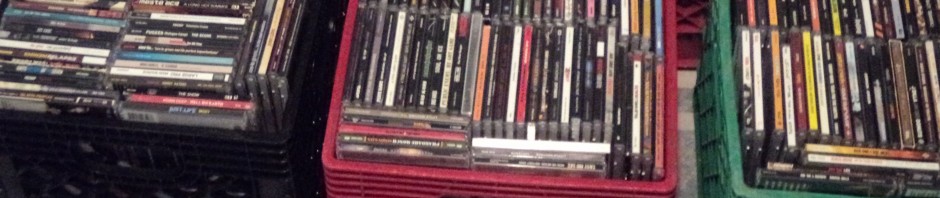
Sometime during the late eighties, hip-hop music started to transform from being a good-spirited, fun, party-fueled genre to more of a thugged-out gangsta art form. With the emergence of artists like Ice-T and groups like N.W.A. finding commercial success and bringing the record labels tons of money, the floodgates were opening for labels to continue to cash in on the new-found subgenre. The next decade would produce a slew of rappers building on the drug-dealing-violent themes started by the O.G.s. Don’t get me wrong, I enjoyed some of it. But much of it consisted of copycats with no artistic value or individuality. Thankfully, there have always been those who go against the status quo. Heavy D was one of them.
Since 1987, Heavy D & The Boyz have been known for their radio-friendly bops and positive image. No talk of guns, murder, and drugs in their music, just light-hearted content with sprinkles of consciousness and a strong focus on lovin’ the ladies. By 1997, Heavy D & The Boyz had five albums under their belts. Together, the four-man team (Heavy D, DJ Eddie F, and dancers Trouble T. Roy and G-Whiz) experienced success and loss. In 1990, Trouble T Roy passed away after falling from a parking ramp (he would be the muse for the group’s 1991 album,Peaceful Journey, and the inspiration behind Pete Rock & C.L. Smooth’s classic record, “They Reminisce Over You”). After T Roy’s passing, the group released three more albums, with Nuttin But Love being the last in 1994. Eddie F would continue to produce and A&R for others, G-Whiz would…continue to dance, and Heavy would continue to make music.
Waterbed Hev is the official solo debut album by Heavy D. With Eddie F out of the picture, Hev would co-produce most of the album under the overseeing of Tony Dofat. Fueled by two singles, WaterbedHev was not as successful as Nuttin’ But Love, but it would still earn Hev a gold plaque, adding to his understated, impressive commercial resume.
Waterbed Hev is another first listen for me. I’ve always loved the Blue Funk album, Nuttin’ But Love was a pleasant surprise, and hopefully, Waterbed Hev goes well.
Continue to rest easy, Hev.
Big Daddy – Things jump off with a twenty-second conga drum solo that our host declares as “just an interlude.” Then warm and luscious R&B chords consume the atmosphere and set the mood for the overweight lover to overweight love (or lust). Hev spits three verses filled with run-of-the-mill lines of female flattery (apparently, Hev thought the “the genuine and you fine, vision you like dollar signs” line was dope enough to say twice in the same verse, and his “Creepin’ through your room late at night” line sounded more predatory than sexy) and Keanna Henson adds her silky vocals to the hook, enticing Hev to continue with his lover man antics. With all its contrived energy, this is still an enjoyable record and a great choice for the lead single.
Keep It Comin – Over a sample of The Gap Band’s “Yearning For Your Love,” Hev does the same thing that he did on “Big Daddy.” He just switches out Keanna Henson for Nicole Johnson on the hook.
You Can Get It – Mr. Cheeks is an early candidate for cameo whore of ‘97, as he makes yet another one on this track (I wonder if I should include Freaky Tah in the equation since he adds his signature adlibs to all of Cheeks’ cameos. Tandem whores). He joins Hev and Hev’s singing mentees, Soul For Real, for this polished lady lovin’ rap/R&B groove, built around a flip of one of the most amazing basslines, Keni Burke’s “Risin’ To The Top.” I didn’t care much for this one, but the woman Hev describes during his first verse with the “body all lumped up and milkshake thick” sounds like quite the eye candy.
Waterbed Hev – This is a fly love song. The title track samples a sexy Patrice Rushen guitar riff, and the lovely Ms. Vinia Mojica (who I first heard on A Tribe Called Quest’s “Verses From The Abstract” (Tribes Degrees of Separation: check. It’s been a long time since I typed those words)) adds her soothing vocals to the hook. Hev continues with his waterbed stunts, sounding more convincing on this one than on other tracks.
Shake It – The congas we heard during the intro briefly return. Then Tony Dofat and ‘em (’em, being Heavy, Quell, and Med) put together a futuristic-electro instrumental created strictly to get freakazoid robots and human asses on the dance floor. It sounds like something will.i.am would have made ten years later. I wouldn’t have liked this back in ‘97, and I don’t know if I necessarily like it in 2024, but at the very least, it’s intriguing.
I’ll Do Anything – James Brown is undisputedly the most sampled artist in hip-hop, and I’m sure Issac Hayes and Barry White aren’t far behind him, but Hall and Oates might be the most sampled white artists in hip-hop history. Dofat borrows from the duo’s classic “I Can’t Go For That (No Can Do),” while April and Sheree of ASK ME spread their lovely vocals over the pristine track like peanut butter and jelly. Meanwhile, Hev continues to Hev.
Don’t Be Afraid – Dofat builds this instrumental around the infectious and very familiar bassline from Le Pamplemousse’s “Gimmie What You Got,” which is a great choice if you’re looking to make a banger with bounce. For the first time this evening, Hev invites a male vocalist to sing on the hook. Big Bub (now that’s a name I haven’t heard in a while. Much respect to Today) does the honors, while Hev finds the perfect pocket with his flow and attacks the track with swag and personality that outshines the instrumental.
Justa’ Interlude – The conga solo that has already cameoed a few times on Waterbed Hev pops up again. But this time, the production team puts claps underneath it, and Hev uses it to get off a quick sixteen, and for the first time, he doesn’t tailor it to please the ladies.
Can You Handle It – Now, this is a collaboration I never saw coming. Clean image, Heavy D links up with the West Coast gangstas, Daz and Kurupt, aka Tha Dogg Pound. Hev also invites McGruff to the cipher, introducing him to a mainstream audience (McGruff (formerly Herb McGruff) was a part of the Harlem-based group Children Of The Corn, which included Big L, Cam’ron, and Mase). The foursome takes turns rhyming over a reinterpretation of EPMD’s “You’re A Customer” instrumental while Big Bub borrows Tony! Toni! Tone!’s “Anniversary” harmony for the hook. Daz and Kurupt’s influence must have rubbed off on Hev as he talks about “peelin’ caps” at one point during the song, which has to be the most gangsta thing he has said in his entire rap career. Overall, this was a decent record.
Wanna Be A Player – McGruff meanders over from the previous track to jump on this one and joins Hev in spittin’ generic game at the dames. The hook is embarrassingly bad, and the stripped-down backdrop (that desecrates the legendary drums from “Sucker MCs”) sounds incredibly dry and empty.
Get Fresh Hev – Sticking with the stripped-down production sound, Heavy relies solely on a beatbox to impress the ladies on this one. He also spits what may be the corniest sex line in the history of rap: “Here’s what I like, 138, that’s 69 twice in one night, who’s jiggy? Hev Diggy, no question.” Nothing to see here, folks.
Big Daddy (Remix) – Heavy closes Waterbed Hev with a remix of the lead single. Gone are the lush R&B chord progressions from the O.G. mix. Dofat strips the backing music down to a rumbling bassline and borrows the lively drum claps from Soul II Soul’s “Back To Life” (Keanna Henson also borrows some of Caron Wheeler’s lyrics and harmony from the same song for the hook). Our always-confident host corrals the beat and places it in submission while McGruff spits a decent verse that doesn’t add much value to the song. Nevertheless, it’s a fire remix and a great way to end the album.
Long before Biggie would lean into his Big Poppa persona, or Prince Markie Dee would assume the role of Love Daddy, Heavy D had established his place as the Overweight Lover. Except for Drake, no other rapper has been as consistent and successful at making radio-accessible records to appeal to the female fanbase as Heavy D. On Waterbed Hev the O.L. continues to focus on the ladies. However, he fails to make any new waves.
Heavy D has never been a lyrical miracle emcee. Still, the mixture of his baritone voice and undeniable flow, along with his unbreakable confidence and charisma, has not only made women adore his music but has earned him the respect of the hip-hop male population, even when his music doesn’t have them in mind. Those attributes continue to shine through on Waterbed Hev, but Hev’s standard musical formula seems disrupted by the production.
That’s not to say that the production on Waterbed Hev is horrible. On the first half of the album, Tony Dofat and Hev string together squeaky-clean instrumentals lined with alluring harmonies, but all the samples are rehashed material that has been way overused or flipped and put to better use by other artists (with the title track being the exception). The last half of the album finds Hev rhyming over experimental and more stripped-down instrumentals that use uncreative reworks of overly familiar elements that might pass when heard on a dance floor but not so much when you’re listening in the comfort of your home. And as much as I appreciate and respect Hev’s emcee ability, halfway through the album, I was hoping he’d move away from the cliche pick-up lines to something more intriguing. He never does.
Even with its issues, Waterbed Hev isn’t a bad project; it’s just not as entertaining as his previous few albums. But I’m not the target demo that Hev intended to enjoy his waterbed, so who cares what I think?
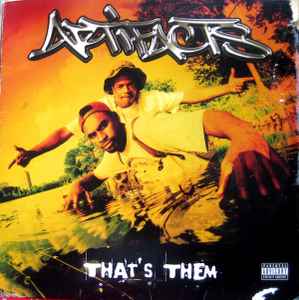
The last time we checked in on our New Jersey friends Artifacts was on their 1994 debut album Between A Rock And A Hard Place. The album produced three underground hits and despite its unimpressive sales numbers, received mostly positive reviews and became a backpackers’ cult classic. While I usually share the backpackers’ point of view, Between A Rock is one that I couldn’t agree with them on. The album did have a few dope joints, but too much mediocrity on it to be called classic. Nevertheless, Tame One, El Da Sensai, and DJ Kaos would return in 1997 to release their sophomore effort, simply titled That’s Them.
On Between A Rock, Artifacts leaned heavily on Buckwild and T-Ray to sculpt the album’s soundscape. For That’s Them, they’d lean on the hand of Shawn J Period to produce a large chunk of the album and received contributions from a handful of other producers, including Mr. Walt, Baby Paul, V.I.C., Lord Finesse, and Showbiz. The album spawned two singles that didn’t make much noise, as the album would perform just as well commercially as their debut.
Shortly after the release of That’s Them, Artifacts disbanded as Tame and El explored their solo careers, each releasing several projects on independent labels over the next decade. They would reunite in 2013, and twenty-five years after releasing That’s Them, they would put out new music as a group in 2022 with the Buckwild-produced album No ExpirationDate. Sadly, DJ Kaos would not be a part of the project as he passed in 2019, and Tame One would transition just days after the album was released. Rest in peace to both of those gentlemen.
That’s Them is another album I bought used years ago, and this review is my first time listening to it in its entirety. Hopefully, it fairs better than their debut.
Art Of Scratch – The album begins with a smooth backdrop, coded with hovering celestial voices, while DJ Kaos introduces Artifacts via scratches, hence the song title. Daddy Rich must have played an integral part in sparking the Artifacts career, as he received a few shoutouts on Between A Rock And A Hard Place and gets a few more scratched in ones during this intro.
Art Of Facts – Shawn J Period builds this instrumental on a sturdy xylophone (esque?) sample and a loop of a drunken but soulful male voice laid over brolic drums. The duo uses the quality backdrop to exchange competent battle bars, which includes some random TMI from Tame One (apparently, he likes to fuck with his boots on. Weird, but whatever floats your boat, pal). Clever song title that I’m surprised took them two albums to use.
31 Bumrush – Artifacts keeps the battle spirit alive as they take turns spittin’ several short verses, breaking things up a couple of times during this three-and-a-half-minute rhyming affair with a semi-catchy hook. I have no idea what “31 Bumrush” means (it must be an inside thing), but I thoroughly enjoyed the rugged drums and the zany horn loop used in Shawn J’s instrumental.
To Ya Chest – Tame and El continue to engage in verbal combat, this time over a mystic and gloomy canvas. I wasn’t crazy about this one initially, but it grows on me the more I listen to it. The instrumental sounds like a third (maybe fourth?) autistic cousin to Premo’s production work on Jeru The Damaja’s “Come Clean.”
Where Yo Skillz At? – The Artifacts spit more moderately dope battle raps over bland boom bap, adding a hook that only exists out of necessity.
Collaboration Of Mics – Tame and El join forces with two Lords (Lord Jamar and Lord Finesse) for this generically titled four-man cipher session. Finesse soundtracks the affair with crispy drums and a bluesy loop that doesn’t sound spectacular, but it will still make you nod your head somewhat. All four emcees make decent contributions (I was expecting Lord Finesse to shine brighter than the other three), but overall, this collaboration sounded very vanilla.
The Ultimate – This was the second single released from That’s Them and the only record I was familiar with going into this review. Baby Paul (formerly of the Beatminerz production team) serves the duo with soulful boom bap, and the Artifacts bless the track efficiently. All these years later, this record still feels good.
It’s Gettin’ Hot – Sticking with the Beatminerz theme, Mr. Walt gets his sole production credit of the evening with this tender composition and its brittle melody. And our hosts continue to do what they’ve done for the majority of the album to this point. Moving on…
This Is Da Way – V.I.C. laces this track with an amazing, gully bass guitar loop, accompanied by rugged drums and a well-played vocal snippet from Run DMC’s “Rock The House.” I believe El and Tame rap over it, but the brilliant instrumental seems to leave me under hypnosis whenever I hear it.
The Interview – The song title had me believing Tame and El were going to use V.I.C.’s creamy instrumental (that sounds like something The Ummah could have produced) to rap out an interview, but they don’t. They give us more of the same, but they sound sharper than normal, rapping over what might be my favorite instrumental on the album.
Break It Down – Deceitful chimes and a grumpy bass line meet solid bars, culminating in quality filler.
Skwad Training – Based on the song’s intro, where some dude gives a tutorial on “Boom Skwad Blunt Rolling Technique, 314,” I thought this would be a record about smoking weed (which was almost mandatory for a hip-hop album in the nineties). But just like they did with “The Interview,” the Artifacts completely abandon the topic at hand, continuing with their barrage of battle raps. At least the random dude from the intro stays on task between Tame and El’s verses.
Ingredients To Time Travel – Another great song title. El Da Sensai sits this one out, and Tame One opens the record with what are probably my favorite bars on the entire album: “If I had it my way, every wack emcee would die Friday, makin’ Saturday a better day, Sunday wouldn’t start your week off ‘til Monday, one day tunes I wrote yesterday, will be tomorrow’s scriptures for today.” Tame and someone with the alias of Gruff Rhino (who shares a few closing words as the song ends) match his off-kilter bars with an oddball bassy instrumental that meets somewhere between lackadaisical and heavenly. Dope record and the inclusion of Redman’s “Funky Uncles” in the track was both hilarious and genius.
Return To Da Wrongside – Like “Wrong Side Of Da Track” from their debut album, Artifacts dedicates this one to the art of tagging (aka graffiti). Shawn J backs the rhymes with a twangy guitar riff and a sample that reminds me of some Inspector Gadget-type shit as the duo discusses their love for tagging and get into some of the politics surrounding the art form. I like this one, and it was refreshing to hear them venture away from their battle raps for a moment.
Who’s This? – Shawn J cooks up what is probably his strongest instrumental of the evening, combining chill drums, a gully horn loop, and a somber guitar riff for our hosts to talk their shit and tell you who they be. I’ll double down and say this backdrop is absolutely irresistible. The track ends with a clip of Artifacts performing “The Ultimate” live, setting up the final song of the night.
The Ultimate (Showbiz Remix) – I like it when a remix not only has a different instrumental than the original mix but also comes with new rhymes. Showbiz gives the song a complete musical makeover with a minuscule melody and a dark, stripped-down feel, while Tame and El’s new bars match the lyrical level of the original. I prefer the lively, soulful groove of the original mix, but this remix is still solid.
By 1997, the materialistic movement in hip-hop was in full motion. A large portion of rappers were spittin’ luxurious lyrics to describe their lavished lifestyle, though, for most, that way of living was a figment of their imaginations. On That’s Them, the Artifacts go against the materialistic grain and carry on a few cornerstone traditions of emceeing: boasting and battling. The duo makes a commendable effort, but they forget one key point: it’s not what you say, it’s how you say it.
During my write-up of Between A Rock, I mentioned how El Da Sensai and Tame One have almost identical dry vocal tones. While their wordplay sounds sharper on this album, the dryness persists, and on several occasions, I couldn’t tell who was on the mic. With no variation in subject matter and matching voices that lack personality or charisma, Tame and El’s rhymes get a little monotonous over the length of fourteen tracks. Shawn J Period and company pick up the slack and provide a consistent diet of quality boom-bap, built around soulful and jazzy loops that capture the essence of nineties East Coast hip-hop. A period and sound that I will forever hold dear to my heart.
On the final verse of “Art Of Facts,” El Da Sensai raps, “What the men say in the back? Thinking that we can’t battle rap and combat, cease that.” That rhyme sums up the running theme of That’s Them. El Da Sensai and Tame One rap with a chip on their shoulders, spending most of the album spewing battle raps to prove their naysayers wrong. But in doing so, they forget about two other important objectives of an emcee: connecting with the listener and entertaining. Thankfully, the producers remembered.
On Sunday, March 9, 1997, I turned on MTV, looking to catch a couple of early morning music videos (yes, kids, once upon a time, years before it would become a whore house for Reality TV, the Music Television Network actually played music videos), when the normally scheduled programming was interrupted by breaking news. John Norris came across the screen to share the terrible report: “Hi, I’m John Norris with an MTV News breaking story. We’re outside of Petersen Automotive Museum in Los Angeles, where the twenty-four-year-old rap artist known as Notorious B.I.G., Christopher Wallace was shot early Sunday morning and later died of gunshot wounds at Cedars-Sinai Medical Center.” I was stunned. Just six months prior, Tupac had been shot in Las Vegas after leaving a Mike Tyson fight and died from the wounds less than a week later. Now, another one of the most talented, full of potential emcees, had been gunned down in the name of a senseless hip-hop civil war. Just a week before his untimely demise, his new single, “Hypnotize,” had hit radio and created quite a buzz for his forthcoming, now suddenly posthumous album, Life After Death.
After the shock of the news set in, Biggie’s death made me soul search. I was already in the beginning stages of seeking God and trying to figure out the purpose of this life, but Biggie’s passing seemed to propel the process. Hip-hop had been my everything over the previous decade, and suddenly, I felt the need to separate myself from it completely, which led to me eventually disposing of the couple hundred CDs I owned at the time. I bought Life After Death the day it was released, and it would be the last secular hip-hop album I would buy or listen to for the next five years (Fret not. After my five-year break, I would end up rebuying almost everything I got rid of, plus a hundredfold. It may have cost me more monetarily, but the lessons I learned during that hiatus were invaluable, and I’d do it all over again…anyhoo, back to Life After Death).
The title Life After Death was a tongue-in-cheek response to Biggie’s ballsy titled debut album, ReadyTo Die. The double album was released on March 25, 1997 (just over two weeks after Biggie’s passing), containing twenty-four tracks that featured production from Puffy and his Hitmen, DJ Premier, Buckwild, Havoc, KayGee, Easy Mo Bee, and RZA, along with a slew of guest cameos. The album would rocket to number one on the Billboard 200, and thanks to its double discness, would earn a spot in the prestigious diamond club (ten million copies sold). The double disc diamond album has always felt like shady business to me. The consumer makes one purchase, and the artist gets credit for two? Whatever, that’s a whole different conversation for another day.
Life After Death is an album I tend to revisit regularly. It’s been a minute since I’ve listened to it from beginning to end, but every time I do, I’m reminded of how art imitates life and the power that our words hold.
Life After Death Intro – A stereotypical male TV commentator voice opens the album, setting up a flashback scene to the last record on Ready To Die, “Suicidal Thoughts,” where a depressed and overwhelmed Biggie does you know what to himself. After the sound of a jolting gunshot, gloomy funeral music plays underneath the steady beep of a heart monitor, while Diddy encourages his non-responsive friend to pull through, but to no avail. The heart monitor flatlines, and the intro ends. I’m sure this intro was created before Big’s untimely demise. But to all the listeners who heard this intro for the first time, a little more than two weeks after his death, this shit was not just a cute dramatic intro but super emotional, considering the circumstances. Twenty-seven years later, it still touches me when I think about Big’s stolen potential. Then I think about some of the rumored diabolical deeds surrounding Puff that recently surfaced, and my sadness switches to anger (If the man responsible for the Biggie tribute, “I’ll Be Missing You,” had anything to do with his murder, he is truly the scum of the earth).
Somebody’s Gotta Die – The record opens with rain, thunder, a gentle piano riff, and a leery synth string chord (it never goes away), creating a mystically somber mood for Big to paint a violent tale about avenging the murder of his homie, C-Rock. Big’s story ends with a sad twist that I won’t mention, just in case you forgot how it plays out and want to rediscover it for yourself. Good storytelling, a great beat choice, and an overall solid record.
Hypnotize – This was the lead single from Life After Death. Deric “D-Dot” Angelettie and Ron “Amen-Ra” Lawrence turn a Herb Alpert break into a funky backdrop for Big to float like, um, a floater (he told y’all during the second verse that he’s “really the shit”). A few sultry ladies reinterpret a line from Slick Rick’s “La Di Da Di” on the hook, bringing this irresistible banger to completion.
Kick In The Door – This is Biggie’s legendary subliminal diss track, and the first of two DJ Premier-produced records on Life After Death (that might also have the greatest opening two bars of any hip-hop song: “Your reign on the top was short like leprechauns, as crush so-called Willies, thugs, and rapper dons”). Over the years, I’ve heard this song was aimed at a thousand different people: Wu-Tang Clan (hence the ten “you’s” at the beginning of the song, which is a theory that works if you include Cappadonna as the unofficial tenth member of the Clan, but it doesn’t quite add up when you consider Meth appeared on “The What” and RZA produced a track on disc two of this album), Nas, Pac, Jay-Z, (even though he makes a cameo on the album three songs later), Jeru The Damaja, and I recently heard speculation that Big is firing at O.G.C. (yes, as in Originoo Gunn Clappaz, O.G.C.). I’m sure a portion of the previous parties listed above were in Big’s crosshairs (even Premo’s alleged to have received some reprimanding with the line: “Son, I’m surprised you run with, I think they got cum in them, ‘cause they nothing but dicks, tryna blow up like nitro and dynamite sticks”), but even without saying names, he makes it clear who this song’s dedicated to: “This goes out to those who chose, to use disrespectful views, on the King of N.Y.” Premo’s mammoth banger sets a Big Foot is coming mood, and Biggie’s recycling of one of his lines from “Get Money,” turns into a simple but effective hook.
Fuckin’ You Tonight – Long before he was tried, convicted, imprisoned, and canceled (even though most of the industry already knew he was a low-life piece of shit years before his conviction), R. Kelly was the man to go if you were looking to make your record hotter in the nineties. Nas linked up with Kells for the “Street Dreams (Remix)” the previous year, and Biggie would follow suit with this record. Daron Jones of 112 (and Diddy, of course) gets credit for the clean and contrived R&B-laden backdrop that Big uses to slip into his Big Poppa persona, smoothly telling the objects of his erection what his intentions are despite the straightforward song title. Meanwhile, R. Kelly keeps things candid on the hook and adlibs, plainly crooning what he wants to do. I didn’t like this record when it came out, and time hasn’t helped matters. Big’s bars were mildly entertaining, but the hook is horrendously corny, lasting way too long, and Kells’ poorly written verse only brings more scrutiny considering what would unfold over time.
Last Day – Big and The Lox pick up where they left off on their 60 Minutes Of Funk Vol. II. freestyle. Sheek Louch, Jada Kiss, Styles P, and Big each spit a verse (in that order) over a grimy string-laden backdrop that has Havoc’s gully imprint all over it (though the liners notes credit Havoc, Stevie J, and Puffy) and an embarrassing corny hook that smells like Diddy’s doing. All parties turn in sufficient verses, but unlike his performance on the 60 Minutes freestyle, Big doesn’t spare his contemporaries, demolishing them and the beat.
I Love The Dough – Jay and Big reconnect to talk big money and lavish lifestyles over Easy Moe Bee’s flip of Rene and Angela’s early eighties groove, I Love You More.” Wisely, they invite Angela Winbush to sing the same melody as the original record with a few alterations to the lyrics. This is another record I didn’t like back when Life After Death first dropped. The loop sounded like a cheap sample choice, but time has made it easier on the ears.
What’s Beef? – Our host uses this one for a quick synopsis of beef. Not the kind you eat, but the type that when “I see you, you guaranteed to be in ICU.” Biggie weaves his thugged-out wordplay like a seamstress’ needle through the slower tempo backdrop. And I love the mysterious mob vibes this Hitmen-produced backdrop emits. Classic.
B.I.G. Interlude – Big pays homage to Schoolly D’s classic record, “P.S.K. What Does It Mean?” with a quick verse over the honoree’s beat that somewhat explains what “B.I.G.” stands for. Those thunderous drums and crashing cymbals are ridiculous and will eternally sound amazing.
Mo Money Mo Problems – The album’s second single. Puff and the newest member of the Bad Boy family, Mase, join Big for this flamboyant, shiny suit affair. The Diana Ross flip of one of her biggest hits on her best-selling solo album was an unimaginative choice, but it still works. Big (who raps circles around his co-workers) brings life to the low-hanging fruit sample choice with lively bars, and I was today years old when I discovered Kelly Price sings the hook. For decades, I thought it was Faith Evans.
Niggas Bleed – Over a dark, unnerving backdrop, Big steps back into his Frank White persona to spin a tale from the perspective of a drug dealer plotting to rob his supplier of his supply. The content and energy of the song feel similar to “Somebody’s Gotta Die,” only the storyline is less interesting, so there’s no reason the two songs should exist on the same album.
I Got A Story To Tell – Sticking with the storytelling, Biggie ends disc one of Life After Death with a zany one-verse tale that starts as an innocent creep (with a chick who gets “dick from a player off the New York Knicks,” and Biggie’s in her “ass, while he (the anonymous Knick player) plays against the Utah Jazz”), but quickly turns into an armed robbery. According to Biggie, the whole episode is soundtracked by a 112 CD (props to Big for pluggin’ his label mates). Buckwild builds the instrumental around a twangy guitar loop that serves as the perfect accomplice to Big’s colorful narrative. The conversation at the end of the record, where Biggie recaps his antics with his homies, is almost as entertaining as the rap. Easily one of my favorite records on the album.
Notorious Thugs – If you polled fans of nineties hip-hop, I’m sure this would be one of the most beloved album cuts on Life After Death. Big joins forces with Bone Thugs-N-Harmony, jacks their speedy melodic style, and raps circles around them with one of the most celebrated verses in his legendary catalog (if this joint comes on at the kickback, everybody’s rappin’ Big’s verse verbatim, from “Armed and dangerous” to “Who’s the killa, me or you?”). A pensive key riff accentuates Stevie J’s emotional backdrop that goes just as hard as Big. Truth be told, I usually check out after Biggie’s verse, but this is still one of the highlights of Life After Death.
Miss U – This one starts with an interlude of Biggie reminiscing about his fallen comrade, O. Then KayGee (one-third of Naughty By Nature) interpolates Diana Ross’ Marvin Gaye tribute record, “Missing You,” for Big to share three different stories about loved ones he lost to prison or the streets. 112’s harmony on the hook intensifies the emotion and somberness of the track. On an album filled with tough guy talk, it’s nice to hear Biggie show vulnerability on records like these.
Another – Lil Kim joins her mentor/Geppetto on this raunchy battle of the sexes duet. This was, is, and will always be certified corn and the weakest link on Life After Death.
Going Back To Cali – The record starts with a skit of Puffy waking Big up with a phone call informing him they have to go back to California for bidness (“Whoa, Cali?”). Then Easy Mo Bee’s “More Bounce To The Ounce” influenced backdrop comes in for Biggie to celebrate the Golden State while semi-remaking LL’s Walking With A Panther classic and letting the listener know he’s got love for the West despite his beef with Pac: “If I got to choose a coast, I got to choose the East, I live out there, so don’t go there, but that don’t mean a nigga can’t rest in the West, see some nice breasts in the West, smoke some nice sess in the West, y’all niggas is a mess, thinkin’ I’m gon’ stop, givin’ L.A. props, all I got is beef with those that violate me, I shall annihilate thee.” I love the bounce in the instrumental and the fun energy Big brings to the track. This is still one of my faves on Life After Death.
Ten Crack Commandments – Premier gets his second and final production credit of the evening, soundtracking a joint that finds Biggie playing the Moses of drug dealers. I’m a huge Premo fan, but this is one of his weakest production moments. The instrumental is drier than Tyrone Biggums’ lips. Big does a commendable job trying to resuscitate the moisture-challenged music, but his commandments aren’t interesting enough to do so. They do make for a great hip-hop trivia question, though. Without revisiting the record, can you name all ten of Biggie’s Crack Commandments?
Playa Hater – I’ve heard interviews of Lil’ Cease talking about how much Biggie loved old soul music. This quick clip finds him getting his Barry (Frank?) White on, reinterpreting and putting a thug twist on The Delfonics “Hey Love.” This was a fun little break in the normally scheduled program, but homeboy who attempts to hit those falsetto notes on the bridge and closing adlibs (is that Puffy?) sounds cringe-worthy.
Nasty Boy – I’m not here to kink shame, but the shit Biggie’s talking about (no pun intended) during the opening interlude of this joint is probably the most disgusting sexual exploit I’ve ever heard in a song. He uses the rest of the record to playfully rap about how nasty he gets with the ladies, but nothing he spits is even remotely as nasty as the intro. For years, I assumed Jermaine Dupri was responsible for this contrived party production, but the liner notes credited Puffy. I hated this song back in the day, but now I appreciate how Biggie’s way with words can dress up a mediocre instrumental.
Sky’s The Limit – This was the third and final single released from Life After Death. Biggie’s highlights of his poverty-stricken childhood and his underlying hood optimism make this one feel like “Juicy” part two. I’m probably in the minority of the hip-hop community that didn’t love “Juicy,” mainly for the ridiculously obvious flip of “Juicy Fruit” (I know what you’re thinking, how could I like “Mo Money Mo Problems” that uses one of the most accessible loops in “I’m Coming Out” but not like “Juicy” for the same reason. I don’t have a logical answer, except that music is subjective, and I like what I like, dammit), but I digress. 112 again adds their smooth harmony on the hook, completing this feel-good, inspirational record.
The World Is Filled… – Our host invites Puff, Too Short, and Carl Thomas to join him on this pimp misogyny festival. Puff kicks things off with a verse that sounds eerie and telling with the recent charges that have surfaced in the past month. Then Big chimes in on verse two (with a verse that Jay-Z would later recycle a part of and use on “I Just Wanna Love U (Give It 2 Me)”) before Too Short wraps (and raps) things up on the final verse. Mr. Thomas handles hook duties, sprinkling his velvety vocals over the smoothly funked instrumental. The content is trash, but you can’t front on the beat.
My Downfall – This one begins with a skit of Biggie receiving a couple of death-threat phone calls (he immediately thinks it’s his then-estranged wife, Faith Evans, which makes me chuckle every time I listen to it), followed by Puffy screaming about jealousy and those who practice the unhealthy habit. Carlos “Six July” Broady chops up a piece of a sappy Al Green love song and turns the borrowed chords into a wonderfully murky canvas for Biggie to discuss those hoping, wishing, and praying for his downfall. Biggie invites DMC (Run’s partner in rhyme) to jump on the hook, which was a cool homage to the Queens legend.
Long Kiss Goodnight – RZA’s instrumental sounds like a cleaner take on some of his 36 Chambers material, while Biggie struggles to find his pocket over the mediocre beat. The hook and all of Puffy’s unnecessary yelling was annoying as shit. This is nothing more than filler that could have been cut and released later as some lost/vaulted material on Born Again.
You’re Nobody (Until Somebody Kills You) – The grand finale begins with Puffy reciting Psalms 23 as partially triumphant, partially paranoid strings slowly build in the background. Then the epically dark instrumental drops for Mr. “Forty-four in fifty-four drawers” to do his thing. Big’s first two verses are decent, but his final verse still sends ironic chills up my spine: “Remember, he used to push the champagne Range?/Silly cat, wore suede in the rain/ swear he put the “G” in game/had the Gucci frame before Dana Dane/thought he ran with Kane/I can’t recall his name/you mean that kid that nearly lost half his brain, over two bricks of cocaine?/Getting his dick sucked by crackhead Lorraine/a fuckin’ shame, dude’s a lame/what’s his name?/Dark-skinned Jermaine, see what I mean?”
When it comes to hip-hop, the term, classic album, gets used far too often and way too loosely. Everybody has their own definition of classic, but there should be some basic criteria for proclaiming an album a classic. For instance, two or three bangers or a few monster singles don’t necessarily qualify an album as a classic. The album cuts need to be strong as well. Production plays a huge role, along with sequencing, energy, and cohesiveness, and one of the truest tests of a classic album is time. There’s no calculated method or easy-to-follow formula to make a classic project. So, if making a classic standard album is difficult, how much more difficult is it when it’s a double?
My biggest issue with Ready To Die was the unevenness of Biggie’s rhymes and flow. The album was obviously written over a significant amount of time, as Biggie’s cadence and delivery on songs like “Gimme The Loot” and “Friend Of Mine” sound animated and prehistoric compared to songs like “Big Poppa” and “Unbelievable,” where his presentation became smoother and more sophisticated. Life After Death presents a polished Biggie, effortlessly lassoing every beat thrown at him, bringing them under submission with charisma and chiseled wordsmanship, even when the beat misses, which doesn’t happen often. Life After Death’s committee of producers provides Big with a diverse and strong palate of instrumentals to work with, ranging from calculated pop-ready canvases to organic boom-bap slaps.
Making a double album is an ambitious endeavor, even for an artist of Biggie’s stature (that’s a double entendre). I enjoyed Life After Death, but any album with twenty-four tracks is going to have some mid to underwhelming moments. Five to six tracks could have been left off the final cut, making the project a slimmer and more concise seventeen to eighteen-track body of work and bringing it closer to the coveted classic status. As is, there are a lot of really good records and a few great ones on Life AfterDeath. So, if you consider it a classic, I ain’t mad at ‘cha.
Revisiting Life After Death is a bittersweet experience. Listening to Biggie gracefully paint audio canvases with his vibrant verbiage will always be a pleasure. But knowing this is the premature swan song for one of the most talented emcees to ever grace a mic, arguably still not yet in his prime, hurts. The dark-skinned Jermaine verse eternally resonates.
The last time we heard from Scarface here at TimeisIllmatic was on his partially self-titled group, Facemob’s debut album, The Other Side Of The Law, which we barely heard from Face on. Instead, the generous leader let his apprentices (Devin The Dude, 350, DMG, Sha-Riza, and Smit-D) take center stage and hold down the fort. This decision left me yearning to hear more from Face and less from his mob. I would soon get my wish, as Scarface would release his fourth solo album, TheUntouchable, in March of ‘97, just nine months after The Other Side Of The Law dropped.
The Untouchable would feature some of the usual suspects on the production side (N.O. Joe, Mike Dean, and John Bido) and a few other guest producers (one in particular that we’ll discuss later). The album would yield three singles, receive favorable reviews, and shoot to number one on the Billboard Top 200. All of the critical and commercial success of The Untouchable would culminate in a second-consecutive solo platinum plaque for Mr. Brad “Scarface” Jordan.
Scarface is one of several rappers I’ve respected from a distance, but I never took the time to delve deep into his catalog until I started this blog. The Untouchable is a recent addition to my collection (I found a used CD copy for five bucks) and hopefully, a more even listen than Face’s last couple of solo projects.
Intro – The Untouchable begins with a sophisticated string orchestration, and even though it sounds nothing like the instrumental for “Notorious Thugs,” for some reason, it makes me chant, “It’s Bone and Biggie, Biggie, it’s Bone and Biggie, Biggie” every time I hear it. This bleeds into the next song…
Untouchable – I love it when a rap album gets the title track out of the way early on. The song begins with a bluesy piano riff, before the crisp drums drop and Face delivers his boastfully ballsy rhymes in his southern Baptist preacher cadence. But Face isn’t out to save souls. His mission is to “send muthafuckas to hell if they fuck with Brad.” Roger Troutman takes care of the hook with his signature talk box-induced vocal tone, adding the cherry on top of this well-executed opening track.
No Warning – The previous track ends with Face awakening some sleeping chump before blasting him into eternal rest. The fatal gunshots are followed by slow-rolling, deep-fried southern instrumentation, courtesy of N.O. Joe and Mike Dean. Ironically, Face spends the majority of the song warning his would-be victims of the violence he’s about to inflict on them. But our host’s contradictions aren’t strong enough to stifle the fire music that backs him.
Southside – Face spits one verse recalling his high school years as a knucklehead dope dealer from the southside of Houston. His story gets a little hard to follow after the vice principal kicks him out of school and tells his parents about his “profession,” but the instrumental, which is equally smooth as it is funky and clean enough to eat off of, is easy to enjoy.
Sunshine – Face’s first verse picks up where he left off on “No Warning,” issuing a plethora of violent threats to whomever it may concern. During the last two verses, Face covers more of his favorite subject: death. The dark content and dark instrumentation (which is flames!) are a sharp contrast to the hook and song title, but whatever.
Money Makes The World Go Round – Odes to money aren’t rare in hip-hop music, and Face and his guests (Daz Dillinger, Devin The Dude, and K.B.) don’t necessarily shed any new or profound light on the subject at hand (although I did enjoy Devin and K.B.’s contribution on the topic). But with an instrumental this creamy and soothing, they could have rapped the alphabet, and I would have enjoyed it.
For Real – Face spins one of his signature drug dealer tales over a decent beat and a monster bass line that more than makes up for the rest of the music’s mediocrity (the hook uses part of Al Pacino’s Scarface character’s famous line: “All I have in this world is my balls and my word, and I don’t break ’em for no one” which Face also used on “Mr. Scarface” from his debut album). The plot: some sucka has stolen some of Face’s dope, and now he’s furious with a new mission statement that he punctuates his first two verses with: “I’m so real about my motherfuckin’ skrill, that any obstacle obscuring my paper is gettin’ killed.” This was dope. I love hearing from fiery Face.
Ya Money Or Ya Life – Our host issues more violent threats over a laidback bluesy groove. The hook contradicts the song title (the title gives the would-be victim an option, but the hook has already decided for the victim). Still, it’s catchy as hell, and you’ll find yourself singing along while you slowly bop your head to the infectious music underneath it.
Mary Jane – This was the second single off The Untouchable. Years before Ashanti (who just gets finer with time) would use this instrumental for her 2002 hit record, “Baby,” Scarface would use it to worship at the feet of his herbal Queen: “A true friend in my time of need, you’re natural, you come from weed, makes me happy when I’m feeling pain, once again, makes me happy just to hear your name…so do your thang, Mary Jane.” Scarface’s lax lyrics and delivery get swallowed up by the undeniably bangin’ backdrop and the sultry singing from an uncredited female voice on the hook.
Smile – This was the lead single from The Untouchable and, I believe, the first posthumous feature from Pac. Mr. Dean and Tone Capone construct a somber soundscape drenched in a few weeping synthesized keyboard riffs for Pac and Face to rap words of encouragement in the most dismal way possible. These are the moments Pac excels, as he brilliantly spews bars of despair (“No fairytales, for this young Black male, some see me stranded in this land of hell, jail, and crack sales.”) and paranoia (“Somebody save me, lost and crazy, scared to drop a seed, hopin’ I ain’t curse my babies”) throughout his two verses that are supposed to inspire the listeners to keep their heads up. Face gets off a decent verse, placed in between Pac’s, but it’s clear who the standout is on this track. Johnny P borrows the melody from The S.O.S Band’s “Tell Me If You Still Care” to belt out a somber hook, but Face’s closing benediction and prayer for Pac (delivered in his southern Baptist preacher tone) will stir up your emotions. If this song still has that effect, nearly thirty years after Pac’s death, imagine how it hit back in 1997.
Smartz – Face gets into his conscious bag, breaking down the plots and traps that they (“they,” being the government and the other powers that be) set in black communities to destroy their inhabitants. I love reflective Face, but I’m not big on conscious Face. It’s hard for me to hear a rapper call drugs and guns “traps the demon set” after playing the role of a murderous drug dealer on five of the album’s previous ten tracks. And what a waste of a Devin The Dude feature.
Faith – Bishop Jordan returns to his pulpit and continues to contradict his dope dealing/gangsta persona with lines like: “Our whole Black community sours, crime rate towers, plagued by white powders,” and then he calls out the government for having “hypocrisy in your democracy.” The haunting melody from the female choir and the flip of Rare Earth’s “I Just Want To Celebrate” on the hook were cool but not cool enough to make me want to listen to Bishop Jordan’s duplicitous sermon.
Game Over – Face saves the best for last. He invites Dr. Dre to verbally spar with him, as the two exchange verses over the good doctor’s diabolical masterpiece of an instrumental (the dark wavering bass line is bound to leave you in a trance). Too Short opens the track with a few words for the haters, and Ice Cube adds a ferocious prayer from the bottom of his gut for the hook, completing this monster of a record.
Outro – The Untouchable ends the way it began, with the same string-led instrumental (“It’s Bone and Biggie, Biggie, it’s Bone and Biggie, Biggie”), bringing things full circle and to a close.
With his debut solo album, Mr. Scarface Is Back, Face made a memorable impression. His flow and delivery were a bit choppy, but his baritone southern accent, charisma, hunger, and obsession with death/murder made him intriguing to listen to; it also helped that Crazy C backed him with a fire southern-fried musical bed. On The World Is Yours, Face would sharpen his microphone skills while staying true to his Scarface persona, but the music on the project was uneven, resulting in a disappointing listen. The Diary would have some of the same production issues as TWIY, and Face, while still sharp and hungry, started to sound redundant in his murderous drug dealer role. TheUntouchable is Face’s fourth time around the dolo realm, and like all leopards, he doesn’t change his spots.
Scarface doesn’t unearth any new dimension on The Untouchable. He continues to sell drugs, kill rivals, revel in murder and death, and occasionally gets conscious, contradicting every immoral principle his rap alias stands on. Technically, Face doesn’t sound bad on The Untouchable, but his hunger seems to have waned, making his rehashed content sound less appealing.
Thanks mainly to Mike Dean, N.O. Joe, and John Bido, The Untouchable’s production is easily the most consistent of Face’s first four albums. Dense bass lines, soulfully bluesy riffs, and the perfect sprinkle of refreshingly live instrumentation (and a mammoth banger from the good doctor to close the album) make for thoroughly entertaining music to support our host’s rhymes. But even though the music keeps you bobbin’ your head while screwin’ your face (no pun intended), it backfires on Face as the pristine instrumentals seem to overpower his voice at times, adding insult to injury already inflicted by his monotonous full belly.
Scarface’s solo work and his catalog as part of the Geto Boys helped pioneer Southern hip-hop and make the South a relevant region in hip-hop. Many consider him the greatest rapper out of the South, and some people will even throw his name into the GOAT conversation (Hell, just for penning one of the greatest hip-hop songs of all time in “Mind Playing Tricks On Me” should give him legendary status). But even legends come up short from time to time. The Untouchable isn’t a bad album; it just exposes the chinks in Scarface’s armor, making him appear a little more touchable.
DJ Muggs is one-third of the Los Angeles area trio Cypress Hill and has been the main maestro of music for the group for the past thirty-plus years. During that stretch, he’s also branched out, producing tracks for damn near everybody: KRS-One, House of Pain (he’s responsible for the immortal energetic party anthem, “Jump Around”), Ice Cube, Janet Jackson, U2, Depeche Mode. Even though he didn’t receive credit for it, he produced Ice-T’s 1988 gangsta classic, “Colors.” By 1997, Cypress Hill had three platinum-selling albums under their belts and was working on their fourth release (that would aptly be titled IV). Muggs would also begin his solo career, releasing Muggs Presents…Soul Assassins Chapter I in ‘97.
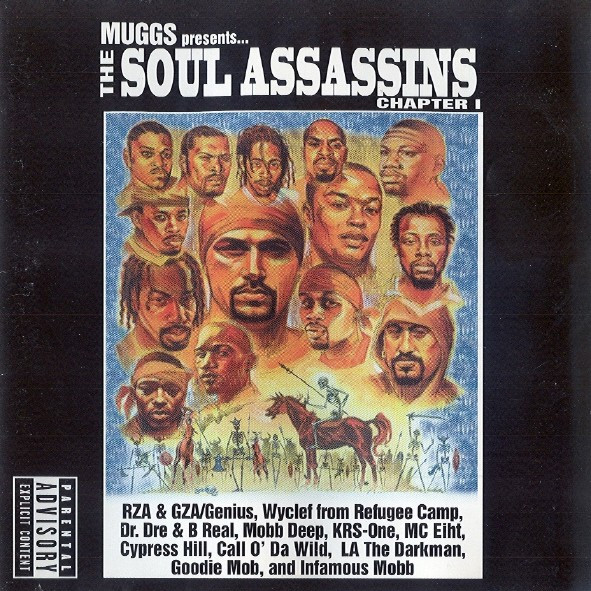
Soul Assassins is a twelve-track compilation album produced by Muggs. The album cover features a collage of caricature paintings of all the album’s featured artists hovering over a bunch of war-ready skeletons. If you cannot make out all of the artists’ faces (like me), the list of names is just below Skeletor and ‘em’s feet. The album received mostly positive reviews, climbing to twenty on the Billboard Top 200.
Soul Assassins is another album I didn’t listen to when it came out. I stumbled on a used CD copy for a few bucks in the mid-2000s, and now, I’m finally listening to it for the first time. The featured guest list looks impressive, and Muggs is a more than capable producer. Hopefully, what is written on paper translates audibly.
The Time Has Come – This one begins with a clip from the 1977 film Wizards that features melodramatic drums, horns, and a soundbite of a male voice saying the song title. Then vanilla drums, a gentle piano loop, and curious strings play while Muggs scratches in several soundbites of people saying “Soul Assassin,” occasionally bringing back the male voice from the Wizards snippet. Now that we’ve gotten the useless opening intro out of the way, we can move on.
Puppet Master – A clown with a stereotypical distorted voice and a sinister laugh invites the listener to step up and experience the masters of the puppets while merry-go-round music plays underneath his diabolical voice, creating a creepy atmosphere. Then, Muggs loops up arguably the funkiest instrumental in music history but severely overused in hip-hop (Issac Hayes’ “Hyperbolic”) for Dr. Dre and B-Real to verbally spar over. Both spit competent verses, though I have to refute Dre’s line about Micheal Jackson losing his Black fans (Even during the height of MJ’s child sexual abuse allegations, he never lost his Black audience). Speaking of Dr. Dre and puppets, I wonder which Geppetto wrote his bars for this record.
Decisions, Decisions – After a short soundbite of a man saying, “Atlanta, gateway to the south,” flat drums drop, accompanied by a bland four-note harp loop. Muggs tasks Goodie Mob with the job of bringing his drab musical creation to life. Big Gipp, Khujo, and T-Mo’s southern social commentary gets smothered by the humidity of the dry instrumental, but CeeLo’s grand finale (which finds him sharing game with a newly signed rapper) rises above the oppression of the backdrop’s blandness, temporarily making you forget just how bland it is.
Third World – A snooty string-led loop with the Rza mic checking/talkin’ shit over it, followed by a clip of some guy talking about being at “the crossroads of the worst war man will ever know,” preludes the next song. Helicopter noise, gunshots, and staticky walkie-talkie communication put the listener in the middle of the war that the British accented soundbite predicted. Eventually, Muggs drops an instrumental that gives off dusty snob energy (and ironically, sounds like Muggs attempting to make a Rza beat), as Gza and Rza (who mistakenly refers to Michael J. Fox’s Back To The Future character, Marty McFly as Jordan McFly during his verse) wage war against their enemies, exchanging solid verses over the quality backdrop, in a losing cause.
Battle Of 2001 – The war rages on. After the battle that took place on the previous record, a communications officer reads a distress signal sent to headquarters from Rza, warning them that enemy troops are moving west toward them and that Yakub (a Black scientist that the Nation of Islam believes created the white race) and Dr. Titus have released a new deadly virus to infiltrate the Western States (which Rza also mentions towards the end of his verse on “Third World”). A few war soundbites set up the next battle, led by B-Real, who gets off a short combat-laden verse over classical piano chords, strings, and crashing percussions. Spoiler alert: B-Real and his troops lose the battle, the virus decimates the population, and the survivors are put under martial law with all their constitutional rights revoked. Sounds like something that could happen if they put Trump’s orange ass back in office. Stay tuned.
Devil In A Blue Dress – LA the Darkman is a Wu-Tang affiliate rapper out of Brooklyn, who I first mentioned on this blog for his cameos on Blahzay Blahzay’s “Danger Part 2” and “Posse Jumpa” off their debut project, Blah Blah Blah. I’m sure it’s his Wu connection that scored him a spot on Muggs’ Soul Assassins roster. Our host provides one of his standard dusty musical canvases that LA paints with typical hood rapper rhetoric: lyrical supremacy, battle bars, gun talk/threats of violence. LA does get a little scatterbrain at the end of his second verse (he goes into the details of a gun shooting that claimed the life of a young girl named Shelly, which is very sad but sounds extremely random placed within the context of his rhymes), but he still gives a proficient performance on an overall decent record.
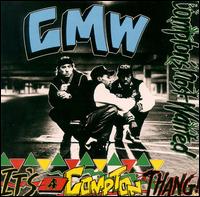
Heavy Weights – When I saw the pairing of MC Eiht with Muggs in the liner notes, I was curious how it would play out. I’ve been an MC Eiht fan since CMW’s It’s A Compton Thang, and Muggs is usually good for a dope dusty boom bap production, which isn’t usually the type of bullet trap Eiht shoots at. After a short clip from the 1936 film The Petrified Forest plays, Muggs brings in a soothingly mystical backdrop built around a classical piano loop, which sounds pleasant, but it didn’t necessarily stir up anything inside of me, either. Eiht commences to lace the track with his standard money/murder discourse but uses a weird cadence to deliver his rhymes, and he sounds very uncomfortable in the process. To make matters worse, he stacks his vocals with a singy delivery that I found annoying as shit.
Move Ahead – Rampage may have faked me out and made me believe that KRS-One was going to make a cameo on Politics & Bullshit, but the Blastmaster actually shows up on Soul Assassins. Kris lets his stream of consciousness flow (and his stream is full of consciousness) as he addresses the East/West feud and the importance of unity in hip-hop: “The East created it, the West decorated it, learn the lesson, the unified picture is Black expression, when Black expression bites itself, it becomes Black digression, leading to depression in health.” Muggs lays energetic boom-bap drums, an emotional key riff, and dramatic horns underneath the Teacher’s vocals, making for arguably the best record of the evening.
It Could Happen To You – What better way to follow KRS-One’s message of non-violent unity in the community than with a Mobb Deep record? After some rambling dialogue from their cronies, Infamous Mobb (not to be confused with Mobb Deep’s classic sophomore album, The Infamous) over a deep bass line and a sexy piano riff that creates quite the deep groove, Muggs brings in a harp loop that sounds stuck between haunted and heartbroken, smeared over dusty boom bap drums that gives the loop some grit. Havoc and Prodigy plaster the tantalizing musical bed (that sounds like something Havoc would produce) with the same violent thug agenda that has riddled the majority of their catalog. Despite the redundant content, magically, they make the shit sound entertaining.
Life Is Tragic – Muggs starts this one with another 1930s movie soundbite (the generically titled, I Am AFugitive From A Chain Gang). Then Infamous Mobb (what a lazy and lousy group name to settle on when your mentors already go by Mobb Deep): Godfather PT III (great song, but horrible alias), Ty Nitty, and Twin Gambino do their best Mobb Deep impersonation with poor results (what the hell was going on during that third verse? Atrocious). The trio’s amateurish performance is met by a dry-ass instrumental (that also sounds like something Havoc would produce), making an already underwhelming listen even more dreadful.
New York Undercover – I’d never heard of Call O’ Da Wild before this review, but they appear to be a duo, and based on the name of this song, it’s safe to assume they’re from New York. After a short somber choir clip introduces the track, the two emcees each spit spirited verses, describing the physical structure of the “Big Rotten Apple” and the behavior of its inhabitants. Muggs backs Da Wild’s poetic street commentary with a drum-less, warped, cinematic thriller-esque loop that makes the duo’s description of NYC more visual. This is easily one of my favorite records on Soul Assassins (and the shortest, not counting the intro). I would love to hear more music from these guys.
John 3:16 – Soul Assassins ends with this Muggs/Wyclef collabo. Clef uses a beautiful, weeping string concerto to spit eclectic bars full of pop culture references, biblical characters, and zany one-liners, all in the name of getting his moral of the story off: “Live reality and don’t get caught up in your fantasy.” I enjoy Wyclef when he’s in abstract creative mode, but I’m not letting him off the hook for the corny “Superman left the gang cause his weakness was crips, tonight” line. Despite that mishap, this was a solid record to end the album.
On Cypress Hill’s first three albums, Muggs created a signature soundscape for B-Real’s nasally diatribes and Sen-Dog’s baritone bravado. Thick pulsating bass lines, dusty loops, and raw drumbeats were the foundation the Hill was built on and would find commercial and critical success with in the early nineties. With Soul Assassins, Muggs deviates from the regular Cypress script.
Soul Assassins does have some of Muggs’ signature blunted residue on it (see “Decisions, Decisions” and “Devil In A Blue Dress”), but the majority of the album uses classical piano and string loops, giving it a regal orchestral feel. I’m not opposed to classical fused hip-hop. I loved Nine’s stringed-out “Uncivilized,” and Salaam Remi’s clever Beethoven flip turned Nas’ “I Can” into a cute, catchy tune. Most of Muggs’ classical samples technically work, but something about them rings hollow, almost soulless, no pun intended.
Soul Assassins does have some really good records, but most of those moments come when Muggs steers clear of his classical theme for more traditional hip-hop sounds, and the emcees rhyming over those tracks (KRS-One on “Move Ahead,” Mobb Deep on “It Could Happen To You,” and my personal favorite, “New York Undercover” with Call O’ Da Wild) sound inspired. The rest of Soul Assassins falls somewhere between decent and boring, including the emceeing. Thankfully, most of the music leans toward the decent side.
When it’s all said and done and Muggs tires from finding obscure samples and decides to hang up his MPC, his jersey will hang in the hip-hop rafters. He’s a legendary producer with critical and commercial success to back it. But even legends have less-than-spectacular moments in their legacies.
In the early 2000s, I was running around with my crew, Anointed Kings Alliance, trying to become an established rapper while spreading the good news of Jesus Christ and his redemptive virtue through my rhymes (it sounds corny, but I’m dead serious). That dream eventually dried up (maybe it’s still there, just deferred for eternity), and civilian life would become my norm. During that run, we saw a large portion of the country and met many people. Some became fans, others were aspiring artists like us, and some were already established in the game, like Frankie Cutlass.
I believe it was 2002 when we crossed paths with Frankie Cutlass at a Holy Hip-Hop Festival/Award show in Atlanta. He was either receiving an award or presenting one, but I vividly remember him “humbly” (and I say that in the most sarcastic way possible) talking about sitting in his studio, looking at all his gold plaques draped across his walls and being thankful to God for his success in the music industry. At the time, I only knew his name because of a CD a friend of mine had of his back in the day. That album was Politics & Bullshit, which based on the title, clearly wasn’t a Christian hip-hop album, so sometime between ‘97 and the early 2000s, Frankie had come into the faith. I had never listened to the album, and it would be at least another five years before I came across a used copy during one of my used CD bin rummages.
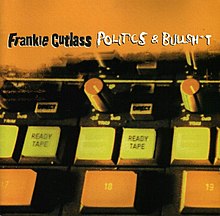
Frankie released his debut album, The Frankie Cutlass Show, on Hoody Records in 1993. Politics &Bullshit is Frankie’s first major label release (Epic Records) and would feature eleven tracks and a slew of esteemed guests rhyming over his production. The album didn’t spawn a hit record or make a ton of noise on the charts, but it did receive favorable reviews from the critics.
This review marks my first time listening to Politics & Bullshit, so without further ado, let’s jump into it. By the way, I still want to know which Frankie Cutlass records went gold.
Puerto Rico/Black People – The album begins with the recycled “Puerto Rico” soundbite from Frankie’s previous single of the same name (off his debut album, The Frankie Cutlass Show), linked with a vocal snippet of someone saying “Black People” on the other end. This dual soundbite repeats itself throughout the two-minute intro, but after its first couple of cycles, a mysteriously pensive melody, rugged drums, and a bass line that smells like doom’s lurking around the corner come creeping in, creating pleasant vibes in the audio sphere. Those pleasant vibes intensify around the mid-way point when our host shows his ass by adding a sophisticated string-esque arrangement to the mix. Most hip-hop album instrumental intros add little value to the project, but this is the exception.
Feel The Vibe – This record brings Rampage The Last Boy Scout, Doo Wop (better known as DJ Doo Wop, known for curating fire mixtapes way back when), and Ruck and Rock (aka Heltah Skeltah) together to mesh over a delicately demented xylophone, backed by a bangin’ rubbery bass line. Rampage (whose KRS-One and “Criminal Minded” references made it seem as if the Blastmaster was going to make a cameo on this track) and Doo Wop (whose rap voice sounds very similar to Fat Joe’s) spit decent verses, but Heltah Skeltah thoroughly entertains with their grimy back-and-forth rhyme scheme. I would have been fine with Heltah Skeltah holding this one down by themselves, but even as is, it’s still a tough record.
Focus – Lost Boyz (well, Mr Cheeks) meets up with M.O.P. and their extended family member, Teflon. Frankie builds the backdrop around the low-hanging fruit from Eugene Wilde’s “Gotta Get You Home Tonight,” which sounds fitting for Mr. Cheeks to rhyme over but way too soft for the Mash Out boys’ abrasive thuggery. Yet, Lil’ Fame and Billy Danze still made me chuckle a few times.
You & You & You – Frankie takes the energy back up a hundred notches with this mesmerizing banger of an instrumental. June Lover (sometimes spelled “June Luva”) bats first (he doesn’t strike out or hit a home run…maybe a single?), followed by Sadat X and his unique voice and abstract rhyme style, which I’m always open to hearing. No disrespect to June or Sadat, but they sound like mere opening acts compared to the beating Redman gives this track (and his name is curiously missing from the liner notes). I’ve been critical of Redman through the years, often feeling like the magic he captured on his rookie album (Whut? TheeAlbum) and his unforgettable performance on the Hit Squad posse record, “Head Banger,” were flukes. I’ll still ponder whether or not he’s overrated, but his verse on this record feels like 1992-93 Red: hungry, inspired, and outrageous. Peace to all the Roy Rogers employees still boxing up apple cobblers.
Boriquas On Da Set (The Remix) – I mentioned earlier that Doo-Wop’s rap voice reminded me of Fat Joe’s. How ironic that he and Joey Crack would get paired up for this record that celebrates their Puerto Rican descent? This is the remix of the original record that appears later in the sequencing (I’ve expressed before on this blog how much I hate when the remix of a song precedes the original in the album sequencing…what’s the point?). Doo Wop and Joe don’t sound that impressive on the mic, but Frankie’s grimy backdrop, punctuated with soiled wah-wah guitars, grows on me more each day.
Old School Radio (Interlude) – Frankie uses this short interlude to pay homage to a few legendary East Coast deejays via the frequencies on an old-school radio.
The Cypher: Part III – Mr. Cutlass loops up George Duke’s forever funky but far too familiar “Reach For It” (see Spice 1’s “In My Neighborhood” and WC And The Maad Circle’s “West Up!”) for this Juice Crew cypher session that features Craig G, Roxanne Shante, Biz Markie, and Big Daddy Kane. The song title is a little problematic. It’s called “The Cypher 3,” but don’t waste your time looking for “The Cypher” and “The Cypher 2” on your favorite DSP. They don’t exist. This is Frankie Cutlass’ spin on what “The Symphony Part 3” would sound like. The title may have been a little more fitting if the same four emcees from Part 1 and 2 participated (Masta Ace, Craig G, Kool G. Rap, and Big Daddy Kane…I know Little Daddy Shane popped up for four bars on Part 2, but I’m not factoring him into the equation). Even with the conflicting song title and lazy sample choice, it was both nostalgic and refreshing to hear these four parts of one of hip-hop’s most legendary crews assemble and proficiently rock the mic.
Know Da Game – If a drone were to capture the destruction and damage left on Earth after the apocalypse happened, this instrumental would be the perfect soundtrack for the footage. After setting things off with a rubbery wah-wah guitar rift, Mr. Cutlass combines weary drums, somber synth chords, and a choir of tortured souls to create a desolate musical masterpiece. And who better to rap over such desolation than Mobb Deep? They’re always reliable for some good ole hopeless thuggery. I was hoping Kool G. Rap would appear on the previous Juice Crew joint. Instead, he surfaces on this record in full mafioso mode, sandwiching his heavily lisped, rapidly paced threats of violence between Havoc and Prodigy’s verses. M.O.P. shouting the hook is the cherry on top of this brilliance in bleakness.
Games – I don’t know much about Roc-City-O other than they appear to be a trio from New York, whom Frankie Cutlass was kind enough to give a feature spot on this album. The song title and hook borrow from a record from the early eighties rapper/singer Sweet G (see “Games People Play”). Roc-City-O spends more time spewing boring gun rah-rah and hollow threats than addressing the games that people play, but J-Quest sticks to the script, crooning about the subject at hand on the hook. I like the dark undertones and deceitful xylophone notes in the instrumental, but I never need to hear from Roc-City-O again, and I have a strong feeling that I won’t.
Pay Ya Dues – This was an interesting pairing. Frankie matches Keith Murray with Smif-N-Wessun (Tek and Steele, who were going by Cocoa Brothers at the time due to legal issues with using the name of the mammoth gun manufacturer) as the three emcees take on his brute percussions laced with the most barbarian xylophone notes that I’ve ever heard on a hip-hop record (Frankie uses more xylophone loops than your average hip-hop producer, but I’m not complaining). Busta Rhymes pops up, adding the exclamation point on the hook with a recycled line from his hit solo debut single, “Woo Hah!! Got YouAll In Check.” Yet another solid record.
Boriquas On Da Set – This O.G. mix is much livelier than the remix we heard earlier in the album. Along with its energetic bounce, it comes with two additional verses from the Evil Twins, Ray Boogie, and True Da Grynch Evil (an early candidate for worst moniker). It has a completely different energy than the remix, but both records work. I’m still not going to forgive Frankie for placing the remix before the original in the sequencing, though.
The title, Politics & Bullshit, reminded me of a few other album titles that have grouped nouns through the years: Diamond D’s Stunts, Blunts And Hip-Hop. A Tribe Called Quest’s Beats, RhymesAndLife. Gravediggaz’s The Pick, The Sickle And The Shovel. The nouns chosen for these titles were all clever combos but also great descriptors for the body of work they represented (side note: I bought a used copy of The Pick, The Sickle And The Shovel a few years back and still haven’t listened to it (it’s a ‘97 release, so it’s getting cued up for review), but I’m sure the content is full of jestful death and gory murder references). That sentiment doesn’t ring true with Politics & Bullshit.
None of the content on Politics & Bullshit’s twelve tracks gets even remotely close to political. Instead, all of Frankie’s guests keep it on some boastful braggadocio bravado, or they get their hardcore thug posturing on. The two themes produce mostly competent contributions, a few stellar moments (most notably, Redman’s uncredited appearance), and a few offerings that could fall under the bullshit category. Frankie musters up a pretty impressive guest list for Politics, but it’s his production that does the heavy lifting, and that’s no bullshit.
Frankie crafts a cluster of sturdy-framed boom bap instrumentals that shake off some of the dust that normally came with East Coast boom bap during the nineties. He replaces the grime with clean string and xylophone elements, giving his production a layered sound that resonates throughout the album. Frankie does make a couple of low-hanging fruit sample choices (see “Focus” and “The Cypher, Pt. 3”), but the songs still work in the grand scheme of things, even if they lack creativity on Frankie’s behalf.
By 1997, Frankie had been in the music business long enough to experience how shady it truly is. Maybe the album title comes from his frustration dealing with the politics and bullshit that come with the fickle industry. Whatever the reason, Politics & Bullshit is a sharp and concise compilation album that may not have received the same notoriety as other compilation albums from that era. Still, it could hold its own up against the best of them.
When it comes to influential figures in hip-hop radio, there are few as long-standing and respected as Aston Taylor Jr., better known to the world as Funkmaster Flex. The Bronx-born and bred DJ (who began deejaying nightclubs at the tender age of sixteen, including a stent at the legendary Manhattan club, the Tunnel) has hosted a show on Hot 97, one of New York City’s most prominent hip-hop radio stations, since 1992. Along with breaking new records and playing your favorite songs, Flex’s show became popular for its legendary freestyles from some of your favorite rappers and emcees. The popularity of his radio show would eventually lead to Flex getting a deal with Loud Records, where he would try to recreate the magic of his show in album form, mixing old, current, and new music with freestyles from the game’s hottest rappers. It would become a mixtape series called 60 Minutes Of Funk, starting with Vol.1, released in 1995. The critical success of Vol.1 would lay the groundwork for Vol. II, released in 1997.
Vol. II would follow the same formula as I: old and new music mixed with freestyles, and Flex breaking a few new records. Similar to Vol. I, Vol. II became a critical darling, but unlike Vol. I, it would earn Flex his first gold plaque (a trend that would continue for Vol. III, Vol. IV, and his collaborative compilation effort with Big Kap, The Tunnel).
I was definitely outside when Vol. I dropped, but that would be my last Funkmaster Flex mixtape experience. Until now, and what better time than now to add to my 60 Minutes Of Funk knowledge?
Talkin’ Shit – After a few opening words from the Funkmaster, you hear a snippet of Method Man’s verse from “Protect Ya Neck.” Then, a basic drum beat, accompanied by a semi-zany horn loop, comes on for supermodel Veronica Webb to repeat the same few lines over and over and over and over for nearly three and a half minutes. The monotony is shortly broken up by Jermaine Dupri giving Flex a drop, and Flex intermittently weaves in the Meth vocal snippet from earlier. I was slightly entertained (and by entertained, I mean aroused) when Ms. Webb referred to herself as “Premium pussy” (in his liner note shoutouts, Flex hi-lariously refers to her as Veronica “Premium” Webb, which left me wondering if he got a chance to sample it). But even with that seductive moment, this shit was entirely too long and unwarranted.
Clear My Throat – A Boyz II Men snippet helps count in DJ Kool’s classic party record. The record was a staple on Vol.1, and it lives through on Vol. II.
I’m Not Feeling You – Flex stays loyal to his Loud Records label mate, Yvette Michele. He let her shine on Vol.1 with the irresistible “Everyday & Everynight” (that he’s credited with producing), and she returns with yet another hypnotic groove on Vol. II. The Sylvester loop the instrumental is built around has been used before (see Big Daddy Kane’s “Taste Of Chocolate Intro” and Lil’ Kim’s “Big Momma Thang”), but Flex and YM put their sauce on it, giving it new life. I’ve never heard Yvette Michele’s debut album (and only album to date), but she’s two for two in my ears.
Freestyle – The first “freestyle” of the evening comes from Jay-Z rhyming over the instrumental to Sadat X’s “Stages And Lights.” It’s not one of my favorite Jay-Z performances, but still solid.
How About Some Hardcore – Flex plays a clip of M.O.P.’s hood classic debut single and shares a few words to hype up the mixtape.
Freestyle – Lil Kim’s next up on the freestyle front, and her bars sound strongly backed by Biggie’s pen. She takes what appears to be a subtle shot at Pac, who was already deceased by the time this album was released (excuse my unintentional bars): “And those with no couth, get thrown off the roof, like Bishop with the Juice.” Considering the timing and circumstances, that line was a bit distasteful, but Queen B still delivers an overall decent verse. The raw and discreetly funky backdrop was dope.
Tour – I’d never heard of Capleton before listening to this album. I did a little digging and discovered he is a Jamaican reggae/dancehall artist who briefly released music through Def Jam in the mid-nineties, but his catalog before and after Def Jam is pretty extensive. This snippet is a remix of the opening track on his 1995 album, Prophecy. As I’ve mentioned several times before on this blog, I’m not a big fan of reggae/dancehall music sans Bob Marley, but you can’t go wrong when you incorporate the bass line from Slick Rick’s “Children’s Story” into your record.
Freestyle – Speaking of reggae/dancehall artists I’ve never heard of, Lady Saw gets off a quick singing chant over a simple drum beat, and the shit is kind of catchy. After several listens, I still don’t know what Ms. Saw saw in her living room the evening before, but whatever.
Clear My Throat – More DJ Kool…
Freestyle – One of my all-time favorite emcees, Nas, gets a freestyle slot on Volume II. It’s not one of my favorite Esco performances, but he manages to get a little busy.
Freestyle – Even though he’s not credited in the liner notes, somebody going by the alias of Pretty Boy kicks this session off rhyming over the instrumental to Mobb Deep’s “Still Shinin’.” He spits a few forgettable bars and wisely clears the way for Foxy to jump on the beat, and she shows us why she’s the sole emcee credited on this track. If you read this blog faithfully, you know how disappointed I was with Foxy’s debut album, Ill Na Na. If she rapped like this on the album, my whole listening experience might have been different.
Hip Hop Hooray – Clip of Naughty By Nature’s classic.
Uptown Anthem – Clip of another Naughty classic.
How I Could Just Kill A Man – Flex plays Cypress Hill’s killer first single (pun intended) up to the second verse, where B-Real nasally says “Time for some action,” which blends into…
Time 4 Sum Aksion – A portion of Redman’s monster 1992 debut single (Man, Red’s been rockin’ a long time!).
Freestyle – This freestyle starts with a basic drum beat and Red saying some super questionable shit that I’ll try not to judge him on (“I got Tic Tacs in my mouth with a big dick, but it don’t matter,” followed by a couple of slurping noises). Then Red cues K-Solo to mumble a little bit of nothing before he recycles his verse from “Do What U Feel” off the Muddy Waters album, making this the second consecutive Flex album that he regurgitates a verse on.
Freestyle – This freestyle session features an emcee who goes by the alias of Ras T. I think he’s the same guy Flex gave a freestyle segment to on Vol. I. (under the moniker of Rasta T), although his flow and cadence sound completely different this go-round. I dug his straightforward approach on Vol. I, but the added animation to his voice on Vol. II makes him sound like a bootleg Rock from Heltah Skeltah. The cheesy noises in the instrumental (that sound like they’re trying to create a computerized/futuristic mood) didn’t do it for me, either.
Freestyle – This is labeled a freestyle by a gentleman named Michelob, but it sounds like part of an actual song. Over a smooth r&b flavored groove (complete with male singers on the hook), the beer-loving emcee spits a verse about a chick he wants to get with, but she already has a man, leaving his dream unattainable (unless she chooses to get triflin’ and use my man as a side piece). I don’t know what came of Michelob’s rap career, but this tidbit was good enough to leave me open to hearing more from him.
Set It Off – A short vocal clip from Greg Nice (half of Nice & Smooth) sets up the next trio of old-school classics.
Flashlight – Parliament’s timeless funk hit record, followed by…
Outstanding – The Gap Band’s vintage barbecue anthem…
Rising To The Top – Then Flex plays a clip of Keni Burke’s often sampled R&B classic that never seems to get old.
Freestyle – After sending RIPs to some of his fallen peeps, Flex gives space for a gentleman named Dav to take center stage and get prime-time placement for a portion of one of his songs. I didn’t care much for this one. Dav sounds like a poor man’s Keith Sweat and the world only needs one nasally-voiced crooner.
Freestyle – I’m not gonna lie. I got a little excited when I heard Mary J. Blige harmonizing over the instrumental to Mobb Deep’s “Survival Of The Fittest.” That excitement intensified when she seemed to be preparing to spit bars, but instead, she repeated the same two-line Flex drop for the next minute or so. What a tease (audio blue balls).
Relax & Party – Flex follows MJB’s drop with a record from a singer named Ivory. He proves to be a decent enough vocalist, but the hip-hopped instrumental he sings over (built around a synth bell sound reminiscent of the sample Dre used for “Nas Is Coming”) is a funky little diddly and an entire vibe.
Crowd Participation – DJ Flexxx (not to be confused with Funkmaster Flex) shares a go-go call-and-response joint that might sound great live, but not so much on a recorded mixtape.
No Joke/Follow Me – Buckshot (the frontman for Black Moon and de facto leader of the Boot Camp Click) is one of the most unheralded emcees ever. Flex lets him shine and showcase his underappreciated talents on Vol. II with this short two-pack. The first half is a remake of Eric B & Rakim’s classic record of the same name (minus the “I Ain’t”), and Buckshot masterfully drips his sauce on it, honoring the original while making it sound like a completely new record. The second half finds the BDI emcee dissecting a funky Parliament piano loop (previously used for Salt-N-Pepa’s “Get Up Everybody (Get Up)” and Boss’ (rip) “Born Gangsta”) with calculated slickness and precision (I wonder if there’s a second verse to “Follow Me.” If there is, I’d love to hear it). This delicious two-piece combo is one of the highlight moments of Vol. II. Side note: the back CD jewel case panel groups the two songs together as one track (27), but the actual CD separates the two songs (“No Joke” as track 27 and “Follow Me” as part of the next track, 28).
Freestyle – This BCC session is divided into five pieces (excluding “Follow Me”). It starts with Rock and Ruck (aka Heltah Skeltah), Tek (half of Smif-N-Wessun), Starang Wondah (one-third of the O.G.C. aka Originoo Gun Clappaz), and Lidu Rock (little brother to Rock and half of the duo, Representativz) warming things up with a Boot Camp Click roll call over a loop from Grover Washington Jr.’s “Knucklehead.” Then Rock and Starang mix things up with semi-melodic bars over almost nonexistent drums, covered in subtly warm vibes. Next, Ruck and BJ Swan celebrate the twelve days of Merry Dissmas (a holiday filled with blue balls, wishful thinking, and misogyny) over a Detroit Emeralds drumbeat you may recognize from Main Source’s “Looking At The Front Door.” Then Tek and someone named MS (not to be confused with multiple sclerosis) spar over the most minimal drum beat ever heard by human ears. This grimy six-minute plus Boot Camp experience ends with Top Dog and Lidu Rock chanting and rhyming over one of the greatest hip-hop instrumentals of all time in “Shook Ones Part II.” There are a few dull moments during this extended session, but most of it works.
Freestyle – Akinyele and Sadat X provided one of the highlight moments on Vol. I with “Loud Hangover,” and Ak returns for Vol. II. Well, kind of. Other than a few adlibs at the beginning and end of the track, he doesn’t lend his voice to the song. Instead, he allows Complexion (who you might remember from Ak’s “Fuck Me For Free” record) to sing and someone named Curry to rap (or talk…maybe spoken word?) over a decent Caribbeanish backdrop. Complexion (who reinterprets the hook to Bootsy Collins’ classic joint, “I’d Rather Be With You”) matches the vibe of the instrumental, adding a little reggae flavor to his vocal, and Curry adds deadpan explicit rhymes, turning this into a hip-hop porno song. The music was dope and Complexion’s hook is catchy, but Curry’s overly simple delivery and elementary rhymes make this one hard to digest.
Method Man – A quick clip from Meth’s self-titled joint off Enter The Wu-Tang plays.
Freestyle – Biggie and then up-and-coming Yonkers trio, The Lox, rep for Bad Boy over Wu-Tang’s “C.R.E.A.M” instrumental. Styles P kicks things off with a solid opening verse, followed by Biggie, who spits a restrained but dope sixteen (it almost feels like he held back a little to not embarrass his co-workers in this cipher). After a quick hook, Sheek Louch gets off a truncated thugged-out verse before Jadakiss closes things out with a quality performance delivered in a far less raspy voice than I’ve grown accustomed to hearing him rhyme with through the years (it was also chuckle-worthy to hear him brag about using chopsticks while eating Chinese food as if that’s a form of high living). All in all, all four emcees hold their own over this classic hip-hop beat. Sadly, this would be one of Biggie’s last released cameo appearances before his death, just a few months later. Random thought: This may be the only project to feature all three of the big three (Nas, Biggie, and Jay-Z) on the same album. If I’m wrong, let me know in the comments.
Freestyle – Years before his fall from grace, public cancelation, and his alias becoming a slang term for suspicious activity, Sean “P-Diddy” Combs was the head of Bad-Boy Records. Thanks to Craig Mack, Biggie, and the Hitmen’s production, by 1997, Bad Boy was one of the hottest and most successful hip-hop labels around. This freestyle session finds Diddy introducing the world to his then-newest protege, Mase, and in true Diddy fashion, he talks all over the record. Flex pairs Mase with another Wu-Tang banger (the instrumental to “Wu-Tang Clan Ain’t Nuthing Ta Fuck Wit”), which is a marriage that I didn’t necessarily love. The instrumental has too much energy for Mase’s deadpan vocal tone and ends up swallowing him up (pause).
Mobb Deep Blend – As the title suggests, Flex lays Prodigy’s first verse from “Hell On Earth (Front Lines)” and the hook over the very familiar (and funky) The Whole Darn Family loop (previously sampled on Tha Alkaholiks,’ “Only When I’m Drunk” and the Jay-Z/Foxy Brown duet, “Ain’t No Nigga”). This quickly ends and gets scratched into the next record.
Freestyle – The Lost Boyz continues to build on their newfound hot streak with this Flex collabo. Mr. Cheeks rhymes with an uncharacteristic urgency that matches the instrumental’s gravitas. And what would an LB record be without Freaky Tah (rip) padding Cheeks bars with energetic adlibs?
Release Yo Delf – Apparently, Flex was a huge Method Man fan. He blends a piece of one of my favorite songs off the Tical album into the mix. Random thought: with all the Wu-Tang music included on Vol. II, I found it interesting that none of the Wu members have a freestyle on the album.
Freestyle – After EPMD’s first break up in 1992, E-Double and PMD started solo careers. The split divided their Hit Squad collective, which included K-Solo, Redman, Das EFX, and a few other acts that aren’t worth mentioning. Redman sided with Erick Sermon, adding Keith Murray to form, Def Squad, while PMD kept the Hit Squad name, taking K-Solo and Das EFX. Clearly, Def Squad would go on to have more success than Hit Squad 2.0, but that’s not to say that Hit Squad 2.0’s output was completely trivial. Flex invites Das EFX, PMD, and K-Solo (even though he doesn’t get a credit in the liner notes) to jump on the mic and rhyme over a Millie Jackson loop (the same one used for BDP’s “Original Lyrics”) and energized drums. All four emcees sound rejuvenated and give adequate performances over the lively backing music. Well done, fellas.
Freestyle – Mr. X to the Z represents the West Coast, his Alkaholik Crew, and his underproductive but full-of-potential supergroup, Golden State Project (Golden State Project was a trio comprised of Xzibit, Ras Kass, and Saafir. They collaborated on a few records, including “Bounce, Rock, Golden State” off the Training Day Soundtrack in 2001, but due to industry business and hoopla, they never released a full project). Flex mashes up the instrumentals from “Likwit” and “Make Room” off the Alkaholiks’ debut album, 21 & Over, to rap over. X doesn’t sound spectacular rhyming over it but manages to hold court.
Freestyle – In my mind, Cormega will always be Nas’ incarcerated mans who received an immortal shoutout on “One Love” (“What up with Cormega? Did you see him? Are ya’ll together?”). After leaving prison, Mega became one-fourth of the Nas-led supergroup, The Firm (along with AZ and Foxy Brown). His time in The Firm would be short-lived after falling out with Nas and eventually being replaced by another Queens emcee, Nature. This Mega/Flex session was apparently recorded before he left The Firm, as he shouts them out during his verse (he also shouts out Flex, but for some reason, they bleep out which Volume this “freestyle” would go on). Mega fairs well spittin’ from his “Mega Montana” persona, but the blunted soulful backdrop carries this one.
Clear My Throat – More DJ Kool…
Sucker MC’s – A portion of Run DMC’s legendary record plays. Years after its release, it still sounds hard as hell.
Back To Life (However Do You Want Me) – Soul II Soul’s timeless techno/R&B groove…
Flex Outro – Vol II ends with a few words and a goofy laugh from Funkmaster Flex.
For the last few NFL seasons, the Philadelphia Eagles have been at the top of NFC teams competing to represent the North in the Super Bowl and earn the title of Super Bowl Champs. In the 2023-24 season, the Eagles would fall short of the goal, losing to the Tampa Bay Buccaneers in the NFC Wild Card round. The year before, they would make it to Superbowl LVII only to come up short to the Kansas City Chiefs, 38-35. One component of the Eagles’ success over the past few seasons has been a play affectionately called the “tush push.” When the Eagles’ offense finds themselves in a third-and-short or fourth-and-short situation, they often resort to the play: Jalen Hurts takes the snap from his center, Jason Kelce, gets low and propels himself forward. At the same time, a few of his wide receivers would push him, giving him that extra boost to ensure he picks up the first down. The play is nearly unstoppable. During the 2023-24 regular season, the Eagles ran the play forty times and picked up the first down thirty-seven times. Like everything else, people criticized the play, with some considering it a form of cheating. But I say, if you have a proven winning formula, why switch things up?
Funkmaster Flex continues his winning formula on The Mixtape, Vol. II, by weaving together old and new records, along with new freestyles over classic hip-hop beats (with the twenty-five-plus years that have passed, it’s all old music now). Musically, Vol. II is more diverse than Vol. I. The first chapter was singularly focused on hip-hop, while the second chapter includes reggae vibes and pays homage to old-school funk and R&B. With only four of the album’s forty-five tracks having a runtime of over three minutes, Vol. II moves rapidly, which becomes helpful when you come across one of the handful of underwhelming freestyles or weak records in the album’s sequencing. Just when you reach to skip to the next tune, the track is over, and you can continue to have a true mixtape experience without interruption.
Jason Kelce retired after the 2023-24 season. But even in his absence, I’m sure Hurts and his new center will successfully run the same “tush push” play on short yardage downs, just as Funkmaster Flex would continue to find success with the rest of his 60 Minutes Of Funk mixtape series.
Greetings! I hope you all enjoyed your summer and are doing well. Labor Day marks the unofficial end of summer and my official return to this labor of love that I call TimeisIllmatic (I’m considering changing the name. Hit me in the comments if you have any good name suggestions). Finally, I’ll begin my journey back to 1997, and I hope you all take this trip with me. The kids are back to school, and I’m back to blogging! Let’s get into it.
Camp Lo is the Bronx-based duo comprised of Sonny Cheeba and Geechi Suede, who came on the National scene in the late nineties. But before the twosome would make a name for themselves in the industry as Camp Lo, they originally called themselves Cee-Lo (as in the dice game) back when they began working with Ski, aka Ski-Beatz. If you’re unfamiliar with Ski’s name, you might be familiar with some of his production work. He’s solely responsible for the music behind both albums from the early nineties hip-hop group Original Flavor (a group he was also a part of) and most notably, for producing a handful of tracks on Jay-Z’s classic debut, Reasonable Doubt. Around the same time Ski was cooking up beats for Jay-Z’s album, he was helping Camp Lo sculpt their demo tape. The demo tape would eventually wind up in the hands of the powers at Profile Records, resulting in a deal for Camp Lo, and they would soon begin to work on their debut album, Uptown Saturday Night.
The album is named after the 1974 film starring Sidney Poitier and Bill Cosby (years before we found out he was Pill Cosby, but I’m sure he was already living up to that alias when the movie was filmed and released), which also inspired Geechi’s alias (Geechi Dan Buford was a character in the film played by Harry Belafonte. Side note: before settling on the alias of Sonny Cheeba (borrowed from the martial artist/actor Sonny Chiba, most famous in the U.S. for his starring role in the 1974 movie The Street Fighter), Sonny’s original alias was Cochise, the name of the character that dies in the classic seventies flick, Cooley High, which was also the inspiration for Camp Lo’s debut single (“Coolie High”)). It’s safe to say that Sonny and Geechi were obsessed with cinema (their sophomore effort would pay homage to another Poitier/Cosby flick, Let’s Do It Again, and their third release was titled, Black Hollywood). Camp Lo would stick with Ski’s production sound for Uptown Saturday Night, as he would have a hand in producing all but one track on the album. The album wasn’t a huge commercial success, but it did garner critical acclaim from the critics and streets alike.
I remember the singles from Uptown, but this was another album I didn’t buy before starting my secular hip-hop hiatus. I did cop a used CD copy back in the early 2000s, but it’s been years since I’ve listened to it in its entirety. Let’s see how kind time has been to this project.
Random Fact: The album cover artwork (credited to Dr. Revolt) pays homage to Ernie Barnes’ classic painting, “Sugar Shack,” which was used on the album cover for Marvin Gaye’s 1976 album I WantYou, and as one of J.J. Evan’s paintings during the closing credits for Good Times.
Krystal Karrington – The song title comes from a character from the eighties TV series Dynasty (Krystle Carrington), played by Linda Evans, whom Geechi shoutouts in the song’s opening bar (“I gets Krystal Karrington ice rock, gritty”). Ski loops up a grumpy bass line for the backdrop that intermittently goes into dramatic stabs while a persistent guitar plucks a singular note throughout. Sonny and Geechi give us our first dose of their unique lyrical spray, which is hard to follow but simultaneously intriguing as hell. Are they talking about armed robbery or getting pussy? Maybe both?
Luchini AKA This Is It – This was the second single off Uptown. I mentioned the television series Dynasty in the previous song, but this song involves a different Dynasty. Ski borrows and builds the backdrop around a loop from the eighties funk/soul band named Dynasty, creating arguably a top-ten hip-hop beat of all time (yeah, I said it!). The self-proclaimed “magnets to moolah” spill slick word combinations and sip Amaretto (or, as Sonny dramatically pronounces it, “Amare-da”) throughout this magnificent exhibition of a hip-hop song. Speaking of liquor, this record sounds like expensive champagne, the audio equivalent of a bottle of Louis Roederer Cristal.
Park Joint – The generic song title sounds like it was carried over from the makeshift title given on the beat tape it was picked from. Ski combines crisp drums and a bouncy loop (the same loop Pete Rock used for an interlude on The Main Ingredient album. Not so random factoid: years later, Camp Lo would record and release an album produced by Pete Rock (see 80 Blocks From Tiffany’s)) to create the subtle bop. The instrumental was solid, but Camp Lo’s vibrant verbiage outshines the music.
B-Side To Hollywood – This is the only track on Uptown that Ski didn’t have a production hand in. The late Trugoy from De La Soul gets the production credit, and he also drops a verse (where he recycles Greg Nice’s classic opening bars from Nice & Smooth’s “Hip-Hop Junkies”) sandwiched between Geechi and Sonny’s bars. I’m a De Le Soul fan, but I strongly dislike this record. Plug Two’s lackadaisical instrumental came dangerously close to lulling me to sleep, and its blandness almost seemed to stifle Camp Lo’s normally lively lyrical content. With that said, continue to rest easy, Trugoy.
Killin’ Em Softly – The song begins with a fuming Geechi Suede telling Sonny Cheeba he’s going to off some unidentified dude if they ever cross paths again while a contradicting tender piano loop plays in the background. Then Ski adds drums to the luscious piano chords, and the duo lays out the details of their drama, which includes beautiful ladies, sheisty brothers, guns, and an attempted robbery. The storyline is a little challenging to follow, but the smoothly sophisticated music makes the rhymes, and trying to figure out why Geechi’s on some “Fuck that dude!” shit worth decoding.
Sparkle – This record is a thing of beauty. Ski builds the backdrop around a sexy vibraphone-driven loop and upbeat percussions that Sonny and Geechi elegantly dismantle with irresistible, flossy poetic couplets. On an album loaded with phenomenal records, this is easily one of my favorites.
Black Connection – Camp Lo once again ventures into their underworld workings, as this track finds them playing the crime bosses to their crime squad that they affectionately call the Black Connection. Sonny and Geechi take the listener on a verbal adventure filled with talks of heists, international travel, money, materialism, lovely Lola Falanas, and sheisty hawks. The saga is capped off with our hosts in a shootout with the meddling fuzz. Ski soundtracks the duo’s rhymes with cool drums, a warm, watery melody, and a seductively somber horn loop that sounds tailor-made for Camp Lo’s seventies Blaxploitation style content.
Swing – From the first time I heard Geechi Suede rap, he reminded me of a more intense version of the Digable Planets lead emcee, Butterfly. Ironically, Butterfly joins his emcee doppelgänger on this duet while Sonny sits this one out. Both parties spit one verse over a hipster jazzy bop that comes with debonair drums and a few superior breaks, resulting in another high-quality album cut.
Rockin’ It AKA Spanish Harlem – Ski taps the title track to Loose Ends’ debut album, A Little Spice, to create a spicy Samba mood that is sure to evoke the feet and curvy hips of beautiful Boricuas and sexy senoritas to dance, and I’m sure it would still have the same effect nearly thirty years later. Our hosts lay low, sprinkling mild party rhymes over the track as they allow the sensuous music to take center stage. The Fearless Four recall on the hook was a nice added touch and homage to the pioneers.
Say Word – Ski turns hyper drums and a clever flip of a Jerry Butler/Thelma Houston loop into a soulfully exhilarating ride. And if the music isn’t enough to get your adrenaline pumping, Sonny and Geechi’s ferocious, abstract lyrical gymnastics will surely excite. Thankfully, their buddy, Jungle Brown, was kind enough to allow them to catch their breath between verses by graciously taking care of hook duties.
Negro League – Sonny and Geechi are joined by Karachi R.A.W. and Bones, as the foursome form *in my commentator voice* the mighty Negro Leeeeeeeeauge!!! Ski sets the pensive mood with an eerie backdrop as the four emcees pass the mic around the cipher like a hot potato. Their guests do a decent enough job on the mic but not decent enough for me to yearn to hear a supergroup album from the four of them.
Nicky Barnes AKA It’s Alright – The song is named after (at least the first part) the seventies New York City Drug Lord turned informant. Jungle Brown, who was assigned hook duties on “Say Word,” gets a chance to rhyme with Sonny and Geechi, or as he so elegantly puts it during his verse, “Articulatin’ figures, with these pretty brown niggas.” I love the peppy drums, and the Issac Hayes loop gives the record an edgy cinematic feel, which makes perfect sense, considering the loop comes from a track off the Shaft Soundtrack.
Black Nostaljack AKA Come On – Over a shiny soulful groove, our hosts continue to talk their exquisite shit. Sonny brags about scoring a ten on his IQ test, which was a weird flex, considering 100 is an average IQ test score. Maybe that was just Sonny’s clever way of saying he gets stupid with the wordplay. Regardless, the record makes for yet another enjoyable audio treat. By the way, I love the song title, at least the first part of it.
Coolie High – This was the lead single from Uptown, previously released on The GreatWhite Hype Soundtrack in April of 1996. The song title is a nod to the seventies Black cinematic classic (Cooley High), which aligns with all the seventies pop culture references the duo makes during the song. Ski samples the closing track from Janet Jackson’s mammoth 1986 album Control to create a creamily airy experience over thudding drums. A few decades later, this one still sounds amazing.
Sparkle (Mr. Midnight Mix) – This mix strips away the music from the O.G. track, leaving only the luscious bass line to support Camp Lo’s bars. The musical minimalism allows Sonny and Geechi’s opulent flows to shine even brighter, as their voices and cadences sound like instruments.
Throughout Uptown Saturday Night, Sonny Cheeba and Geechi Suede sound like two lifelong friends in their own world, speaking their own dialect with no concern about whether or not the listening public can decode their luxuriously abstract rhyming style, soaked in seventies Black pop-culture references (which in turn makes sense of the album cover artwork). The duo’s distinct voices, well-crafted flows, and unique cadences allow their perplexing stanzas to dance around the listener’s ears in pure entertainment. And if you’re not a fan of having to unlock riddles when you listen to rappers rhyme, which I can respect, Ski’s production will surely please. Ski uses mostly untapped jazz and soul samples for the album’s musical bed, chopping them up precisely and placing them over pristine drums that play their role well, rarely outshining the loops placed over them. Other than the one time that Ski relinquishes the keys to the production board (see “B-Side To Hollywood”), the rhymes and rhythms on Uptown form the perfect marriage, and thankfully, Camp Lo doesn’t disrupt the union by adding useless skits and interludes.
Unfortunately, Camp Lo’s sophomore project (Let’s Do It Again) wouldn’t be well-received and would start Camp Lo’s descent into independent label irrelevancy. But Uptown Saturday Night is an unheralded classic that has aged well and sets the bar high for the rest of their contemporaries who released albums in 1997.
Sir Mix-A-Lot will forever be remembered as the rapper who created one of the biggest pop hits of all time, “Baby Got Back.” The song was such a smash that it would overshadow his previous works, which included two RIAA-certified projects, Swass(platinum) and Seminar (gold). The two albums would house lighthearted hip-hop classics, like “Posse On Broadway,” “Beepers,” and my personal favorite Mix-A-Lot record, “My Hooptie.” But “Baby Got Back” would earn Sir Mix-A-Lot his sole Grammy Award for Best Rap Solo Performance in 1993. The single would go double platinum, and the Mack Daddy album would also earn a platinum plaque. Sir Lot would try to build on the commercial success of Mack Daddy with 1994’s Chief Boot Knocka and its lead single, “Put ‘Em On The Glass,” but the single was cheesier than cheddar and the album as weak as a spinachless Popeye. But that wouldn’t deter Mix-A-Lot or his label, American (formerly Def American), from putting out more music, as he would resurface in 1996 with his fifth release, Return Of The Bumpasaurus.
I wasn’t familiar with the term Bumpasaurus before this review, but according to Urbandictionary.com, it describes a flamboyant, normally under the influence, dancer who may be extremely good-looking or a startling, gifted dancer. Neither scenario seems to describe Sir Mix-A-Lot, but what do I know? As usual, Mix-A-Lot would handle most of the production on Bumpasurus, but he would also get help from a few lesser-known names like Mike Kumagai and Quaze. The album failed to render a hit single and would produce dismal sales numbers, which I’m sure played a part in the label and Mix-A-Lot going their separate ways afterward.
If you read this blog regularly, you already know I wasn’t a fan of any of Mix-A-Lot’s previous four albums. Looking at the track listing, cover artwork, and album title for this one, I doubt things will go any differently.
You Can Have Her – Mix-A-Lot proves he has a sense of humor, as the album begins with a clip of Chris Rock poking fun at him and his cheesy single, “Put ‘Em On The Glass,” during a stand-up performance. The comical intro is followed by a messy funk instrumental that finds our host sounding a little salty. He shares three stories about chicks he dated, but they left him or cheated with other options, and to feel empowered, he’s “given them away,” as if he owned them. I enjoyed the Chris Rock bit, but the song was trash.
Da Bomb – Mix-A-Lot lets his friend Amy Dorsey take center stage to get off a bit about the once popular slang term, “Da bomb.” She sounds like Fran Drescher’s character from The Nanny, Fran Fine, which made me reminisce about one of my childhood lusts (boy, did Fran ever live up to her last name. For six seasons, she flaunted that body around Maxwell Sheffield’s home, making what was a mediocre show, much watch television). The skit’s good for a mild chuckle but not much replay value.
Buckin’ My Horse – The song title is Mix-A-Lot’s unique slang for flossin’ fancy and/or souped-up cars. His 1992 Goolie (aka Pontiac 6000), Impala, and Porsche each get a dedicated verse from the proud owner of these fly rides. Speaking of rides, I was more than impressed with how Mix-A-Lot rides the slightly zany but decent instrumental. He flows with a swiftness and clarity that even Twista would appreciate.
Mob Style – Mix-A-Lot invites A.R.T., E-Dawg, and the Jackers to join him in on this ode to West Coast party culture/fuck shit. Mix, A.R.T., and E-Dawg each get a verse to talk about drinking, fuckin’, smokin’, and flossin’ (E-Dawg gives Peabo Bryson what might be the most random shoutout ever in a hip-hop song), while the Jackers co-sign with struggle crooning on the hook. I never considered Washington a part of the West Coast, more like Northwest, but technically, I guess it is. This record is a poor representation of West Coast hip-hop. The music, the theme, the hook, and the bootleg Roger Troutman adlibs make this sound like a cheap reboot of Pac’s “California Love.”
Top Ten List – Mix-A-Lot lives out his dream of being a late-night talk show host with this skit. He borrows David Lettermen’s “Top Ten List” routine for his opening monologue, and none of his list is even remotely funny. Thankfully, he spares the listener from enduring the whole humorless list.
Man U Luv Ta Hate – Sir Lot resurrects elements of his classic joint “Posse On Broadway” (part of the instrumental, some of the rhymes, and he adapts his original nasally melodic flow) as he embraces the hate from his naysayers and proclaims himself as the “J.R. Ewing of Seattle.” It just dawned on me that the infamous Dallas oil mogul was played by the same actor (Larry Hagman, RIP) who played Major Nelson on I Dream Of Jeannie. Oh yeah, the song. Super mid.
Bark Like You Want It – Mix-A-Lot ventures into Miami Bass territory with the instrumental on this one. It also feels like he was trying to recapture the commercial magic he found with “Baby Got Back.” I hated the Tinker Bell backdrop, and the hook and bridge (which has the men barking like dogs and the women purring like kittens) is embarrassingly bad.
Bumpasaurus Cometh – A completely unnecessary, overly dramatic spoken word interlude that sets up the next song.
Bumpasaurus – Mix-A-Lot uses this one to talk a little shit, boast of his accomplishments, and take pride in his longevity in the game: “I’ve seen the mountain top in this rap game/The Grammys, the AMAs, but aint a thang change/’cause when you hit the top it aint nowhere else to go, but down/but I’ve been around/so I held my ground and stayed on track/I got my B-L-V-D style back, I can’t lax/some get the big head when they hit the top/they never change their style, so they fuck around and drop.” He also gets a little carried away at the end of the song, proclaiming himself as King of the Pacific Time Zone. Although most of Mix-A-Lot’s catalog is not my cup of tea, it was kind of cool to hear him pat himself on the back. Quaze’s P-funk heavy backdrop was also decent.
Denial – Amy Dorsey returns for yet another skit. This time, she plays a bougie sista, having a phone conversation with Mix, which quickly turns into an argument about her blackness. I literally lol every time I hear Mix-A-Lot aggressively tell her to “shut up” during their exchange. This all sets up the next track.
Aunt Thomasina – Aunt Thomasina is the female equivalent of an Uncle Tom, which Mix-A-Lot addresses on this record. Mix spends the song’s three verses giving lame examples of what qualifies a woman as an Aunt Thomasina: She likes Barry Manilow, Tom Jones, and Barbara Streisand’s music. She gets plastic surgery and wears a blond weave and blue contact lenses. She left the church choir to sing R&B. She buys nice cars. She secured the bag and moved out of the hood (I’m so glad hip-hop has moved past the silly notion that moving out of the hood when you make enough money to do so is selling out). The only legitimate argument he gives for her being a sellout is the skin bleaching (shoutout to Sammy Sosa). Amy Dorsey proves that she not only can act, but can also sing as she powerhouses the hook, shaming the same Auntie Mix-A-Lot raps about in his verses. I didn’t care much for this one. Mix-A-Lot’s gripes are superficial, and the instrumental is super garbage.
Jump On It – Mix-A-Lot remakes The Sugarhill Gang’s “Apache.” But he’s not concerned with fictitious cowboys and Native Americans; he’s focused on hoes in different area codes. This was horrible.
Aintsta – A few years before 50 Cent coined the term “Wanksta” and turned it into a hit record dissin’ wannabe gangsta, Mix-A-Lot would create this record with the same intent. 50 Cent’s record was a general diss to the plethora of studio gangstas flooding the industry in the early 2000s, but Mix-A-Lot’s aim is on a specific target. I first thought he was shooting at his longtime sidekick, Kid Sensation, but the clues didn’t add up. If you know who he’s firing at, hit me in the comments. But whoever the shots were aimed at has nothing to worry about, as his bullets are only powerful enough to leave a mild flesh wound at best. The funk-lite jam session was cute but a terrible musical choice to support a diss record.
Sag – Only Sir Mix-A-Lot would dedicate a whole song to explaining why he sags his britches. He puts most of it on style and comfortability (he gotta let his “ding-a-ling hang”), then he gives the real reason during the third verse: “I don’t sag ‘cause I’m cool, I got a gut, so I gotta give it room, fool.” I actually enjoyed the lighthearted content, and the beat was tough.
Message To A Drag Artist – Mix-A-Lot waxes poetic about an anonymous former protege whom he tried to help get into the rap game, but the unnamed individual didn’t take advantage of the opportunity our host provided. This interlude, which sounds heavily influenced by The Roach” on The Chronic, sets up the next song.
Lead Yo Horse – Our host continues to build on the message from the previous interlude. He invites Malika to chime in on the matter, and the Jackers resurface, attempting to take the listener to church during the hook. This was decent.
Playthang – Mix-A-Lot raps from the perspective of a…vibrator? Dildo? A vibrating dildo? The unique POV is mildly intriguing, and maybe if we weren’t seventeen songs into what feels like a never-ending track list, I would have enjoyed it more.
Funk Fo Da Blvd. – I’m really ready for this album to end.
Slide – Mix-A-Lot invites his pal E-Dawg to join him on this album-ending, formulaic, raunchy club joint that has the stench of Hammer’s “Pumps And A Bump” all over it. And finally, we’re done.
Like many pro athletes, a lot of rappers have a hard time knowing when it’s time to throw in the towel and walk away. We can all name rappers who once possessed an unsatisfying hunger and razor-sharp lyrical sword, but over time, their bellies became full from money and fame, and their swords began to dull. For every Lebron James there are a thousand Grant Hill’s. Return Of The Bumpasaurus proves that Sir Mix-A-Lot is no Lebron.
Sir Mix-A-Lot has never been a lyrical monster. On his first few albums, it was his “Fresh Prince with an edge” image and ability to make comedic records with street cred that made him so enduring. The dichotomy of “Baby Got Back” was the record had some of the sensibilities from his earlier playful classics (i.e., “Posse On Broadway,” “Beepers,” and “My Hooptie”), but it also had a slapstick-esque feel as if he was intentionally trying to make a pop record, which is what it would eventually become. The success of “Baby Got Back” seemed to kill Mix-A-Lot’s hunger, and his subsequent music sounded like he was chasing the commercial success that the gigantic single brought him. Bumpasaurus is more or the same. Most of Mix-A-Lot’s themes are lighthearted, but they feel forced and over the top, like a circus performance looking to impress the masses. Adding insult to injury, his Ringling Bros. style themes, hooks, and rhymes are backed by massive amounts of undesirable synth-heavy instrumentals. There are three or four decent records on Bumpasaurus, but four decent records on an eighteen-track-length album isn’t good. Matter of fact it’s horrible, making this album nearly impossible to listen to from beginning to end.
On the album’s title track, Mix-A-Lot claims he’s back to “rescue dance music from the bums.” But in his attempt to do so, the Bumpasaurus ends up sounding more like a Tyrannosaurus who somehow time- warped from his prehistoric era to 1996 and now is forcibly trying to be loved, accepted, and relevant, but to no avail.
Robbie and Noel Arthurton (aka Dynamic Twins) are no strangers to TimeIsIllmatic. I first wrote about the identical twin Christian rap duo when I reviewed their debut album, Word 2 The Wize, almost nine years ago (damn, time flies!). Their name would re-emerge on this blog a few months ago, when their fourth release, Above The Ground, came up during my 1996 reviews. You can click the links above if you’re interested in hearing my exhaustive thoughts on both albums, but in a nutshell, I wasn’t impressed by either of them. Even with my unenthusiastic reception of W2TW and ATG, it wouldn’t stop the completionist in me from buying their third release, 40 Days In The Wilderness, just a couple of weeks ago.
The album title refers to the scripture in the book of Matthew, where Jesus is led by the Spirit into the desert to be tempted by the devil and afterward fasted for forty days and forty nights. I’ve always found it funny that the scripture says after Jesus completed his fast, “He was hungry.” Uh, obviously. The Dynamic Twins would handle all the production on 40 Days, calling on a few friends to contribute verses and vocals to some of its tracks.
I first bought a copy of 40 Days years ago during my secular hip-hop hiatus in the late nineties, but somewhere through the years, it got lost in the shuffle, never to be found and shuffled in my car’s five-disc CD changer again (*sigh* the good old days). So, when I stumbled upon a brand new, still factory-sealed CD copy of 40 Days a few weeks back, I had to cop it. If my memory serves me correctly, there were some good tunes on this album. But my memory isn’t always good at serving. Let’s dive in.
Forget About Your Troubles – The album begins with a skit of some dude named Eric (maybe DT’s manager?) accepting an award on behalf of the Dynamic Twins for 40 Days In The Wilderness (maybe a Dove?). Robbie and Noel interrupt Eric in the middle of his acceptance speech with a couple of smacks to the dome, before dragging him off to the woods, which I guess all fits with the album title and concept. Then Brothers Arthurton start the night with a competent funk canvas that they paint with an optimistic message: Cast all your cares on Jesus and live worry-free, which is all biblically based (see 1 Peter 5:7 and Matthew 6:25-29), but easier said than done. Anyhoo, this was a decent way to kick things off.
Who R U – Even Christian rappers forget to use proper punctuation in song titles but moving on. Over a devious bassline and mid-tempo thunderous drums, Robbie and Noel ask a rhetorical question to get the listener to go within and discover that they’re a child of God. Drew “Da Bum” (what an alias) sings the hook to drive home the message on another solid record.
It’s About Time – The twins discuss the decay of the family structure and proclaim that now (or then) is the time to repair that paramount foundation. They match their pensive tone with a darkly tinted backdrop that comes equipped with faint jazzy horns and a bit of a swing that I enjoyed. They also bring a whole choir, in the form of Appointed, Kenisha Bradley, and Andrea Brown, to sing the hook and adlibs that might now sound spectacular, but it serves its purpose.
Reap What You Sow – Aeisha (not to be confused with the Ayeesha once signed to Grapetree Records, which was the Christian equivalent of No Limit Records, only way less successful) and one of my favorite Christian rap duos, LPG, join the twins for this sanctified cipher session. The troops come together to discuss the biblical principle of reaping what you sow (see Galatians 6:7-9), which is kind of like the second cousin to karma. Aeisha, Robbie, and Noel do a serviceable job with the subject, but surprisingly Dax and Jurny Big (aka LPG) miss the mark with way too much “lyrical miracle” sauce on their shared verse. The fire instrumental more than makes up for any of the emcees’ shortcomings.
Global – Just as Jesus instructed his disciples in Matthew 28:19-20 to make disciples of all men, the Dynamic Twins and Aeisha follow suit, as they express their “obsession to spread the word” around the world in hopes of bringing as many as possible to Christ, while Drew “Da Bum” sings their mission statement on the hook. Speaking of obsession, I was a bit obsessed with the luscious guitar plucks, the bellowing bass line, and the relentless cymbal that backs their missionary bars. I have no proof, but I can’t help but think this song was inspired by ATCQ’s “Award Tour” (Does that qualify for a Tribe Degrees of Separation?). This one ends with a skit of Eric (the same dude who got smacked up on the album intro) and Noel in the wilderness looking for food (Noel’s hood ass hi-lariously asks for McDonald’s) before some unidentified flying animal approaches, and Noel pulls out heat to lay it down, which leaves innocent Eric shocked and asking, “Where did you get that gun from?” This skit sets up and bleeds into the next song.
The Story – Over an emotional instrumental, Robbie and Noel share some of the tribulations from their childhood that helped shape their faith and into the men they are today, or at least the men that they were in ‘95: “New York City weather’s gettin’ mama sick/wanted a better life, so we had to move to county, quick/ now I’m feelin’ anger cause I see a family living good and true/thinkin’ if my daddy was around then we would too/now I’m grown with a family of my own/remembering the teachings mommy taught me at home/saying ‘though we have a father here who didn’t give a dime/we have a Father whose in heaven who was with us all the time.” Sometimes simple rhymes filled with heartfelt honesty can hold way more weight than well-sculpted, complex sixteens. Noel and Robbie’s testimony is both touching and compelling, and the “bodiyah” sample from Earth, Wind & Fire’s Brazilian Rhyme (Beijo)” on the hook was a nice added touch.
Get On Down – Aeisha gets yet another chance to rock the mic, joining Robbie and Noel on this track. For the first time on 40 Days, DT’s production fails them. The instrumental sounds like a throwaway EPMD beat, circa 1992.
Will You Still? – One of my biggest turn-offs with the Christian community is the false sense of self-righteousness that a lot of believers walk around with, specifically in leadership. They present a persona of perfection as if they are above sin and error, so when they fall from grace, or their devilish deeds get exposed, they look like foolish hypocrites and give Christianity a bad look. Robbie and Noel humbly acknowledge that they are saved by grace (Ephesians 2:8-9), but even though they believe in Jesus, they won’t always get things right in this walk of faith: “Even though I’m on stages, mags, and cages, makin’ wages/this ordinary man makes mistakes, kid/don’t call me perfect, ‘cause I’m really not/see, I fall short a lot/quick to trust in me, I’ll fail you on the spot/don’t got a “S” on my chest with a cape leapin’ buildings/believe this, even Superman’s gotta weakness.” I’m a sucker for vulnerability, so next to “The Story,” content-wise, this is my favorite record on 40 Days. The omnipresent melancholic synth chord and the interpolated bass line from Marvin Gaye’s “Inner City Blues” sound great behind the duo’s honest bars. The song’s followed by another wilderness skit with Eric and the twins, and once again, eager Eric ends up being the butt of the joke when he jumps in a random body of water only to find out he’s swimming with an alligator. I’m not sure if there’s a hidden message in the playful routine or if it’s just a goofy act to break up the pensiveness of the previous record. Either way, I could do without it.
Back To The Garden – Brothers Arthurton speak on the process of going back to the genesis of their faith in order to move on to the next level. The rhymes are backed by an intense head nod-inducing banger, and LPG stops by, this time to help with the hook. Well done, fellas.
Ready – Brothers Arthurton graciously take a seat and give Aeisha a chance to let her light shine on her very own record. She uses it to talk about her incarcerated brother (who she happens to be the “little sus” to) and does a little bit of bible reading shaming (“Havin’ the form, but denying the power/How much do you read the Bible? Oh, a half an hour?/ That’s what I mean, it’s really not enough/you must be rooted and grounded in the word when times get tough”), but ultimately, she’s out to make sure you’re ready when Jesus returns. The uncredited female singing voice (Is that Aeisha?) reiterates the question on the hook and does a decent job. Brothers Arthurton’s instrumental sounds a little cheap, but they still manage to churn out a modest bop.
Overcomer – DT chefs up a brolic backdrop and builds on Apostle Paul’s content from Roman’s Chapter 8 (which also ties into Revelation 2:7) about overcoming the pressures and temptations of this world and solely serving Jesus to live with him in heavenly peace for the rest of eternity. Even if you don’t buy into their religious viewpoint, it’s great music to help overcome whatever obstacle you may be facing and a good tune to add to your workout mix.
Are You With Me? – DT ends the album with a sanctified party, as they let their hair down and get loose but still manage to sprinkle some biblical bars into their verses (the irony is that the song begins with gunshots and sirens). They also use the proper punctuation for the question posed in the song title (gold star for DT!). The rhymes were cool, but the warm organ chords, blaring jazzy horns, and well-pocketed drums sounded amazing. The album ends with some drunk-sounding dude (maybe Eric, drunk in the Spirit?) thanking the listener for listening to the album. And we’re done.
Proverbs 24:16 reads: For a righteous man falls seven times, and rises again, but the wicked stumble in time of disaster and collapse. Musically, the Dynamic Twins fell short with W2TW and ATG, but with 40Days In The Wilderness, the God-fearing duo find their footing.
My biggest issue with the other two albums was Noel and Robbie’s vocal clarity, or lack thereof. W2TW had the Arthurton boys sounding like they dumped a bowl of marbles in their mouths before going into the booth. The marble problem wasn’t as prevalent on ATG, but it still existed, and the poor mixing that drowned out their vocals with music made it nearly impossible to understand what they were saying. Marbles and mixing aren’t an issue on 40 Days, as DT rhymes with confidence and solid articulation throughout the project. Noel and Robbie aren’t top-notch lyricists, but their commentary sounds more interesting than the other projects I’ve heard from them. They do a great job of displaying their faith without sounding judgmental, and their vulnerability makes them relatable to all listeners. Aeisha gets her Consequence from Beats, Rhymes And Life on (does that qualify as a Tribe Degrees of Separation moment?), appearing on a quarter of the album’s tracks. She vibes well with the twins but not well enough to change the group name to Dynamic Triplets.
The Dynamic Twins’ production on 40 Days is even more impressive than the rhyming. With the exception of one track (“Get On Down”), Brothers Arthurton string together a quality group of sonic slaps that tap into their New York City roots with jazz-tinged boom bap, but they also utilize some of their transplanted West Coast funk influence on other bangers, sprinkled with just the right amount of live instrumentation throughout the album to give it that extra layer of musicality. The coastal blend sounds organic and makes this holy hip-hop experience even more enjoyable.
Mathew 18:21-22 reads: Then Peter came to Jesus and asked, “Lord, how many times shall I forgive my brother or sister who sins against me? Up to seven times?” Jesus answered, “I tell you, not seven times, but seventy-seven times.” I’m willing to forgive the Dynamic Twins for their two subpar albums, but only because they righted their wrong with 40 Days. Hopefully, the rest of their catalog doesn’t call for forgiveness. I don’t know if I’m built to forgive anyone seventy-seven times. Work on me, Lord.